Advertising disclosure: This page includes affiliate product links that may earn us a commission, as well as products from our own store.
Press in Snatch: Keep the Squat Steady While the Bar Moves
Pressing a barbell overhead while holding the bottom of a squat is a very different task from standing and pressing. Your ankles, hips and torso must maintain a usable position while your arms move the bar. A light weight can reveal a loss of balance that a much heavier standing press never exposes.
This guide concerns the wide-grip, behind-the-neck version: the press in snatch. It is often called a Sots press, although that name originally refers to pressing from the front rack in a squat. Naming the version clearly helps you choose the right setup, coaching cues and progression.
1. Decide whether the position is available today
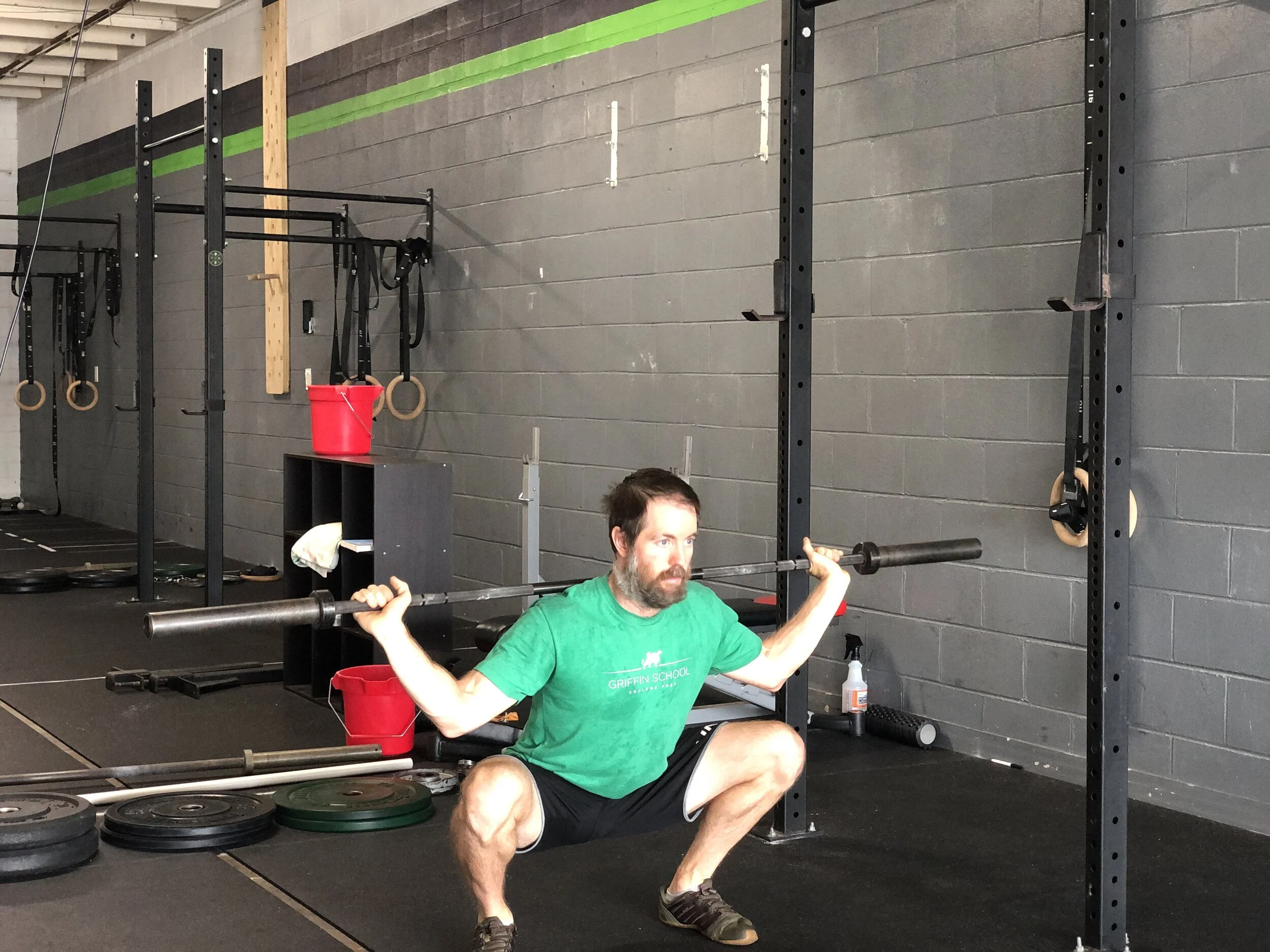
Before combining a deep squat and a behind-the-neck press, establish whether you can perform the component positions comfortably. You need a manageable squat, an overhead position and a path between the upper back and overhead. Reaching one position by compensating somewhere else does not demonstrate that the combined movement is ready for loading.
Begin with a light training implement rather than assuming that an empty full-size bar is automatically light enough. The first question is whether the movement stays smooth, not whether the bar has plates on it. If you must arch sharply, tip forward or change your foot pressure to complete the press, reduce the difficulty and get feedback on the limiting position.
Do not use the exercise as a diagnosis of a particular joint or muscle. Difficulty can reflect several interacting factors, and a photograph cannot identify which one applies to you. Coaching can help separate setup, movement familiarity and available range. Pain is a reason to stop this version, not a challenge to press through in pursuit of mobility.
2. Set a reproducible squat and grip
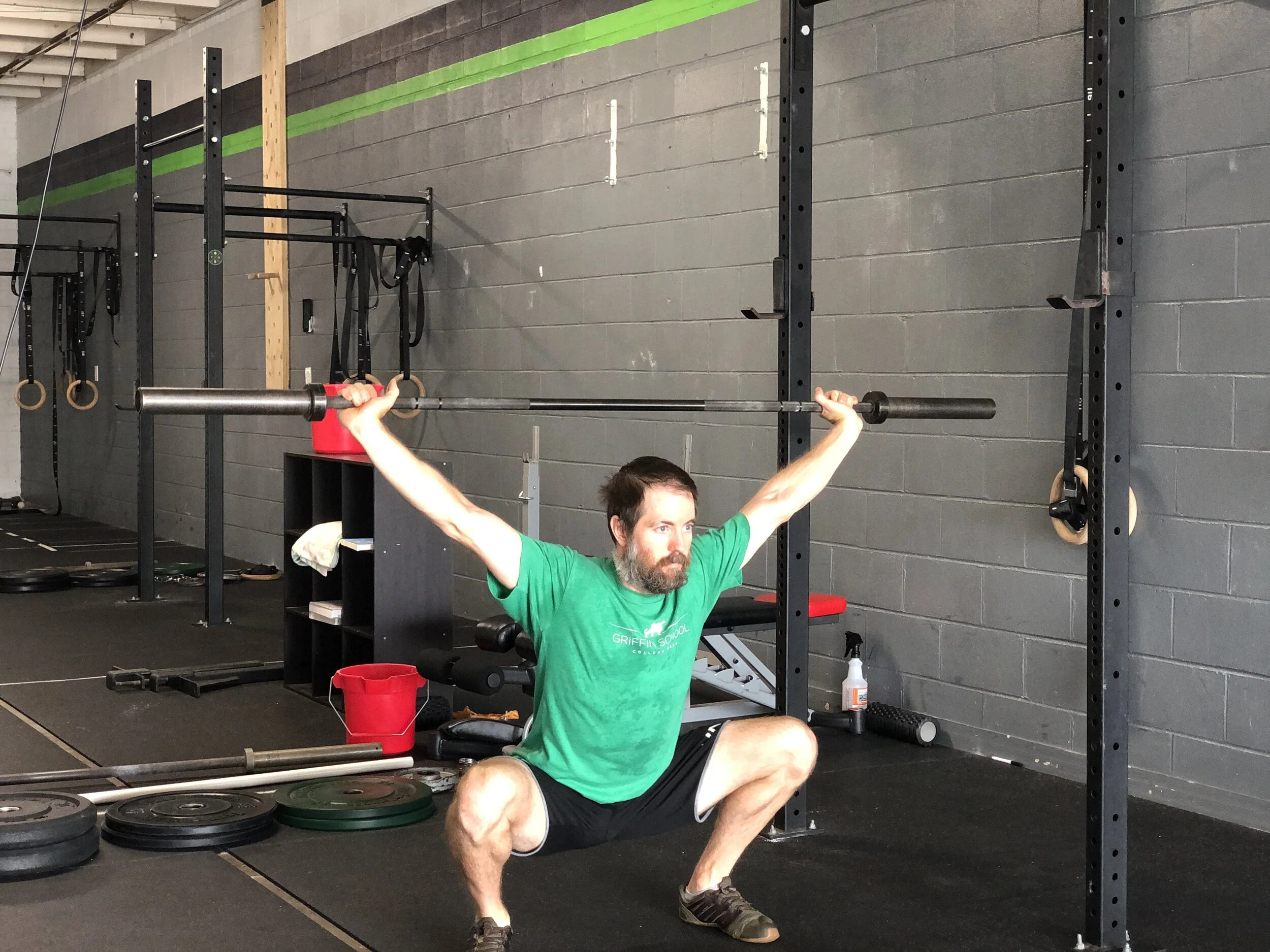
Use the wide grip associated with your snatch or overhead squat, with the bar supported on the upper back at the start. Choose a stance you can hold without repeatedly shifting the feet. Descend into a controlled squat and pause long enough to establish your balance before beginning to press.
A useful rehearsal is to settle at a depth you can own, then notice whether your torso and foot pressure remain consistent. Do not force someone else’s bottom position. A lower squat accompanied by an uncontrolled forward lean is not a more successful repetition simply because your hips traveled farther.
Keep the setup consistent across attempts. Mark the grip using the bar’s reference marks and note the stance you used. If the position changes every time, it becomes difficult to tell whether the movement improved or you simply found a different way to complete it.
Use a clear lifting area and know how you will start and finish the set. Arrange the bar and supports for the task before getting underneath. Avoid improvising the return after discovering that you can press a weight but cannot lower it comfortably.
3. Press without turning the repetition into a squat
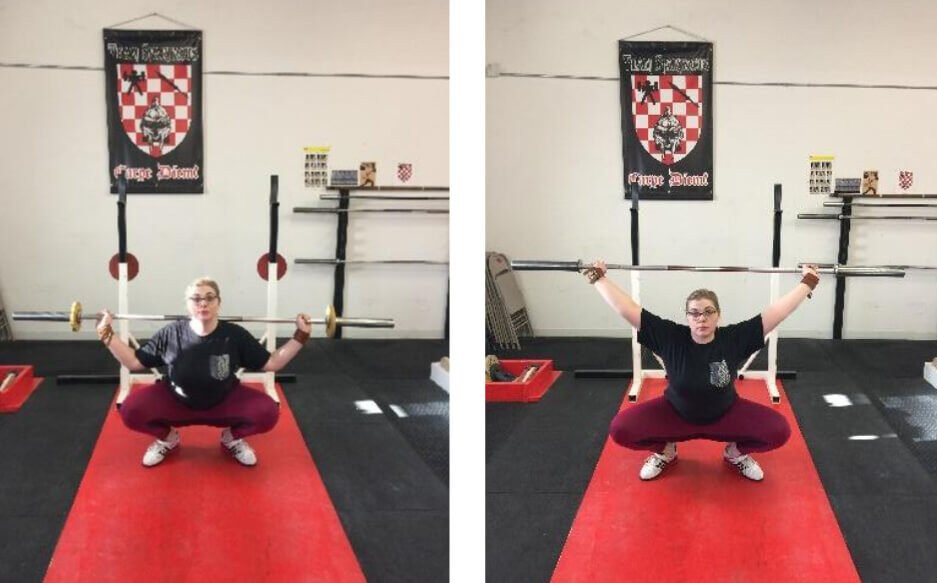
Hold the squat while pressing the bar into the overhead position. The legs should not bounce or extend to launch the weight. That changes the task from pressing within a held receiving position to using leg drive to help the bar move.
Brace the torso and keep the bar’s path organized over your support. Once the elbows straighten, hold the overhead position briefly rather than immediately dropping the bar back. The pause gives you a chance to distinguish a supported finish from a fleeting position that you only passed through.
Lower the bar deliberately to the upper back. Do not let it fall onto your shoulders or neck. The downward phase is part of the repetition, and the appropriate load is limited by what you can control in both directions. If the return becomes abrupt before the upward press becomes difficult, the return is still the limiting factor.
For a simple technique check, compare the first and last repetition from a fixed camera angle outside the lifting area. Look for a change in squat depth, torso angle or elbow path. Choose one observation to address next; an overloaded list of cues can make a demanding movement harder to learn.
4. Separate related drills instead of treating them as interchangeable
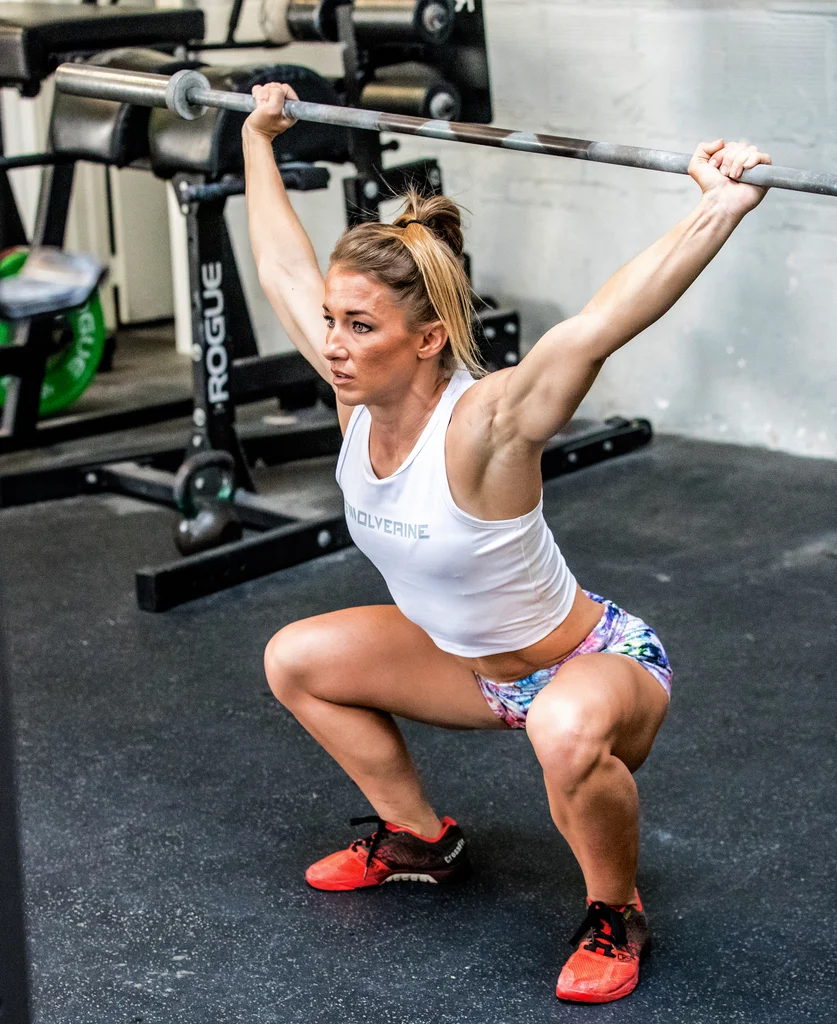
An overhead squat starts with the bar supported on straight arms, then moves the body through a squat. A press in snatch adds elbow movement while the body holds the squat. You can be comfortable in one without being equally capable in the other.
Ordinary dumbbell presses offer a separate standing-press option; they do not reproduce this barbell drill. A standing snatch-grip press removes the bottom-squat requirement and can help you practice the pressing path separately. A front-rack Sots press changes the starting position and usually the grip. Neither is simply the same exercise under a different label, so record the actual variation rather than comparing their loads directly.
There are also top-down entries, overhead pauses and repetitions that reset fully on the upper back. Each changes what you must control. Learn one version before combining several variations. A heel support or a shallower position may change the task, but it should be a deliberate coaching choice rather than an unnoticed workaround.
Keep demonstrations in context. An experienced lifter using a loaded bar shows what that person can perform; it does not establish your starting weight. The useful comparison is whether your chosen version remains consistent and comfortable across repetitions.
5. Use short practice sets and track the limiting phase
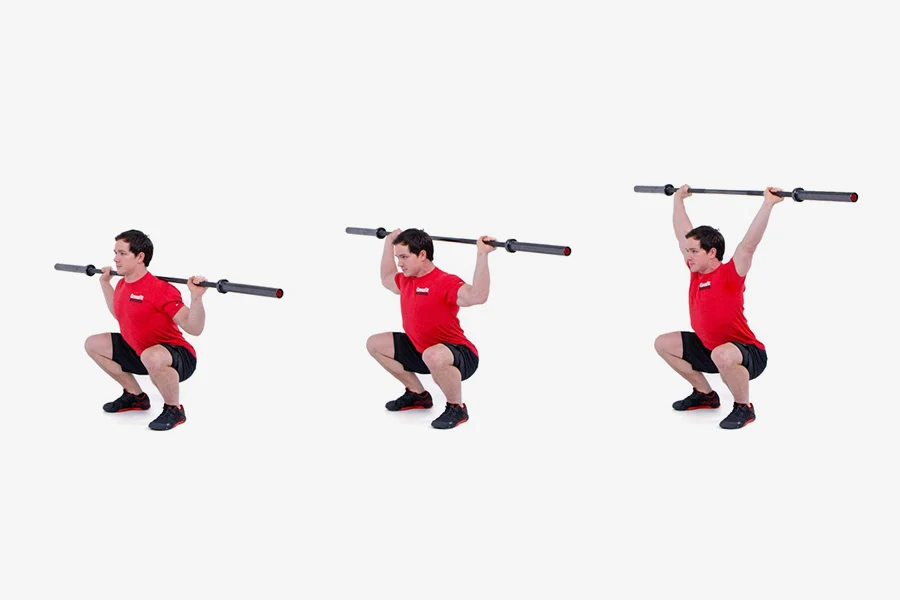
For positional preparation, short sets of two to five controlled repetitions are a reasonable starting framework, with the load determined by the lifter. Begin at the lower end while learning the sequence. Finish before fatigue turns each repetition into a search for a new position.
Place light practice where it serves the session. It can prepare the receiving position before snatch work, provided it does not become a tiring strength test. If your main goal is a heavy standing press or general muscle growth, this specialized drill is optional; you do not need to master it to make progress with other exercises.
Log the implement, load, grip, squat depth and the phase that lost control. “Stable press, rushed return” suggests a different next step from “heels shifted before the bar moved.” Repeat the same setup first, then adjust one variable. Adding plates is only one form of progression; maintaining the intended position more consistently is useful progress too.

Equipment Worth Exploring
Explore equipment, accessories and gear from our carefully selected range.


Competition Plates
Competition-style bumper plates for Olympic lifts and loaded strength training.


Grip Plates
Rubber-coated weight plates with handholds for loading barbells and machines.


Rubber Hex Dumbbells
Rubber-coated hex dumbbell pairs with a stable shape for home and commercial strength training.

Select equipment that lets you make sensible loading changes. Confirm bar and plate compatibility, secure the load as intended and avoid treating an available plate increment as a requirement to increase weight. The purpose is controlled practice in a specific position, not collecting repetitions that barely count.

Funny Gym Shirts & Workout Gear
Funny gym shirts, tanks, hoodies and workout gear for lifters who like training hard.

I Snatched Your Heart Funny Valentine's Gym – Olympic W T-Shirt
Show some gym-day personality with “I Snatched Your Heart Funny Valentine's”.

Control Your Gains Stoic Greek God Marble Sculpture T-Shirt
Make gym days more fun with “Control Your Gains Stoic Greek God Marble” style.

Lift Smart Brain Weight Plate Mind Muscle Connection 45 Hoodie
Keep it laid-back with a little “Lift Smart Brain Weight Plate” attitude.

Stars Stripes & Squats Patriotic Eagle – 4th Of July T-Shirt
Rep “Stars Stripes & Squats Patriotic Eagle” humor in and out of the gym.

The Only Difference Between Good And Great Is One T-Shirt
Bring “The Only Difference Between Good And Great” humor to your next gym day.


Gym Skull Weightlifting Pullover for Powerlifters Bodyb Hoodie
Bring “Skull Weightlifting” gym humor to lazy days and post-workout plans.

I Love Squats – Valentine's Day Leg Day Meme Vest Muscl Tank Top
Add some leg-day attitude to training with “I Love Squats”.

Dumbbell Meme Shirt – Essential & Gymbros Seeking T-Shirt
Make gym days more fun with “Dumbbell Gym Meme” style.

Safety Practice Safe Sets Sweater Jumper T-Shirt
Show some gym-day personality with “Gym Safety”.