Advertising disclosure: This page includes affiliate product links that may earn us a commission, as well as products from our own store.
The Concept2 SkiErg is familiar in hybrid training, yet its floor stand is often treated as an afterthought. It should not be. The choice between a wall mount, standard stand and wide stand changes your usable floor, installation requirements, access and even whether the station can pass through a doorway. None of those choices changes the underlying training machine.
This guide separates the actual SkiErg from its optional support, compares the two stand footprints, checks compatibility with older models and explains how to place the station without sacrificing a sensible training lane. It is a purchasing and setup guide, not a hands-on durability review.
What the stand adds – and what you still need to buy
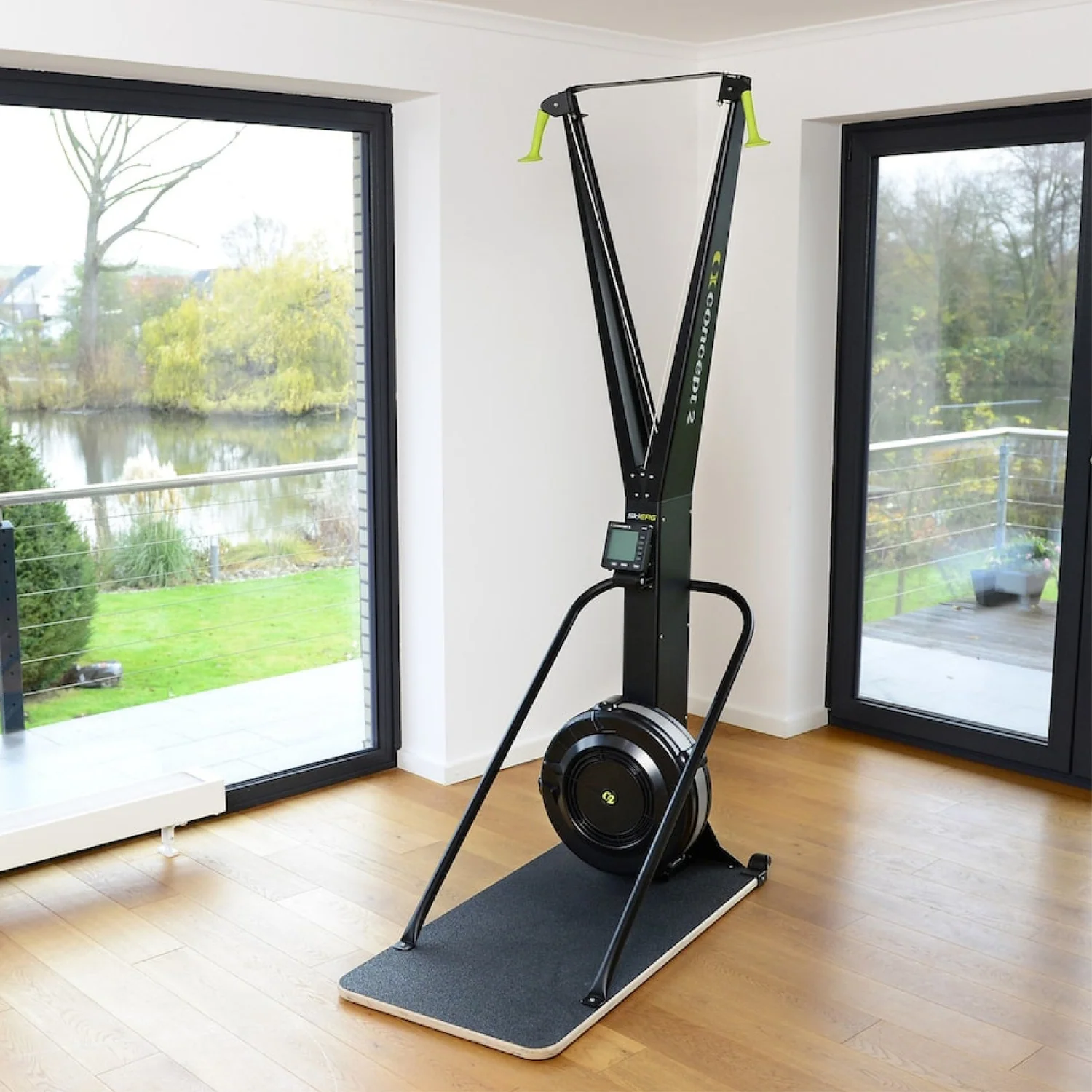
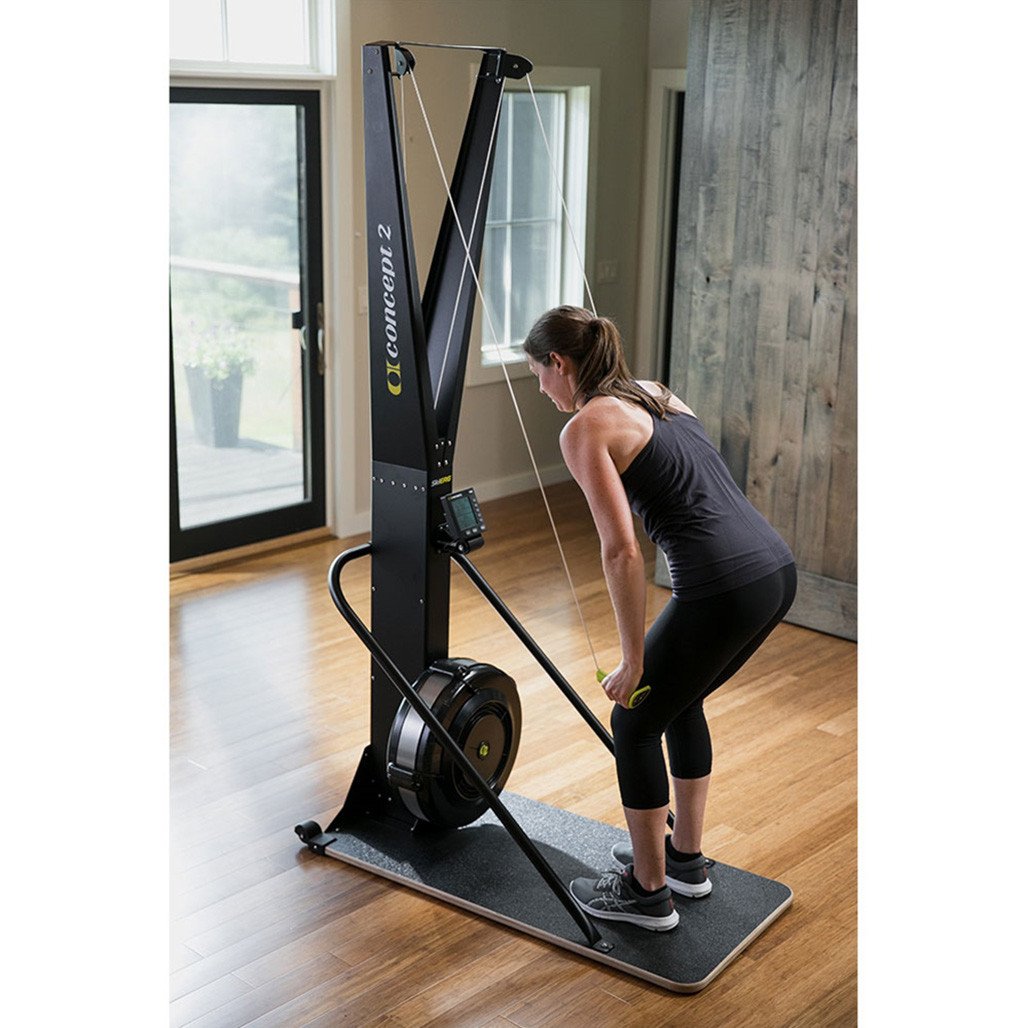
The Concept2 SkiErg can live on a wall, or it can be fitted to an optional floor stand. Those arrangements use the same skiing machine; the stand is an accessory, not a second kind of SkiErg with a different resistance system. The practical difference is where the loads travel. A correctly installed wall unit relies on building structure. With the stand, steel supports and a laminated wooden platform carry the unit and create a free-standing station. It is a configuration decision rather than a shortcut to better watts.
Concept2 describes an anti-skid, wear-resistant standing surface and integrated caster wheels for moving the assembled station. Those features make a stand attractive in a rented room, a changing studio or a shared strength-and-conditioning floor. They do not turn it into something to roll around during a hard interval. Choose a flat, level training spot, position the base fully, and keep a clear pull path. The wheels help with relocation between workouts, not with exercise itself.
The most important line on the buying page is easy to miss: the SkiErg is sold separately. A stand alone does not include the flywheel, handles, cord system or PM5 monitor. Conversely, if a room has an appropriate wall and secure mounting is possible, the separate stand is not compulsory. Before comparing prices, check whether the listing is for the machine, the accessory or a bundle. Confusing those three listings can change the apparent value by hundreds of dollars.
Standard versus wide: measure the whole station
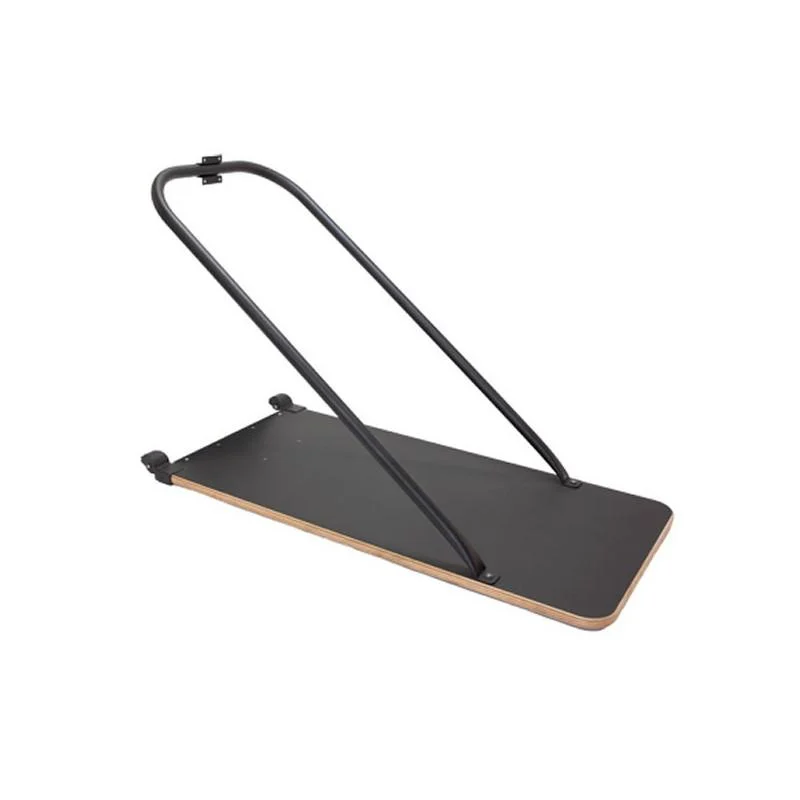
The standard stand creates a complete SkiErg footprint of approximately 23.5 inches wide by 50 inches deep, with an installed height of 85 inches. The wide alternative uses approximately 32 inches of width, 52 inches of depth and the same 85-inch height. The extra width is around eight inches, or 20 centimeters. In metric units that means roughly 60 x 127 x 216 cm for the standard installed station versus 81.3 x 132 x 216 cm for the wide version. Both remain tall pieces of equipment, even though the pull itself does not require a long running track.
Do not treat the listed base dimensions as the entire area needed to exercise. You still need room for your shoes, a natural hip hinge, moving elbows, other people and access to the monitor. Mark the footprint on the floor with tape and stand where your feet would land. Run through the movement without a machine, including your deepest comfortable reach and your finish position. If a bench, rack or open door overlaps that space, the theoretical footprint is irrelevant.
The standard platform makes sense when you mostly train facing forward and your available floor is narrow. The wide version can be valuable when a user needs a broader stance or additional access space. Concept2 also offers it with adaptive use in mind, including wheelchair access, but room dimensions and the individual setup still need to be checked. Wider is not automatically more stable in every real floor condition, nor does it increase the machine’s power output. It changes the room and foot-area options.
Think about transportation before ordering the wide stand. At 32 inches across, the assembled wide base can exceed many household door clearances. Measure the narrowest doors, turns, elevators and storage paths, rather than measuring the training corner alone. If you need to move the unit routinely between rooms, that doorway check could decide the purchase more clearly than the extra foot room.
Wall mounting or free standing: the real trade-off
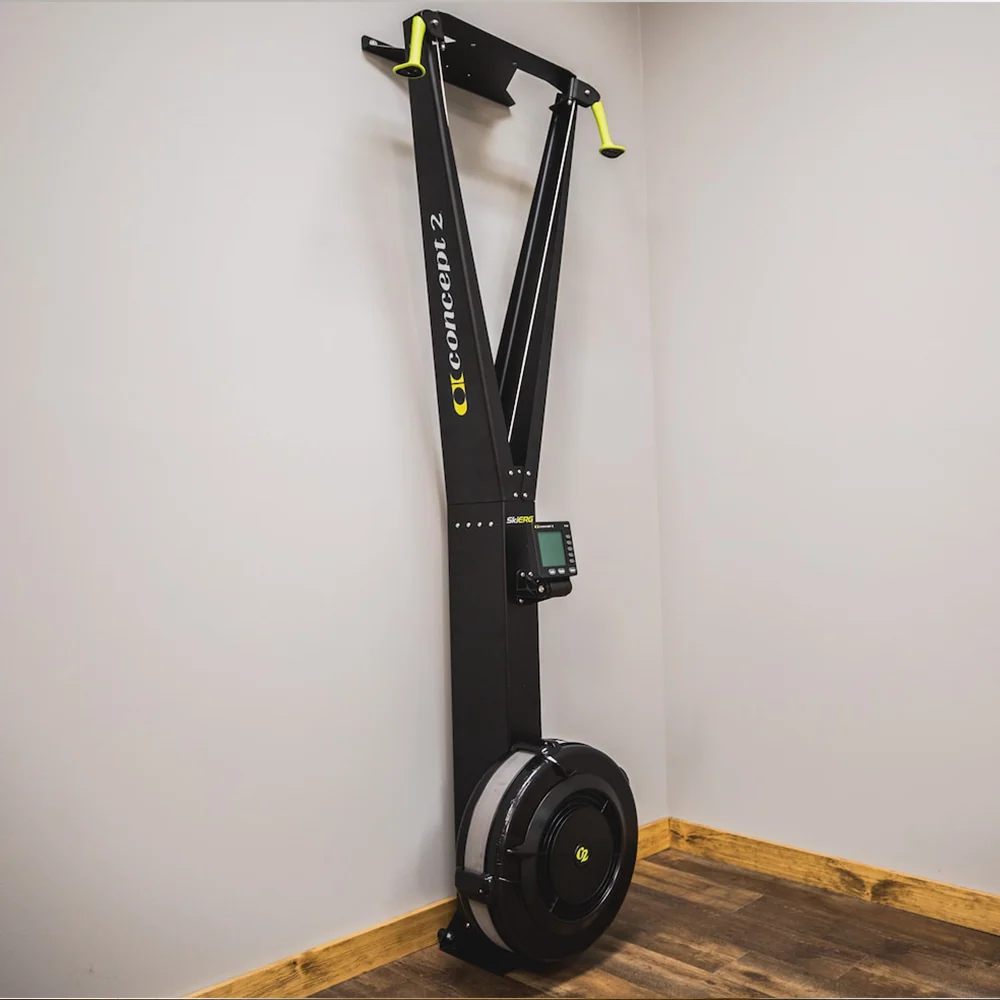
Wall mounting is the simpler choice for floor space when the building allows a safe attachment. The SkiErg itself stands roughly 85 inches high and projects about 16 inches from the wall in the manufacturer’s space specifications. But those equipment dimensions are not a promise that a person can exercise in a 16-inch-deep corridor. The athlete still moves in front of it. The advantage is that you avoid buying and storing a separate standing platform.
The intended wall-mount hardware accommodates wooden studs at 16-inch spacing. Other wall constructions, including concrete, metal framing or unfamiliar stud layouts, require suitable hardware and often professional advice. A mount that looks visually straight is not proof that its fasteners are sound. Do not treat drywall alone as a structural anchor, and do not improvise a hardware choice from somebody else’s photograph. If you cannot establish suitable anchoring, the floor stand is the cleaner option.
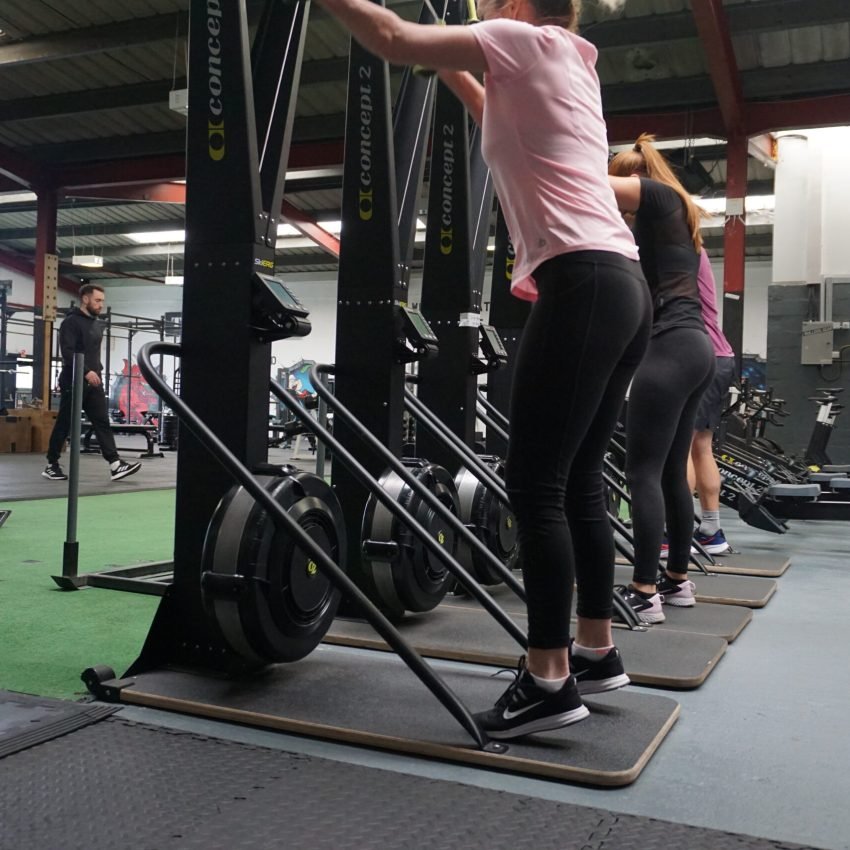
Free standing is useful for a studio that rearranges zones or for someone who cannot alter their walls. The caster wheels and platform make relocation more straightforward, but the unit occupies a dedicated patch of floor for its entire workout. A wall-mounted SkiErg can be easier to keep out of a busy training lane; a floor-stand unit may be easier to share among athletes with different training stations. Consider which of those inconveniences you actually face several times a week.
Both arrangements require a level surface, sound assembly and a route that keeps other lifters clear of the moving handles. A practical test is to mock up not only the floor outline but also where your partner will walk, where dumbbells are dropped and whether a cable station crosses the SkiErg zone. Good installation is as much about managing traffic as it is about equipment measurements.
Compatibility, assembly and movement checks
The current accessory is intended for the black SkiErg generation manufactured from August 2014 onward. It is not compatible with the older gray SkiErg manufactured from June 2009 through July 2014. Color is a helpful first clue, but if you are buying used, verify the actual model and generation rather than trusting a vague marketplace title. Some used listings photograph an old unit with accessories in the background; that does not prove compatibility.
The standard floor-stand part number is 2720, and the wide variant is 2372 in Concept2’s accessory information. Check the chosen option, local dealer stock and whether fasteners and instructions are part of the specific offer. The SkiErg itself requires modest assembly, and the floor stand also needs assembly. Concept2 publishes separate assembly guidance for both wall mounting and the stand; working with a helper is sensible when positioning a tall structure. Follow the instructions for the correct generation instead of guessing bolt order from a short clip.
Before the first hard set, inspect the fasteners, the connection points between machine and stand, platform placement and the handle-cord path. Confirm that the monitor is secure and that neither handle snags the surrounding rack or wall. Move the station only after the workout, with a clear path and control over the tall assembly. If anything shifts or rattles during gentle pulls, stop and correct it before increasing intensity.
Maintenance is comparatively simple, but simple is not the same as maintenance-free. Keep the base free of debris and moisture, check for damage from dropped plates and periodically inspect visible connections. A platform that has been pushed under a rack can also become a trip hazard. This matters particularly when several people rotate through timed intervals while fatigued.

Equipment Worth Exploring
Explore equipment, accessories and gear from our carefully selected range.


Pro Sled System
Heavy-duty push-pull training sled for loaded conditioning, speed, and strength work.

Competition Wall Ball
Competition-style weighted wall ball for HYROX, wall-ball shots, and functional conditioning.

Slam Ball
Low-bounce weighted slam ball for explosive throws and high-intensity conditioning.

Cast Iron Kettlebells
Textured cast-iron kettlebells for swings, squats, carries, and full-body training.


Rubber Hex Dumbbells
Rubber-coated hex dumbbell pairs with a stable shape for home and commercial strength training.
How to train with the SkiErg once it is installed
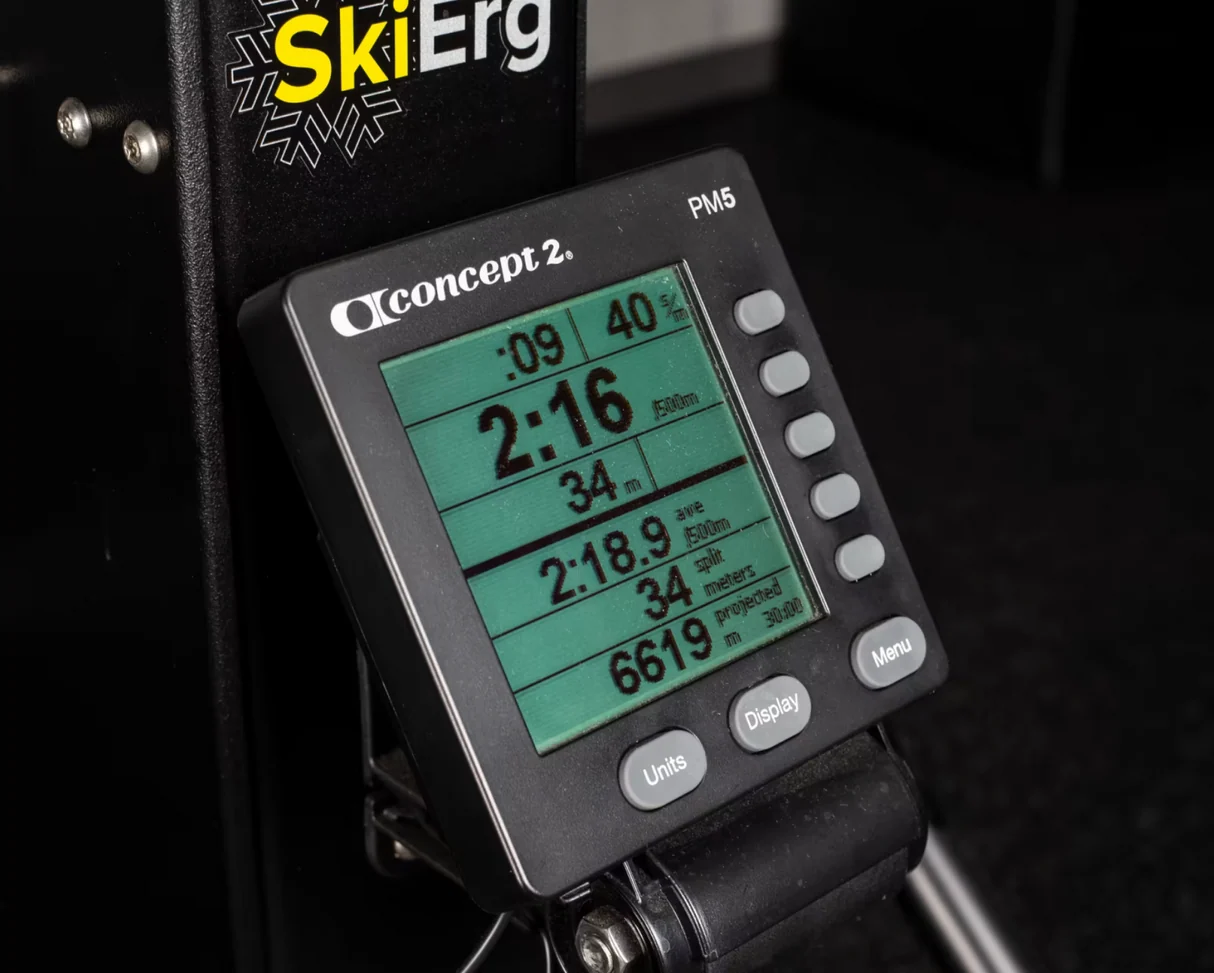
The floor stand does not change the Concept2 air-resistance mechanism. The PM5 monitor still measures pace, watts, distance and intervals, while the damper changes the feel of the flywheel rather than acting as a fixed weight selection. More damper is not automatically a better workout. Pick a setting that lets you repeat coordinated strokes with clear breathing, a stable stance and consistent output. Log the same workout conditions when comparing progress over several weeks.
For a double-pole stroke, begin tall with the handles above you, soften the knees and drive the arms downward while the trunk and hips contribute. Finish with the hands passing the thighs, then recover without jerking the shoulders upward. Keep enough knee flexion for the movement you can control; avoid turning every stroke into a deep squat or an uncontrolled forward fold. A lifter who relies entirely on the arms may fatigue the shoulders before the cardiovascular system is challenged. Start at a lower effort until the timing feels natural.
Try three distinct sessions rather than attacking every day as a maximum-effort test. One session can be 12 to 20 minutes at a conversational pace. A second can use six rounds of one minute strong and one minute relaxed, targeting an effort that remains repeatable in round six. A third can be eight to ten short technique intervals of 20 seconds, separated by at least 40 seconds easy. Those are sample starting points, not universal prescriptions; adjust total work to your conditioning and current lifting program.
If your goal is a hybrid event, keep the SkiErg workload in context. Its upper-body and trunk demands can interfere with hard pulling or shoulder training when clustered carelessly. Place exhausting intervals away from your heaviest back session, or reduce their volume if your bar speed and grip performance worsen. Conversely, a short easy SkiErg session may suit a warm-up when the shoulders feel good and you have practiced the movement. The monitor makes progressive training easier only when you interpret the numbers alongside recovery and technique.

Cardio Shirts & Workout Gear
Cardio and conditioning gym gear for runners, endurance athletes and anyone who earns the sweat.

Rowing – Dost Thou Even Row Medieval Knight Crewneck fo T-Shirt
Show some gym-day personality with “Rowing”.

Cardio Heartbeat for Runners, Cyclists and Endurance Fa Tank Top
Bring “Cardio Heartbeat” humor to your next lifting session.


Gym Dost Thou Even Pedal Medieval Knight Air Bike Parod Hoodie
Show off your medieval humor in a laid-back “Dost Thou Even Pedal Medieval Knight Air” hoodie.

Hybrid Athlete – Iron Man Medieval Triathlon Pullover f Hoodie
Show off your medieval humor in a laid-back “Hybrid Athlete” hoodie.

Anti Jump Rope Club Shirt Cardio Meme Top & Gymbros T-Shirt
Rep “Anti Jump Rope Club” humor in and out of the gym.

Cardio Is Calling You , Meme Top Answer Or Decline? T-Shirt
Make gym days more fun with “Cardio Is Calling You” style.

Anti Rowing Rowing Club Shirt – Meme & Top T-Shirt
Show some cardio attitude with a playful “Anti Rowing Rowing Club” tee.

Running Dost Thou Even Trot Medieval Treadmill Pullover Hoodie
Show off your medieval humor in a laid-back “Running” hoodie.

Exercise I Thought You Said Extra Fries Retro Fitness M Tank Top
Bring “Exercise I Thought You Said Extra Fries” humor to your next lifting session.
The buying decision: which configuration earns its floor space?
Choose the wall-mounted SkiErg when you own or control a wall suitable for secure installation, want the smallest fixed footprint, and do not need to relocate the station. Choose the standard floor stand when wall mounting is inappropriate and a compact free-standing station fits the room. Choose the wide stand when the extra stance or access area is genuinely useful, especially for adaptive setups, and when the wider base will pass through the route it must travel.
Look beyond the headline price. A correct comparison includes the separate SkiErg machine if you do not already own it, the stand size and availability, local delivery, any professional wall installation, and the space the setup permanently occupies. The cheapest wall arrangement is no bargain if the anchor is unsuitable. The widest stand is no upgrade if it blocks a doorway or forces a neighboring rack into an awkward position.
Do a final five-point check before ordering: identify the SkiErg generation, measure height and floor area, check doorway width, choose a safe mounting surface or level floor, and decide where the machine will live between sessions. If you can draw a clean plan for all five, the stand purchase becomes fairly straightforward. The best setup is not the one with the most accessories; it is the one that makes consistent skiing easy without obstructing the rest of your training.