Advertising disclosure: This page includes affiliate product links that may earn us a commission, as well as products from our own store.
Machines or Free Weights for Bigger Quads? What the Evidence Really Shows
Do you need heavy barbells to build impressive quads, or can a leg press do the job just as well? The argument often turns into a loyalty test: free weights supposedly build “real” muscle, while machines supposedly let you isolate it. Neither slogan tells you what actually happens when you train.
A small experiment compared free-weight lunges with an inclined leg press, measuring changes in different regions of the quadriceps. Both approaches increased muscle thickness over nine weeks, without a statistically detectable difference between them. That is useful information, but it is not a universal verdict. Here is what the comparison can teach you, what it cannot establish, and how to build a productive leg session with either setup.
1. What the nine-week comparison actually tested
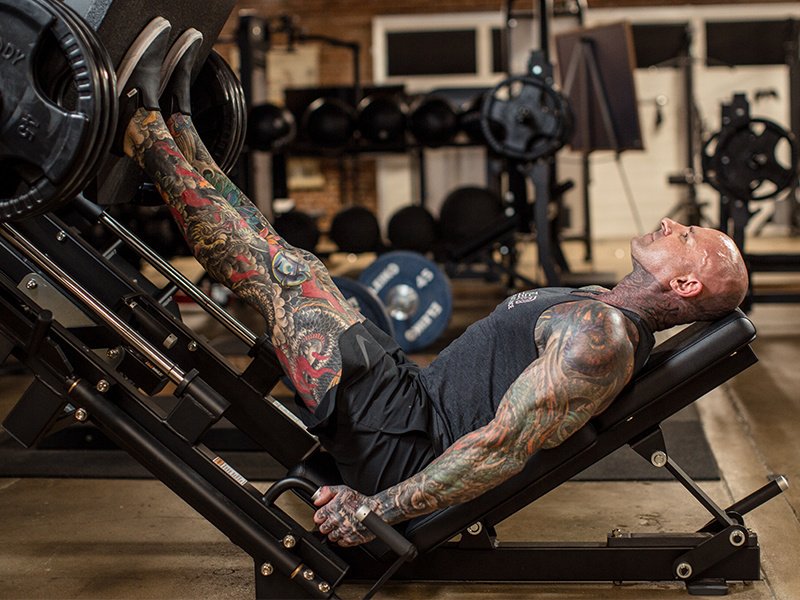
Eight healthy women who had not been resistance training took part. One leg performed free-weight lunges; the other trained on an inclined leg-press machine. The exercises were assigned within each participant, and sessions took place three times per week for nine weeks. That setup helps control for differences in nutrition, sleep and genetics between people, because each person’s legs experienced two training approaches.
The investigators used ultrasound before and after training to measure muscle thickness in the rectus femoris and vastus lateralis, two quadriceps muscles. Measurements were taken at two locations along each muscle. Both methods produced increases in those measured regions, with reported changes varying by muscle and measurement point. The largest percentage increases appeared at one of the rectus femoris sites.
Crucially, the study did not detect a significant difference between lunge-trained and leg-press-trained legs in the changes over time at the four measured sites. That means this experiment did not demonstrate that either approach grew those regions more. It does not mean every possible machine and free-weight exercise creates identical adaptations, or that the two methods have been proved equivalent for everyone.
Eight participants make this an informative but small comparison. Nine weeks is also a short window for judging long-term training outcomes. The women were previously untrained, so the result should not automatically be projected onto advanced powerlifters or experienced bodybuilders. The most defensible takeaway is simple: meaningful quad growth is possible with both modes when training is carried out consistently.
2. Why a lunge and a leg press feel so different
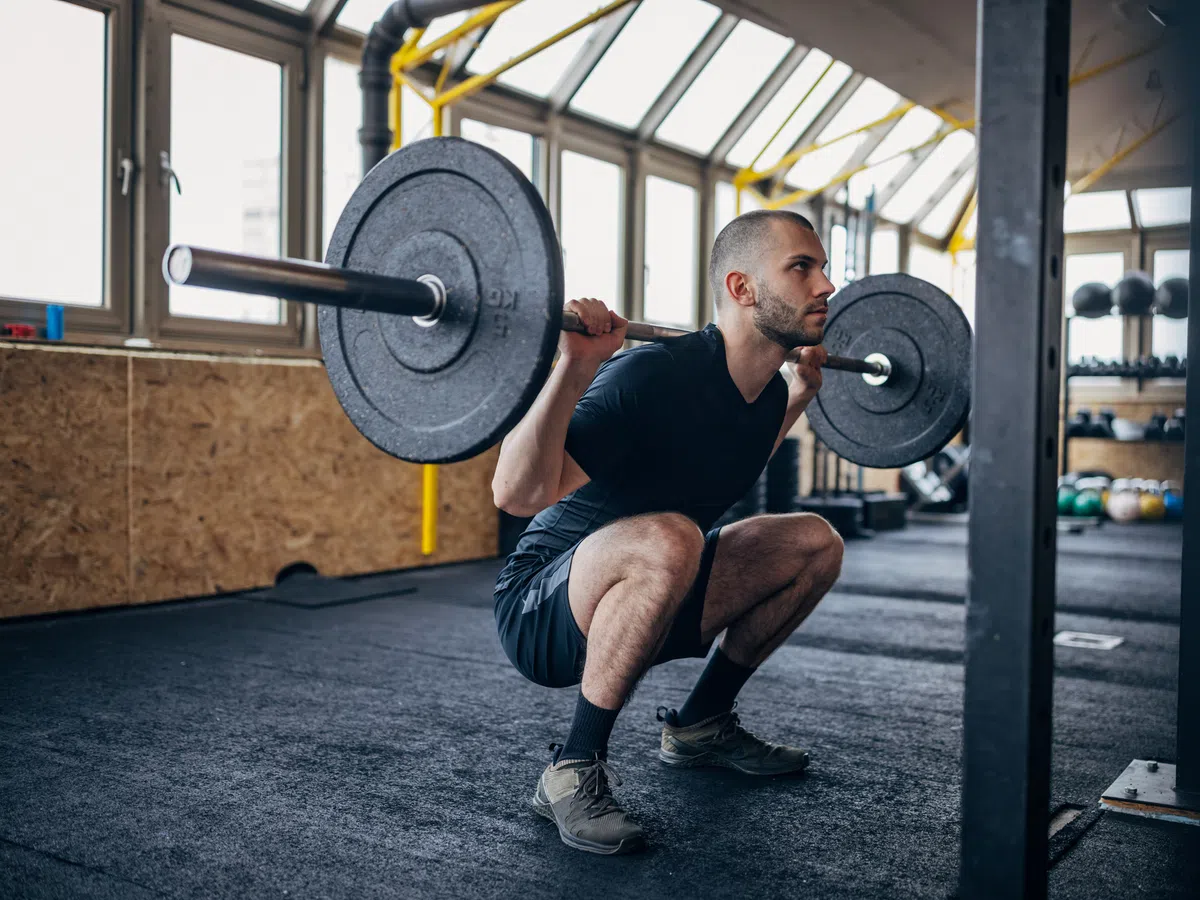
A free-weight lunge asks the working leg to extend the knee and hip while the whole body manages balance, forward and sideways control, trunk position and the path of the moving foot. The knee extensors work, but the movement also requires coordination. Load is commonly limited by how confidently you can reproduce each rep, not just by how much force the quads can produce.
An inclined leg press supports your torso and constrains the path of the carriage. You can concentrate on pushing through the feet and repeating a stable range of motion without having to balance a moving body. Many lifters can accumulate hard quad-focused repetitions with less attention spent on stabilizing the trunk. That is a practical advantage, not a sign the exercise is cheating.
Neither movement is automatically “more quad dominant.” Foot placement, depth, machine geometry, stance, effort and body proportions change the joint demands. On a leg press, keep the pelvis supported and use a depth you can control without rounding aggressively at the lower back. On a lunge, choose a step length that lets you descend smoothly and drive through the working foot without collapsing inward.
The experiment compared those two specific exercises rather than a free-weight squat against a machine squat. That distinction matters. If your goal is better barbell squat technique, squatting has a direct skill advantage. If your goal is repeatable challenging sets for the thighs, a leg press can be an efficient choice. You can value both without pretending their movements are interchangeable.

Equipment Worth Exploring
Explore equipment, accessories and gear from our carefully selected range.

Leg Press/Hack Squat BPR-790
Convertible 45-degree leg press and hack squat machine with a broad footplate and band pegs.

Compact Leg Press CLP-700
Compact reverse-style leg press with a moving seat carriage and an adjustable footplate.

Leg Extension/Curl BCO-780
Leg extension and lying leg curl combo with plate loading, band pegs and a cable-loading option.

Seated Leg Combo BCO-680
Adjustable seated leg extension and leg curl machine with band pegs for added resistance.

Studio V-Squat
Plate-loaded V-squat machine for supported lower-body strength training.


HUSLA Leg Extension Pad
Pad attachment designed to increase usable range of motion on compatible leg-extension machines.


Squat Harness
Wearable harness for hands-free cable squats, sled work, and lower-body training.

GymPin Squat Wedges
Non-slip 15-degree squat wedges help elevate the heels for deeper quad-focused squats.
3. Muscle growth is regional, not one magic number
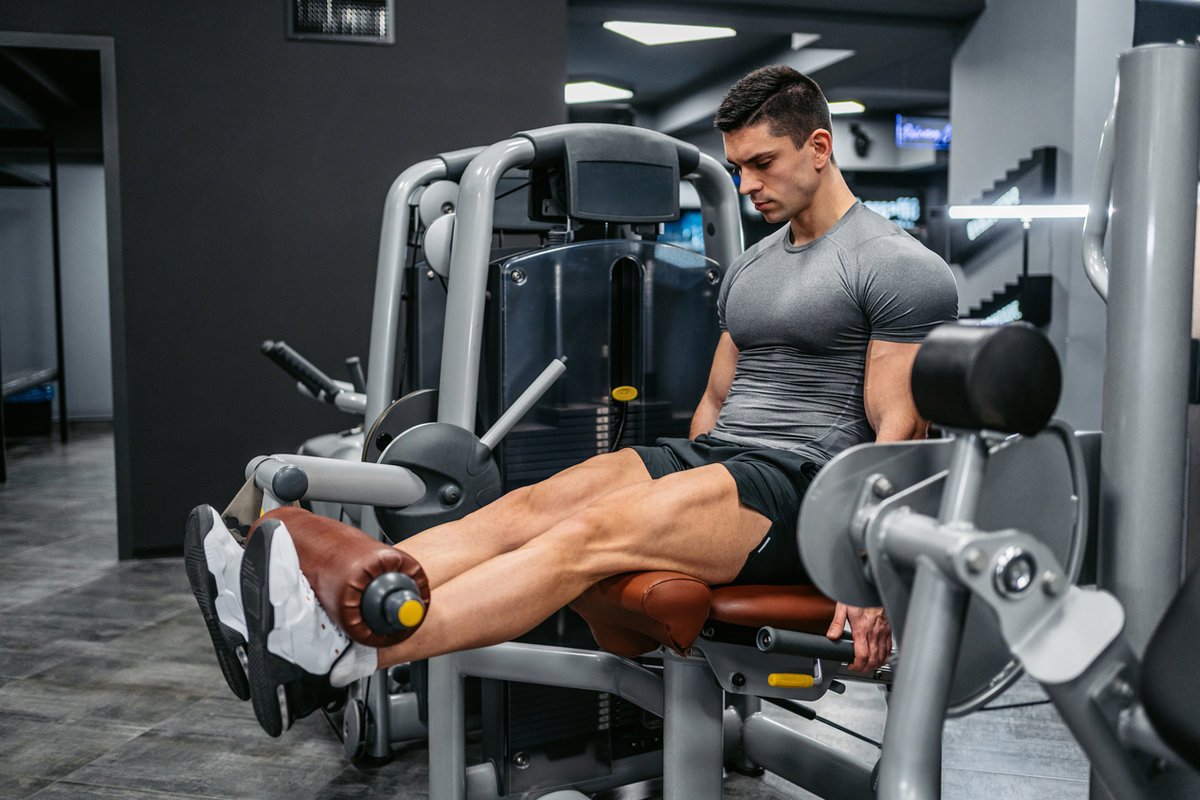
Your quadriceps are not a single uniform block of tissue. The rectus femoris crosses both the hip and knee, whereas the vastus muscles act at the knee. Exercises can challenge these muscles in different positions and through different joint angles. Even within one muscle, changes near the hip or knee do not always match perfectly.
That is why the nine-week experiment looked at different locations of the rectus femoris and vastus lateralis instead of only asking whether a participant’s legs looked bigger. The outcome was encouraging for both training modes, but a percentage at one ultrasound site should not be read as the percentage increase in total thigh size. Muscle thickness is a useful local measurement, not a complete map of every quadriceps head.
For programming, exercise variety may offer coverage of slightly different demands. A deep knee-bending compound movement can anchor your session, while a leg extension allows targeted knee extension without another heavy hip-extension task. You do not have to turn every session into an anatomy experiment, but it is reasonable to keep some variation rather than relying on one very similar movement for all sets.
Do not overinterpret temporary muscle swelling either. The pump can feel satisfying, but it is not itself proof that one exercise produced superior long-term hypertrophy. More informative signs are a stable technique, progressively challenging loads or repetitions, enough recovery, and changes observed across many weeks rather than one workout.

Leg Day Shirts & Workout Gear
Leg-day gym shirts and workout gear for lifters who never skip squats, lunges and lower-body punishment.

Quadzilla Massive Quads Leg Day Squatting Meme Tank Top
Train hard, laugh a little, and rep “Quadzilla”.


Never Skip Legday – Chicken Legs Meme , , & Leg Day T-Shirt
Heavy lifts, good laughs, and a little “Never Skip Legday” energy.

My Leg Hurts Leg Day Sweater & Squat Meme Lovers T-Shirt
Keep things casual with a little “My Leg Hurts” attitude.

Leg Day No Thanks – Skip Legday Meme , Squats & T-Shirt
Heavy lifts, good laughs, and a little “Leg Day No Thanks” energy.


Heavy Squatter Meme Squats & Gains Leg Day Wizard Top T-Shirt
Heavy lifts, good laughs, and a little “Heavy Squatter” energy.

Strong Woman Leg Day Squats Decal Water Bottles Sticker
A fun “Strong Woman” touch for bottles, laptops, and lockers.

Barbie & Barbells Female Leg Day Motivation Hoodie
Bring “Barbie & Barbells” gym humor to lazy days and post-workout plans.

3 Plates Squat Club : Essential Meme & Leg Day T-Shirt
Make gym days more fun with “3 Plates Squat Club” style.
4. Match the equipment to the skill you want to improve
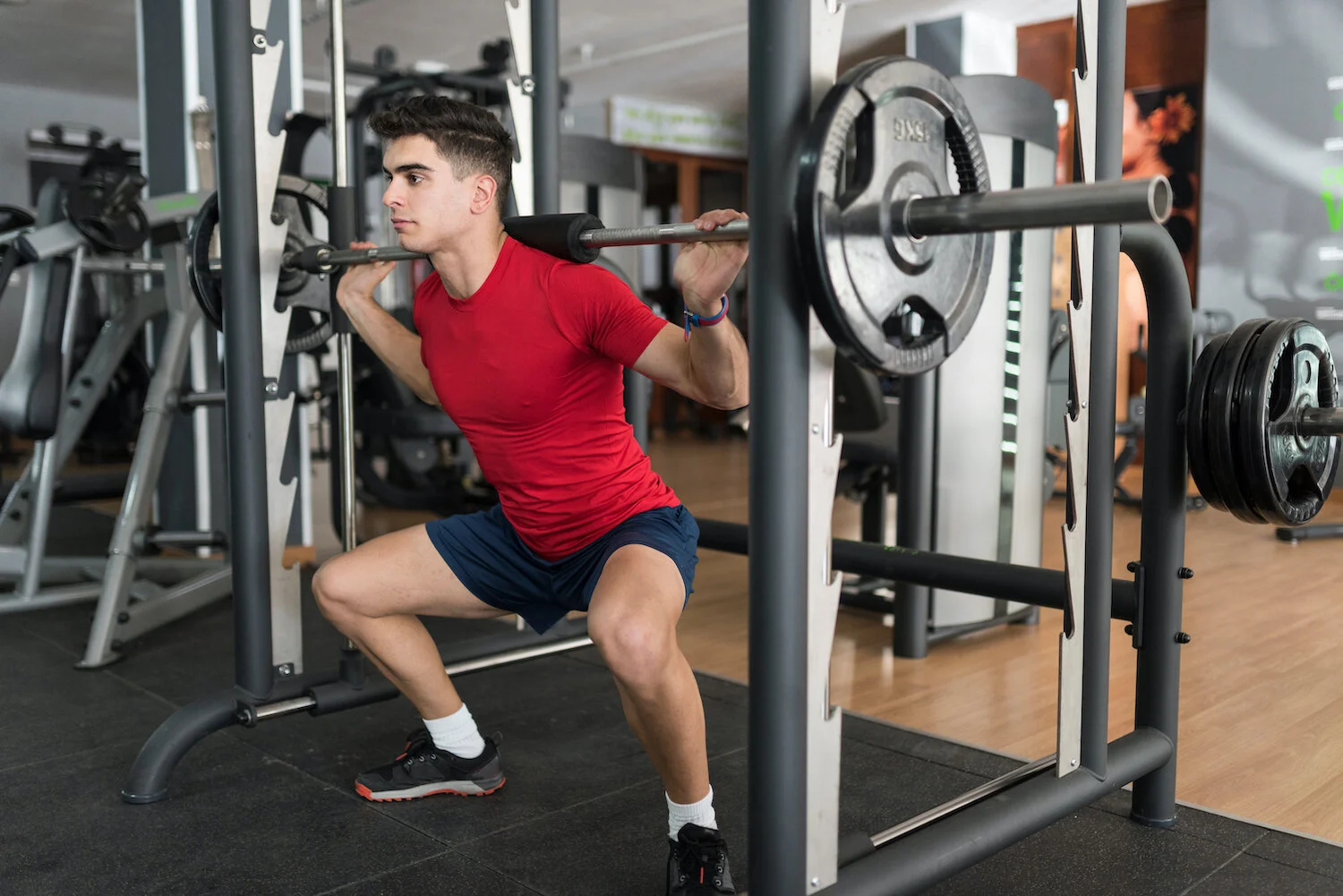
Research comparing machines and free weights across multiple training studies has generally not shown a consistent advantage for either when the outcome is muscle size. Strength tests are a different story: people tend to improve most on movements resembling those they practiced. That is not surprising. Better bracing, balance and coordination matter when the test asks you to perform a specific lift.
If you compete in a barbell squat, the leg press can add useful leg work, but it cannot replace practicing your actual squat. Likewise, a strong squat does not automatically make you technically efficient on every leg-press machine. Exercise-specific strength is one reason it is risky to compare the plates loaded on two completely different machines or argue about an imagined equivalent squat weight.
Joint comfort is another legitimate consideration. A fixed track can make it easier to work hard when balance is the limiting factor, but individual machine designs do not fit every person equally well. Free weights allow you to change your stance and path, but they may demand more stability. Choose options that let you control the desired range and train hard without escalating discomfort.
The practical decision is therefore about useful hard work, not ideology. Pick the exercise that you can perform safely, repeat consistently and progress. Then, if your recovery and available training time allow, complement it with a different pattern rather than simply adding sets that feel identical.
5. A straightforward six-week quad-building approach
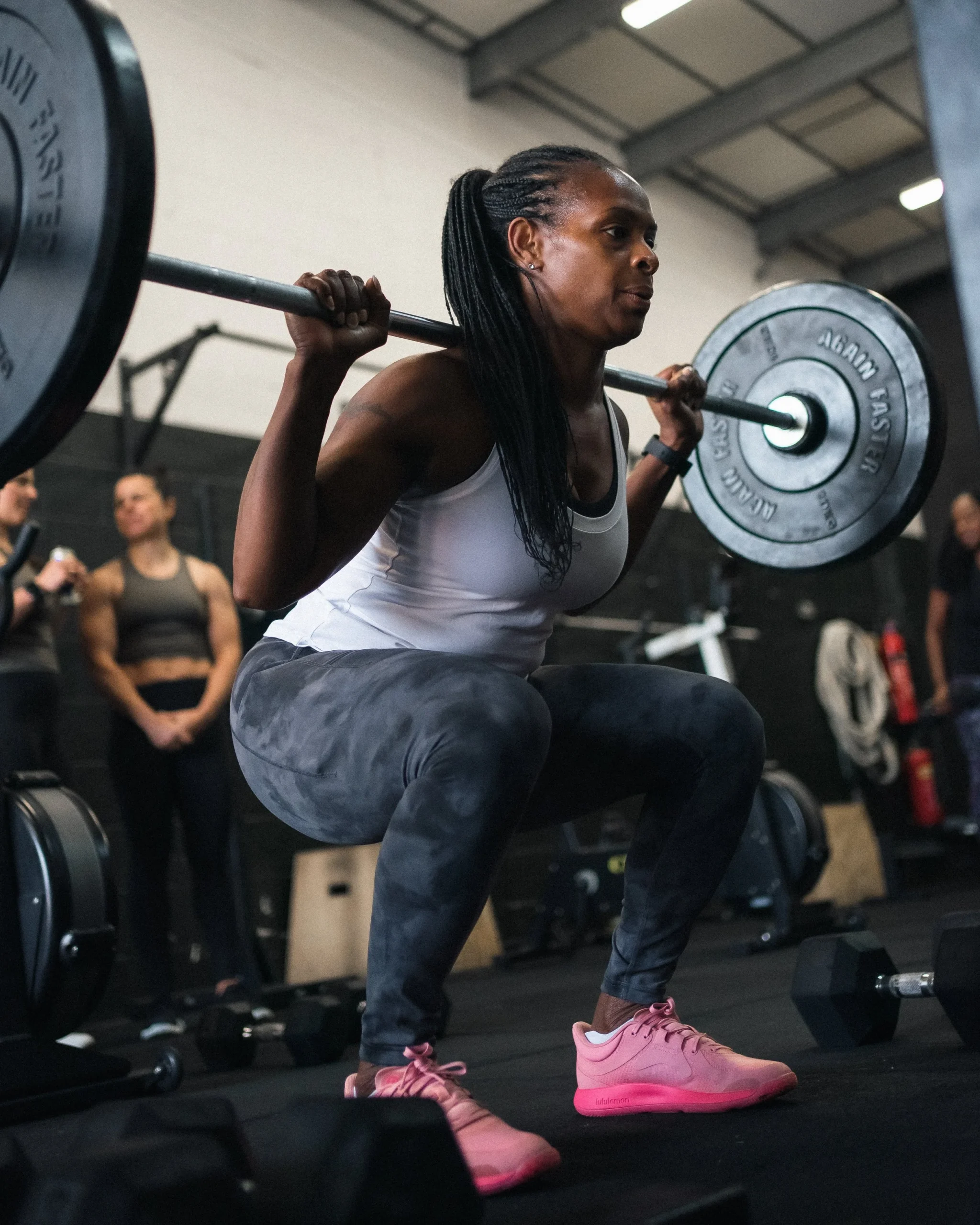
Start each lower-body day with one compound movement you can track. On day one, use a barbell squat, a controlled dumbbell lunge or another free-weight knee-bending pattern for three working sets of six to ten repetitions. On day two, lead with a leg press or supported squat machine for three sets of eight to twelve. Choose loads that leave roughly two or three technically clean repetitions available on the first week.
Follow each primary exercise with a complementary knee-dominant movement. This could be two sets of leg extensions for ten to fifteen controlled reps, or split squats if you have no machine. Keep the lowering phase deliberate and avoid bouncing into the bottom position. You should know which leg or muscle group is doing the work instead of chasing the largest number on a weight stack.
Across weeks one and two, focus on repeatability: same depth, foot placement, setup and rest intervals. In weeks three and four, add one rep per set when technique remains steady. In weeks five and six, increase the load modestly after you have reached the top of the intended rep range, then build the reps back up. Do not add weight if it requires a sharply shorter range of motion.
Give the legs adequate recovery between hard sessions and adjust volume to the rest of your training week. If running, sports or deadlifts already make your legs sore, you may need fewer challenging quad sets. Track total sets and how close you train to your limit, not merely whether an exercise feels brutal. A training log that shows better reps under comparable conditions is more useful than a machine-versus-barbell debate.
Bottom line: The available evidence does not support treating free weights as mandatory for quad hypertrophy. Machines can build muscle, free weights can build muscle, and a sensible blend often makes the most practical program. Choose based on effort, skill goals, comfort and consistent progression.
Equipment Worth Exploring
Explore equipment, accessories and gear from our carefully selected range.

VForce 3IN1
All-in-one rack combining an adjustable Smith machine, functional trainer, and free-weight station.

VForce 3IN1 Max
Six-post all-in-one rack with Smith machine, functional trainer, and variable-force cables.

Multi Pull Smith Rack MPHR-780
All-in-one rack with a Smith machine, functional trainer, lat pulldown and low row.


Rubber Hex Dumbbells
Rubber-coated hex dumbbell pairs with a stable shape for home and commercial strength training.


Competition Plates
Competition-style bumper plates for Olympic lifts and loaded strength training.

Safety Squat Handles
Barbell squat handles that reduce shoulder positioning demands during high-bar squats.

Belt Squat Collar
Heavy-duty collar adapter for compatible belt-squat and landmine bar setups.