Advertising disclosure: This page includes affiliate product links that may earn us a commission, as well as products from our own store.
At 60, Ukrainian strength athlete Lyudmila Gaiduchenko held a weighted Silver Bullet in a Captains of Crush gripper for 47.17 seconds, improving a women’s record that had stood since January 2014. The time makes a great headline. The more useful question for a lifter is what she actually held, how the rules work and which parts of her preparation can sensibly transfer to a home gym.
The 47.17-second result, and the date that matters
Lyudmila Gaiduchenko was 60 when she delivered a 47.17-second hold using the women’s Captains of Crush No. 2 Silver Bullet setup. The attempt took place on November 8, 2026, in Kamianske, Ukraine; IronMind announced her world-record result on November 17. Those are different dates: the later announcement did not mean a second record attempt was performed that day.
The previous women’s mark was Amy Wattles’ 45.42 seconds from January 26, 2014. Gaiduchenko added 1.75 seconds, an improvement of about 3.9 percent. That percentage sounds small until you consider that this is a hold taken close to grip failure. At the margin, another second requires the fingers to keep resisting a gripper that is trying to open.
Accounts of her attempt describe a power outage and a gym temperature of approximately 8°C. That is striking context, but it should not be turned into a recommendation to deliberately train grip in freezing conditions. Cold can interfere with hand comfort and preparation; a well-controlled warm-up remains the sensible choice for ordinary lifters.
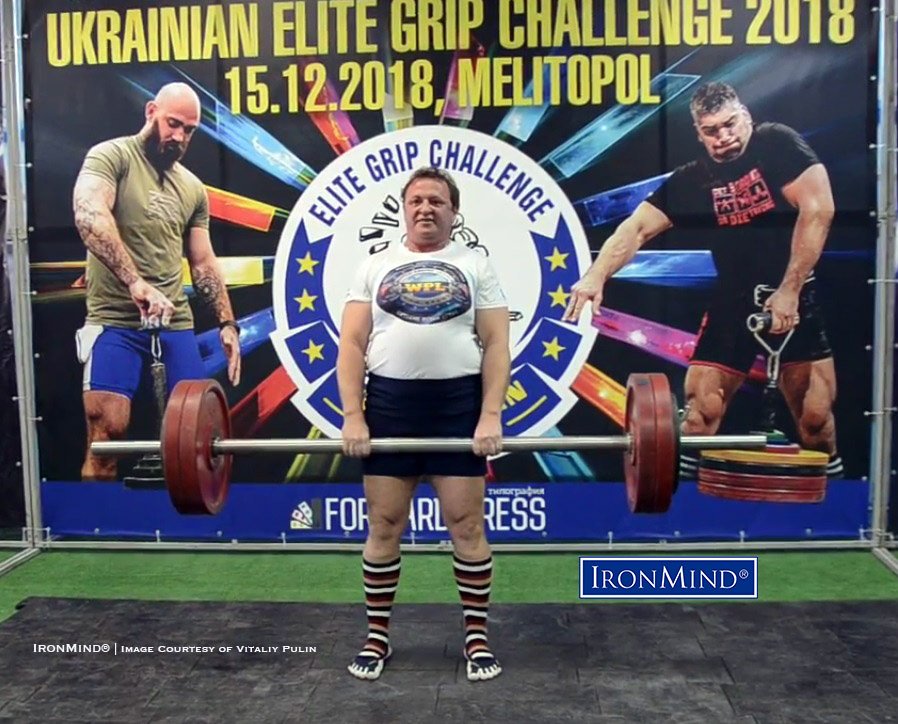
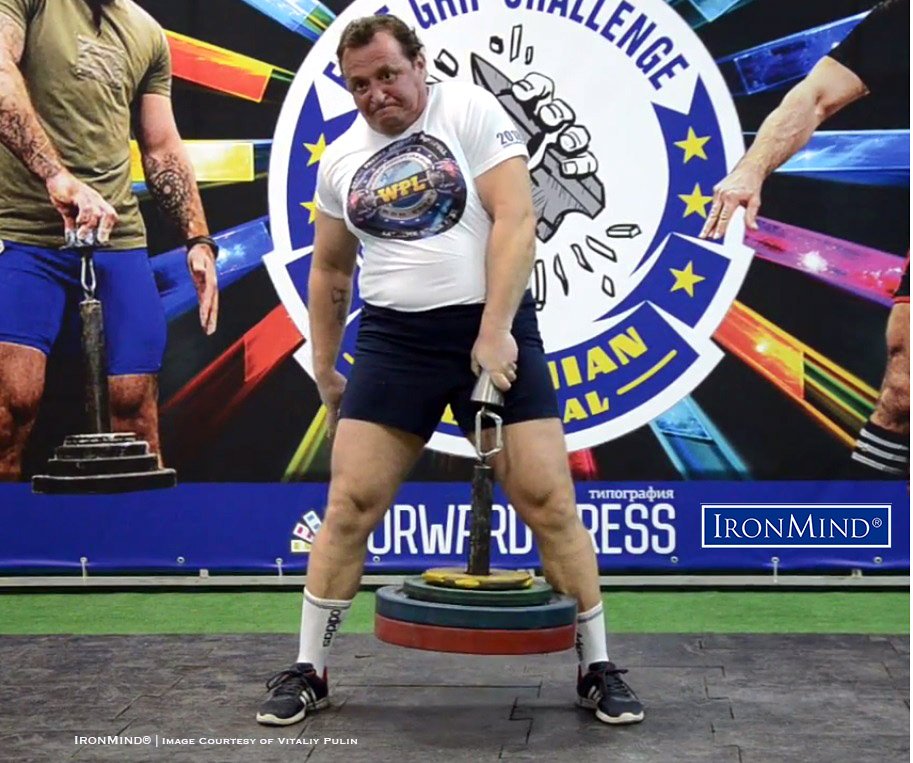
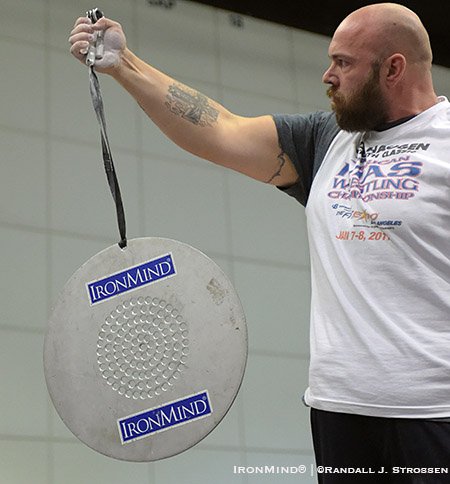
The photograph above this section is from a separate 2018 axle-lifting competition. It shows her long involvement in grip sports, not the November 2026 Silver Bullet attempt. Her achievement is impressive enough without confusing archive material with the record itself.
The Silver Bullet is not a conventional handgripper squeeze
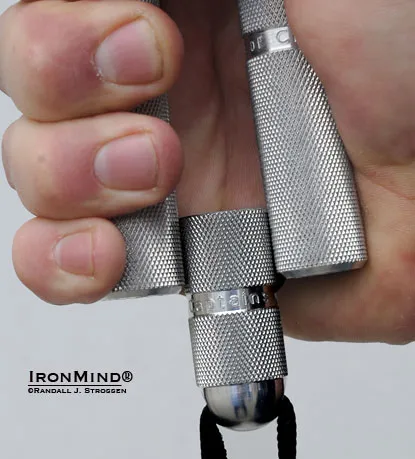
Here is the distinctive challenge: a small weighted metal insert, the Silver Bullet, sits between the handles of a Captains of Crush gripper. The athlete closes the gripper enough to trap the insert, then maintains that position with one hand while a calibrated 2.5kg weight hangs below it. The clock runs only after the referee signals the valid one-hand hold.
The load is not equivalent to simply hanging from a bar with 2.5kg attached. The gripper’s spring resists closure, and the insert turns any meaningful loss of compression into a failed hold. The position also depends on finger contact, gripper orientation, insertion depth and strict officiating. Comparing a random spring-gripper hold on social media with an official record is therefore unreliable.
For record attempts, the women’s category uses a Captains of Crush No. 2; men’s categories use No. 3 or No. 4. The contest rules require a genuine new gripper opened at the event and specify the insert and hand position. Ordinary powdered chalk is allowed, while liquid chalk is not. The judge stops the clock when the insert drops or a prohibited position appears.
That specificity is why the event produces a meaningful time ranking. If you want to measure progress at home, record your exact gripper, insert and loading method, hand used, and whether you held to strict form. Otherwise, a longer time may simply reflect an easier setup.
Why beating a 2014 record is different from winning a weightlifting title
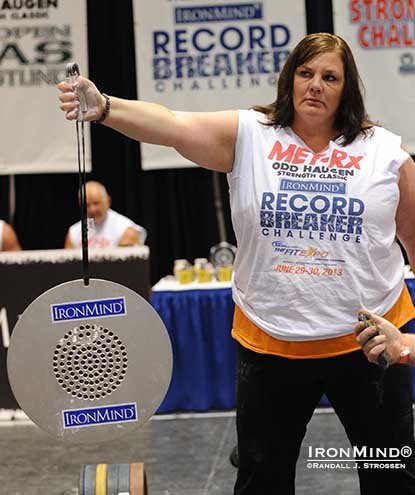
Amy Wattles set the previous benchmark in January 2014. It remained the published women’s No. 2 Silver Bullet standard until Gaiduchenko’s result. A performance from 2014 is not an extra data point in a new 2026 contest; it is the mark another athlete had to surpass under a comparable event specification.
Grip sport contains several distinct tests: crush-gripper certification, one-hand thick-handle deadlifts, pinch devices and timed holds. Even within the Silver Bullet event, different prescribed gripper levels create different rankings. Nobody should interpret a 47.17-second No. 2 women’s result as faster or slower than an athlete’s No. 3 or No. 4 time without recognising the very different spring resistance.
A competitive lifting history can supply useful strength and training habits. The record itself still belongs to a narrow, standardized grip test. That distinction matters if you want to borrow ideas for your own workouts rather than copy an elite athlete’s most visible result.
Her training mixed maximum tension and endurance
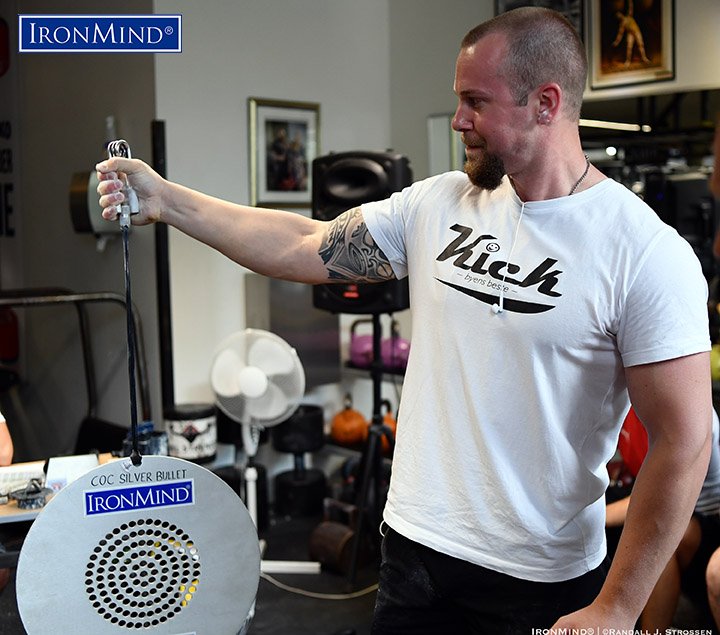
Gaiduchenko spent decades around strength sport. She competed in powerlifting from 1990 until 2016 and later built an extensive armlifting career. She also coached strength athletes. Her record was not the product of someone discovering a handgripper only a few weeks before a challenge.
She described a shift in focus toward the Silver Bullet in 2025. Her grip preparation distinguishes heavier static-strength efforts, using harder Captains of Crush grippers such as the No. 2.5 and No. 3, from longer static-endurance work with easier grippers such as the No. 1 and No. 1.5. She also mentioned extra loading on No. 2 holds, plus work for her wrists, fingers and forearms.
This combination makes physiological sense: you need the reserve force to establish a hold and the specific endurance to maintain it. But her comments do not provide a complete independently verified weekly programme, all set counts or a prescription suitable for a beginner. Treat the heavy-versus-light distinction as an idea to test, not a universal protocol.
Her wider base includes squats, presses and deadlifts twice weekly, alongside running, cycling or swimming when practical. That matters to home-gym lifters: grip training can complement full-body strength instead of replacing it. A stronger set of forearms is useful, but not if constant maximum hand work disrupts pulling sessions, recovery or everyday tasks.
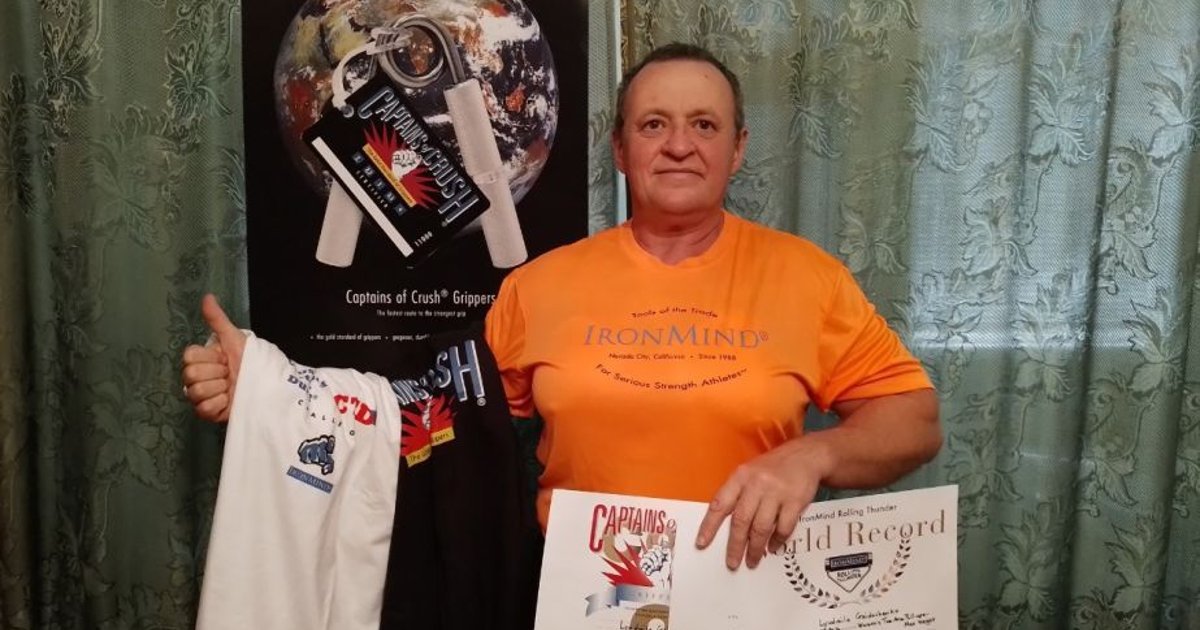
The archival image here shows Gaiduchenko in an older Little Big Horn contest. It documents the breadth of her grip competition experience; it is not a picture of the 2026 record hold.

Funny Gym Shirts & Workout Gear
Funny gym shirts, tanks, hoodies and workout gear for lifters who like training hard.

Grip Training Essential Gymbro Jumper & T-Shirt
For laid-back days and lifting humor: “Grip Training Essential”.

Grip Day Legend Essential Gymbro & T-Shirt
Rep “Grip Day Legend” humor in and out of the gym.

Grip Strength Fanatic Meme Hoodie
Show off your lifting humor in a laid-back “Grip Strength Fanatic” hoodie.


Grip Day Legacy Gymbro & Decal Sticker
Give your everyday gear a playful “Grip Day Legacy” twist.

Grip Train Get A Grip Jumper Grip Training T-Shirt
Show some gym-day personality with “Grip Train”.

Dadlift Dads Meme Dad Strength Gains Hoodie
Show off your powerlifting humor in a laid-back “Dadlift” hoodie.

Gold Skull Uplift Iron Club Gym Decal Powerlifting Body Sticker
Put “Gold Skull” gym humor on your laptop, bottle, or gym gear.

Muscle Mommy Muscle Club for Gym Girls, Lifting & Stren T-Shirt
Bring “Muscle Mommy Muscle Club” humor to your everyday gym style.

Iron Man Heavy Metal Workout Tank Lifting Meme Muscle S Tank Top
Show some personality between sets with “Iron Man”.
A sensible four-week grip progression for normal lifters
You do not need an official record setup to improve your hand strength. Start with one short grip-specific session after a lower-stress strength workout and leave at least a day between hard gripping and your next important heavy pull. For the first week, use a manageable gripper or thick-handle implement for three holds of about 10–15 seconds per hand, finishing each with the ability to maintain clean control.
In week two, keep the same tool and progress only one variable: add a few seconds to the successful holds, or a small amount of loading if the implement allows it. Avoid increasing resistance, total sets and time all at once. In week three, separate a heavier but shorter effort from a lighter endurance effort, with several minutes between harder sets. If technique deteriorates, the set is over even if the clock has time left.
In week four, reduce accumulated work and test one standardized hold. Use the same implement, hand position, chalk choice and timing method as your initial test. A better time under the same conditions is useful evidence, even if it is nowhere near 47 seconds. The test must not become a daily all-out contest.
Stop for sharp pain, tingling or unusual finger and wrist discomfort. Tendons and small structures may not tolerate sudden surges of static loading as readily as your enthusiasm does. Wrist extensor work, finger-opening drills and ordinary pulling movements can support a balanced routine, but they are not guaranteed injury prevention.
Thick-bar grips, forearm trainers, neutral handles and loaded carries offer different ways to challenge the hands. The equipment carousel below shows possible tools to investigate, not products used or endorsed by Gaiduchenko, and none should be mistaken for a certified Silver Bullet event setup.

Equipment Worth Exploring
Explore equipment, accessories and gear from our carefully selected range.

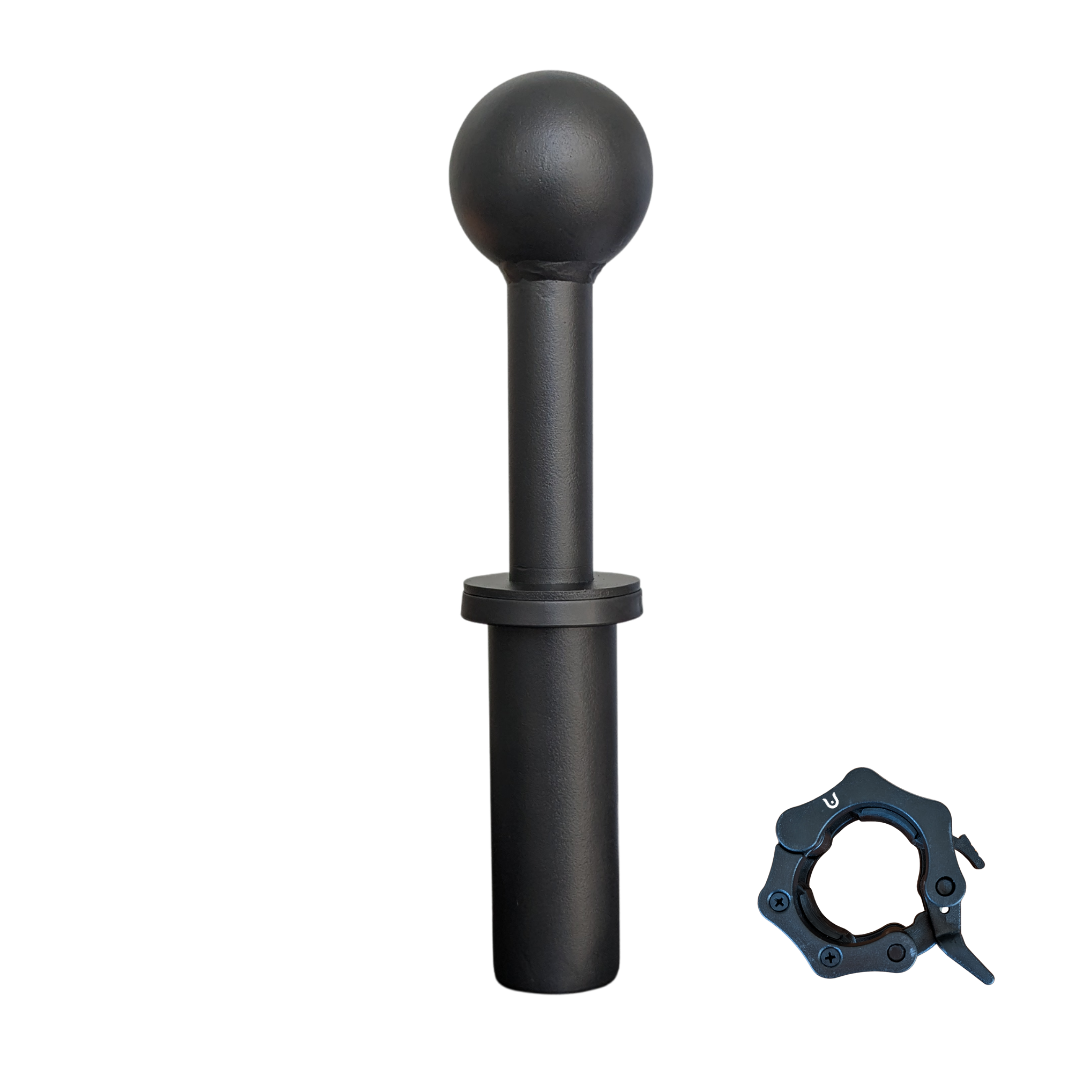

Leather Wrist Grips
Padded leather lifting grips help support the hands and wrists on heavy pulling exercises.


Angles 90 Grips
Flexible grip attachments that allow natural wrist movement during pulling exercises.


GymPin Ergo Handles
Pair of ergonomic cable handles shaped for comfortable triceps and pulling exercises.

What her record really teaches about longevity and specificity
The best lesson is not that everyone should chase maximal crushing grip strength at 60. It is that a highly trained athlete can keep refining a particular ability after changing priorities. Gaiduchenko’s powerlifting years, armlifting experience and focused preparation are a much larger story than the final number on the timer.
For most lifters, grip is a supporting quality. If straps help you train your back without your hands giving out first, using straps on selected sets is not surrender. If grip itself is the target, give it specific unstrapped work and record the results honestly. Strongman carries, deadlift holds and gripper compression can coexist, but each deserves its own progress metric.
Choose a small objective you can reproduce: a clean 15-second controlled gripper hold, a longer farmer carry with the same load, or a set of pull-ups without losing the bar. Record which hand was weaker and whether the limiting sensation came from finger opening, discomfort or whole-body fatigue. Those observations tell you what to practise next.
Equipment Worth Exploring
Explore equipment, accessories and gear from our carefully selected range.
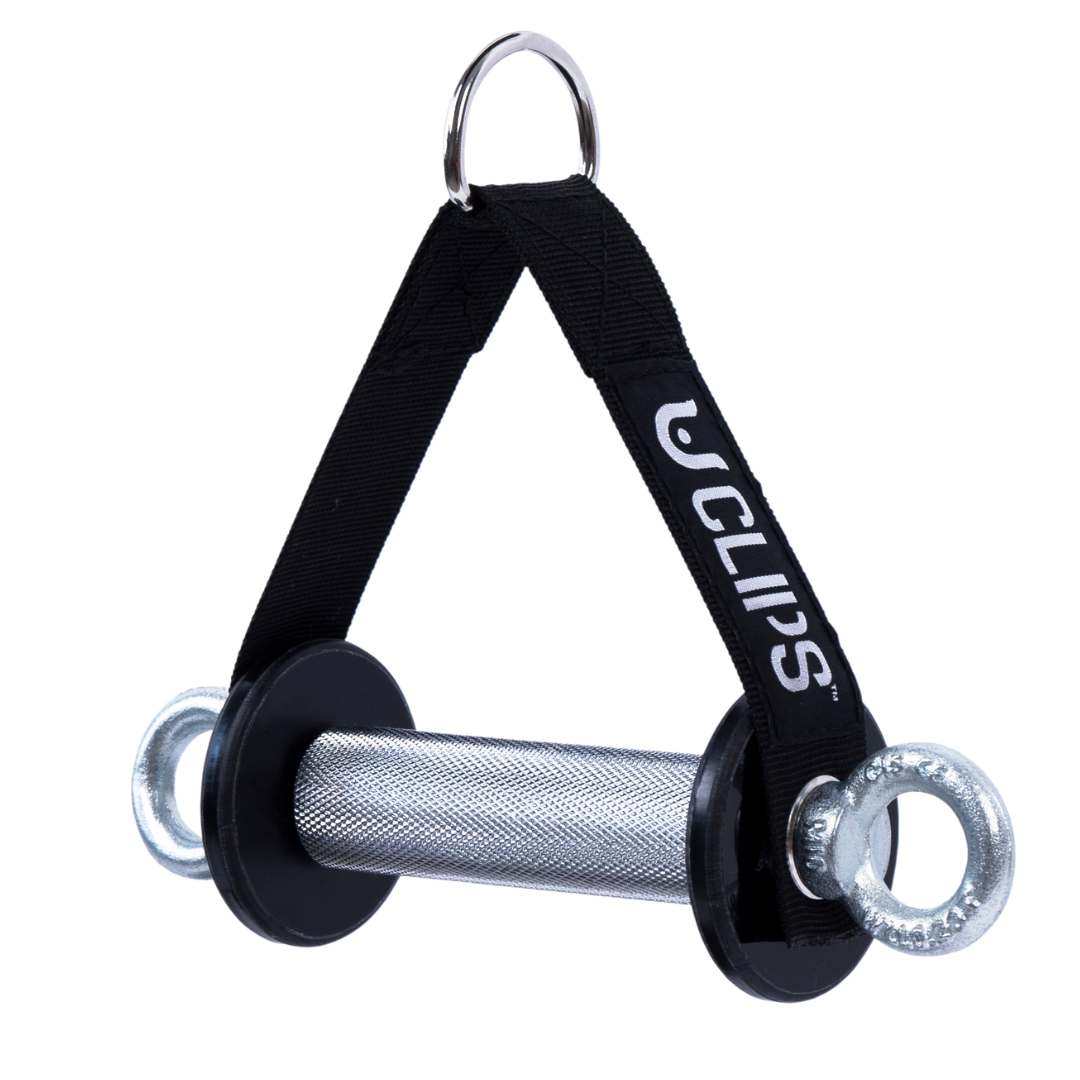

Grip Plates
Rubber-coated weight plates with handholds for loading barbells and machines.

GymPin Barbell Row Handle
Heavy-duty handle attachment for barbell, landmine and T-bar rows.


Cast Iron Kettlebells
Textured cast-iron kettlebells for swings, squats, carries, and full-body training.


Power Tower
Freestanding pull-up and dip station with adjustable handles for bodyweight training.

GymPin D Handle Bar
Multi-use steel D-handle bar for cable rows, pulldowns and other cable exercises.

48in Aluminum Lat Bar
48-inch aluminum lat pulldown bar with knurled grip and rotating center swivel.
The real achievement behind 47.17 seconds is patient specialization applied to an exact standard. Respect the athlete, the rules and the context, then build a training goal that helps your own lifting rather than making every grip session an attempt to imitate a world record.