Can lifting weights make life with migraine easier? Exercise is often described as either a healthy habit or a possible headache trigger, with little room between those extremes. A 2026 mechanistic review brings resistance training into the conversation, particularly for women. The promising part is that some exercise trials report fewer migraine days. The important qualification is that research is not yet strong enough to prescribe a single lifting program as a proven migraine treatment.
That distinction matters for anyone who wants to train but worries that a hard set, heat, dehydration or a sudden increase in effort might bring on an attack. Strength training can be adapted. It does not have to mean maximal deadlifts, breath-holding or pushing every set to failure.
Why Researchers Are Looking at Strength Training for Migraine
Migraine is a neurological disorder, not simply a headache caused by tight muscles. Attacks may involve nausea, sensitivity to light, sensory changes and, for some people, aura. Hormonal fluctuations can influence susceptibility, which is one reason researchers often examine women separately.
Resistance exercise may influence systems that intersect with migraine biology: cardiovascular regulation, stress responses, inflammation and pain modulation. These are plausible connections, not proof that a dumbbell corrects a particular neurological mechanism.
For someone training at home, the useful question is whether consistent, tolerable resistance exercise could become one component of a broader management plan. It may, especially alongside appropriate clinical care, sleep, hydration and comfortable aerobic activity. The goal is to explore that possibility without confusing a research hypothesis with a guaranteed result.
What the Exercise Trials Actually Found
A 2025 network meta-analysis combined 27 randomized trials involving 1,611 participants. In its statistical ranking, combined aerobic and resistance exercise performed best for reducing migraine burden, with resistance training alone also ranking favorably. Those results deserve attention because they look beyond a single small experiment.
But a ranking is not proof that one activity is universally superior. The researchers rated the certainty of evidence as low to very low. Training programs differed, participants had different migraine presentations and many trials were small. A pooled standardized effect cannot be translated into a reliable promise that an individual will have a particular number of fewer attacks.
A separate review of whole-body resistance exercise found only two eligible studies for its narrower question, covering migraine and vestibular migraine. Its estimates were encouraging, but the limited and mixed evidence base restricts confidence. A 2026 review focused on neck strengthening found a clearer signal for improved migraine-related disability than for attack frequency or intensity. Those are different outcomes, and they should not be blended into one sweeping claim.
The emerging picture is cautiously positive: exercise may help some people manage migraine, and strength work deserves more rigorous testing. It is not yet possible to name an optimal barbell load, exact weekly set count or universal migraine-specific exercise selection.
Practical takeaway: judge a routine by tolerability, consistency and longer-term symptom patterns rather than whether one session felt unusually good.
Equipment Worth Exploring
Explore equipment, accessories and gear from our carefully selected range.


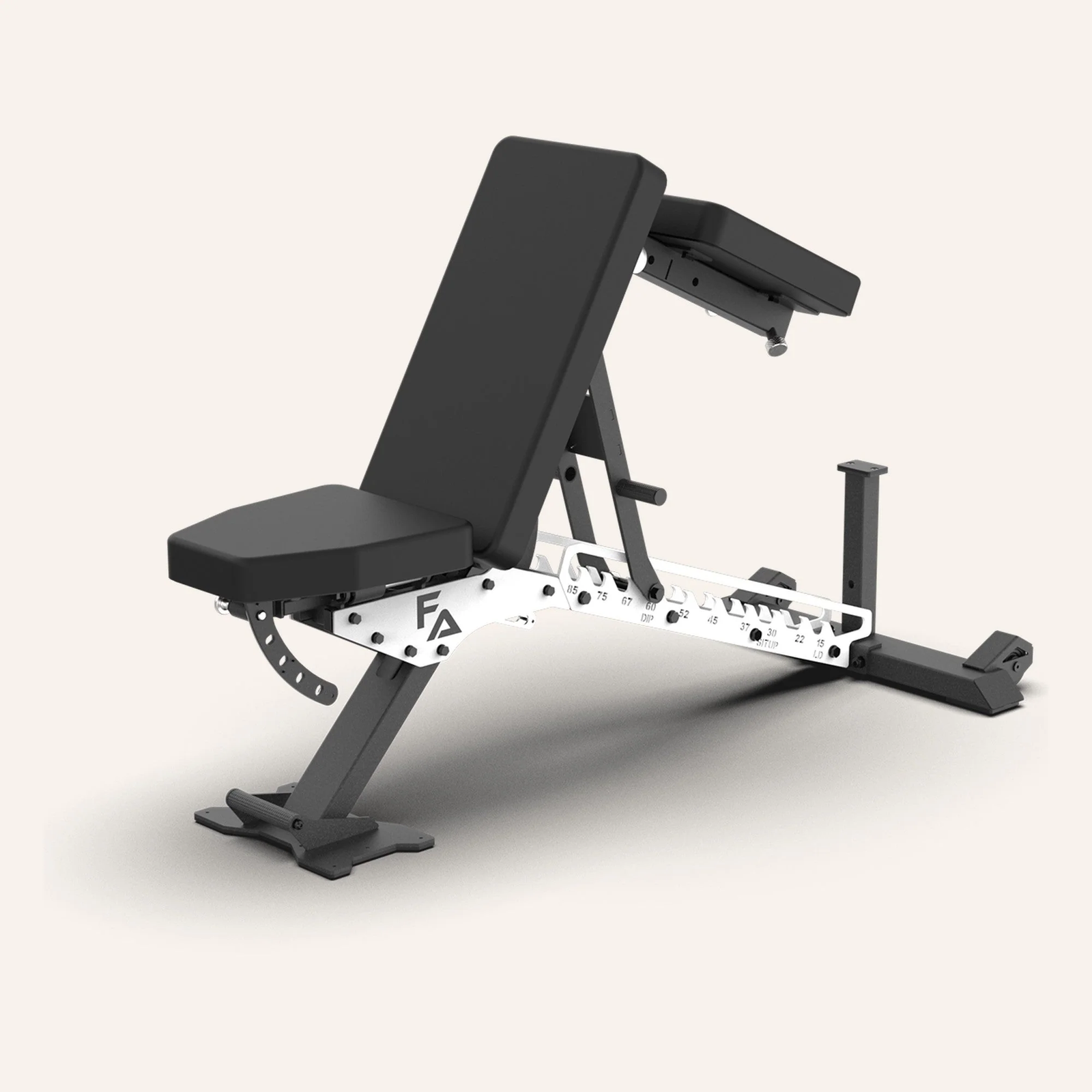
FID Bench MAX
Adjustable bench offering flat, incline, and decline positions + adjustable headrest.

VOLTRA
Compact digital cable trainer with smooth, adjustable resistance.

Go-Tone Pro
Portable digital cable trainer with up to 66 lb (30 kg) of adjustable resistance.

Gym Girl Shirts & Workout Gear
Gym shirts, tanks and workout gear for women who lift, train hard and live the gym lifestyle.

The Powerlift Girls – Gym Girl Superhero Cartoon Hooded Hoodie
Keep it laid-back with a little “The Powerlift Girls” attitude.

Beauty And The Biceps Meme Hooded Hoodie
Stay casual and show some gym-girl attitude with “Beauty And The Biceps”.

Smash Weights She-Hulk Sweater Girls & Meme T-Shirt
Show some gym-day personality with “Smash Weights”.

Powerpump Girls Female Meme Athletic Shirt Top Tank Top
Train hard, laugh a little, and rep “Powerpump Girls”.

Lifterbell Fairy Girl Meme Gains & T-Shirt
Heavy lifts, good laughs, and a little “Lifterbell Gym Fairy” energy.

Barbie & Barbells Female Leg Day Motivation Hoodie
Bring “Barbie & Barbells” gym humor to lazy days and post-workout plans.

Mona Lifta Mona Lisa Meme Sweater Artistic Meme Top T-Shirt
For laid-back days and gym-girl humor: “Mona Lifta”.

Lifterella Princess Female Meme Athletic Shirt Tank Top
Show some personality between sets with “Lifterella”.

Hello Lifty Cute Sweater & Cats Meme T-Shirt
For laid-back days and gym-girl humor: “Hello Lifty”.

Barbie Leg Day Squats Booty Builder Strong & Gains Hoodie
Show off your leg-day humor in a laid-back “Barbie Leg Day” hoodie.
How Lifting Might Affect Pain, Stress and Recovery
Several biological explanations are reasonable. Regular training can improve cardiovascular fitness, affect autonomic regulation and influence how people respond to stress. Exercise can also change pain-modulating pathways. Each mechanism is relevant to migraine research, but none establishes that lifting fixes the disorder through one confirmed pathway.
Hormonal biology adds another layer. Migraine susceptibility can fluctuate across the menstrual cycle and during perimenopause. That does not mean every woman should schedule heavy workouts according to a rigid hormone calendar. Individual symptom diaries are more useful than assuming everyone responds identically to the same phase.
There is also a behavioral explanation that requires no elaborate molecular claim. A manageable training routine can create predictable activity, support sleep and improve confidence in movement. Those benefits matter even if headache frequency stays unchanged. Conversely, a program that causes prolonged fatigue, missed meals or anxiety about the next session may undermine its usefulness.
Do not mistake a lower headache score after training for proof of a direct neurological effect. Medication, stress, hydration, sleep and ordinary variation in attack frequency can all influence outcomes. Track several variables together and change only one or two training factors at a time. Consistency makes the log easier to interpret.
What the Evidence Does Not Prove
It does not show that lifting cures migraine, that women should stop preventive medication, or that heavy strength training beats every other activity. It also does not show that resistance training is safe for every headache presentation. Sudden severe headaches during exertion, new neurological symptoms or a major change in headache pattern deserve medical evaluation rather than a workout adjustment.
The difference between acute exercise response and long-term adaptation is important. Some people feel better after moderate activity; others experience exertion-related headaches. A beneficial average across trials cannot predict an individual’s immediate response to a heavy squat set. Trial participants are typically screened, and results may not transfer to someone with uncontrolled blood pressure or another medical condition.
Another limitation is what resistance training actually means. One trial may use supervised machines at moderate effort; another may emphasize neck-specific exercises or a mixed exercise program. Calling both simply lifting hides differences in exercise selection, total work, progression and rest. The evidence does not justify a migraine-specific ranking of dumbbells, cables, barbells and bodyweight movements.
For now, think of strength training as a potentially helpful addition to individualized migraine care, not a replacement. Anyone with frequent or disabling attacks should discuss exercise plans with a clinician familiar with their symptoms and medication.
Reduce Avoidable Triggers Before Increasing Intensity

The safest starting point is not a particular exercise. It is a routine that makes abrupt changes less likely. Warm up gradually for five to ten minutes, avoid training when severely dehydrated or under-fueled, and choose temperature and lighting that feel tolerable. Some people find bright lights, heat or rapid transitions in effort especially uncomfortable.
Begin with a conversational level of effort. During resistance exercises, breathe steadily and exhale through the demanding portion instead of deliberately holding your breath for long periods. Rest enough between sets to keep technique and breathing controlled. There is no need to turn every workout into a high-intensity circuit to obtain strength benefits.
If a session appears to trigger symptoms, record what happened before assuming the exercise alone was responsible. Note sleep, meals, caffeine changes, hydration, menstrual timing where relevant, room temperature and when symptoms began. Repeated patterns are more informative than one difficult day.
Stop and seek medical advice for a new exertional headache, unusually severe pain, fainting, weakness, speech problems or other concerning neurological symptoms. A sudden thunderclap headache warrants emergency assessment. Do not try to train through an active attack simply to complete a plan.
Once a comfortable baseline is established, increase either weight or total work modestly, not both at once. If symptoms worsen, return to the last tolerable workload and review the change with a healthcare professional.
Equipment Worth Exploring
Explore equipment, accessories and gear from our carefully selected range.


Leather Lifting Straps
Padded leather straps support grip during heavy rows, deadlifts and pulling exercises.

Safety Squat Handles
Barbell squat handles that reduce shoulder positioning demands during high-bar squats.


Leg Day Shirts & Workout Gear
Leg-day gym shirts and workout gear for lifters who never skip squats, lunges and lower-body punishment.

I Love Squats | Valentine's Leg Day with Black Heart We T-Shirt
Show some leg-day attitude with a playful “I Love Squats” tee.

Squat You Must Star Wars Leg Day Meme Hooded Hoodie
Show off your leg-day humor in a laid-back “Squat You Must” hoodie.

Skeleton Deadlift – Meme Deadlift Lovers, Leg Day & T-Shirt
Show some leg-day attitude with a playful “Skeleton Deadlift” tee.

Uncle Sam Squats Funny Patriotic Gym – USA Meme Hooded Hoodie
Make your off-duty look more fun with “Uncle Sam Squats Funny Patriotic”.

Swolebob Squatpants Gym | Funny SpongeBob Meme Workout Sticker
Bring “Swolebob Squatpants” attitude to your water bottle or laptop.

Powerlift Deadlifts Powerage Album Cover Parody AC/DC H Hoodie
Keep it laid-back with a little “Powerlift Deadlifts” attitude.

I Want You To Squat Uncle Sam Patriotic – Funny 4th of Tank Top
Show some personality between sets with “I Want You To Squat Uncle Sam Patriotic”.

Zombie Deadlift Lifting Dead Halloween T-Shirt
Add a playful “Zombie Deadlift” touch to your casual rotation.

Deadlift You Must Star Wars Yoda & Leg Day Gains Hoodie
Keep it laid-back with a little “Deadlift You Must” attitude.

Stars Stripes & Squats Patriotic Eagle – 4th of July Wo Tank Top
Add some leg-day attitude to training with “Stars Stripes & Squats Patriotic Eagle”.
A Gentle Two-Day Strength Plan
This example is for an adult medically cleared for exercise who wants a conservative starting structure. It is not a tested migraine treatment protocol. Schedule two nonconsecutive sessions of roughly 25 to 35 minutes. Begin with one or two sets per movement and leave several repetitions in reserve. The objective is consistent practice, not a personal record.
Day A: five minutes of easy walking or cycling; supported squat to a bench or light leg press for 2 sets of 8–10; chest press or incline push-up for 2 sets of 8–12; seated cable or dumbbell row for 2 sets of 10–12; then an easy cooldown. Use loads that permit clean, unhurried repetitions and steady breathing.
Day B: a similar warm-up; light hip hinge or Romanian deadlift for 2 sets of 8–10; step-up or split squat with support for 2 sets of 6–10 each side; neutral-grip pulldown for 2 sets of 10–12; and a gentle carry or another comfortable core exercise if tolerated. If a movement repeatedly provokes symptoms, substitute a simpler version or skip it pending advice.
For the first two weeks, aim for an effort around 5–6 out of 10. If sessions remain comfortable, progress toward 6–7 without training to failure. Small increases are enough. The same muscles can be trained with machines, cables, dumbbells or bodyweight; no specialized product treats migraine.
On other days, comfortable walking or cycling may complement strength work. Keep aerobic intensity moderate at first. Combined exercise looks promising in the research, but adding more and more work is not necessarily better.
Use a Four-Week Log to Judge the Plan
Without a baseline, it is easy to mistake a good or bad week for a training effect. Before starting, record a typical week of migraine days, attack severity, medication use, sleep and physical activity. Track the same measures for four weeks while keeping the strength routine relatively stable. This is a practical first audit, not enough to establish a clinical treatment effect.
Week 1: learn the movements and identify a tolerable session length. Record workout times, immediate symptoms and whether you needed to stop early. Week 2: repeat the same loads and check whether the routine feels easier. Week 3: if symptoms are stable, add one or two repetitions to selected sets rather than increasing every exercise. Week 4: review your notes for trends, not isolated sessions.
Compare migraine days and severity with your usual variation. If training becomes more comfortable while headaches remain unchanged, that may still represent progress in strength, confidence and activity tolerance. If attacks worsen, reduce intensity or volume and discuss the pattern with your clinician. Do not independently change prescribed medication because of a workout diary.
The most useful conclusion is deliberately modest. Regular resistance training may be one more tool for some people living with migraine, especially as part of a balanced activity plan. The science is promising but uncertain, and a routine that fits your symptoms and daily life is more valuable than chasing an unproven perfect program.