Advertising disclosure: This page includes affiliate product links that may earn us a commission, as well as products from our own store.
Landmine Press: Half-Kneeling vs Standing, Bar Path and a Six-Week Shoulder Plan
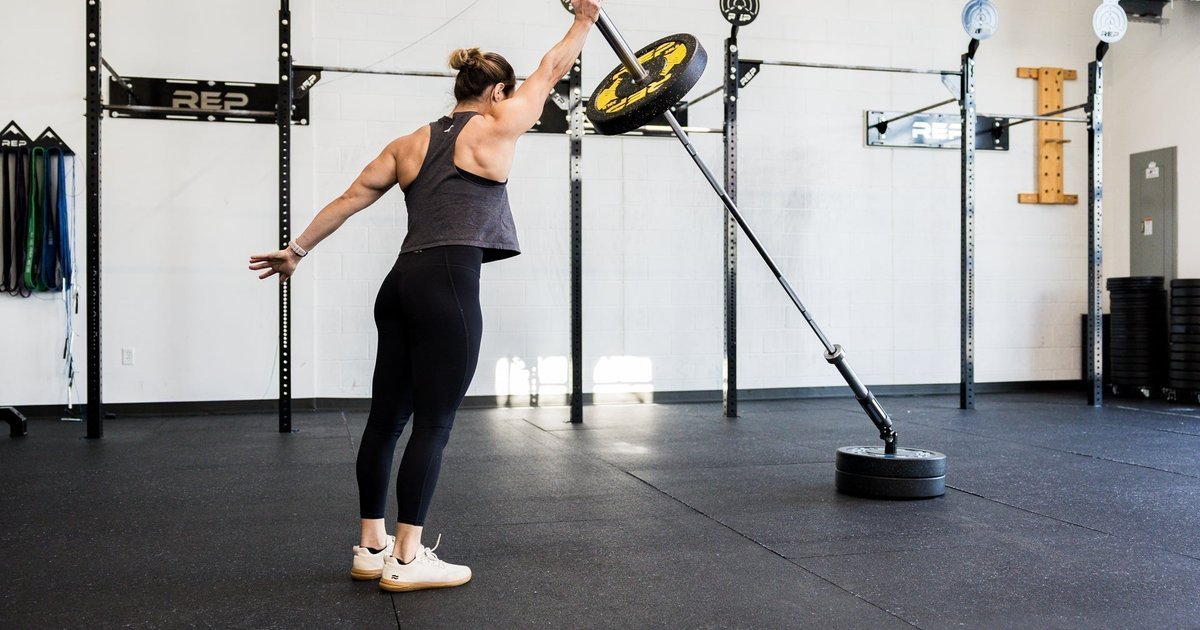
A landmine press looks simple: one end of a barbell pivots near the floor while you drive the other end away from your shoulder. Yet stance, distance from the pivot and the direction of the press determine whether it feels controlled or turns into a low-back extension contest. The diagonal path makes this a useful alternative when a straight overhead press is awkward, but it is not a guaranteed fix for painful shoulders. Here is how to set it up, compare half-kneeling with standing and progress it over six weeks.
Secure the landmine anchor and set the starting angle
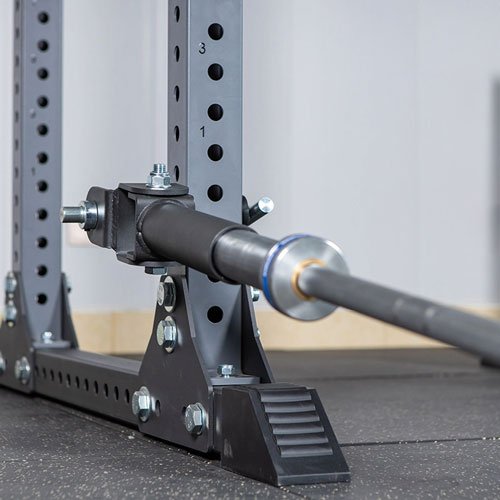
Start with a purpose-built landmine sleeve attached to a rack or a securely weighted floor base. The bar needs to rotate smoothly through its natural arc, and the pivot must not skate across the floor. Check the sleeve, retaining hardware and barbell end before every working set. A rack-mounted attachment should be installed according to its manufacturer’s instructions and inspected for any movement. Do not rely on a loose barbell end pushed against a fragile wall or painted corner as though it were a secure landmine station.
Load small plates on the free sleeve only after testing the movement with the empty bar. The weight you feel at the handle is not identical to the total weight printed on the bar and plates: some mass is supported near the pivot, and the effective resistance changes as the bar rises. Different bar lengths, attachment heights and starting angles also change the feel. Comparing loads across two landmine setups therefore requires more than reading the plates.
Stand or kneel so the free end begins close to the working-side shoulder. Your elbow points somewhat in front of the torso rather than stretching far behind it. Use a secure grip around the sleeve or an appropriate handle, keep wrists in line with the forearm, and leave enough ceiling and forward clearance for the full arc. Clear people and loose equipment from the movement path. If the bare bar already pulls you forward, shorten your range or adjust your distance before adding weight.
Follow the diagonal pressing arc instead of chasing a vertical press
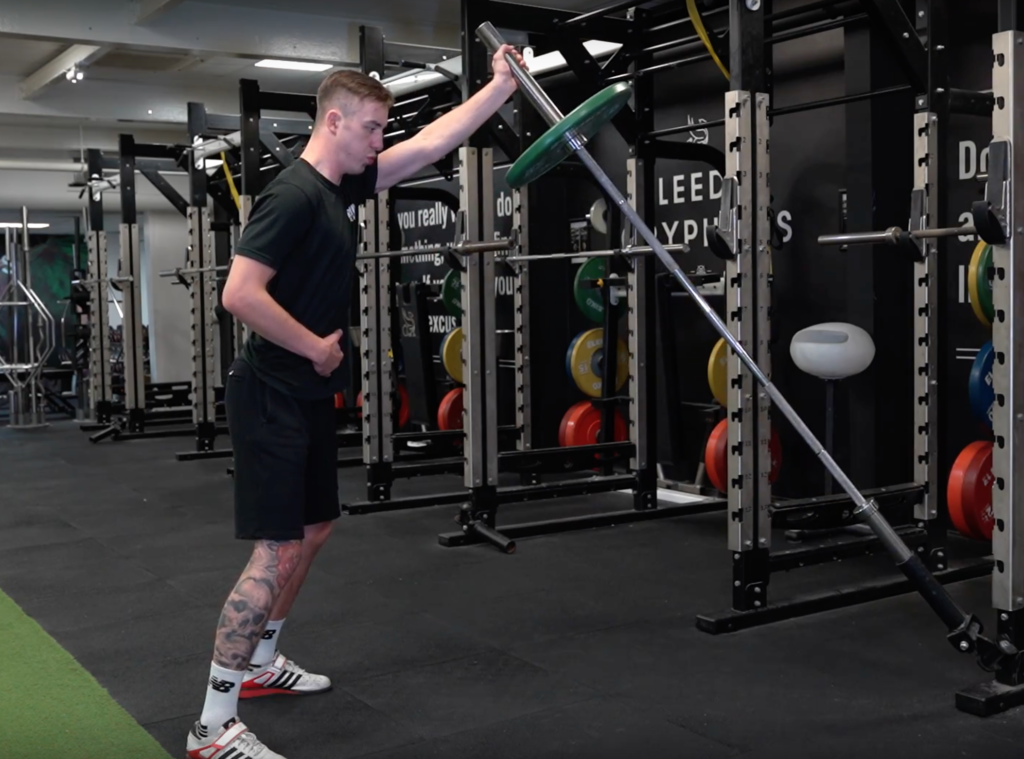
The characteristic landmine line is up and forward, not straight toward the ceiling. Imagine pushing the bar away along its fixed arc while your shoulder blade is free to rotate upward around the rib cage. You do not need to pin your shoulder blades down throughout the motion. For a one-arm rep, begin with the handle around shoulder level, keep the elbow slightly forward of the body and press until your arm approaches a comfortable straight position. Bring the bar back slowly to the same start.
The anterior deltoid and triceps help extend the arm, while upper-chest fibers may contribute depending on torso and bar angle. The serratus anterior and other shoulder-blade muscles help organize the scapula, and the trunk has to limit unnecessary rotation. No single muscle works in isolation, nor should you interpret a strong sensation in one muscle as proof it grew more from this lift than from another press.
On every repetition keep your ribs stacked above your pelvis and allow a natural reach at the top without hunching aggressively. A slight whole-body lean into the bar can be compatible with the movement, but using a large back arch or leg dip converts a strict rep into something else. Try two or three light sets, film from the side and look for a repeatable bar path. If each rep begins at a different height, stabilize your stance or reduce the load.

Equipment Worth Exploring
Explore equipment, accessories and gear from our carefully selected range.




Foldable Wall Rack
Wall-mounted folding squat rack designed to save floor space between workouts.
Half-kneeling versus standing: choose the right base
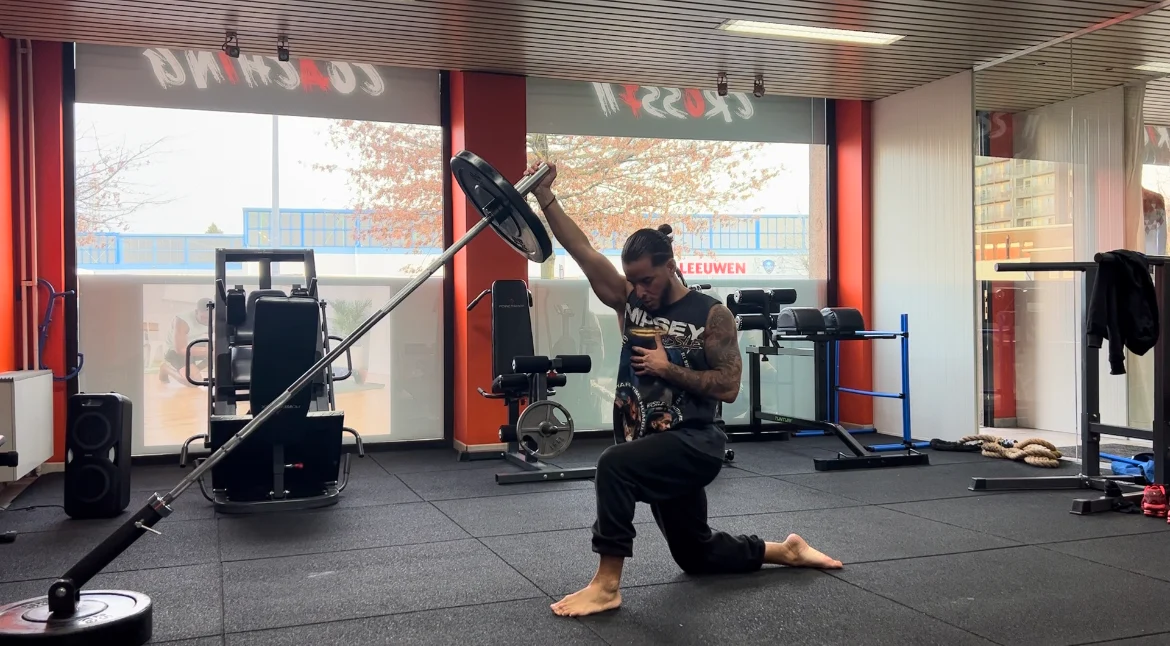
For the half-kneeling version, put the knee on the same side as the pressing arm on a pad, with the opposite foot planted ahead. Position both hips approximately square toward the landmine. The front knee bends comfortably, the rear glute stays engaged and the torso remains upright enough that the press does not become a falling-forward catch. This stance reduces your ability to create momentum from your legs, making it useful for controlled technique practice.
Standing usually makes loading and setup faster. Place your feet approximately hip- to shoulder-width apart and soften the knees without deliberately bouncing. Press with one arm while keeping the hips and shoulders mostly facing the pivot. A split stance is also valid; it can provide extra front-to-back stability. The best stance is the one that keeps your balance, shoulder comfort and bar trajectory repeatable at the intended effort.
Neither stance is automatically superior for shoulder growth. In half-kneeling, an inexperienced lifter may find it easier to notice excessive hip movement and rib flare. Standing lets stronger lifters train heavier and may transfer well to athletic pressing, but it also permits subtle leg help. If you train both sides, match reps, range and proximity to technical fatigue rather than letting the stronger side dictate an unrealistic load. Begin on the less coordinated side and use its clean reps as the ceiling for the other.

Bodybuilding Shirts & Workout Gear
Bodybuilding shirts, tanks and gym gear for lifters chasing muscle, size, symmetry and the pump.


Chest Day Sweater Bench Press & Meme T-Shirt
Add a playful “Chest Day” touch to your casual rotation.

I Love Bench Press Gym | Funny Heart Plate Muscle Shirt Tank Top
Add some lifting attitude to training with “I Love Bench Press”.

Raise The Barbell Shirt – Motivational & T-Shirt
Show some powerlifting attitude with a playful “Raise The Barbell” tee.

Rep God | Rap Music Workout Pullover & Gains Hoodie
Stay casual and show some lifting attitude with “Rep God”.

Be Happy Lift Heavy Happy Weights Emoji Weight Plate De Sticker
Give your everyday gear a playful “Be Happy Lift” twist.

Strength Stoic Bodybuilder Greek God Marble T-Shirt
Bring “Strength Stoic Bodybuilder Greek God Marble” humor to your next gym day.

Lift Heavy – Hardcore Heavy Metal Gym Muscle Shirt for Tank Top
Bring “Lift Heavy Tank” humor to your next lifting session.
Protect the shoulder by fixing these four common mistakes
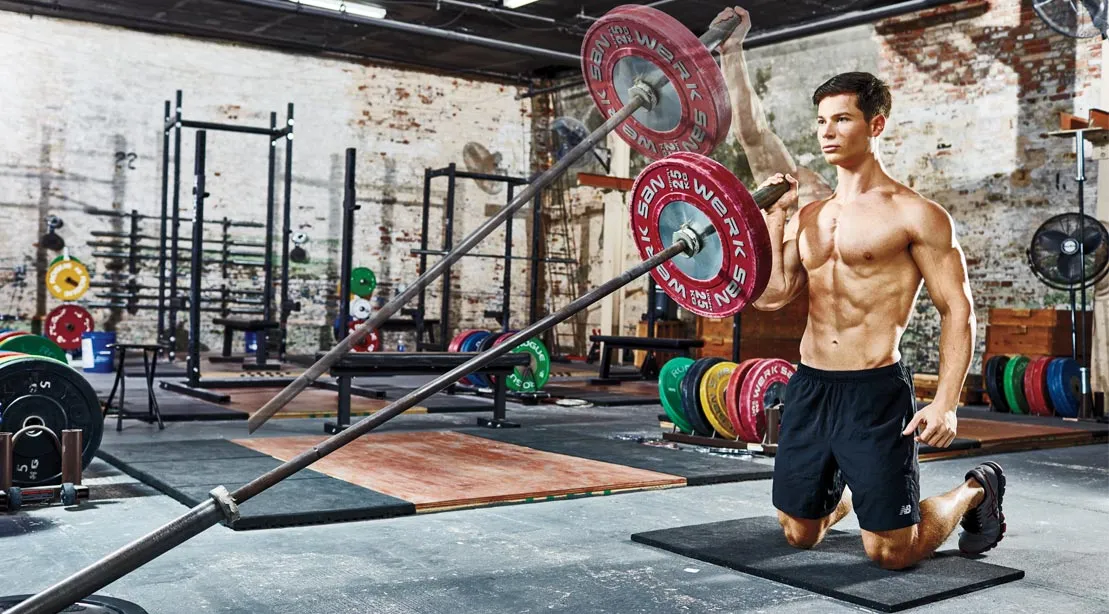
First: overextending the lower back. If the rib cage lifts and the pelvis tips forward at lockout, your lower spine is contributing movement that the exercise did not require. Exhale lightly before the press, brace your abdomen, squeeze the glutes and use a load that allows your torso to stay organized. You do not need to lock every joint rigidly, but you should be able to stop the bar on demand at any point.
Second: starting too deep. Pulling the elbow well behind the torso to get extra stretch can force an uncomfortable position. End the lowering phase when your hand is just in front of or beside the shoulder, depending on the setup. The relevant range is the one you can control pain-free, not the largest possible arc. If one grip or angle causes a sharp pinch, stop and try a less irritating setup instead of pressing through it.
Third: twisting toward the loaded side. In unilateral work, keep the sternum and hips facing the landmine instead of rotating the whole body with each rep. Slow the eccentric phase, or switch temporarily to two-hand pressing to establish control. Fourth: trying to turn the lift into a strict vertical overhead press. The pivot fixes the bar path. Fighting its diagonal arc often creates awkward wrist and shoulder positions. Follow the bar rather than forcing it into a line it cannot take.
Temporary muscle effort is expected; sharp joint pain, numbness or pain that worsens with each set is not something to train through. Persistent shoulder symptoms, a recent injury or a loss of strength deserves individual assessment by a qualified clinician. Describing the landmine press as frequently tolerable for some lifters is more accurate than calling it universally safe or therapeutic.
How it compares with overhead presses and incline pressing
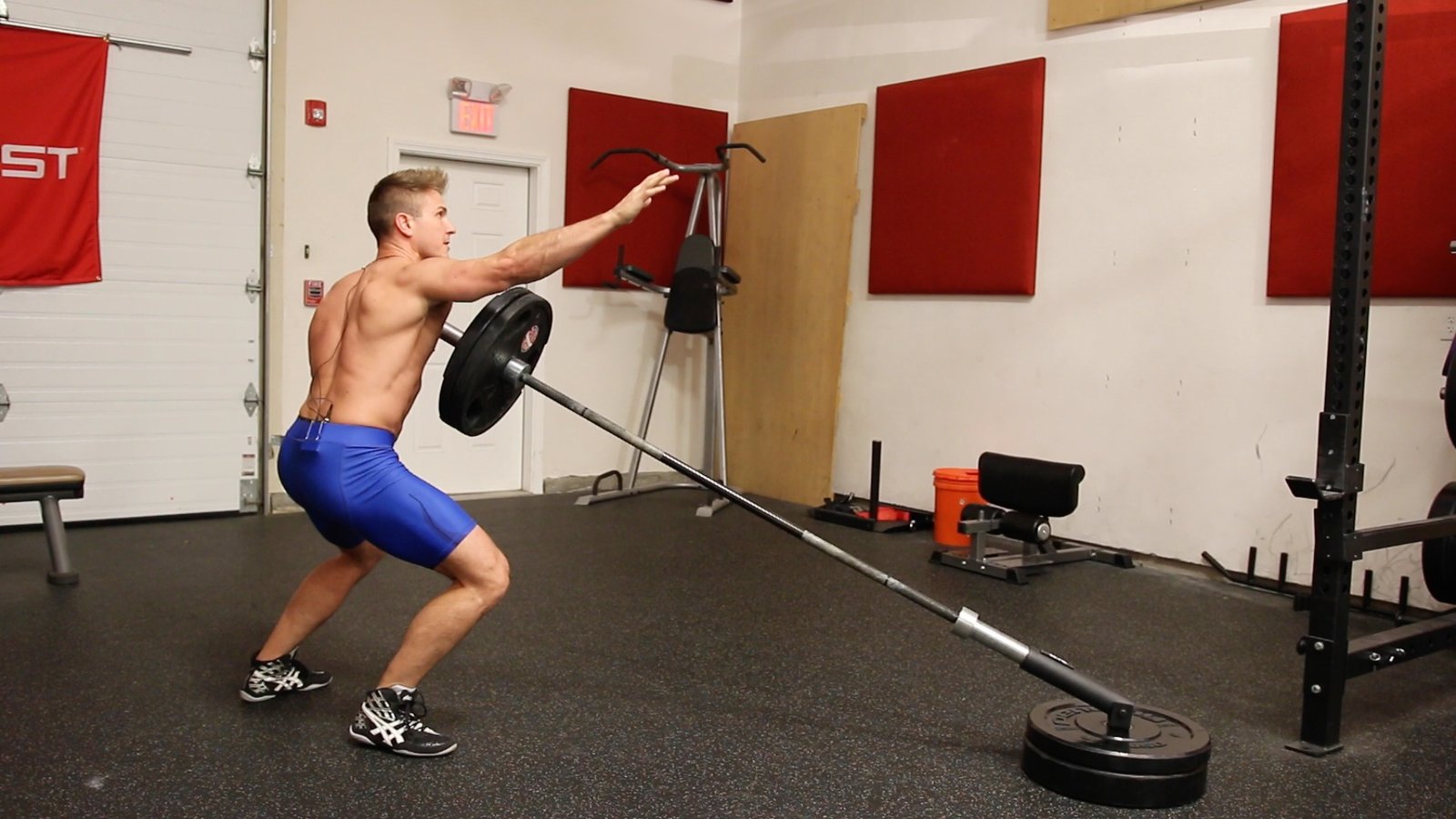
A strict dumbbell or barbell overhead press sends the load closer to vertical and generally asks for more shoulder elevation. An incline press places the lifter on a bench and shifts the arm path into a forward/upward angle, usually with substantial chest involvement. The landmine press sits between those patterns in a practical sense: its bar travels diagonally and the standing version asks the trunk to contribute balance. These are differences in task and leverage, not evidence that one exercise wins every hypertrophy comparison.
If your goal is maximal performance in the barbell overhead press, keep practicing that movement when tolerated. A landmine press can supplement it, providing additional pressing volume with a different path and possibly a more comfortable reach. If your priority is chest development, an incline dumbbell or machine press may offer a more straightforward way to load the pecs through a large range; use the landmine press if it fits a specific movement or comfort need, not because it secretly replaces every chest movement.
Think of exercise selection as a joint decision between the muscle you want to train, the loading that can be progressed, your available equipment and your response over several weeks. Track repetitions and effort within the same exercise setup. When comparing standing landmine weights to incline or overhead numbers, remember that changing the pivot, arc and leverage makes raw plate-to-plate comparisons misleading.
Equipment Worth Exploring
Explore equipment, accessories and gear from our carefully selected range.

T-Bar Row Attachment
Welded barbell attachment that connects a D-handle bar for landmine and T-bar rows.


Lever Arm Multi Press LMP-650
Multi-press with independent lever arms and an integrated adjustable bench for upper-body training.


Rubber Hex Dumbbells
Rubber-coated hex dumbbell pairs with a stable shape for home and commercial strength training.


FID Bench MAX
Adjustable bench offering flat, incline, and decline positions + adjustable headrest.
Useful variations and the equipment that changes them
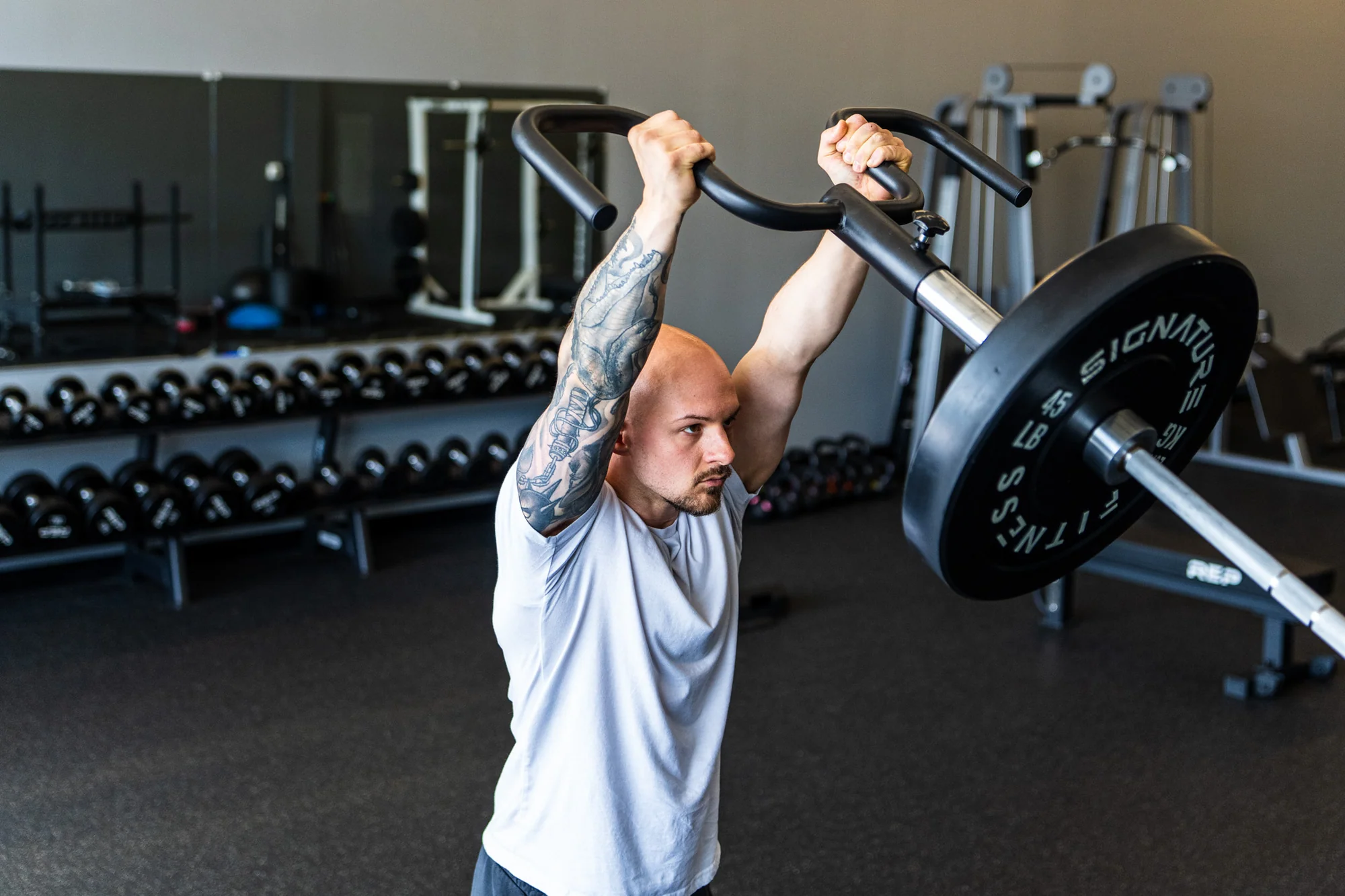
The single-arm strict press is the simplest starting point for most lifters. A two-hand landmine chest-style press is a reasonable alternative when unilateral balance or grip tolerance limits quality. Holding the end of the bar with both hands lets you push symmetrically, but the stance and elbow position may bring the movement closer to a chest press. If you want an additional challenge to resist torso rotation, return to one arm and reduce the load until your hips stay square.
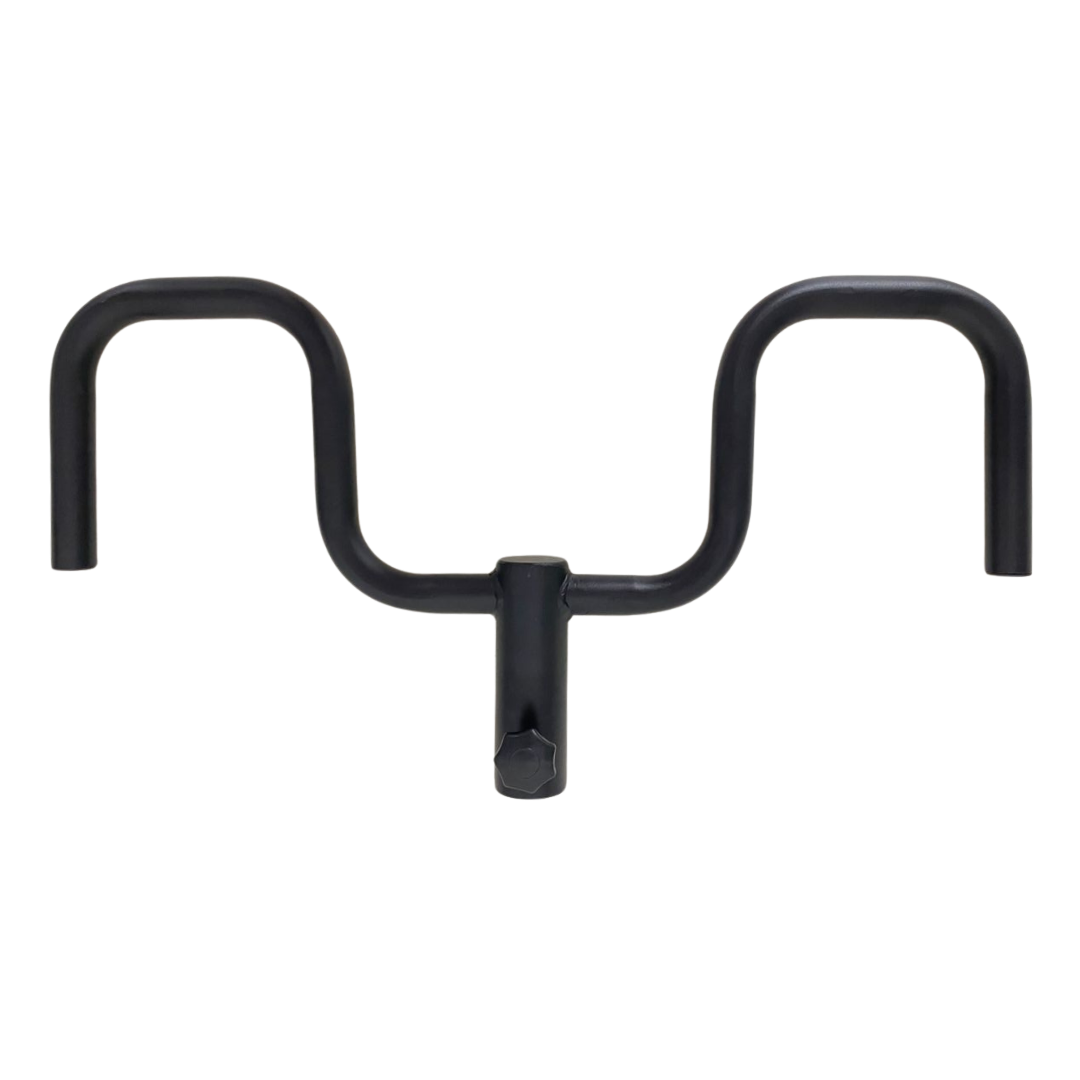
A Viking-style landmine handle allows a two-hand grip with handles away from the sleeve. It can make pressing more comfortable for some people and easier to load heavily, but the handle’s weight and distance from the pivot affect resistance. It is not interchangeable with a bare-sleeve one-arm press for tracking progress. A rotating landmine base, sturdy rack and collars are more important purchases than exotic handles if the basic pivot is unstable.
For power, a landmine push press uses a deliberate shallow dip and coordinated leg drive; label these sets separately because they are not strict pressing reps. For shoulder muscle work, first master controlled two- to three-second lowerings and a consistent top position. Bands may increase resistance farther into the arc, but they introduce another variable and should be attached only if the band path is secure. Skip added complexity until the basic movement feels natural.
Funny Gym Shirts & Workout Gear
Funny gym shirts, tanks, hoodies and workout gear for lifters who like training hard.


Pressure Stoic Tee
Make gym days more fun with “Pressure Stoic Sigma Greek God Marble” style.

Stronger Than Excuses Tank
Show some personality between sets with “Be Stronger Than Your Excuses”.

Grip Strength Fanatic Meme Hoodie
Show off your lifting humor in a laid-back “Grip Strength Fanatic” hoodie.

Bench Press and Chill Funny Gym T
Make gym days more fun with “Bench Press and Chill” style.

Strong Inside And Out Shirt Weights And Brains Meme T-Shirt
Rep “Strong Inside And Out” humor in and out of the gym.

Squat Bench Deadlift Read Shirt Literary Bookworm Top T-Shirt
Bring “Squat Bench Deadlift Read” humor to your next gym day.

Heavy Barbell – Meme Shirt & Top T-Shirt
Make gym days more fun with “Heavy Barbell Powerlifting Graphic” style.

Ultimate Bench Press Tee
Heavy lifts, good laughs, and a little “Ultimate Bench Press” energy.

Barbell Country Club Shirt Meme Top & T-Shirt
Heavy lifts, good laughs, and a little “Barbell Country Club” energy.
A six-week progression with measurable, clean reps
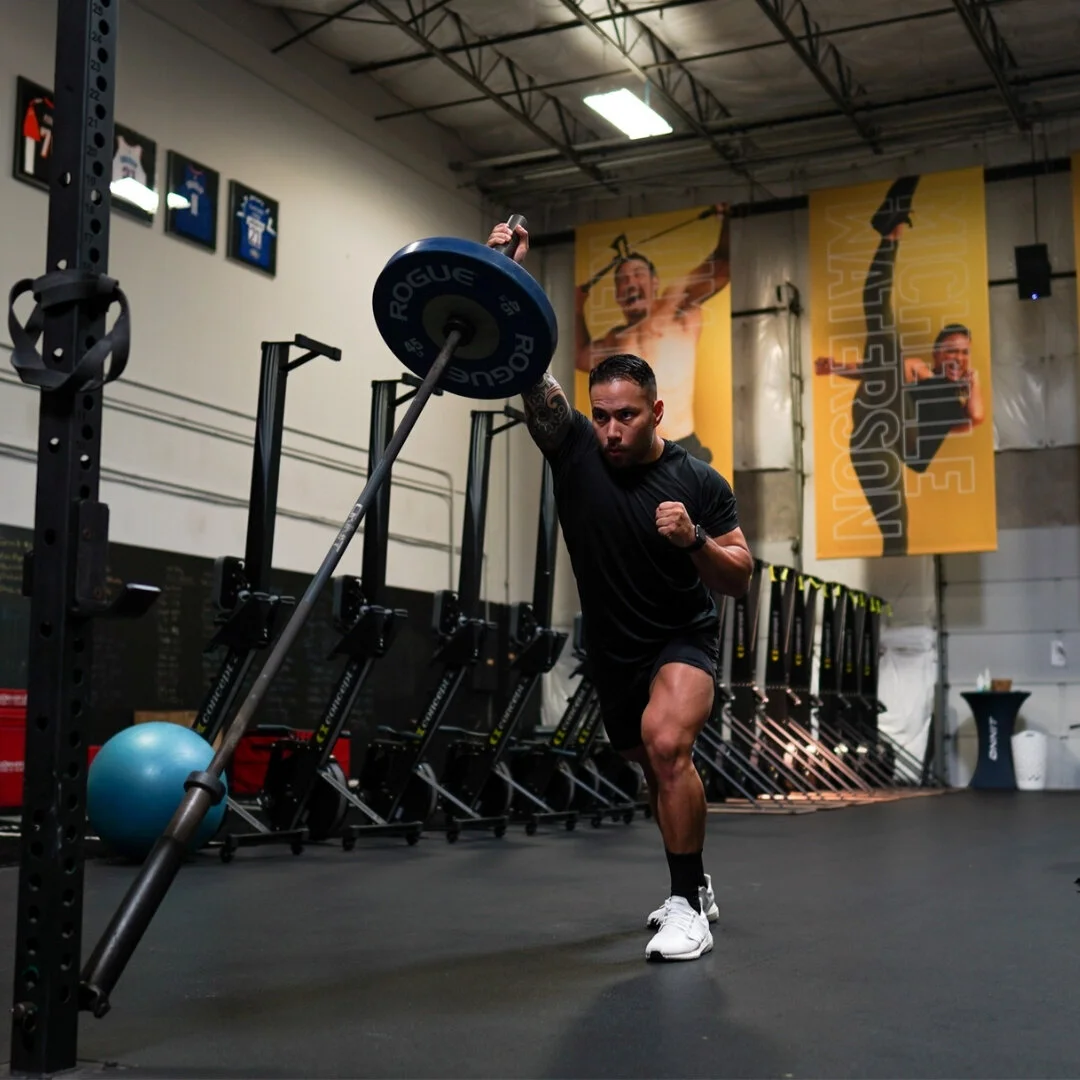
Train this lift once or twice per week after an upper-body warm-up, leaving at least a day between hard sessions if your shoulders need it. Start each workout with a few easy arm circles, a light press and gradually heavier rehearsal sets. The plan below is a practical example, not a laboratory-tested six-week prescription. Choose a starting load that permits all planned repetitions with two or three clean reps left in reserve. Keep the attachment, bar length and stance identical when comparing performances.
| Weeks | Prescription | Progress target |
|---|---|---|
| 1-2 | Half-kneeling, 3 sets of 10-12 each side | Same start position; smooth return; 2-3 reps in reserve |
| 3-4 | Half-kneeling or standing, 3 sets of 8-10 | Increase load only after every set reaches 10 clean reps |
| 5-6 | Standing strict press, 4 sets of 6-8 | Hold consistent torso and bar path; progress gradually |
Rest about 90 to 150 seconds between moderate sets, longer if your breathing or trunk fatigue interferes with control. Progress by adding the smallest available plate increment or one repetition per set, not both at once whenever effort is already high. If technique slips, repeat the same load next time rather than forcing progression. On a second weekly day, use lighter two-hand or half-kneeling sets of 10-15 for practice rather than duplicating the hardest session.
Write down the working side, stance, plates, bar and reps. A cleaner set of ten at the same load is progress even if the plates do not change. After six weeks, compare your starting videos with your current reps: does the bar follow the same diagonal line, can you stop a repetition at midrange, and can you work each side without leaning or twisting? If yes, continue building. If your shoulders dislike the movement, substitute a tolerable press and adjust your program rather than chasing a specific exercise.
Bottom line: A stable pivot, comfortable diagonal path and consistent stance matter more than the amount of iron hanging from the bar. Learn the strict press first, then use small, repeatable increases to develop shoulder strength and technique.