Advertising disclosure: This page includes affiliate product links that may earn us a commission, as well as products from our own store.
Do you need hours in the weight room to gain meaningful long-term health benefits? A 2026 investigation following 147,374 adults suggests that consistent, moderate amounts of strength training are linked to lower mortality risk—but its headline 90–119-minute range is not a ceiling for building muscle. Here is what the evidence says, what it cannot prove, and how to combine productive lifting with aerobic work without turning every workout into a stopwatch contest.
What the 147,374-person study actually measured

A new long-term analysis followed 147,374 adults across three large cohorts, including 31,540 men and 115,834 women. Researchers tracked reported weekly resistance-training time and aerobic exercise over periods reaching 30 years, documenting 35,798 deaths. Exercise questionnaires were completed at the start and then at approximately two-year intervals, allowing a more informative view of habits than a single snapshot.
The central question was not whether lifting makes you bigger or increases your one-rep max. It was whether different amounts of strength work were associated with different long-term patterns of death from all causes and specific diseases. The researchers statistically accounted for numerous measured characteristics, including aerobic activity, when comparing groups.
That distinction matters. A person who consistently lifts may also sleep differently, eat differently, have different medical care, or adopt other habits the models cannot perfectly capture. The findings describe associations among people followed over time. They are not an experiment that assigns thousands of lifters to exact training prescriptions and tests whether those prescriptions extend life. It is encouraging evidence about an active lifestyle, not a stopwatch-based guarantee.
The 90–119-minute result, explained without the hype
Compared with participants reporting no resistance training, those reporting 90–119 minutes a week had a 13% lower adjusted hazard of death from any cause in this analysis. The corresponding estimate for cardiovascular death was 19% lower, and for death attributed to neurological disease it was 27% lower. These are group-level relative associations, not absolute percentages of individuals rescued by lifting.
In the analysis, going beyond roughly two hours of strength work was not associated with additional observed mortality reduction. This does not show that 120 minutes is a biological maximum, that longer sessions are dangerous, or that a dedicated bodybuilder should stop training midway through a productive workout. For hypertrophy and maximal strength, a lifter may rationally perform more training than the amount associated with the lowest mortality hazard in an observational sample.
Nor should you turn a precise-looking minute range into fake certainty. These are survey-based time categories; the study did not prescribe exact rest periods, exercises, hard sets, repetitions, effort levels, warm-ups or tempos. Ninety minutes spent taking long breaks between heavy sets is not necessarily the same exposure as ninety minutes of brisk circuits. Treat the result as support for doing resistance training consistently, not an instruction to obsess over the last minute.

Equipment Worth Exploring
Explore equipment, accessories and gear from our carefully selected range.




Rubber Hex Dumbbells
Rubber-coated hex dumbbell pairs with a stable shape for home and commercial strength training.

Power Tower
Freestanding pull-up and dip station with adjustable handles for bodyweight training.

Studio V-Squat
Plate-loaded V-squat machine for supported lower-body strength training.

FID Bench MAX
Adjustable bench offering flat, incline, and decline positions + adjustable headrest.
Training for muscle and training for long-term health can overlap

A well-designed lifting program can develop strength, muscle mass, joint capacity and the skills needed to keep moving confidently. Those are meaningful goals for someone in their twenties, forties or beyond. A longevity-focused approach does not require abandoning progressive overload, but it gives recovery, repeatability and coverage of major movement patterns more weight in programming decisions.
Two full-body sessions weekly are a practical entry point. A squat or leg press, a hinge, a horizontal or vertical push, a pull and some loaded carrying can expose most major muscle groups to useful resistance. In a short session, prioritize a few challenging sets with consistent technique rather than attempting ten unrelated exercises. A workout that you can complete for years has a greater opportunity to support long-term habits than an exhausting experiment you abandon after a week.
More experienced lifters may train four or five days because they want more weekly sets for particular muscles or prefer shorter sessions. Nothing in this mortality analysis invalidates that choice. The useful distinction is between the minimum amount of training that moves your health habits in a favorable direction and the additional volume required for a specific strength or physique goal. One question concerns population-level risk; the other concerns individual athletic adaptation.
Why aerobic work still belongs beside the barbell

The study examined combined aerobic and resistance activity, rather than treating one as a substitute for the other. The lowest observed mortality hazards often appeared among people accumulating substantial aerobic activity alongside lifting. For example, in one comparison, those reporting 30 to under 45 MET-hours of weekly aerobic activity plus 60–119 minutes of strength training had a hazard ratio of 0.55 relative to the reference group with low aerobic activity and no lifting.
A MET-hour is a way of combining approximate intensity and time. It is not a demand that every person duplicate a high-activity subgroup. A moderate brisk walk, an easy bike session and a harder rowing interval session contribute differently, and the best starting amount depends on current fitness and recovery. The broad, practical message is simple: strength training and aerobic fitness serve overlapping but distinct functions.
If your main goal is muscle growth, place intense conditioning where it will not repeatedly undermine your best lower-body sessions. A 20-minute easy ride after upper-body training, two brisk walks on nonlifting days and one optional interval session may be easier to sustain than stacking a brutal run onto every heavy squat day. Build aerobic volume progressively, not as punishment for eating or missing a workout. Consistency and sensible effort matter more than fashionable training labels.

Functional Fitness Shirts & Workout Gear
Functional-fitness shirts, tanks and workout gear for athletes who train strength, conditioning and everything in between.

Gym Is My Happy Place Happy Kettlebell Emoji Graphic Wh T-Shirt
Make gym days more fun with “Gym Is My Happy Place” style.

Happy Kettlebell Emoji Smiley Kettlebell Meme T-Shirt
Show some gym-day personality with “Happy Kettlebell Emoji”.

Kettlebell Heartbeat Crewneck Pullover Sweater Workout T-Shirt
For laid-back days and bodybuilding humor: “Kettlebell Heartbeat”.

Lift Together Grow Stronger for Gym Buddies Who Train T T-Shirt
Show some gym-day personality with “Lift Together Grow Stronger”.

Live Love Lift Hooded Pullover Workout Gymbro Apparel Hoodie
Keep it laid-back with a little “Live Love Lift” attitude.

Vive La Resistance Bands – Resistance Bands Warmup Reha Sticker
Bring “Vive La Resistance Bands” attitude to your water bottle or laptop.

Hybrid Athlete – Strength & Endurance Crewneck for Func T-Shirt
For laid-back days and lifting humor: “Hybrid Athlete”.


HYROX High Rocks Functional & CrossFit Hooded Hoodie
Stay casual and show some lifting attitude with “HYROX High Rocks”.

How to fit useful strength work into two weekly sessions
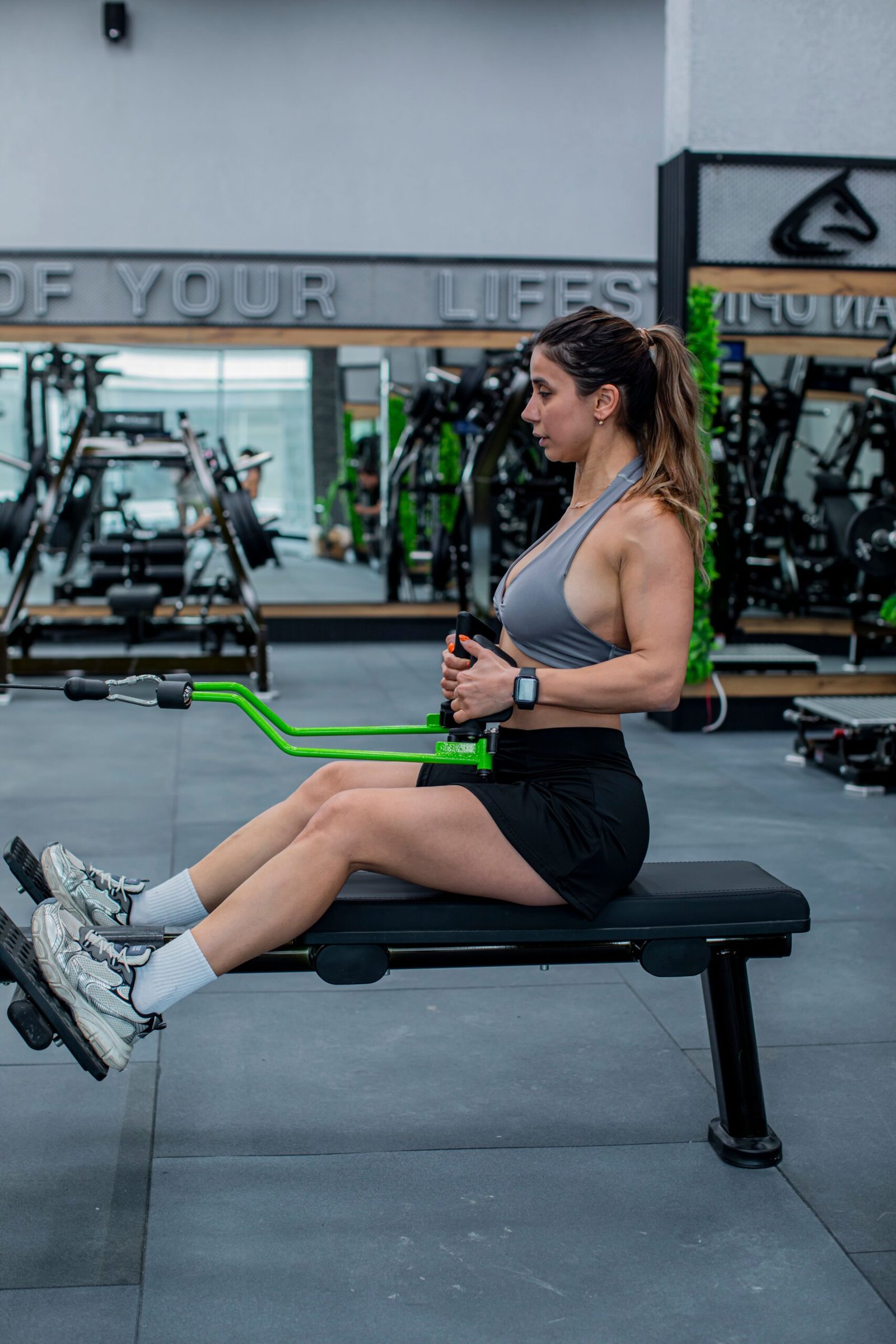
A minimalist plan should still resemble actual training. On the first day, use a squat pattern, a horizontal press and a row, then include a hip hinge or carry. On the second, include a hinge, a vertical press or pulldown, a single-leg movement and a core exercise. Perform two or three controlled working sets of most movements, leaving roughly one to three technically sound repetitions in reserve for the bulk of your work.
For a beginner, that could mean a goblet squat, dumbbell bench, cable row and farmer carry on Tuesday, followed by a Romanian deadlift, overhead press, split squat and pulldown on Friday. Select weights that allow a repeatable range, perhaps six to twelve reps for major movements and eight to fifteen for some accessories. The exact loads are not prescribed by the longevity study; these are practical programming examples based on ordinary strength-training principles.
Start each session with a few minutes of easy movement and specific lighter warm-up sets for the first compound lift. Rest long enough that technique does not deteriorate merely to hit a time target. Write down reps and loads. When all planned sets feel stable near the top of the repetition range, increase the load slightly. If work, travel or soreness threatens consistency, keep a shorter version of the session instead of assuming the week is lost.
An adaptable four-week lifting and cardio template

Weeks one and two should establish a repeatable schedule, not test your limits. Perform the two full-body sessions, each about 35–55 minutes including warm-up, and add two to four low-intensity aerobic sessions of 15–30 minutes. Walking counts as movement, even if you prefer a rowing machine, bike or treadmill for structured conditioning. Choose a level at which you can speak in sentences and recover by the next lifting session.
In week three, progress one variable at a time. You might add a repetition to each set on two key exercises, take a modest load increase, or extend one aerobic session by five to ten minutes. Resist the urge to simultaneously add more weight, more sets, more running and less sleep. For someone who already trains heavily, the better adjustment could be replacing one redundant accessory block with a sustainable cardio session.
In week four, review adherence and outcomes. Did you actually complete your sessions? Are your lifts moving better, is easy cardio more comfortable, and do you feel prepared for another month? If yes, repeat the structure with gradual progression. If not, simplify. This is an illustrative plan for healthy adults who can exercise, not medical advice or a trial-tested life-extension protocol. Anyone with symptoms, medical restrictions or unexplained exercise intolerance should obtain individualized guidance before increasing exertion.
Equipment Worth Exploring
Explore equipment, accessories and gear from our carefully selected range.
VOLTRA
Compact digital cable trainer with smooth, adjustable resistance.


Cast Iron Kettlebells
Textured cast-iron kettlebells for swings, squats, carries, and full-body training.

Competition Plates
Competition-style bumper plates for Olympic lifts and loaded strength training.


Grip Plates
Rubber-coated weight plates with handholds for loading barbells and machines.
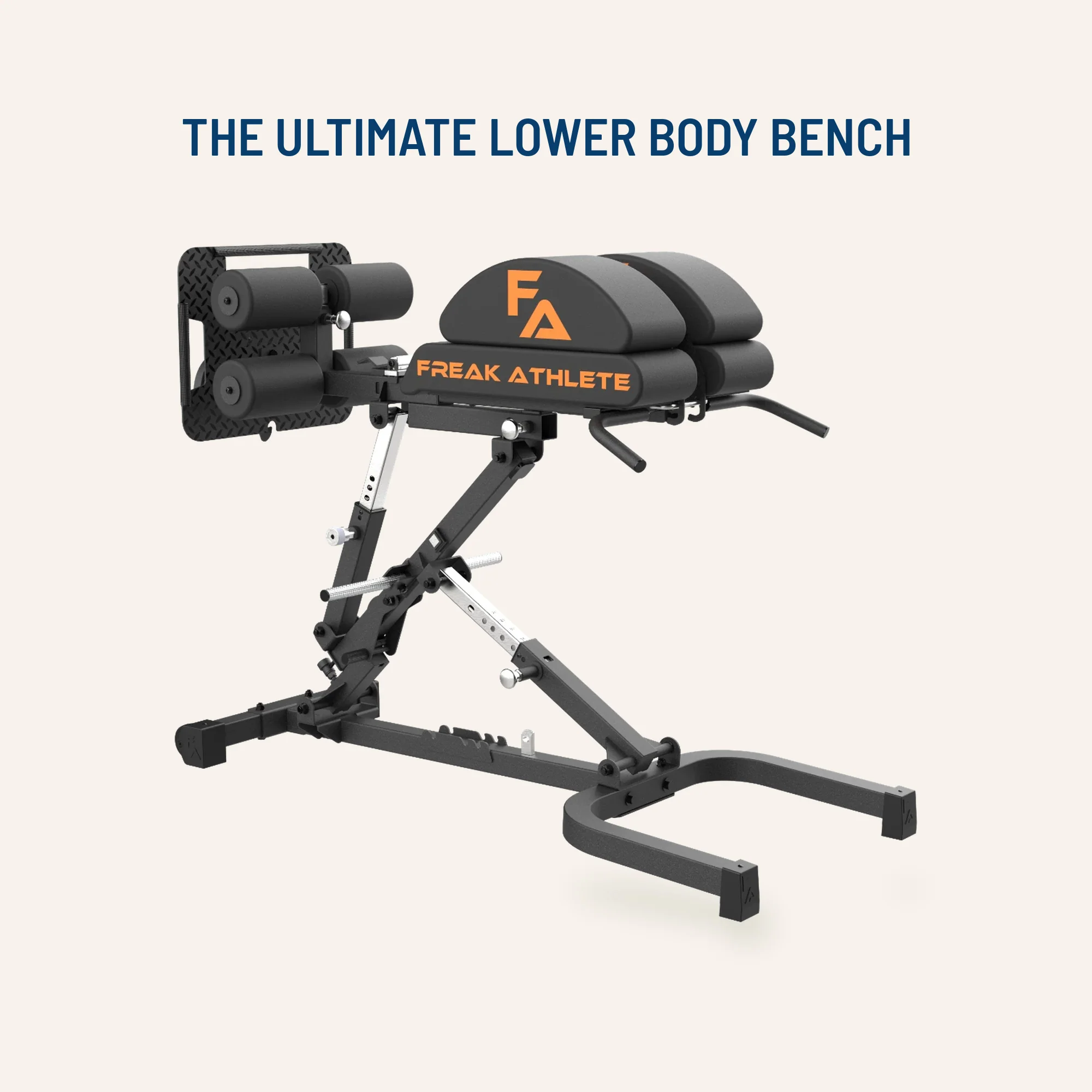

Studio Glute Drive
Plate-loaded hip-thrust machine with supported back pad and adjustable foot platform.

What the research cannot tell you—and what to do next

The biggest limitation is causality. People were not randomly assigned to decades of lifting or no lifting. Even careful statistical models can leave residual differences between groups. Exercise duration and frequency were self-reported, with inevitable measurement error; the datasets also had limited detail on set intensity, specific resistance exercises and training quality. The cohorts included large numbers of health professionals, so the exact pattern need not apply identically to every country, age group or athletic population.
The study did not establish an optimal number of sets per muscle, a best exercise for survival, or a maximum safe weekly training volume. It cannot settle whether bodybuilders should reduce volume, whether muscle gains stop mattering past a given point, or whether running and weights are interchangeable. Cancer-related estimates varied by dose category and should not be exaggerated into personalized prevention promises.
For lifters, the decision is more grounded: make strength training a dependable part of the week, maintain some aerobic activity, progress patiently and give recovery the attention you give load selection. If you already enjoy longer sessions, do not interpret this paper as an order to stop. If you have been waiting for a perfect program, start with two manageable lifting sessions and build the habit. The health value of training is not captured by a single weekly-minute number, and the best routine is one you can keep executing.
Cardio Shirts & Workout Gear
Cardio and conditioning gym gear for runners, endurance athletes and anyone who earns the sweat.

Don't Quit Do It – Motivational Jumper Pullover For Wor T-Shirt
Show some gym-day personality with “Don't Quit Do It”.

Cardio Heartbeat Hoodie
Show off your cardio humor in a laid-back “Cardio Heartbeat” hoodie.

Gym Dost Thou Even Pedal Medieval Air Bike Joke for Cro T-Shirt
Show some gym-day personality with “Dost Thou Even Pedal Medieval Air Bike Joke”.

Running Dost Thou Even Trot Medieval Treadmill Pullover Hoodie
Show off your medieval humor in a laid-back “Running” hoodie.

Rowing – Dost Thou Even Row Medieval Knight Pullover fo Hoodie
Show off your medieval humor in a laid-back “Rowing” hoodie.


Hybrid Athlete – Iron Man Medieval Triathlon Crewneck f T-Shirt
Show some gym-day personality with “Hybrid Athlete”.

Cardio Is Calling Decline Decal Water Bottles Meme Sticker
A fun “Cardio Is Calling” touch for bottles, laptops, and lockers.

with Shark Meme – Motivation Finds You Workout Vest for Tank Top
Bring “with Shark Meme” humor to your next lifting session.

Exercise Your Demons | Cardio Workout From Hell Pullove T-Shirt
For laid-back days and cardio humor: “Exercise Your Demons”.