Advertising disclosure: This page includes affiliate product links that may earn us a commission, as well as products from our own store.
Open and Pro athletes run the same eight kilometres at HYROX, visit the same eight workout stations and finish with the same 100 wall-ball repetitions. Yet the men’s Pro race adds 50 kilograms to each sled station. That difference sounds small compared with the hundreds of kilograms already on the equipment, until you try to keep the sled moving while breathing hard from another kilometre of running.
The 2026/27 Singles standards offer a more useful way to choose a division than asking whether you are “strong enough” in the gym. Here is where the load changes, why the changes interact with running and how to test your readiness without turning every session into a mock race.
The eight stations stay the same; the loads do not
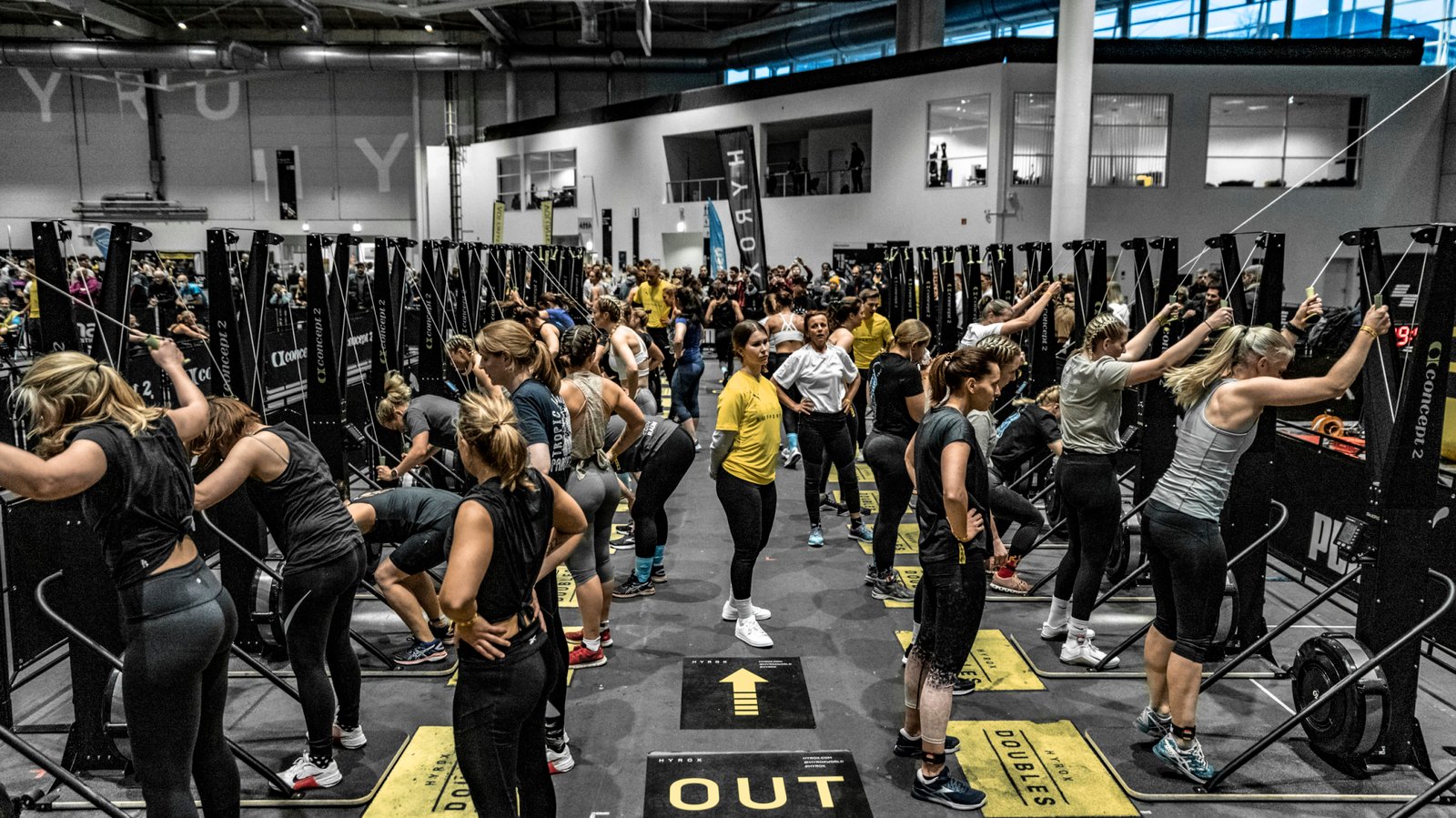
HYROX Singles alternates a one-kilometre run with one station, eight times. The sequence is SkiErg for 1,000 metres, sled push for 50 metres, sled pull for 50 metres, burpee broad jumps for 80 metres, rowing for 1,000 metres, farmers carry for 200 metres, sandbag lunges for 100 metres, and 100 wall balls. This order matters: the sleds arrive after running, while the lunges and wall balls come when the legs have already accumulated substantial work.
In the 2026/27 rulebook, the Open women’s, Open men’s, Pro women’s and Pro men’s divisions share those distances and repetition counts. SkiErg, burpees and rowing have no extra Pro load. The five loaded stations differ. Pro women use the same listed weights as Open men, except that their wall-ball target remains 2.70 metres rather than the men’s 3.00 metres. The men’s Pro division is heavier than men’s Open across all five loaded stations.
Importantly, the sled figures below already include the sled. They are not instructions to load that many kilograms of plates onto an empty sled. Nor can you compare one gym’s sled resistance directly with another’s: turf, runners, surface condition and the sled model change the force needed to get it moving.
| Station | Women Open | Men Open / Women Pro | Men Pro |
|---|---|---|---|
| Sled push, 50m | 102kg | 152kg | 202kg |
| Sled pull, 50m | 78kg | 103kg | 153kg |
| Farmers carry, 200m | 2 × 16kg | 2 × 24kg | 2 × 32kg |
| Sandbag lunges, 100m | 10kg | 20kg | 30kg |
| Wall balls, 100 reps | 4kg / 2.70m | 6kg / 2.70m women, 3.00m men | 9kg / 3.00m |
Sled push: why the extra 50 kilograms changes the race
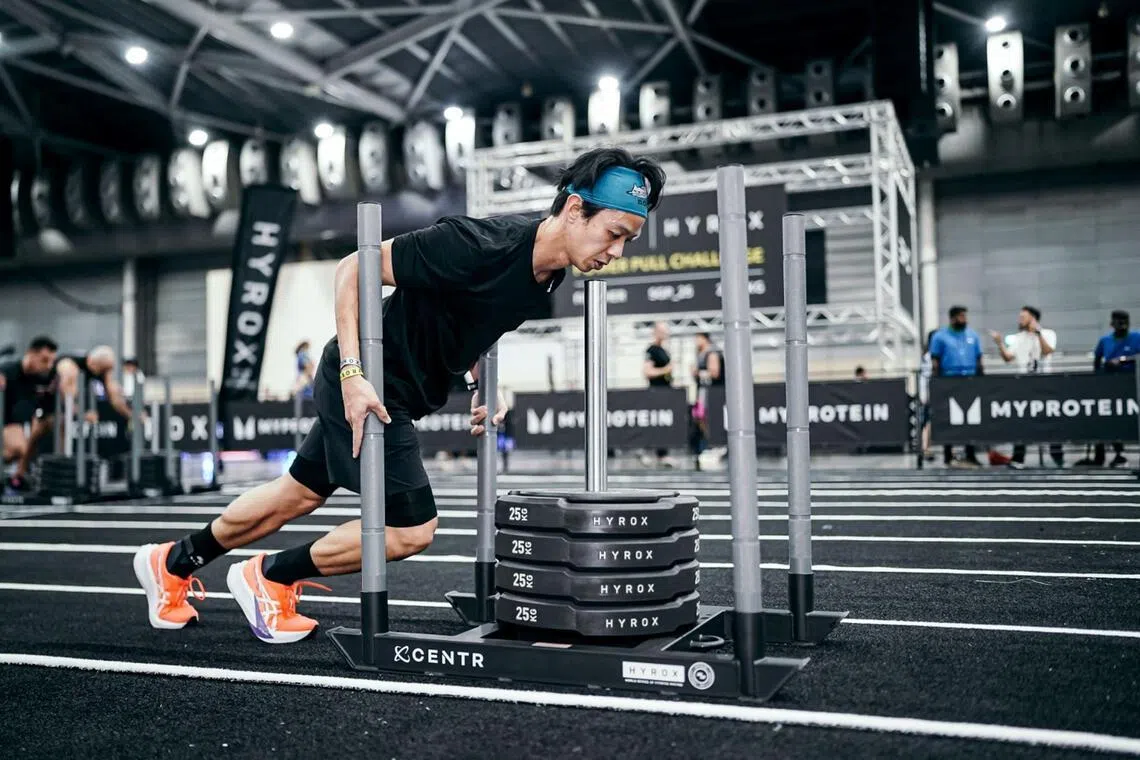
The men’s Pro push is 202 kilograms including the sled, versus 152 kilograms in Open. Both cover 50 metres, typically as four 12.5-metre lengths. A heavy gym squat is useful preparation, but it does not perfectly predict the task. The push combines horizontal force, foot traction, torso stiffness, stride length and the ability to keep moving while your heart rate is high.
The critical question is not merely whether the sled moves once. Can you restart it after a stop, drive through a full length without the hips rising uncontrollably, and repeat that effort after a controlled run? A big first push followed by prolonged standing can waste more time than short, repeatable drives. Traction and technique may matter as much as another small increase in barbell strength.
Practise on turf resembling the intended race surface where possible. Use both lighter, faster lengths and heavier, controlled pushes. On a separate session, practise one run-to-push transition rather than stacking endless heavy sled bouts. For a deeper examination of both force directions, our sled push versus pull training guide covers the setup, acceleration and progression details.

Equipment Worth Exploring
Explore equipment, accessories and gear from our carefully selected range.


Pro Sled System
Heavy-duty push-pull training sled for loaded conditioning, speed, and strength work.


Lateral Row Machine LRM-720
Rowing machine with independent lever arms, an adjustable seat and chest support.
Sled pull: strength is useless if the rope rhythm collapses
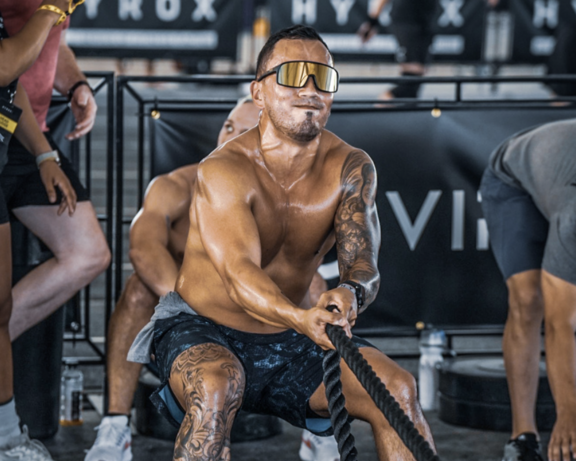
The second sled station raises another 50 kilograms for Pro men: 153 rather than 103 kilograms including the sled. Women move from 78 kilograms in Open to 103 kilograms in Pro. The athlete stays behind the designated line, draws the rope in, and manages the accumulating coils while the sled crosses the course. A gym cable row is a useful strength exercise, but it omits the uneven turf friction, foot positioning and rope management.
Practise a repeatable foot stance and pull rhythm. Start by setting the feet, then use the body and arms together without turning every pull into an uncontrolled lower-back heave. Move the rope clear of the feet as you work; fighting a pile of rope costs energy and can disrupt the next pull. A stronger grip helps, but efficient repetitions are what keep the station from becoming a series of emergency rests.
Try controlled sled pulls under fresh conditions first. Later, introduce a modest run before the task and measure whether technique degrades. A rower or cable machine can build work capacity around the pattern, although neither is a complete substitute for the competition movement. When tired, choose a pace you can hold across all lengths instead of chasing the fastest possible first length.
Farmers carry and lunges: the hidden cost of fatigue
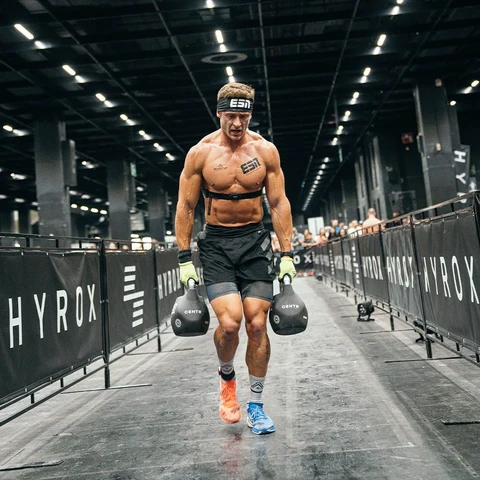
At the sixth station, men carry two 24-kilogram kettlebells in Open or two 32-kilogram kettlebells in Pro for 200 metres. That is 16 kilograms more total external load in the hands. Women move from two 16-kilogram bells to two 24-kilogram bells. The extra weight does not change the distance, but a grip that is already tired from the rope pull may turn continuous walking into repeated breaks.
Train loaded carries with the shoulders settled, ribs stacked over the pelvis and a brisk, controlled gait. Avoid deliberately leaning back to counterbalance the bells. Practise turns, since the time lost to awkward direction changes can matter. If the hands fail before the legs, strengthen the carry and grip gradually rather than relying only on deadlifts. An open versus closed trap-bar carry comparison explains why handle position and frame clearance also affect loaded walking.
Immediately afterward comes the 100-metre sandbag lunge: 20 kilograms for Open men and Pro women, 30 kilograms for Pro men, and 10 kilograms for Open women. That makes hip stability, step consistency and trunk endurance particularly relevant. Practise the prescribed knee and movement standards with moderate loads before training under heavy fatigue. If balance deteriorates or the front knee becomes painful, stop and scale the drill.
Equipment Worth Exploring
Explore equipment, accessories and gear from our carefully selected range.

Cast Iron Kettlebells
Textured cast-iron kettlebells for swings, squats, carries, and full-body training.


Competition Wall Ball
Competition-style weighted wall ball for HYROX, wall-ball shots, and functional conditioning.

Slam Ball
Low-bounce weighted slam ball for explosive throws and high-intensity conditioning.

Rubber Hex Dumbbells
Rubber-coated hex dumbbell pairs with a stable shape for home and commercial strength training.


Open Hex Bar
Open-frame trap bar with multiple handles for deadlifts, carries, and lower-body training.


Grip Plates
Rubber-coated weight plates with handholds for loading barbells and machines.
Wall balls: the last hundred reps punish poor pacing
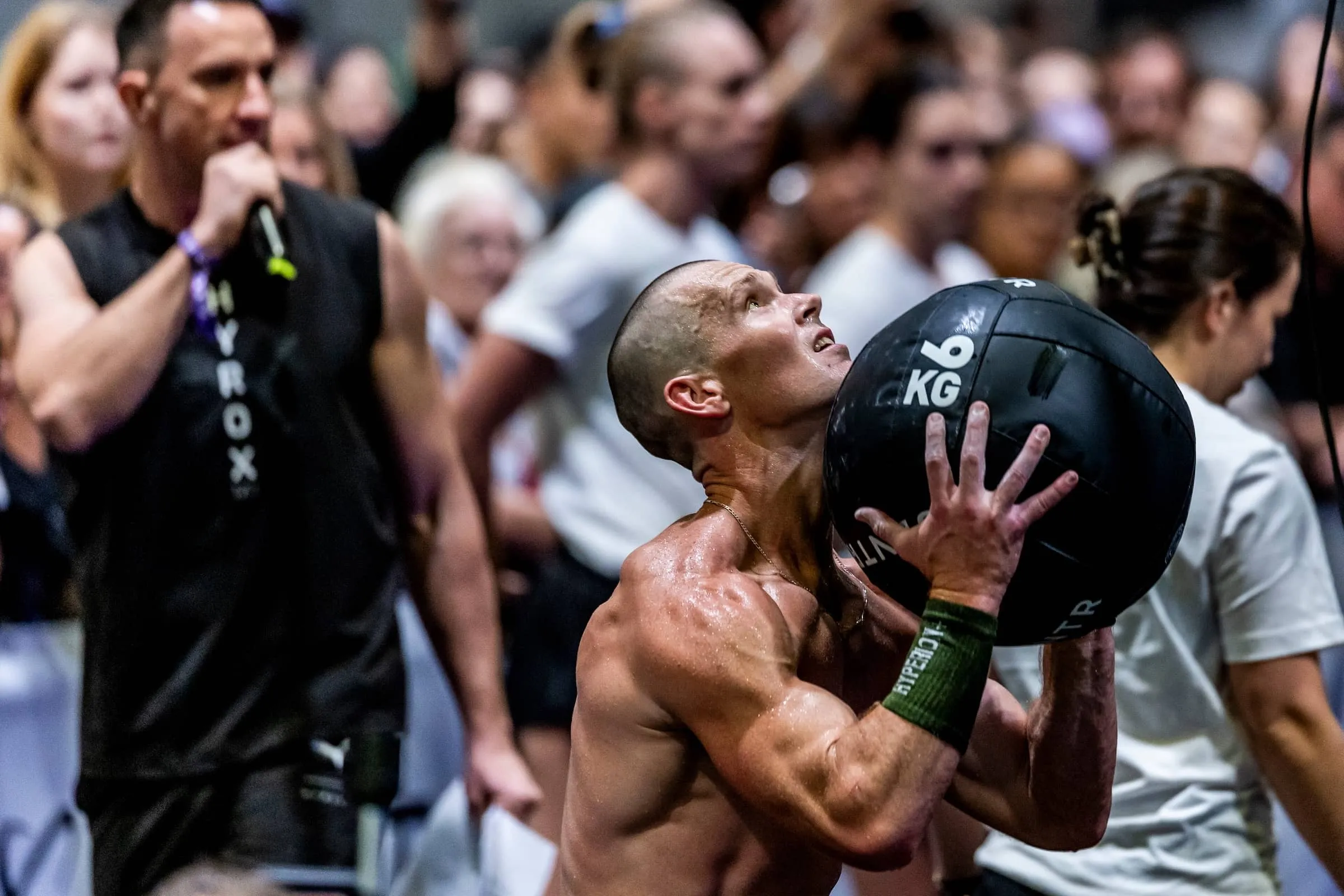
Wall balls finish the race. Open men throw a six-kilogram ball to a three-metre target; Pro men throw nine kilograms to the same height. Women use a 2.70-metre target, with four kilograms in Open and six in Pro. A 50% heavier ball for Pro men is not a promise of 50% more difficulty, because your technique, height, endurance and how frequently you break the set all matter. It does mean more resistance on every squat and throw.
The difference between a training-room 100-rep best and race-day execution is what came before. Learn to hit a consistent squat depth, drive the ball smoothly from the legs and catch it without collapsing into the next repetition. Rehearse the target height: repeatedly missing the mark wastes effort and can trigger no-reps.
Use deliberate sets before you become desperate. For example, ten sets of ten with brief controlled rests can be more reliable than opening with forty repetitions and then requiring prolonged recovery. The right break structure depends on your conditioning, not on a universal magic number. Our 100-rep wall-ball pacing guide
Open or Pro? A four-week readiness check
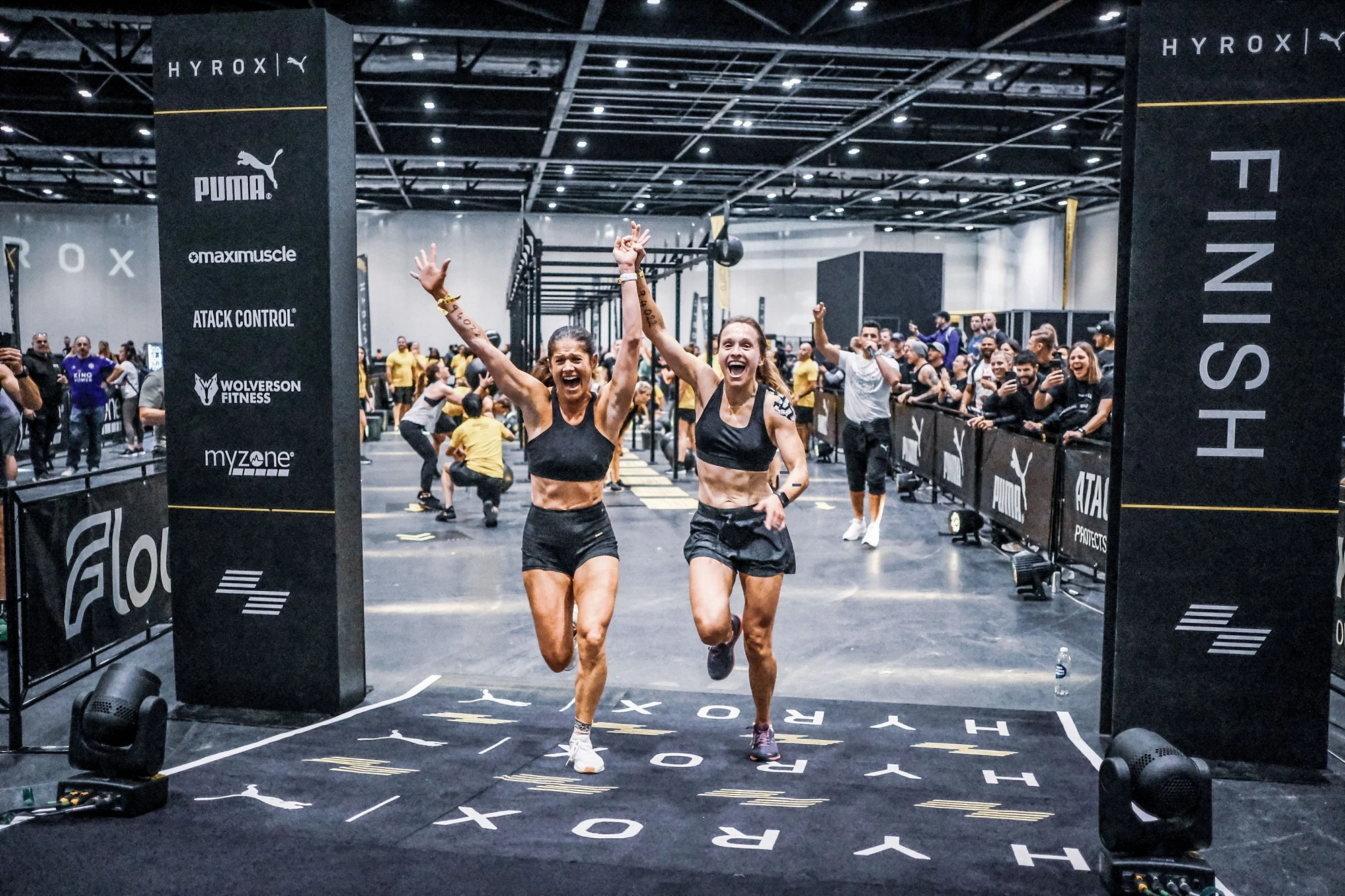
Regular Pro registration does not require you to qualify first; the Elite 15 professional series has separate licence and points rules. That distinction matters. Being allowed to choose Pro and being ready to race it well are not the same thing. Nor is Open a lesser accomplishment: eight kilometres plus eight stations is a serious endurance event at any legal load.
Week 1: test technique separately. Record manageable lengths of sled push and pull on a known surface, 100 metres of farmers carry, controlled sandbag lunges, and sets of wall balls at the intended ball and target. Establish honest baselines rather than an exhaustion contest. Week 2: repeat with slightly more continuous work, keeping movement quality. Week 3: pair a short easy-to-moderate run with one or two of the stations, observing how breathing changes your splits. Week 4: reduce fatigue and make a simple division decision based on the quality of repeatable efforts.
Choose Pro if the heavier weights are realistically trainable, your movement standards are consistent and you can transition back to running without repeatedly grinding to a halt. Choose Open if the Pro sled requires maximal efforts, grip fails early or you need to build more running durability first. If you are new to hybrid racing, a consistent Open race can establish a useful benchmark for a later Pro attempt. The useful metric is not which word appears beside your name; it is whether you can execute the work you entered to do.
Even strong lifters can struggle with the combination. On race day, start conservatively, preserve the running legs through the sleds, and save enough coordination for the final wall balls. Review Jake Dearden’s running and strength balance for a complementary view of how hybrid training fits together.

Functional Fitness Shirts & Workout Gear
Functional-fitness shirts, tanks and workout gear for athletes who train strength, conditioning and everything in between.

Hybrid Athlete – HYROX Workout Checklist Gym Decal for Sticker
Give your everyday gear a playful “Hybrid Athlete” twist.

Hybrid Athlete – Built Different Crewneck for HYROX, Cr T-Shirt
Show some gym-day personality with “Hybrid Athlete”.

Hybrid Athlete Strength Tee
Show some lifting attitude with a playful “Hybrid Athlete” tee.


Rowing – Dost Thou Even Row Medieval Knight Crewneck fo T-Shirt
Show some gym-day personality with “Rowing”.


Burpees Bad Breaking Bad Shirt – Meme & Cardio Haters T-Shirt
Show some cardio attitude with a playful “Burpees Bad Breaking Bad” tee.

Gym Dost Thou Even Pedal Medieval Air Bike Humor for Cr Tank Top
Bring “Dost Thou Even Pedal Medieval Air Bike” humor to your next lifting session.

Anti HYROX HYROX Club Meme Shirt Gymbro T-Shirt
Make gym days more fun with “Anti HYROX HYROX Club” style.

Battle Ropes HIIT Tee
Show some superhero attitude with a playful “Wonder Woman Battle Ropes” tee.