Advertising disclosure: This page includes affiliate links that may earn us a commission at no additional cost to you.
A stronger squat is not the only way to build a more capable lower body. Direct hip-flexor training is often overlooked, yet a controlled eight-week experiment found that physically active adults improved both hip-flexion strength and short running-test times. Here is what that result does and does not mean, and how to add resisted knee drives without losing sight of the bigger training picture.
Why lifting the knee deserves its own strength work
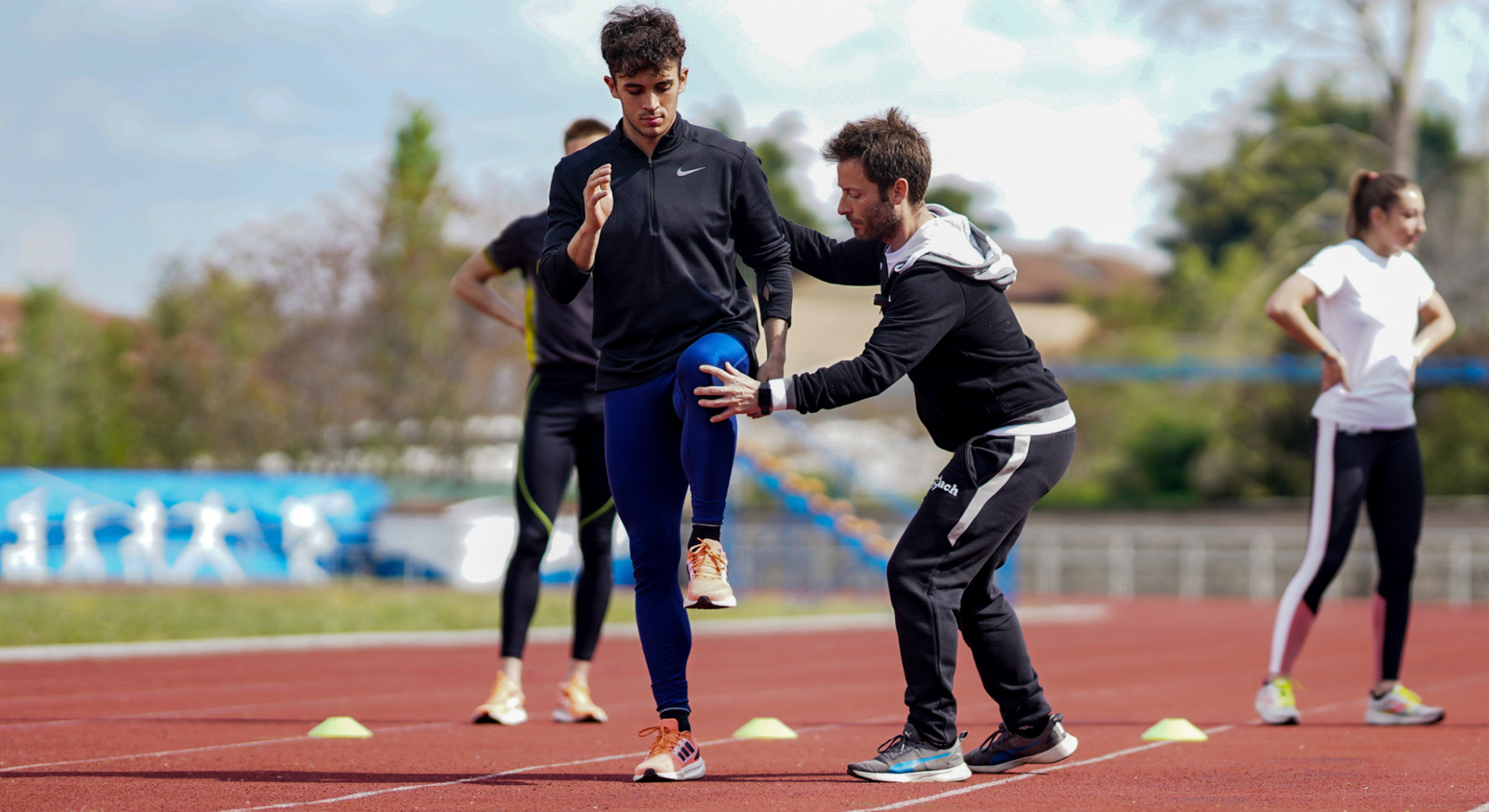
Most leg programmes devote plenty of time to extending the hip. Squats, hinges and step-ups make sense because producing force against the ground is central to sport. But when the foot leaves the ground, the leg must come forward again. Hip flexion is that movement: the thigh moves toward the trunk, whether you are climbing stairs, stepping over an obstacle or bringing the leg through during a sprint. It is not the same action as bending the knee, and it deserves to be considered separately when you decide what your lower-body programme is missing.
Several muscles contribute, including the iliopsoas and the rectus femoris. The latter also crosses the knee, which is one reason the position of the leg can change the experience of an exercise. When you perform a hanging knee raise, the abdominal muscles help manage the pelvis while the hip flexors bring the thighs up. During a standing resisted march, the hip flexors of the moving leg work while the opposite side and trunk keep you upright. Neither movement is a magical way of isolating a single muscle.
The case for direct work is strongest when the rest of your training gives the movement little progressive resistance. It is perfectly possible to squat impressive weights yet find a light banded knee drive surprisingly demanding. Conversely, a runner who already tolerates plenty of sprint work may gain little from adding another fatiguing accessory. Treat the exercise as a tool to address a training need, not as a compulsory correction for everyone who spends time sitting.
Eight weeks of resistance training: what actually changed
A 2005 controlled study compared eight weeks of hip-flexion resistance training with a control group. There were 24 participants in each group, with both men and women represented. The training group improved measured isometric hip-flexion strength by 12.2 percent. Their average 40-yard sprint time decreased by 3.8 percent, and their shuttle-run time by 9 percent. The comparison group did not show the same improvements. That makes the results particularly interesting: the experiment was not simply a before-and-after demonstration in which everyone received the same exercise.
These were physically active people without specialist training, however, not elite sprinters chasing fractions of a second. A 3.8 percent improvement in a sprint test can be meaningful in that context, but it would be unreasonable to use it as a prediction for an experienced athlete. The tests included a short sprint segment and a vertical jump as well; the headline results do not establish an equivalent benefit for every athletic task. The study also does not tell us that hip flexion is more important than other parts of a complete sprint programme.
A separate six-week randomized trial involving 33 healthy adults offers useful evidence about the strength adaptation itself. Participants trained the hip flexors against elastic resistance for about ten minutes three times per week, progressing from a load suitable for roughly fifteen repetitions to one suitable for eight. Strength of the trained leg increased by 17 percent. The between-group comparison supported a genuine training effect. It was a strength experiment rather than a guarantee of faster sprint times, so the two studies answer complementary questions: whether the muscles can be strengthened with a modest training commitment, and whether a particular intervention may transfer to certain performance tests.
How to load hip flexion without turning it into a balance test
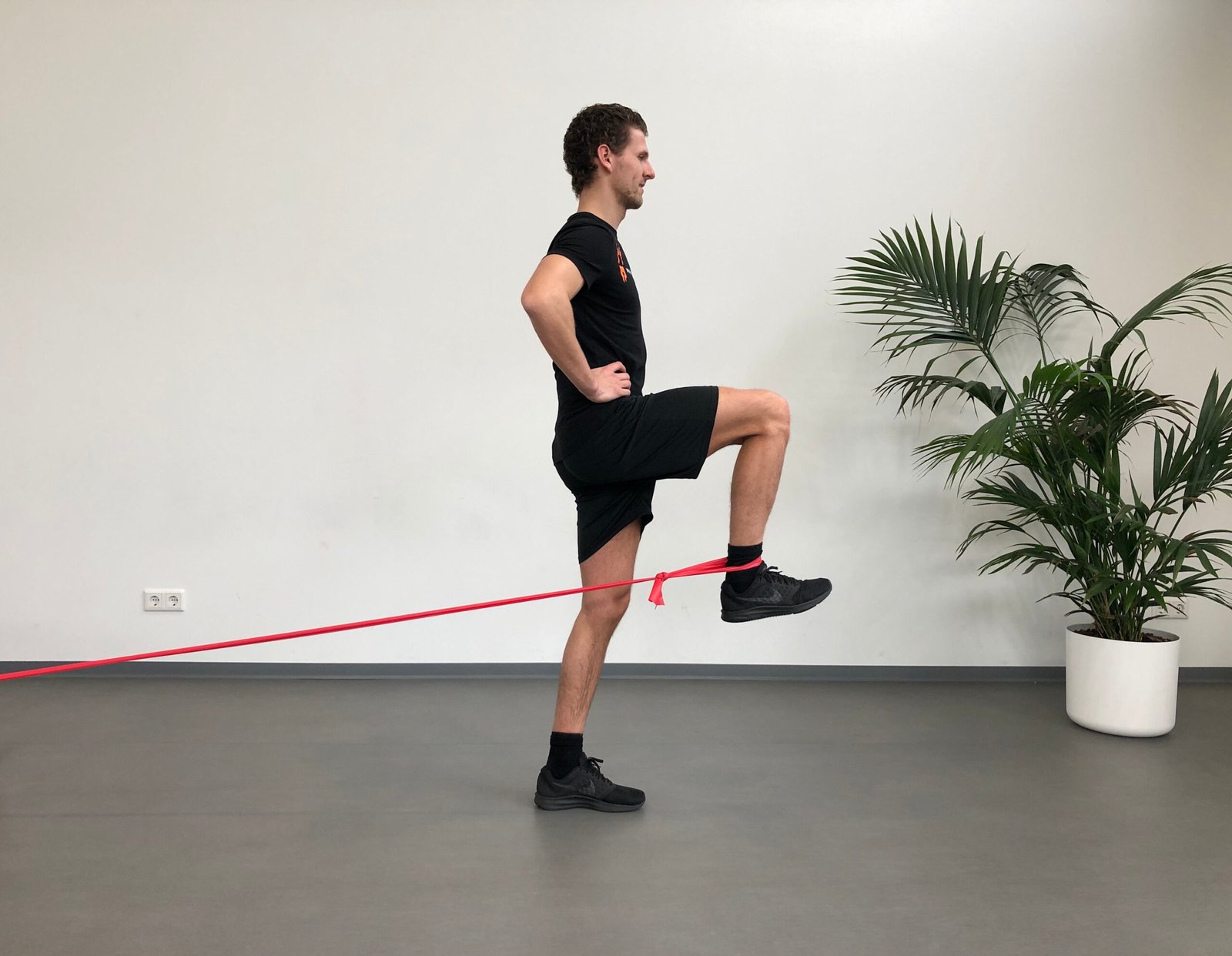
For a straightforward starting exercise, use a resistance band secured behind you at a low, stable anchor. Loop an appropriate band around the working foot or use a purpose-made cuff compatible with the resistance system. Face away from the anchor and use a solid support with one hand if needed. Start with the thigh near neutral, then bring the knee forward and upward through a range you can control. Return slowly rather than allowing the band to snap the leg back. Keep the supporting foot planted and stop before the pelvis starts rotating or the back arches noticeably.
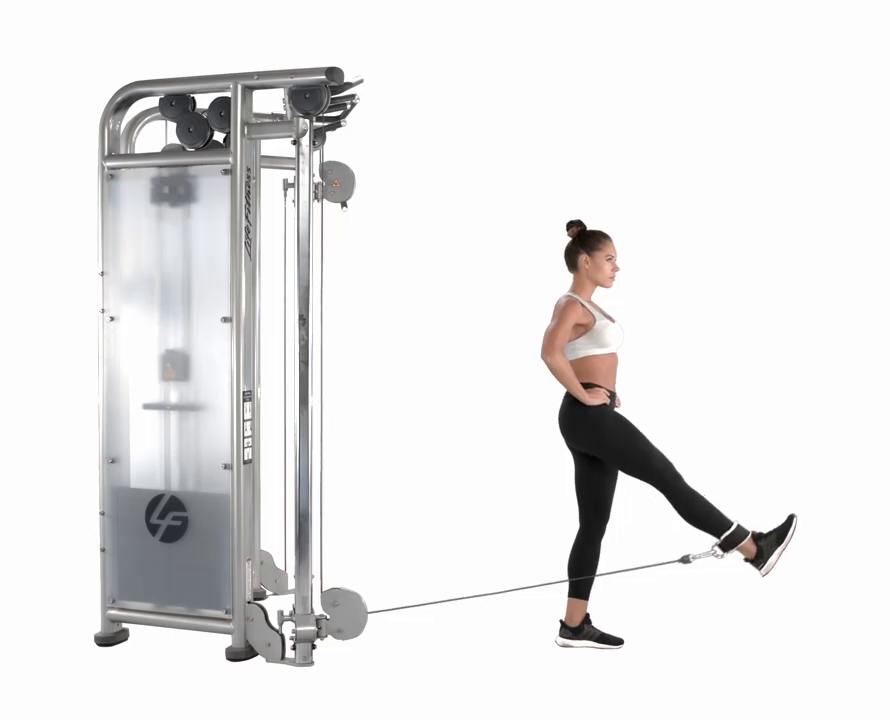
A low cable pulley with a compatible ankle cuff is a useful alternative because resistance can be adjusted in small, measurable increments. You do not need a whole new machine to perform it. If the cable pulls from behind, its line of action changes as the thigh rises; the perceived difficulty may differ from a band even when both exercises feel similarly hard at the beginning. Establish a repeatable stance, distance from the pulley and stopping position. Check that the cuff, anchor and connector are secure and rated for the setup before loading.
Standing without support can be useful for coordination, but it can also make balance the limiting factor. A hand on a rack allows you to concentrate on moving the thigh. If standing remains awkward, seated active marches or supported supine variations offer a gentler entry point, although their resistance curves and movement ranges are different. For a straight-leg variation, the longer lever can make even a modest load feel demanding. Begin conservatively rather than comparing the weight on the stack with your squat or leg-extension numbers.
Keep the difference between muscle effort and pain in mind. Fatigue in the front of the hip during resisted lifting is not the same as persistent pinching or sharp groin pain. Do not force the knee higher to reach an arbitrary angle if symptoms develop. People with existing hip or groin problems should get individual guidance rather than using a general performance programme as treatment.

Equipment Worth Exploring
Explore equipment, accessories and gear from our carefully selected range.
VOLTRA
Compact digital cable trainer with smooth, adjustable resistance.

Go-Tone Pro
Portable digital cable trainer with up to 66 lb (30 kg) of adjustable resistance.


VForce Wall Trainer
Space-saving wall-mounted functional trainer with pivoting cable arms and variable resistance ratios.

VForce 2IN1
Half rack and pivot-arm functional trainer with switchable 1:1 and 2:1 pulley ratios.


Multi Pull Smith Rack MPHR-780
All-in-one rack with a Smith machine, functional trainer, lat pulldown and low row.

A six-week accessory plan that fits around real sprint training
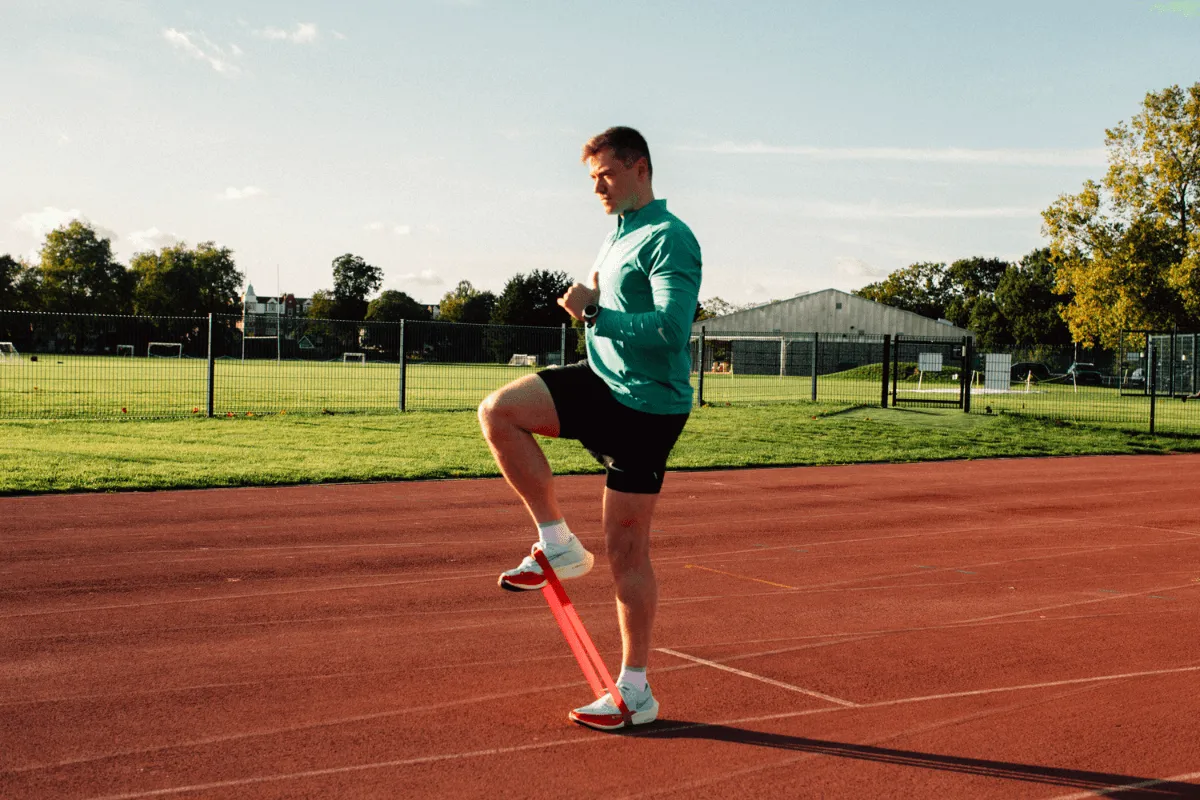
The following is an editorial example for a healthy recreational lifter or runner, not a reproduction of either experiment. Start with two sessions per week and two sets of controlled knee drives per side. Use a resistance that allows twelve to fifteen smooth repetitions with several more available. Keep the same setup across sessions and rest long enough to perform the second set without relying on a swing. If you run on the same day, place this work after your main speed session or after lifting rather than exhausting the hip flexors immediately before fast strides.
During weeks three and four, add a third set if the first two weeks were well tolerated. A small increase in resistance is appropriate once every repetition reaches the same controlled height. Aim for ten to twelve repetitions and avoid grinding. During weeks five and six, consider eight to twelve repetitions at a slightly higher resistance while maintaining a smooth lowering phase. A third weekly exposure can make sense for someone who is recovering easily, but it is not necessary if running sessions already provide substantial workload.
For a runner who lifts on Tuesday and Friday, the easiest approach may be to finish both sessions with a short hip-flexion block. For someone who trains speed and strength on separate days, add the accessory to the easier strength day and observe whether the next running session feels normal. The aim is to build capacity over weeks, not to set a record on a small isolation exercise. Keep the rest of the programme intact: sprint practice, appropriate strength work for the hip extensors, hamstrings and calves, and adequate recovery remain important. A direct exercise for the front of the hip is a supplement, not a replacement for the larger movements that produce and transmit force.
Measure the transfer instead of assuming it
Decide in advance what success would look like. For a gym-based goal, record the band or cable setting, distance from the anchor, number of repetitions and whether you reached the same knee height without leaning. If the resistance or repetitions increase while the movement stays controlled, you have evidence of progress in that task. Do not confuse an improvement in balance or familiarity with a precise measurement of isolated muscle strength.
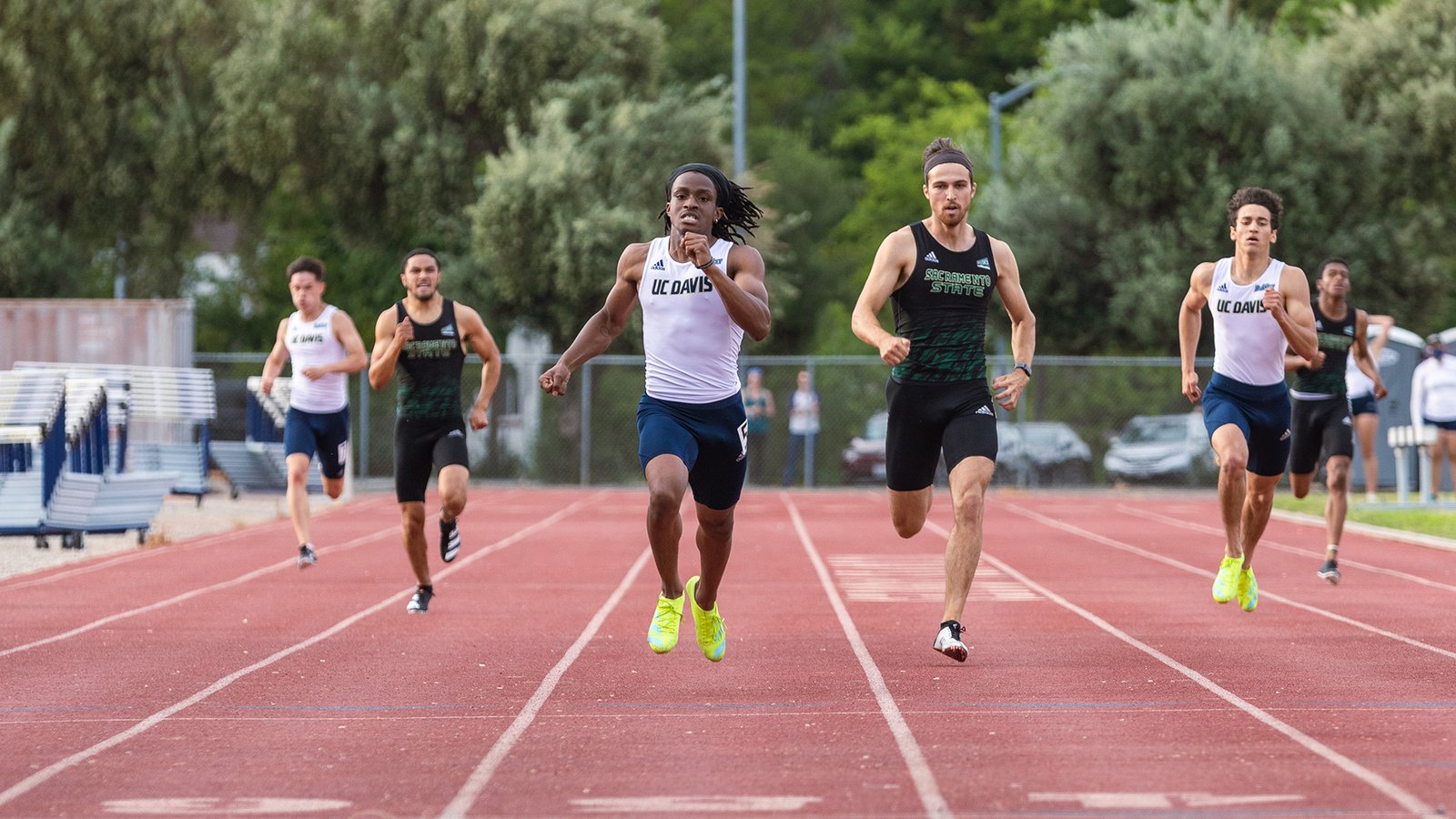
If sprinting is the goal, use a short standardized test on the same surface and with similar shoes, warm-up and rest. Timing methods matter: hand timing can introduce enough noise to hide modest changes, particularly over short distances. A few good efforts with full recovery are more informative than a long series of fatigued runs. Compare trends over several sessions rather than celebrating a single unusually fast repetition. A faster shuttle run additionally depends on braking and changing direction, which are not identical to bringing the thigh forward.
Finally, consider the opportunity cost. If resisted knee drives improve consistently but your priority sessions become worse, reduce the accessory workload or reconsider its place in the week. If your lifting performance and running remain stable while the new exercise progresses, that is a reasonable basis for continuing it. You need not achieve the percentages from either study to justify keeping a small exercise that addresses a genuine gap. The strongest conclusion is narrower and more useful: hip-flexion strength is trainable, and direct resistance work may help certain recreational athletes, but the value of that strength depends on the task you are actually preparing to perform.