Advertising disclosure: This page includes affiliate product links that may earn us a commission, as well as products from our own store.
A hang clean high pull can look like an upright row performed with a lot of leg drive, but the important part is the timing: the lower body accelerates the bar before the elbows finish the pull. Get that sequence right and the exercise becomes a useful, repeatable weightlifting derivative. Get it backward and the load can drift, the shoulders take over and the point of the drill gets lost.
Start in a repeatable hang position, not wherever the bar happens to be
The hang clean high pull begins with the bar already off the floor. That simple change removes the floor-to-knee portion of a clean and gives you more opportunities to practice the part of the lift in which the legs and hips drive the bar upward. It is not a hang clean with a missed catch: there is deliberately no turnover into the front rack. The rep finishes as a powerful pull with the elbows traveling up and out.
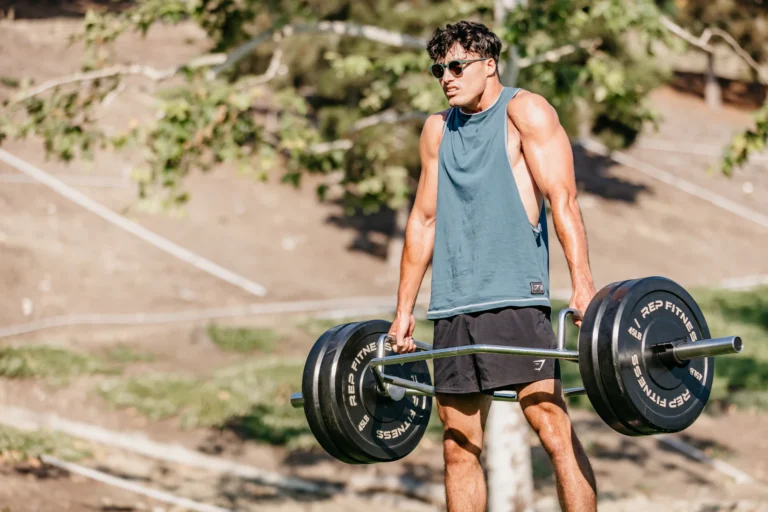
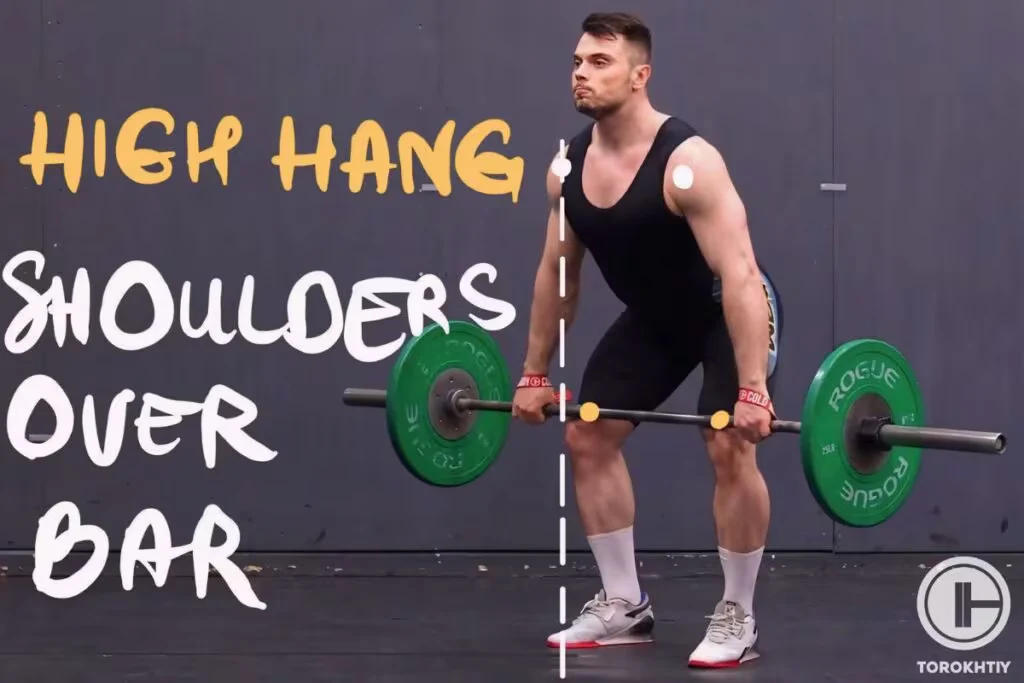
Stand tall with a clean-width grip, usually a little outside shoulder width, and bring the bar to the upper thigh. Place your feet roughly hip width apart, leave enough space to extend freely and set your trunk before lowering into the hang. Push the hips back while allowing the knees to bend enough to keep your balance over the midfoot. A useful starting point is the bar just above the knees. Higher or lower hangs are valid variations, but changing depth every repetition makes the exercise difficult to assess.
Keep the arms long and the shoulders slightly over the bar as you establish the position. Think of the bar remaining close to the thighs, with pressure distributed across the whole foot rather than tipping onto the toes early. A neutral, braced torso is more useful than forcing an exaggerated chest-up posture that pulls you behind the bar. Take one still moment before the first fast pull; if you cannot hold the hang without rocking, reduce the weight.

Equipment Worth Exploring
Explore equipment, accessories and gear from our carefully selected range.


Competition Plates
Competition-style bumper plates for Olympic lifts and loaded strength training.


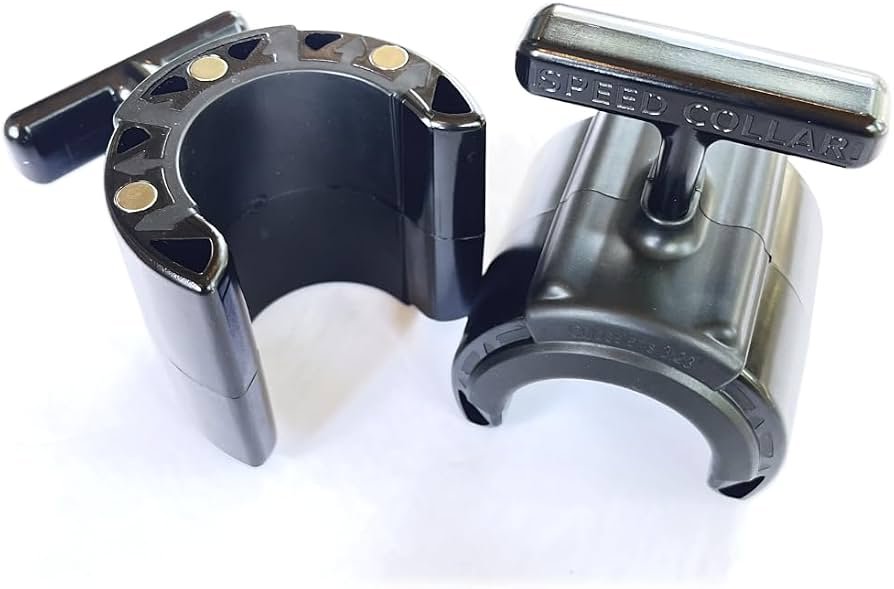
Speed Collar
Quick-release collars designed to secure weight plates on standard two-inch Olympic bars.
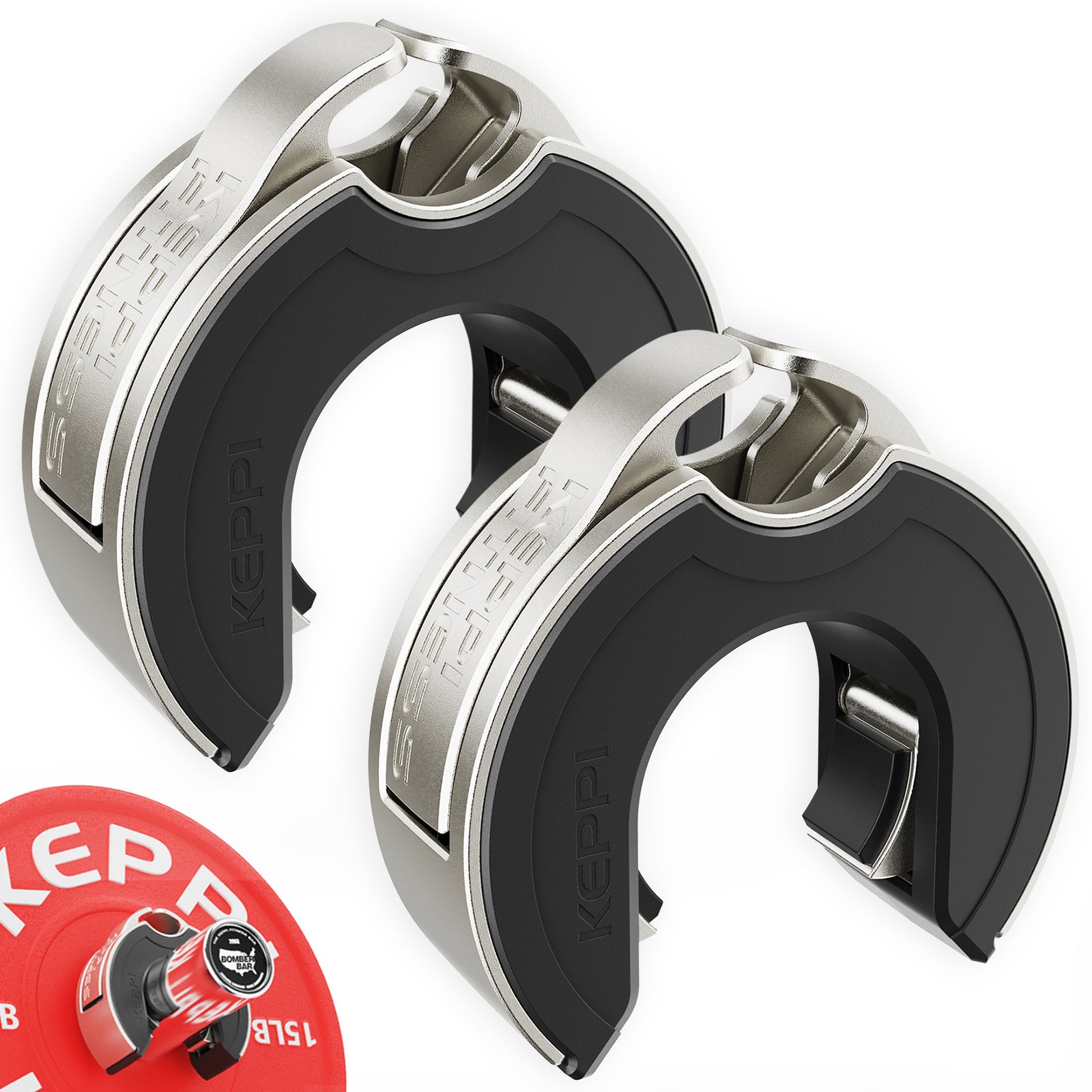
Keppi Open Collars
C-shaped magnetic Olympic barbell collars with a quick-lock mechanism and grippy lining.

Leather Lifting Straps
Padded leather straps support grip during heavy rows, deadlifts and pulling exercises.
Use bumper plates and a stable lifting platform where appropriate. When learning, a bare bar or training bar is often enough. Confirm your shoulders and wrists tolerate the grip, and give yourself sufficient overhead-free space even though the bar will not be caught. Do not turn an unfamiliar ballistic movement into a maximum-weight test.
Finish the leg and hip drive before asking your arms to pull
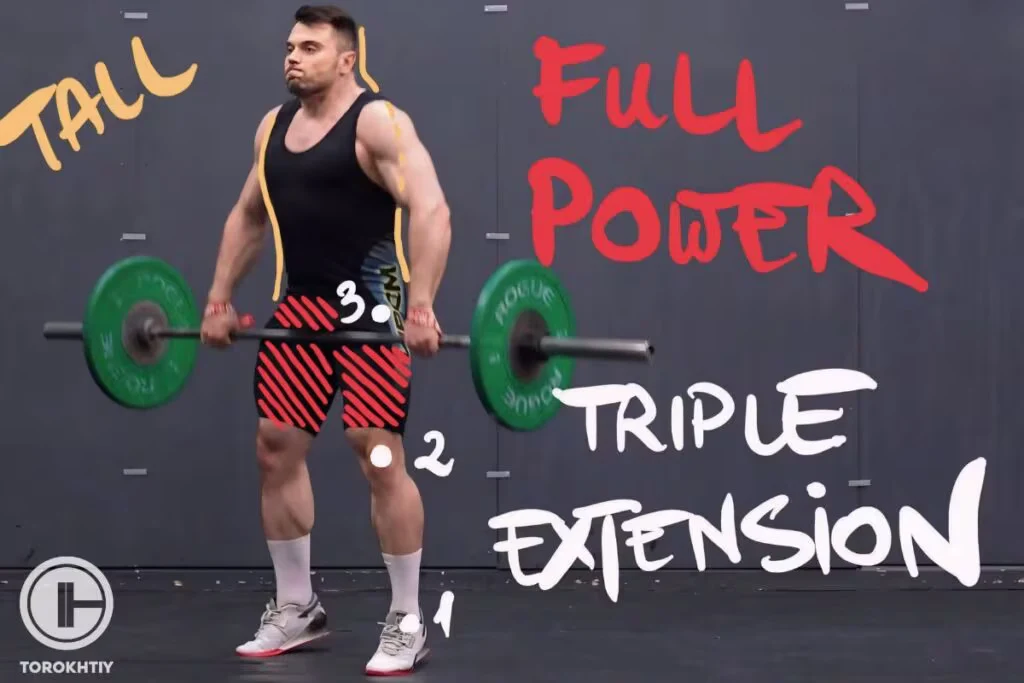
The power of the hang high pull should be generated primarily by a coordinated push against the floor. From the hang, extend the knees and hips forcefully while keeping the bar close. As the body rises, the ankles may extend as part of the natural finish. These linked actions are often described as triple extension, but the goal is a strong vertical impulse, not a posed calf raise or an exaggerated backward lean.
A familiar error is to begin rowing the bar as soon as it moves. Early elbow flexion can make the lift look busy, yet it interrupts the clean sequence that the drill is meant to reinforce. During the initial drive, the arms are connectors. Once the lower body has delivered its force, the upper traps and arms continue the upward motion. Your torso should finish tall, with the bar traveling nearly vertically instead of looping toward the knees and then away.
Try two deliberate rehearsals with an empty bar: first stand from the hang without bending the elbows, then repeat and let the elbows rise after extension. The second movement should feel like the bar briefly becomes light as you finish driving. A person watching from the side can check whether the elbows begin folding before the hips have opened. A short video from waist height can provide the same evidence without guessing from how heavy the rep felt.
The faster phase is not a license to lose control of the descent. Allow the bar to fall only as fast as you can guide it back into your selected hang position. If every repetition requires a large hop, torso swing or a chase forward, the combination of load and speed is not yet repeatable. Deliberately separate effort on the way up from discipline on the way down.
Pull high with the elbows while keeping the bar close to your body
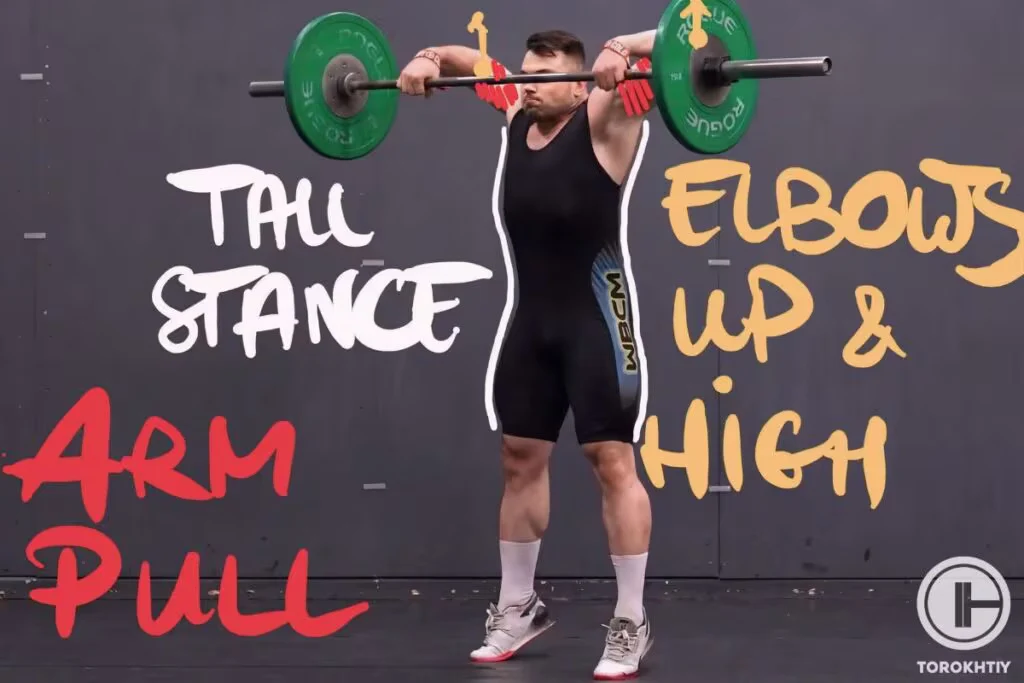
After the legs finish their work, shrug and drive the elbows up and outward. The elbows can rise above the hands, but their exact height will vary with load, shoulder mobility and the lifter’s proportions. A heavy high pull does not need to reach the chin to count as a technically useful repetition. Reaching some arbitrary facial landmark by curling harder is a poor trade if it causes the bar to swing away from the torso.
Keep the knuckles oriented down through much of the rise and let the bar travel close to the shirt. You are not trying to smash the bar against the hips or slide it painfully up the body. You are trying to minimize needless horizontal motion. At the top, stay tall; avoid arching backward so the torso can apparently lift the bar higher. A good finish is quick, balanced and easy to distinguish from a conventional upright row.
If the bar shoots forward, check the hang first. Starting with the shoulders too far behind the bar or immediately throwing the hips toward it can create a long arc. If the bar stays close but the pull stops early, inspect your extension timing before adding more shoulder effort. If the elbows are doing all the work, lower the load and perform crisp single repetitions, resetting at the same hang height.
The hands are responsible for retaining the bar, not for transforming this into a biceps exercise. A secure hook grip can help some lifters; straps may be appropriate for experienced athletes during planned pulling work, but only when their use is safe and familiar. Grip aids do not excuse poor technique and should not be used to mask loss of control. Keep clear of nearby people and equipment during every explosive rep.
Clean-grip and snatch-grip high pulls solve different problems
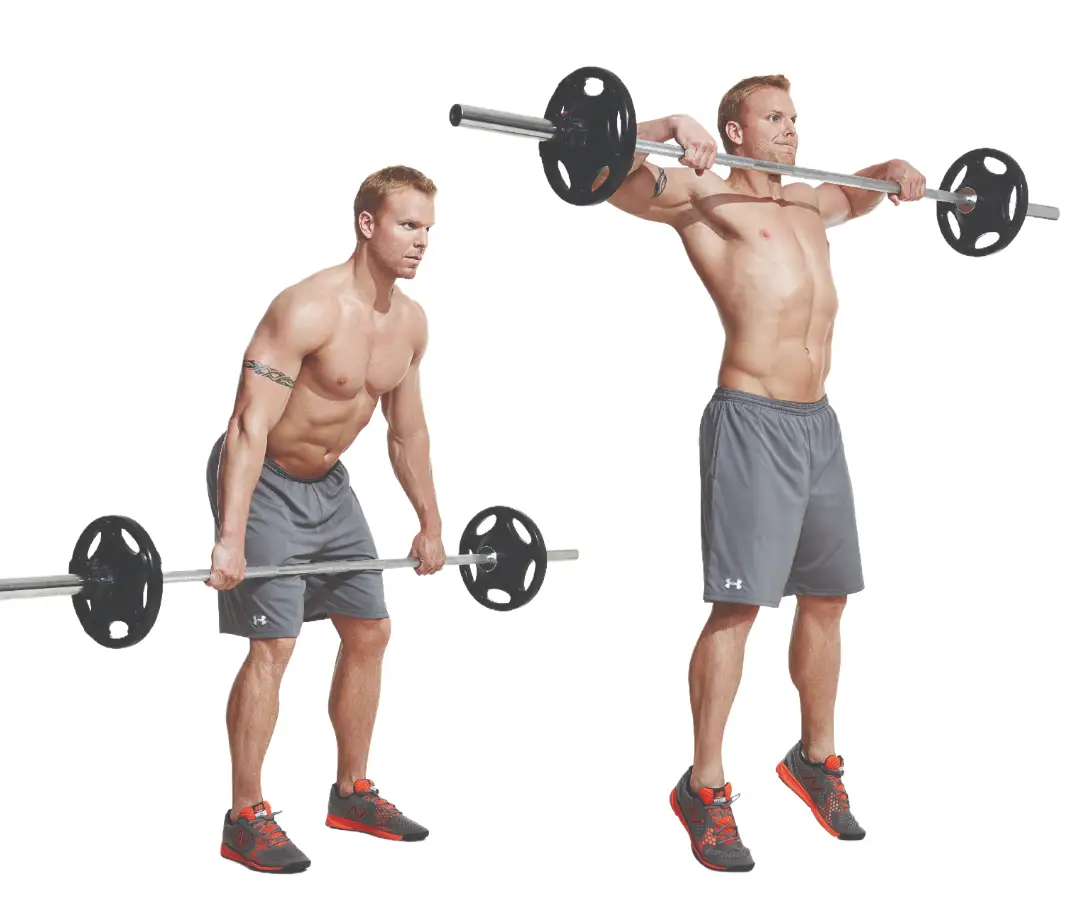
The clean-grip version uses a comparatively narrow grip and emphasizes the path and timing of the clean’s upward pull. A snatch-grip high pull uses a substantially wider hand position and changes the geometry of the movement. Both involve forceful lower-body extension, but the arm positions, bar travel and comfortable loading are not identical. A photograph of a wide-grip snatch pull is useful for explaining that contrast, not for demonstrating clean-grip hand spacing.
Also separate a high pull from a clean pull. In a conventional clean pull, the athlete completes a forceful extension without deliberately continuing to pull the elbows high. A high pull includes a more pronounced arm-led finish after the extension. Neither variation requires catching the bar, whereas a hang clean does. The hang clean adds the task of actively moving under the bar and securing a front-rack receiving position.
Choose the derivative based on the actual skill you want. An athlete whose clean extension ends prematurely may benefit from controlled pulls emphasizing a tall finish. Someone who consistently curls the bar to the shoulders may use a more basic clean pull or a lighter high pull to isolate sequencing. If the issue is the turnover and receiving position, a hang clean with appropriate technical coaching addresses a different piece of the lift.
Do not assume a high pull automatically makes every athlete sprint faster or jump higher. Explosive training can be useful, but outcomes depend on the whole program, coaching, effort, progression and the athlete’s starting abilities. A practical reason to choose a hang high pull is that it permits fast pulling practice without the catch. That is a specific mechanical feature, not evidence that it outperforms every alternative for every goal.

Funny Gym Shirts & Workout Gear
Funny gym shirts, tanks, hoodies and workout gear for lifters who like training hard.

Raise The Barbell Shirt – Motivational & T-Shirt
Show some powerlifting attitude with a playful “Raise The Barbell” tee.

Heavy Barbell – Meme Shirt & Top T-Shirt
Make gym days more fun with “Heavy Barbell Powerlifting Graphic” style.

Shirt & Barbell Heartbeat , Gymbros & Meme Lovers T-Shirt
Heavy lifts, good laughs, and a little “Funny Gym Shirt & Pump” energy.

Vitruvian Man With A Barbell Shirt – Leonardo Da T-Shirt
Show some powerlifting attitude with a playful “Vitruvian Man With A Barbell” tee.

Meme – "Shhh I'M Doing Plate Math" & Weightlifting Sticker
Stick a little “"Shhh I'm Doing Plate Math" Workout &” humor on your favorite gear.

Platehead Skull Powerlifters & Weightlifters Meme Top Tank Top
Show some personality between sets with “Platehead”.

Lift Eat Repeat – Weightlifting & – Meme Bros & T-Shirt
Make gym days more fun with “Lift Eat Repeat” style.

Meme Shirt – Two Things I Like Lifting Weights Not T-Shirt
Make gym days more fun with “Two Things I Like Lifting Weights Not” style.

Lifting Is My Therapy – Bodybuilding Powerlifting Meme Hoodie
Stay casual and show some powerlifting attitude with “Lifting Is My Therapy”.

Be Happy Lift Heavy Happy Weights Smiley Face Weight Pl T-Shirt
Show some gym-day personality with “Be Happy Lift”.
Fix the three errors that make a fast lift look slow
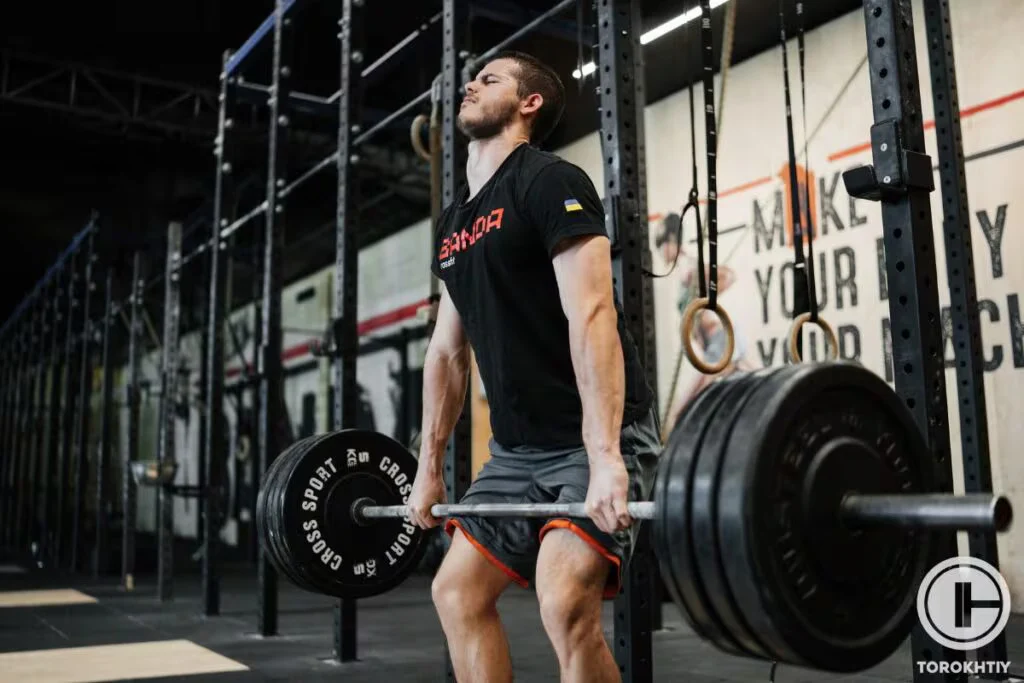
First, stop letting the bar drift forward. A bar that begins a long way from the thigh forces the lifter to chase it. Before the rep, hinge into a balanced hang, brace and draw the bar close without jerking the shoulders. After the rep, compare your feet and the bar’s vertical travel with the starting position. If you are stepping forward repeatedly, the bar path or balance needs attention before heavier weights.
Second, stop trying to manufacture height with a backward lean. Full extension should not become a dramatic backbend. The torso travels from its hinged starting orientation to a tall finish, while the rib cage remains controlled. If you repeatedly throw the shoulders far behind the hips, lighten the bar, rehearse a vertical leg drive and finish with your head and trunk stacked over your feet.
Third, stop turning every rep into a slow upright row. A hanging clean high pull trains an explosive sequence. If the elbows bend before the hip and knee drive, the timing is reversed. Practice clean-grip jump shrugs or high pulls with an empty bar and compare how the bar moves. The shrug is a continuation of the extension, not a substitute for it. Reduce the set length when velocity drops or successive repetitions no longer resemble one another.
The most useful coaching cue is the one attached to an observable change. Rather than shouting ‘be explosive,’ ask a lifter to keep the heel pressure longer, delay the elbow bend, or finish straight up. Check one cue at a time with a few repetitions. If a technique change creates joint discomfort, stop and reassess rather than pressing through. Beginners should learn under supervision if barbell lifting mechanics are unfamiliar.
Use short, fast sets and measure quality before adding plates
A practical beginner session can begin with a thorough general warm-up, empty-bar hinges and a handful of clean-grip jump shrugs. Then perform three to four sets of three clean high pulls with a load that allows repeatable positions and visibly fast movement. Rest long enough to start the next set deliberately. This is an illustrative technique prescription, not a research-validated optimal number of sets for every lifter.
More experienced athletes can generally work with sets of two to five crisp repetitions, adjusting load to the objective. A speed-focused day may use a lighter bar that moves decisively; a strength-emphasis day may use a heavier bar even though its peak height is lower. Do not interpret a lighter bar reaching the collarbone as necessarily more powerful than a heavier bar traveling less distance. The mix of force and velocity matters, and you cannot estimate it reliably from height alone.
In one experiment involving eight weightlifters, hang high pulls displayed greater measured peak power than hang power cleans at several lighter relative loads, while the difference was not evident across the heavier loads examined. A different small experiment using 14 athletic men found that force, bar velocity and power peaked at different relative weights. These are acute measurements in particular groups, not proof that any single percentage builds the most power over months. Avoid copying percentages directly from a laboratory comparison onto a beginner’s first session.
To progress, record the hang height, grip, load, sets, repetitions and one technical observation such as whether the elbows waited for extension. Hold these variables steady for a week before changing one. Increase the weight only while the movement remains recognizable. If power cleans, heavy deadlifts or sports practice share the same day, account for cumulative fatigue rather than adding high pulls simply because they have no catch.
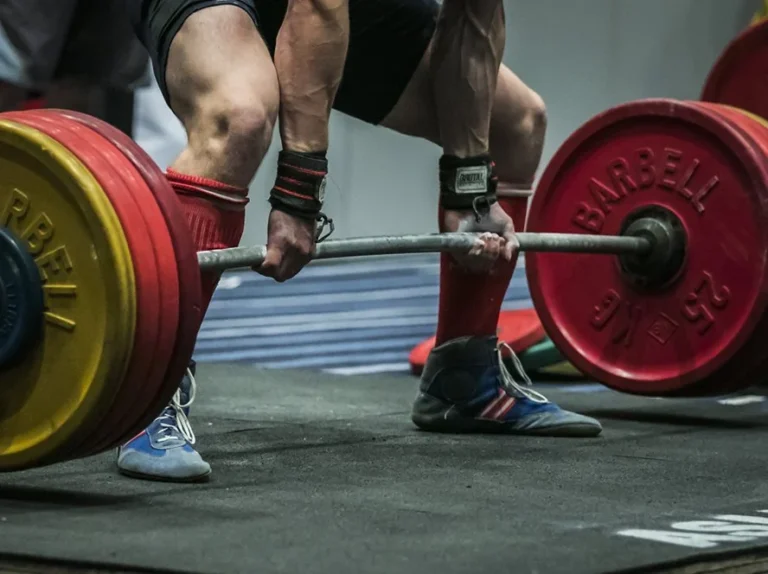
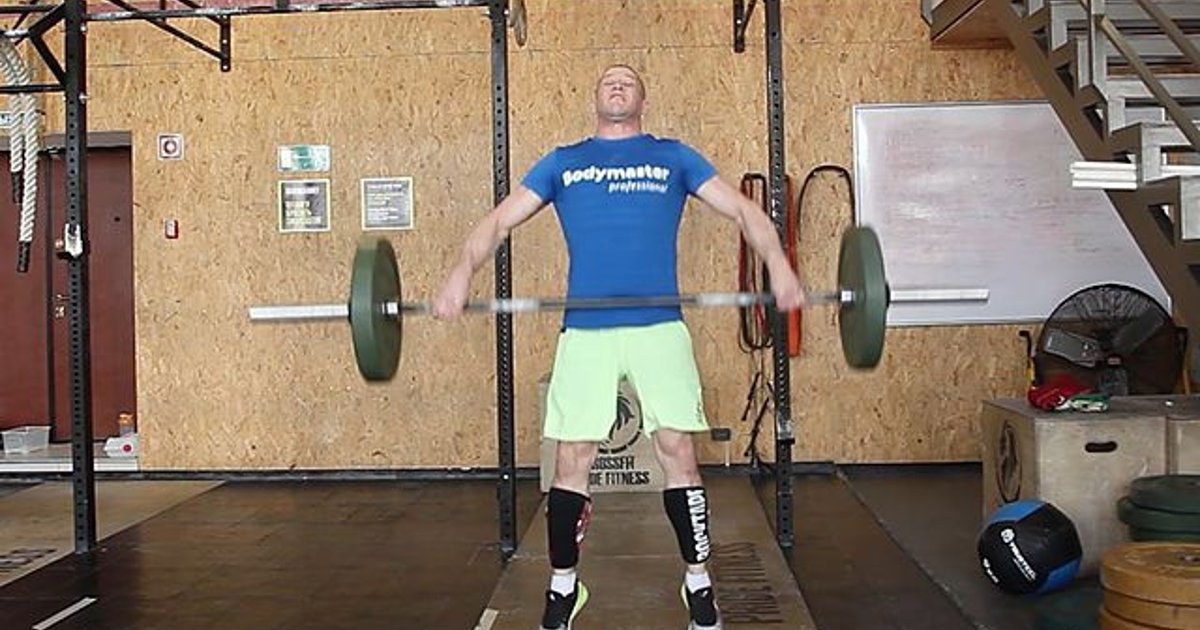
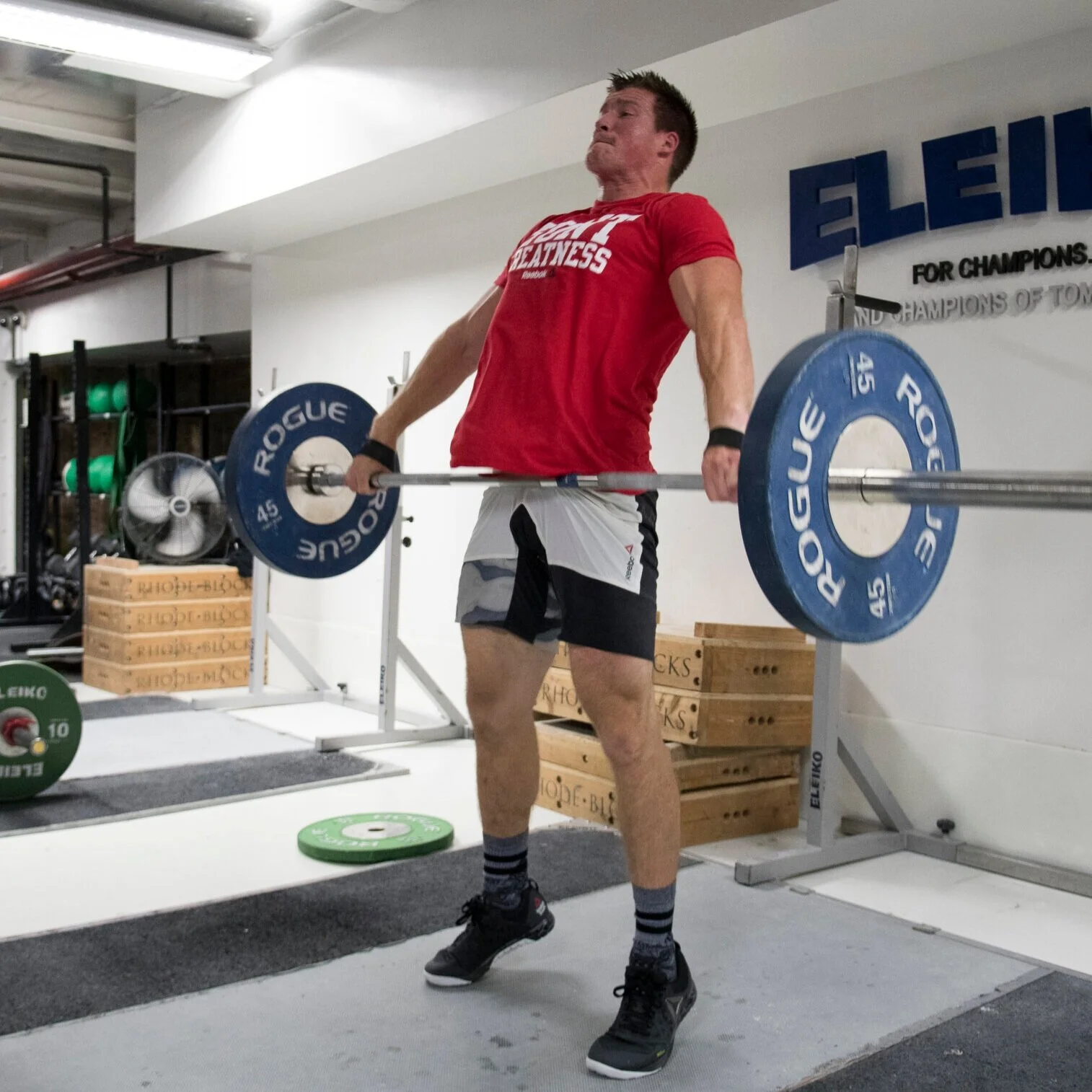
The final photograph illustrates the straight-arm extension stage of a clean pull, rather than the complete high-elbow finish. Keep the surrounding training simple: a squat or deadlift variation develops basic force capacity; rows and upper-back accessories can contribute general muscular development; jumps or sprints may provide other power expressions. The high pull is a tool within that program, not a replacement for a comprehensive strength plan. Finish your session knowing which technical quality improved, not merely how many plates you moved.