Advertising disclosure: This page includes affiliate product links that may earn us a commission, as well as products from our own store.
An adjustable cable bar is useful when it solves a specific setup problem. The GymPin D-Handle Bar offers a range of sizes, constructions and mounting options, but the bar is only one part of the connection between you and the resistance. Choose the version, the grips and the fit together, then keep a record of the setup that actually works for your exercises.
Choose size, thickness and fitment as separate decisions
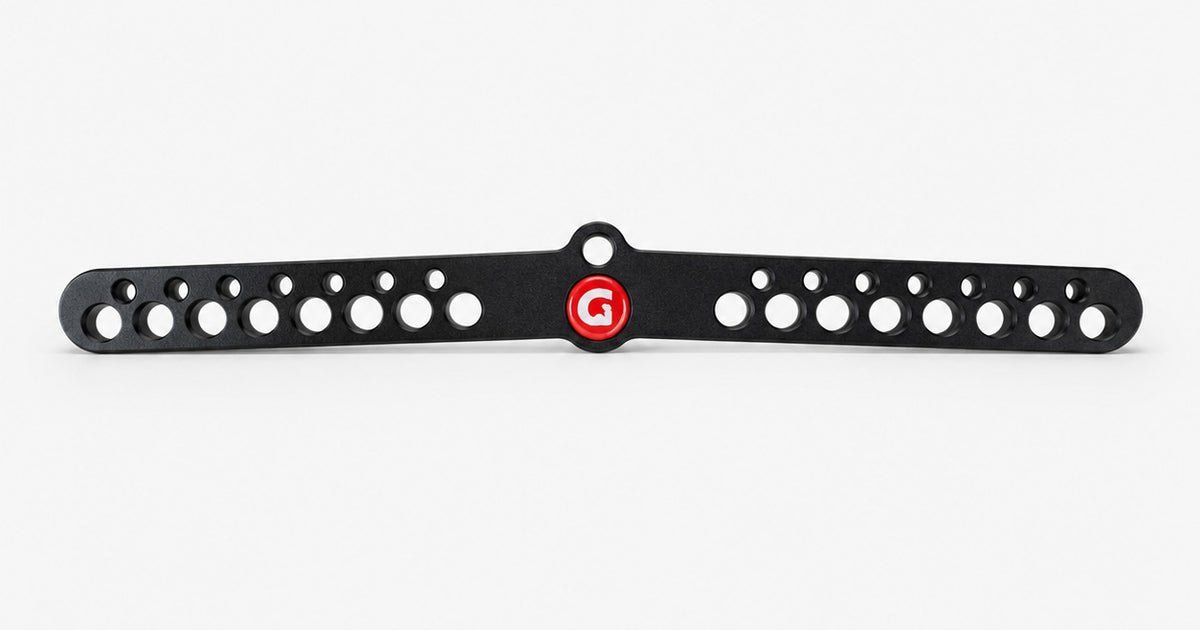
The GymPin D-Handle Bar is an adjustable attachment platform, not a complete cable machine. The current range lists 20-inch and 30-inch lengths, LITE and PRO constructions, steel and stainless-steel choices, and standard or Holey configurations. Treat those as separate decisions. A longer bar does not automatically tell you which material or connection style you are ordering.
LITE is listed at 8 mm thick and PRO at 10 mm. That identifies a construction difference; it is not a published load rating for your entire setup. Your machine, cable, connector and chosen handles remain part of the system. Do not convert the word PRO into permission to exceed another component's limits, or assume that the thicker option resolves a fit problem.
Start with the grip spacing you actually want to use. A wider attachment is useful only if you have room for it and want the positions it offers. Measure the available space around your cable station, including where the ends move during the exercise. A bar that clears the uprights at rest may still approach a frame or another attachment as you pull.
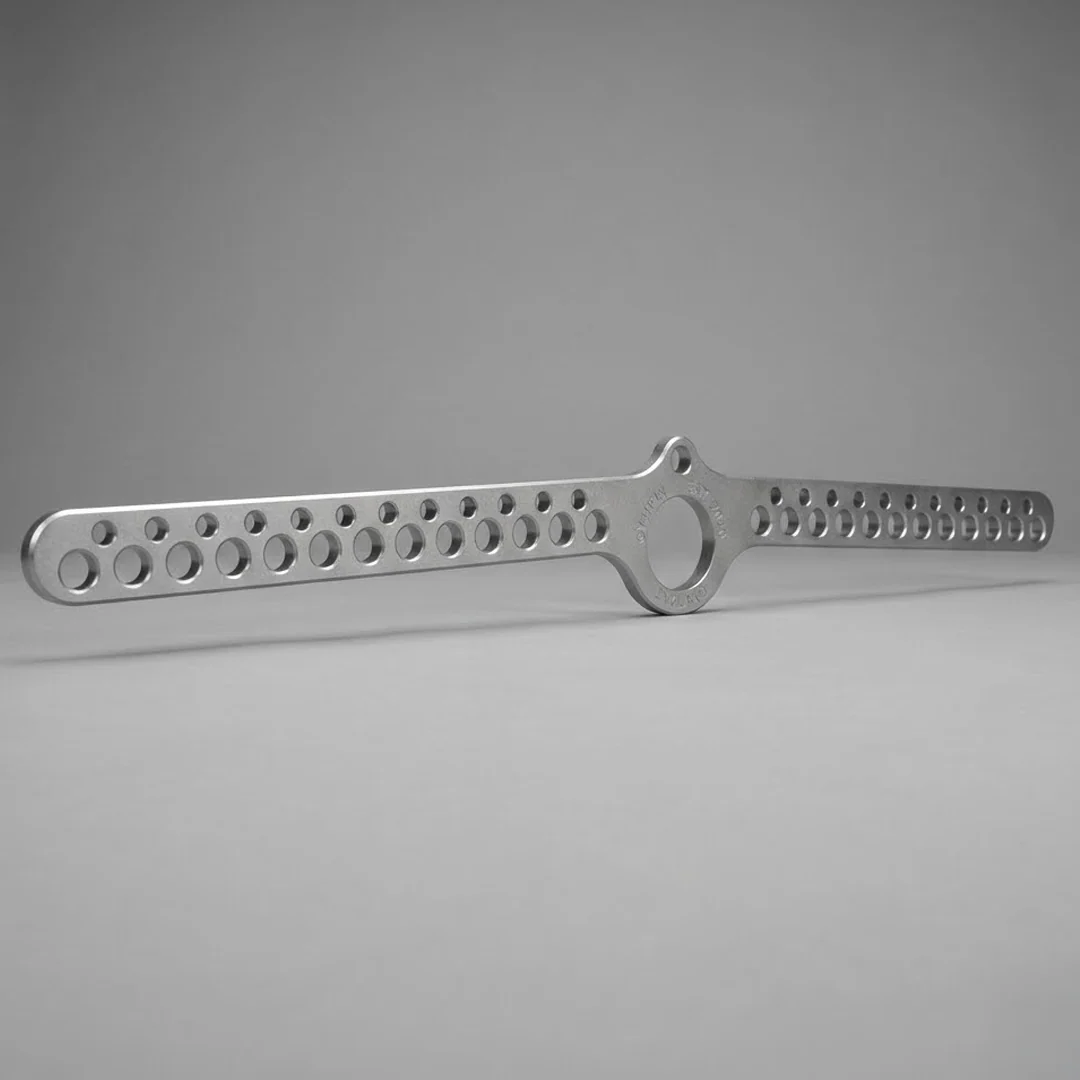
The Holey model shown in this section has a large central opening as well as the smaller mounting holes along its arms. The product range distinguishes versions for cable attachment work from versions intended to suit an Olympic barbell for landmine or T-bar applications. Select the exact version for the intended connection instead of assuming that every bar carrying the same name serves every job.
Write down your choices before checkout: length, construction, material and intended mounting arrangement. This short description is also useful when asking a compatibility question. It is much clearer than asking whether the D-bar fits while leaving the version and the rest of the equipment unspecified.
Check the entire connection path before loading
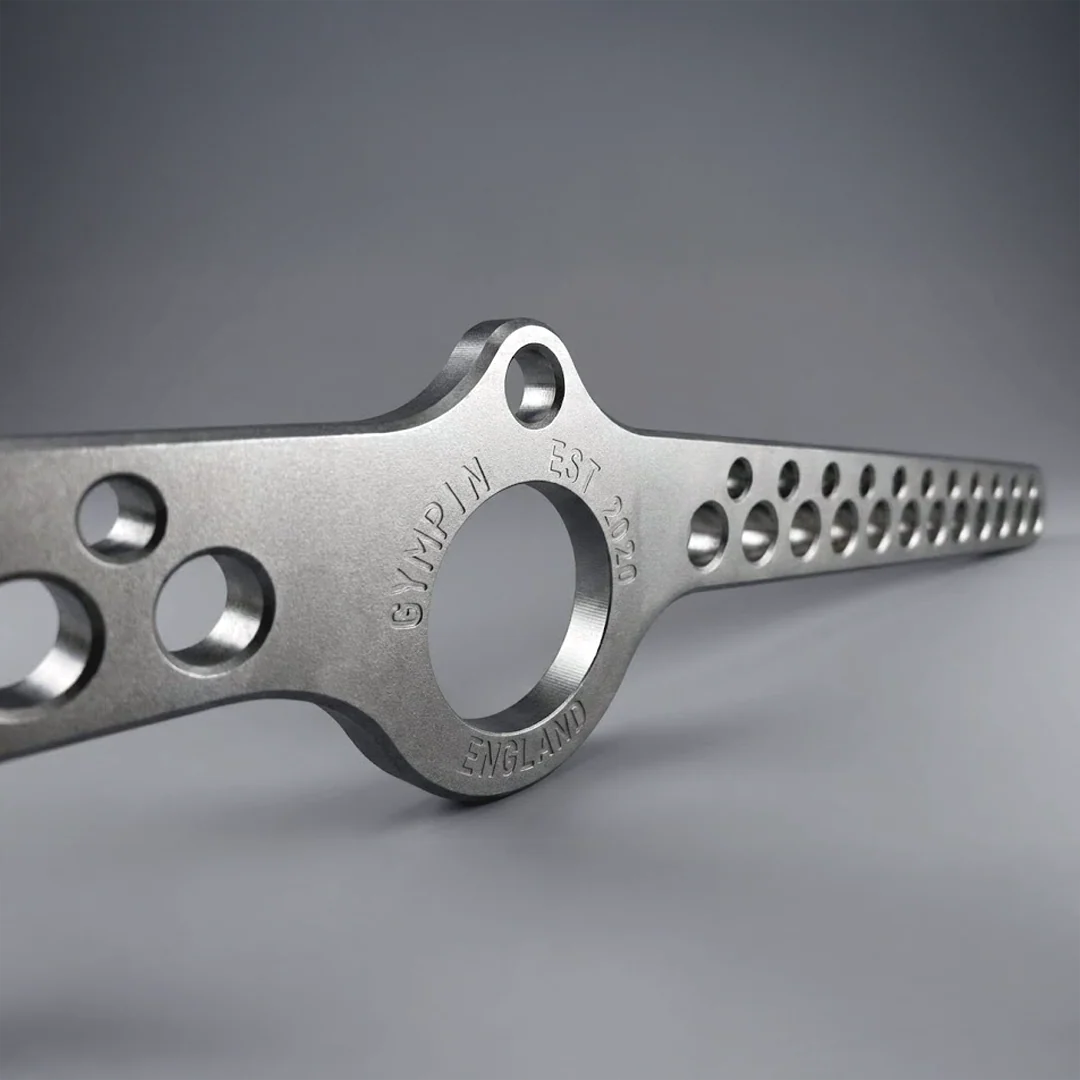
For a cable exercise, trace the connection from the machine to the bar and then to the hand grips. Check the cable-end connector, the selected attachment point and the fittings used on each side. A component passing through a hole is only the beginning of the check. It also needs appropriate clearance and a secure connection in the position it will occupy during the movement.
The close-up here shows the Holey bar's central opening and upper attachment eye. These are different features. Do not confuse the large barbell opening with a generic instruction to clip any connector anywhere. If you are uncertain about which point to use with your exact model, obtain the correct fit information before making the exercise heavier.
As a practical fit check, arrange the intended components without loading them and inspect where they meet. Does a connector close fully? Does the body of a grip or fitting foul the bar? Can the attachment move without levering a connector against an edge? These are useful questions to put to the equipment supplier rather than improvising a solution with an unfamiliar part.
A landmine-style setup has a different connection path from a cable setup. It introduces the barbell, its supported pivot and the way the attachment is retained on the sleeve. Buying the Holey version does not by itself provide all those other parts. Consider the complete arrangement, including the space in which the loaded end moves, rather than buying from a close-up photograph alone.
Inspect the equipment before use and make adjustments with the load removed. Stop if anything is damaged, insecure or incompatible. This is a buying and setup guide, not an engineering certification of an unseen machine. A clear answer about the exact parts is more useful than guessing from an apparently similar gym installation.
Choose the hand contact separately from the bar
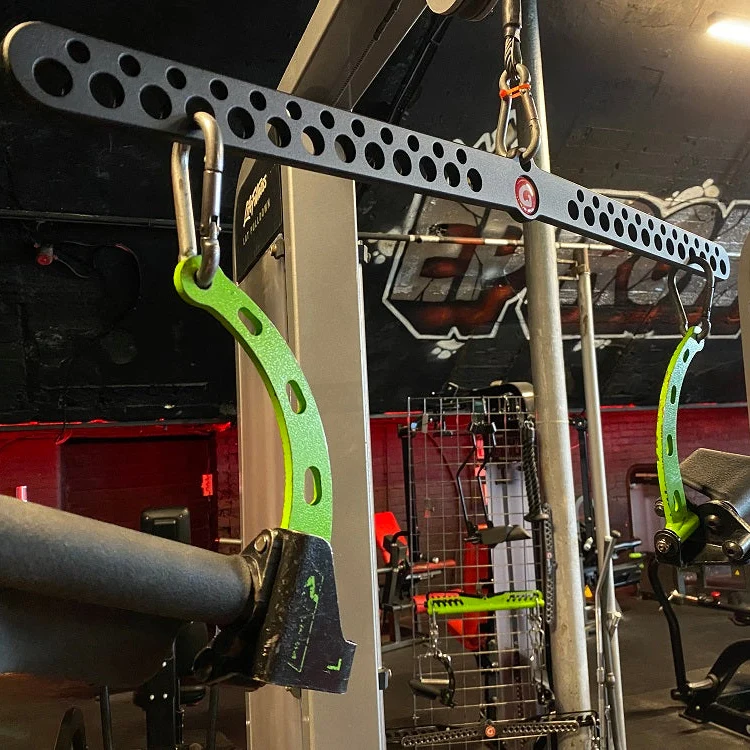
The bar gives you mounting positions; the attachments you hold determine another part of the experience. The photograph shows two green grips suspended at spaced points along a black GymPin bar. It demonstrates an assembled combination. It does not mean those grips are included in every bar order, or that every other grip will connect in the same way.
GymPin's fabric D-handles are sold separately as a pair. Their listing specifies a 14 cm handle width and a 300 g pair weight. That is useful when considering what you want to hold and carry, but it is not a measurement of the whole bar-and-handles assembly. Include the connectors and the chosen mounting method when working out how much the finished attachment hangs below the cable.
Quick Release D Handles are another separate option. They use pull-pin adjustment and come in fixed or rolling grip versions. The listing specifies a 13 cm pin-to-handle drop. The distinction between a grip that stays fixed and one that rolls matters when describing the setup, even if both are mounted at the same width on the same bar.
For those quick-release handles, remove cable tension before repositioning them and check that the pin is fully seated as directed. Their fit depends on the receiving hole, the material thickness and surrounding clearance. Do not infer universal compatibility from the fact that a different handle is pictured on a perforated bar. A handle, pin and mounting hole need to be assessed together.
Before buying another pair of grips, identify what you dislike about the existing contact point. Is it too narrow for your hand, too long below the cable, or simply positioned poorly for the exercise? Those are different problems. Solving the specific one is more useful than collecting several attachments that reproduce the same limitation.

Equipment Worth Exploring
Explore equipment, accessories and gear from our carefully selected range.

GymPin D Handle Bar
Multi-use steel D-handle bar for cable rows, pulldowns and other cable exercises.

GymPin Ergo Handles
Pair of ergonomic cable handles shaped for comfortable triceps and pulling exercises.



GymPin D Cuffs
Adjustable wrist cuffs with textured grips for supported cable-machine exercises.

Angles 90 Grips
Flexible grip attachments that allow natural wrist movement during pulling exercises.

Long Tricep ERGO Ropes
Extended triceps ropes with ergonomic grips for cable pressdowns and overhead extensions.
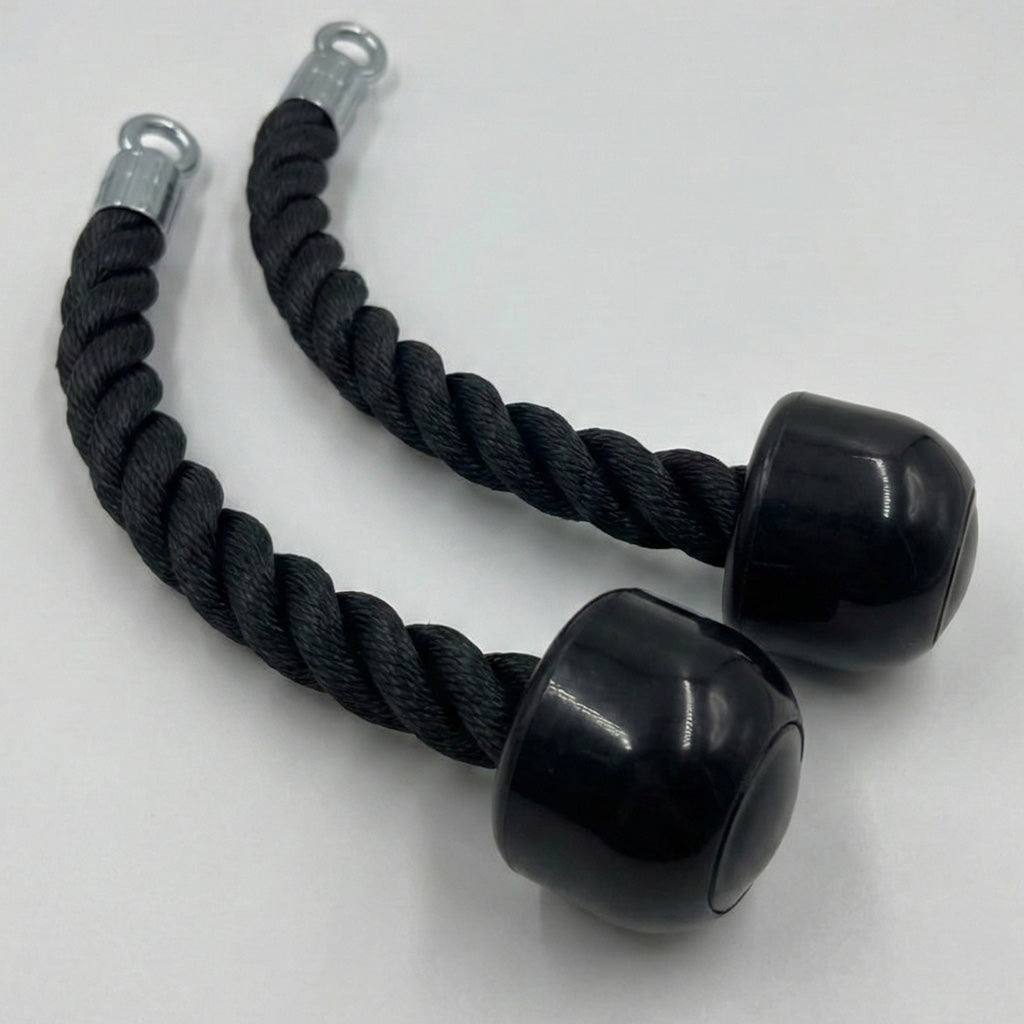
Individual Tricep Ropes
Pair of individual cable ropes for triceps pressdowns and cable hammer curls.

Multi-Length Tricep Strap
Adjustable-length cable strap for triceps, biceps and upper-body cable exercises.

VForce Wall Trainer
Space-saving wall-mounted functional trainer with pivoting cable arms and variable resistance ratios.
Use the positions to make your exercise repeatable

Adjustable width is useful when you can return to a setting deliberately. Choose the exercise first, then select a grip position and attachment combination that lets you perform it comfortably under control. The photo shows a lifter holding a GymPin bar in front of a bench. It illustrates a training arrangement, not a promise that copying the pictured equipment will produce the same result for everyone.
For a seated cable row, keep the load manageable and use a controlled pull and return. Avoid turning the comparison between grip positions into a competition over how far you can throw your torso backward. If changing the setup makes the exercise feel different, record that observation without immediately labelling it superior for muscle growth.
Log the station, bar version, hand attachments and selected holes. A simple note such as same holes on both sides is more reproducible than medium grip if you share the equipment with someone else. Counting outward from an obvious central feature can help you return to a position, provided you describe that counting convention clearly and check both sides.
Change one feature at a time when comparing setups. If you move the handles, swap a rolling grip for a fixed one and increase the load together, you have changed three variables. That may be an enjoyable experiment, but it gives you little basis for deciding which change mattered. Repeat a familiar setting before drawing conclusions from one unfamiliar set.
The equipment options below include other cable handles, ropes, straps and compatible station categories. They are alternatives for different jobs, not a list of required additions to the D-Handle Bar. Confirm the actual connection and intended use for any combination. An unrelated accessory does not become necessary just because the main attachment has more holes.
Buy for one actual problem and keep the useful setup

The strongest reason to consider an adjustable bar is a clear limitation in your current arrangement. Perhaps a fixed attachment leaves your hands in an awkward position, or you want to repeat two defined grip widths on the same cable station. Start there. Buying the largest or thickest version is a separate decision from whether the attachment solves that problem.
Check what the order contains. The bar listing describes one bar in the selected variant, while the separate handle listings describe their own packages. Do not build a budget around everything visible in a lifestyle photograph. Confirm the bar, handles, pins or connectors and any other equipment you intend to use, including the parts you already own.
Use a short buying note: intended exercise, machine connection, desired hand position, available space and exact parts required. This turns a vague shopping decision into a practical comparison. It also makes it easier to recognise when a simpler handle would meet the same need without another large attachment.
Once the equipment is assembled correctly, keep a small record of what works. Include the exercise, mounting positions, load, repetitions and one useful comment about comfort or control. If the attachment is shared, a setup photograph can help you restore the arrangement, but it should supplement rather than replace checking that everything is fitted securely each session.
Evaluate the purchase after several comparable sessions rather than one exciting first set. Did it remove the limitation you identified? Can you reproduce the grip position without a lengthy changeover? Does it still fit the station through the movement you actually perform? These practical outcomes are easier to judge than broad claims about an attachment being essential for every lifter.
The aim is a useful connection between you and the resistance. Keep the version and accessories that suit your real exercise, and resist changing the whole arrangement merely to use every available option. More adjustment is valuable when it gives you a better-defined setup, not when it leaves every session impossible to compare.

Bodybuilding Shirts & Workout Gear
Bodybuilding shirts, tanks and gym gear for lifters chasing muscle, size, symmetry and the pump.

Shirt Pull Day – Back & Biceps Meme Top T-Shirt
Heavy lifts, good laughs, and a little “Pull Day Graphic” energy.

Safety Practice Safe Sets Vest Weightlifting Tank Top
Bring “Gym Safety” humor to your next lifting session.

Gymhead Lifting On My Mind Meme Decal Water Bottles Sticker
Give your everyday gear a playful “Gymhead” twist.

Lift Smart Brain Weight Plate Mind Muscle Connection 45 Hoodie
Keep it laid-back with a little “Lift Smart Brain Weight Plate” attitude.

Mind Muscle Perfection Brain and Biceps Gym for Science T-Shirt
Show some gym-day personality with “Mind Muscle Perfection Brain and Biceps”.

One More Rep Shirt: Motivational & T-Shirt
Make gym days more fun with “One More Rep” style.

Growth Stoic Bodybuilder : Meme & Ancient Greek God T-Shirt
Rep “Growth Stoic Bodybuilder” humor in and out of the gym.

Heart Weight Plate Valentine'S Day Lovers T-Shirt
Rep “Heart Weight Plate” humor in and out of the gym.

Pink Flower Weight Plate Floral Meme & Gymbros T-Shirt
Rep “Pink Flower Weight Plate” humor in and out of the gym.

Gym Skull Weightlifting Design for Powerlifters Bodybui T-Shirt
Bring “Skull Weightlifting Design for Powerlifters” humor to your next gym day.