Advertising disclosure: This page includes affiliate product links that may earn us a commission, as well as products from our own store.
Straight-bar curls, EZ-bar curls and hammer curls all deserve a more useful question than which one wins a muscle-activation chart. A 2026 experiment offers a clear example of why the grip, the implement and the phase of the repetition must be considered together. Here is how to interpret the result and use it to make arm training more consistent.
What the 12-man curl experiment can actually tell you
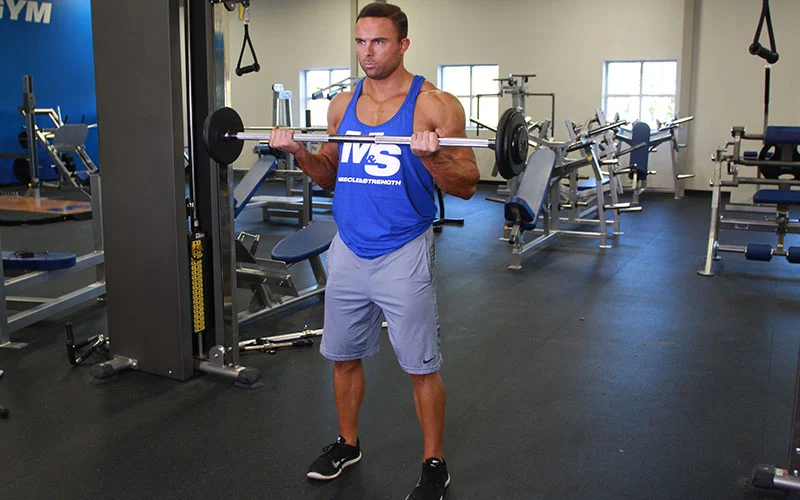
A July 2026 experiment tested 12 resistance-trained men using three combinations: a straight bar with palms up, an EZ bar with an angled grip, and a hammer curl bar with palms facing inward. They performed ten repetitions at 65% of estimated one-repetition maximum, with approximately one second up and two seconds down. Surface electrodes recorded biceps brachii and brachioradialis activity. This was an acute laboratory comparison, without a muscle-growth training period.
The lifting phase produced higher normalized electrical activity than the lowering phase in both measured muscles. During lowering, the forearm muscle showed greater normalized activity than the biceps in the straight-bar and EZ-bar conditions, with weaker evidence in the neutral condition. That compares two muscles within a setup; it does not establish which bar builds more biceps. Bar shape and hand orientation changed together, so the experiment cannot isolate a pure grip effect.
This distinction matters when a chart becomes a shopping recommendation. A measurement can describe what happened during a tested task without telling you which exercise will produce the greatest visible change after months of training. Electrode placement, normalization and the movement being measured affect what the recorded signal represents. A higher number should prompt questions about the experiment before it prompts a wholesale change to your arm routine.
Read any curl comparison in this order: who trained, what equipment they used, how the repetitions were performed, and what outcome was actually measured. If the outcome was electrical activity during one visit, use it as information about that task. For a claim about bigger arms, look for repeated training and direct measurements of muscle size. Keeping those questions separate makes research useful without pretending every experiment supplies a complete program.
Choose the grip and the implement as one setup
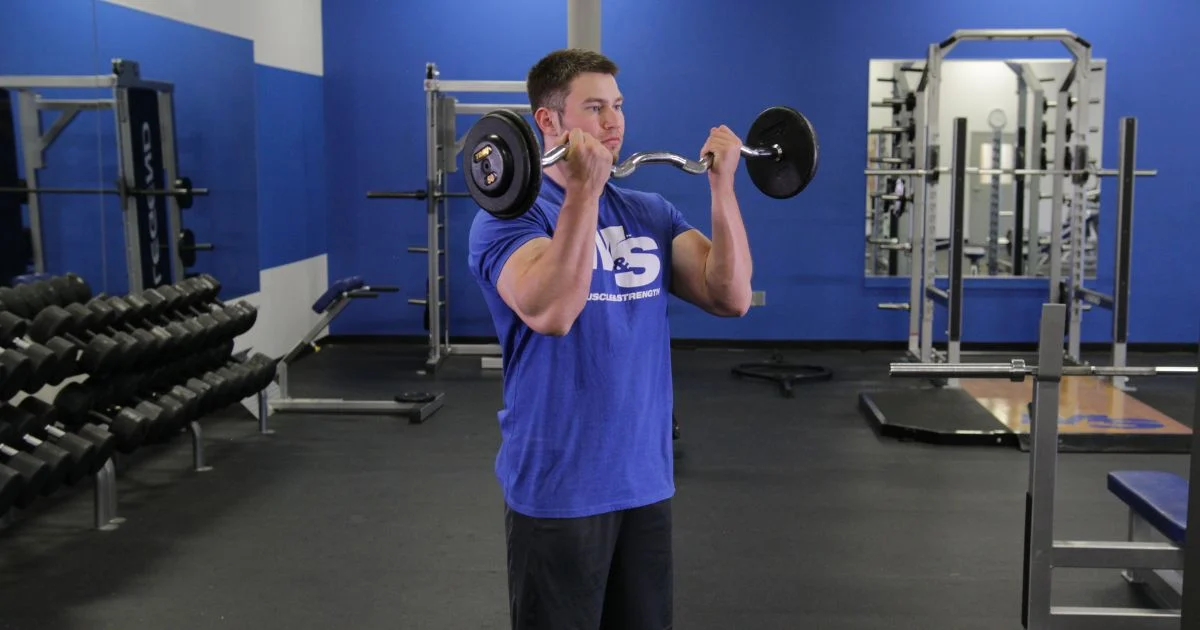
A straight bar fixes both hands along one shaft. An EZ bar offers angled gripping segments. Dumbbells let each hand find its own orientation, while a hammer curl bar provides parallel handles. These are useful practical differences even before you consider a muscle-activity measurement. Start with the implement you can hold and move comfortably, then judge the exercise through a repeatable set rather than through the label on the bar.
Do not assume that changing from straight to angled grips alters only your palms. The empty bars may weigh different amounts, their sleeves may accept different plates, and the usable hand positions may be different distances apart. A comparison using the same plates on each end can therefore involve different total loads. Record the bar itself as part of the exercise. Ten kilograms added to an unfamiliar bar is an incomplete description of the resistance.
Check the full movement with a light load before committing to work sets. Your hands should remain securely around the grip, with the wrists aligned rather than folding backward to make the bar reach higher. Choose a hand spacing that allows the elbows and shoulders to move comfortably. An angled bar is an option for finding a suitable position; it is not a guarantee against wrist or elbow problems, and discomfort should not be treated as proof that an exercise is effective.
For a practical comparison, keep one version as your main curl for several sessions. If you try a second implement, give it its own starting load and training record. Compare control, consistency and tolerability instead of declaring a winner from the first pump. Seated dumbbell curls and cable curls with individual handles are additional options, but changing support or resistance direction creates another exercise variation. Their results should not be treated as a direct reproduction of a three-bar laboratory test.

Equipment Worth Exploring
Explore equipment, accessories and gear from our carefully selected range.


EZ Curl Barbell
Olympic EZ curl bar with angled grips for curls and triceps exercises.

Rubber Hex Dumbbells
Rubber-coated hex dumbbell pairs with a stable shape for home and commercial strength training.



Speed Collar
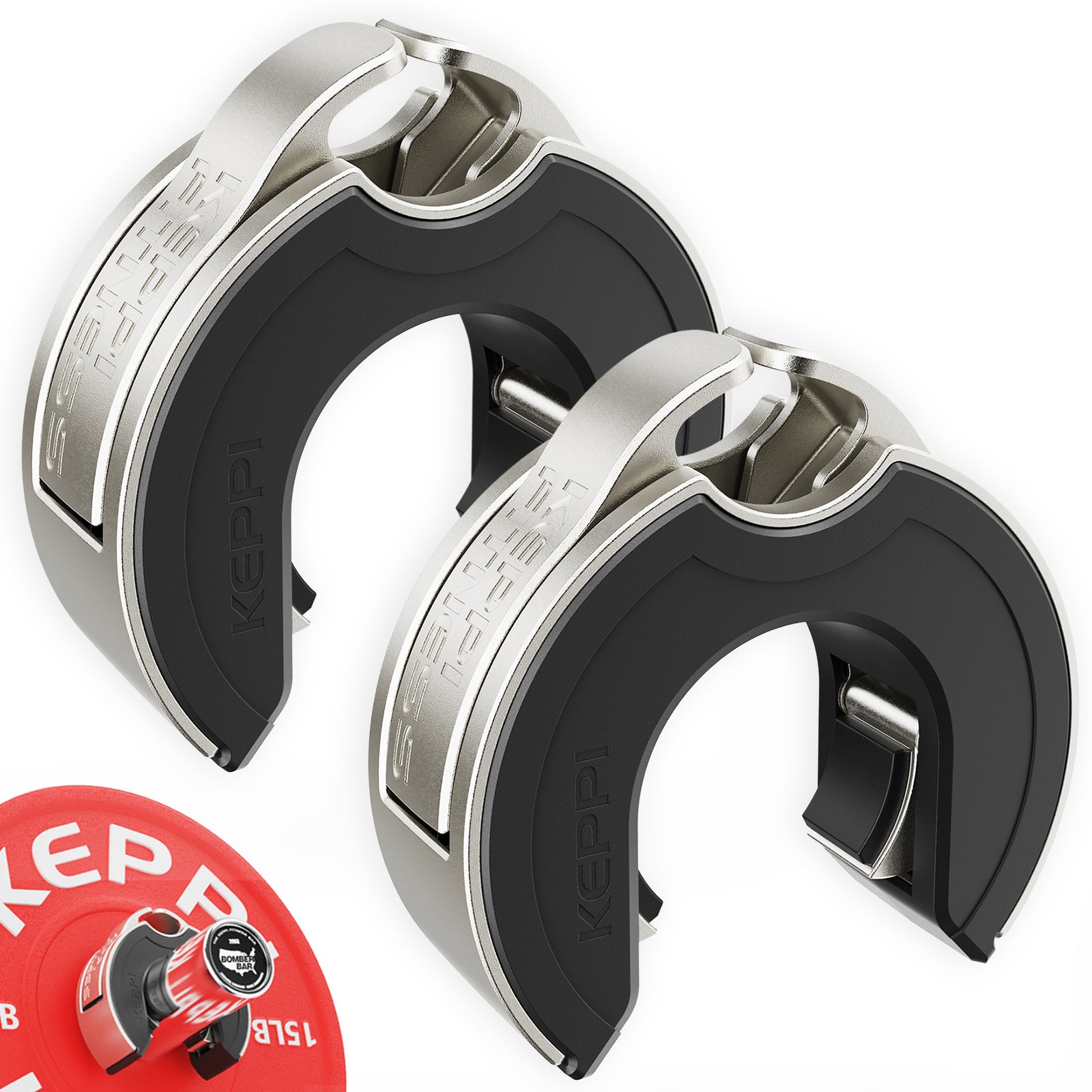
Quick-release collars designed to secure weight plates on standard two-inch Olympic bars.
Keppi Open Collars
C-shaped magnetic Olympic barbell collars with a quick-lock mechanism and grippy lining.
A quieter lowering signal does not make lowering useless
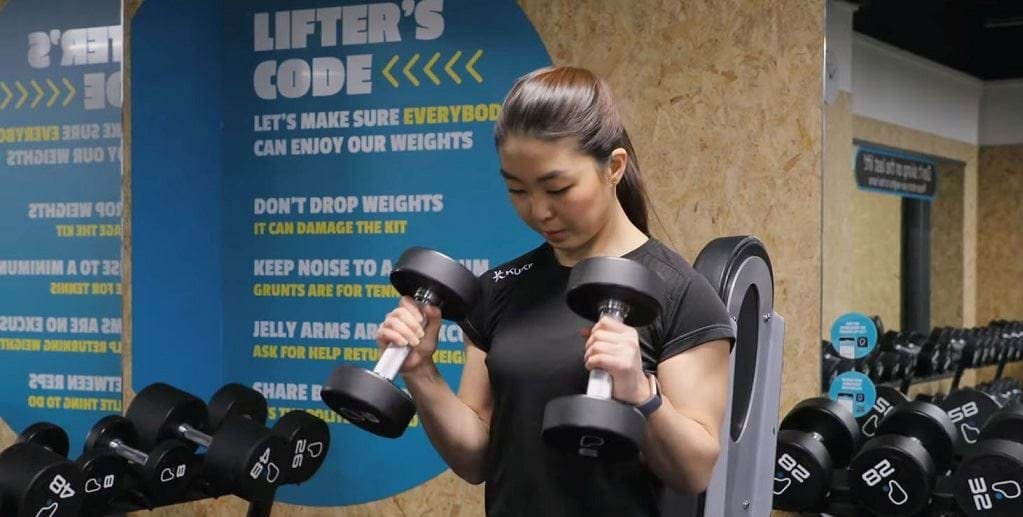
The biceps shorten as you lift a curl and lengthen under load as you lower it. The electrical signal need not be equally large in those two actions for both to matter. A systematic comparison of longer training studies found that concentric-only and eccentric-only training could both increase muscle size. Its estimated advantage for eccentric training was uncertain. That is a different question from which phase generated the larger signal during a single set.
For an ordinary curl, the useful starting point is straightforward: lift the weight you can control, then return it deliberately. Do not drop the dumbbell because the hard part feels finished. Equally, there is no need to convert every return into an exaggerated ten-second challenge. A manageable, consistent descent lets you reproduce the exercise without making counting seconds the main event. If you deliberately change the tempo, record the change before interpreting a drop in repetitions as lost strength.
A simple example illustrates the problem. Suppose you normally perform twelve curls with a smooth return and then manage only eight after adding a long pause and a much slower descent. Those are different repetitions. The new set may be challenging, but the count alone cannot establish that it was better or worse. Keep load, movement, rest and tempo sufficiently consistent that a change in performance has an understandable meaning.
Avoid jumping from these findings to assisted heavy negatives. Having another person lift a weight you cannot raise yourself introduces a different loading method, assistance requirement and practical risk. The routine here requires a load you can lift and lower independently. Finish the set when you can no longer maintain the chosen movement instead of using the lower-activity phase as permission to lose control.
Make a curl repeatable before making it heavier
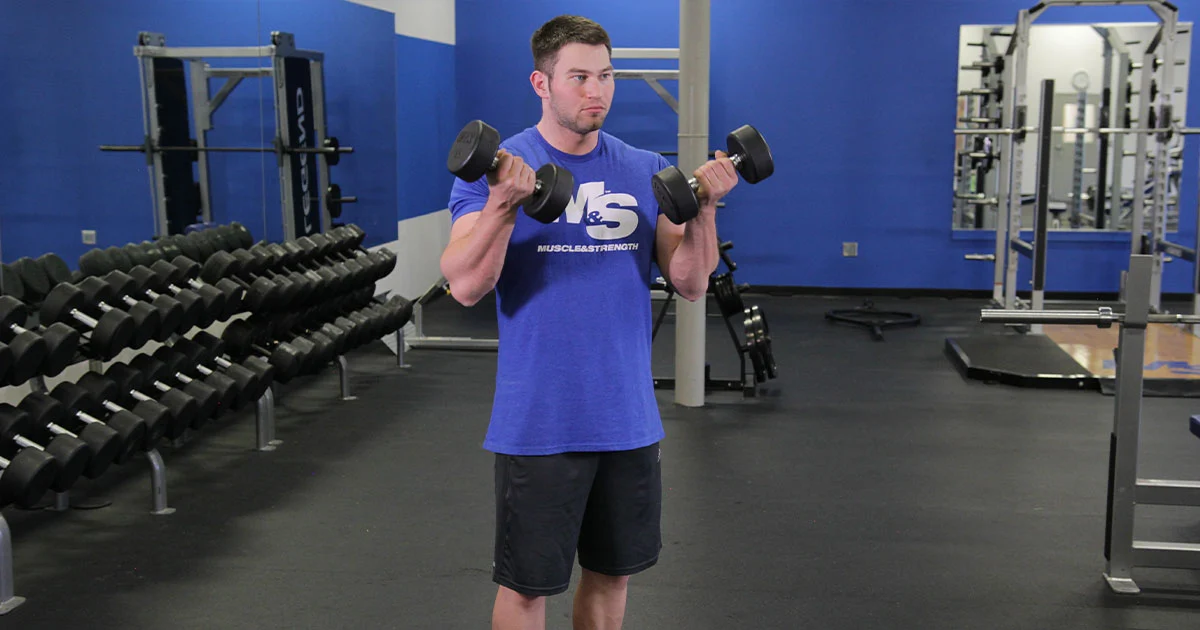
Set your feet, stand tall and begin with the arms in a comfortable lower position. Bend at the elbow to bring the weight upward, then reverse the movement smoothly. Keep the wrists firm and avoid using a sudden backward lean to throw the resistance through the hardest part. With dumbbells, decide whether you are curling both arms together or alternating them, and use that same choice when comparing sessions.
For a hammer curl, keep the palms facing inward instead of rotating them upward as the weight rises. Maintain a stable torso and a deliberate return. The exercise still involves elbow flexion; the change in hand orientation does not turn it into a forearm-only movement. Do not chase an extra centimetre of height by bending the wrist. Use a range you can control and repeat without forcing a painful position at either end.
A short side-view recording can help you compare your first and final repetitions. Look for an increasingly large lean, the elbows moving substantially farther forward, or the return becoming a drop. A small natural movement is different from using your whole body to rescue a load. The aim is a consistent exercise, rather than an artificial demand to keep every joint frozen. If your technique changes enough that you are doing a different movement, stop and adjust the load.
Treat persistent or sharp wrist, elbow or shoulder pain as a reason to change or stop the exercise and seek appropriate assessment when needed. A different grip may feel more comfortable, but comfort alone does not diagnose the cause of pain. Start a replacement movement conservatively. There is little value in winning an argument about the theoretically ideal bar if you cannot perform useful, repeatable training with it.
Build an arm-training record that answers useful questions
Use a short entry that names the implement, total load, repetitions and an effort note. For example: standing EZ-bar curl, identified bar plus plates, three work sets of ten, nine and eight, smooth return, approximately two repetitions left on the first set. This is an example of a record, not a universal prescription. The point is to make the next session comparable without requiring a detailed laboratory report between sets.
Choose a manageable repetition range for your current program and keep the variation stable while you learn it. If you use eight to twelve repetitions as your chosen range, first improve the quality and number of those repetitions at the same load. Add a small increment when the sets consistently meet your target with the intended effort and control. After increasing the load, accept that the repetition count may return toward the lower end of the range.
If you want a second curl, give it a clear role. You might use an angled bar as the main exercise and a lighter neutral-grip dumbbell curl as an additional option. You do not need three nearly identical movements simply because three conditions appeared in an experiment. Consider the pulling work already in your program and the time and recovery you can sustain. Add work for a reason, then review whether it remains useful.
Assess the routine over repeated sessions. Can you reproduce the setup, keep the movement controlled and gradually improve performance without accumulating problems? If you also track arm size, use the same measurement conditions and allow enough time for a trend to emerge. A pump immediately after curls is a poor comparison with a relaxed measurement on another morning. Research can sharpen the questions you ask; a consistent training record helps you answer the practical ones.

Bodybuilding Shirts & Workout Gear
Bodybuilding shirts, tanks and gym gear for lifters chasing muscle, size, symmetry and the pump.

GymTok – TikTok Parody Bicep Workout Vest for Gymbros a Tank Top
Bring “GymTok” humor to your next lifting session.

The Real Alps Muscle Mountain – Crewneck Pullover Jumpe T-Shirt
For laid-back days and lifting humor: “The Real Alps Muscle Mountain”.

Big Biceps Theory Decal Water Bottles & Gear Meme Sticker
Bring “Big Biceps Theory” attitude to your water bottle or laptop.

Funny Micro Biceps Club President | Gym Humor Hooded | Hoodie
Bring “Micro Biceps Club President” gym humor to lazy days and post-workout plans.

Brain and Biceps Tee
Make gym days more fun with “Mind Muscle Perfection Brain and Biceps” style.

Curls The Girls Shirt – Bicep Curls Top & Gymbros T-Shirt
Rep “Curls For The Girls” humor in and out of the gym.

Repetition Stoic Shirt: Meme Sigma & Greek God Pump T-Shirt
Show some lifting attitude with a playful “Repetition Stoic” tee.

Lift Smart Brain Weight Plate Mind Muscle Connection 45 Tank Top
Add some lifting attitude to training with “Lift Smart Brain Weight Plate”.

Gymhead Lifting On My Mind Meme Bro Athletic Shirt Tank Top
Bring “Gymhead” humor to your next lifting session.

The Only Difference Between Good And Great Is One T-Shirt
Bring “The Only Difference Between Good And Great” humor to your next gym day.