Advertising disclosure: This page includes affiliate product links that may earn us a commission, as well as products from our own store.
Front-Rack Carries: Breathe, Brace and Progress Without Losing Position
A front-rack carry puts the weight near shoulder height while you move. The useful challenge is keeping that position organised as your feet alternate and your breathing continues. It is easy to turn the exercise into a contest of grimacing, leaning back and surviving a longer distance. A more repeatable approach starts with the implement you can hold comfortably, a clear route and a finish you can control. This guide separates rack-position practice, walking and conditioning so you can choose the version that fits your session.
1. Build a rack position you can enter and leave
Before thinking about distance, decide how the weight gets to your shoulders and how it returns. A kettlebell clean is one option for someone who already knows it. Learning a heavy clean and a loaded carry simultaneously adds an unnecessary variable. Use a manageable implement and a familiar setup; rehearse putting it down before beginning the work set.
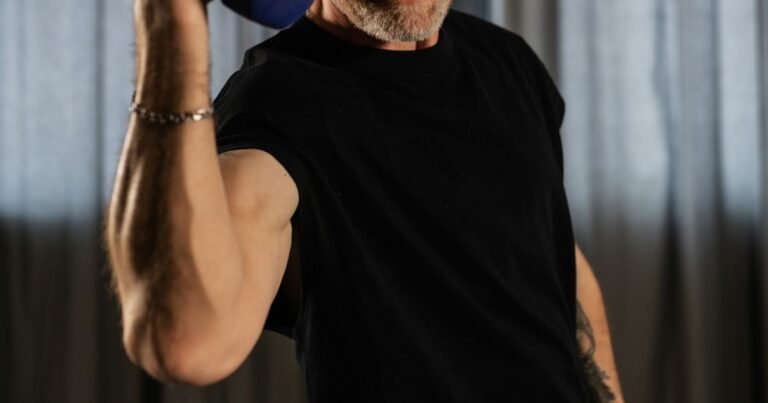
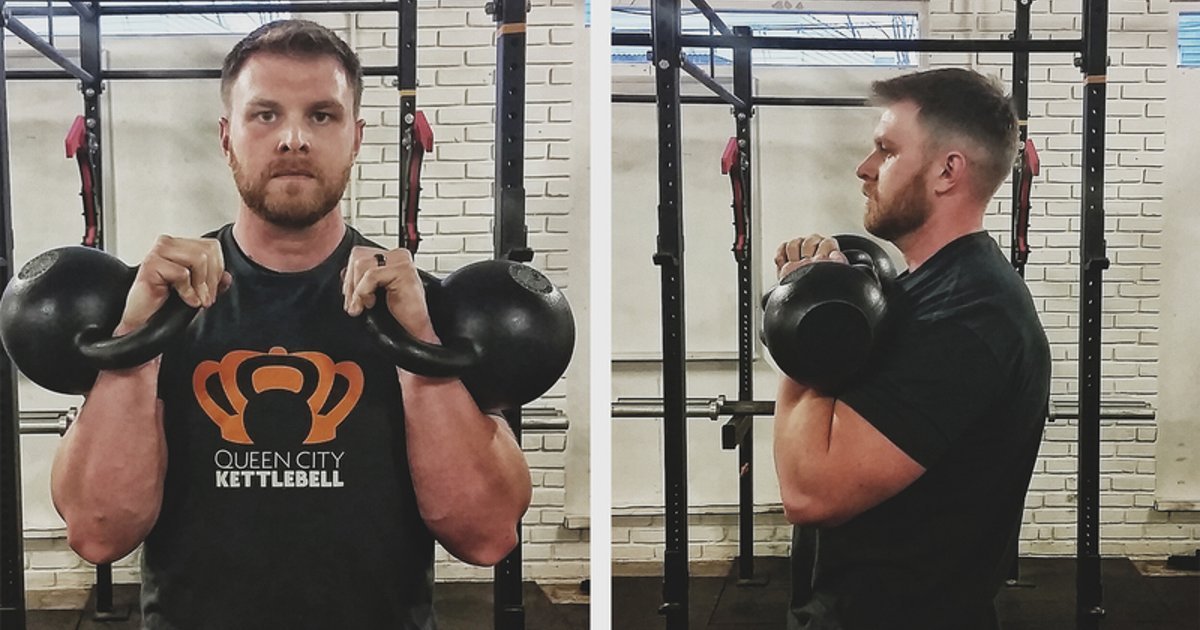
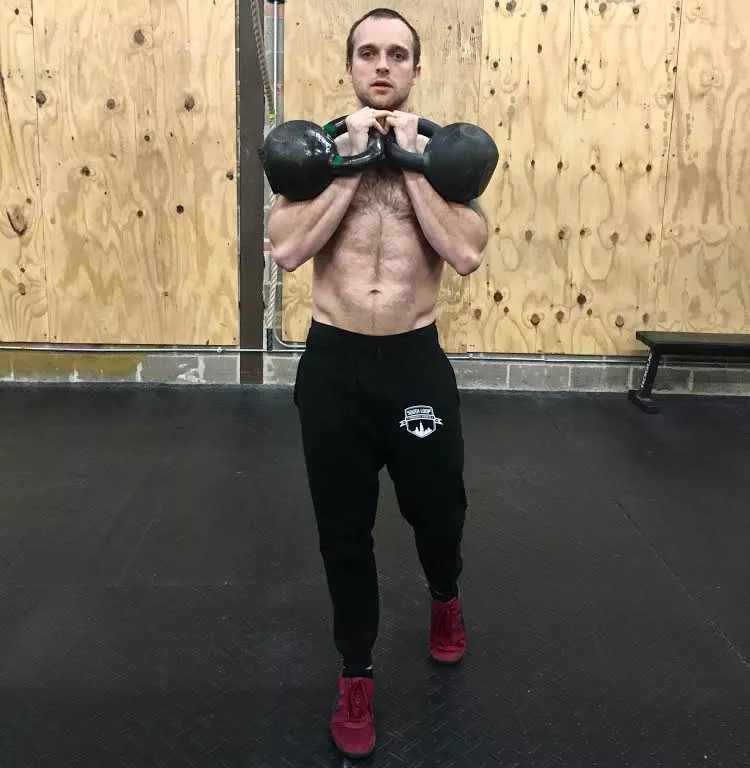
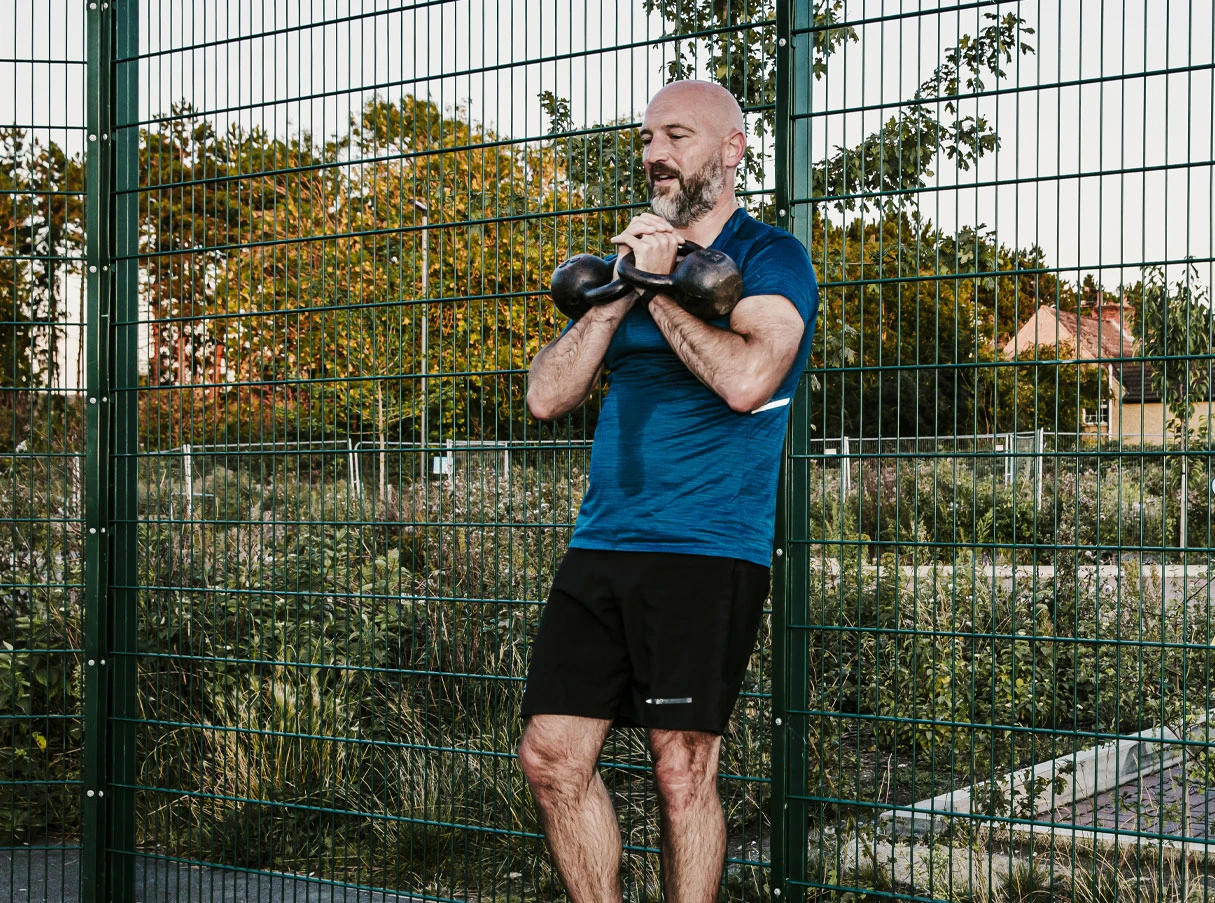
With a conventional kettlebell rack, the bell rests against the forearm and upper arm, close to the torso. Your hand stays around the handle rather than balancing the bell on open fingers. Elbow position differs from a barbell front squat: you do not need to force kettlebell elbows high and forward. Find a supported position without bending the wrist sharply or letting the load pull away from your body.
Check equipment as part of the setup. An adjustable kettlebell should be locked according to its instructions, with no loose plates or moving adjustment parts. A bulky dumbbell may fit differently against the shoulder from a compact fixed bell. Equal kilograms do not make those contact points interchangeable. Start again with a lighter load when changing implements.
Clear the route before lifting. Move loose plates, check the surface and decide where you will stop. Avoid carrying through someone else’s lifting space. Your first successful set is one in which the pickup, hold and return are all deliberate; the walk comes after those pieces are dependable.
2. Keep breathing without turning the hold into a backbend
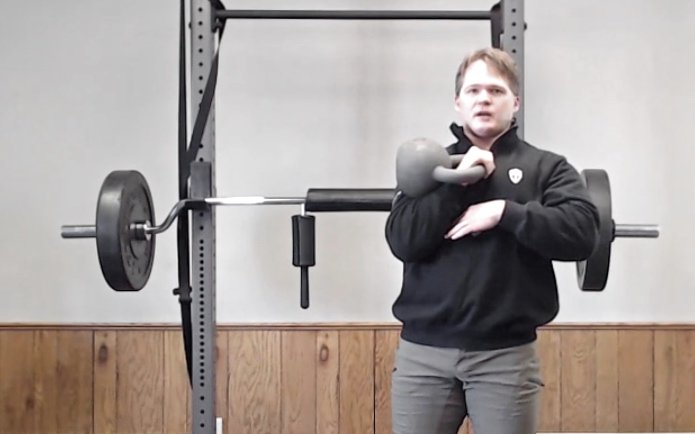
Take a short standing hold before your first trip. Settle the bells, look forward and check whether you can take several ordinary breaths without changing your stance. Brace enough to keep the trunk controlled. Do not interpret that cue as an instruction to hold one maximal breath until the set ends.
A common escape is lifting the chest and leaning backward as the bells feel heavier. That may keep the weights near the shoulders, but it changes the posture you intended to practise. Think about keeping the ribcage over the pelvis rather than pushing the ribs upward. A training partner or a brief side-view recording can help you compare the beginning and end.
Use a simple observation checklist: did the bells drift forward, did one elbow sink, and did your torso position change while you breathed? Pick one adjustment for the next set. Trying to monitor ten cues at once makes the task harder to repeat. If standing itself feels disorganised, shorten the hold or reduce the load before adding steps.
Nose breathing can be a useful pacing option at an easy effort, but it is not a score that every carry must pass. The practical priority is controlled breathing without turning the set into prolonged straining. Stop and reset if the rack position becomes uncomfortable or you cannot keep the load securely supported.
3. Make the route and the last few steps part of the exercise
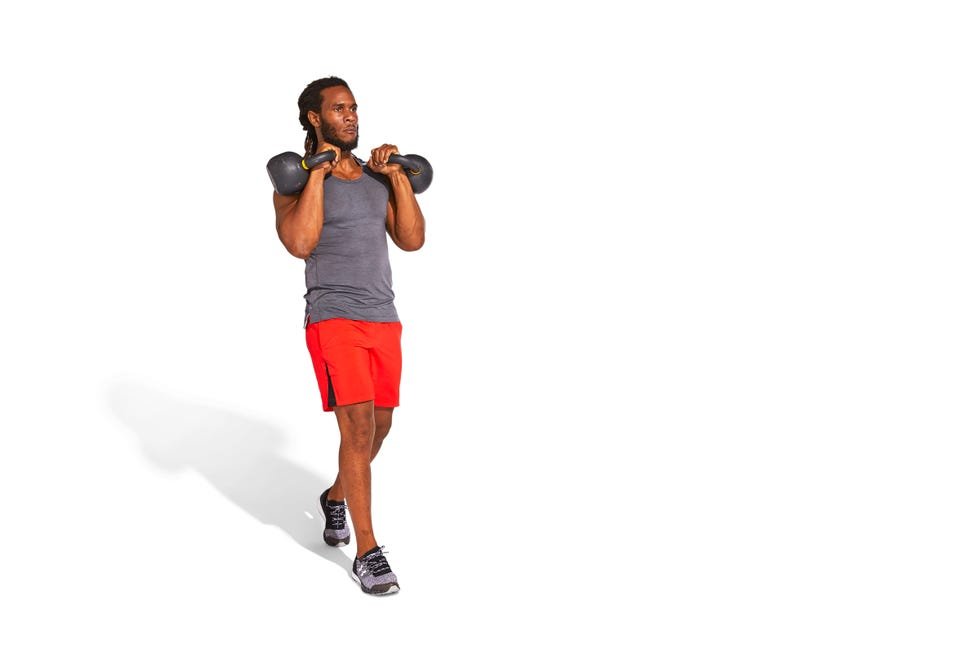
Begin with short, deliberate steps on a straight, unobstructed path. Keep your gaze ahead and avoid rushing to reach the marker. A carry is different from walking unweighted because you must manage the load during every step, not just stand tall at the start.
Plan the return before fatigue arrives. If you use an out-and-back route, slow down before turning and give yourself room to turn with small steps. Do not twist abruptly underneath bells you can barely support. A shorter straight route with a controlled finish can be more useful than a longer route crowded with obstacles.
Track the route as well as its length. Twenty metres with a turn is a different task from twenty uninterrupted metres, and a busy gym floor may change what is possible that day. Keep those differences in your log rather than treating every distance as directly comparable. Consistency makes progress easier to judge.
End the set before the final steps become a rescue operation. If the first half looks controlled but the second half requires a pronounced lean, the longer distance has not automatically made the set better. For the next attempt, shorten the route and aim to make the final few steps resemble the first few. Leave enough control for a deliberate put-down.
4. Choose one bell, two bells or marching for a reason
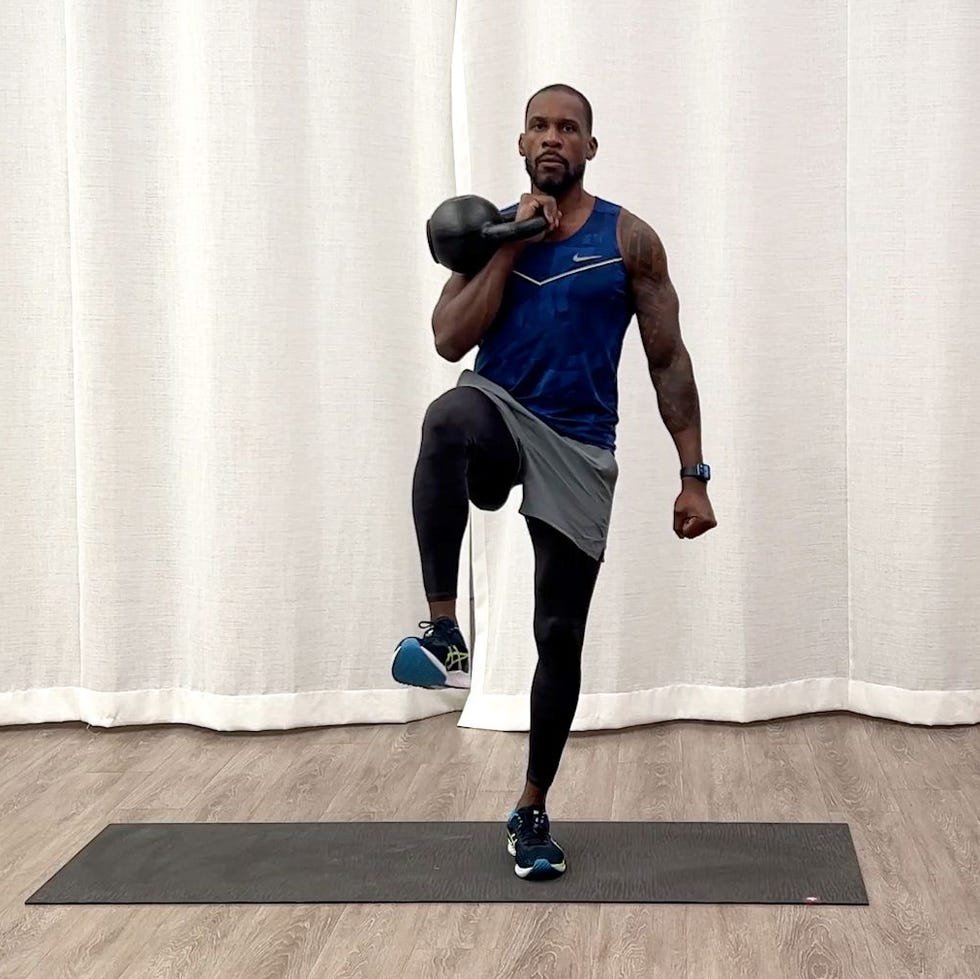
One bell gives you an obvious side-to-side comparison. Carry it at one shoulder, then repeat on the other using the same route and a comparable effort. Watch whether you tilt, rotate or change your stride. Different sensations do not identify the cause of an imbalance, and they are not a reason to automatically double the work on one side.
Two bells let you practise supporting a load on both sides at once. Record the weight of each bell: two 12-kilogram bells means 24 kilograms total, not a 12-kilogram carry. Avoid comparing that entry with a single-bell set as though only the duration changed. They are separate variations.
Marching in place is useful when you want alternating steps without navigating a route. Raise one foot, replace it under control and alternate. A higher knee lift is optional; it should not require leaning backward or letting the bells bounce. Keep your chosen step height consistent so the drill remains comparable between sessions.
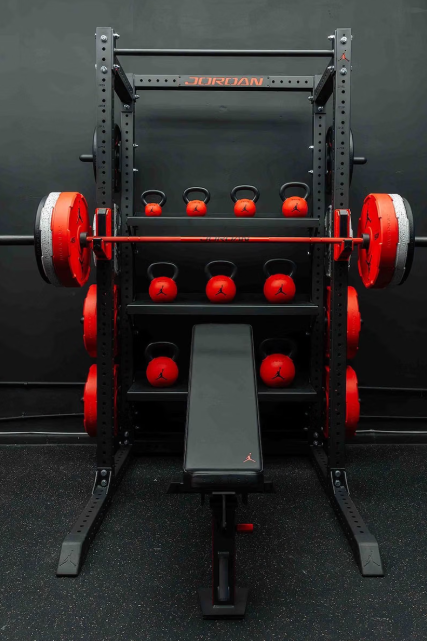
Dumbbells offer another rack shape, while a barbell requires a different support position and a planned rack setup. Neither is a mandatory upgrade. If practising a barbell front-rack hold, use appropriate rack equipment, secured plates and familiar loading rather than improvising a walking route with a heavy bar. Kettlebells, dumbbells and barbell equipment below serve these different tasks; choose the tool that fits the position you can control.

Equipment Worth Exploring
Explore equipment, accessories and gear from our carefully selected range.

Cast Iron Kettlebells
Textured cast-iron kettlebells for swings, squats, carries, and full-body training.


Rubber Hex Dumbbells
Rubber-coated hex dumbbell pairs with a stable shape for home and commercial strength training.


Competition Plates
Competition-style bumper plates for Olympic lifts and loaded strength training.
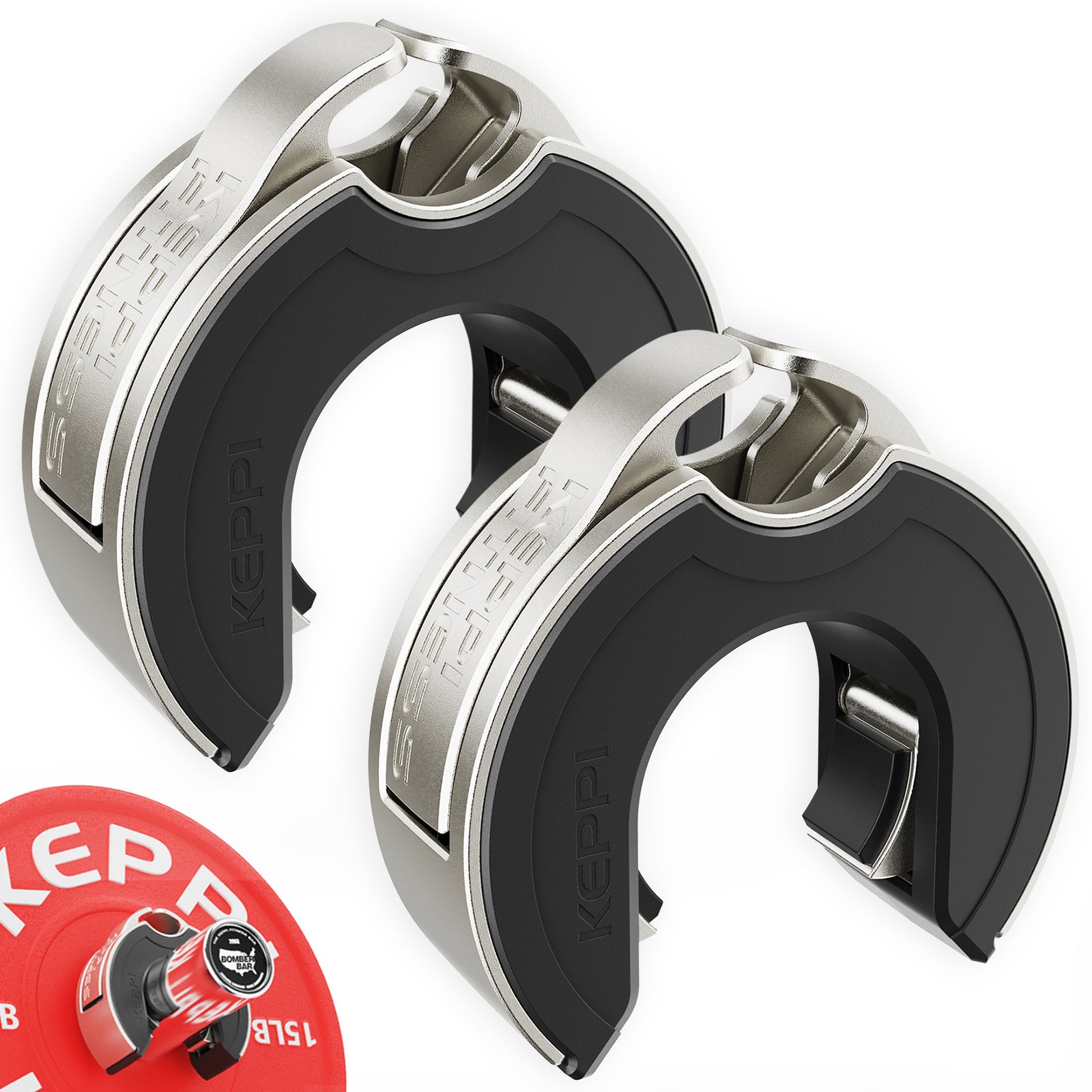
Keppi Open Collars
C-shaped magnetic Olympic barbell collars with a quick-lock mechanism and grippy lining.
5. Progress the task you can actually repeat
Decide whether today’s work is position practice or a more demanding carry. For practice, use a brief hold or short trip while you are fresh. For accessory work, place it where tired shoulders or breathing will not compromise the important lifts that follow. If carries are a finisher, acknowledge that fatigue is part of the task and keep the route conservative.
Here is an illustrative starting experiment, not a universal prescription: perform two short trips with a comfortable load, resting until you can repeat the same setup and control. Record implement, weight per hand, distance, turns and a brief note about the finish. For a single-bell carry, include both sides. For marching, record time or steps instead of inventing a distance.
On the next exposure, repeat the task before changing it. If both trips were controlled and the put-down was easy to organise, add a small amount of distance or a few seconds. Change one variable at a time. Increasing weight, distance and sets together makes it difficult to tell what you have improved or why the position deteriorated.
Compare two example entries: “two 12-kilogram bells, two straight 15-metre trips, stable finish” and “same load, two 20-metre trips, leaned back late.” The second entry contains more distance, but it also tells you where to adjust. You could return to 15 metres or use a smaller increase; another maximal attempt is not the only response.
Also note changes that make a comparison less clean. Switching from marching to walking, changing footwear or replacing one bell with a different handle can alter the experience. Keep the new variation as a separate log entry until you have a repeatable baseline. This is particularly helpful when several people share the available bells.
Breathlessness, a hard rack hold and a difficult grip are observations, not proof that the exercise will build a specific amount of muscle or transfer to a particular lift. Keep your main strength and conditioning work in the programme. Let the front-rack carry earn its place through a clear purpose, a manageable recovery cost and progress you can recognise. For the kettlebell sessions where it fits, the functional-training gear below follows that same training theme.

Functional Fitness Shirts & Workout Gear
Functional-fitness shirts, tanks and workout gear for athletes who train strength, conditioning and everything in between.

Donut Kettlebell Meme Shirt – The Ultimate Bulking T-Shirt
Rep “Donut Kettlebell” humor in and out of the gym.


Hell's Bells Kettlebell Tee
Show some rock-and-lifting attitude with a playful “Hell's Bells Kettlebell” tee.

Gym Equation Kettlebell Makes Me Happy Meme Crewneck an T-Shirt
Bring “Gym Equation” humor to your everyday gym style.

Skull Kettlebell Gym | Heavy Metal Lifting Funny Workou T-Shirt
For laid-back days and metalhead humor: “Skull Kettlebell”.

Lift Together Grow Stronger for Workout Partners and Li Hoodie
Show off your powerlifting humor in a laid-back “Lift Together Grow Stronger” hoodie.

OnlyGains Kettlebell Meme Hooded Jumper Hoodie
Bring “OnlyGains” gym humor to lazy days and post-workout plans.


Kettlebell Heartbeat Decal for Water Bottles Laptops Wo Sticker
Put “Kettlebell Heartbeat” gym humor on your laptop, bottle, or gym gear.

Pancake Kettlebell – Breakfast Gains Meme Decal for Wat Sticker
Give your everyday gear a playful “Pancake Kettlebell” twist.