Advertising disclosure: This page includes affiliate product links that may earn us a commission, as well as products from our own store.
Do more carbs automatically build more muscle? Extra rice, oats or a carbohydrate shake can be convenient fuel, but convenience is not the same as a proven increase in muscle growth. A 2026 experiment followed 20 experienced male lifters through two eight-week supplement conditions and looked for changes in size and strength. The surprising part is not that carbohydrate mattered less than a marketing slogan suggests. It is how carefully the result must be interpreted before you change your next bulk.
What the 20-lifter experiment actually compared

The central question was deceptively simple: when experienced lifters already consume protein and follow a resistance-training program, does adding a moderate daily carbohydrate supplement produce measurably bigger muscles or greater strength? In a trial released in June 2026, 20 resistance-trained men, averaging about 27 years old and almost ten years of lifting experience, completed two different eight-week phases. The same volunteers experienced both conditions, with order counterbalanced, allowing each man to contribute results from both approaches. That design is useful, but it does not magically eliminate differences in habits, recovery or the order of training phases.
One supplement supplied 30 grams of protein with 4 grams of carbohydrate. The other supplied the same 30 grams of protein with 54 grams of carbohydrate. The difference in the supplement itself was therefore 50 grams of carbohydrate, equivalent to roughly 200 kilocalories before considering what participants ate for the rest of the day. Both phases included supervised resistance training and were assessed using strength, muscle-size and fatigue measures. Neither group was deliberately deprived of dietary protein.
This was not a test of low-carb dieting versus a genuinely high-carbohydrate athletic diet. It also was not a contest between eating enough and starving. The meaningful comparison is a modest extra carbohydrate-and-energy supplement in trained men against a protein-matched supplement while normal daily food intake continued. Keep that distinction in mind whenever a headline implies that all bulking carbs have suddenly become unnecessary.
The calorie-versus-carbohydrate wrinkle matters
The supplement labels suggest a roughly 200-kilocalorie daily difference. Yet the recorded difference in total daily energy intake between conditions was approximately 485 kilocalories, while the recorded difference in carbohydrate intake was about 33 grams per day. Those numbers do not represent a tidy metabolic equation: the extra reported energy cannot simply be attributed to the supplement’s carbohydrate grams. Free-living participants adjusted the rest of their eating, knowingly or not, and dietary reporting has limitations.
The researchers reported no statistically significant difference in total protein or fat intake between conditions, and no meaningful difference in training volume. That helps isolate the comparison, but it still does not establish exactly where every additional calorie went. A person who eats a carb-rich snack and then unconsciously skips part of dinner may experience a very different daily energy surplus from someone who adds the snack on top of everything else. Real-world appetite and meal substitution frequently muddy otherwise clean food experiments.
For practical bulking, this separates three questions worth asking independently: do you have enough energy to recover and gain weight at a sensible pace; are you consistently reaching adequate protein; and are carbohydrates limiting the performance of your actual sessions? A specific supplement is just one way to answer the third question. It cannot replace the wider food log, body-weight trend or honest assessment of training quality.

Funny Gym Shirts & Workout Gear
Funny gym shirts, tanks, hoodies and workout gear for lifters who like training hard.

Sweet Home Cheat Meal Shirt Lynyrd Skynyrd Southern T-Shirt
Show some bulking attitude with a playful “Sweet Home Cheat Meal” tee.

Bulking Bad Breaking Bad Parody Sweater Meme T-Shirt
Keep things casual with a little “Bulking Bad” attitude.

Bulking King Sweater & Mass Gain Meme T-Shirt
Add a playful “Bulking King” touch to your casual rotation.

Eat More Whole Foods Donuts – Junk Food Meme Vest Muscl Tank Top
Add some donut-loving attitude to training with “Eat More Whole Foods Donuts”.

Funny Protein Addict Gym | Breaking Bad Parody Workout T-Shirt
For laid-back days and bodybuilding humor: “Protein Addict”.

I'm Into Fitness Fitness Donut In My Mouth – Donut Meme T-Shirt
For laid-back days and donut-loving humor: “I'm Into Fitness Fitness Donut In My Mouth”.

Protein Diet Dark Humor Decal Edgy Meme Sticker
Stick a little “Protein Diet” humor on your favorite gear.

Fried Chicken Gains – Thanksgiving Leg Day Meme Jumper T-Shirt
Keep things casual with a little “Fried Chicken Gains” attitude.

Donut Dumbbell Donuts Barbell Bulk T-Shirt
Bring “Donut Dumbbell Donuts Barbell” humor to your everyday gym style.

Microdosing Food Psychedelic Gym | Funny Workout Pullov T-Shirt
Add a playful “Microdosing Food Psychedelic” touch to your casual rotation.
What happened to muscle size and squat strength?

The trial examined muscle adaptations using body-composition and ultrasound measurements, and assessed performance with strength and fatigue-related tests, including the squat. The headline result was straightforward but narrower than many nutrition debates: there were no statistically significant differences between the supplement conditions for the measured outcomes. Additional analyses restricted to the first training phase did not overturn that conclusion.
That is not the same thing as saying every participant made identical gains. Individuals vary, and a small trial is not a perfect detector of small benefits. The statistical result means that the observed data did not establish a reliable superiority of the additional carbohydrate–energy condition in this particular sample and program. It neither proves the supplements are equivalent for every lifter nor establishes that carbohydrate has no physiological role in demanding training.
A crucial second point is that these men were already experienced. Someone with nearly a decade of training behind him may progress slowly and unevenly over eight weeks. A change that is obvious in a novice might be difficult to separate from normal variability in a seasoned lifter. Likewise, an eight-week block is not a lifetime of training. The experiment should make us more skeptical of guaranteed supplement-based gains, not more confident in universal nutrition absolutes.

Equipment Worth Exploring
Explore equipment, accessories and gear from our carefully selected range.


Open Hex Bar
Open-frame trap bar with multiple handles for deadlifts, carries, and lower-body training.

EZ Curl Barbell
Olympic EZ curl bar with angled grips for curls and triceps exercises.

Rubber Hex Dumbbells
Rubber-coated hex dumbbell pairs with a stable shape for home and commercial strength training.

VForce Lat Seat
Rack-mounted seat attachment for supported lat pulldowns and seated cable exercises.

Studio V-Squat
Plate-loaded V-squat machine for supported lower-body strength training.

Competition Plates
Competition-style bumper plates for Olympic lifts and loaded strength training.

Grip Plates
Rubber-coated weight plates with handholds for loading barbells and machines.


VForce Wall Trainer
Space-saving wall-mounted functional trainer with pivoting cable arms and variable resistance ratios.
Why extra carbohydrates can still help demanding workouts
Carbohydrate is an important source of fuel for repeated hard exercise, especially when session density and overall volume rise. But the need is contextual. Consider a fed lifter performing several hard sets of squats and presses across an hour, versus an athlete completing a very long session, a second workout later that day, or conditioning alongside strength work. Their fueling constraints need not be identical.
A broader review of 49 carbohydrate-manipulation studies found that acute performance benefits were inconsistent. Many studies involving typical strength sessions did not detect improvements, while benefits appeared more often in situations such as fasted comparisons or particularly high volumes. The evidence also suggested that prior glycogen depletion and repeated same-day training can change the equation. That is a much more useful perspective than a one-size-fits-all command to drink sugar before every set.
Your own performance can provide clues, although it is not a laboratory glycogen measurement. Repeatedly fading late in high-volume workouts, struggling in sessions after long periods without eating, or training twice daily may justify a stronger carbohydrate plan. If you are well fed, recover comfortably and maintain progression in shorter sessions, a compulsory extra scoop of carbohydrate powder is harder to justify. Hydration, sleep, training dose and overall calorie intake deserve attention before blaming a single macronutrient.
Build the diet around protein, total energy and training
Protein remains the dependable first check for building muscle. A large synthesis of resistance-training trials found that adding protein can improve average gains in muscle and strength, particularly when baseline intake is insufficient. For many otherwise healthy lifting adults, a practical intake range around 1.4–2.0 grams per kilogram of body weight per day is a reasonable starting framework, adjusted for body size, dietary preferences and total energy intake. More is not automatically better once requirements are met.
Next, decide whether you are maintaining, gaining or deliberately losing weight. During a gain phase, use changes in morning body weight averaged over weeks, gym performance and waist measurements to judge whether your energy surplus is useful rather than assuming any high-calorie shake must be anabolic. During a cut, adequate protein and well-managed training are particularly important; prolonged energy deficits can make gains in lean mass harder to achieve. A nutrition plan should support a training goal, not merely win an argument over bread.
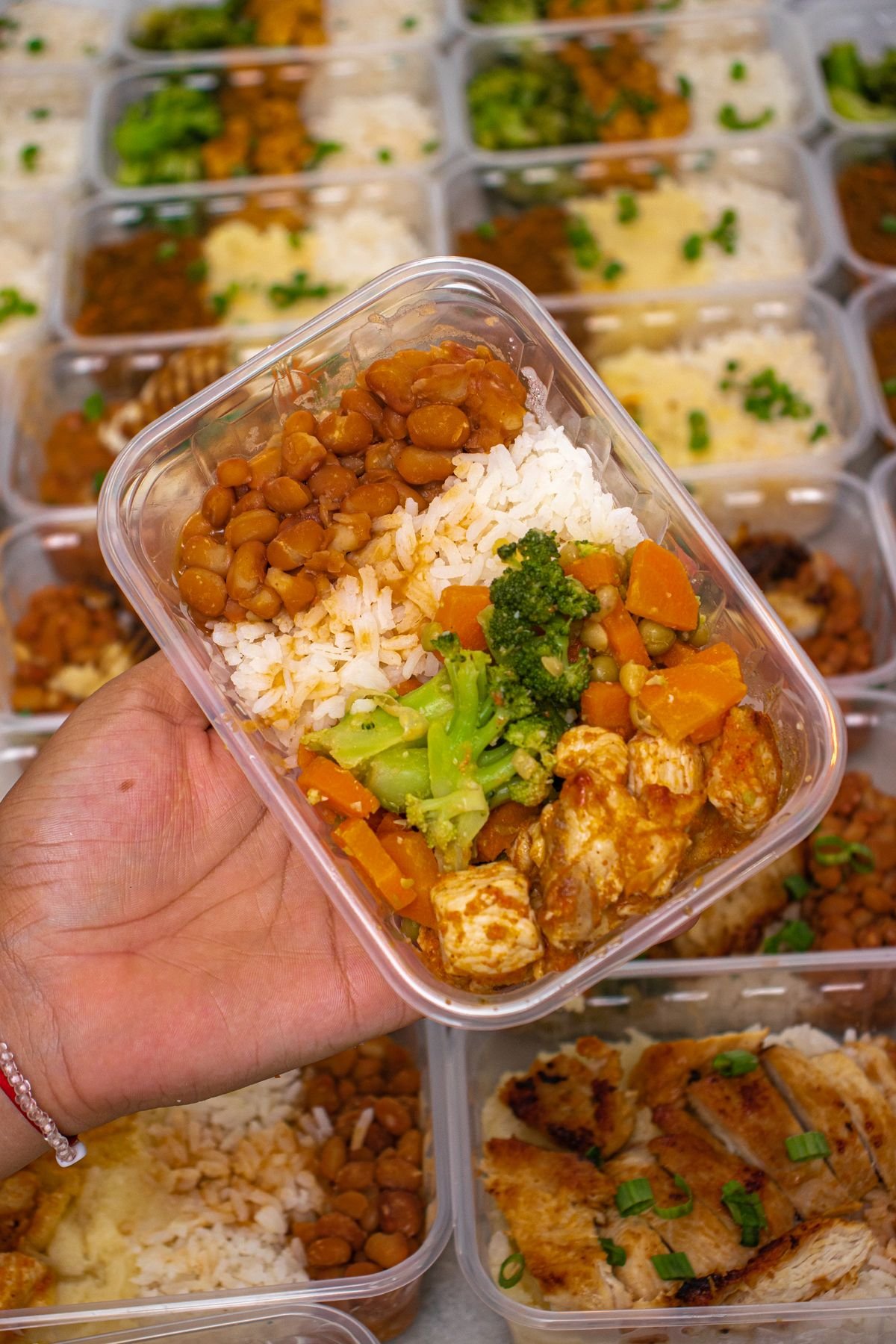
Finally, allocate carbohydrate to the work you actually do. Rice, potatoes, oats, fruit, pasta and other ordinary foods can provide the same basic macronutrient without requiring a branded preworkout drink. A carb-containing meal before a demanding session may be convenient, especially if you have not eaten for hours. A post-training meal can replenish energy while also delivering protein. There is no need to fear a practical mixture of carbohydrate and protein simply because one small trial failed to find larger muscles from a modest supplement.
Equipment Worth Exploring
Explore equipment, accessories and gear from our carefully selected range.

VForce 2IN1
Half rack and pivot-arm functional trainer with switchable 1:1 and 2:1 pulley ratios.

VForce 3IN1
All-in-one rack combining an adjustable Smith machine, functional trainer, and free-weight station.

VForce 3IN1 Max
Six-post all-in-one rack with Smith machine, functional trainer, and variable-force cables.

Foldable Wall Rack
Wall-mounted folding squat rack designed to save floor space between workouts.

Ultimate Power Seat
Rack-mounted power seat for lat pulldowns, leg extensions, and leg curls.


A realistic example for a hard-training lifter

Imagine an 80-kilogram lifter who trains four evenings per week, alternating upper- and lower-body sessions. He is eating about the same calories every day and consistently gets 140 grams of protein. His scale weight is flat and his main lifts are progressing slowly. Before buying a carbohydrate product, he should first decide whether he actually wants to gain body weight, then watch his seven-day average rather than reacting to one salty dinner.
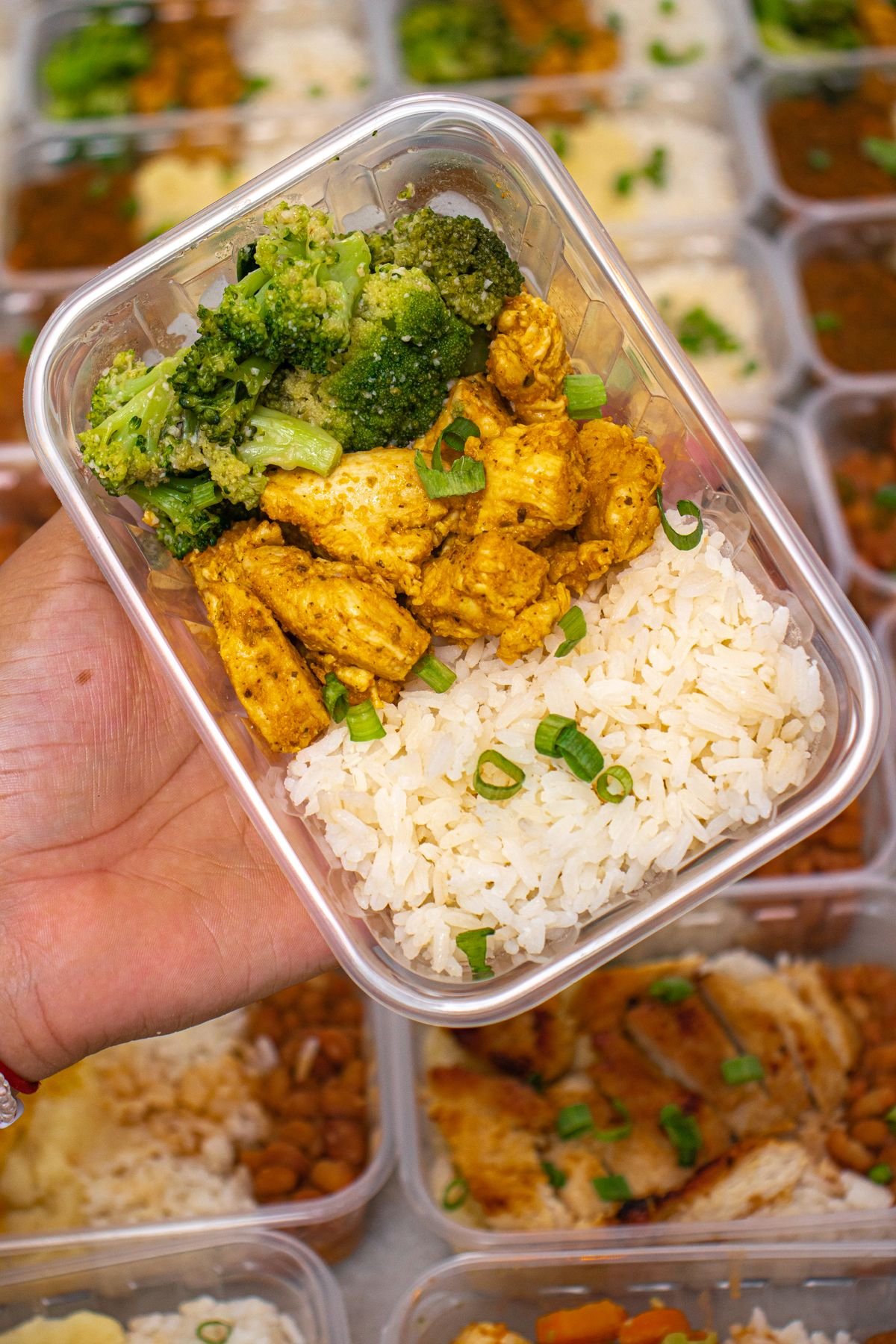
On a heavy leg day he could eat a normal meal of rice, chicken and vegetables a few hours before training, add fruit or a snack if it has been a long gap, and keep water available. On a shorter upper-body session that follows a substantial meal, he may not need anything beyond his usual routine. If he adds 50 grams of carbohydrate daily, he should track his real total intake because hunger and food substitutions can cancel or amplify the intended energy change.
For a second example, a lifter who does intense conditioning in the morning and high-volume bodybuilding work at night is imposing a different demand. Here, distributing carbohydrate throughout the day and replacing energy between sessions may be more valuable than for the four-day gym-goer. Neither example guarantees muscle gain; both illustrate why training structure, appetite, total food and consistency matter more than treating a supplement label as a universal program.
How to test your own fueling without chasing noise

Start with a two-week baseline. Keep your basic program stable, record approximate sets, working weights, repetitions and perceived effort, and weigh yourself under similar morning conditions. Note when you train relative to meals and whether late-session performance actually drops. This creates a reference more informative than the memory of one unusually good workout.
If food intake seems to be limiting performance, try one manageable change for two to four weeks: a regular pretraining meal, an additional carb serving on high-volume days, or a modest rise in total daily calories when gaining weight is the goal. Keep protein approximately stable and resist simultaneously rewriting your split, adding stimulants and changing sleep habits. Compare similar sessions, not random personal records made on different exercises.
Then ask what changed. Did total hard-set quality improve, especially toward the end of sessions? Is body weight moving in the desired direction? Are digestion, hunger and energy manageable? If your training is unchanged and you are gaining weight faster than intended, extra calories may not be solving the right problem. This trial’s valuable takeaway is neither that carbs are essential magic nor that they are pointless: a modest add-on failed to produce a demonstrable advantage under one controlled set of conditions. Match food to the work, and demand evidence from your own consistent training before paying for promises.
Bodybuilding Shirts & Workout Gear
Bodybuilding shirts, tanks and gym gear for lifters chasing muscle, size, symmetry and the pump.

Muscle Mommy Lifting Club for Gym Girls, Bodybuilding & T-Shirt
Heavy lifts, good laughs, and a little “Muscle Mommy Lifting Club” energy.

Heavy Weights And Protein Shakes T-Shirt
Make gym days more fun with “Heavy Weights and Protein Shakes” style.

Dark Side of the Lifting Muscle | Parody Vest for Worko Tank Top
Bring “Dark Side of the Lifting” humor to your next lifting session.

The Boy Who Lifted Muscle | Harry Spotter Bodybuilding Tank Top
Your gym-day look, with a playful “The Boy Who Lifted” twist.

Big Wayne Lifting Gains | Swole Weezy Hip Hop Parody Pu Hoodie
Bring “Big Wayne Lifting Gains” gym humor to lazy days and post-workout plans.

Pain Train Gains Gym | Thomas The Tank Engine Meme Work Hoodie
Stay casual and show some lifting attitude with “Pain Train Gains”.

Hustle For That Muscle Gym Sweatshirt
Keep things casual with a little “Hustle For That” attitude.

Protein Sniffing Gym | Hilarious Workout For Bodybuilde Hoodie
Stay casual and show some lifting attitude with “Protein Sniffing”.

Muscle Mommy Pink Gym Graphic for Women, Lifters & Stre T-Shirt
For laid-back days and gym-girl humor: “Muscle Mommy”.

Muscle Daddy Pink Barbell Plate Pullover for Men Who Li Hoodie
Keep it laid-back with a little “Muscle Daddy” attitude.