Advertising disclosure: This page includes affiliate product links that may earn us a commission, as well as products from our own store.
Can air resistance build serious strength without a weight stack? The Concept2 StrengthErg makes a different pitch from a smart cable trainer or a traditional plate-loaded machine: push or pull against a fan, and the resistance responds to how hard you move. Concept2 introduced the machine in November 2024 after unveiling it the preceding October; this is a current product analysis, not a brand-new 2026 launch or a hands-on MMP test. It can train a leg press, chest press and seated row, but its unusual concentric-only action changes what “replaces weights” really means.
What the StrengthErg actually does
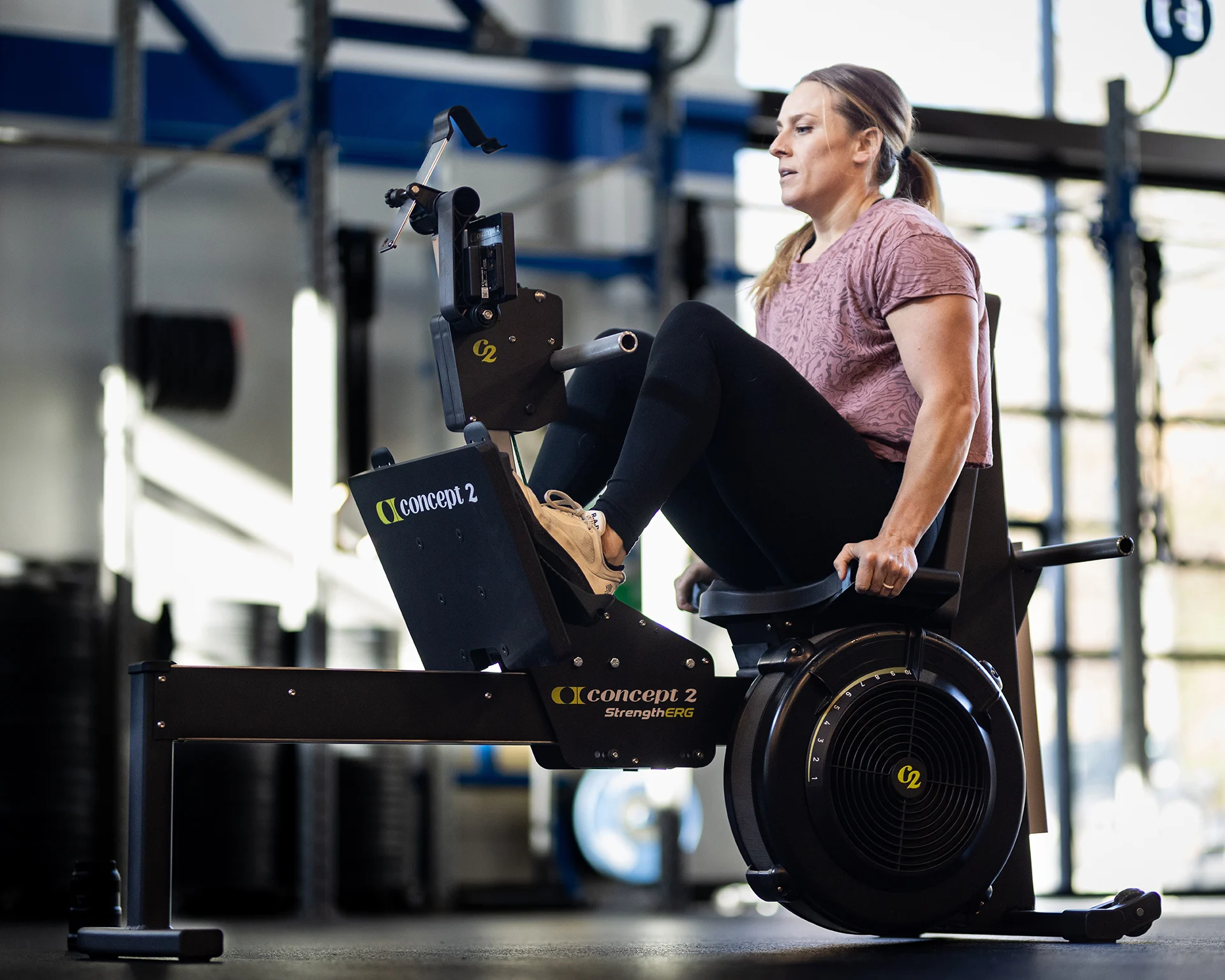
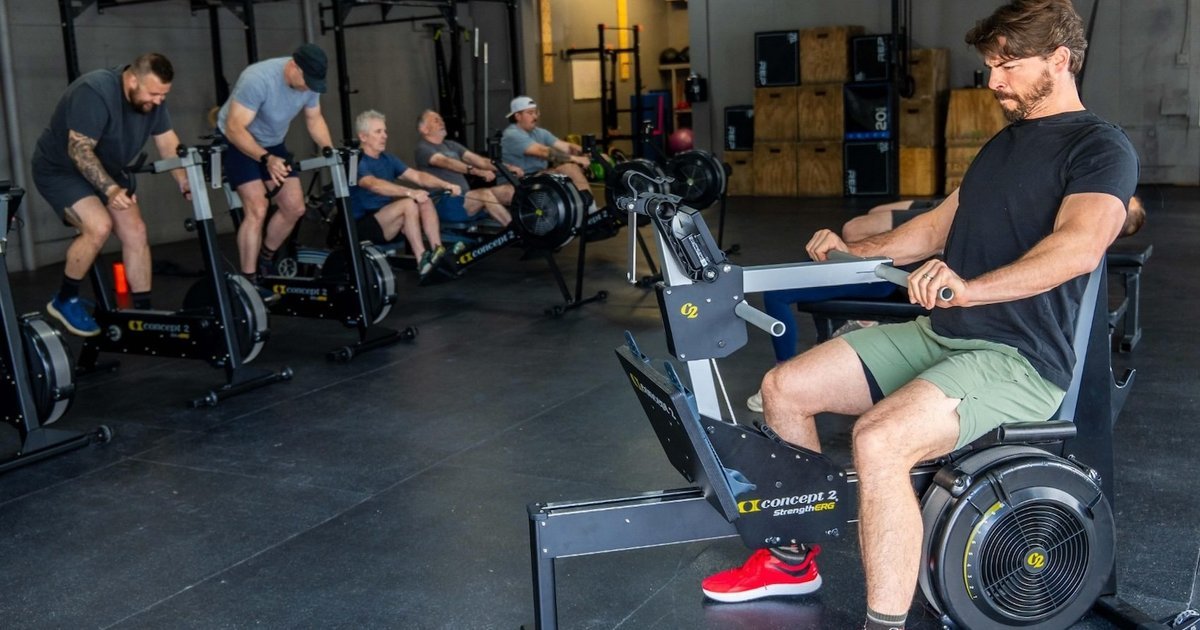
The StrengthErg takes a familiar principle from rowing machines and applies it to strength training. Instead of raising a selected mass on a cable stack, your effort spins a flywheel. As you accelerate the mechanism, it produces air resistance. You can sit in three principal setups: press with your legs, push the handles away with your upper body, or pull the handles into a seated row. There is no plate pin to move between sets, so two people with very different strength levels can use the same station without stripping or loading plates.
The machine is not simply a RowErg turned sideways. The mechanics, body positions and outputs emphasize short forceful repetitions rather than a continuous rowing stroke. A lifter can use a few deliberate, high-effort reps or a longer set that demands muscular endurance. That versatility is real, but it does not automatically replicate a barbell squat, bench press or deadlift. Those free-weight lifts require stabilizing a fixed load through both directions, while the StrengthErg provides a guided push or pull. Think of it as a specialist strength-and-conditioning station with three patterns, not an all-in-one replacement for every exercise.
For the buyer, the important distinction is purpose. Want measurable leg, chest and back output, rapid user changes and no loose plates? The design makes sense. Need overhead pressing, loaded hinges, isolation curls or sport-specific barbell technique? You will still need other equipment. Evaluating that gap before comparing prices prevents an expensive machine from becoming a partial solution to the wrong problem.
How the air damper changes force and effort
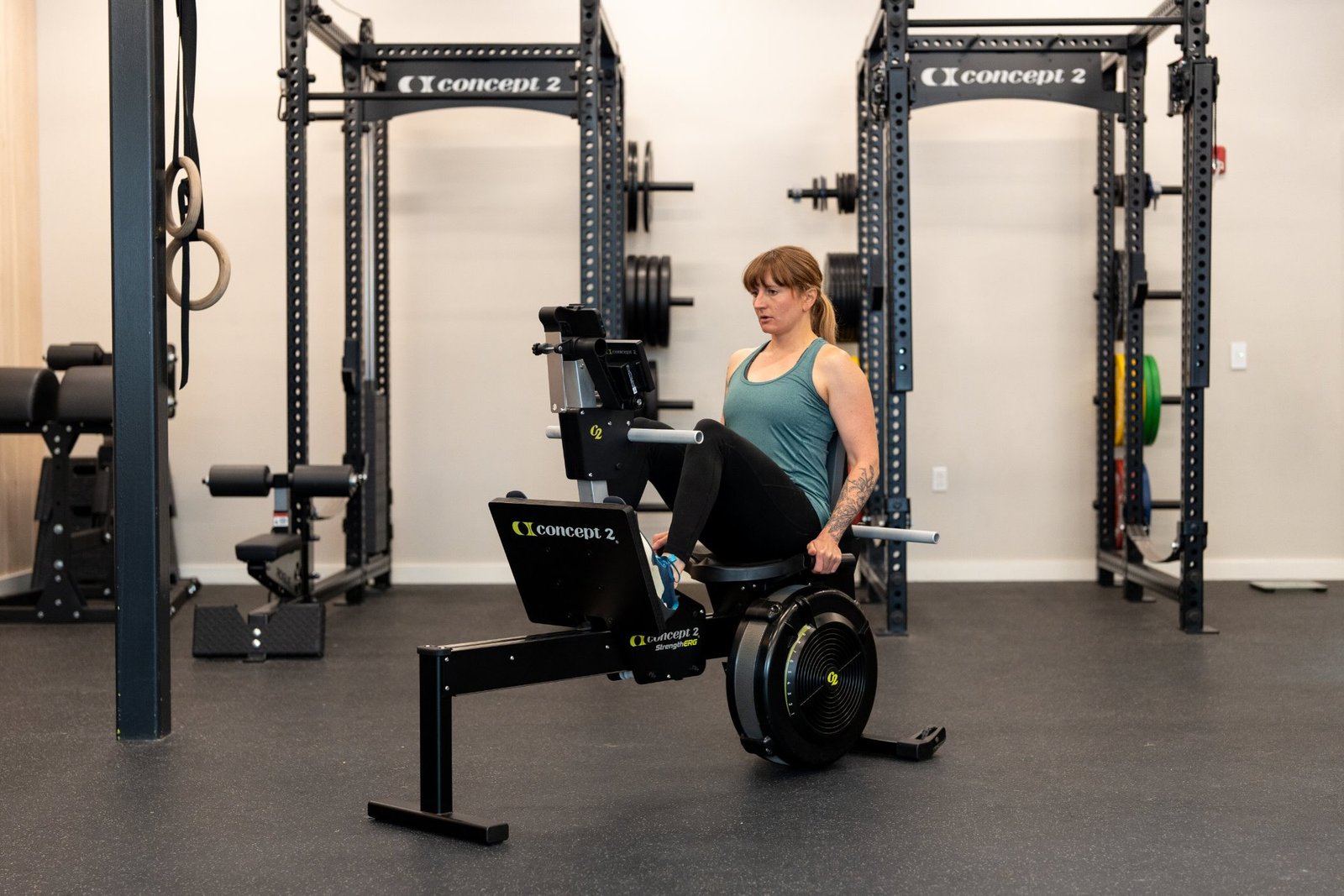
On a weight stack, selecting 100 pounds means the same nominal mass stays on the machine for that set, even though cable ratios, friction and your leverage affect the actual force at the handles. On the StrengthErg, there is no comparable fixed number of kilograms suspended in gravity. The flywheel’s resistance varies with the combination of damper setting and how you drive it. A higher damper usually produces a heavier, slower feeling; a lower setting tends to suit faster movements. Neither should be treated as a direct one-to-one substitute for a particular dumbbell weight.
That difference creates a useful way to train: choose a position and damper, perform full-range reps with consistent intent, then compare repeatable output rather than guessing how much effort you made. If you push gently, the machine reacts gently. A stronger drive is met with more resistance, so you do not need someone to swap plates at the top of every progression. This is especially convenient in a circuit or a shared training room.
It also creates a trap for enthusiastic buyers. The manufacturer describes a structure capable of handling more than 1,200 pounds of force. That is a structural force figure, not a claim that a rep equals a 1,200-pound leg press or that the machine makes anyone a stronger squatter. Force, mechanical work, speed and time under tension are related but different metrics. For honest comparisons, keep the same exercise position, damper, movement length and rep style. Changing everything at once produces an impressive graph without useful training information.

Equipment Worth Exploring
Explore equipment, accessories and gear from our carefully selected range.
VOLTRA
Compact digital cable trainer with smooth, adjustable resistance.

Go-Tone Pro
Portable digital cable trainer with up to 66 lb (30 kg) of adjustable resistance.

VForce Wall Trainer
Space-saving wall-mounted functional trainer with pivoting cable arms and variable resistance ratios.

VForce 2IN1
Half rack and pivot-arm functional trainer with switchable 1:1 and 2:1 pulley ratios.

VForce 3IN1
All-in-one rack combining an adjustable Smith machine, functional trainer, and free-weight station.

VForce Lat Seat
Rack-mounted seat attachment for supported lat pulldowns and seated cable exercises.

HUSLA Leg Extension Pad
Pad attachment designed to increase usable range of motion on compatible leg-extension machines.

Studio V-Squat
Plate-loaded V-squat machine for supported lower-body strength training.

Studio Glute Drive
Plate-loaded hip-thrust machine with supported back pad and adjustable foot platform.

VForce Lat Tower
Wall-mounted cable tower with pivot arms and adjustable 1:1 or 2:1 pulley ratios.
Leg press, chest press and seated row: three useful patterns
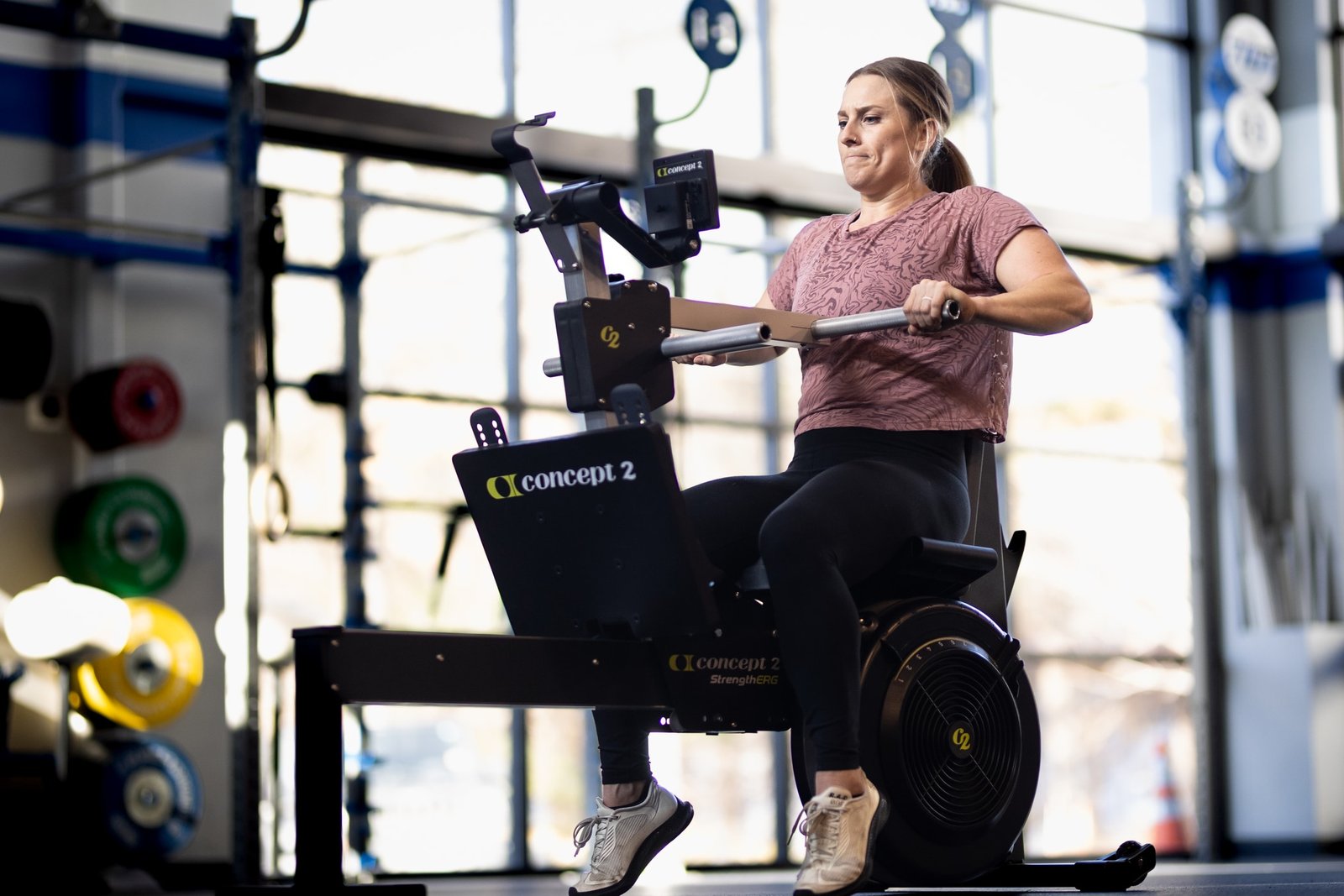
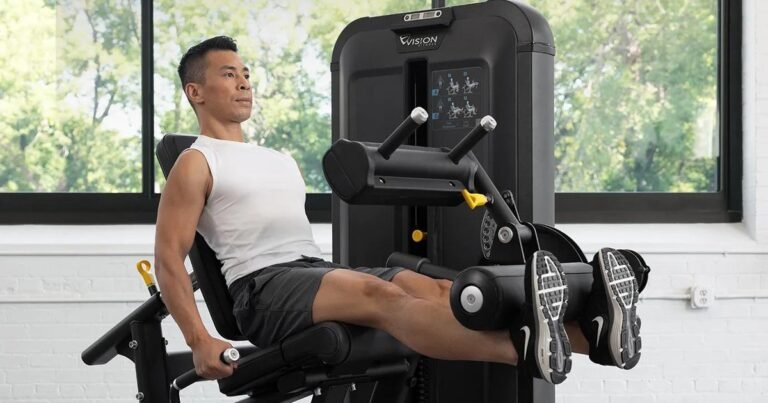
Leg press: sit with your torso supported, place your feet securely on the platform, and push while keeping your movement smooth rather than kicking the plate. The main challenge falls on the quadriceps and glutes, with other lower-body muscles contributing. A guided seated leg press can be a practical way to get extra hard leg work when you do not want to load a barbell. It is not, however, identical to a squat: the torso and hip demands differ, as do balance and coordination.
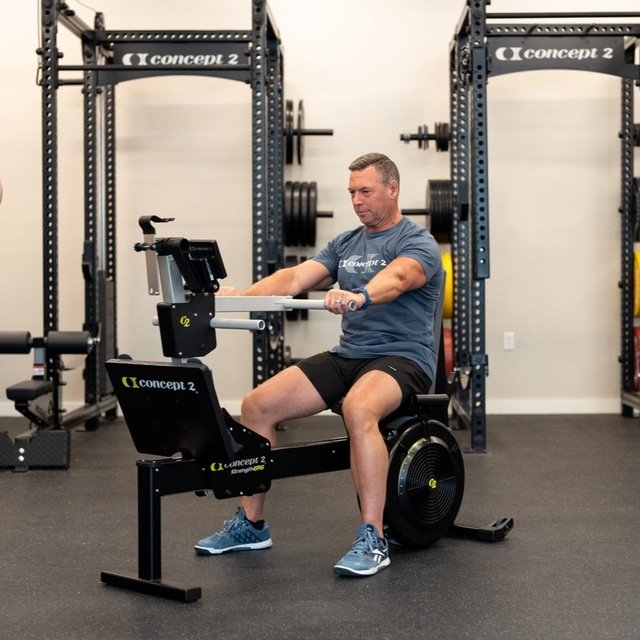
Chest press: use the handle position that allows a comfortable shoulder path and controlled elbow movement, then drive forward without jerking. The press emphasizes chest, anterior shoulders and triceps. You can produce strong intent without having a heavy bar suspended above you, but it will not develop the same bar path and stabilization skills required for a competition bench press. Do not mistake the lack of an eccentric barbell phase for proof that technique is irrelevant.
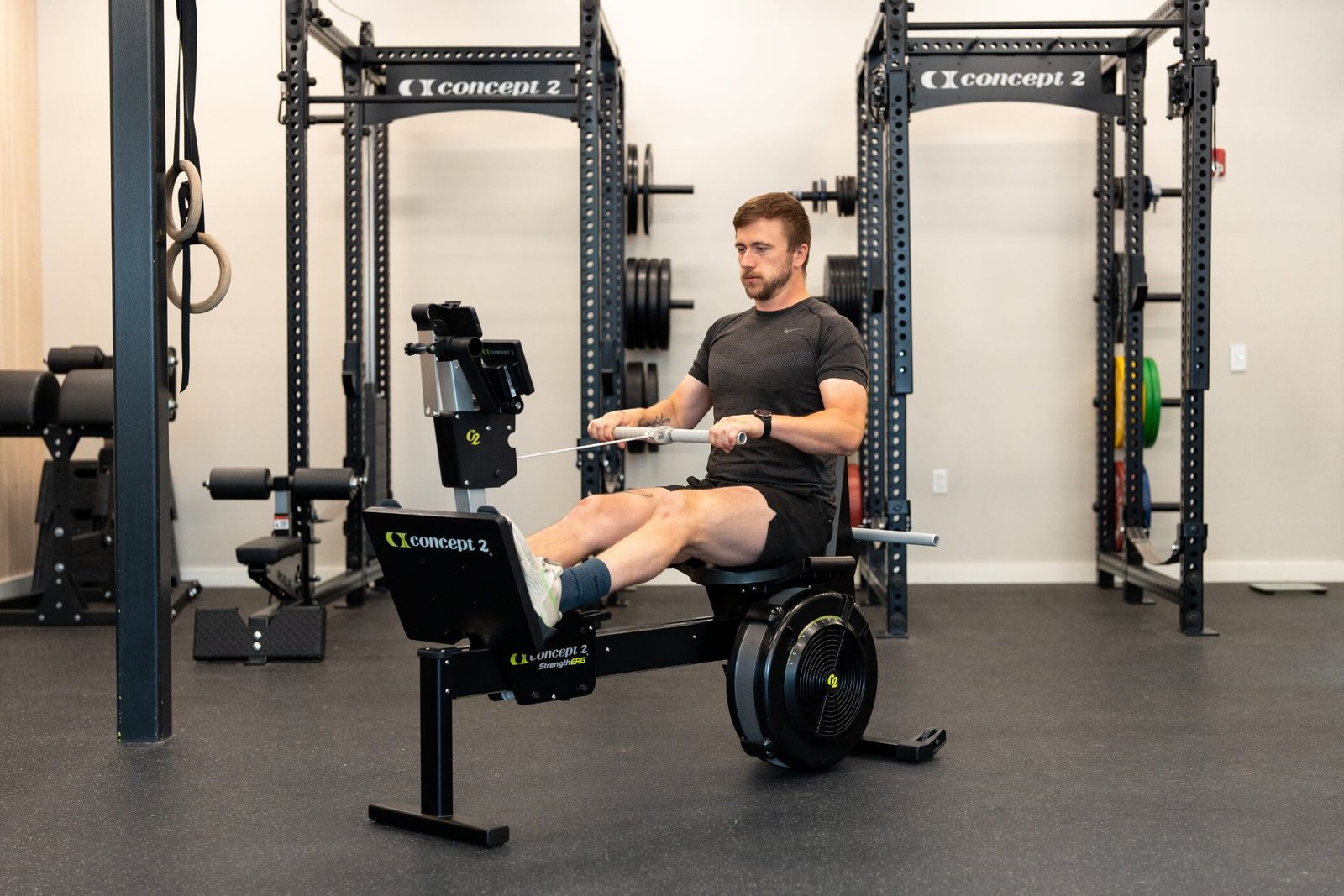
Seated row: brace your trunk, keep the shoulders moving naturally and pull toward the body rather than turning each rep into a backward lean. This pattern trains the upper back and lats, alongside the elbow flexors. It makes a logical counterpart to pressing, especially for lifters whose usual routine overemphasizes chest work.
The three exercises form a respectable push-pull-leg circuit. Yet the station does not offer a full menu of squat, hinge, vertical push, vertical pull and rotation patterns. Athletes who need pulling strength for pull-ups, a heavy hip hinge or precise single-leg work should treat those as additional movements, not secretly covered by an air-driven row. Keep the movement category honest and the training plan becomes more useful.

Functional Fitness Shirts & Workout Gear
Functional-fitness shirts, tanks and workout gear for athletes who train strength, conditioning and everything in between.

Rowing – Dost Thou Even Row Medieval Knight Gym Decal f Sticker
Give your everyday gear a playful “Rowing” twist.

Gym Dost Thou Even Pedal Medieval Air Bike Humor for Cr Tank Top
Bring “Dost Thou Even Pedal Medieval Air Bike” humor to your next lifting session.

Vive Le Resistance Bands – Resistance Bands Warmup Reha Hoodie
Stay casual and show some lifting attitude with “Vive Le Resistance Bands”.

Hybrid Athlete Strength & Endurance Tank
Add some lifting attitude to training with “Hybrid Athlete”.


Live Love Lift Muscle Shirt Athletic Vest Workout Gymbr Tank Top
Add some lifting attitude to training with “Live Love Lift”.


Hybrid Athlete – Built Different Crewneck for HYROX, Cr T-Shirt
Show some gym-day personality with “Hybrid Athlete”.

Happy Kettlebell Emoji Smiley Kettlebell Graphic Who Lo T-Shirt
Make gym days more fun with “Happy Kettlebell Emoji” style.

What progressive overload looks like without plates
Progressive overload still matters when the load is reactive. The mistake is assuming that only adding iron to a bar can count as progression, or conversely that a higher peak-force number always means better training. First establish an exercise-specific baseline: the seat and foot placement, damper setting, approximate rep range, rest interval and deliberately repeatable technique. A ten-rep chest press with a short, rushed range is not comparable to a ten-rep set at a fully controlled length.
Monitor work, force and drive characteristics through the available PM5 or ErgData setup, paying attention to what each measure represents. One week you might produce more work over the same ten reps; another week you might hold performance across four sets with less decay. Both can indicate meaningful improvement in that task. If numbers only go up because you shortened range of motion or launched your body, the apparent progress is less useful.
For muscular endurance, record total controlled work in a set or a fixed-time interval. For strength emphasis, perform fewer high-intent repetitions with longer recovery and compare consistent efforts rather than chasing fatigue. For general fitness, use alternating leg press, row and chest press while controlling breathing and form. These are three different training goals; the monitor cannot decide which one matters for you.
Track two signals outside the machine as well: the performance of your regular compound lifts and your recovery between sessions. Improving on an air-resistance station is valuable on its own, but a transfer to barbell strength or physique progress needs to be observed, not assumed.
Can concentric-only resistance grow muscle?
The unusual part of the StrengthErg is what happens between forceful repetitions. In standard weightlifting, the concentric phase shortens the working muscle while lifting; the eccentric phase lengthens it under control as you lower the weight. Concentric-only training largely removes that loaded lowering requirement. That can reduce the distinctive soreness associated with unfamiliar eccentric exercise and may make additional work tolerable during demanding training weeks.
It does not mean eccentric training is optional for every strength or bodybuilding goal. Controlled lowering is a substantial part of normal resistance training, and different muscle actions expose tissue to different challenges. Research comparing concentric- and eccentric-focused programs supports adaptation from both, but the designs, loading and populations vary. No such comparison automatically proves that the StrengthErg matches the hypertrophy from a properly programmed dumbbell routine in trained lifters.
Broader comparisons of free weights and machines often find that both can build muscle when the work is well designed. That is reassuring for guided resistance generally, yet this particular air-driven concentric-only machine is not the same as a conventional selectorized machine. The best conclusion is narrower: it offers a credible hard-effort stimulus for major muscles, especially for supplementary work and conditioning, but independent long-term head-to-head hypertrophy trials on this exact device should not be invented.
For lifters chasing maximum size, keep a mix of challenging patterns and monitor actual results. Adding StrengthErg sets to a balanced program may be more sensible than discarding all free-weight exercises based solely on the promise of less soreness. Recovery depends on total effort, volume, sleep and nutrition too; less eccentric loading is not a guarantee of zero fatigue.
Equipment Worth Exploring
Explore equipment, accessories and gear from our carefully selected range.


Foldable Wall Rack
Wall-mounted folding squat rack designed to save floor space between workouts.


Rubber Hex Dumbbells
Rubber-coated hex dumbbell pairs with a stable shape for home and commercial strength training.



FID Bench MAX
Adjustable bench offering flat, incline, and decline positions + adjustable headrest.


Space, price, monitoring and everyday tradeoffs
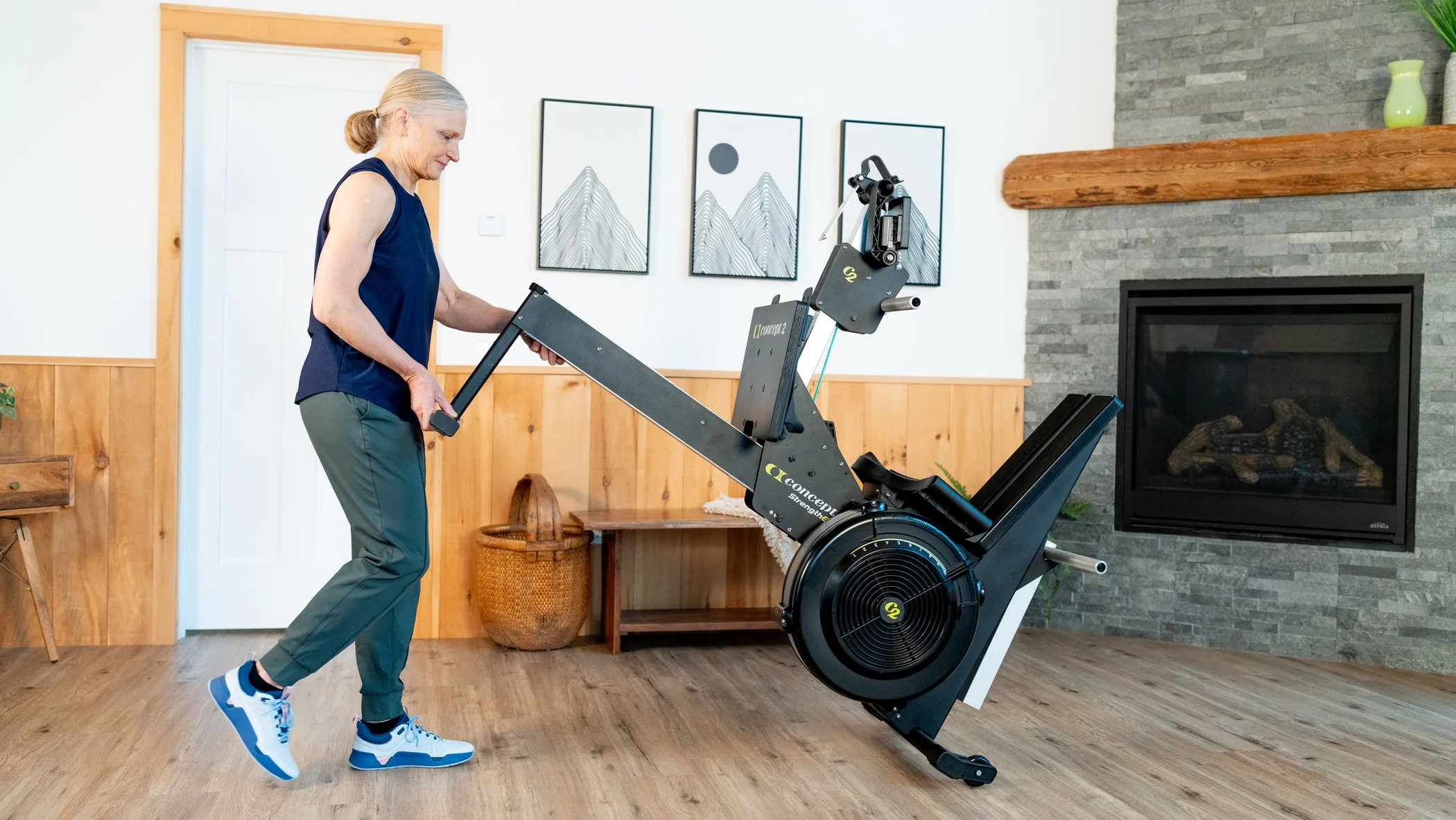
At roughly 61 inches long and 26 inches wide with its pushbar, the StrengthErg looks compact beside a full commercial leg-press station. The manufacturer recommends closer to 80 by 38 inches of usable floor clearance, however, and the machine is about 90 pounds. That is the area to measure, not just its bare footprint. Transport wheels help reposition it, but it must be stored assembled rather than tipped upright like some folding equipment.
The US product page showed an advertised price of $1,500 when checked in November 2026, with configuration choices that include a PM5 monitor or use of your own compatible device with ErgData. Regional pricing, shipping and taxes differ, so confirm the exact variant and full checkout total. In a shared facility the on-board PM5 may be more convenient; for an individual who reliably trains with a phone or tablet, the other setup may meet the tracking need. Neither one adds a fourth movement station.
Compare that total spend against equipment you would otherwise buy. A compact cable trainer can offer vertical and horizontal pulling plus curls and triceps work, although it may require mounting, power, attachments or more floor space. A good adjustable dumbbell pair and bench allow many unilateral and free-moving exercises, while also demanding more stabilization and storage decisions. A simple rack plus barbell expands lower-body loading options but carries its own space, safety and technique requirements.
The StrengthErg earns its premium if its actual three movements, measurable outputs and easy changeovers will be used repeatedly. It is less convincing as a single purchase for someone whose primary goals are heavy barbell technique, broad exercise selection or the lowest cost per exercise.
Cardio Shirts & Workout Gear
Cardio and conditioning gym gear for runners, endurance athletes and anyone who earns the sweat.

Anti Rowing Rowing Club Shirt – Meme & Top T-Shirt
Show some cardio attitude with a playful “Anti Rowing Rowing Club” tee.

Cardio Heartbeat for Runners, Cyclists, Rowers and Fitn Sticker
Give your everyday gear a playful “Cardio Heartbeat” twist.

Anti Jump Rope Jump Rope Club Shirt Meme Cardio & T-Shirt
Heavy lifts, good laughs, and a little “Anti Jump Rope Jump Rope Club” energy.

Shirt Cardio Kills Meme Top T-Shirt
Show some cardio attitude with a playful “Cardio Kills Meme” tee.

Skip Cardio Exit Cardio Meme Vest Tank Top
Add some cardio attitude to training with “Skip Cardio”.

Exercise Your Demons Gym | Funny Workout From Hell Hood Hoodie
Keep it laid-back with a little “Exercise Your Demons” attitude.


Exercise I Thought You Said Extra Fries Retro Workout C T-Shirt
Show some gym-day personality with “Exercise I Thought You Said Extra Fries”.

Negative Cardio Review 1 Star Sweater Cardio Sucks T-Shirt
Show some gym-day personality with “Negative Cardio Review”.

Funny Uncle Sam Gym – I Want You To Do Cardio Patriotic Tank Top
Train hard, laugh a little, and rep “Uncle Sam”.
A six-week starting framework and the buying verdict
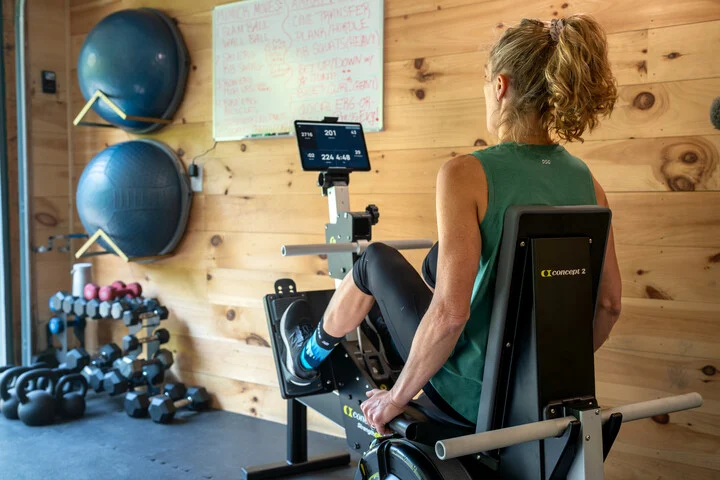
A sensible trial does not require chasing maximal force on day one. During weeks one and two, use two sessions per week, moving through leg press, chest press and seated row for two or three sets of eight to twelve smooth repetitions. Leave several good reps in reserve while learning seat positions, damper behavior and consistent drive length. Write down the setup so each exercise is repeatable, then add your other training around it rather than assuming this circuit is a complete program.
In weeks three and four, consider three sets per movement and aim to improve a chosen output measure while holding technique and rest consistent. If you are already lifting heavily elsewhere, you may need fewer hard sets rather than another full workout. In weeks five and six, keep some moderate-rep work and introduce one or two lower-rep, high-intent sets with generous rest. The goal is measurable performance without forcing all-out efforts after fatigue has destroyed the movement pattern. These are illustrative programming suggestions, not a clinical protocol or a device-specific trial result.
Before buying, ask: Do I actually want to train these three patterns several times a week? Do I value concentric-only effort and data tracking more than exercise variety? Can I leave an 80-by-38-inch usable space clear? Will the people using it benefit from changing force without changing plates? And will I still own the tools needed for hinges, overhead presses, vertical pulls and unilateral work?
The verdict: the Concept2 StrengthErg is a distinctive, practical tool for measurable push-pull-leg training and strength-oriented conditioning. Its biggest strengths are responsive air resistance, quick user transitions, repeatable output and a manageable footprint. Its biggest compromises are a limited movement menu, absence of conventional loaded eccentrics and a substantial price. It can complement weights impressively; calling it a proven universal replacement for them would go beyond the evidence. Review the current official StrengthErg configuration before deciding.
Some product links may be affiliate links, which can support Mind Muscle Perfection at no additional cost to you.