Advertising disclosure: This page includes affiliate product links that may earn us a commission, as well as products from our own store.
A snatch-grip Romanian deadlift changes the distance between your hands, but that small setup decision changes how the whole repetition feels. The bar sits higher against your thighs, your hands have more work to do, and keeping the bar close can become a different challenge. The useful question is whether you can repeat a controlled hip hinge with that grip. This guide covers choosing a workable width, finding your own stopping point and progressing the exercise without confusing a longer-looking repetition with a better one.
Choose a wide grip you can reproduce
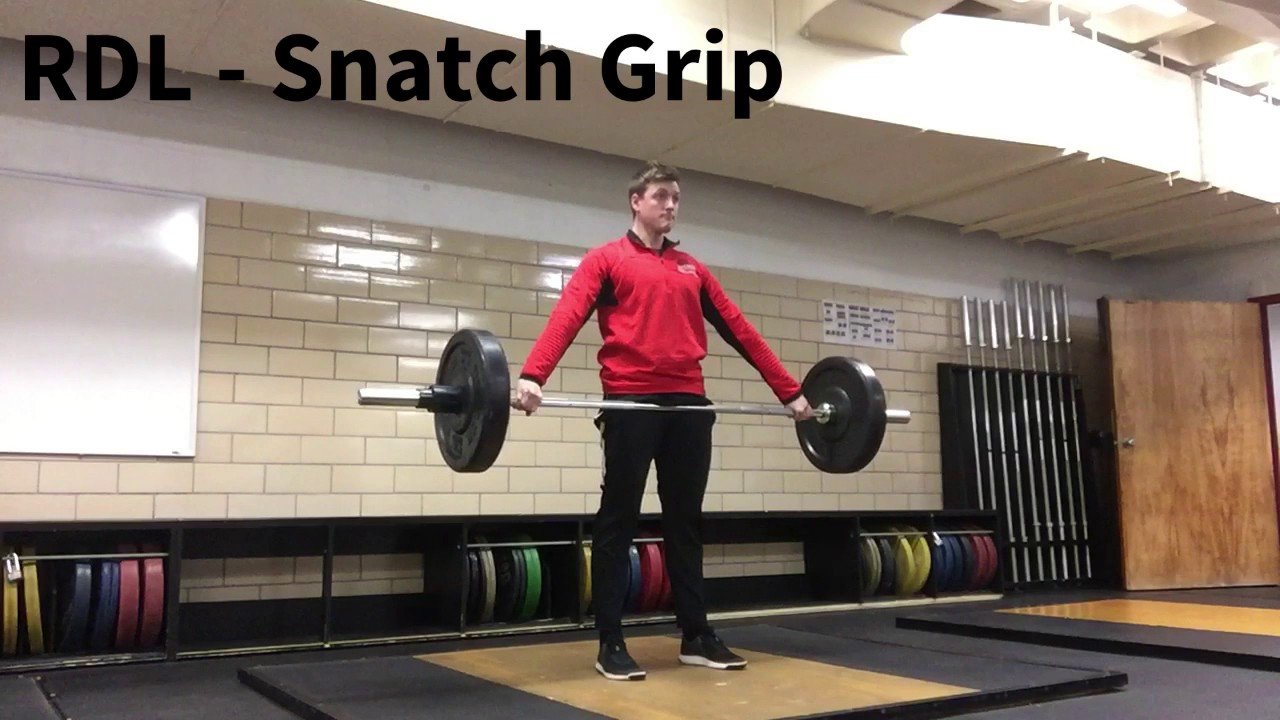
The snatch-grip RDL starts its working repetitions from standing. It is different from a snatch-grip deadlift in which each repetition begins with the plates on the floor. That distinction matters when you choose the load, judge the bottom position and compare your training log. A floor-start pull adds a separate starting-position problem; an RDL lets you organize the descent from the top.
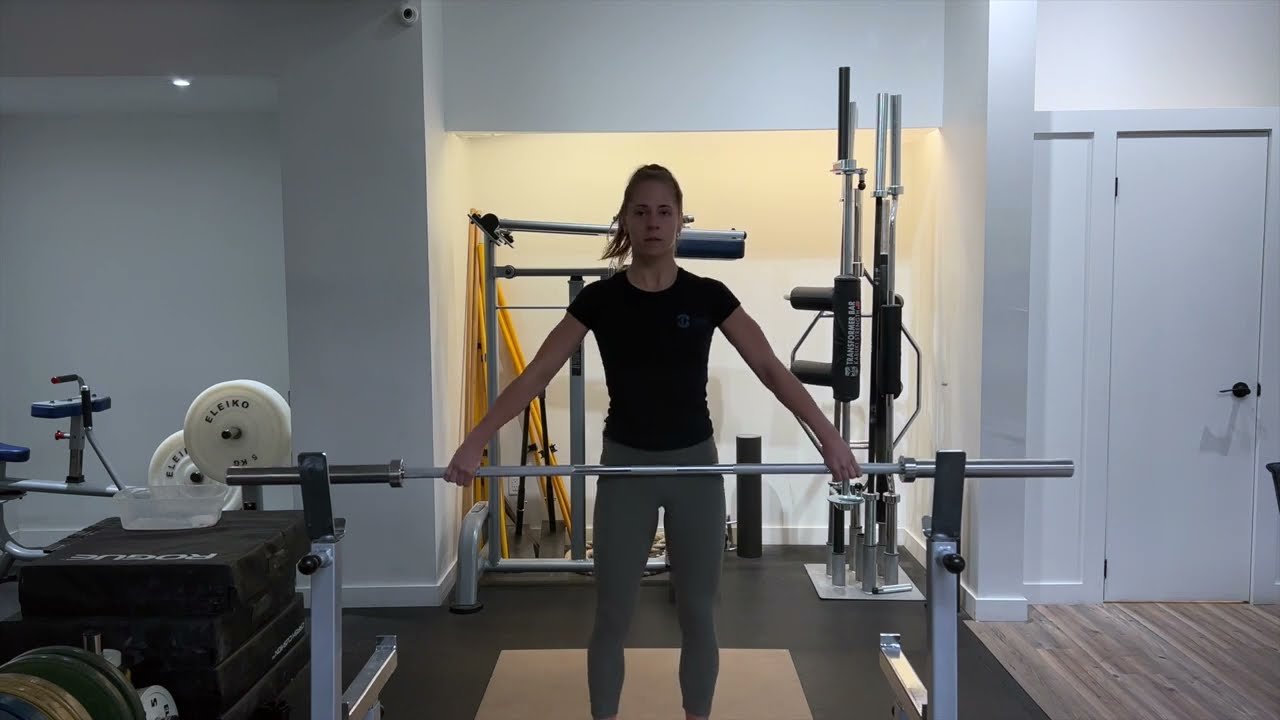
Use an unloaded bar to explore a symmetrical, wide overhand grip. A bar position near the hip crease when standing tall is a useful starting reference, not a universal measurement that every lifter must match. Arm length, shoulder comfort and the bar itself affect the result. Avoid forcing your hands toward the sleeves simply to make the grip look more extreme. You should be able to hold the position without bending your elbows to manufacture a different bar height.
Pick a repeatable landmark on the bar and record it. Then check that both hands are equally far from the center. Start with a roughly hip-width stance and make small adjustments for balance. If the wider position feels awkward, practice the standard RDL first and return to a modest widening later. There is no prize for using a grip that prevents you from organizing the basic hinge.
Keep the bar close as your hips move back
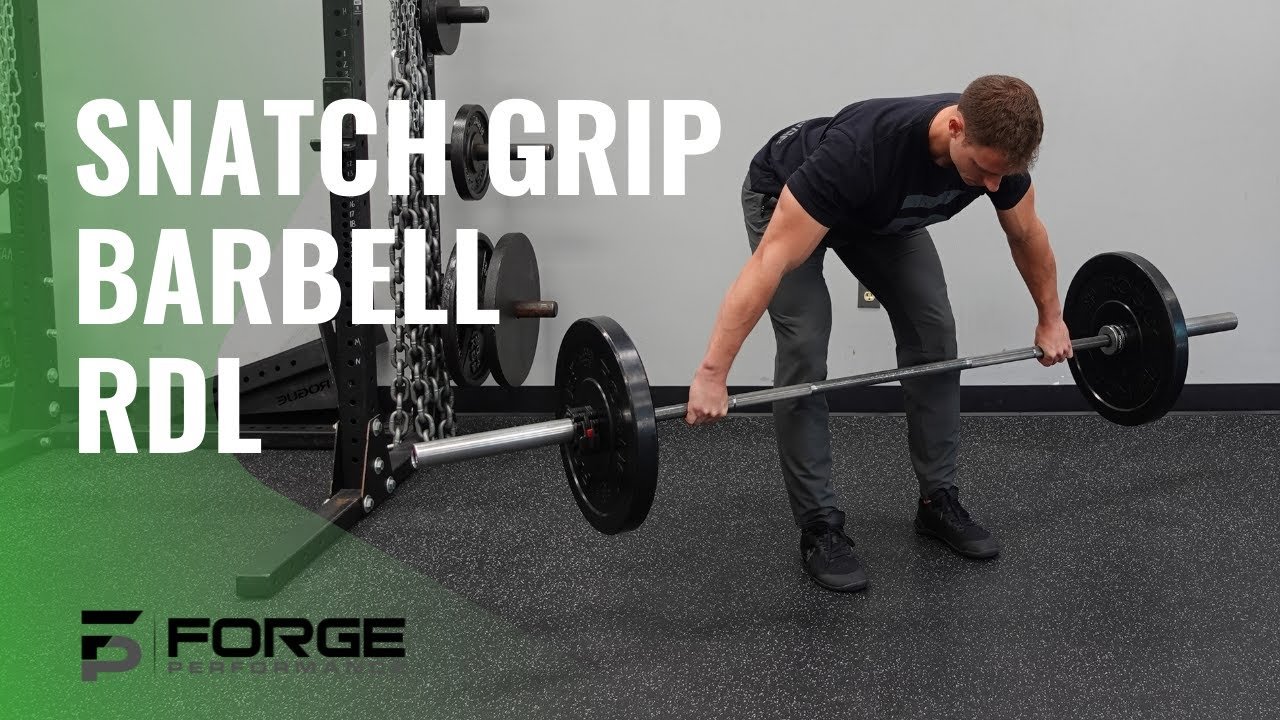
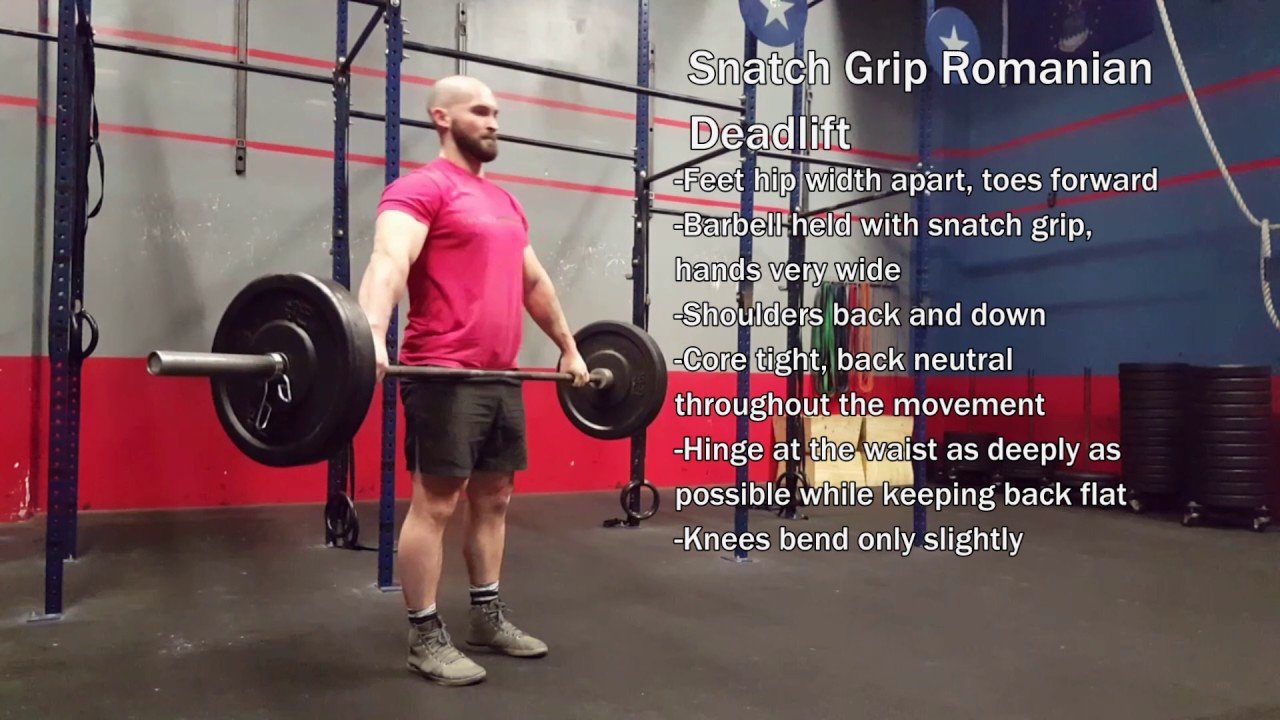
From standing, soften the knees slightly and begin moving your hips backward. Keep that knee bend fairly steady rather than continuing to sit lower as if performing a squat. Your torso tips forward as the hips travel back. The bar follows your legs instead of being deliberately pushed out in front of you. Keep the arms long; this is not a row added to a deadlift.
Think about pressure across the whole foot. Pushing the hips back should not mean lifting the toes or rocking so far onto the heels that you have to rescue the next repetition. Equally, do not let the bar pull you onto your forefoot. If balance changes sharply halfway down, reduce the load and shorten the descent while you work out what moved first.
A side-view recording can make the setup easier to assess. Watch whether the bar separates from the legs, whether the knees keep folding and whether the torso position changes suddenly near the bottom. Compare the beginning and end of the set. One tidy opening repetition does not establish that the load is appropriate for all the repetitions you planned.
Reset your brace and breathing between repetitions when needed. Use a rhythm you can sustain with the load under control. The aim is a recognizable series of hinges, not a race to finish before your hands or balance give out.
Let position determine the bottom of the RDL
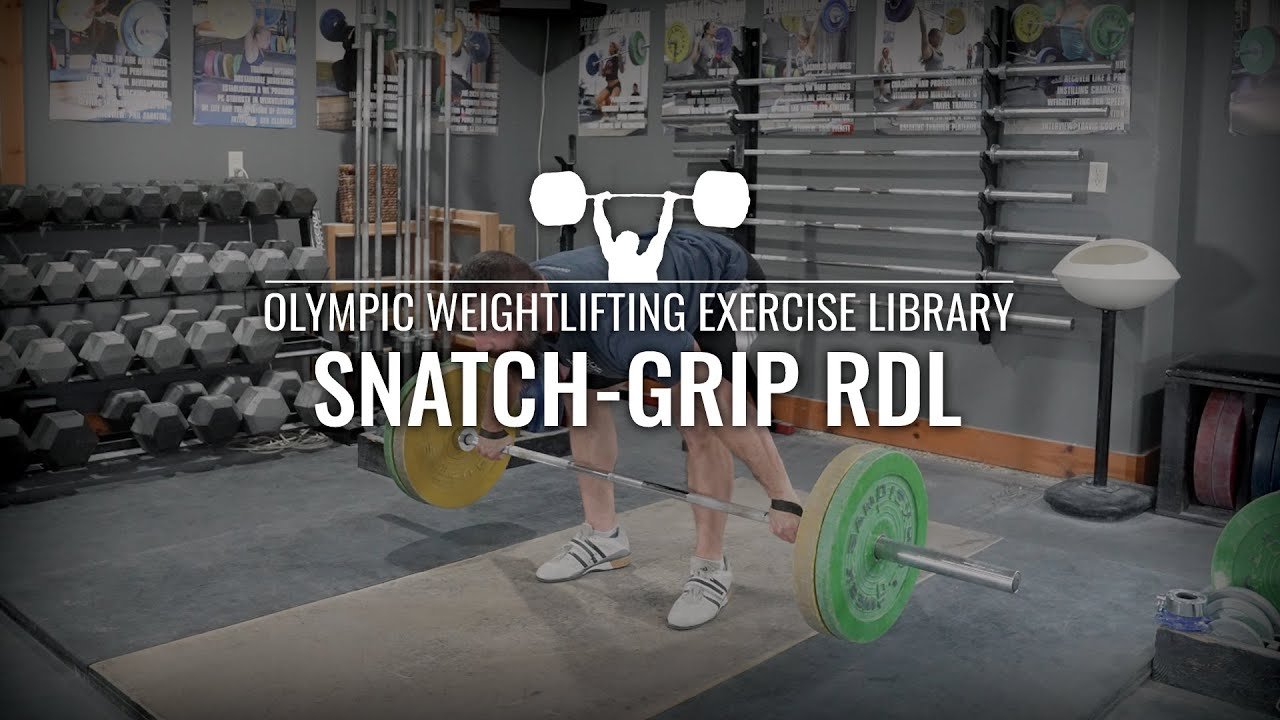
Lower only as far as you can maintain the trunk position and balance you established. For many lifters that leaves the bar somewhere around the knees or farther down the shins, but a body-part landmark is a reference rather than a compulsory target. The plates do not need to touch the floor. Reverse the movement smoothly and stand tall by bringing the hips forward, without finishing with an exaggerated backward lean.
A wider grip changes where the bar hangs relative to your body. It may allow more bar travel before the plates approach the floor. That extra clearance does not automatically create more usable hip range. If reaching lower requires rounding farther, changing the knee position or moving the bar away, you have changed more than the distance traveled.
Choose a stopping point you could recognize again next session. For example, note the bar's position relative to a point on your shin and pair that note with a side-view clip. Do not chase an exact depth if the position is worse on a tired day. A slightly shorter controlled set is easier to evaluate than one in which every repetition reaches a different place.
Keep deficit platforms out of the initial experiment. First establish that the ordinary standing version already gives you a useful, repeatable hinge. Stop a set that produces pain rather than trying to force additional depth through it. Grip width and range are adjustable choices, not tests of toughness.
Progress the same movement before adding weight
A practical starting example is two light working sets of six to eight repetitions after your warm-up. This is an adjustable learning framework, not a studied prescription or a required percentage of your squat or conventional deadlift. Pick a weight that leaves several controlled repetitions available. The wider hand position can make a familiar barbell load feel unfamiliar.
Keep the grip landmarks, stance, range and lowering rhythm consistent for a few sessions. When you can reach the top of your chosen repetition range without changing those features, consider the smallest useful load increase. If the increase makes the bar drift or shortens the hinge, return to the previous load and keep practicing. Adding repetitions with a different technique makes the training log harder to interpret.
Straps are an option when holding the bar limits the hinge work you intended. If grip training is part of the goal, some lighter unstrapped work may make sense instead. Record which approach you used; a strapped set and an unstrapped set are different conditions. Practice attaching and releasing straps with an unloaded bar before using them on working sets.
For equipment, prioritize a suitable straight bar, secure collars, compatible plates and a stable place to take the bar into and out of the starting position. Check rack, hook and plate fit rather than assuming every accessory works together. A combination rack's free-bar setup is distinct from its guided Smith track. Raised supports can help with pickup logistics; they are not a reason to stand on blocks for extra depth. Keep bar storage clear of the lifting area.

Equipment Worth Exploring
Explore equipment, accessories and gear from our carefully selected range.


Leather Lifting Straps
Padded leather straps support grip during heavy rows, deadlifts and pulling exercises.


Foldable Wall Rack
Wall-mounted folding squat rack designed to save floor space between workouts.

Competition Plates
Competition-style bumper plates for Olympic lifts and loaded strength training.

Grip Plates
Rubber-coated weight plates with handholds for loading barbells and machines.

Speed Collar
Quick-release collars designed to secure weight plates on standard two-inch Olympic bars.
Fit it into leg day without losing the main goal
Treat the snatch-grip RDL as a deliberate hinge choice within your lower-body training. It can sit after the main lift when the purpose is controlled posterior-chain accessory work. If you are using it for a weightlifting-specific technical goal, choose its placement around that priority instead. The exercise name alone does not decide the best order for every program.
Look at the work already present before adding sets. Squats, conventional deadlifts, rows and other hinges can all influence how ready you feel to hold another barbell and maintain position. Replacing an existing RDL slot is an easier first experiment than adding the new variation on top of an already demanding leg day. Keep the other variables reasonably stable so you can judge what actually changed.
Log a few details that explain the session: grip landmark, load, repetitions, stopping point and whether straps were used. Note if your hands ended the set before the hinge muscles felt challenged. That information helps distinguish a grip-training session from one intended mainly for hamstring and glute work. Neither aim requires pretending that every set served both equally well.
Progress and consistency mean repeating useful work, not collecting plate milestones at any cost. A heavier deadlift from the floor and a controlled wide-grip RDL can both belong in strength training, but their numbers are not interchangeable. Keep this variation when it fits the goal and you can reproduce it. Choose a standard RDL or another hinge when the wide grip adds more complication than benefit.

Funny Gym Shirts & Workout Gear
Funny gym shirts, tanks, hoodies and workout gear for lifters who like training hard.

Grip Training Essential Gymbro Jumper & T-Shirt
For laid-back days and lifting humor: “Grip Training Essential”.

Deadlifts & Gains Meme – Essential T-Shirt
Heavy lifts, good laughs, and a little “Deadlifts & Gains” energy.

Leg Day Squats Deadlifts Meme Hooded Hoodie
Show off your leg-day humor in a laid-back “Leg Day” hoodie.

I Look Better Bent Over Squats Deadlifts & Booty Tank Top
Add some leg-day attitude to training with “I Look Better Bent Over”.

Leg Day Is Calling You Squats, Deadlifts & Gains T-Shirt
Rep “Leg Day Is Calling You” humor in and out of the gym.

Negative Leg Day Review Leg Day Sucks Meme Squats, T-Shirt
Show some leg-day attitude with a playful “Negative Leg Day Review” tee.

4 Plates Deadlift Club – Motivational & Deadlifts Top T-Shirt
Show some deadlift attitude with a playful “4 Plates Deadlift Club” tee.

Be Stronger Than Your Excuses Motivational Workout for Sticker
A fun “Be Stronger Than Your Excuses” touch for bottles, laptops, and lockers.

Progress Stoic Bodybuilder Greek God Marble Sculpture T-Shirt
Heavy lifts, good laughs, and a little “Progress Stoic Bodybuilder Greek God Marble” energy.