Advertising disclosure: This page includes affiliate product links that may earn us a commission, as well as products from our own store.
Capsaicin for Lifting: Why the Studies Do Not Give One Clear Answer
Capsaicin is attracting attention as a possible performance supplement, but the lifting evidence does not support a simple promise of extra repetitions. A 2026 trial in advanced resistance-trained men found no significant improvement in leg-press repetitions or jump height. Another recent trial reported more squat volume in its higher-dose condition. Those results deserve comparison rather than a contest to choose the most exciting headline.
The useful question is not whether spicy food feels intense. It is whether a defined supplement improves a particular outcome under conditions that resemble your training. Exercise choice, participants, dosing approach and the way performance is counted can all change what a result means. None of these short experiments establishes that capsaicin produces more muscle over months.
1. A leg-press trial found no clear performance advantage
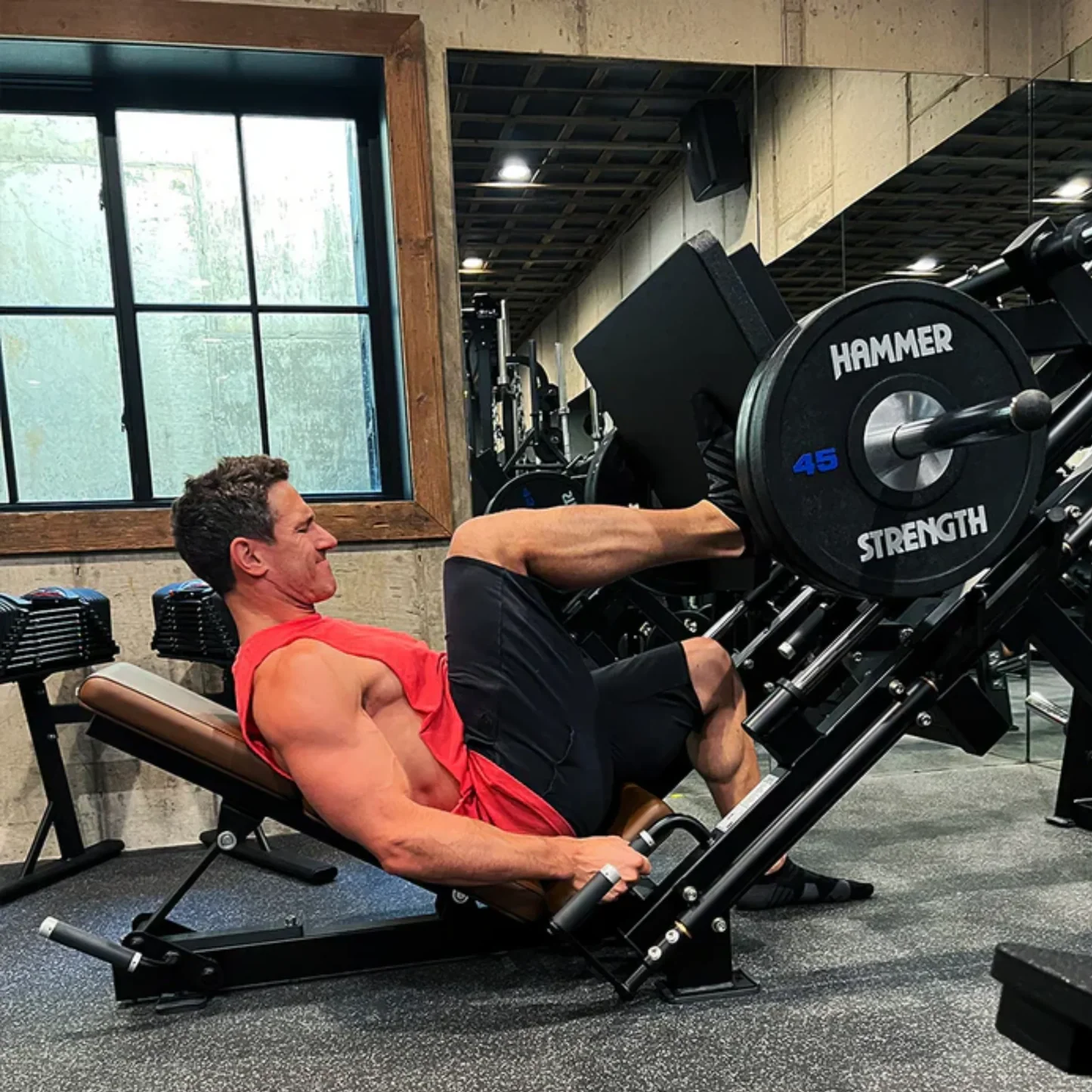
In a study published online in August 2026, sixteen advanced resistance-trained men completed repeated testing under three conditions: capsaicin, placebo and no supplement. The protocol included four leg-press sets at 70% of one-repetition maximum and countermovement jumps. Participants took the capsules before testing, and the design included familiarization sessions and separated test visits.
The average total was 55 repetitions with capsaicin, 52 with placebo and 54 without supplementation. Despite the numerical differences, the comparison was not statistically significant. Jump height was similarly close across conditions, with averages around 36 centimetres. The trial therefore did not demonstrate a useful performance benefit under its tested conditions.
This is why looking only at the highest average can mislead. “Three more reps” sounds attractive when the accompanying variability and comparison disappear from the sentence. A group average does not mean every participant gained three repetitions, and a small numerical lead is not automatically a reproducible supplement effect.
There is a second distinction worth keeping: failure to demonstrate a benefit is not proof that an ingredient can never affect any exercise. The reasonable reading is narrower. This particular test did not provide convincing support for improving these outcomes in these trained men. That is useful information without turning a small trial into a universal verdict.
2. Positive squat findings do not erase the negative result
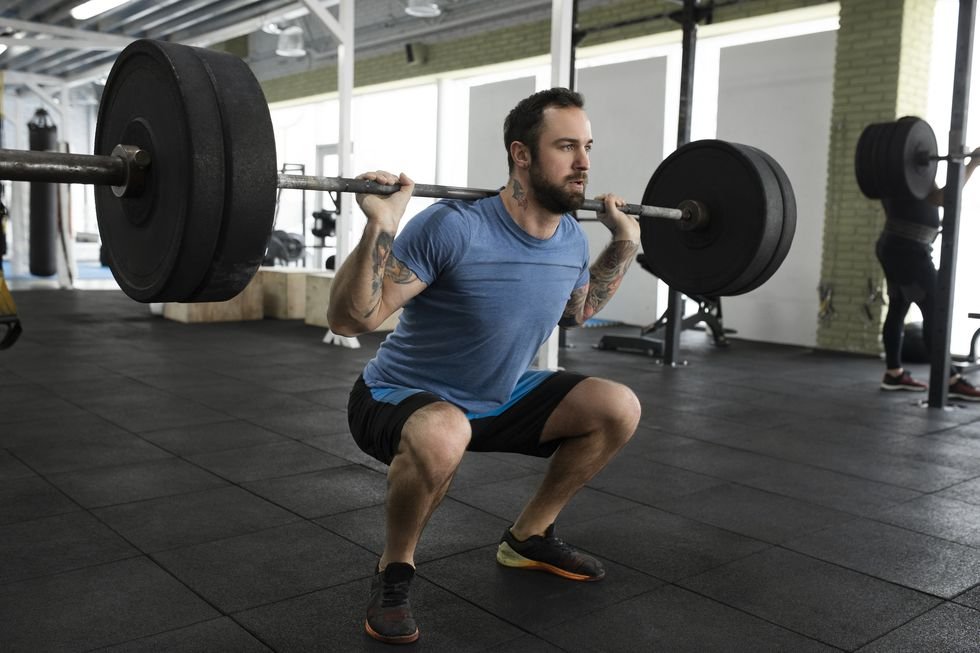
An October 2026 report examined nineteen resistance-trained men using a crossover design with lower and higher body-mass-relative capsaicin conditions and placebo. They performed four back-squat sets. Total training volume was greater in the higher-dose condition than in the lower-dose and placebo conditions, while movement speed, blood lactate and perceived exertion did not differ significantly.
An older trial in ten trained men also reported greater total squat volume with capsaicin than placebo. In that experiment, the work consisted of four sets at 70% of one-repetition maximum, taken to movement failure. The older result also included lower perceived exertion, whereas the newer nineteen-man report did not find that difference.
These are interesting findings, but they are not interchangeable replications of the leg-press trial. Squats and leg presses are different tasks. The dosing approaches and participant samples also differ. A result obtained with one testing arrangement does not automatically predict the outcome of another, even when both sessions are described as lower-body resistance exercise.
Do not turn that comparison into an instruction to increase the dose until something happens. The studies do not establish a universally effective amount or a safe upper limit. They show why a conclusion should retain its conditions. “A higher-dose condition improved volume in one small squat experiment” is more accurate than “more capsaicin means more gains.”

Equipment Worth Exploring
Explore equipment, accessories and gear from our carefully selected range.

Leg Press/Hack Squat BPR-790
Convertible 45-degree leg press and hack squat machine with a broad footplate and band pegs.

Compact Leg Press CLP-700
Compact reverse-style leg press with a moving seat carriage and an adjustable footplate.

Leg Extension/Curl BCO-780
Leg extension and lying leg curl combo with plate loading, band pegs and a cable-loading option.

Competition Plates
Competition-style bumper plates for Olympic lifts and loaded strength training.

Grip Plates
Rubber-coated weight plates with handholds for loading barbells and machines.


Multi Bench MBX-650 2.0
Adjustable multi-bench with roller adjustment, 15 backrest positions and accessory mounts.
3. A pooled benefit is a starting point for questions

A systematic review published in a February 2026 issue reported a small pooled improvement in acute resistance-exercise performance with capsaicinoid or capsinoid supplementation. The standardized effect was about 0.20, with a confidence interval of approximately 0.08 to 0.31. That is evidence of a possible short-term effect across the included experiments, not a prediction of how many additional repetitions you will personally complete.
The same review described limited chronic evidence. It identified three longer-term resistance-training studies, with one reporting increased strength. For aerobic performance, time-to-exhaustion tests and the overall result also did not tell the same story. These differences matter because the broad label “exercise performance” combines outcomes that answer different questions.
A standardized effect helps compare results measured on different scales. It is not a percentage increase in strength, muscle size or workout productivity. Reading a small standardized effect as a guaranteed twenty-percent improvement would be a serious mistake. The number needs its statistical meaning and its actual outcome attached.
Pooling results can improve perspective, but it does not remove differences in tasks and protocols. Nor should a review published earlier in the year be described as already incorporating every later trial. Treat the synthesis and the newer experiments as parts of an evolving picture rather than pretending one summary settles all future findings.
For a buying decision, ask what the potential effect would change. A modest possibility of extra work during a laboratory test is a different proposition from a demonstrated improvement in your usual program. The latter requires evidence that follows the training outcome you actually care about.
4. A supplement protocol is not a hot-sauce prescription

The food connection makes this topic especially easy to oversimplify. A controlled capsule experiment specifies what participants receive. A spicy meal or a spoonful of hot sauce is a food choice, not a reproduction of that protocol. Heat sensation cannot tell you that you have matched the experimental intervention or secured its reported outcome.
You can enjoy peppers without assigning them a performance job. The mistake is treating the food image beside a supplement story as proof that adding more chilli to dinner produces the same result. No such food-equivalence calculation follows from the trials discussed here. They also do not show that a stronger burning sensation predicts a better set.
Another gap appears when a single-ingredient finding is applied to a multi-ingredient pre-workout. If a product contains several active ingredients, evidence for one does not establish the effect or suitability of the combination. A familiar name on the label is not the same as a trial of that exact formula.
Performance and safety are separate questions. A brief exercise experiment is not a comprehensive assessment of long-term use, every medical condition or every medication combination. Do not use a performance headline as a reason to escalate intake or dismiss suitability concerns. Questions about a concentrated product should be resolved with an appropriately qualified professional.
The practical priority remains ordinary training preparation: enough food and fluid for the session, an exercise setup you can repeat and a program you can recover from. An optional product should be evaluated around that foundation rather than becoming the explanation for everything that happens in the gym.
5. Decide what evidence would actually change your training
Before judging any proposed performance aid, define the outcome. Are you interested in total repetitions at a fixed load, the quality of the final set, strength over several weeks or simply how hard a session feels? Those outcomes can move independently. Feeling more stimulated or uncomfortable is not evidence that you completed more useful work.
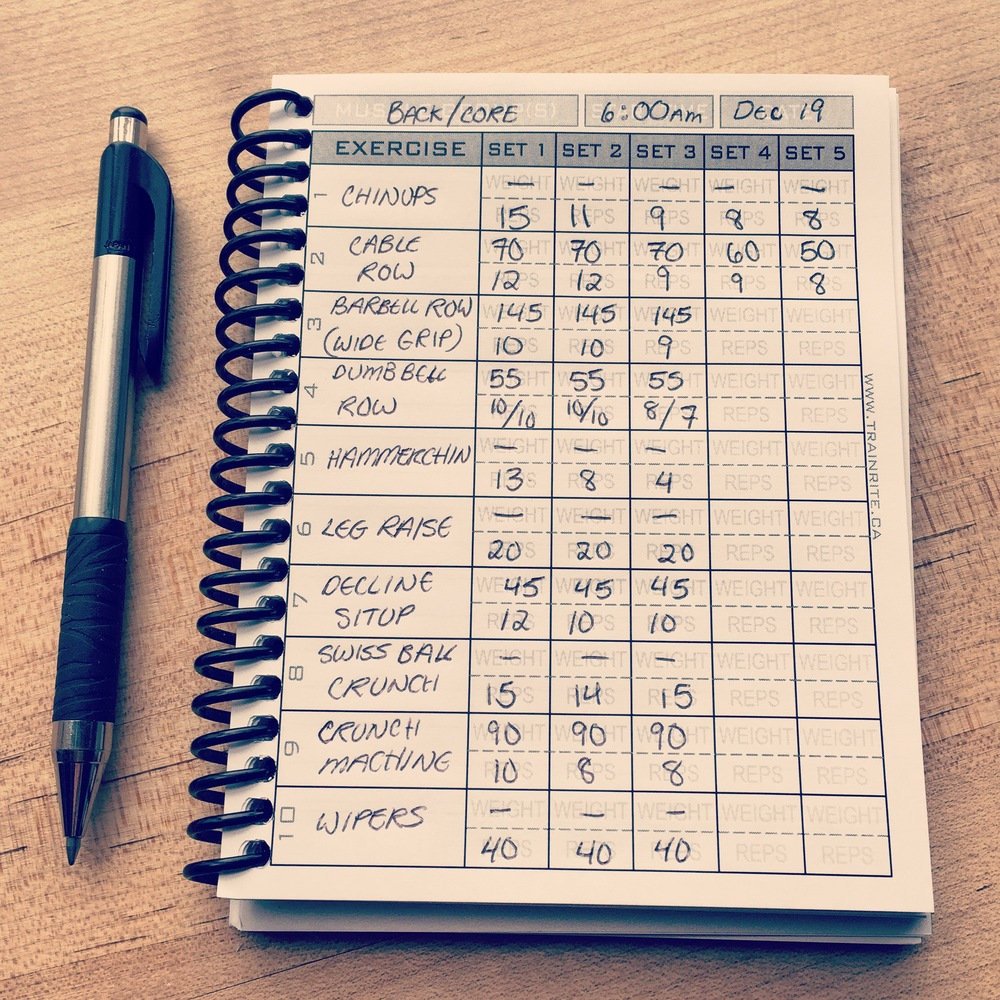
A training log can keep the comparison honest. Record the exercise, load, range of motion, rest intervals and repetitions. Note obvious changes in the session, such as a different machine or a much shorter rest. You are not trying to build a laboratory in your notebook; you are preventing unrelated changes from being credited to the newest purchase.
For example, a leg-press personal best after changing the seat position and shortening the range cannot be attributed confidently to a supplement. Likewise, extra squat volume after adding another set is not the same result as completing more work within an unchanged test. Keep the comparison aligned with the claim before interpreting the number.
A personal log still cannot prove a causal effect. Expectations, ordinary variation and other differences remain. Its value is practical: it helps you see whether a claimed benefit corresponds to anything meaningful in your training instead of replacing one vague impression with another.
Capsaicin remains an interesting research question with mixed short-term findings. It has not earned a promise of extra reps for every lifter, a hot-sauce dosing rule or a shortcut to muscle growth. Give more weight to repeatable training outcomes than to the heat of the headline.

Funny Gym Shirts & Workout Gear
Funny gym shirts, tanks, hoodies and workout gear for lifters who like training hard.

Flexonomics Tee
Show some lifting attitude with a playful “: Flexonomics Muscle Graph” tee.

Consistency Is Key Stoic Greek God Marble Sculpture T-Shirt
Make gym days more fun with “Consistency is Key Stoic Greek God Marble” style.


Meme – "Shhh I'M Doing Plate Math" Hooded Hoodie
Bring “"Shhh I'm Doing Plate Math" Workout Hooded” gym humor to lazy days and post-workout plans.

Bro Science Element Chemical T-Shirt
Show some bodybuilding attitude with a playful “Bro Science Element” tee.

Bro Scientist Chemistry of Gains | Workout Crewneck Pul T-Shirt
Keep things casual with a little “Bro Scientist Chemistry of Gains” attitude.

Mind Muscle Perfection Brain and Biceps Gym for Science Hoodie
Show off your lifting humor in a laid-back “Mind Muscle Perfection Brain and Biceps” hoodie.

Lift Eat Sleep Repeat Meme & Lifting Vest Tank Top
Show some personality between sets with “Lift Eat Sleep Repeat”.

Gymhead Lifting Is On My Mind Decal Skull Meme Sticker
Bring “Gymhead” attitude to your water bottle or laptop.

Be Stronger Than Your Excuses Funny Gym
Bring “Be Stronger Than Your Excuses” humor to your everyday gym style.