Advertising disclosure: This page includes affiliate product links that may earn us a commission, as well as products from our own store.
Caffeine Gum Before Lifting: Fast Delivery Does Not Guarantee Stronger Sets
Caffeine gum is convenient, portable and easy to treat as a last-minute workout upgrade. That convenience raises a more useful question than whether it feels stimulating: does the gum improve the performance you actually want? A faster delivery format does not automatically mean more weight on the bar, more useful repetitions or better muscle growth.
For adult lifters, the sensible decision starts with the outcome, the product label and the rest of the day’s caffeine. You can be interested in the evidence without turning an optional product into a requirement. The same applies if your training mixes lifting, jumping and endurance work: those tasks should not be treated as interchangeable tests.
1. Read the lifting result separately from the overall result
A September 2026 meta-analysis included 25 studies and 390 participants. Caffeine gum produced a statistically significant but trivial overall performance effect, with low certainty of evidence. The muscular strength and endurance subgroup did not show a statistically significant benefit. Aerobic endurance, anaerobic performance and vertical-jump outcomes contributed different signals.
That distinction matters if your reason for buying gum is a better bench session. An overall result combining different activities is not proof that every activity improved. Equally, a nonsignificant subgroup result does not prove that no lifter can ever respond; it means a clear advantage was not established in that analysis.
The pooled effect was a standardised effect size, not a percentage increase in strength. Do not turn a number near 0.2 into a promised 20% improvement. The review also identified study-quality concerns, and certainty ranged from low to very low across the evidence.
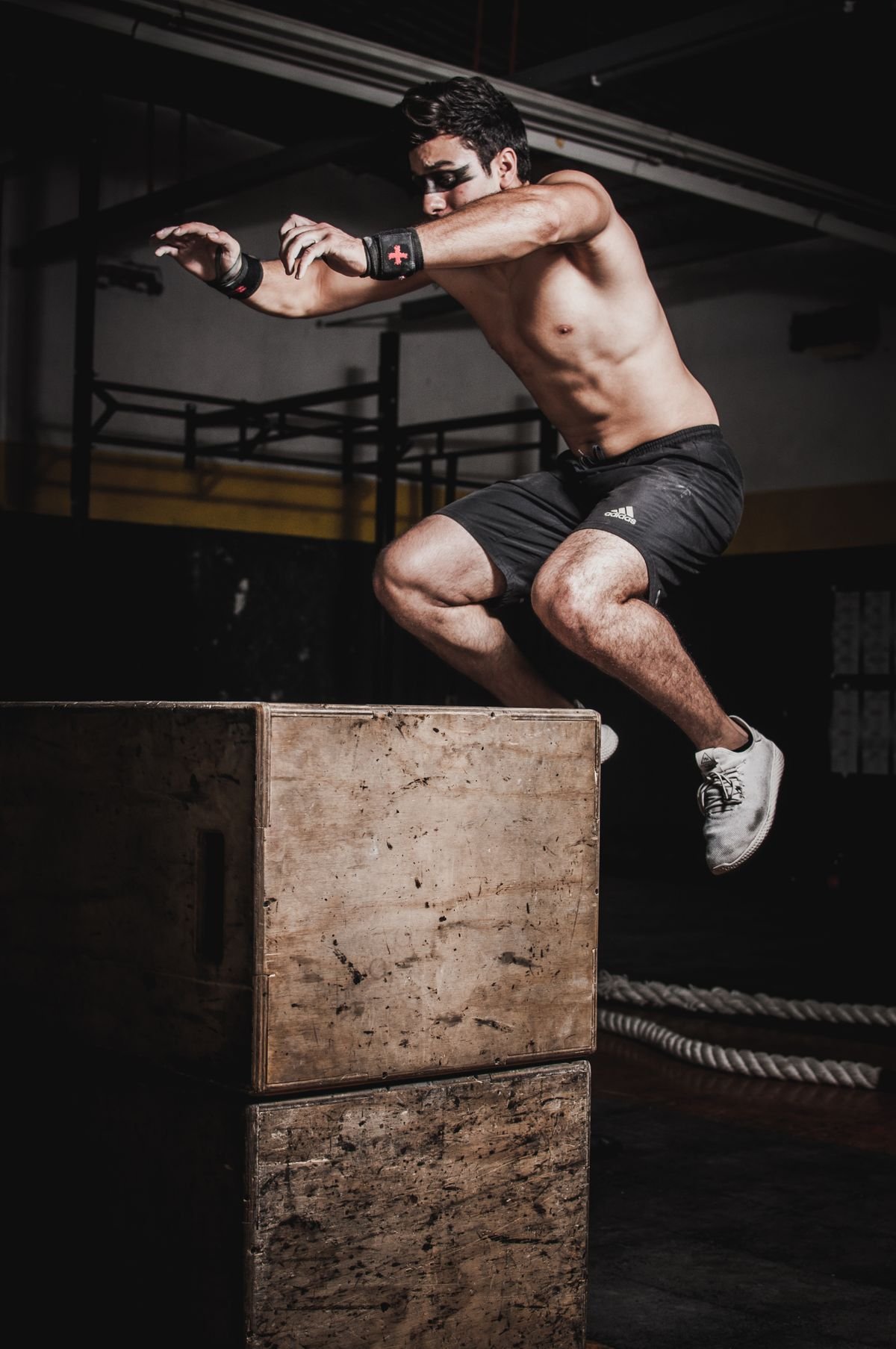
A jump photograph illustrates why matching the outcome matters. Jump height, a cycling effort and repetitions with a fixed lifting load answer different questions. None of the people pictured here should be assumed to be study participants or users of the product discussed.
Write your intended outcome before considering a supplement. “Improve my first working set without changing the load or technique” is more testable than “have a better workout.” It also makes disappointment easier to interpret: feeling more awake is a different observation from completing more controlled repetitions.
2. Treat the gum as a delivery format, not a different stimulant
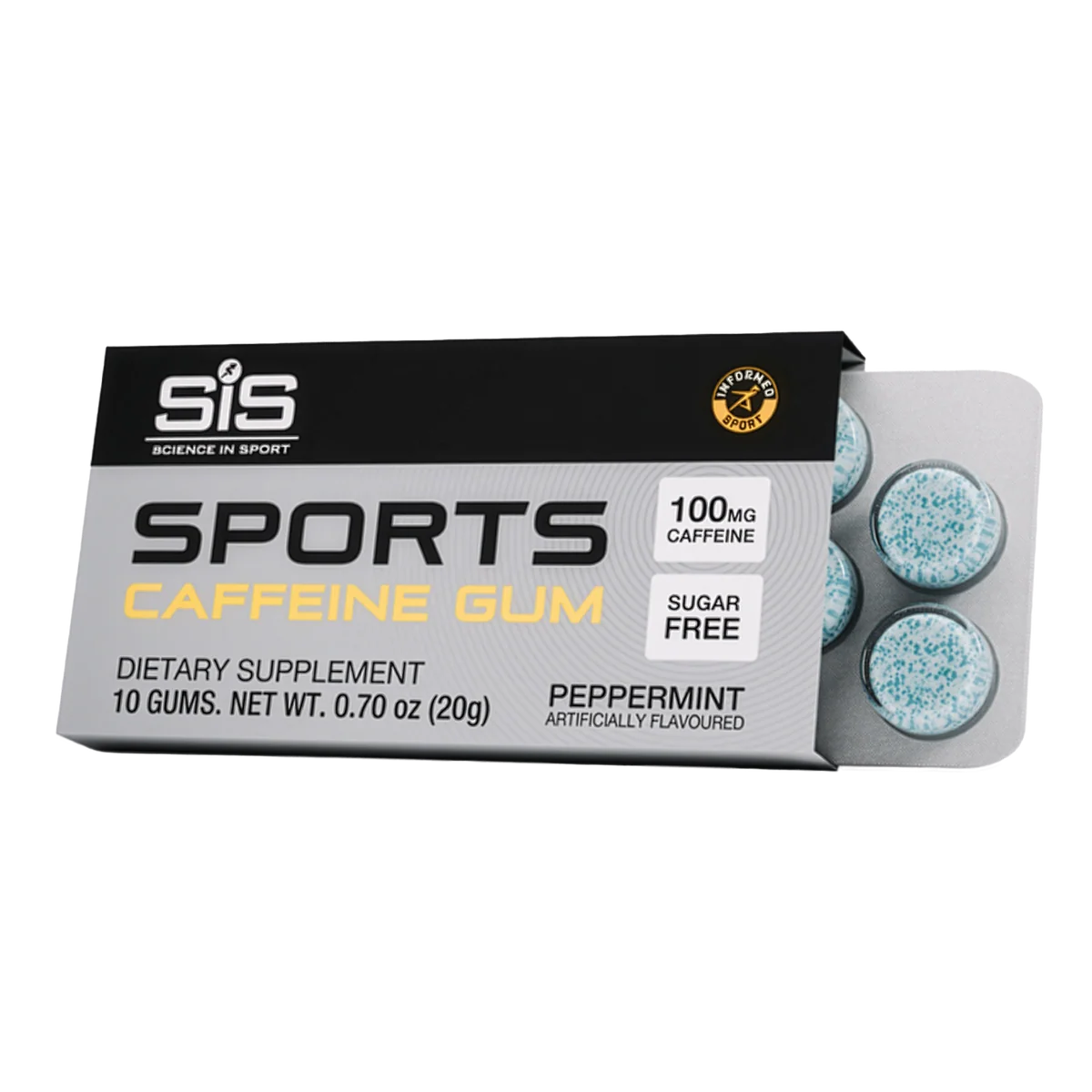
Caffeine can be absorbed through the mouth, which helps explain interest in gum for situations where a drink or capsule is inconvenient. But caffeine delivered this way remains caffeine. A compact packet does not remove its effects on alertness, side effects or the need to consider other caffeine consumed that day.
The photograph shows a labelled caffeine-gum packet and blister tray, rather than ordinary chewing gum being presented as a performance product. It is an example of the format, not a recommendation for that brand or evidence that every gum has the same formulation. Read the product you actually have.
Check the amount per piece and the stated serving size separately. A label might describe one piece, several pieces or a whole serving in different places. Count what you use rather than assuming that one small packet represents one modest amount. Keep the packaging available so you can check the instructions instead of relying on memory.
Follow the specific chewing and disposal directions. Do not borrow a timing routine from a different product simply because both are gum. A research protocol and a commercial label also serve different purposes; neither justifies improvising with multiple pieces to produce a stronger sensation.
If gum is uncomfortable during your training, its portability has little value. Consider whether chewing fits the activity and whether you would rather keep the session simple. There is no requirement to use gum instead of another familiar approach, and choosing no added caffeine is a valid option.
3. Add up the whole day’s caffeine before adding another source
Coffee, tea, energy drinks, pre-workout products and gum can all contribute to the same total. The useful unit is milligrams, not how many different product types you have used. Switching from a drink to gum does not reset the count.
Consider an arithmetic example, not a suggested intake: a drink containing 120 mg, a pre-workout serving containing 180 mg and gum containing 100 mg total 400 mg. If you overlook the gum because it feels like a minor snack, your estimate would be wrong by 100 mg. Check the actual labels; those illustrative numbers are not universal serving values.
For most adults, 400 mg a day is an amount not generally associated with negative effects, but it is not a target, a guarantee or an appropriate amount for everyone. Sensitivity, medical conditions and medications can change the decision. People who are pregnant, trying to become pregnant or breastfeeding should discuss caffeine limits with their healthcare professional.
Watch for unwanted effects such as jitters, anxiety, an upset stomach, palpitations or disrupted sleep. More stimulation is not necessarily better preparation for a technically demanding lift. If caffeine causes symptoms, do not treat escalating the amount as the way to make the workout productive.
Keep this an adult decision rather than extending a sports-supplement routine to children or teenagers. Store caffeinated gum distinctly from ordinary gum so that someone else does not use it without realising what it contains. A clear label matters beyond your own workout.

Bodybuilding Shirts & Workout Gear
Bodybuilding shirts, tanks and gym gear for lifters chasing muscle, size, symmetry and the pump.

Caffeine & Weights for Coffee Fueled Workouts, Bodybuil T-Shirt
For laid-back days and powerlifting humor: “Caffeine & Weights”.

Coffee Shots & Heavy Squats for Leg Day, Lifting and Fi Tank Top
Add some leg-day attitude to training with “Coffee Shots & Heavy Squats”.

Caffeine Gym Cosmic Graphic , Coffee Workout Hoodie
Show off your powerlifting humor in a laid-back “Caffeine” hoodie.

Coffee and Weights Retro Cartoon Muscle Shirt for Caffe Tank Top
Bring “Coffee and Weights Retro Cartoon” humor to your next lifting session.

Caffeine Skull Coffee Gym Crewneck Hardcore Energy Pull T-Shirt
Show some gym-day personality with “Caffeine Skull”.

Preworkout – Heavy Metal Gym Shirt for Hardcore Lifters T-Shirt
Make gym days more fun with “Preworkout” style.

Bro Science Periodic Table Tee
Bring “Bro Science Periodic Table” humor to your next gym day.

Lift Eat Sleep Repeat Meme Sweater & T-Shirt
Bring “Lift Eat Sleep Repeat” humor to your everyday gym style.

Bro Science Graph Shirt – Essential & Gains T-Shirt
Heavy lifts, good laughs, and a little “Bro Science Graph” energy.

Spit Preworkout In My Mouth Meme Weightlifting, & T-Shirt
Show some lifting attitude with a playful “Spit Preworkout In My Mouth Meme” tee.
4. Include tonight’s sleep in the performance calculation

The relevant window extends beyond the hour in the gym. Caffeine can disturb subsequent sleep, and the timing and amount both matter. A systematic review of sleep outcomes found reductions in total sleep time and sleep efficiency, alongside changes in the time needed to fall asleep and overnight wakefulness.
That does not establish one perfect cutoff for every person or product. A timing estimate derived from a particular amount cannot simply be transferred to an unknown gum serving. Consider your bedtime, your usual response and the caffeine already consumed rather than treating an afternoon workout as an isolated event.
If you train late, compare the possible benefit with the practical cost. A slightly more stimulating session followed by a poor night may be an unattractive trade. You do not need to prove that every performance measure worsened before deciding an optional stimulant is inconvenient for your schedule.
Record the evening context alongside the workout. Note when you used caffeine, roughly how much, when you went to bed and whether sleep felt different. A single restless night has many possible explanations, so look for a pattern rather than immediately assigning a cause.
Also avoid using extra caffeine as the automatic answer to every tired session. When sleep has been poor, adjusting the session may be more sensible than trying to recreate a fully rested day through stimulation. Keep the movement and loading appropriate for the state you are actually in.
5. Keep any comparison simple and judge whether the format earns its place
If you choose to evaluate an optional product, use an ordinary training session rather than an important competition or maximum attempt as the first exposure. Keep the exercise, warm-up, load, rest and stopping rule familiar. Changing those features at the same time makes the result difficult to interpret.
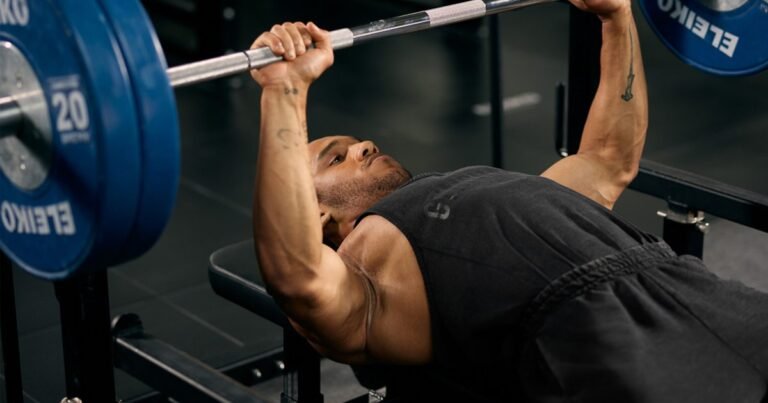
For example, record your normal working sets on a bench press or squat with the same range of motion and a consistent repetition standard. Log the outcome, perceived effort and any unwanted effects. Do not count a shortened repetition or a changed technique as evidence that the product helped.
A personal training log is useful feedback, but it is not a blinded experiment. Expectations, day-to-day variation and differences in food or sleep can affect what you notice. One exciting session cannot establish a reliable advantage, and one disappointing session cannot explain every variable involved.
Keep cost and convenience in the decision. If the gum makes a particular situation easier, that is a practical benefit you can describe honestly. It is different from claiming a strength effect that the evidence has not clearly demonstrated. If it adds uncertainty, symptoms or unnecessary spending, leaving it out does not make the programme incomplete.
The priority remains a repeatable training plan with suitable exercise selection, recovery and nutrition. Caffeine gum is an optional delivery method with limited performance evidence, not a shortcut around those foundations. The equipment below relates to consistent pressing, squatting and other training comparisons; it does not make caffeine work better or establish that you need another product.

Equipment Worth Exploring
Explore equipment, accessories and gear from our carefully selected range.


FID Bench MAX
Adjustable bench offering flat, incline, and decline positions + adjustable headrest.


Rubber Hex Dumbbells
Rubber-coated hex dumbbell pairs with a stable shape for home and commercial strength training.


Open Hex Bar
Open-frame trap bar with multiple handles for deadlifts, carries, and lower-body training.


Leg Press/Hack Squat BPR-790
Convertible 45-degree leg press and hack squat machine with a broad footplate and band pegs.