Advertising disclosure: This page includes affiliate product links that may earn us a commission, as well as products from our own store.
The Bells of Steel Kraken can add cable work to an existing rack, but a useful buying decision starts with the complete installation. Check the rack configuration, attachment quantity, loading choice and room layout before paying. One upgrade claim also needs direct confirmation because the manufacturer currently gives conflicting answers.
Begin with the rack you actually own
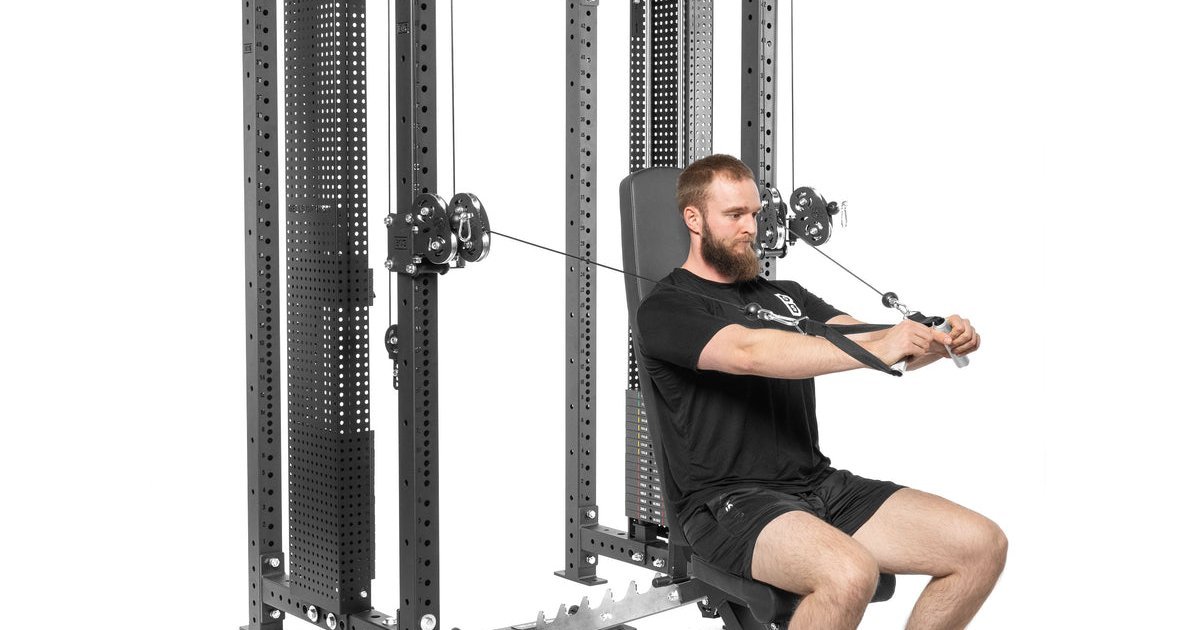
The Kraken four-post attachment adds cable training to a compatible power rack. That makes rack identification the first buying decision. Write down the rack family, upright height, hole size and crossmember depth before comparing loading options. A photograph of the assembled frame and a close-up of its hardware can be more useful to customer support than a description such as standard three-inch rack.
Bells of Steel lists the four-post configuration for Hydra and Manticore racks, with different hardware families. Its compatibility guidance includes 24-, 30- and 43-inch crossmember depths. Treat those as specified configurations rather than permission to combine arbitrary parts. Flat-foot arrangements and taller uprights can introduce additional crossmember requirements; confirm the complete build instead of checking only one dimension.
Make a simple floor plan before buying. Mark the rack, bench, stored plates and the space occupied by a person using a cable. Then trace how you would move from a barbell set to a low row or standing press. Equipment can fit inside a room while leaving too little space to use it comfortably. Include doors, shelves and the route used to bring the boxes into the room.
For another manufacturer's rack, request confirmation for the precise model and proposed layout. Matching nominal tube dimensions alone does not settle hole spacing, bracket clearance or the position of existing attachments. Keep the answer with your order details. This is a purchasing check, not an invitation to drill new holes or improvise structural modifications when a bracket does not line up.
Count attachment sides separately from handles
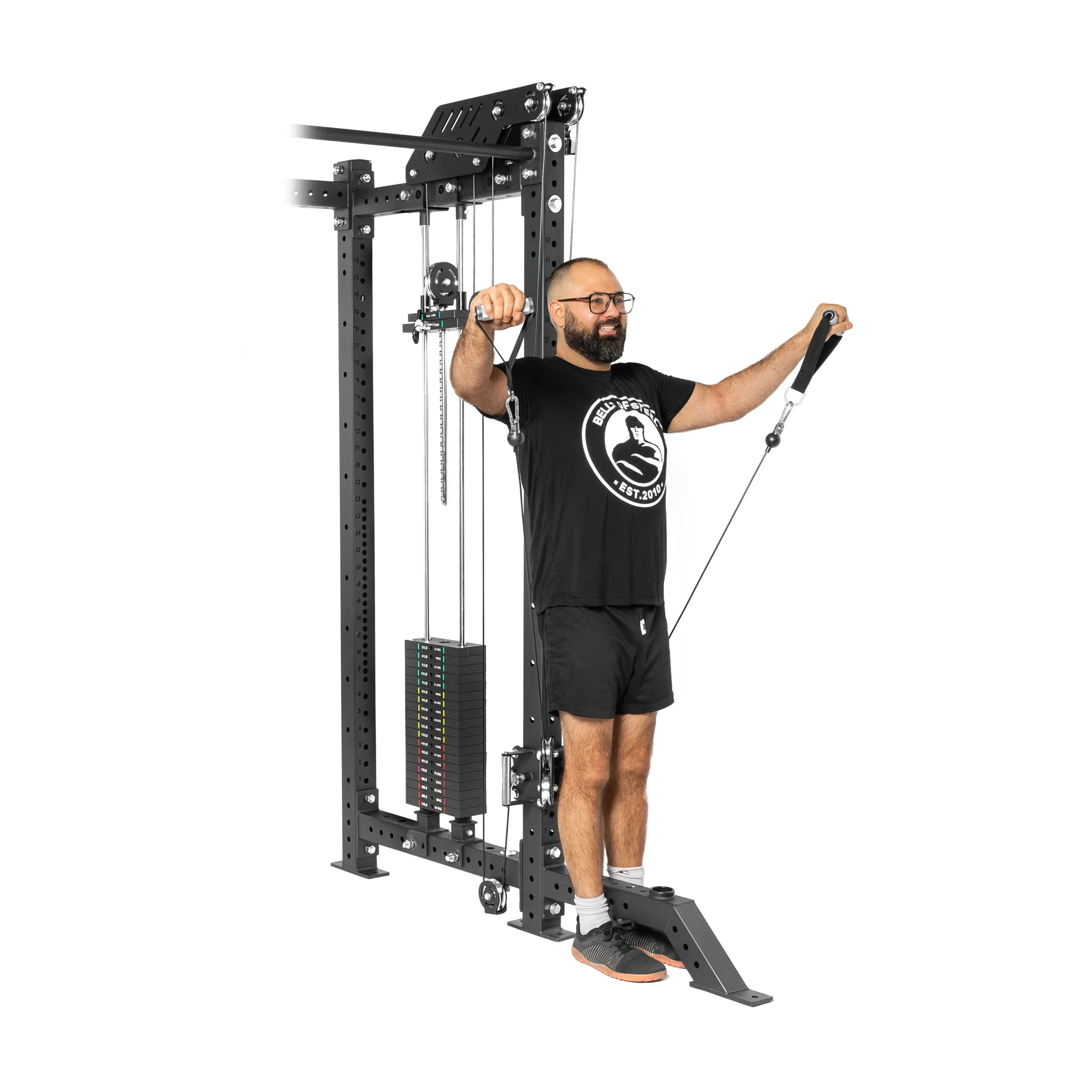
The listing is for one side of the rack, and that side includes two handles. This is an easy distinction to miss in photographs showing a complete training station. Two handles supplied with one attachment do not mean two separate rack-side systems are included. Check the quantity and the selected configuration in the basket before using the headline price as your complete budget.
Decide which exercises justify a second side. A single upright may provide the positions you need for several movements, while widely separated cable flyes create a different space requirement. Sketch the cable origins and your body position for the movements you actually perform. Do not buy a second attachment solely because it looks symmetrical if it adds little to your normal training.
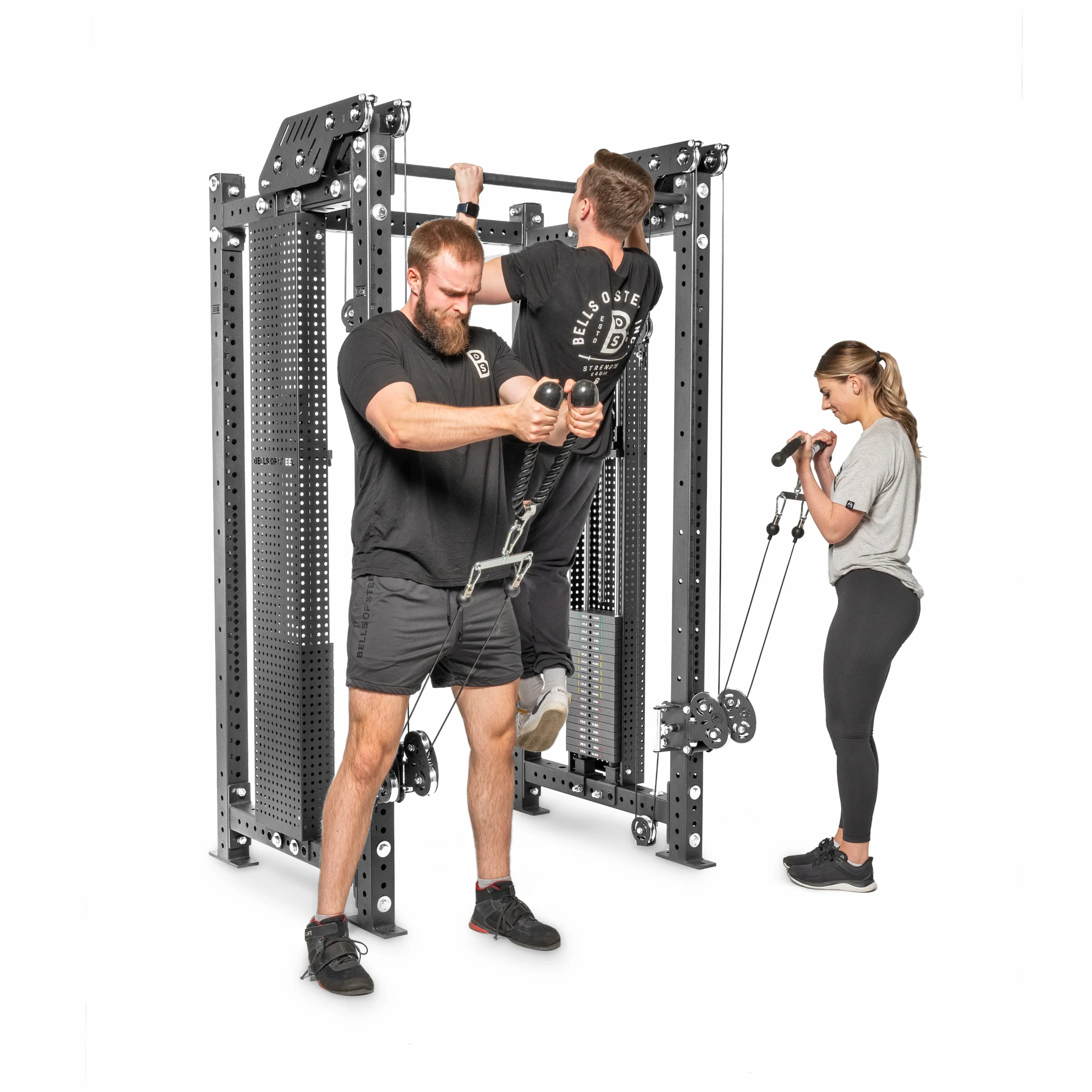
Also consider who shares the room. Two lifters may need bench space, access to a barbell and a clear route around the rack at the same time. A staged demonstration photograph is useful for seeing possibilities, but it does not prove that your floor plan supports simultaneous exercise. Walk through a realistic session using the equipment already in place, including where unused handles will hang.
Build a total-system list rather than a pile of accessories. Separate the rack, cable attachment sides, loading supply, stabilizing components, bench and optional storage. Mark each item as owned, included, optional or still to confirm. This reduces the chance of ordering a duplicate handle while overlooking a much more consequential mounting component or required installation step.

Home Gym Shirts & Garage Gym Gear
Home, garage and basement gym shirts and workout gear for lifters who built their own place to train.

Ultimate Meme : Power Rack Shirt & Home Gains T-Shirt
Show some lifting attitude with a playful “Ultimate Gym Meme” tee.

Home Is Where Your Gym Is | Funny Garage Gym Meme Worko Sticker
Give your everyday gear a playful “Home Is Where Your Gym Is” twist.

Home Gym Nerd Garage Gym Basement Gym Meme Bodybuilding Sticker
A fun “Home Gym Nerd” touch for bottles, laptops, and lockers.

Funny Garage Gym Hooded Pullover for Home Gym Owners Li Hoodie
Stay casual and show some lifting attitude with “Garage”.

Garage Gym Muscle Shirt Athletic Vest for Home Gym Lift Tank Top
Bring “Garage” humor to your next lifting session.

Funny Basement Gym Crewneck Pullover Sweater for Home G T-Shirt
Bring “Basement” humor to your everyday gym style.

Basement Meme & Gymbros – Top Home Gains T-Shirt
Show some lifting attitude with a playful “Basement Gym Meme” tee.

Shirt Home Owners – Garage , Basement & – Meme T-Shirt
Bring “for Home Gym Owners” humor to your next gym day.

Anti Social Gymbro Club Sweater & Meme Fans T-Shirt
Keep things casual with a little “Anti Social Gymbro Club” attitude.

Anti Home Club – Meme , Gymbros & Home Gains Top T-Shirt
Make gym days more fun with “Anti Gym Home Gym Club” style.
Choose loading without assuming a future conversion
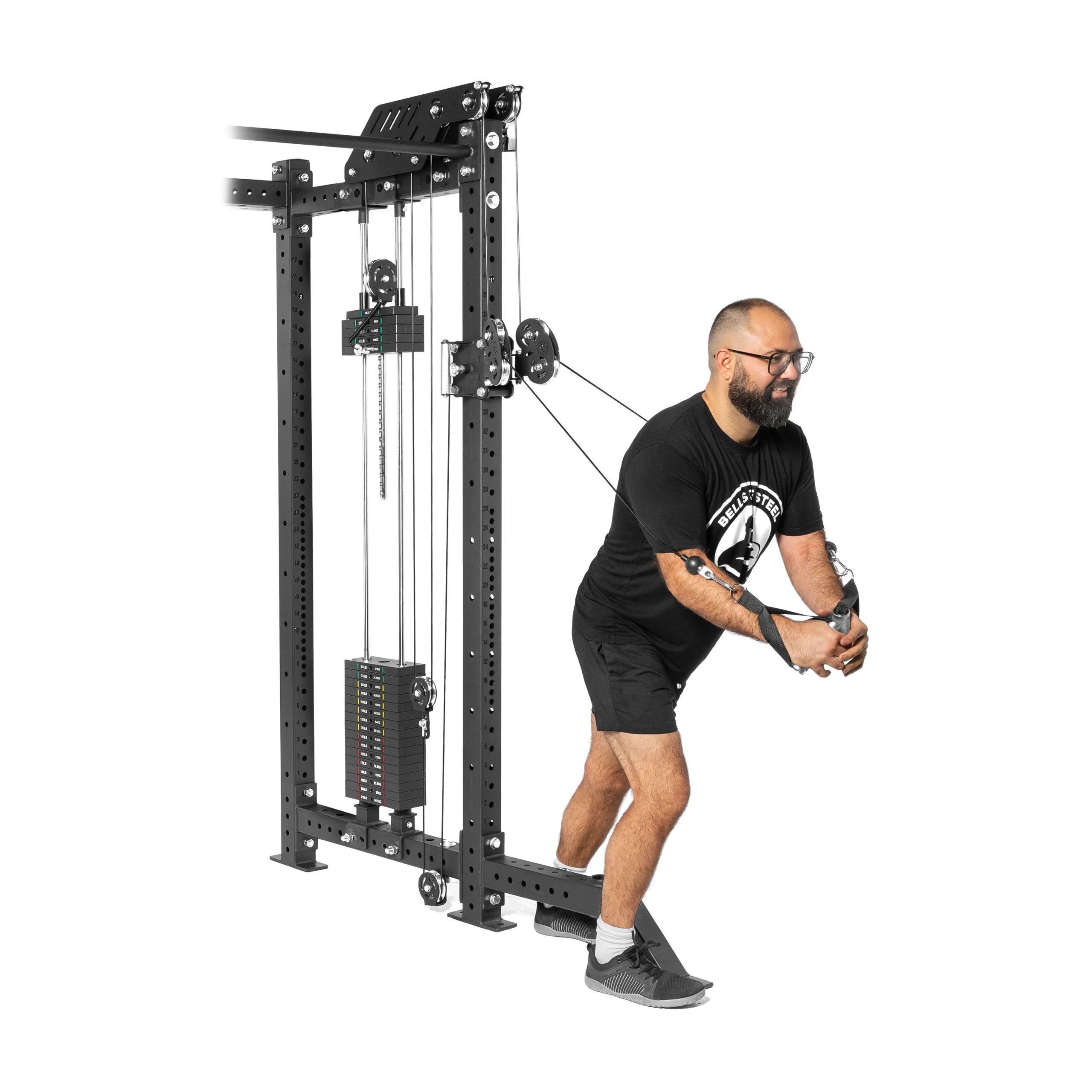
Plate-loaded and weight-stack configurations solve different everyday problems. Plates can be attractive when you already own suitable weights, but they require a loading area and repeated handling. A selectorized stack makes frequent changes easier. Think about how often you alternate exercises and how many people use the station, rather than treating one loading system as automatically better for everyone.
There is an important qualification to the upgrade story. On 16 November 2026, the product listing says plate-loaded Krakens can be upgraded by contacting customer service, while a separate Bells of Steel support answer still says conversion is not possible. Those statements conflict. Do not base a purchase on an assumed conversion kit, cost or installation process until the manufacturer confirms what applies to the exact unit being ordered.
Ask for a specific answer: the required parts, the supported configuration, the total delivered cost and whether any existing pieces would need replacement. Keep that answer in writing. Buying a plate-loaded model now can still be a sensible decision if you would be satisfied keeping it that way. It becomes a different gamble when the entire plan depends on an unconfirmed later conversion.
Use a normal workout to compare convenience. Imagine a row, a lighter shoulder exercise and another row with a different load. Count the changes and consider where the plates would be placed between sets. Also account for any weights that must remain available for the barbell. The cheapest initial configuration can become less convenient if several stations compete for the same small plate supply.
Understand the cable setup before comparing loads
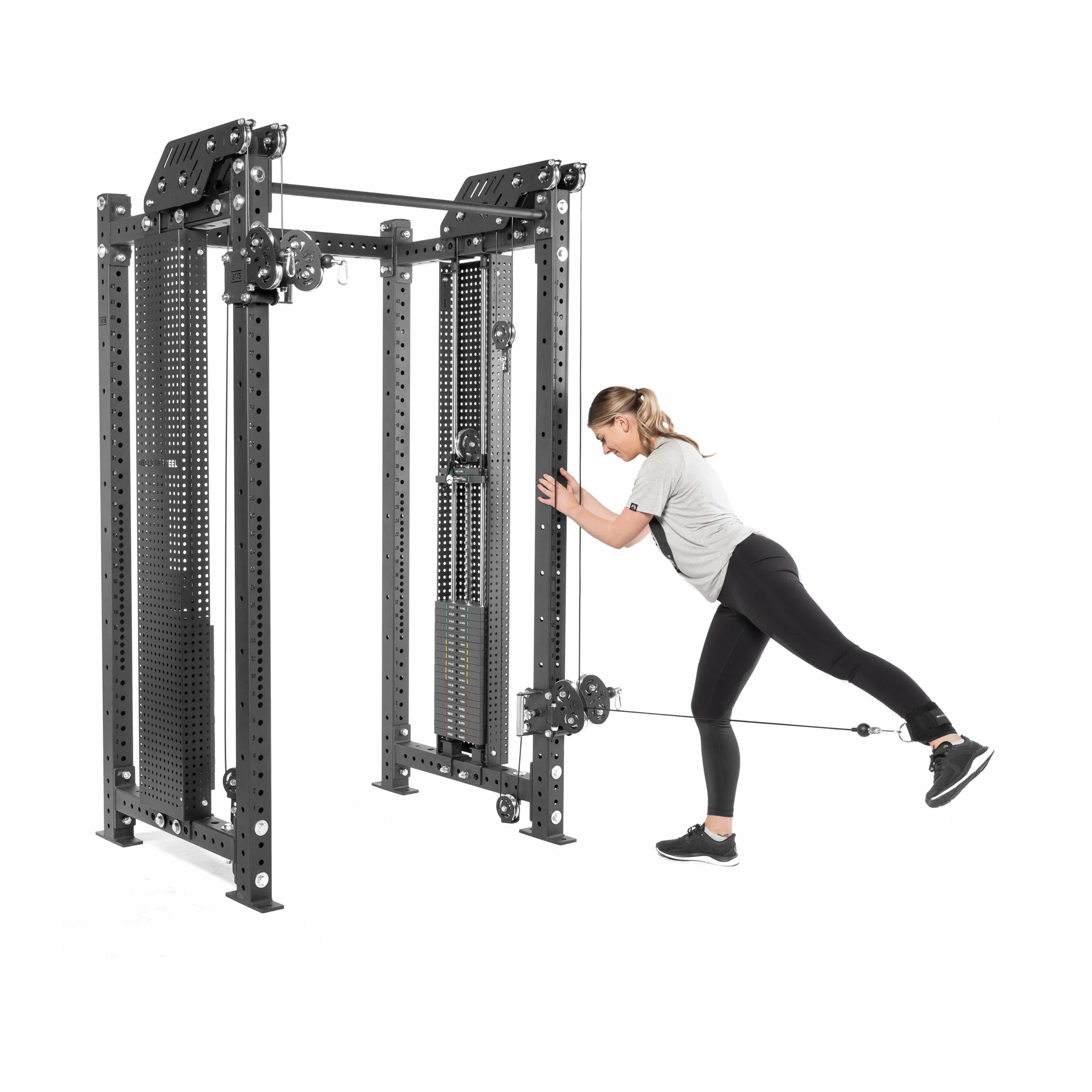
The Kraken offers separate cable use and a supplied adapter for joining the outputs. These are different configurations, so a number printed on a stack is not enough to compare the resistance you feel across every exercise. Follow the current assembly and operating instructions for the exact version, and record which cable arrangement you use when tracking a lift.
Think of the exercise log as more than a load column. Note the trolley position, attachment, bench position and whether the outputs are joined. Changing one of those details can alter the movement enough that a heavier selection does not represent a straightforward strength improvement. A repeatable setup gives your next session a useful starting point and makes progress easier to judge.
Before the first working set, test the movement lightly through the intended range. Check that the cable stays clear of the bench and your body, that connectors close correctly and that the chosen handle allows a comfortable path. Do not assume that an accessory from another system is suitable merely because a carabiner can be clipped to it. Connection and intended loading both matter.
Plan the exercise first and choose the accessory second. A compact handle may be convenient for a press, while a longer bar may change the available working space. More attachments do not automatically create more useful training. A small group of well-chosen options, stored where you can reach them without crossing a loaded cable, often makes a session easier to run.
Treat stability and cable care as part of the purchase
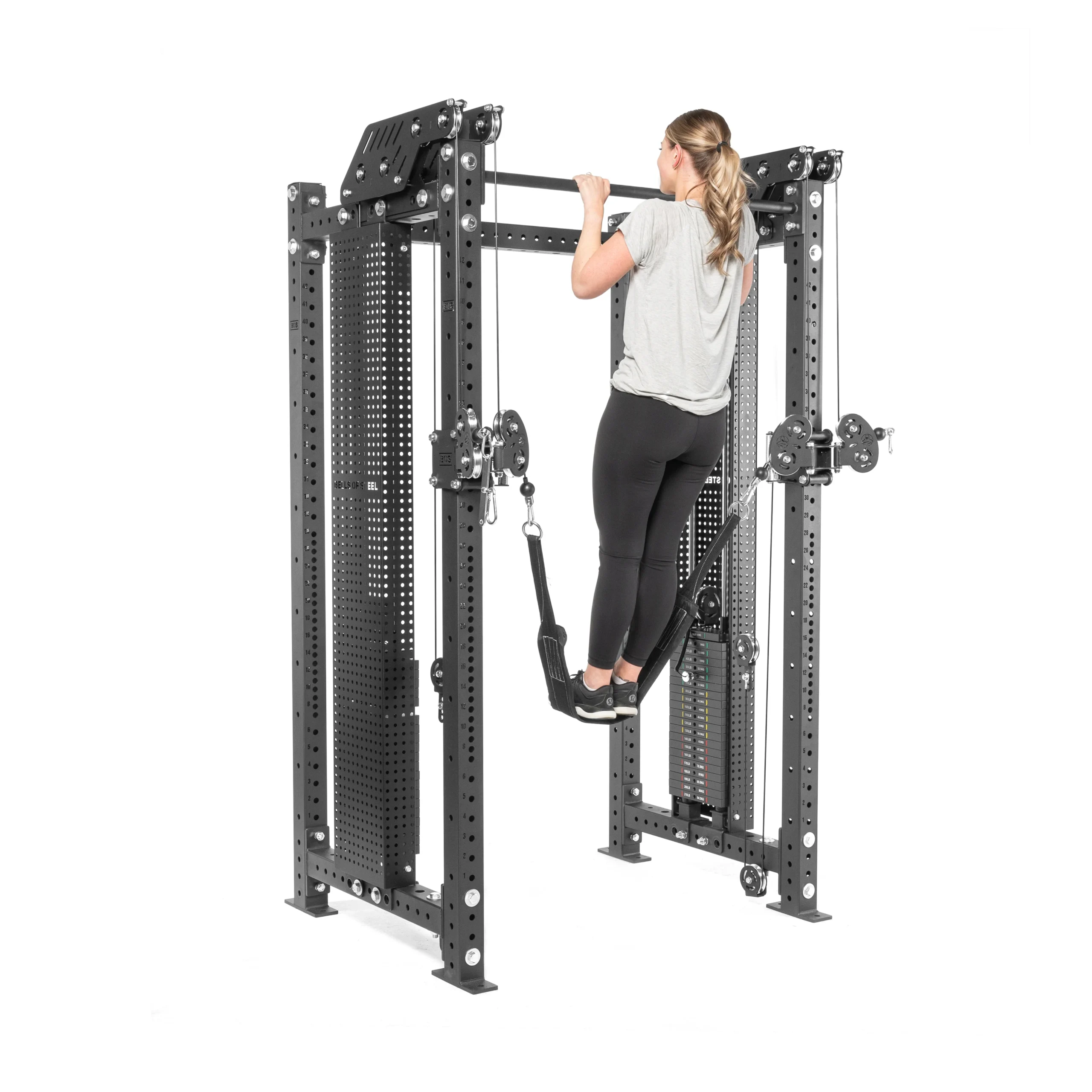
Bells of Steel states that a rack with the Kraken installed must be bolted down or have Front Foot Stabilizers. Confirm the approved arrangement for your rack and floor before installation. Existing confidence in the rack during ordinary squats does not replace the manufacturer's requirements for an added cable system, which changes how forces are applied to the structure.
For a rented room or a finished floor, resolve installation constraints early. Ask about the supported stabilizing option rather than assuming that a heavy rack cannot move. Check that the required components can occupy the planned space without blocking doors or the bench route. If the approved setup is unsuitable for the room, reconsider the purchase before delivery instead of improvising after assembly.
The manufacturer also warns that excessive single-sided cable use may encourage twisting and accelerate cable or pulley wear. This makes the intended operating configuration worth understanding, especially if most of your programme consists of unilateral movements. Ask how to arrange those movements within current guidance. Do not invent your own maintenance interval or dismiss a warning because the first few repetitions feel smooth.
Include a short inspection in your session routine. Look for obvious damage, unusual cable routing or loose components, and stop using the system if something appears wrong. Obtain the correct service instructions and replacement parts rather than concealing a problem with an improvised fix. Smooth travel is useful feedback, but it is not a substitute for checking that the system remains assembled as intended.
Make the final decision with a session walkthrough
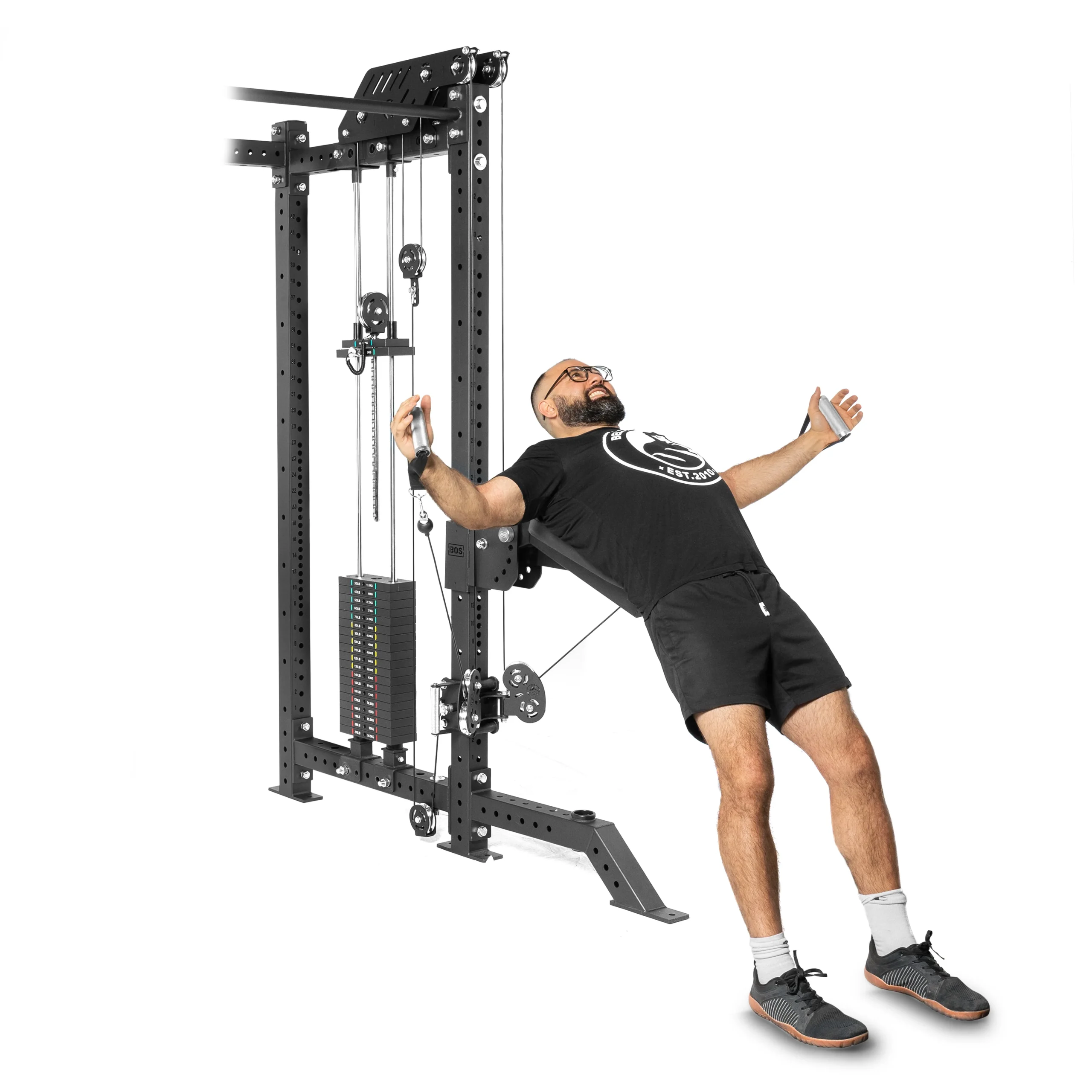
A practical final check is to write one ordinary upper-body session on paper. Choose a press, a row and a small isolation movement that already belong in your programme. For each, mark the cable position, handle, bench placement and loading change. The purpose is to assess whether the new system makes your real training easier, not to create a longer workout merely to justify the purchase.
Then walk through the transitions. Where does the bench go when you stand up? Can another person reach the plates? Will stored attachments interfere with cable travel? These details are difficult to appreciate from a single product photograph. They are also the details that determine whether a space-saving attachment feels efficient or turns every exercise change into furniture moving.
Compare the result with a separate cable station or with keeping your current setup. A rack attachment is attractive when it adds the movements you need without compromising the barbell work you value. A separate machine can make sense when users need independent stations or when the rack layout becomes crowded. There is no need to force one solution onto every room or training style.
Before payment, confirm the exact rack configuration, quantity of sides, loading choice, stabilizing method, included parts and unresolved conversion question. Recheck the current regional price and delivery terms rather than relying on an old screenshot. The useful outcome is a complete, supported system that fits your sessions. An impressive exercise list matters less than being able to perform your own movements comfortably and consistently.

Equipment Worth Exploring
Explore equipment, accessories and gear from our carefully selected range.

VForce Lat Tower
Wall-mounted cable tower with pivot arms and adjustable 1:1 or 2:1 pulley ratios.

VForce Wall Trainer
Space-saving wall-mounted functional trainer with pivoting cable arms and variable resistance ratios.

VForce 2IN1
Half rack and pivot-arm functional trainer with switchable 1:1 and 2:1 pulley ratios.

VForce 3IN1
All-in-one rack combining an adjustable Smith machine, functional trainer, and free-weight station.

VForce 3IN1 Max
Six-post all-in-one rack with Smith machine, functional trainer, and variable-force cables.

Multi Pull Smith Rack MPHR-780
All-in-one rack with a Smith machine, functional trainer, lat pulldown and low row.

Trinity Lat Machine LSW-850
Weight-stack pulldown tower offering three cable directions and adjustable seated support.
VOLTRA
Compact digital cable trainer with smooth, adjustable resistance.

Go-Tone Pro
Portable digital cable trainer with up to 66 lb (30 kg) of adjustable resistance.
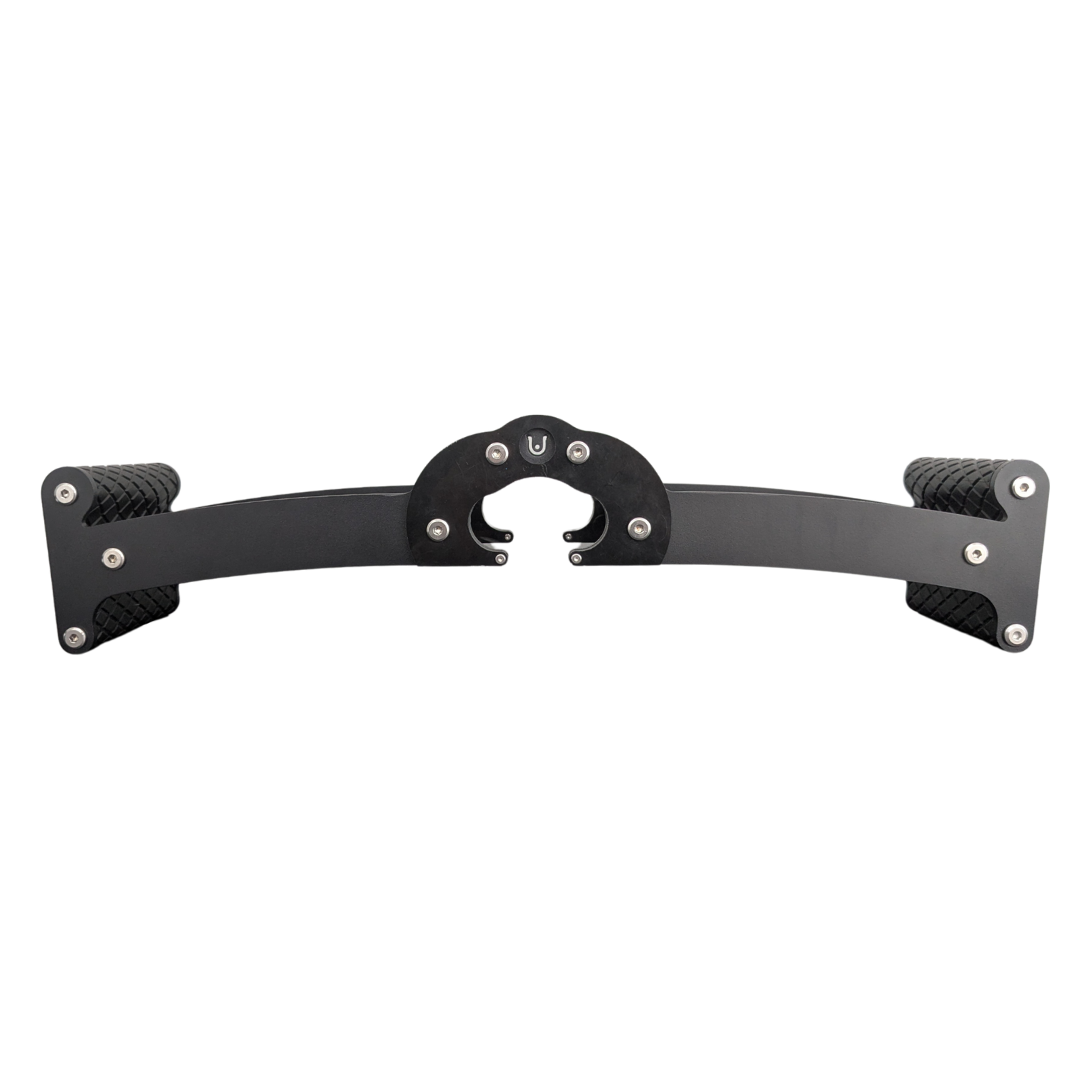
Back Bar
Multi-grip cable and landmine bar with a built-in deadlift jack.