Advertising disclosure: This page includes affiliate product links that may earn us a commission, as well as products from our own store.
Barbell Hack Squats: Set Up Behind the Bar and Keep the Path Clear
The barbell hack squat places the bar behind your legs, held in your hands rather than across your shoulders. That simple change creates an unfamiliar route for both the bar and your body. It is a free-weight lift, with none of the back support or guided track of a hack-squat machine. Before loading it heavily, establish whether you can reach the bar, stand up and return it without getting tangled around your knees. The useful challenge is repeatable leg work, not proving that every body must fit this particular exercise.
1. Establish a starting position you can reach
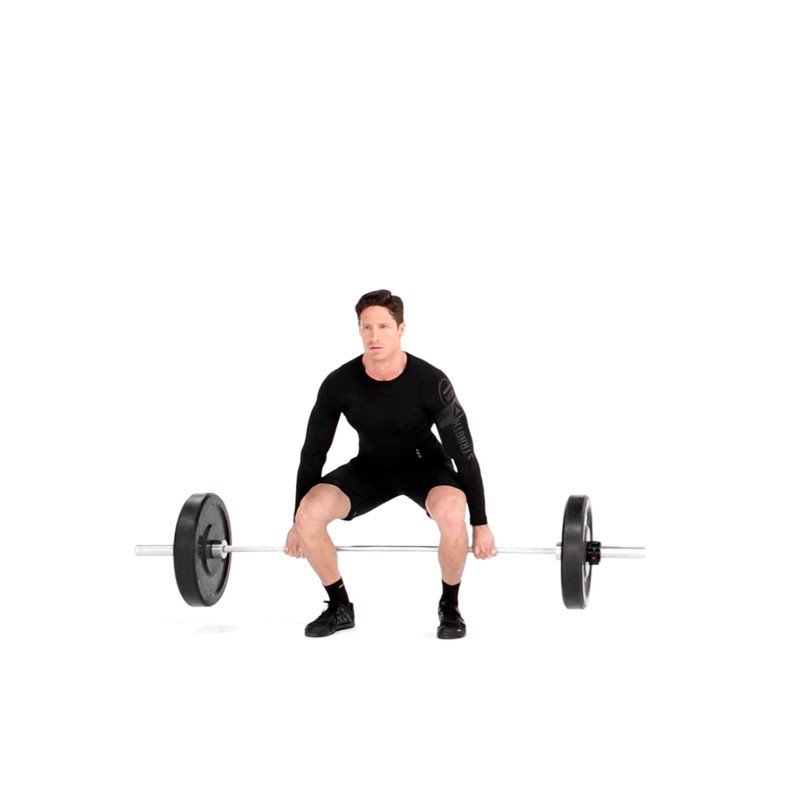
Place the bar on a level lifting surface and stand just in front of it, with the shaft behind your calves. Start around shoulder width and reach back with your hands outside your legs, using an overhand grip. Bend the knees and hips to reach it while keeping the trunk controlled. Do not begin by twisting down toward one hand and then searching for the other.
Plate diameter changes the starting height. A light bar fitted with small plates sits lower than one fitted with full-size plates, even if the total load is modest. Check the actual position instead of assuming that an empty or lightly loaded bar is automatically easier to set up. Suitable training plates or an appropriately arranged raised start can change that access point without requiring a heavier working weight.
Keep both sides at the same height, secure the plates and clear the space behind you. A loose plate, uneven surface or nearby bench complicates a lift that already puts the load outside your normal view. Plan where the bar will land when the repetition finishes. You should not need to shuffle backward into equipment to put it down.
If reaching the bar demands a position you cannot control, stop the rehearsal. Changing starting height or choosing another squat variation is more useful than immediately adding straps, more weight or a dramatic stance. Treat setup access as a separate question from how strong your legs are.
2. Let the knees move while the bar stays close
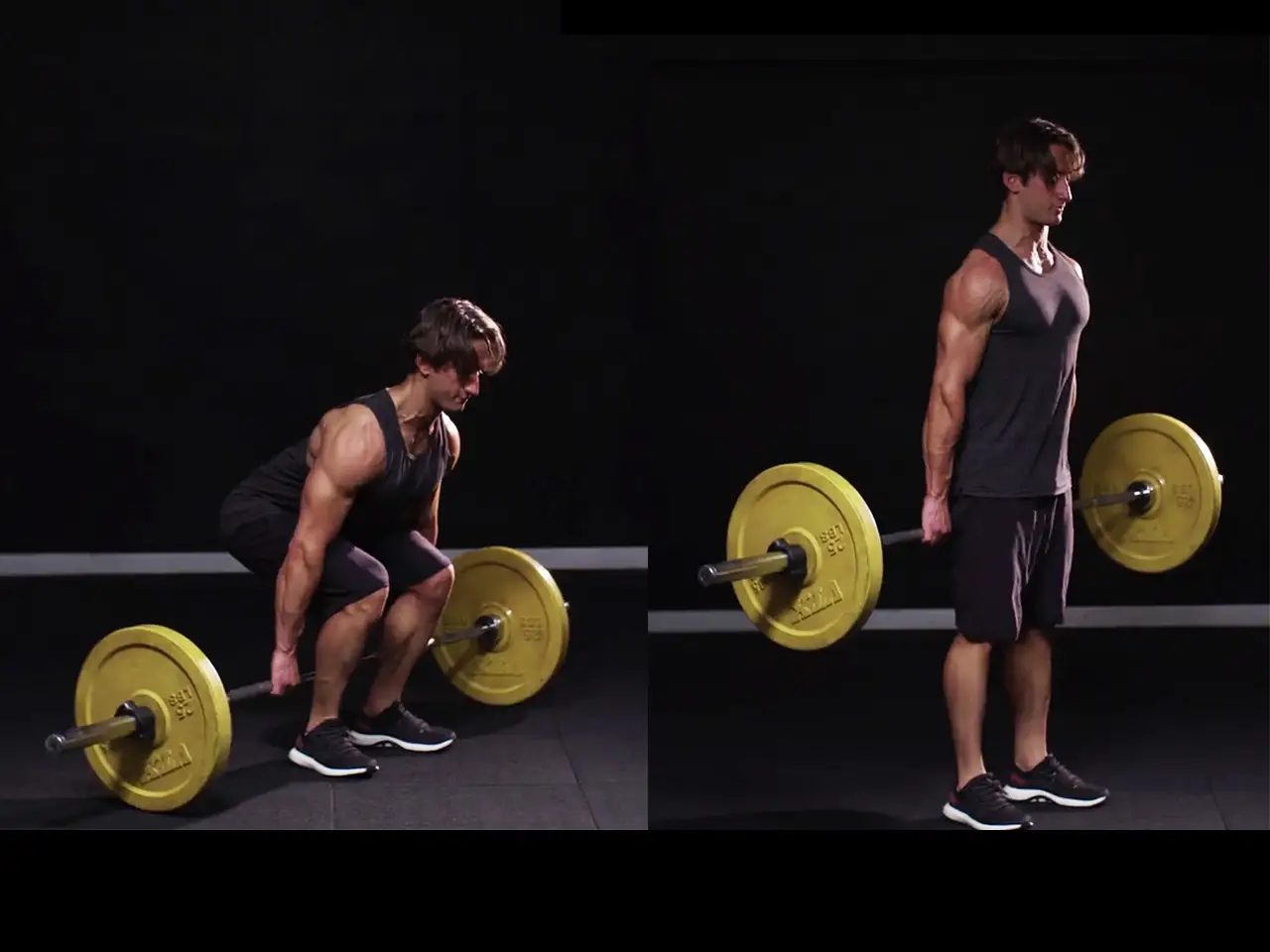
Stand by extending the knees and hips together, keeping the arms long and the bar near the backs of the legs. Your quadriceps contribute to extending the knees, while the hips and trunk also have work to do. This is not a way to switch off the glutes or lower back, and it should not be advertised as a universally back-friendly replacement for every other squat.
The behind-the-legs position leaves limited room for the bar. If you push the hips far backward as you rise, the shaft may run into the thighs or glutes. Some forward knee travel is part of making room for a more upright rise. Trying to keep the knees completely behind the toes can make the task unnecessarily awkward.
Use a light rehearsal and observe where contact occurs. Does the bar stop at the same point on every attempt, or only when the hips suddenly move backward? A short side-view recording can distinguish those situations. Do not use a forceful backward swing to send the bar around an obstacle. Reduce the load and reassess the route.
Your proportions affect the available path. Two lifters can use the same stance and plate height yet have different experiences because their arms, thighs and torso are different lengths. A demonstration is a useful reference, not proof that you should reproduce its exact geometry. If a comfortable path remains unavailable after reasonable adjustments, there are other ways to train the legs.
3. Finish tall and return without losing the route
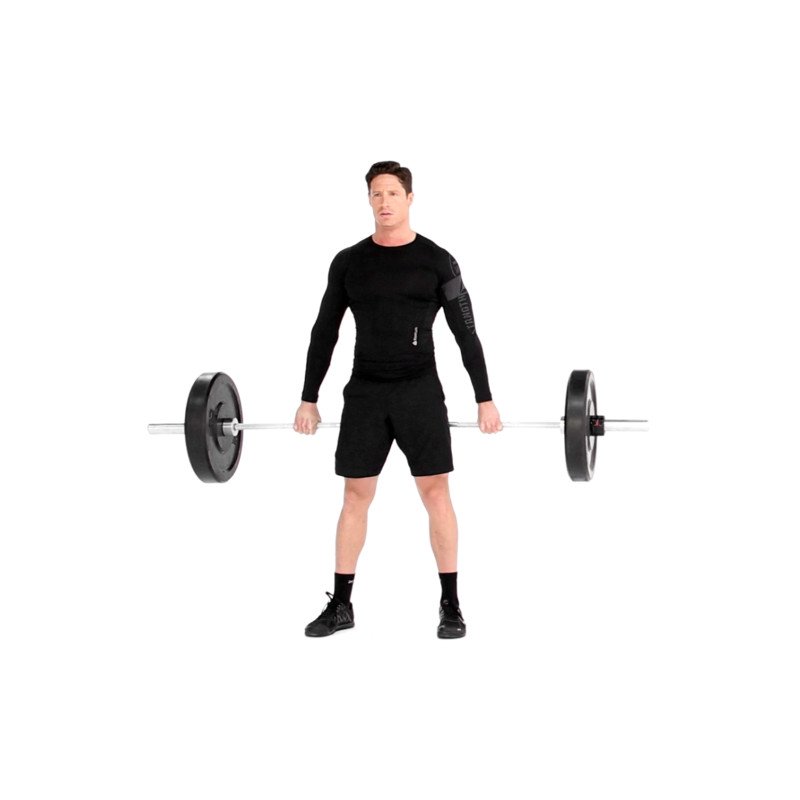
At the top, stand upright with the bar behind you and the arms straight. Avoid turning the finish into a backward lean or an exaggerated shrug. Holding the load in your hands means grip can limit the set, but a tighter grip will not solve a bar path that repeatedly catches on the body.
Lower through a controlled bend of the knees and hips, following the route you established on the way up. Keep the descent deliberate enough to notice whether the bar remains close or drifts away. Do not simply drop the hips and hope the bar clears the legs. Set it down evenly and reset before the next repetition if needed.
Choose whether each repetition returns to a defined start or stops at another controlled depth, and record that choice. A floor-start repetition and a continuous repetition that stops higher are different tasks. You cannot judge a load increase fairly if the return quietly becomes shorter every week.
Compare the first and last repetitions. A useful set ends with enough control to put the bar down as intended. If the final attempt requires stepping around the bar, bouncing it away from the legs or rushing the descent, reduce the next set rather than treating survival as the standard. Leave the competition-style maximum attempts to lifts you can perform consistently.
4. Distinguish heel changes from a different exercise
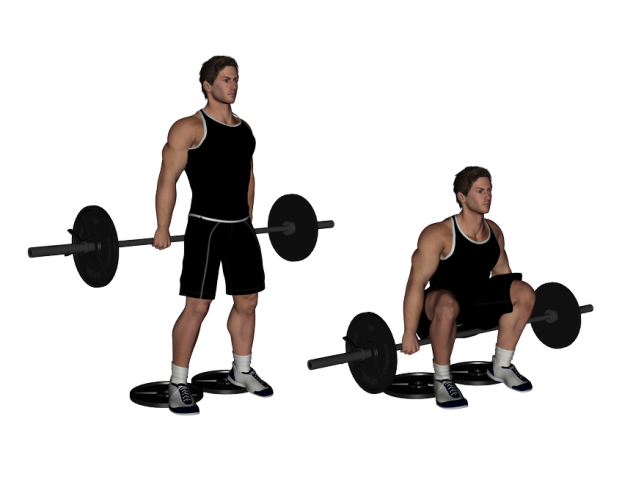
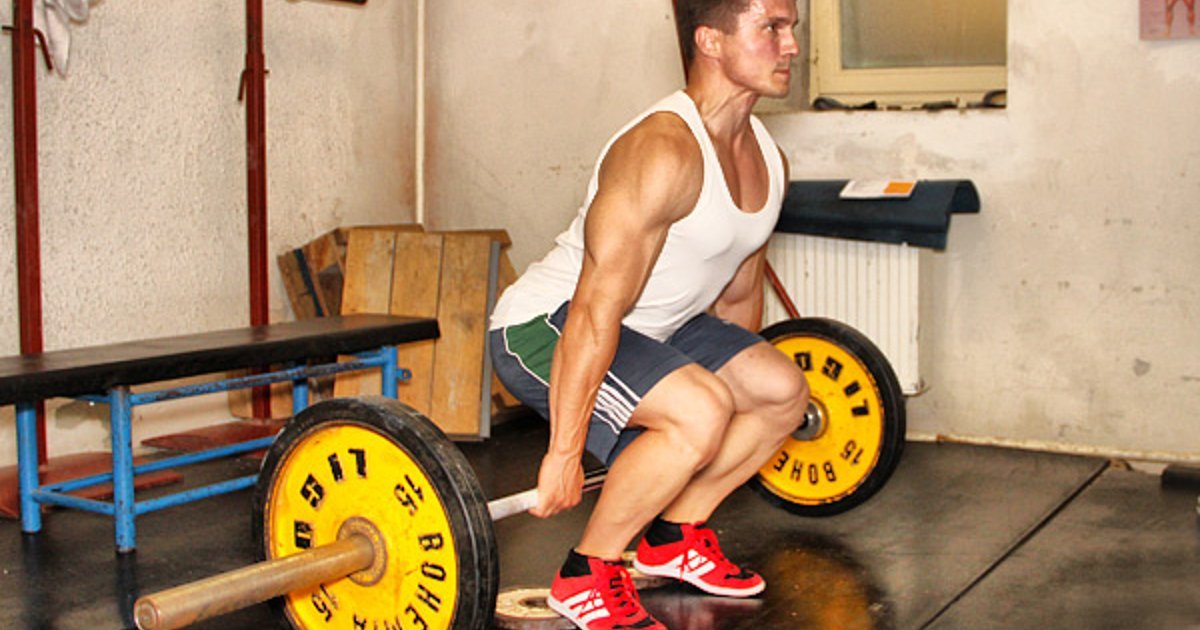
A modest heel elevation can change how a squat feels and how easily the knees move forward. It does not guarantee that the barbell hack squat will fit you, and it changes the setup you are testing. Establish the flat-footed version first where possible, then make one deliberate comparison rather than adding several adjustments at once.
The photograph shows a heel-elevated example. It is not an instruction to stack loose plates under your feet. If comparing an elevated setup, use equipment intended for stable support and check that both feet have secure contact. A shifting improvised support is a poor trade for a slightly different torso angle.
A hack-squat machine is another distinct option: the pad supports your back and the machine constrains the movement. Its sled angle, friction and starting resistance mean that the number of plates cannot be compared directly with a barbell load. Log each exercise separately. Neither version earns priority simply because it has the same name.
A leg press, split squat or goblet squat may provide useful knee-dominant work when reaching behind the legs is the limiting issue. Choose based on the training task and the equipment you can use well. You do not need to make an awkward free-weight variation work before you are allowed to use a machine.
5. Progress the version you can actually repeat
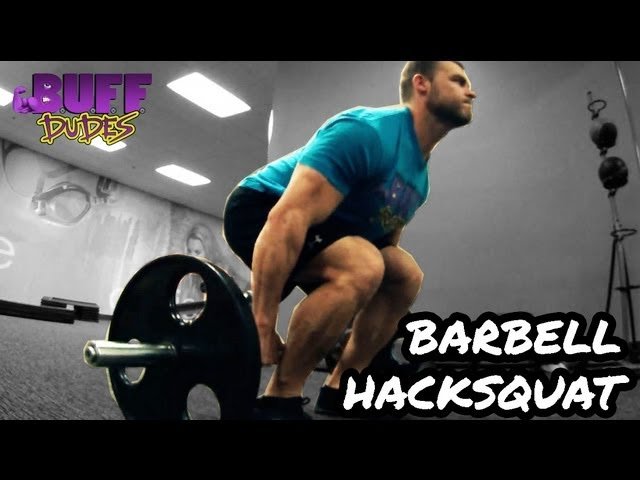
Begin with a short practice set while fresh enough to pay attention to the route. An illustrative first exposure might be two easy sets of five controlled repetitions with a light load, resting until you can repeat the same setup. This is a practical experiment, not a research-established prescription or a test of your leg strength.
Record the bar, total load, plate diameter, starting height, footwear and whether the feet were elevated. Include a short note about clearance and the return. Those details prevent an apparent improvement from being nothing more than a higher starting bar or a shorter range. Count the bar’s weight as part of the total.
If your programme already includes squats and a leg press, decide what this variation replaces before adding several demanding sets. Keep the first exposure small enough to judge its effect on the rest of leg day. A new movement can be interesting without requiring extra total work or displacing the exercise that currently suits you best.
On the next exposure, repeat the same version before changing it. If every repetition followed the intended path and the set left a comfortable margin, add a small number of repetitions or the smallest practical load increment. Change one variable at a time. When the next weight jump spoils clearance, return to the earlier load and reassess instead of forcing the increase.
For example, “two sets of five, full-size plates, controlled floor resets” is a clearer baseline than “heavy hack squats.” If the next session uses smaller plates, recognise that the starting position changed before concluding that you lost strength. If grip ends the set early, record it rather than calling it leg failure.
The equipment below covers bars, compatible plates and collars for that repeatable setup, with machine and dumbbell alternatives where the behind-the-legs route is unsuitable. Choose appropriate starting loads and secure hardware; maximum capacity is not a reason to make the first practice session heavy.

Equipment Worth Exploring
Explore equipment, accessories and gear from our carefully selected range.


Competition Plates
Competition-style bumper plates for Olympic lifts and loaded strength training.

Grip Plates
Rubber-coated weight plates with handholds for loading barbells and machines.



Speed Collar
Quick-release collars designed to secure weight plates on standard two-inch Olympic bars.
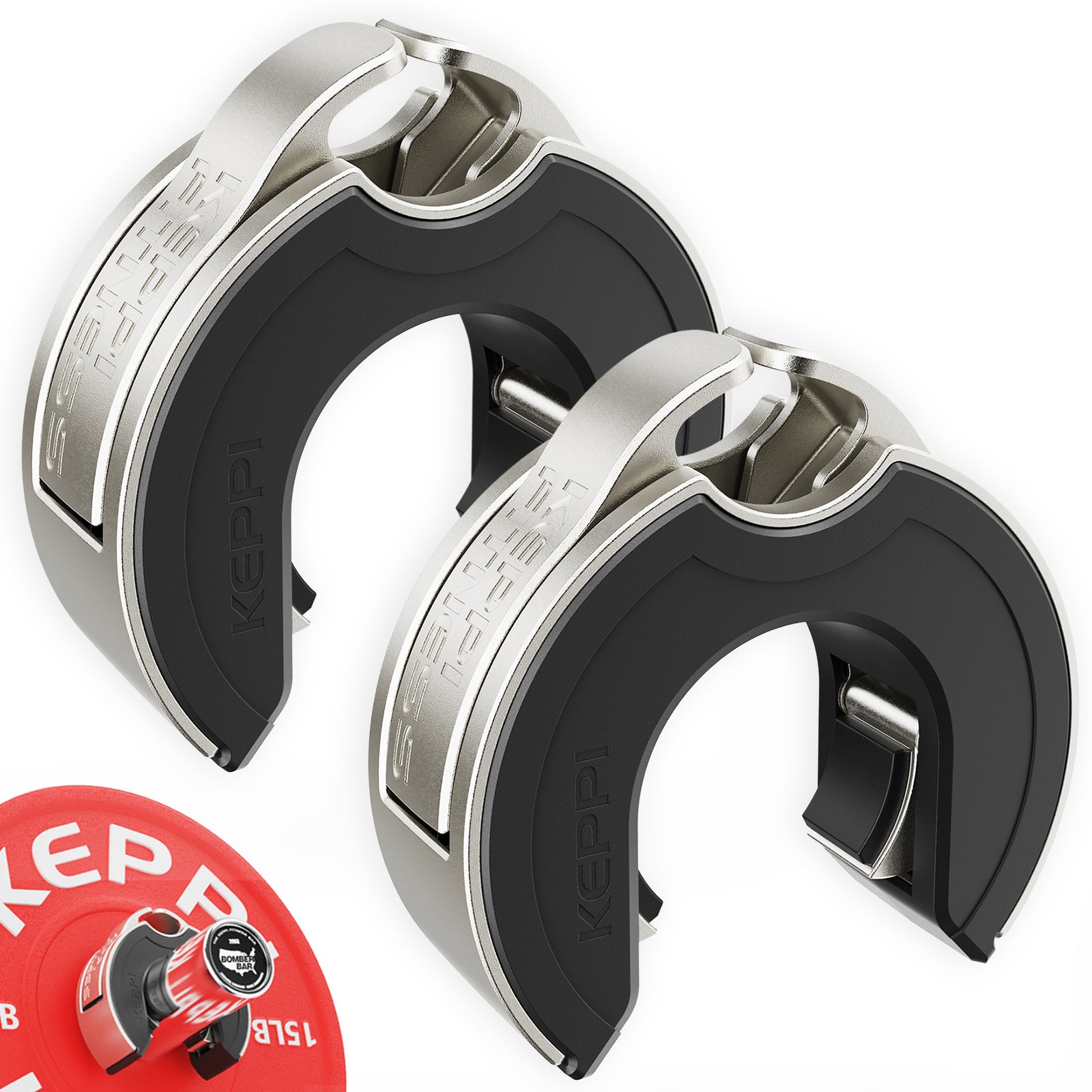
Keppi Open Collars
C-shaped magnetic Olympic barbell collars with a quick-lock mechanism and grippy lining.
For the leg-day sessions where this lift fits, the following designs follow the squat, barbell and lower-body training theme.

Leg Day Shirts & Workout Gear
Leg-day gym shirts and workout gear for lifters who never skip squats, lunges and lower-body punishment.

We Don'T Need No Leg Day Pink Floyd Meme & Gymbros T-Shirt
Heavy lifts, good laughs, and a little “We Don't Need No Leg Day” energy.

No More Leg Day Shirt Ozzy Osbourne Heavy Metal & T-Shirt
Heavy lifts, good laughs, and a little “No More Leg Day” energy.

Heavy Metal Leg Day – Shirt Squats & Gains – & T-Shirt
Show some metalhead attitude with a playful “Heavy Metal Leg Day” tee.

Heavy Metal Skeleton Squat for Powerlifting, Bodybuildi T-Shirt
Show some gym-day personality with “Heavy Metal Skeleton Squat”.

Coffee Shots & Heavy Squats for Caffeine Fueled Lifting T-Shirt
For laid-back days and leg-day humor: “Coffee Shots & Heavy Squats”.

Leg Day Never Comes Hoodie
Stay casual and show some metalhead attitude with “Leg Day The Day That Never Comes Metallica”.

Funny Patriotic Gym – The Only Thing To Fear Is Leg Day Hoodie
Show off your leg-day humor in a laid-back “Patriotic” hoodie.

Freedom To Skip Leg Day – Patriotic Statue of Liberty V Tank Top
Bring “Freedom To Skip Leg Day” humor to your next lifting session.

Yesterday I Skipped Leg Day – Beatles Music Meme Decal Sticker
Give your everyday gear a playful “Yesterday I Skipped Leg Day” twist.

Leg Day Thou Shalt Not Skip Leg Day Medieval Knight Gym Sticker
Give your everyday gear a playful “Leg Day” twist.