Advertising disclosure: This page includes affiliate product links that may earn us a commission, as well as products from our own store.
Getting stronger and fitter for boxing is not the same as making every session harder. The challenge is building useful physical capacity while leaving enough energy for coached technical practice. Here is how to organize strength, conditioning and recovery around the work that matters most, using historical elite preparation and practical principles that recreational athletes can adapt.
Put boxing practice at the center of the week
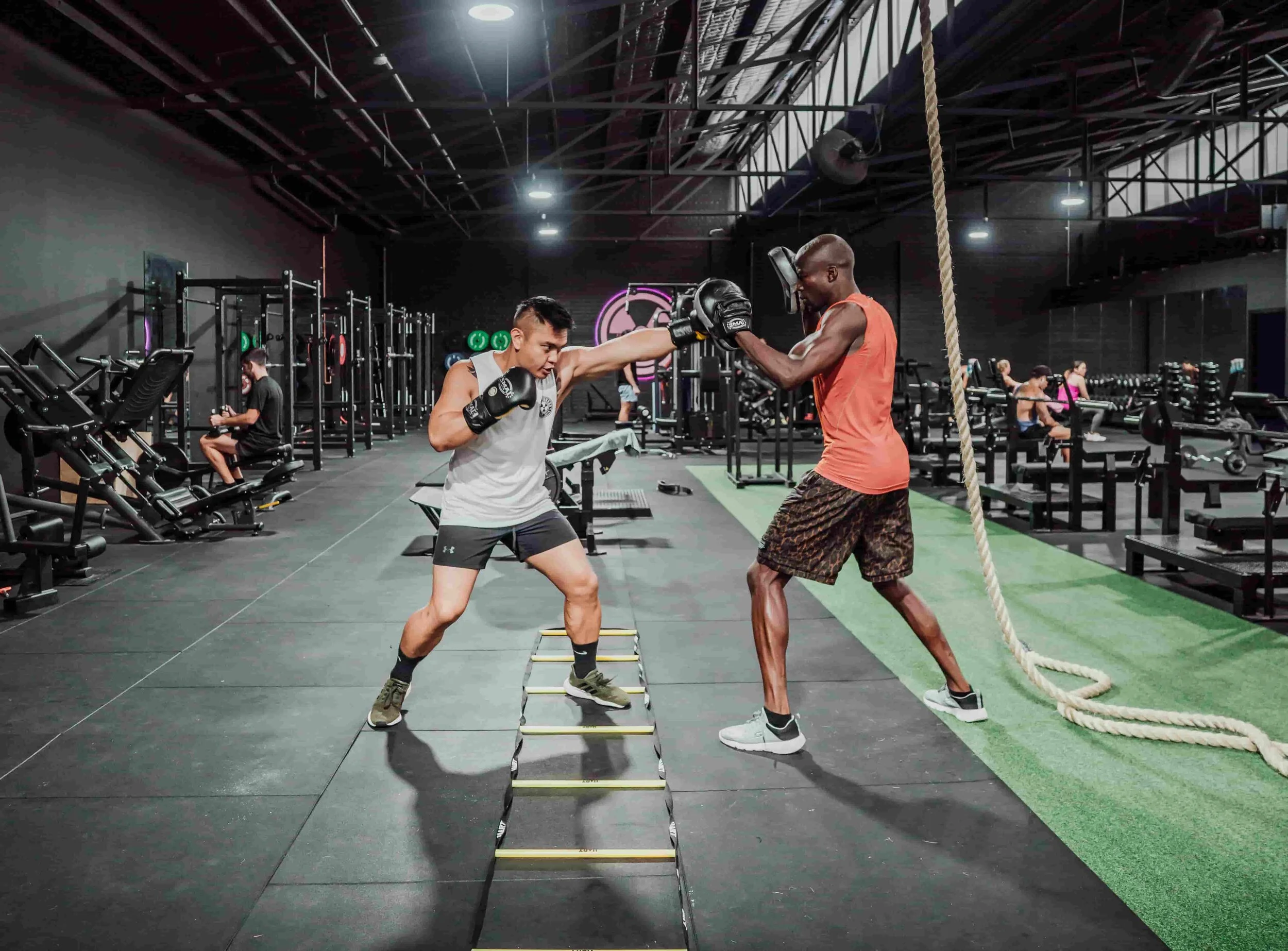
Boxing has an unusual training problem: the qualities that make a fighter better are not always developed by doing more of the hardest available exercise. A session that produces sore legs, tired shoulders and a dramatic heart-rate trace can still leave the athlete worse prepared for the next technical lesson. Strength and conditioning should improve the work in the ring, rather than become a separate competition.
Preparation for the 2016 Olympic cycle in Great Britain illustrates the importance of changing the emphasis as competition approaches. General preparation can accommodate more physical development; later, as sparring and competition-specific practice increase, supplementary work needs to become more selective. The goal is to retain useful physical qualities while managing the total demand on the athlete. That historical example is not a universal schedule or a prescription for every boxer.
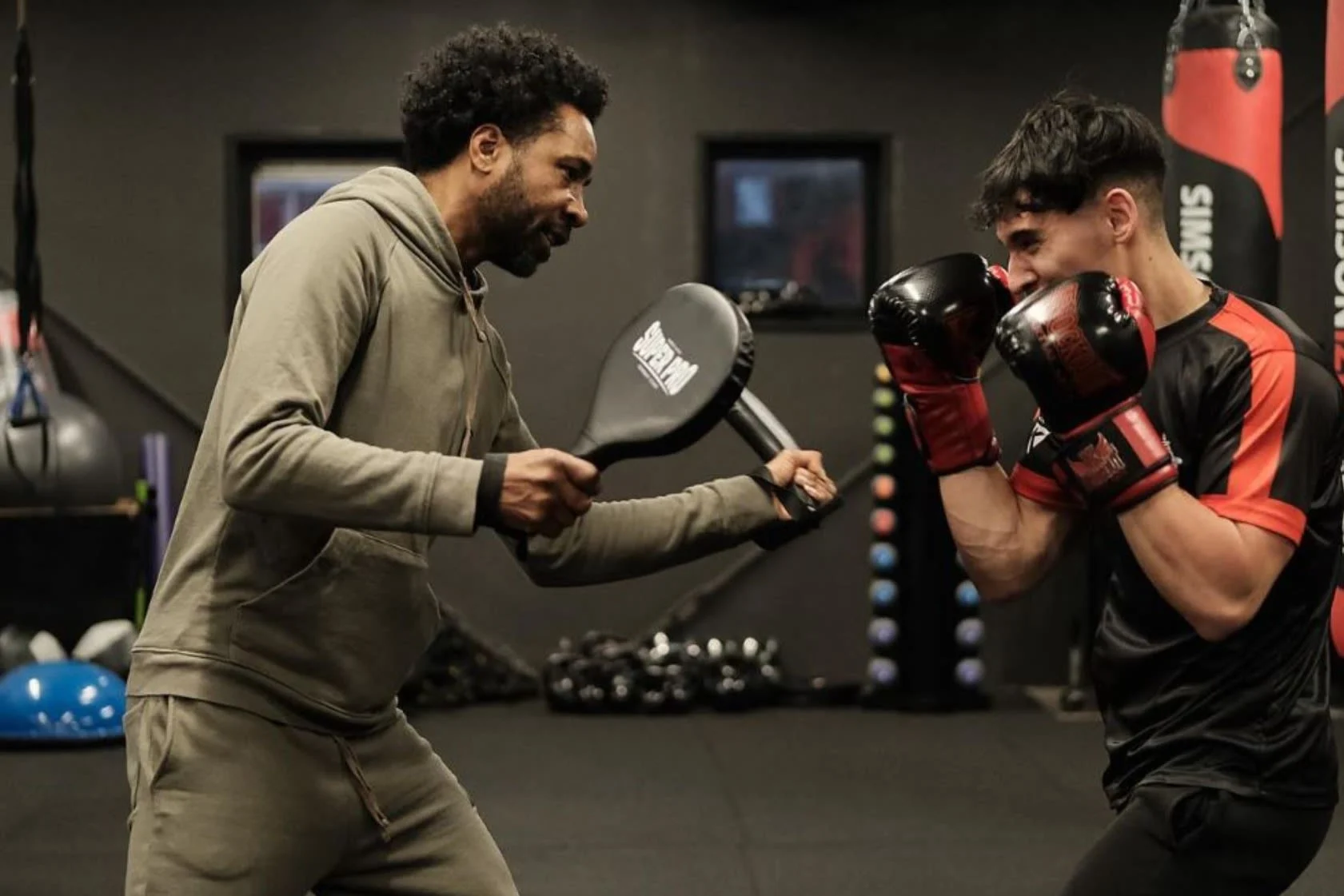
Start by identifying the sessions that actually require the most concentration and freshness. A technical lesson involving new footwork or defensive reactions deserves a different place in the week from a relaxed aerobic session. Hard sparring should be planned with a qualified coach and treated as a substantial training stress, rather than an incidental extra on a lifting day. Beginners do not need hard sparring to develop fitness.
Write your existing boxing sessions on a calendar before adding gym work. Highlight the two most demanding sessions and protect the preceding day from unnecessary fatigue. If you only train twice a week, there may be enough recovery for two modest strength sessions. If you train six days a week, the same lifting volume could be excessive. A sensible program starts with the time and recovery capacity you actually have.
Build strength without carrying unnecessary fatigue
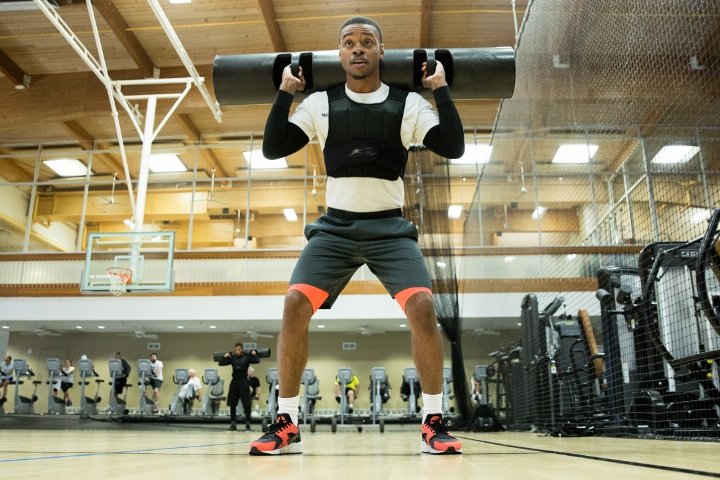
A boxer needs enough force-producing capacity to support explosive movement, stability and repeatable athletic actions. Research comparing physical test results with punching performance has found relationships with lower-body maximal strength and explosive upper- and lower-body strength. These are associations, not proof that adding a particular amount to a squat will produce a predictable increase in punching force. Punching remains a complex skill.
A review of strength training research in Olympic combat sports in 2024 found promising changes in several physical qualities, but the certainty of the evidence was low and female athletes were underrepresented. That makes a simple, measurable approach more useful than claiming that one exact lifting protocol is necessary.
For a recreational adult, begin with two short full-body sessions. Use a squat or split squat, a hinge such as a Romanian deadlift, a horizontal push, a row or chin-up, and a trunk exercise. These patterns can be performed with barbells, adjustable dumbbells, kettlebells or basic cable equipment. Start with two or three working sets per movement and stop with roughly two to three repetitions in reserve. Keep the exercise selection stable long enough to judge whether you are progressing.
Explosive work can be introduced when the athlete has adequate technique and a suitable training space. Low-volume jumps or light medicine-ball throws performed while fresh are examples. Treat each repetition as a separate effort, with adequate recovery between repetitions; stop if landing control or movement speed deteriorates. Do not add weighted punches merely because they resemble boxing. They change the movement demands and may compromise control, especially at speed.
As boxing volume increases, first remove redundant accessory sets and unnecessary exercises. Maintaining a few well-executed sets of familiar movements is often easier to recover from than continuing a bodybuilding-style session with multiple exercises for every muscle group. The exact reduction depends on the athlete’s response, not on a fixed percentage inherited from someone else’s camp.

Equipment Worth Exploring
Explore equipment, accessories and gear from our carefully selected range.


Grip Plates
Rubber-coated weight plates with handholds for loading barbells and machines.


Rubber Hex Dumbbells
Rubber-coated hex dumbbell pairs with a stable shape for home and commercial strength training.


Power Tower
Freestanding pull-up and dip station with adjustable handles for bodyweight training.

Condition for repeated efforts, not just exhaustion
A boxing round involves repeated changes of intensity. Movement, brief exchanges, pauses and tactical decisions place different demands on the body. A 2022 review of boxing studies found that competitive bouts generally produced greater physiological stress than sparring or simulated activities. A conditioning circuit is therefore not automatically equivalent to competition, even if it feels exceptionally difficult.
Build a basic aerobic foundation alongside more demanding intervals. For someone who already boxes regularly, an easy bike, row or brisk walk for 20 to 35 minutes at a conversational effort can be a useful starting point. It should feel manageable enough that normal training the following day remains possible. Increase duration gradually if recovery and other commitments allow.
Intervals have a different purpose. An example for a healthy, conditioned recreational boxer is four to six efforts of 30 seconds on a stationary bike at a hard but controlled intensity, separated by 90 seconds of easy pedaling. This is an illustration rather than a boxing-specific physiological prescription. The first effort should not be so aggressive that the final efforts become slow, disorganized struggles. If the athlete is new to exercise or has a medical concern, build basic tolerance first and seek appropriate guidance before attempting vigorous intervals.
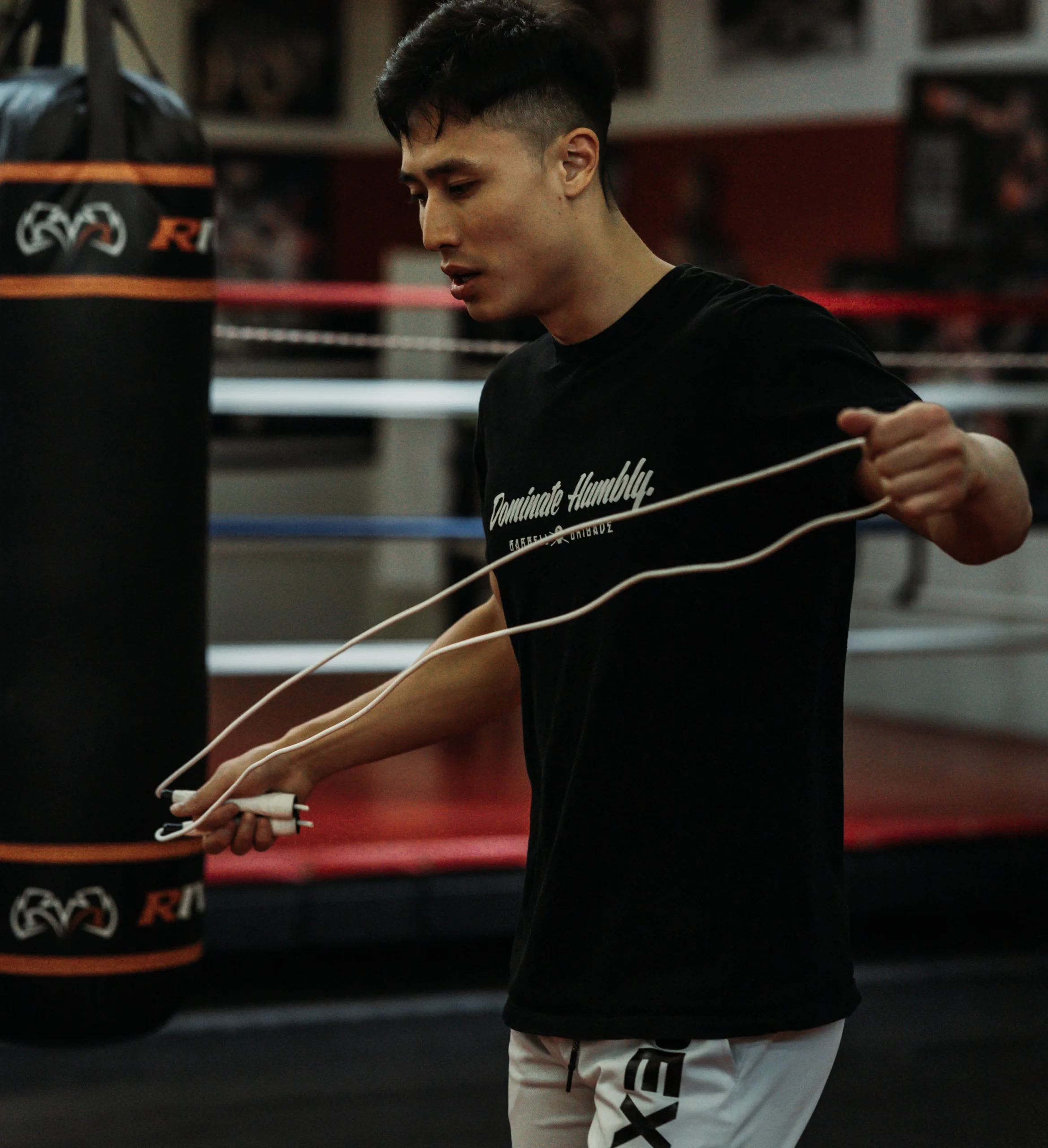
Rope skipping can also be useful when the athlete enjoys it and can tolerate the repeated contacts. Short blocks with relaxed shoulders and quiet, controlled landings are preferable to chasing a high repetition total while tripping repeatedly. A stationary bike can provide an alternative on a day when additional impact is undesirable. Neither modality replaces coached boxing practice.
Separate the purpose of conditioning from the appearance of conditioning. A session can be productive without ending in a puddle of sweat. Progress can mean completing the same workload with less perceived effort, keeping a more consistent pace across intervals, or arriving at the next boxing session ready to learn.
An adaptable week for a recreational boxer
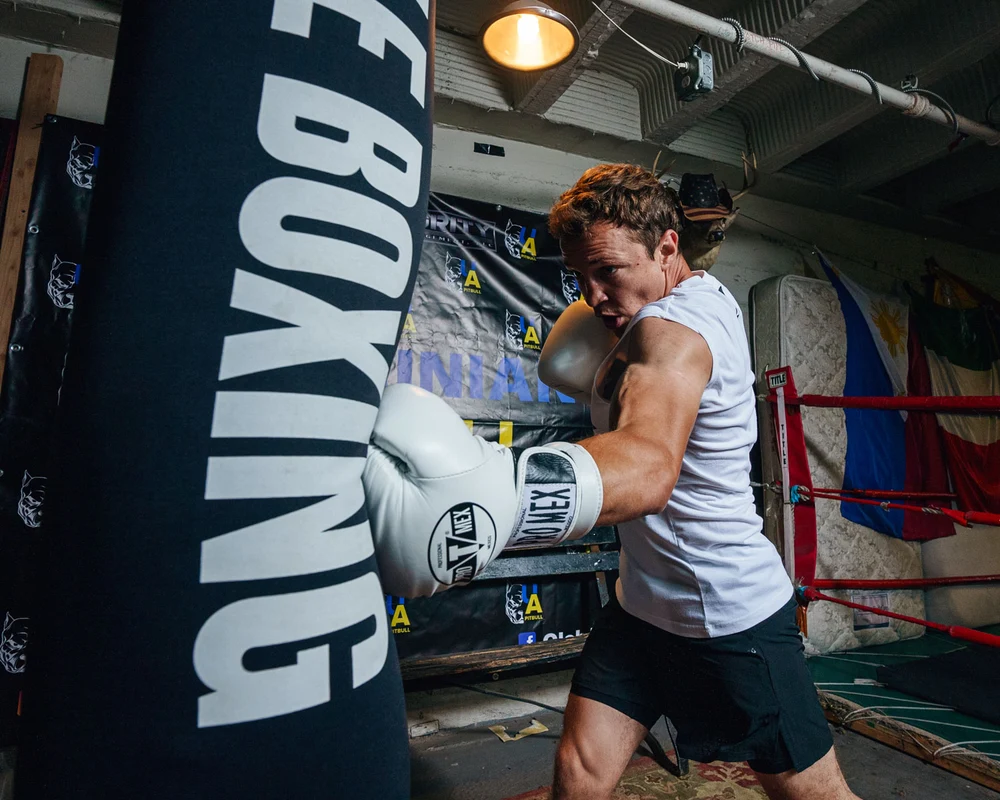
The following week is an original example for an adult who attends three coached boxing sessions, not the documented program of an Olympic boxer. Assume the harder boxing session is on Saturday and the athlete has already established basic lifting and aerobic fitness. Change the schedule to match coaching priorities, work commitments and recovery.
- Monday: full-body strength A: squat, dumbbell press, row, hinge and a short trunk exercise. Two or three sets each, with controlled technique.
- Tuesday: coached technical boxing. Keep additional conditioning optional and easy.
- Wednesday: full-body strength B: split squat, Romanian deadlift, chin-up or pulldown, push-up and a carry. If appropriate, use a few low-volume jumps before lifting.
- Thursday: coached boxing and, if needed, a short controlled conditioning block agreed with the coach.
- Friday: rest or easy movement, such as a walk or a gentle bike ride.
- Saturday: the priority boxing session. Follow coaching decisions on intensity, contact and protective equipment.
- Sunday: recovery or an easy aerobic session if fatigue is low.
Equipment choice should make this schedule easier to execute. A rack and barbell support progressive lower-body training; dumbbells and kettlebells allow straightforward unilateral exercises; a rowing machine or air bike provides repeatable conditioning without needing a large running area. Resistance bands may help with warm-up exercises when used appropriately. You do not need all of these tools to start.
Over four weeks, avoid changing every variable at once. During week one, establish comfortable loads and learn the schedule. During week two, add a repetition to selected working sets if technique remains strong. During week three, increase the load slightly where all repetitions remain controlled. In week four, either repeat the successful workload or reduce it if boxing practice has become demanding. Do not increase lifting load, add interval repetitions and substantially increase boxing intensity in the same week simply because the calendar says to progress.

Functional Fitness Shirts & Workout Gear
Functional-fitness shirts, tanks and workout gear for athletes who train strength, conditioning and everything in between.

Hybrid Athlete Strength Tee
Show some lifting attitude with a playful “Hybrid Athlete” tee.

Gym Dost Thou Even Pedal Medieval Knight Air Bike Parod Hoodie
Show off your medieval humor in a laid-back “Dost Thou Even Pedal Medieval Knight Air” hoodie.

Rowing – Dost Thou Even Row Medieval Knight Gym Decal f Sticker
Give your everyday gear a playful “Rowing” twist.

Vive La Resistance Bands – Resistance Bands Warmup Mobi T-Shirt
Add a playful “Vive La Resistance Bands” touch to your casual rotation.

Live Love Lift Muscle Shirt Athletic Vest Gymbro Workou Tank Top
Train hard, laugh a little, and rep “Live Love Lift”.

Kettlebell Heartbeat Hooded Pullover Workout Fans Hoodie
Keep it laid-back with a little “Kettlebell Heartbeat” attitude.


Meme – You May Delay Time Will Not Next Cult Brand T-Shirt
Heavy lifts, good laughs, and a little “You May Delay Time Will Not” energy.

Lift Together Grow Stronger for Gym Buddies Who Train T T-Shirt
Show some gym-day personality with “Lift Together Grow Stronger”.

Heavy Metal Gym – Funny Kettlebell Rock Music Decal for Sticker
Put “Heavy Metal” gym humor on your laptop, bottle, or gym gear.
Track the quality of training before adding more
The most useful monitoring system is one you will keep using. Record the number of boxing sessions, approximate duration, perceived difficulty and how recovered you felt when each session began. Add the main strength exercises, loads and repetitions, and one repeatable conditioning measure such as bike distance at a specified effort. Keep the record simple enough to complete in a minute.
Compare trends rather than a single disappointing day. If technical practice is consistently sharp and strength is improving, the current workload is probably tolerable. If normal warm-ups feel unusually heavy, the same intervals become progressively harder and boxing technique deteriorates across several sessions, look for causes before adding more exercise. Poor sleep, inadequate food intake, illness and accumulated training stress are all possibilities.
Use the information to make a specific adjustment. Remove an extra lifting set, shorten an interval session, or move a strength workout away from the most important coached lesson. If the change helps, keep it. If it does not, reassess with a coach. Pain, dizziness, chest discomfort, unusual shortness of breath or suspected concussion are not ordinary fatigue signals to train through; stop and seek appropriate medical assessment.
Strength work should ultimately support the athlete’s objectives rather than become a source of anxiety about missed workouts. A boxer who can attend practice consistently, develop technical skills and build physical capacity over months is in a better position than one who repeatedly alternates between ambitious training weeks and forced rest. The best program is not the one with the most exhausting individual day. It is the one that makes the important days better while remaining sustainable.