Advertising disclosure: This page includes affiliate links that may earn us a commission at no additional cost to you.
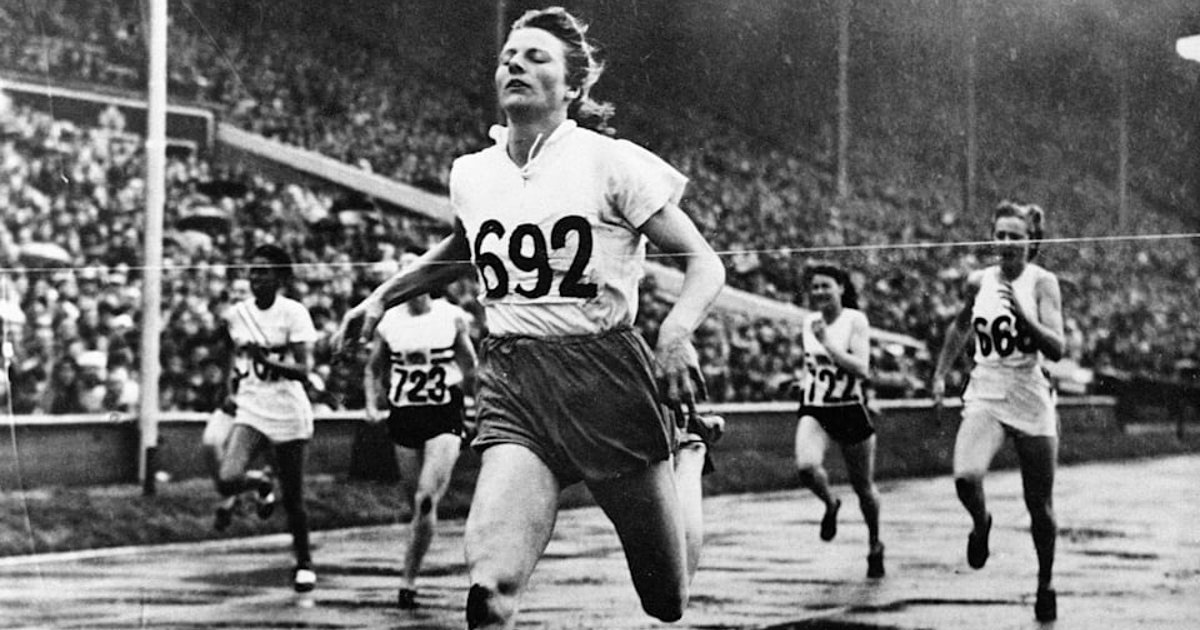
Four gold medals can sound like one achievement repeated four times. Fanny Blankers-Koen’s London 1948 Olympics were more interesting than that. She won the 100 metres, 200 metres, 80 metres hurdles and 4 × 100 metres relay: flat sprinting, sprinting around a bend, clearing barriers and finishing a team race.
She was 30 and a mother of two, competing against expectations that treated those facts as reasons to stay away. The results overturned that judgment. They also leave a useful sporting question: what does success across several events actually tell us about an athlete, and what should an ordinary trainee resist reading into it?
This is a look at the performances and their context. It is not a reconstruction of her weekly workouts, a claim to have found her secret programme, or a prescription to copy an Olympic competition schedule.
The athlete existed before the famous week
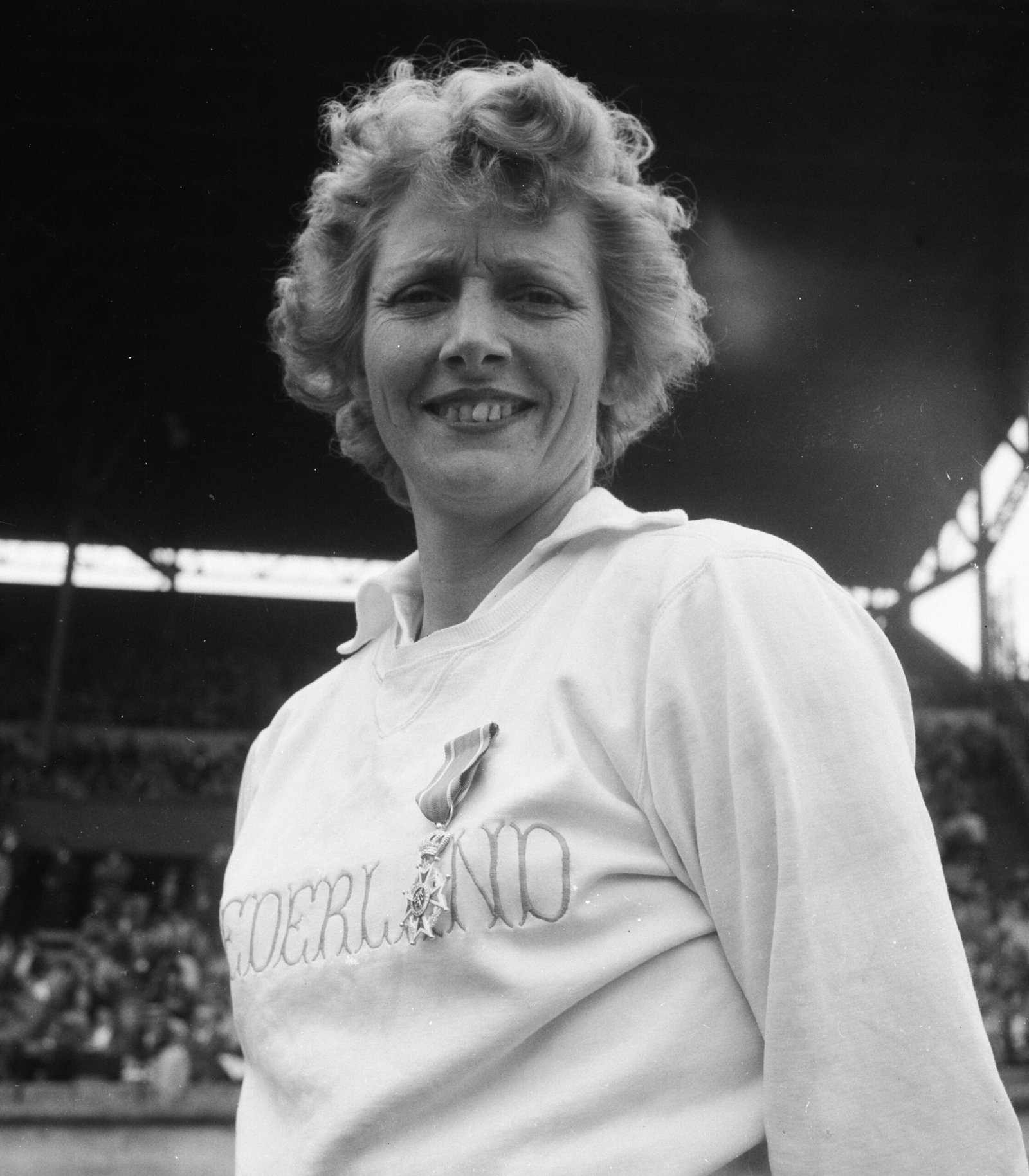
Blankers-Koen made her Olympic debut in Berlin in 1936. London came twelve years later, after the cancelled Games of 1940 and 1944. Her eventual four-gold performance was not a newcomer suddenly discovering an athletic gift. It sat within a career already involving international competition and world records.
Her range matters. She was accomplished in jumping as well as running, and held the high-jump and long-jump world records before London. Yet regulations restricted women to three individual events, alongside the relay. She could not simply add every discipline in which she had demonstrated ability.
That makes the event list a selection within a wider athletic background. It does not prove she would have won the jumps, and those hypothetical medals should stay hypothetical. A record held before an event is not a medal awarded after it.
For readers used to seeing a champion reduced to one training clip, the distinction is useful. The visible competition week is the result we can identify. The years behind it are a different subject, requiring their own evidence. A finishing photograph cannot reveal every session, every adjustment or every difficult period that preceded it.
Three individual golds, with different problems to solve
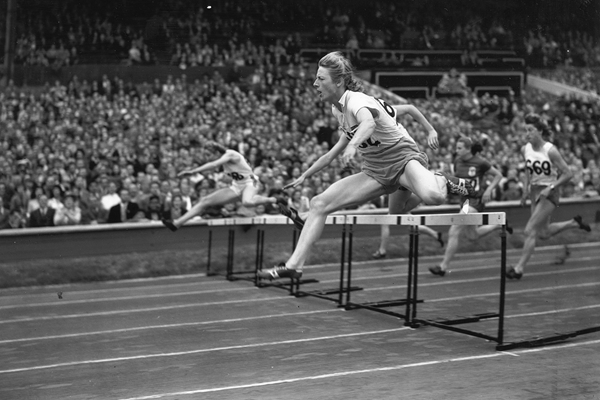
The 100 metres rewarded a complete flat sprint from the start to the line. The 200 metres added a bend and a longer racing distance. The 80 metres hurdles placed repeated barriers inside a sprint. Sharing the word sprint does not make the events technically identical.
Blankers-Koen won all three in London. The hurdles final was particularly close: she and Maureen Gardner received the same recorded time of 11.2 seconds, with Blankers-Koen awarded gold. Her 200 metres victory was clearer, in 24.4 seconds. These were different competitive situations within the same medal haul.
The contrast gives the achievement more texture than a total alone. A convincing win and a narrow win both require the race to be completed and the result secured. Winning one does not guarantee the next will feel equally comfortable. Different events can expose different weaknesses even when the athlete is highly accomplished.
There is also a useful limit to historical comparisons. Times belong to their recorded events, surfaces, equipment and timing conventions. They can describe what happened without becoming a clean measurement of how a 1948 athlete would perform in a modern race. Changing the conditions changes the question.
For an ordinary runner, the broad lesson is specificity. Being generally fit does not automatically teach hurdle rhythm, acceleration or racing a bend. Those skills need their own practice. That is a training principle we can discuss; the medal list alone does not tell us how many repetitions Blankers-Koen used to develop them.
The fourth gold belonged to a relay team
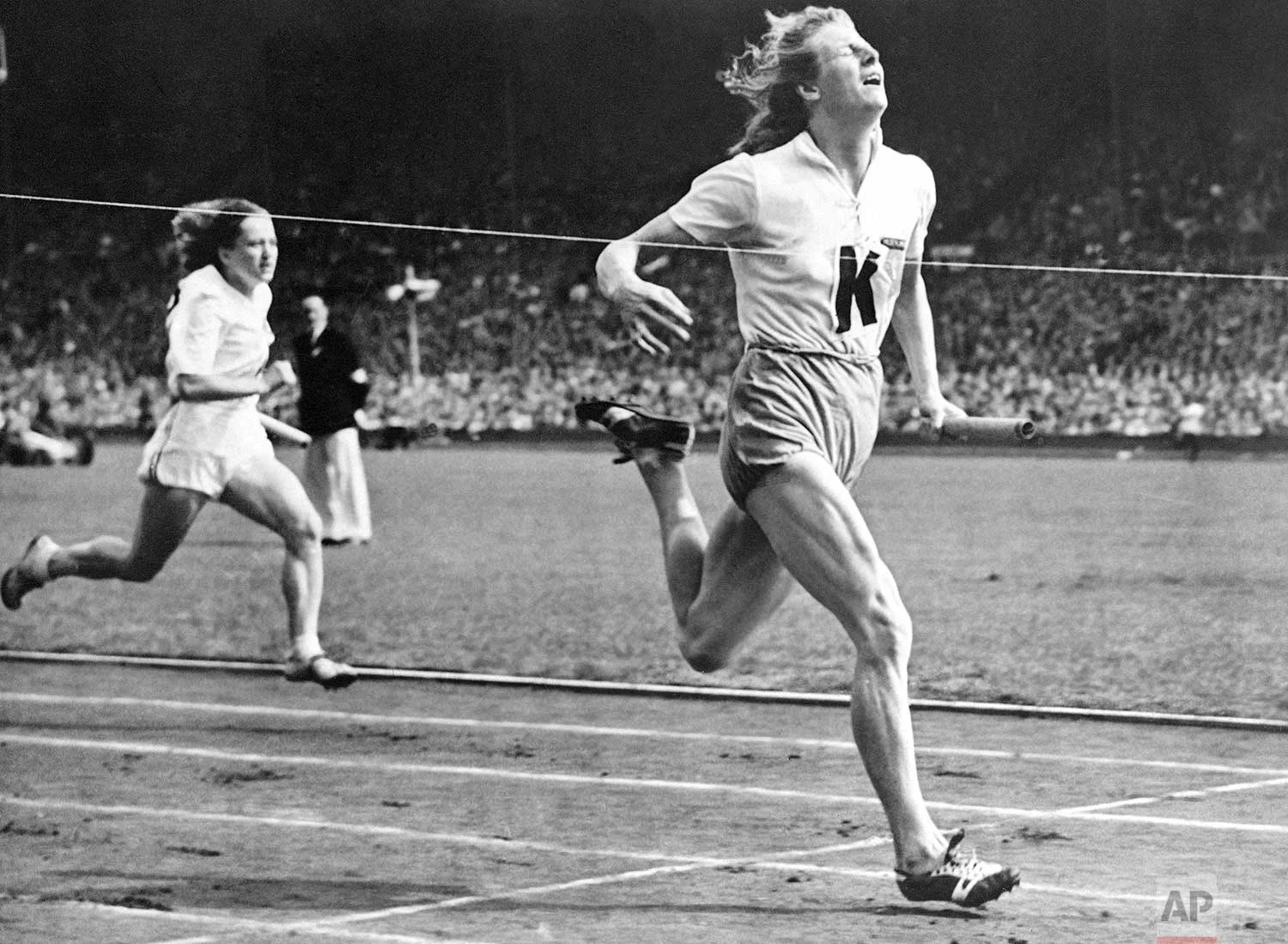
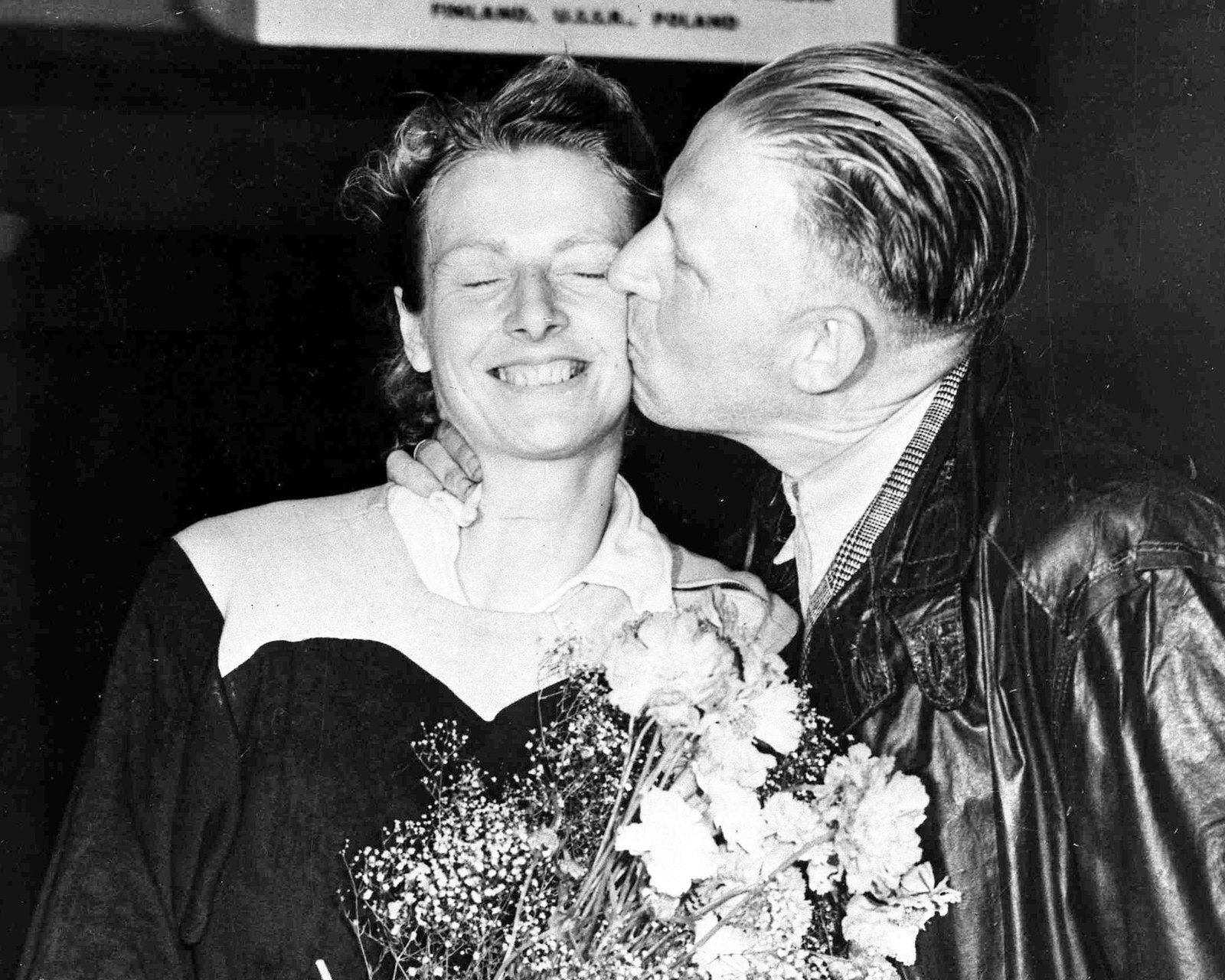
The Netherlands also won the women’s 4 × 100 metres relay, with Blankers-Koen running the anchor leg. The final took place on 7 August 1948, and the winning time was 47.5 seconds. The image of her carrying the baton towards the finish captures the final part of a shared performance.
A relay is not merely an individual sprint with an object in hand. The team must move that object from runner to runner as well as cover the distance. An outstanding anchor cannot run the other legs or make every exchange alone. Remembering the team does not diminish the individual achievement; it describes the event correctly.
That is a useful correction to the way sporting stories often become a single-person highlight. The last runner is easiest to photograph at the decisive moment. The earlier work is less visible in that picture, but remains part of the result.
Multi-event achievements can demand very different combinations of abilities. The contrast with Emil Zátopek’s three distance-running golds in Helsinki makes that especially clear. His treble and her quartet are both extraordinary; they do not represent the same physical or technical challenge, and there is no need to flatten them into one formula for greatness.
Borrow a principle without inventing her programme
A champion’s history can inspire training without becoming a ready-made routine. Here the useful editorial principle is to give different qualities different jobs. Skill practice, strength work and conditioning can support a broader athletic goal, but adding them together still requires choices about priority and recovery.
For a recreational trainee, a simple planning exercise is to name the session’s main purpose before choosing exercises. If the goal is learning a running skill, keep that practice distinguishable from a hard conditioning effort. If the goal is resistance training, choose movements and loads you can perform with control. Do not call a random collection of difficult drills an Olympic method.
A modern strength session might use a squat or split squat, a hip hinge, a pulling movement and a pushing movement. Dumbbells, kettlebells and a suitable bench offer several ways to organise those patterns. These are contemporary equipment options, not equipment Blankers-Koen is being claimed to have used or endorsed.
Choose an exercise version you already understand, then progress one variable at a time. That could mean a little more load or another controlled repetition rather than changing every exercise. A Nordic variation, for example, is an optional harder hamstring exercise that needs appropriate scaling; it is not a compulsory starting point because this article concerns a sprinter.
Additional loading also needs a purpose. A weighted vest can change a familiar strength exercise, but its availability is not a reason to wear one for fast running. Equipment should serve the chosen task. The selection below is for readers organising their own modern resistance work, with no implied connection to her actual preparation.

Equipment Worth Exploring
Explore equipment, accessories and gear from our carefully selected range.
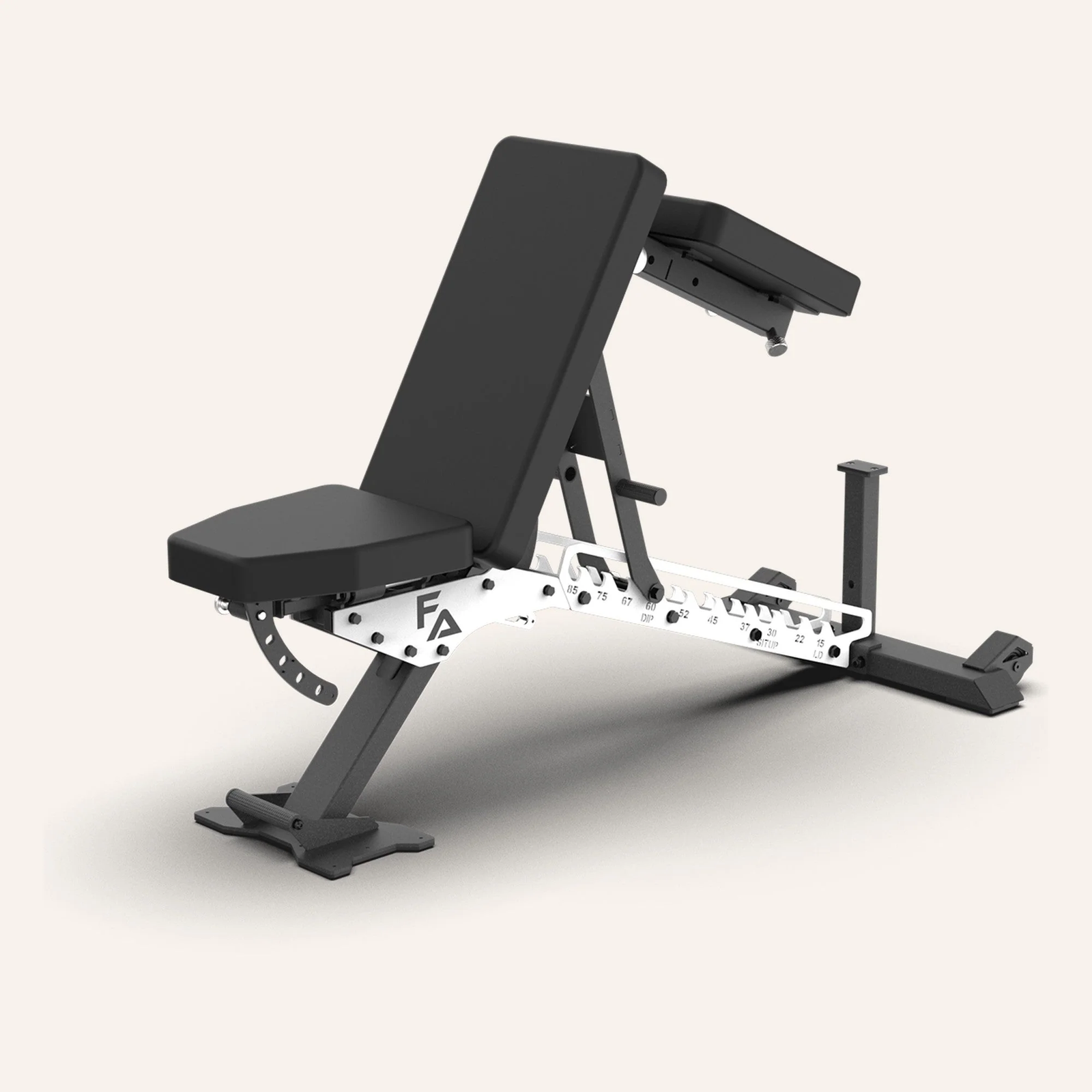


FID Bench MAX
Adjustable bench offering flat, incline, and decline positions + adjustable headrest.


Rubber Hex Dumbbells
Rubber-coated hex dumbbell pairs with a stable shape for home and commercial strength training.

Cast Iron Kettlebells
Textured cast-iron kettlebells for swings, squats, carries, and full-body training.
The same caution applies when a famous equipment detail dominates a story. Abebe Bikila’s barefoot and shod Olympic victories offer another example of why a memorable image should lead to more questions rather than an instant training prescription.
A legacy larger than a training shortcut
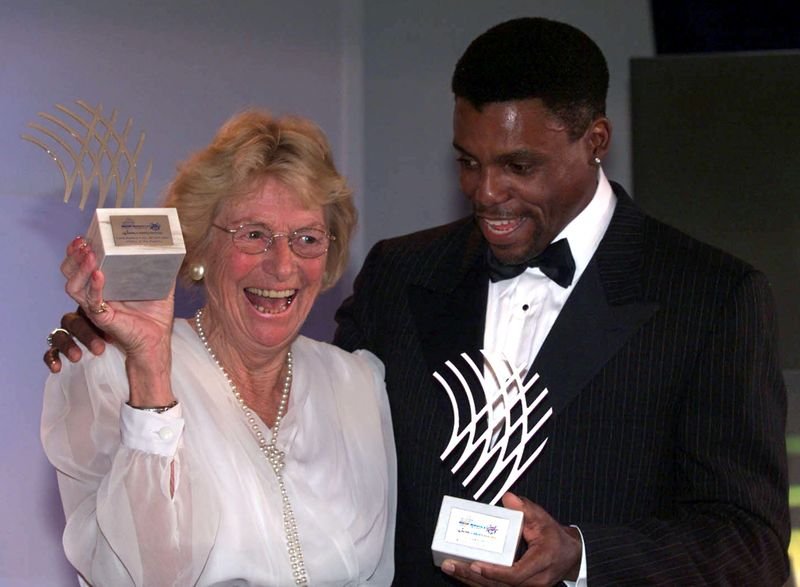
Blankers-Koen’s career continued beyond London. She won the 100 metres, 200 metres and 80 metres hurdles at the 1950 European Championships, and later competed at the 1952 Olympics. In 1999 she was named the female athlete of the twentieth century. The recognition reflected a career that had outlasted the week most often used to introduce her.
Her story also exposes the difference between a social assumption and a sporting result. Being 30 and having children were treated by critics as reasons she should not compete. They were not evidence that she lacked the ability to win. Her results answered that particular judgment without establishing a universal age limit, recovery rule or training template for everyone else.
For fitness readers, that is a better takeaway than a supposedly rediscovered secret. Assess what a person can actually do. Respect the specific demands of the task. Keep verified achievements separate from a routine invented after the fact.
There is room for some lighter running and cardio humour around training too. The merchandise below uses motivation and cardio jokes; the slogans are not coaching claims, historical quotations or an endorsement by Blankers-Koen.

Cardio Shirts & Workout Gear
Cardio and conditioning gym gear for runners, endurance athletes and anyone who earns the sweat.


Cardio Heartbeat for Runners, Cyclists and Endurance Fa Tank Top
Bring “Cardio Heartbeat” humor to your next lifting session.

Don't Quit Do It – Motivational Jumper Pullover For Wor T-Shirt
Show some gym-day personality with “Don't Quit Do It”.

Straight Outta Shape – Out Of Shape Meme Vest Tank Top
Your gym-day look, with a playful “Straight Outta Shape” twist.

Exercise Your Demons | Cardio Workout From Hell Decal Sticker
Put “Exercise Your Demons” gym humor on your laptop, bottle, or gym gear.

Cardio Is Hardio – Workout Meme Hooded Pullover Hoodie
Keep it laid-back with a little “Cardio Is Hardio” attitude.

Negative Cardio Review Cardio Sucks Running , Meme T-Shirt
Heavy lifts, good laughs, and a little “Negative Cardio Review” energy.

Anti Running Club Tee
Heavy lifts, good laughs, and a little “Anti Running Running Club” energy.

Anti Jogging Jogging Club Shirt – & Meme Top T-Shirt
Bring “Anti Jogging Jogging Club” humor to your next gym day.

Cardio Is Calling Decline Bros Meme Hooded Hoodie
Make your off-duty look more fun with “Cardio Is Calling”.
Four golds remain the headline. The richer story is the athlete who could solve several different competitive problems, in a setting that gave her plenty of reasons to be underestimated.