Advertising disclosure: This page includes affiliate product links that may earn us a commission, as well as products from our own store.
A strong set of squats and an easy length of the pool are very different tests of fitness. You can be comfortable lifting heavy weights and still find that swimming 50 metres leaves you gasping. That does not automatically mean your cardiovascular system is weak. In the water, the way you breathe, the position of your body and how efficiently you move all affect the cost of covering a distance.
For lifters who want to improve their conditioning without turning every training day into a pounding run, swimming offers an interesting option. The trick is to begin with a realistic dose and make the pool work support your priorities in the weight room rather than compete with them.
Swimming changes the way your conditioning feels
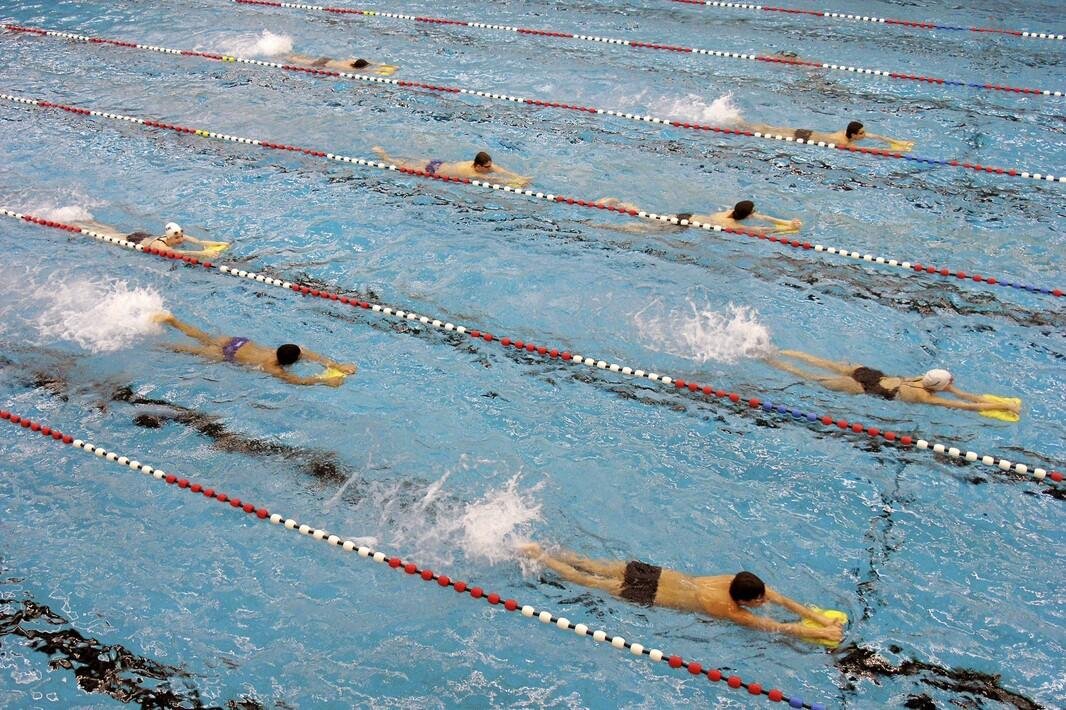
Buoyancy reduces the weight you have to support while moving. Unlike running, a lap of front crawl does not involve repeatedly landing on one foot. For someone whose legs already receive plenty of loading from squats, lunges and deadlifts, that can make the pool a welcome alternative. It is still exercise, though, not an automatic recovery session. Fast swimming can be extremely demanding on your shoulders, back, trunk and cardiovascular system.
There is also a useful distinction between being tired and obtaining the training stimulus you wanted. A beginner who swims two frantic lengths and spends several minutes recovering may accumulate very little sustainable aerobic work. A skilled swimmer can cover far more distance at a comparable subjective effort. Your early goal is to close that gap by making each length economical, rather than by trying to overpower the water.
Water-based exercise can allow some people to move for longer without aggravating joint discomfort. That does not make it universally suitable for every injury or mean that swimming replaces resistance training for bone health and muscle strength. If your shoulder hurts while swimming, changing to a different stroke or getting assessed is more productive than assuming the water will fix it.
Use a supervised pool, learn its lane rules and make sure you can safely stop and exit at any point. If you cannot comfortably swim a length, adult lessons are a better first step than following a distance programme alone. A competent instructor can often identify a breathing or body-position problem that no amount of gym conditioning would solve.
Learn to breathe before trying to swim faster
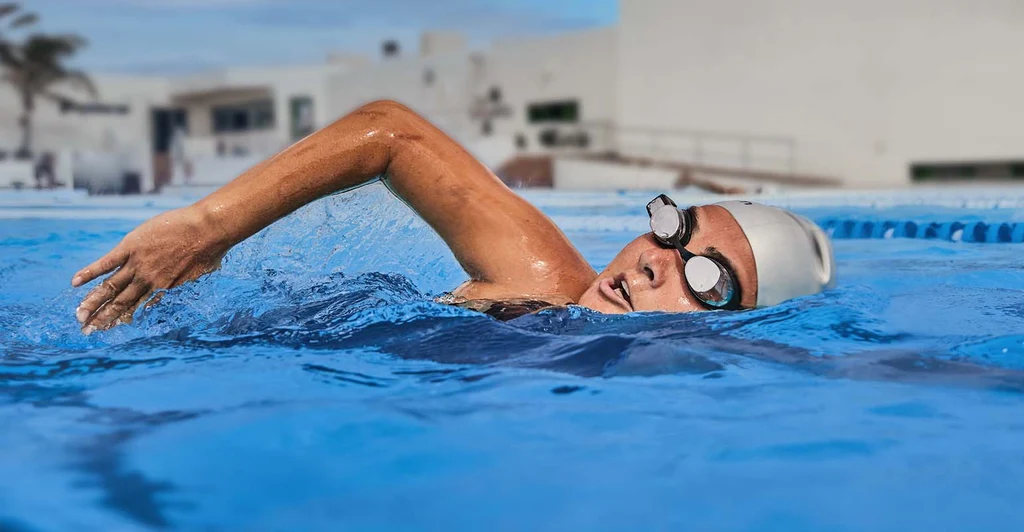
Many new swimmers instinctively hold their breath while their face is underwater. When they finally turn to the side, they have to breathe out and in during the same short window. This makes the stroke rushed and often causes the head to lift, the hips to sink and the legs to work harder to maintain position.
Instead, practise a relaxed exhalation into the water followed by a comfortable inhalation when the mouth clears the surface. Turn with the body rather than lifting your head forward. Do not force a particular number of strokes between breaths. Breathing every two strokes on one side may be more manageable initially than forcing yourself to breathe less often. Learn both sides over time with an instructor if it helps your symmetry.
Keep the kick small enough to maintain balance without exhausting your legs. A large, frantic kick is not a requirement for basic conditioning. Your hand should enter the water in front of the corresponding shoulder rather than repeatedly crossing the centreline. Think about travelling forward smoothly, not about pulling as hard as possible with every stroke.
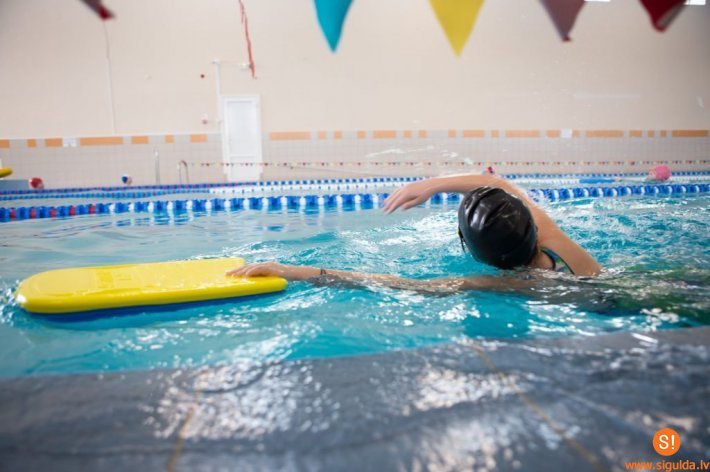
Start with goggles that seal comfortably and a swimsuit that lets you move. A kickboard may help isolate a skill, and short fins can sometimes make a drill easier, but neither is a prerequisite. Large paddles increase the load on the upper body and are a poor starting point if your shoulders are already fatigued from pressing and pulling. A pull buoy can help you learn a higher body position, but don’t let it substitute for learning balance without equipment.
Never hyperventilate before swimming, deliberately restrict breathing or practise prolonged underwater breath holding. Your aerobic session is about moving and breathing consistently, not testing how long you can tolerate a shortage of air.
A four-week plan built around short repeatable lengths
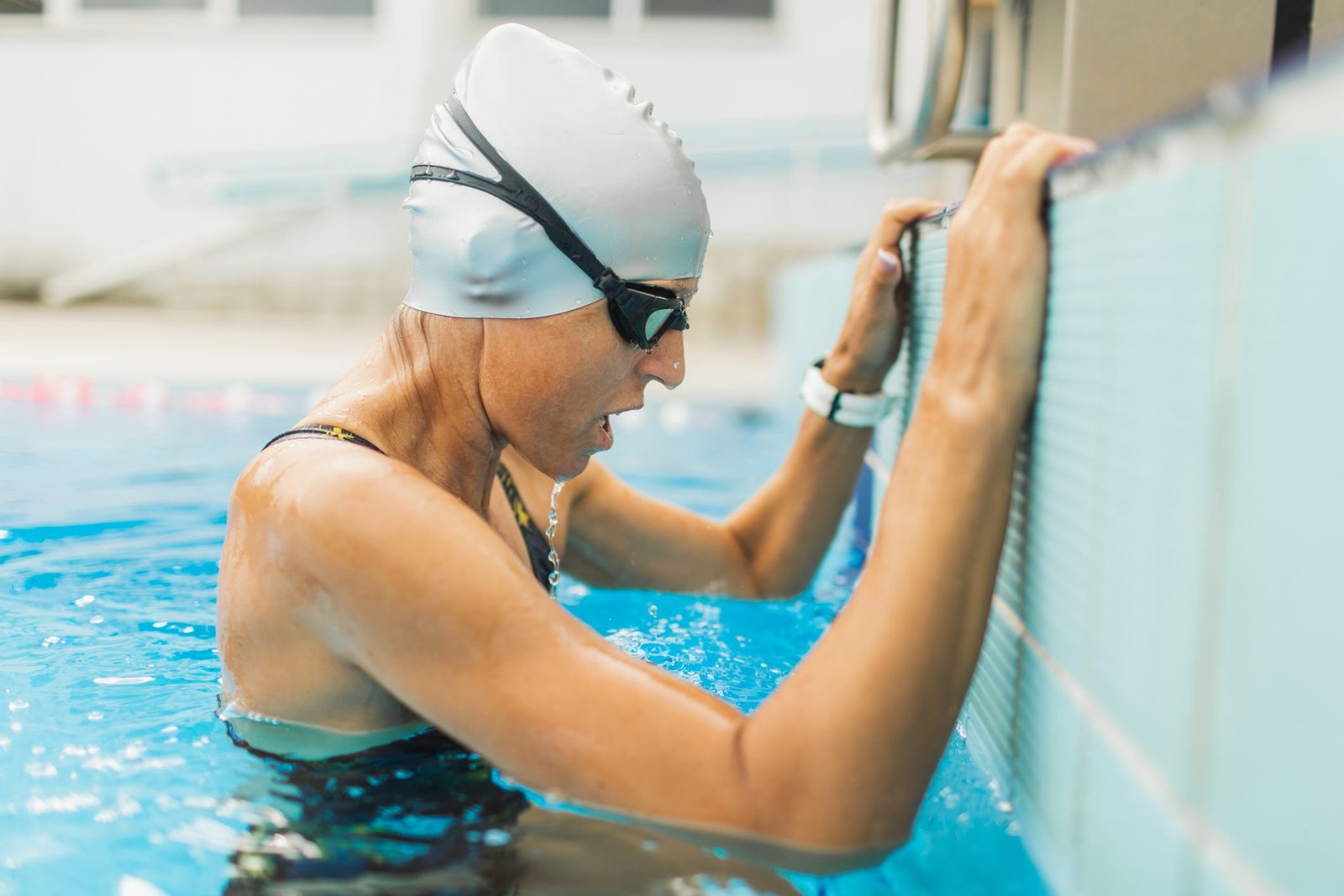
The following is an introductory plan for a lifter who can already swim 25 metres safely. It assumes a 25-metre pool and two visits per week. In a longer pool, reduce the initial distance or get instruction if you cannot reach the wall comfortably. Rest for as long as needed to restore relaxed breathing; the listed intervals are starting points, not compulsory limits.
| Week | Easy warm-up | Main set | Cool-down | Total distance |
|---|---|---|---|---|
| 1 | 4 × 25 m | 6 × 25 m, 30–45 sec rest | 2 × 25 m | 300 m |
| 2 | 4 × 25 m | 8 × 25 m, 30–45 sec rest | 2 × 25 m | 350 m |
| 3 | 4 × 25 m | 4 × 50 m, 30–60 sec rest | 2 × 25 m | 350 m |
| 4 | 4 × 25 m | 6 × 50 m, 30–60 sec rest | 2 × 25 m | 450 m |
The distances include warm-up and cool-down, so you do not need to tack extra laps onto the end. Take the easy lengths at a very manageable pace. During the main set, aim for an effort of approximately four or five on a ten-point scale. It should feel like training, but you should not be fighting for every breath. Once you stop at the wall you should be able to speak normally after a short recovery.
In week three, the total distance stays the same while individual repeats become longer. This is intentional: changing the structure of the set is a progression even when the distance does not increase. If 50 metres causes your form to collapse, repeat 25-metre lengths instead. In week four, increase the number of repeats only if week three felt comfortable and your lifting sessions remained productive.
Do not race another lane. Record the distance, rest and your overall effort after each swim. A useful early improvement is swimming the same distance with a calmer breathing pattern and less rest. The stopwatch can become more important after your basic stroke is reliable. You can also choose one lesson and one independent practice visit each week rather than doing two identical workouts.

Cardio Shirts & Workout Gear
Cardio and conditioning gym gear for runners, endurance athletes and anyone who earns the sweat.

– Swimming Sharks Motivation Meme Decal for Water Bottl Sticker
Give your everyday gear a playful “Swimming Sharks Motivation Meme” twist.

Anti Swimming Club Shirt Meme & Top T-Shirt
Make gym days more fun with “Anti Swimming Club” style.

Hybrid Athlete – Iron Man Medieval Triathlon Gym Decal Sticker
Give your everyday gear a playful “Hybrid Athlete” twist.

Triathlon – Iron Man Medieval Knight Swim Bike Run Deca Sticker
Give your everyday gear a playful “Triathlon” twist.

Cardio Heartbeat for Runners, Cyclists and Endurance Fa Tank Top
Bring “Cardio Heartbeat” humor to your next lifting session.

Skip Cardio Exit Cardio Meme Hooded Hoodie
Keep it laid-back with a little “Skip Cardio” attitude.

Negative Cardio Review Cardio Sucks 1 Star Decal Sticker
Give your everyday gear a playful “Negative Cardio Review” twist.

Cardio Is Hardio – Workout Meme Hooded Pullover Hoodie
Keep it laid-back with a little “Cardio Is Hardio” attitude.

Cardio Kills Gains Shirt 'S Meme & Top T-Shirt
Rep “Cardio Kills Gains” humor in and out of the gym.

Cardio Is Calling Decline Sweater Meme T-Shirt
Bring “Cardio Is Calling” humor to your everyday gym style.
Keep the weights in your weekly schedule
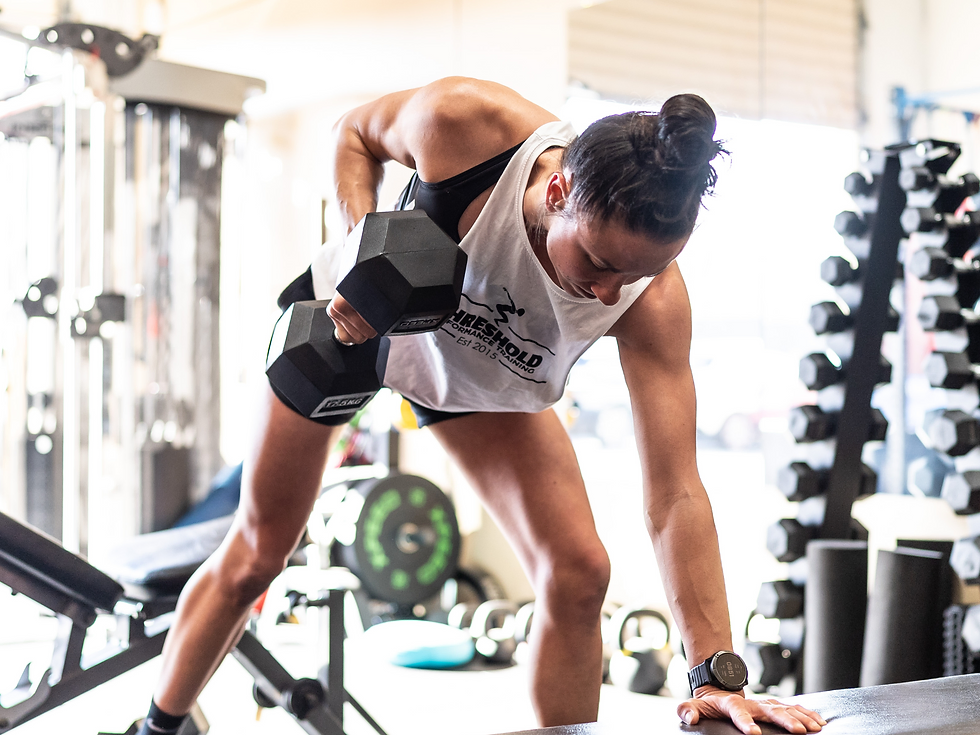
Swimming is not a substitute for your progressive lifting programme. A review of 43 concurrent-training studies found that combining aerobic work and resistance exercise did not, on average, meaningfully reduce maximal strength or muscle growth relative to resistance training alone. Explosive strength improvements were less compatible, particularly when both activities occurred in the same session. Most of that evidence involves land-based exercise, so it is not a promise that any amount of swimming will have no effect on your lifting.
Swimming also uses many muscles lifters train directly. Front crawl requires repeated shoulder movement and force from the back, while the trunk helps control rotation. A hard swim immediately before a heavy upper-body session can therefore create local fatigue even if your legs feel fresh. Start by keeping your pool workouts deliberately easy and placing them away from the hardest upper-body sessions.
For example, a three-day full-body lifter could lift Monday, Wednesday and Friday and swim Tuesday and Saturday. Thursday and Sunday remain open for rest or normal walking. If you lift four days on an upper/lower split, try an easy swim after a lower-body day or on a separate day that does not precede your heaviest pressing session. Keep several hours between workouts when possible; perform your priority training first if they must share a day.
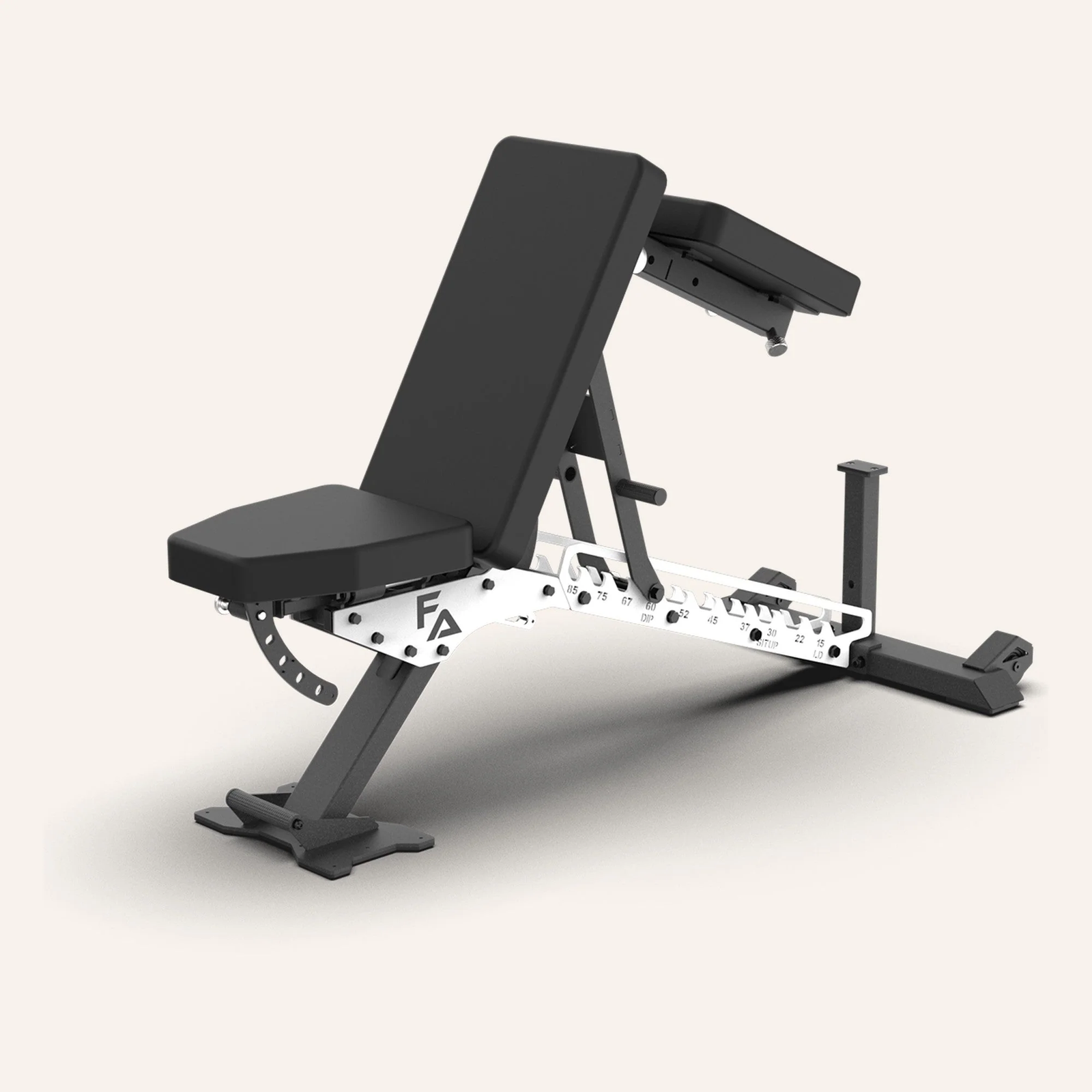
On land, retain your usual squat or hinge, press and row patterns. Adjustable dumbbells, a stable bench, a cable row or a lat pulldown can all support a simple strength programme. If a pool visit is unavailable, a stationary bike or indoor rower offers an alternative way to accumulate conditioning time without trying to replace swim technique. A 2025 analysis of 36 trials involving competitive swimmers found that combined water and dry-land preparation was useful for swim performance, but those trained athletes had a different goal and starting skill level from a recreational lifter.

Equipment Worth Exploring
Explore equipment, accessories and gear from our carefully selected range.


Rubber Hex Dumbbells
Rubber-coated hex dumbbell pairs with a stable shape for home and commercial strength training.


Lateral Row Machine LRM-720
Rowing machine with independent lever arms, an adjustable seat and chest support.

Trinity Lat Machine LSW-850
Weight-stack pulldown tower offering three cable directions and adjustable seated support.

VForce Wall Trainer
Space-saving wall-mounted functional trainer with pivoting cable arms and variable resistance ratios.


Know when to add distance and when to back off
Evaluate the pool programme by the results that matter in both locations. If your swim distance is improving but your normal gym loads have fallen for several workouts, examine the total workload before adding more. If your lifting is stable but you are still taking the same long recovery after every length, look at breathing technique rather than assuming you need harder intervals.
Signs of a manageable session include relaxed breathing at rest, stable movement quality from the first repeat to the last and no unusual lingering shoulder irritation. Persistent joint pain, dizziness, chest discomfort or unexpected shortness of breath are reasons to stop and seek appropriate help, not to push through another length. Bring a water bottle: you can lose fluid through sweating even when you do not notice it in the pool.
Once the introductory plan is comfortable, choose one variable to progress. You might add two lengths to the main set, shorten rest modestly or practise longer continuous repeats at the same effort. Keep the other variables stable so that you can tell whether the new dose is appropriate. There is no requirement to swim faster simply because you have been doing it for another week.
If you are cutting weight, resist the temptation to compensate for every swim by guessing how many calories it burned and changing your food intake that day. Track your usual body-weight trend and training performance instead. Eat enough protein and maintain adequate overall energy and carbohydrate intake for the sessions you actually perform. Swimming works best when it becomes a repeatable part of your week, not an additional punishment for eating.
The best outcome after four weeks is not a spectacular lap time. It is being able to enter the pool, complete an appropriate session with confidence and return to the gym without needing to rebuild your strength routine around exhaustion. From there you can decide whether to keep swimming as general conditioning or give it a bigger role in your training.