Advertising disclosure: This page includes affiliate product links that may earn us a commission, as well as products from our own store.
A food label can be perfectly readable while the number entered into your meal log is wrong. The usual problem is the basis: per serving, per 100g, per scoop or per whole package. For lifters comparing protein foods, that distinction affects both the meal total and the apparent value for money. You do not need a more complicated diet to fix it. You need to identify the amount the label describes, match it to the amount you eat and keep the preparation method consistent.
Find the basis before comparing the big numbers
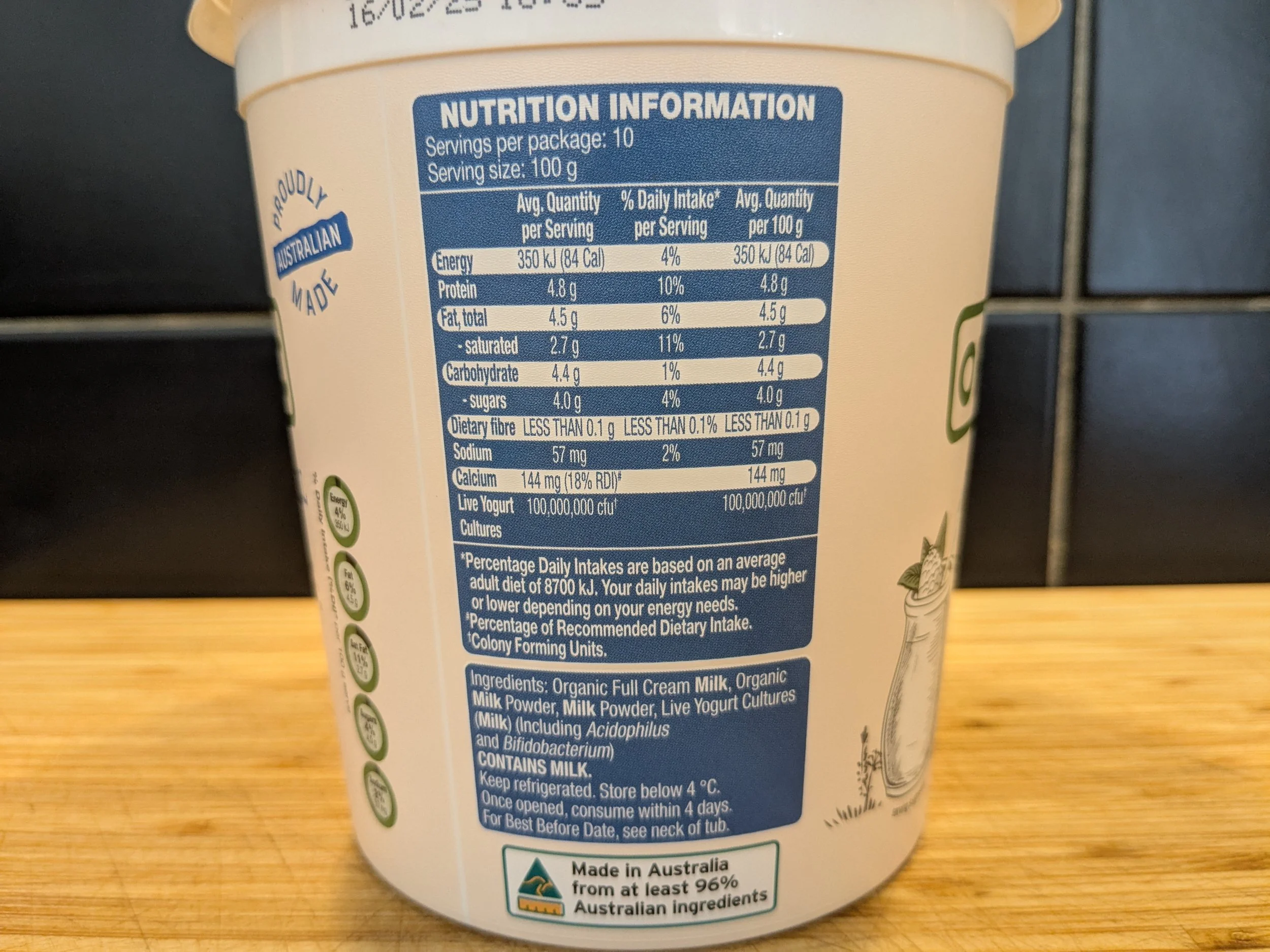
Start beside the nutrition table rather than with the front-of-pack protein claim. On a US Nutrition Facts panel, check serving size and servings per container; some packages also provide whole-container information. The listed serving is not a personalized instruction about how much you should eat. In European-style nutrition tables, a per-100g or per-100ml column is a familiar comparison basis, sometimes accompanied by a portion column. Read the heading rather than assuming every number describes the entire package.
The photographed yogurt label illustrates why the heading matters: it has both serving and per-100g columns. It is an Australian product photograph, not an example of a US panel or a claim about European packaging rules. All calculations below use invented, clearly stated numbers. They are not measurements of the pictured yogurt, oats or prepared meals, and they are not product recommendations.
Imagine two snack packs. Pack A advertises 15g protein for a 150g serving. Pack B lists 12g protein for 100g. Comparing 15 with 12 makes A look stronger, but the amounts differ. Convert A to a common basis: 15 divided by 150, multiplied by 100, gives 10g protein per 100g. B has the higher protein concentration in this example. A larger serving may still contain more total protein.
Those are different questions, not contradictory answers. Concentration helps compare like foods; portion totals help plan an actual meal. A small portion of a concentrated food can provide less protein than a larger portion of another food. Neither comparison alone establishes overall diet quality, taste, affordability or how comfortably the food fits your routine.
Write down the units with the number. A note saying only 150 calories becomes ambiguous once you forget whether it referred to a serving, a bar or 100g. A quick photograph of the current package can be more useful than trusting an old app entry. Product recipes and package sizes can change, so match the listing to the food in your hand.
Use one multiplier for the portion you actually eat
The basic calculation is straightforward: amount eaten divided by the label’s reference amount gives the multiplier. Multiply each relevant nutrient and the listed calories by that same factor. Keep the units compatible. A weight in grams cannot be divided directly by a volume in millilitres unless you have a suitable conversion for that particular food.
Take a hypothetical cereal labelled 380 calories and 13g protein per 100g. A 60g portion has a multiplier of 0.6, giving 228 calories and 7.8g protein. Milk, yogurt, fruit and toppings are additional ingredients. Calling the bowl one serving does not make their contribution disappear. Equally, the dry cereal’s calorie concentration should not be applied to the weight of a bowl that now contains liquid.
For a package labelled per serving, the process is the same. Suppose a 250g tub contains two stated 125g servings, each with 90 calories and 10g protein. Eating the whole tub gives 180 calories and 20g protein. Eating 187.5g is one and a half servings: 135 calories and 15g protein. These are arithmetic examples based on hypothetical label values, not laboratory precision for every spoonful.
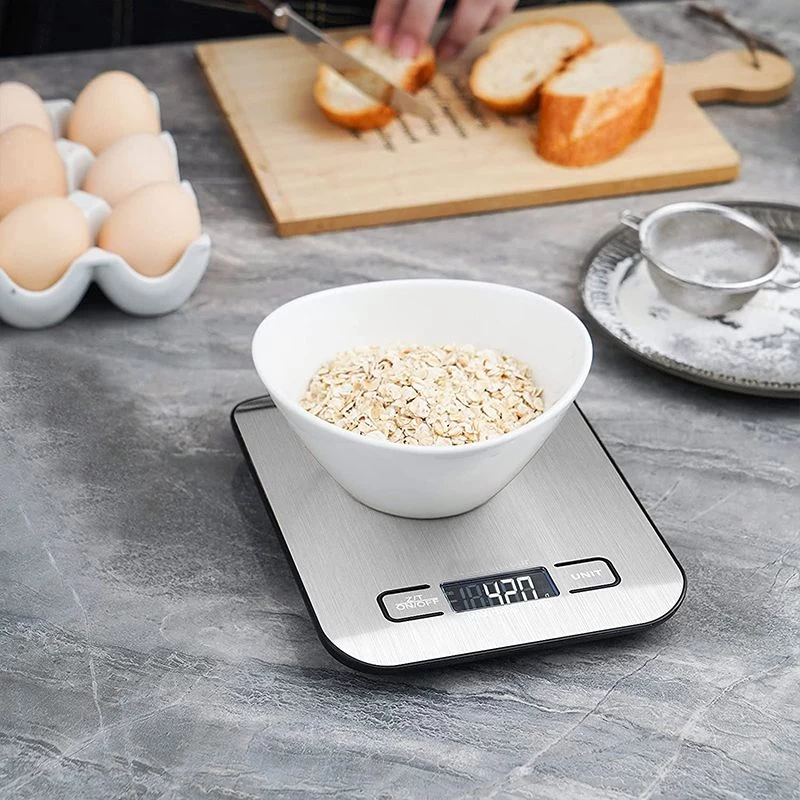
A kitchen scale can help establish what a familiar portion looks like. Place the empty bowl on the scale, zero it and then add the food if you want the food’s weight alone. The scale photograph is illustrative; its display is not evidence that the oats have been tared correctly or that their nutrition was measured. Check units and subtract the container when needed.
A scoop is a volume measure, too. If a powder’s stated serving is 30g but your scoop holds 33g, the multiplier is 1.1. Use the measured amount when that distinction matters rather than assuming every scoop supplies exactly one serving.
Use this approach to resolve a specific uncertainty, not to make ordinary meals unnecessarily stressful. Label values are rounded estimates, and measuring every crumb does not create perfect biological precision. The useful improvement is usually catching a repeated basis error, such as logging half a tub while eating all of it. If tracking food becomes distressing or compulsive, a less numerical approach with appropriate professional support may serve you better.
Compare protein, calories and price with the same denominator
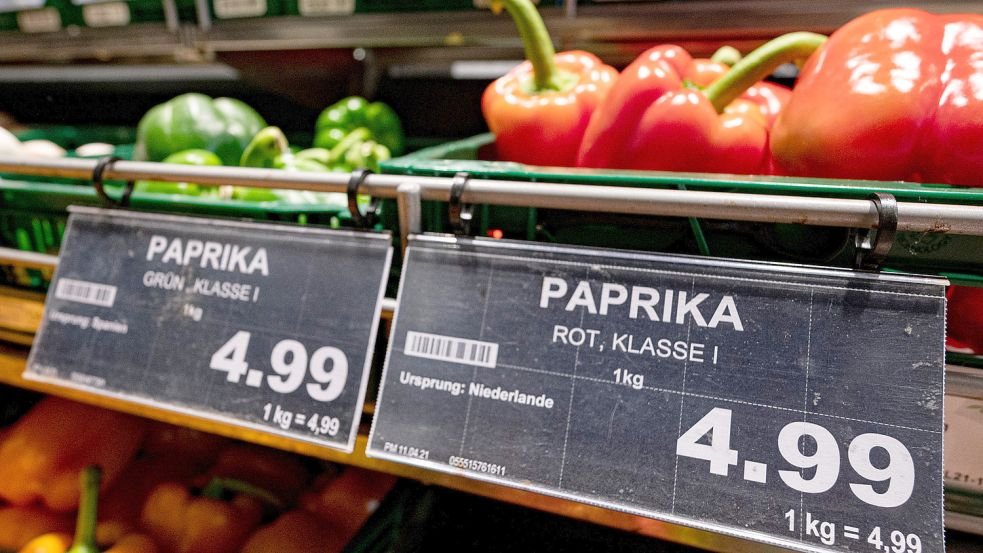
A shelf price per kilogram answers a different question from protein per serving. The shelf photograph illustrates unit pricing in a supermarket; its displayed price is archival and is not a current offer. To compare two foods sensibly, first decide whether you care about total cost, cost per amount of food, protein concentration or protein relative to calories. There is no single ratio that replaces all four.
Consider an invented 500g tub costing €2.40 with 8g protein per 100g. The whole tub contains 40g protein, so the cost per 20g protein is €1.20. Another invented 200g product costs €1.50 and contains 12g protein per 100g. It contains 24g protein in total, giving €1.25 per 20g protein. The smaller package is cheaper at checkout and more protein-dense, but slightly dearer per equal protein amount in this example.
The formula is package price divided by total protein grams, multiplied by the comparison amount you choose. Do not divide by the protein in one serving while using the price of the whole package. Include only the edible quantity on the same basis as the nutrition information. If the label or weight basis is unclear, keep the comparison approximate rather than pretending the answer is exact.
Calories introduce another trade-off. Two foods can supply the same protein with different energy totals. Our comparison of whole eggs and egg whites explores why that difference can be useful without declaring one ingredient universally better. A food that fits a calorie budget may still differ in flavour, fat, other nutrients, convenience and the rest of the meal it encourages you to eat.
Use the arithmetic to narrow an ordinary shopping decision. A nominal bargain that you dislike, waste or cannot conveniently store may not save money in practice. Conversely, a convenient portion can justify a higher unit price if it helps you follow a workable routine. That is a practical judgment, not evidence that premium packaging produces better training results.
Keep preparation and meal totals consistent
Before scaling a value, check whether it describes the food as sold, drained or prepared. Dry rice and cooked rice contain different amounts of water per 100g. Applying a dry-food entry to a cooked weight can therefore produce a misleading total. There is no universal dry-to-cooked conversion that fits every product and cooking method. Use the package instructions or an entry that matches the state you actually measured.
For a mixed meal, record ingredients on compatible bases, then sum them. An illustrative recipe containing 1,200 calories and 80g protein across four genuinely equal portions would provide 300 calories and 20g protein per portion. Dividing a cooked batch by weight can help allocate it, but only if the ingredients are distributed reasonably evenly. Equal box sizes alone do not prove equal nutrition.
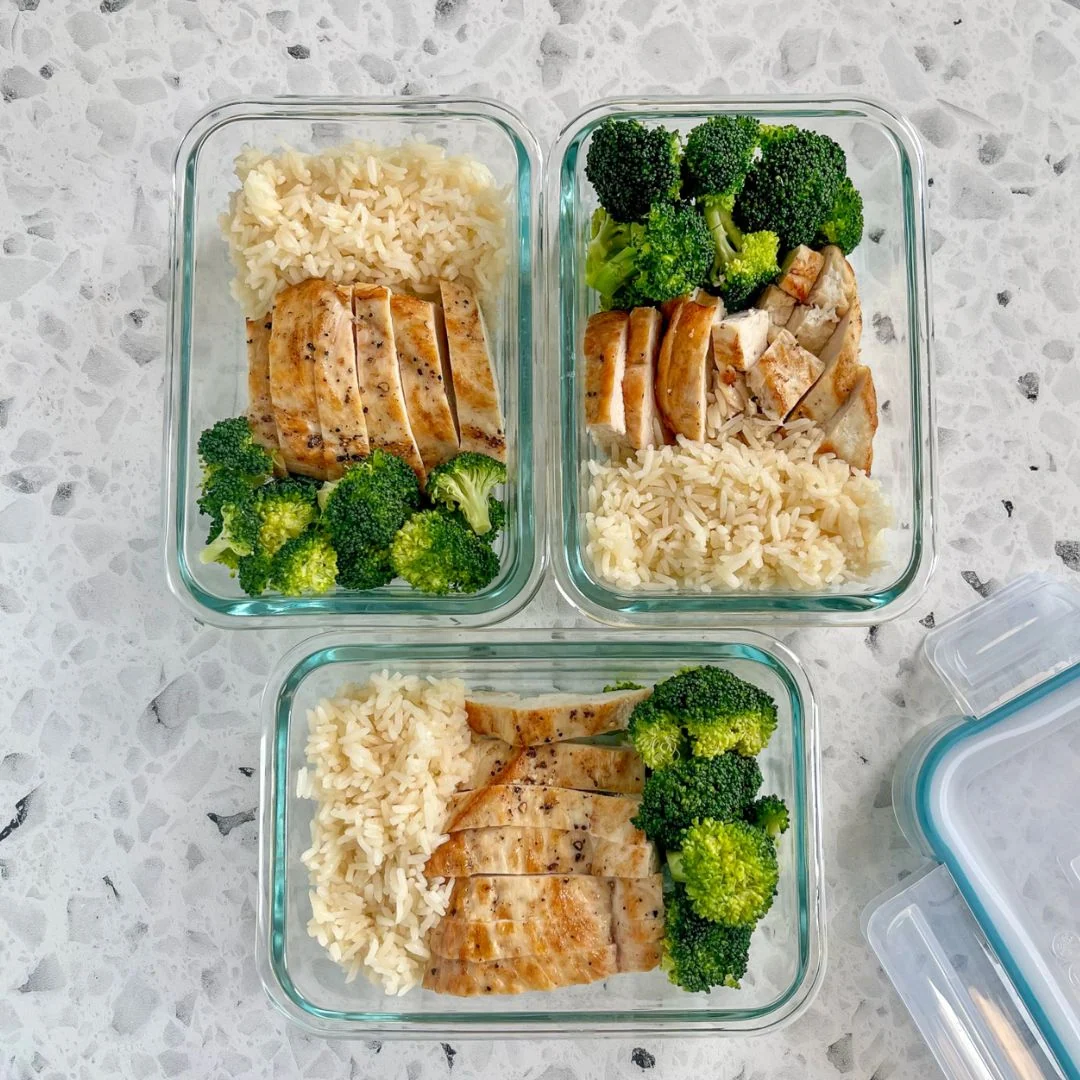
The photographed chicken, rice and broccoli containers show meal preparation, not a verified recipe with known macros. Sauces, cooking fats and differences in ingredient amounts can change a meal’s total. Do not import a generic chicken-and-rice entry merely because its photograph resembles your lunch. Start from what went into your batch, or use a sensible approximation and acknowledge its limits.
Once you understand the total, you can think about how to distribute meals around the day. Our analysis of three versus five protein-rich meals explains why meal count and total intake should not be confused. A label calculation cannot by itself determine your ideal protein requirement, calorie target or training response.
For the next unfamiliar package, use a short sequence: identify the reference amount, identify your portion, calculate the multiplier, include additions and compare products on a shared basis. Save the result only after checking those details. The goal is a repeatable method that makes eating easier to understand, not a collection of impressive numbers detached from the food you actually eat.

Funny Gym Shirts & Workout Gear
Funny gym shirts, tanks, hoodies and workout gear for lifters who like training hard.

Rice Chicken Broccoli Sweatshirt
For laid-back days and meal-prep humor: “Powered By Rice Chicken Broccoli”.

Brotein Bar Gym | Funny Protein Bar Meme Workout Decal Sticker
Bring “Brotein Bar” attitude to your water bottle or laptop.

Protein Shaker Bottle : For Bodybuilding & Powerlifting Hoodie
Bring “Protein Shaker Bottle” gym humor to lazy days and post-workout plans.

Protein Monster Humorous Vest & Tank Top
Train hard, laugh a little, and rep “Protein Monster”.

Funny Protein King Gym | Burger King Parody Workout Swe T-Shirt
For laid-back days and burger-loving humor: “Protein King”.

This Is Your Body On Protein Shirt – Meme & Top T-Shirt
Bring “This Is Your Body On Protein” humor to your next gym day.


Bulking Season Bulk T-Shirt
Heavy lifts, good laughs, and a little “Bulking Season” energy.

Do It The Noods Shirt – Bulking & Gains T-Shirt
Rep “Do It For The Noods” humor in and out of the gym.

Donut Dumbbell Donuts Barbell Bulk Diet Sticker
A fun “Donut Dumbbell Donuts Barbell” touch for bottles, laptops, and lockers.