Advertising disclosure: This page includes affiliate product links that may earn us a commission, as well as products from our own store.
When bodyweight chin-ups become predictable, an extra plate can turn a familiar back-and-biceps exercise into a precise strength test. The difficulty is not merely pulling the load upward. You need a secure way to attach it, a palms-facing-you grip that suits your joints, and a consistent range that does not shrink as the belt gets heavier. This guide explains how to set up weighted chin-ups, build clean repetitions and use a modest four-week progression without turning every session into a maximal attempt.
Earn the right to add weight to your chin-ups
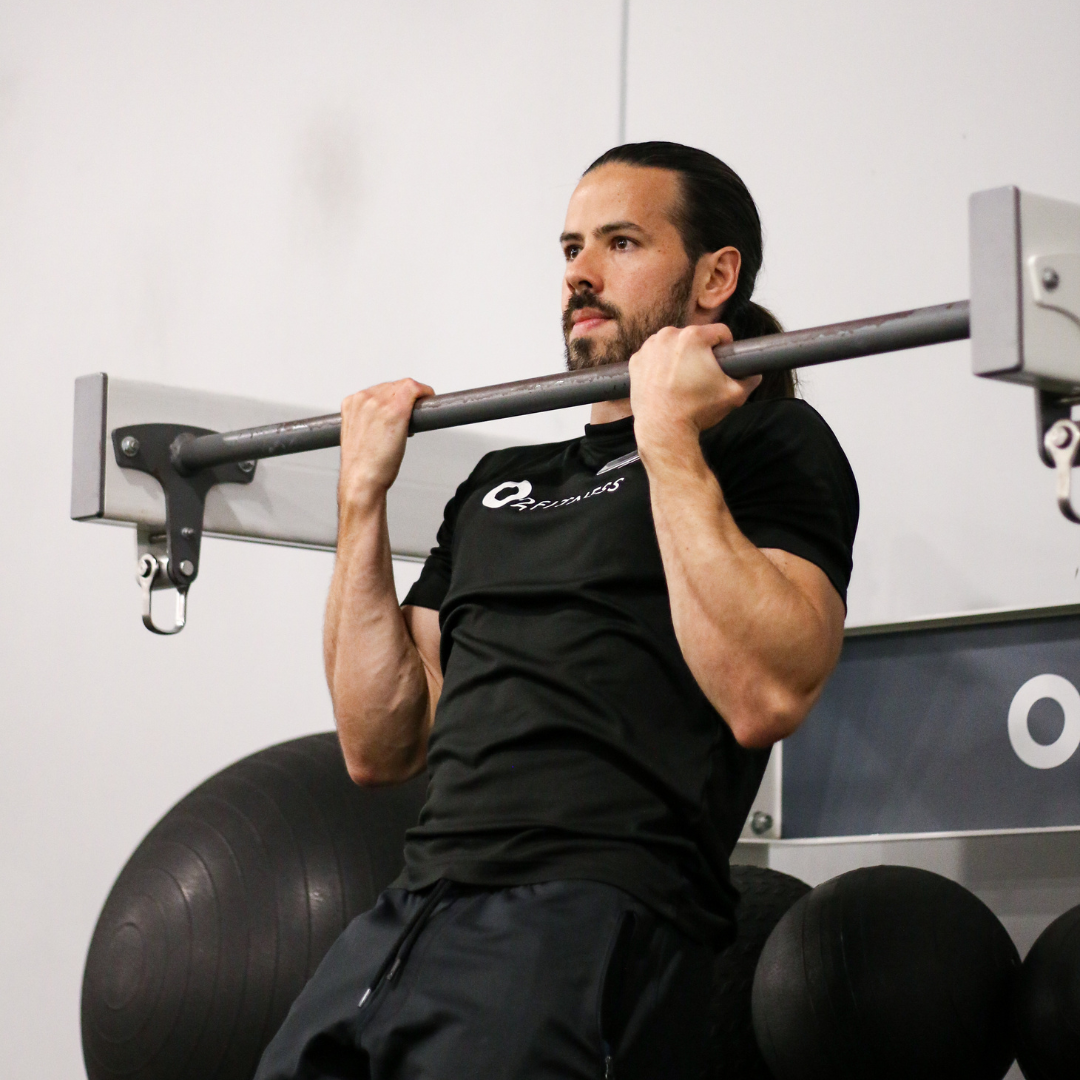
A weighted chin-up is not a different pulling trick. It is an ordinary underhand chin-up performed with an additional external load, typically suspended from a dip belt. That distinction matters because a heavier plate cannot repair a shortened range, a kick at the bottom or a head thrust over the bar. First establish a movement you can repeat. Start at a full, comfortable hang, keep your trunk relatively quiet and pull until the chin clears the bar without using the legs to launch the rep.
A practical entry test is several controlled sets of bodyweight chin-ups that look similar from the first repetition to the last. Eight to ten clean reps in one set is a useful coaching reference, not a physiological threshold: a lifter who owns six excellent repetitions and can start with a tiny load may be better prepared than one who survives twelve shortened reps. Your readiness also depends on grip, elbow comfort and whether you can lower to your chosen bottom position without a sudden drop.
Try a rehearsal set with no extra weight. Stand on a box if the bar is high, take an underhand grip with the thumbs wrapped around the bar, and settle your body before pulling. Note your hand spacing, chin clearance and lower position. If the third repetition becomes a different exercise from the first, record that rather than treating the set as a pass. Clean consistency offers a better benchmark for later progress than an arbitrary number of repetitions.
When the unloaded version is stable, add only a small plate. For many adults 2.5 kg is enough to make the first weighted session informative, and even less can be useful. The appropriate increment scales with bodyweight and current strength. Keep at least a couple of repetitions in reserve on the first weighted session; there is no need to discover your maximum before you have learned how the hanging load changes the movement.
Load a dip belt securely and take the bar without jumping
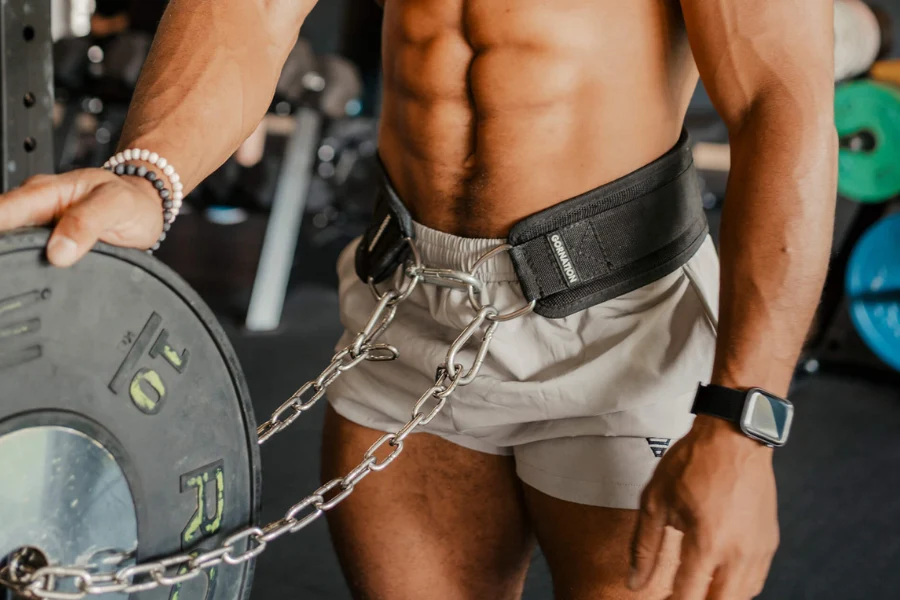
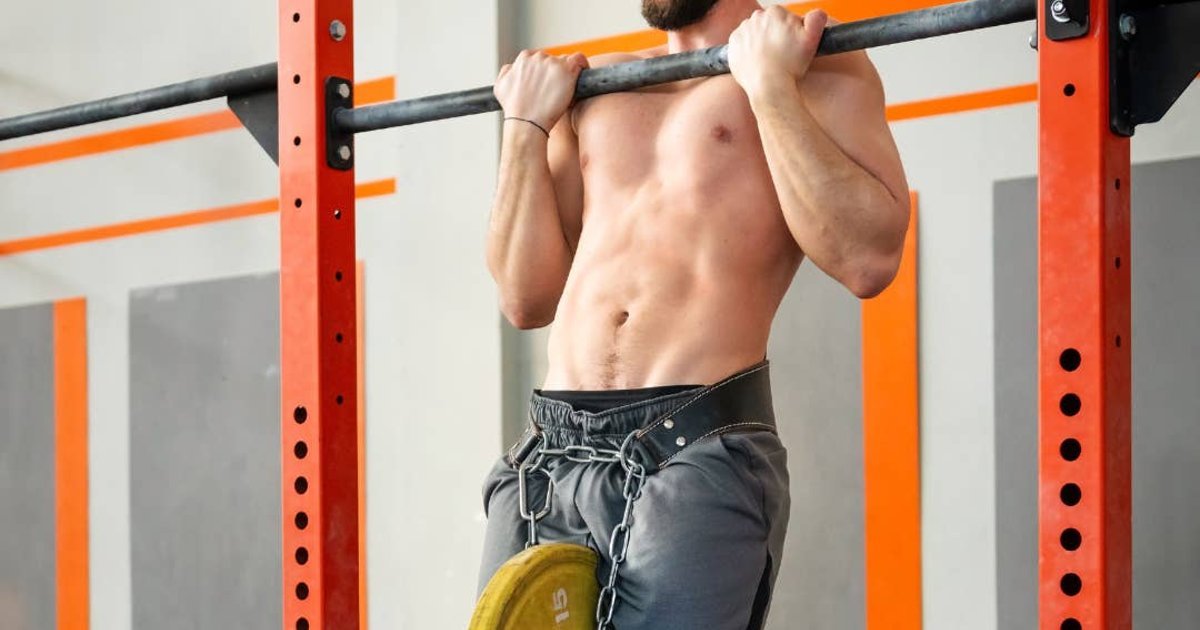
A dip belt usually places a padded strap around the hips and suspends the plate from a chain or loading strap. Inspect the belt, connectors, webbing and stitching before putting weight on them. Pass the chain through the plate opening exactly as the belt maker intends and make sure both ends are fully secured. Avoid improvised knots, loose clips and stacks of plates that can strike the knees or the floor. The goal is a load that hangs below your center of mass without swinging into the legs.
Use a steady box or platform to reach the bar, not a jump with a heavy plate dragging beneath you. Step up, take your grip, brace and transfer the weight into the hang gradually. Let the plate settle before the first repetition. After the final rep, return to the platform under control and remove the load only when your feet support you. If a bar is too high to enter and exit safely, change the station rather than attempting a heroic leap.
A weighted vest is an alternative when hanging plates would hit the floor or when you prefer the load spread over the torso. The vest still must fit securely and must not restrict breathing or shoulder movement. A dumbbell gripped between the feet may work for a light set, but it is less forgiving if fatigue causes the feet to separate; a secure belt or vest is generally easier to manage for deliberate progression. Check the pull-up bar and mounting system against their actual rated capacity, accounting for bodyweight plus added load, not just the plate number.
Start with enough floor clearance that the weight cannot scrape or wedge against objects beneath you. A long chain and a short bar height can become an unexpected limitation. Position the box just outside the moving load path and keep people away from the hanging plate. Good setup is not wasted time: it removes the uncontrolled swing and awkward dismount that can turn otherwise sound chin-up technique into a risky gym maneuver.
Use an underhand grip and pull your elbows toward your ribs
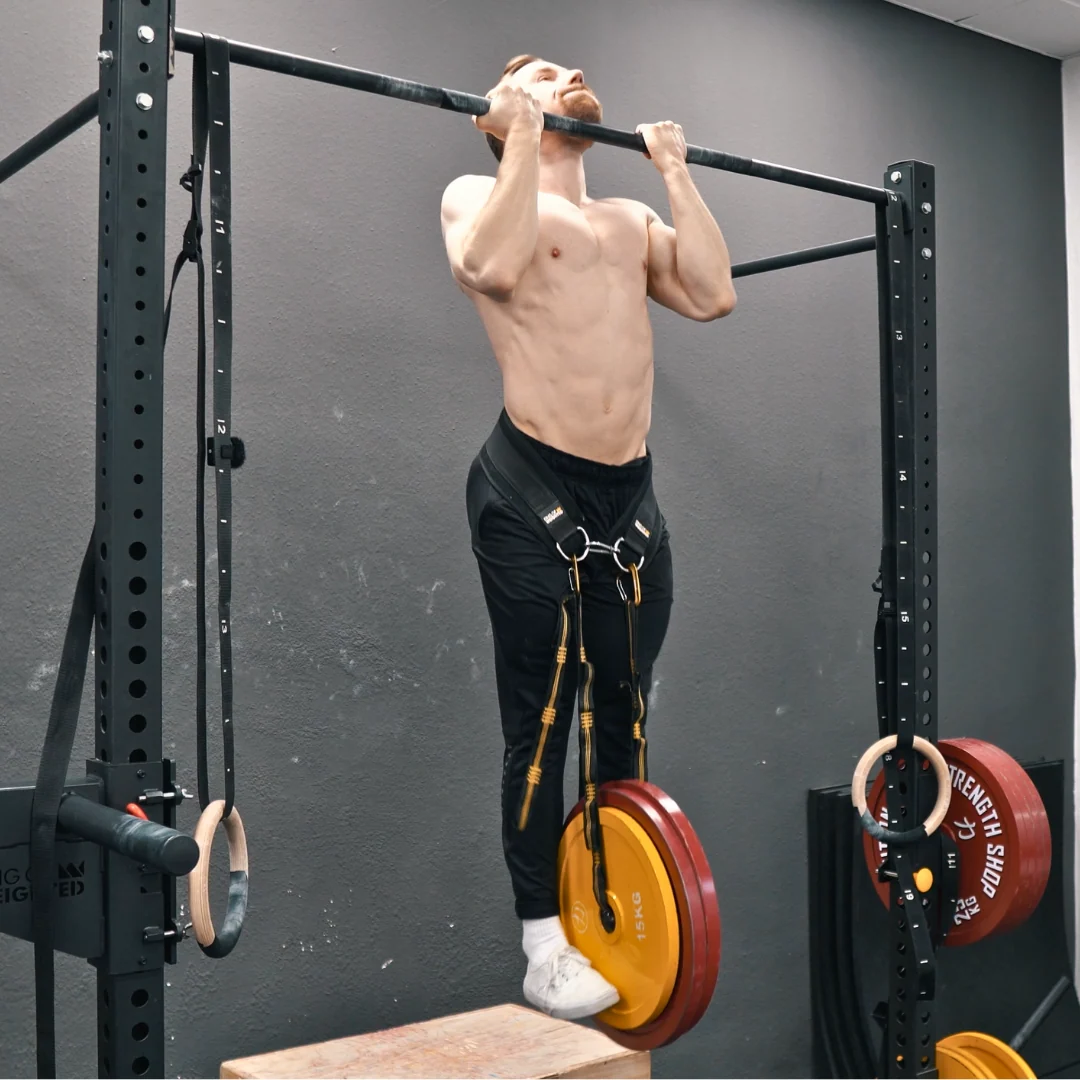
The defining feature of the chin-up is the supinated, palms-toward-you grip. Shoulder-width is a sensible starting point, but not a compulsory measurement. Narrower hands may feel natural for one lifter and unpleasant at the wrists for another. Experiment with small changes while unloaded and choose the width that lets your elbows travel comfortably. If a fixed straight bar aggravates a wrist or elbow, a neutral-grip pull-up may be a better training choice than forcing the variation.
Initiate the repetition with a controlled upper body, not a violent shrug or sudden leg kick. Brace the abdomen and glutes enough to keep the suspended plate quiet. Drive the elbows down toward the sides as your upper arms move toward the torso. Let the shoulder blades move naturally; they do not need to be frozen into one aggressively squeezed position. The lats, biceps and other elbow flexors contribute through the lift, with the upper back and trunk helping organize the motion.
Aim to clear the chin without jutting the neck forward. There is no requirement to drive the sternum into the bar or lean so far back that the movement becomes a row. A modest natural body angle is fine, but repeat it from rep to rep. Lower deliberately to the same comfortable arm extension you selected during the bodyweight warm-up. Avoid crashing into an unsupported bottom hang, especially as the additional load increases the demand on elbows and shoulders.
Take a moment at the bottom if the plate starts swinging. You can pause between repetitions to restore a steady position rather than allowing the next rep to be pulled in a rhythm dictated by the chain. If the chin stops clearing the bar while the legs start to help, the set is over. Preserve the most transferable measure of progress: additional weight lifted through the same honest range with approximately the same amount of body movement.

Equipment Worth Exploring
Explore equipment, accessories and gear from our carefully selected range.


Power Tower
Freestanding pull-up and dip station with adjustable handles for bodyweight training.


Know what changes when the grip turns overhand
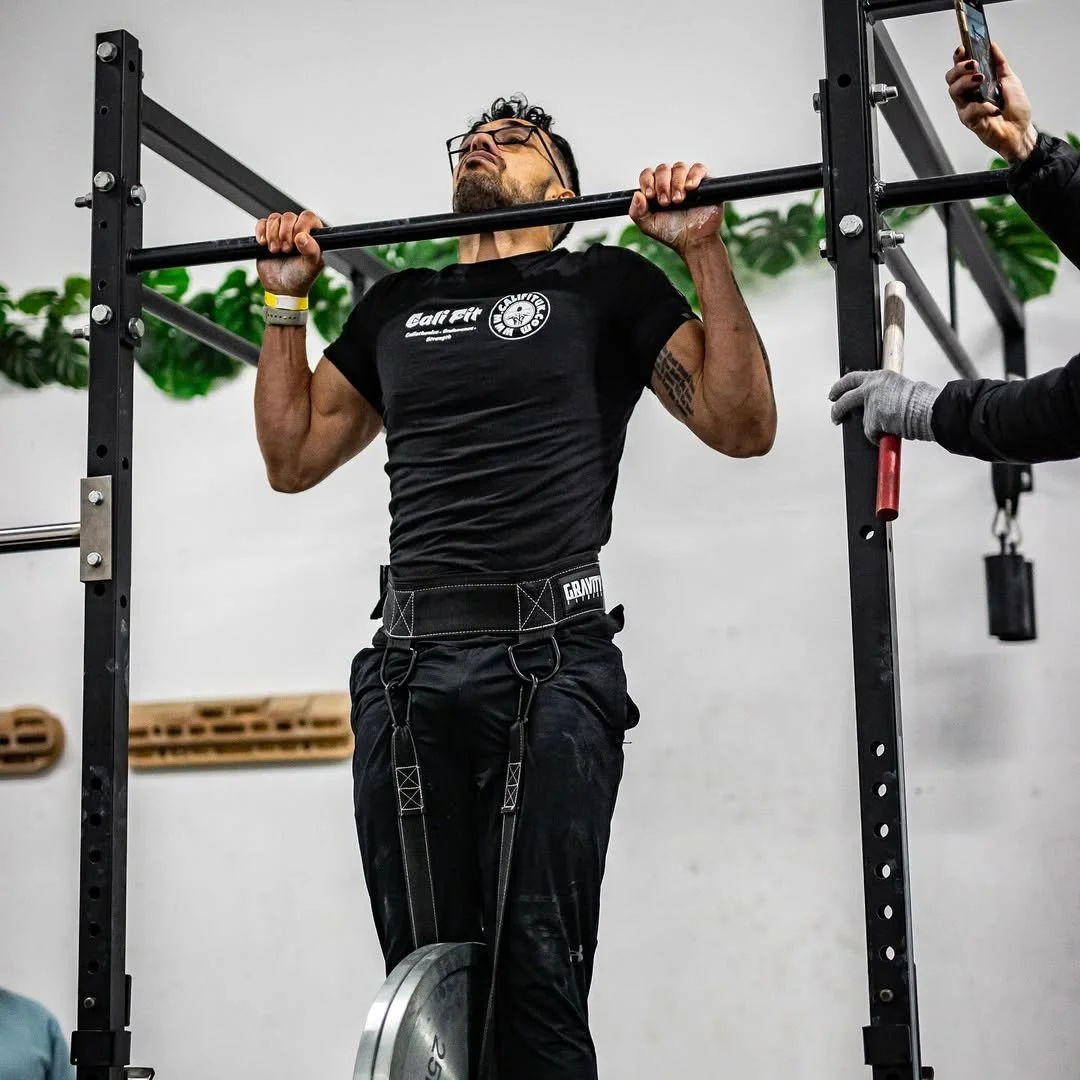
Weighted chin-ups and weighted pull-ups share the same broad vertical-pulling pattern, but the hands face different directions. Underhand chin-ups generally feel more favorable to elbow-flexor contribution, while overhand pull-ups can change the relative demand and comfort of the arm position. Do not turn that into a universal claim that one builds only biceps and the other only back. Both involve substantial lat and upper-back work, and anatomical differences influence which grip feels best.
The choice also affects the numbers you can log. An athlete might perform more repetitions or attach a larger plate with a supinated grip, but that does not make each additional kilogram an isolated measurement of biceps strength. Grip width, bodyweight, hang depth, movement speed and range all matter. Compare like with like. If you switch from a shoulder-width chin-up to a wide overhand pull-up, begin a new log entry rather than treating the loads as interchangeable.
Use supporting movements to address the bottleneck you actually have. A controlled bodyweight chin-up can provide extra practice without constantly escalating the belt. Rows help train pulling at a different arm angle; curls offer direct elbow-flexor work; scapular control and grip practice can help organize a clean start. None replaces the actual weighted chin-up when the goal is improving that exact movement, but a variety of pulling work can let you train without taking every set to failure.
The photograph in this section shows a loaded pull-up position rather than proving any one grip is mechanically superior. Look at the important common features instead: a secured load below the hips, stable bar and controlled body position. Your training choice should come from comfortable execution and measurable progress, not from assuming a single photograph reveals how every shoulder or elbow will respond.
Progress the added plate with repeatable sets, not guesswork
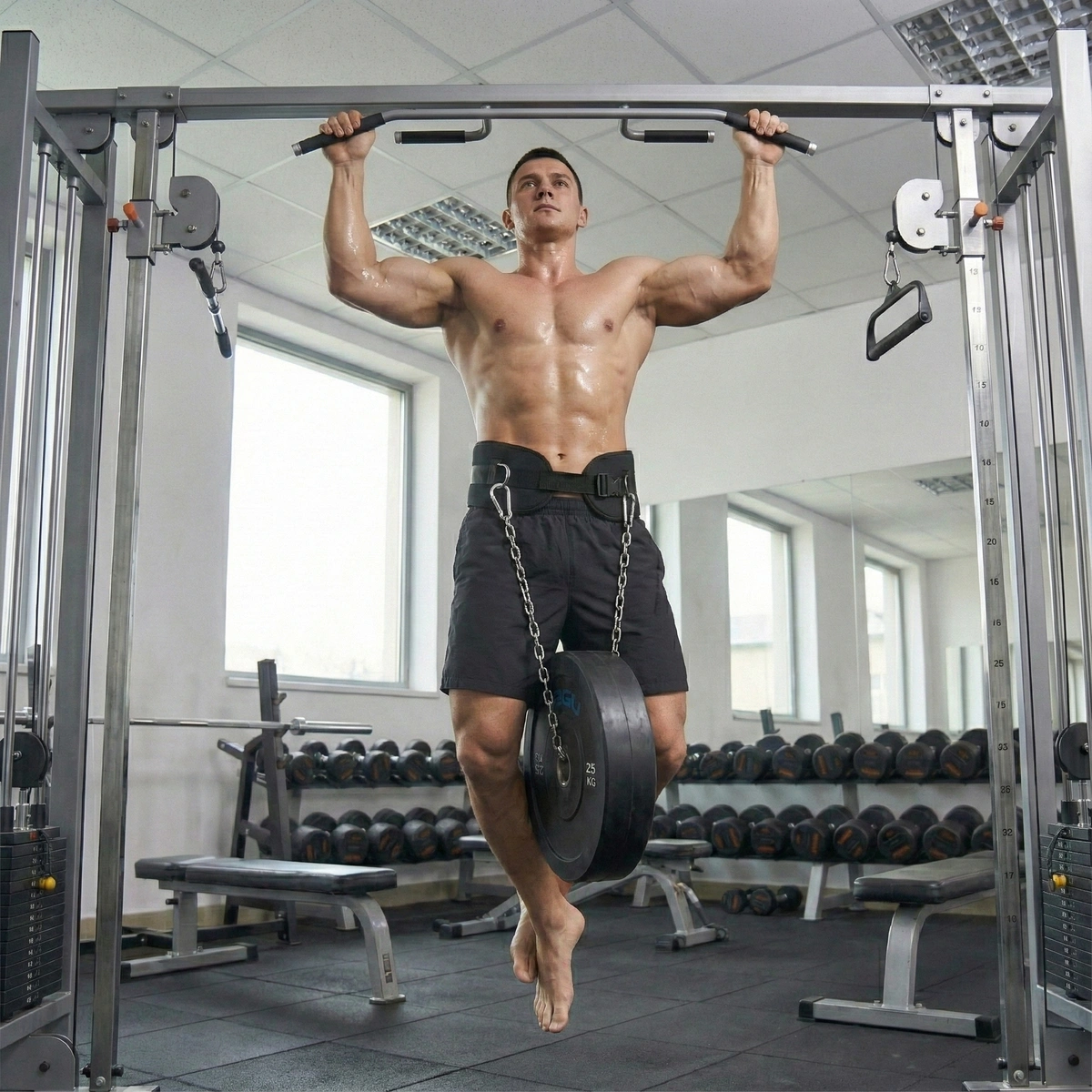
For strength-focused work, try three or four sets of three to five controlled weighted chin-ups with two to three minutes of rest, extending rest when needed to reproduce technique. For a muscle-building emphasis, sets of five to eight or six to ten may be practical if you remain in control; the higher rep range often calls for less additional weight. These are adjustable programming examples, not precise prescriptions established for every lifter. Put the demanding weighted sets early enough in the workout that fatigue from rows and curls has not already compromised grip and elbow control.
A straightforward double-progression system avoids testing a maximum every week. Choose a load that permits three sets of five reps while leaving one or two repetitions in reserve. Repeat that load until all three sets reach seven or eight similarly clean reps, then add the smallest available plate and return toward five. Write down both bodyweight and added weight. A 10 kg belt plate has a different relative meaning at 65 kg than at 115 kg, and changes in bodyweight alter the total system you are pulling.
For a four-week example, begin week one with a light, controlled baseline and record the best-looking repeatable sets. In week two, add a rep to one or more sets if all original reps were clean. In week three, aim to fill out the chosen rep target without swinging. In week four, add a small plate only if you own the top of the range, or keep the load unchanged and improve control. There is no requirement to increase something on every session; recovery, elbow comfort and a consistent range are legitimate reasons to hold steady.
Avoid an arithmetic trap in which a short partial repetition with an extra plate is automatically called progress. Use the same hang, hand width and chin-clearing standard before comparing loads. Film an occasional set from the side if it helps reveal a kick or forward neck thrust, and keep the camera out of other gym users’ way. If work and sleep are poor, preserve a few technically sound sets and reduce accessory volume rather than using heavier weights to prove the session was worthwhile.
A lighter unweighted pulling day can sit between heavier sessions. For example, place weighted chin-ups on one upper-body day and bodyweight chin-ups, neutral-grip pulling or easy rows several days later. Rest days are not proof of weakness; they give the elbow flexors, grip and shoulder structures time to tolerate the accumulating workload. When consecutive weeks bring declining reps or new joint irritation, lower the plate or number of hard sets before trying to force adaptation.
Troubleshoot the swing, elbows and failed final reps
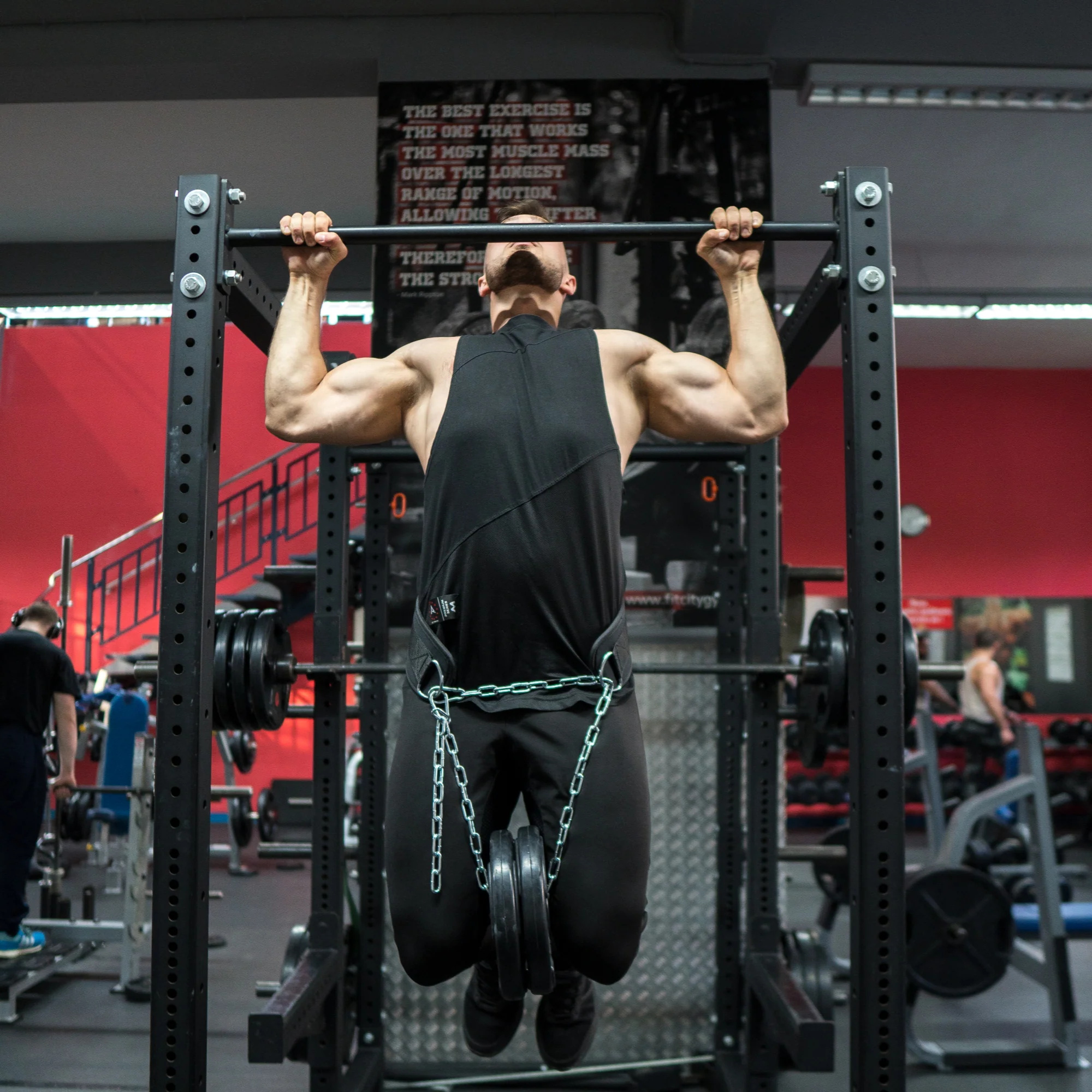
A swinging plate is usually a setup or pacing problem before it is a strength problem. Step into the hang gently, bring the feet beneath you and start only after the load is still. If the plate pitches forward on each repetition, check whether you are kicking, pulling the knees sharply upward or rushing through the bottom. Deliberately stop and reset between repetitions until the movement no longer depends on momentum. Shorter sets with consistent form are better than longer sets whose final reps look unrelated to the first.
Discomfort at the front of the elbow deserves attention because supination and added bodyweight both increase the demands of the exercise. Try less added load, fewer difficult sets or a slightly different hand spacing. If the straight bar remains irritating, test a neutral grip or a machine and return to the underhand variation only when comfortable. Sharp pain, sudden loss of grip or persistent symptoms are reasons to end the set and seek appropriate assessment, not a challenge to push through.
Grip slipping may be a more immediate limit than the back. Dry hands and an appropriately textured bar can help; straps change the challenge and may not be appropriate for every weighted-calistenics goal. For maximal specificity, use a secure normal grip and loads you can actually hold. Check that the bar, rack and dip belt are rated for the combined system and that plates or clips will not fall free. A secure weighted setup also means planning the dismount before the first rep, especially near the end of a tiring workout.
Balance your program instead of trying to resolve every upper-body goal through one lift. Weighted chin-ups are a strong, measurable vertical pull, but rows, presses, direct arm training and shoulder-friendly accessory work all have distinct purposes. If you are new to external loading, keep the first month intentionally undramatic. What you want at the end is a stable grip, clean repetitions, repeatable numbers and elbows that still feel good enough to train next week. The badge of progress is not the largest plate you managed to hang; it is the largest load you can repeatedly move without changing the rules.

Calisthenics Shirts & Street Workout Gear
Calisthenics and bodyweight-training gear for pull-ups, dips, handstands and street-workout athletes.

Pull Up Or Shut Up Hoodie
Bring “Pull Up Or Shut Up” gym humor to lazy days and post-workout plans.

Always Pull Yourself Up Tank
Show some personality between sets with “Always Pull Yourself Up”.

Pullups Heartbeat Sticker
Stick a little “Calisthenics Pullups Heartbeat” humor on your favorite gear.


Turn Off Gravity Funny Calisthenics Gym Muscle Shirt fo Tank Top
Bring “Turn Off Gravity Funny Calisthenics” humor to your next lifting session.

Calisthenics Hanging Out Hoodie
Make your off-duty look more fun with “Calisthenics Hanging Out”.


Be Stronger Than Your Excuses Motivational Workout Pull Hoodie
Make your off-duty look more fun with “Be Stronger Than Your Excuses”.

Funny Calisthenics Gym Decal for Water Bottles Laptops Sticker
Bring “Calisthenics” attitude to your water bottle or laptop.