Advertising disclosure: This page includes affiliate product links that may earn us a commission, as well as products from our own store.
822,242kg. Eleven thousand seven hundred and forty-nine deadlifts. One day. Daniel Mulligan’s cumulative-lifting record is a reminder that strength is not always measured by the heaviest single barbell. The British trainer’s extraordinary 24-hour challenge blended strength endurance, patient technique and a fundraising purpose. The official performance took place on 20 December 2025; coverage resurfaced during 2026. Here is what the arithmetic tells us, what it cannot tell us, and how everyday lifters can take something useful from a feat nobody should casually imitate.
The verified 822,242kg record happened in December 2025
Daniel Mulligan, a British personal trainer, completed his 24-hour deadlift challenge in Nottingham on 20 December 2025. His officially listed cumulative load is 822,242kg, equivalent to more than 822 metric tonnes lifted from the floor. The result became a widely discussed fitness story in September 2026, but the attempt itself was not a new November 2026 competition. That distinction matters whenever the video and images are recirculated.
The record was previously 580,220kg, established in 2022. Mulligan cleared that benchmark by 242,022kg, a considerable margin for an event measured by accumulated work rather than a single maximum lift. One enormous deadlift is a short display of peak strength; this result depended on repeating submaximal lifts over nearly an entire day.
The challenge was held in a normal-looking weight room rather than on a traditional powerlifting platform. Its scale did not come from a spectacular plate stack on one attempt. The striking part is how ordinary the lift can look before repetition, fatigue and the passing hours turn it into something extraordinary. A recreational lifter should appreciate the feat without copying its extreme total.
11,749 repetitions: the arithmetic and the pacing problem
The reported count was 11,749 repetitions across 24 hours. Averaged over 1,440 minutes, that is about 8.16 deadlifts per minute, or one roughly every 7.35 seconds if the work were distributed perfectly evenly. It was not necessarily that smooth: the available public account does not provide a minute-by-minute pace chart, exact rest breaks or the changing set structure. An average is not a description of each minute.
A commonly reported working weight is around 70kg. Multiplying 11,749 by an exact 70kg produces 822,430kg, which is 188kg above the official 822,242kg total. The two rounded descriptions do not reconcile exactly, so the verified cumulative record should remain the authoritative total; we should not quietly replace it with a back-of-envelope figure. The average effective load implied by the totals is just under 70kg.
The apparent precision of a world-record total is also a useful reminder to separate official scoring from rough media shorthand. The cumulative weight, repetition count and comparison with a 70kg bar each describe the same attempt at slightly different levels of precision. They should not be treated as independently verified line-by-line training logs. A serious coach would want exact sets, loads, break durations and equipment conditions before drawing conclusions about the best way to organise a similar endurance test. For perspective, a routine workout might contain 20 to 40 deadlift reps. Reaching five figures demands an entirely different pacing strategy, especially when sleep deprivation, nutrition, grip fatigue and movement consistency enter the equation. The meaningful lesson is not that everyone should chase enormous volume. It is that endurance challenges are defined by managing a workload that would be impossible to treat as a normal strength session.

Equipment Worth Exploring
Explore equipment, accessories and gear from our carefully selected range.


Competition Plates
Competition-style bumper plates for Olympic lifts and loaded strength training.


Open Hex Bar
Open-frame trap bar with multiple handles for deadlifts, carries, and lower-body training.


Leather Lifting Straps
Padded leather straps support grip during heavy rows, deadlifts and pulling exercises.

Leather Wrist Grips
Padded leather lifting grips help support the hands and wrists on heavy pulling exercises.


Foldable Wall Rack
Wall-mounted folding squat rack designed to save floor space between workouts.
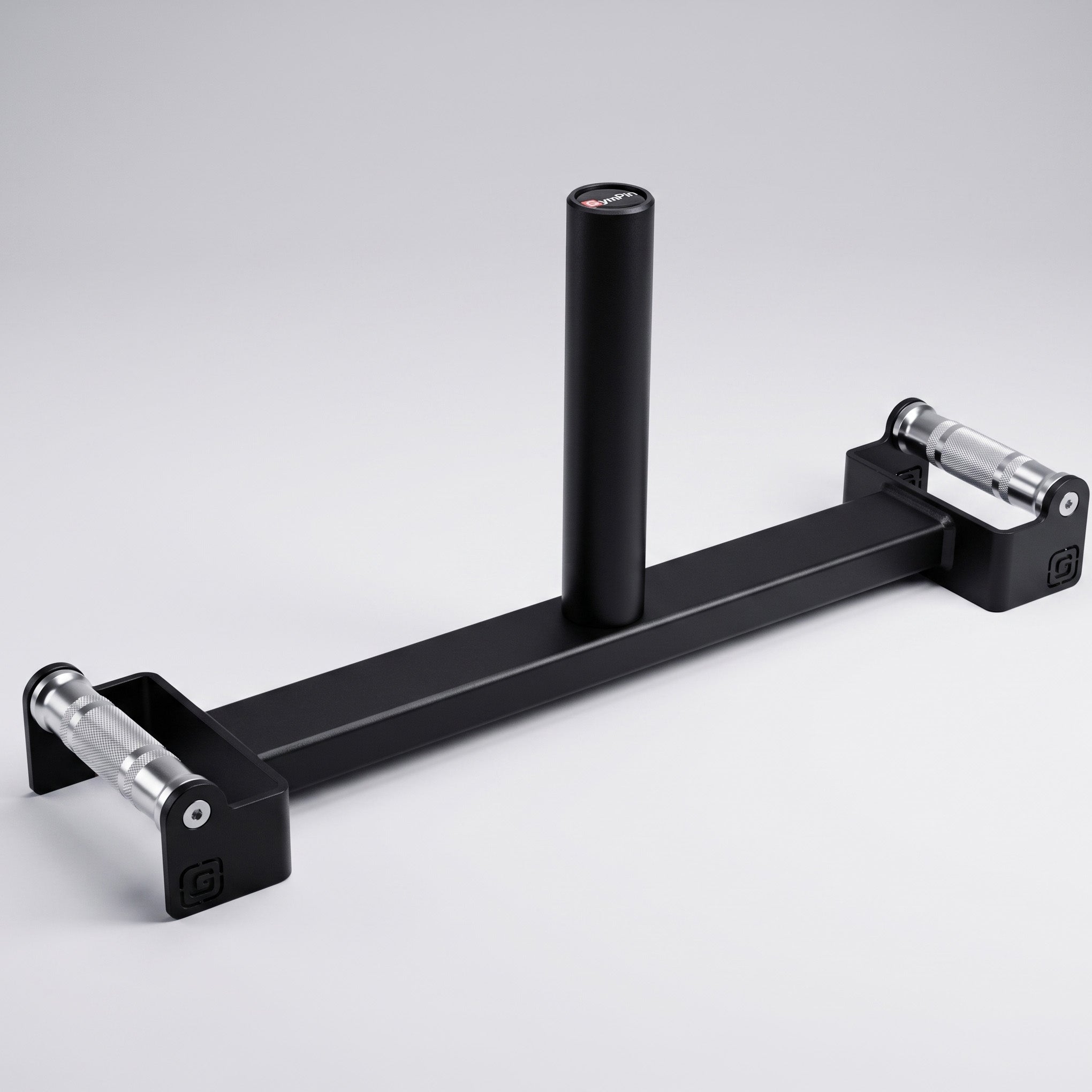
GymPin Hyper Loader
Central Olympic-plate loading attachment for weighted hyperextensions.
Five months of preparation and the deadlift cues worth keeping
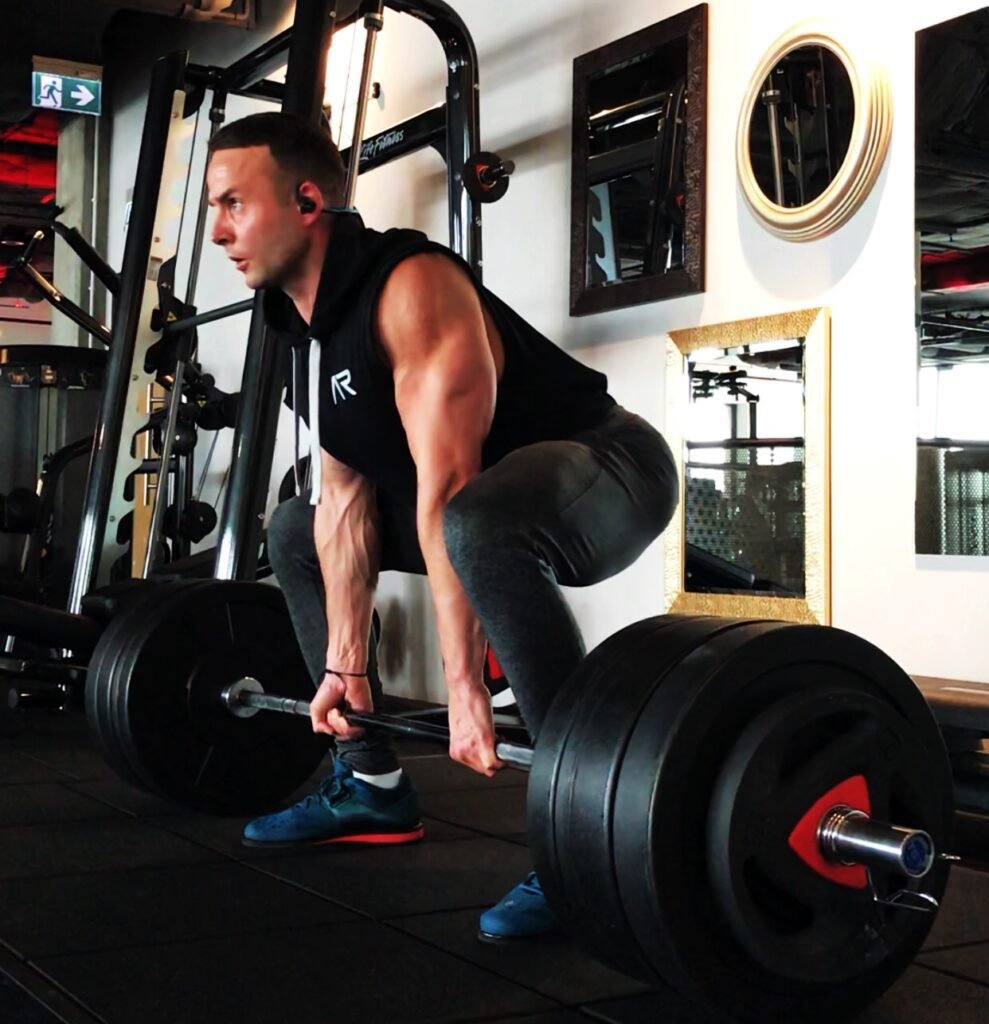
Mulligan described a roughly five-month preparation period, not an impulsive single-day challenge. His basic setup advice translates surprisingly well to everyday deadlifts: approach the bar over the midfoot, brace the trunk before pulling, and remove slack from the system before accelerating the weight. Those principles can make the first few centimetres of a lift more predictable and reduce wasted movement.
Foot placement and starting hip height still need to match the lifter’s build, mobility and barbell style. Telling everyone to keep their hips unusually low can cause the hips to shoot upward before the plates leave the floor. The goal is a repeatable start position that permits controlled force through the floor, not a perfect-looking freeze frame copied from somebody else’s proportions.
His description of saving very hard sets for occasional exposures and practising more frequently with manageable loads is a better takeaway than the record number itself. For normal training, a challenging top set followed by lighter controlled work lets skill improve without making every repetition a maximum-effort grind. Keep the bar close, allow your lats to stabilize your arms and finish by extending your hips rather than leaning backward. A recording from the side is often more useful than adding another plate.
Blisters, grip fatigue and a hernia: the costs behind the headline
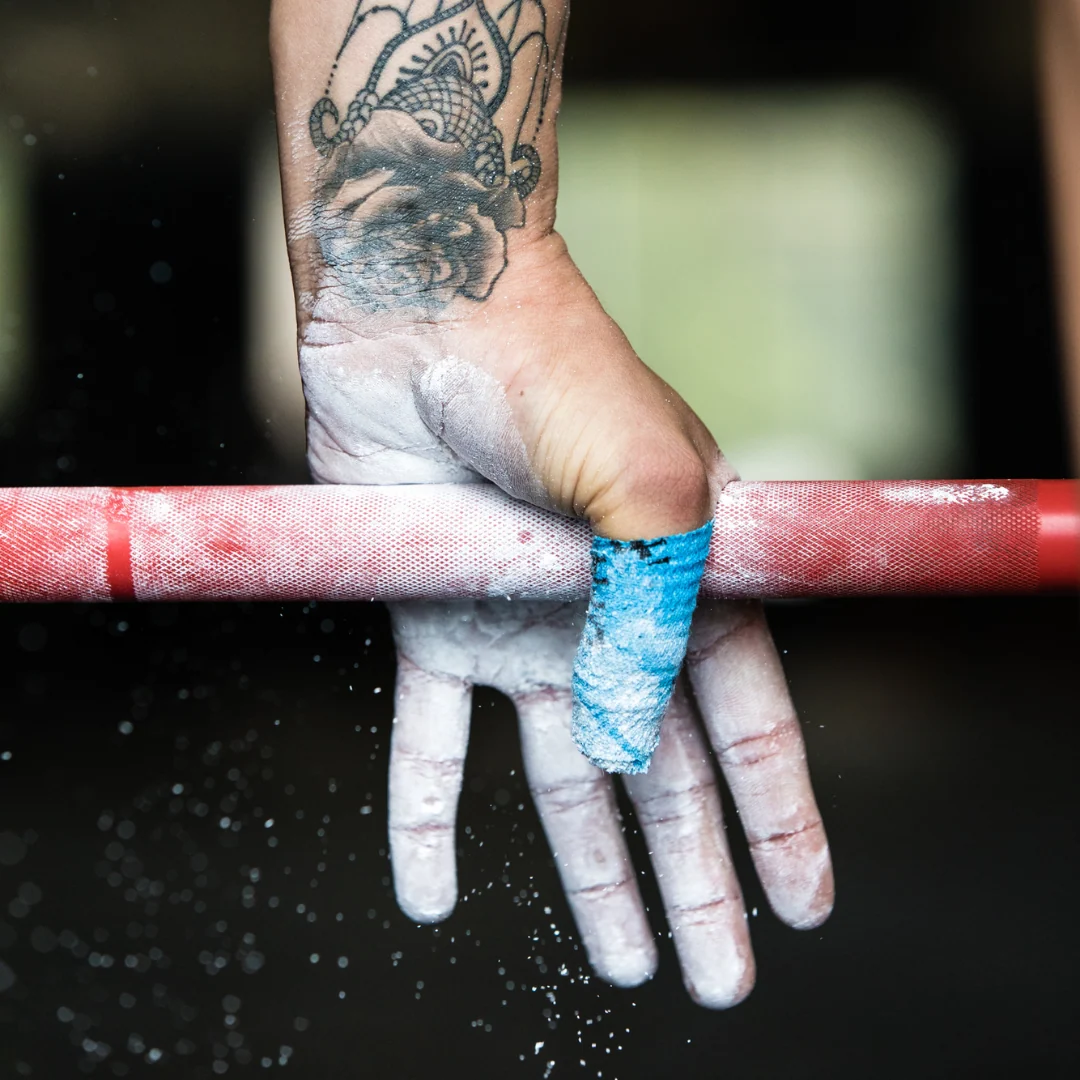
The record preparation was not without problems. Mulligan reported blistered hands and a small hernia that he was managing during training. Those details are not inspirational instructions to ignore pain. They are reminders that highly repetitive lifting exposes tissue to enormous accumulated friction, loading and fatigue, even when the bar feels light compared with a one-repetition maximum.
Deadlift grip can fail before the legs and back lose the ability to move a manageable load. That makes hand care, bar texture, chalk, training load and sensible rest relevant variables. Straps can reduce the grip bottleneck in some sessions, while barehand training maintains a direct grip stimulus. Neither choice licenses reckless volume, and friction injuries should prompt adjustment instead of being celebrated as proof of toughness.
Back and abdominal symptoms warrant more caution than ordinary muscle soreness. A suspected or existing hernia, sharp pain, numbness, dizziness or unusual weakness is not something to train through for an internet challenge. Workload should also be adjusted when sleep is inadequate. Even a technically solid deadlift can become less controlled once fatigue overwhelms the lifter’s capacity to brace and concentrate.
The record demands respect precisely because it is exceptional. The sensible version for the rest of us is to manage exposure before there is a problem rather than using the eventual problem as a badge of commitment.
Equipment Worth Exploring
Explore equipment, accessories and gear from our carefully selected range.


Angles 90 Grips
Flexible grip attachments that allow natural wrist movement during pulling exercises.


FID Bench MAX
Adjustable bench offering flat, incline, and decline positions + adjustable headrest.

Cast Iron Kettlebells
Textured cast-iron kettlebells for swings, squats, carries, and full-body training.


GymPin Squat Wedges
Non-slip 15-degree squat wedges help elevate the heels for deeper quad-focused squats.

Rubber Hex Dumbbells
Rubber-coated hex dumbbell pairs with a stable shape for home and commercial strength training.

Why a charity challenge mattered more than a giant total
The attempt had a personal purpose beyond becoming a record holder. A friend’s cancer diagnosis pushed Mulligan toward a fundraising effort big enough to draw attention. The eventual amount raised was reported as £7,032 for cancer support. His friend preferred not to be publicly identified, and the story is stronger for respecting that privacy instead of turning someone else’s illness into another spectacle.
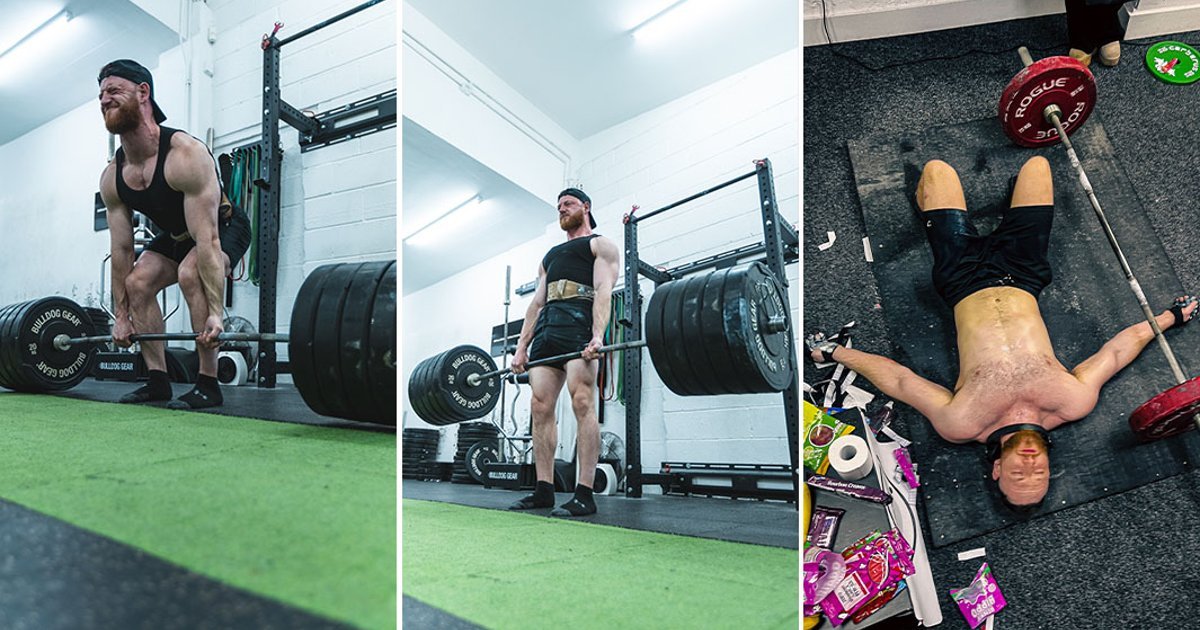
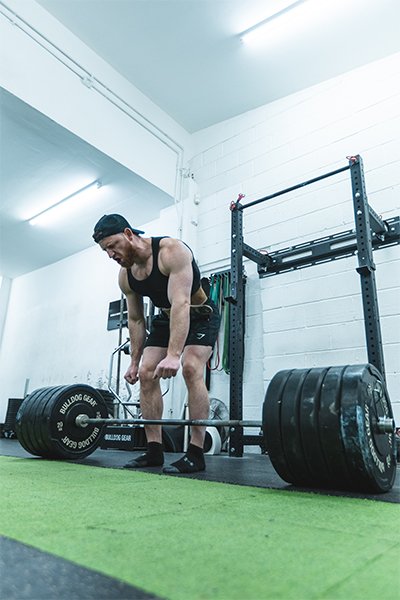
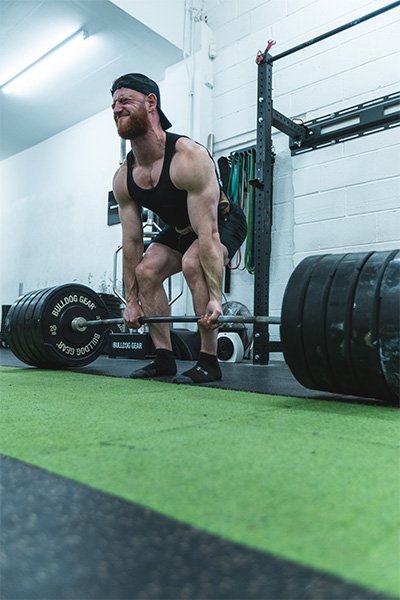
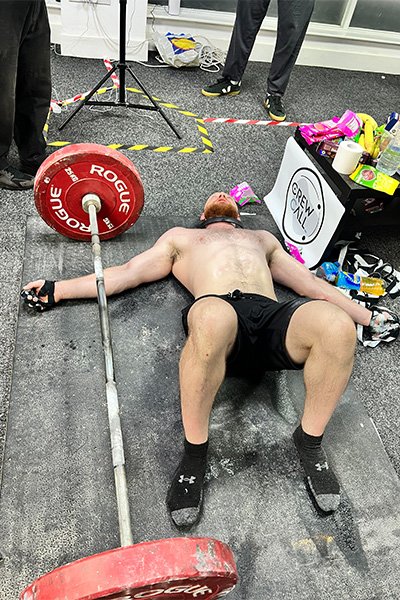
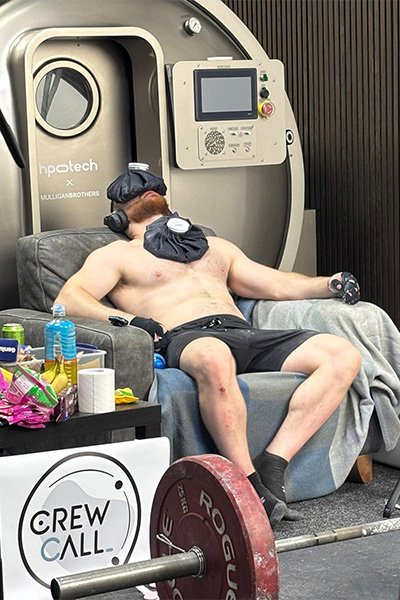
The public images show both exertion and exhaustion: heavy-looking repetitions in the gym, then moments spent lying on the floor or resting. Those scenes help explain why a 24-hour record is primarily an endurance undertaking. The final hours likely required difficult pacing decisions, although the precise schedule has not been published, so it would be wrong to narrate invented dramatic moments as if they were documented.
Big numbers are useful when they call attention to the right thing. In this case, a verified performance and a documented donation total can coexist with a more modest interpretation: no single marathon session is necessary to become stronger, healthier or more disciplined. Raising money, helping other people and training consistently are separate achievements. The unusual task connected them for one athlete on one specific day.
A four-week deadlift plan that borrows the discipline, not the risk
For an ordinary home gym or commercial weight room, copy the repeatable setup and patient progression rather than the 24-hour exposure. Train the hip hinge twice weekly with at least two days between heavy sessions. On Day A, perform three sets of five conventional or trap-bar deadlifts at a load that leaves roughly two good repetitions in reserve. Add one or two light back-off sets only if your technique and recovery support them.
On Day B, use two or three sets of eight Romanian deadlifts with a controlled lowering phase, followed by a row and a modest loaded carry. Start with manageable weights, keep the repetitions uniform and stop the session when quality visibly deteriorates. In week two, add a small amount of load or a repetition if all sets remain crisp. In week three, progress only one variable again, not load, reps and sets together.
During week four, make the schedule easier: use approximately half the usual hard sets while retaining comfortable technique practice. Record the bar load, repetitions, effort and any discomfort. A useful plan should improve your ability to repeat good training sessions over months. Someone recovering from an injury or dealing with an abdominal problem should adapt the programme with qualified medical guidance.
The record shows what long-term dedication can build in a remarkable individual. Your personal benchmark is simpler: finish each week ready to train well again, and let meaningful progress accumulate without needing a world-record clock.

Leg Day Shirts & Workout Gear
Leg-day gym shirts and workout gear for lifters who never skip squats, lunges and lower-body punishment.

Deadlift Purple Skull Gym Shirt for Powerlifters Heavy T-Shirt
Make gym days more fun with “Deadlift” style.

Patriotic Deadlift Statue Of Liberty Meme 4th Of T-Shirt
Make gym days more fun with “Patriotic Deadlift” style.

Deadlift Stone Skull Gym Pullover for Powerlifters, Har Hoodie
Keep it laid-back with a little “Deadlift” attitude.

Deadlift Flaming Skull Graphic , Hardcore Workout Pullo Hoodie
Keep it laid-back with a little “Deadlift” attitude.

Deadlift Bloody Skull Graphic , Hardcore Horror Gym Gif Hoodie
Stay casual and show some deadlift attitude with “Deadlift”.

Deadlift PR or Die Skull Graphic , Hardcore Halloween G T-Shirt
Bring “Deadlift” humor to your everyday gym style.


Gym Iron Before Honor Medieval Knight Muscle Shirt for Tank Top
Bring “Iron Before Honor Medieval Knight” humor to your next lifting session.

Day of the Dead Deadlift Gym – Día de los Muertos Calav Sticker
Give your everyday gear a playful “Day of the Dead Deadlift” twist.

Patriotic Eagle Deadlift Stars Stripes and Deadlifts Gy Sticker
Give your everyday gear a playful “Patriotic Eagle Deadlift” twist.