Advertising disclosure: This page includes affiliate product links that may earn us a commission, as well as products from our own store.
A kettlebell that covers dozens of loads sounds like an obvious upgrade over a row of fixed bells. The catch appears when the workout asks you to change weight. Bells of Steel’s Adjustable Competition Kettlebell offers small loading steps inside a familiar shell, but opening that shell takes time. Whether that trade works depends more on your session than on the headline number of settings.
This is a specification-based buying and programming guide, rather than a hands-on MMP review. The useful question is simple: do you need finer progression between sessions, or faster transitions inside them?
Small weight jumps help only when the available range fits
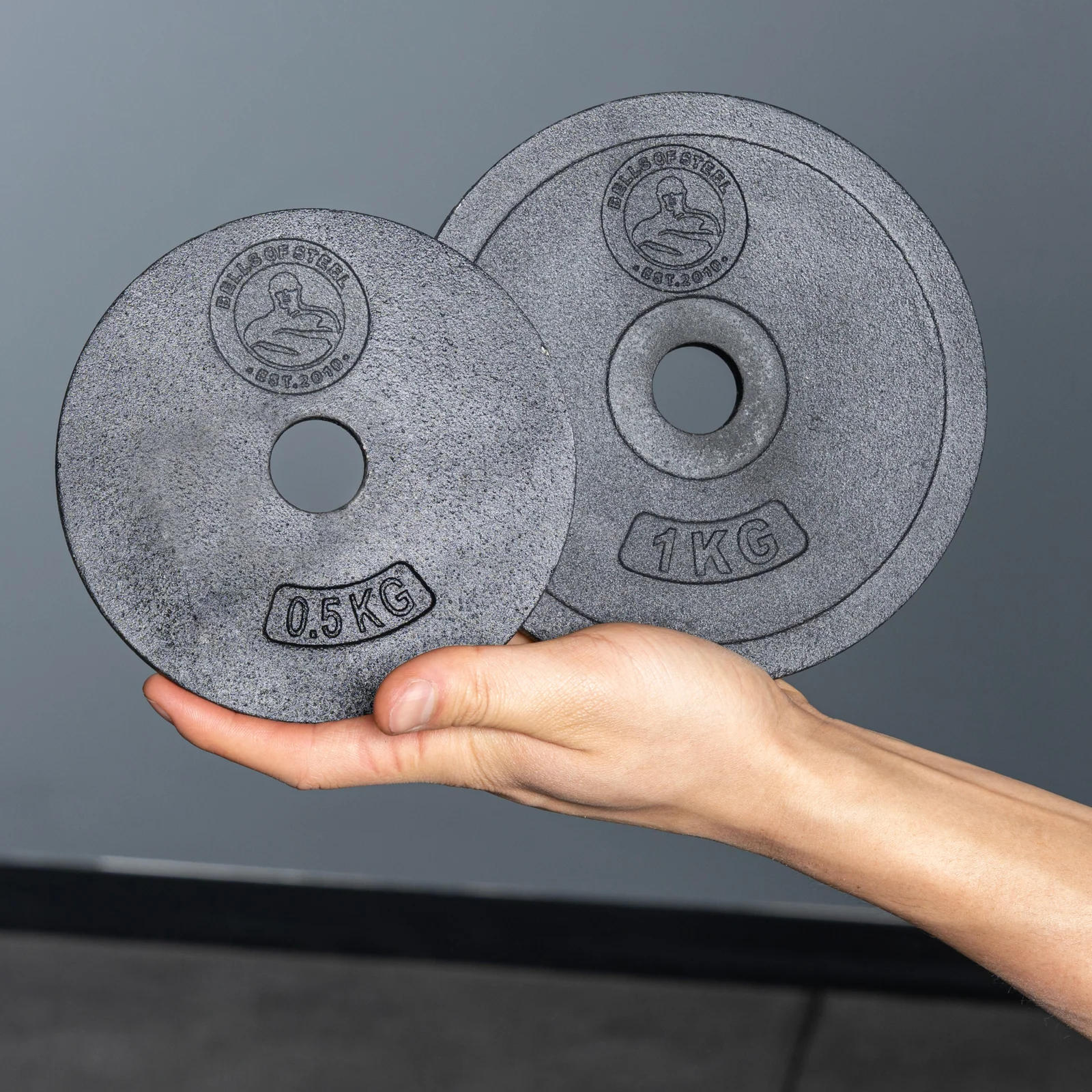
The standard Bells of Steel shell starts at 12kg. Its included plates take the lighter package to 20.5kg; the expansion package extends the range to 32kg. An optional plastic bottom lowers the starting point to 9kg. The full steel-bottom configuration is advertised with 41 settings in 0.5kg steps. Those are different purchase configurations, so check the actual package before treating the maximum as included.
The arithmetic explains the appeal. Moving from 16kg to 20kg adds 25% to the external load. Moving from 16kg to 16.5kg adds about 3.1%. Neither percentage predicts how many repetitions you will gain or lose, but the smaller jump offers a more manageable experiment when a press is close to your present limit.
That does not make half-kilo increases compulsory. If the existing weight still produces inconsistent repetitions, another plate merely makes those repetitions heavier. First decide what improvement means: the same repetitions with more control, an extra repetition within your chosen range, or a modest load increase while preserving the movement.
Minimum weight matters just as much as maximum weight. A bell suitable for your swing can still be too heavy for an unfamiliar overhead movement. Write down the lightest and heaviest loads you actually need for each exercise. If one falls outside the bell’s range, budget for a different implement or choose a different exercise. Forty-one possible settings do not help if none is the right starting setting.
The count itself is straightforward: a 20kg span divided into half-kilo intervals contains forty intervals and forty-one endpoints. It describes selectable loads, not forty-one separate bells available at once. Double-bell exercises still require two implements, and two people sharing one bell still need to coordinate their settings.
The adjustment time belongs in the workout plan
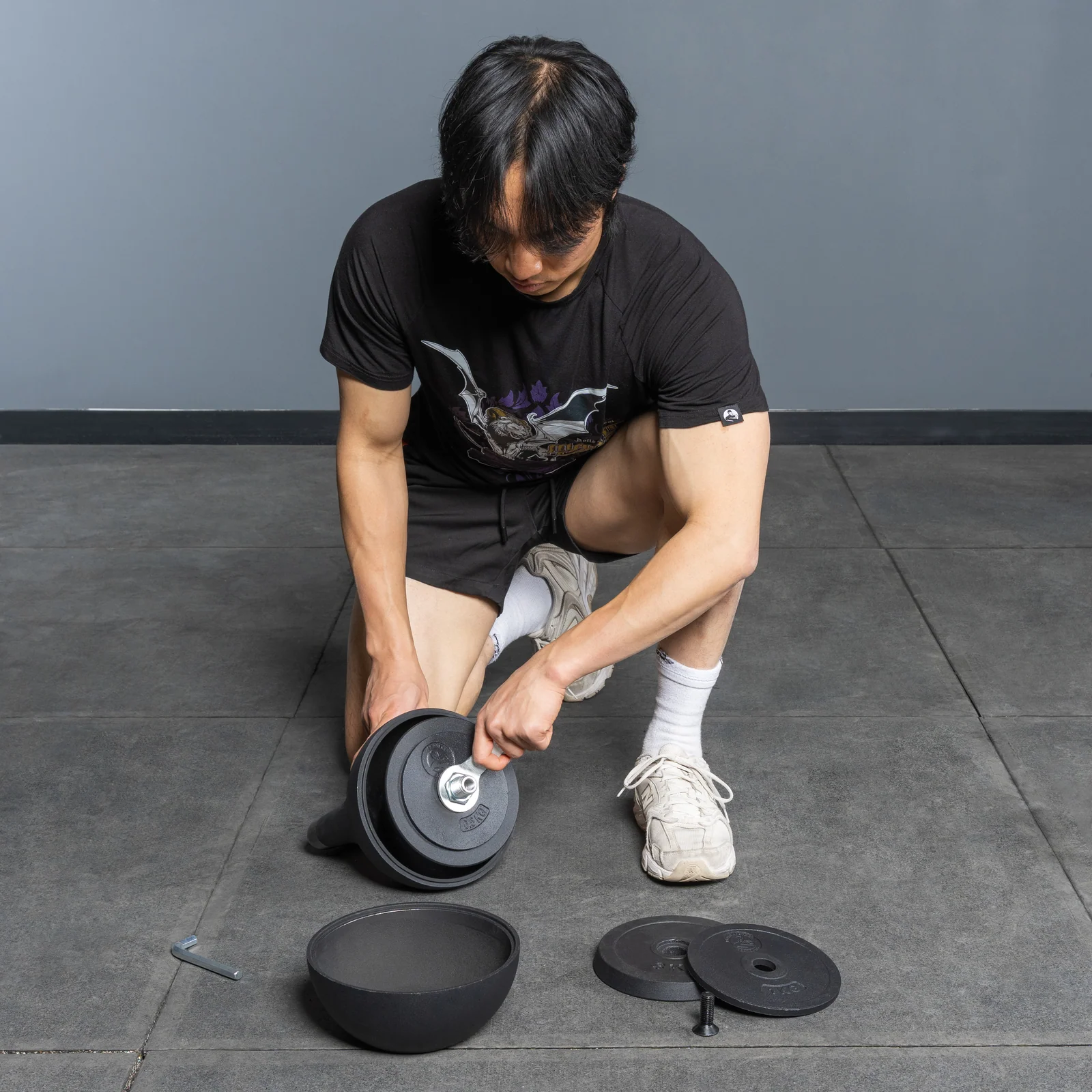
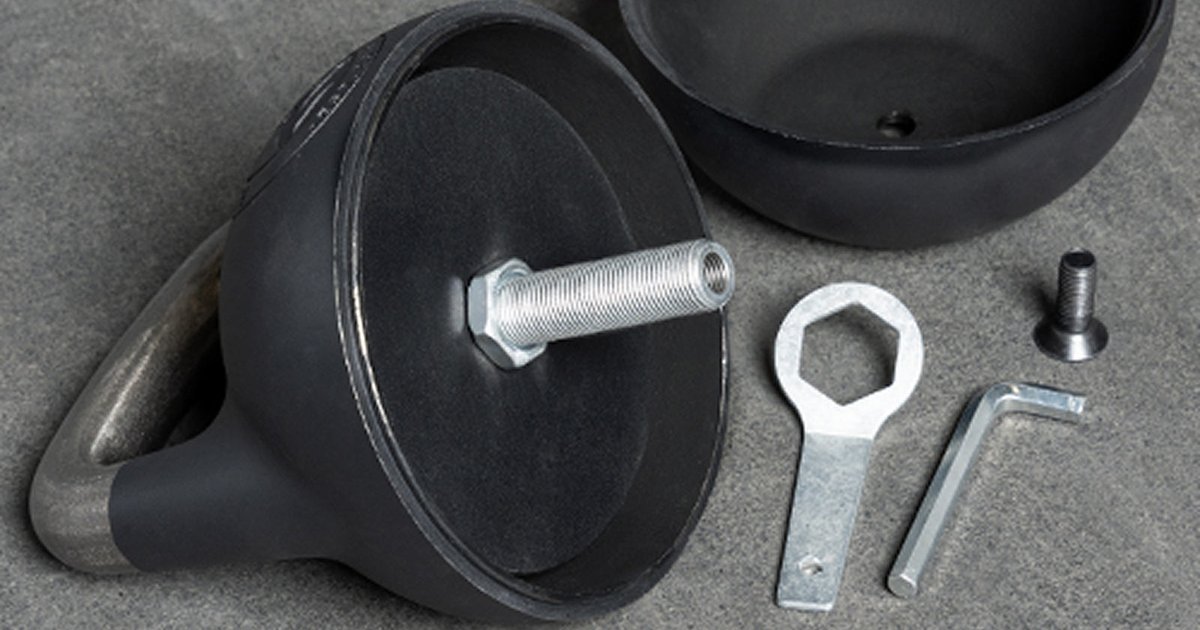
This bell changes weight by opening the shell, rearranging plates and securing the assembly with tools. Bells of Steel describes roughly one to two minutes per change. Treat that as a manufacturer estimate, not an MMP stopwatch result. Familiarity, plate combinations and careful checking can all affect the time you need.
Consider a hypothetical circuit that alternates a heavier swing and a lighter press for five rounds. Changing down and back up can require nine changes across the session. At the stated estimate, that represents nine to eighteen minutes of adjustment, separate from exercise and planned rest. It is not necessarily a bad workout, but it is a different workout from a continuous circuit.
A simpler arrangement completes the press work at one load, then changes once for the swings. You keep exercise-specific loading without spending every transition on the floor with a wrench. Another option uses one fixed bell for the frequently repeated movement and the adjustable for everything else.
Do not let a running timer turn assembly into a race. Set the bell down in a clear area, follow the current instructions for the exact model and check the closure before lifting. Keep loose plates and tools outside your movement space. If something shifts unexpectedly or a fastener will not secure properly, stop and resolve it before another set. The attraction of a small increment never outweighs a correctly assembled implement.
A constant shell is useful, but handle fit stays personal
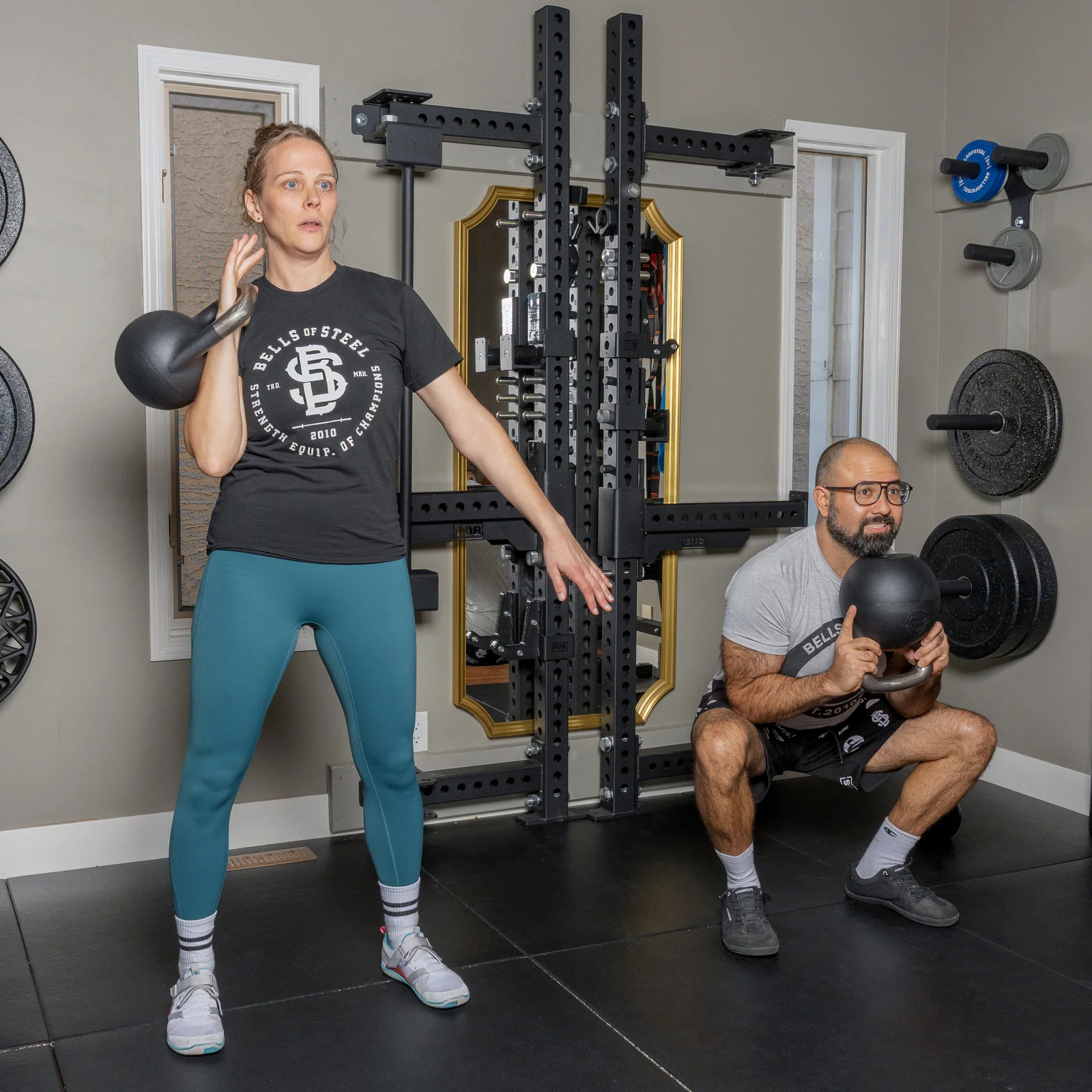
The Bells of Steel design keeps the same external shell as plates change, with a listed 35mm handle. That means selecting a lighter setting does not shrink the body resting against your forearm. This consistency is a genuine design distinction, though it does not establish that the bell will feel comfortable in everyone’s hand.
For a single-arm clean or press, consider the relationship between the handle opening, wrist position and where the shell meets your forearm. For a two-handed swing, consider whether both hands fit without forcing an awkward grip. These are separate questions. A comfortable single-hand hold does not automatically prove a comfortable two-hand hold.
If you can try the actual model, begin with a controlled hold and an appropriate light setting. Check clearance before moving into repetitions. Avoid judging comfort from a photograph of someone with different hand dimensions or a different technique. A shiny handle, a competition-style silhouette and a familiar weight label are incomplete information.
Space comparisons need the same realism. One adjustable bell can replace several stored weights, but the unused plates and tools still need somewhere to live. You also need room to set the bell down and adjust it. A pair doubles both the number of available implements and the equipment to store; it does not produce two training weights from one purchase. Measure the usable training area, not just the corner where a bell looks tidy.
Before ordering, check how replacement tools, fasteners and plates are supplied in your region. That practical question matters more than assuming every adjustable system uses interchangeable hardware. Parts that look similar in a product photograph may belong to entirely different mechanisms.
Build the session around one deliberate change
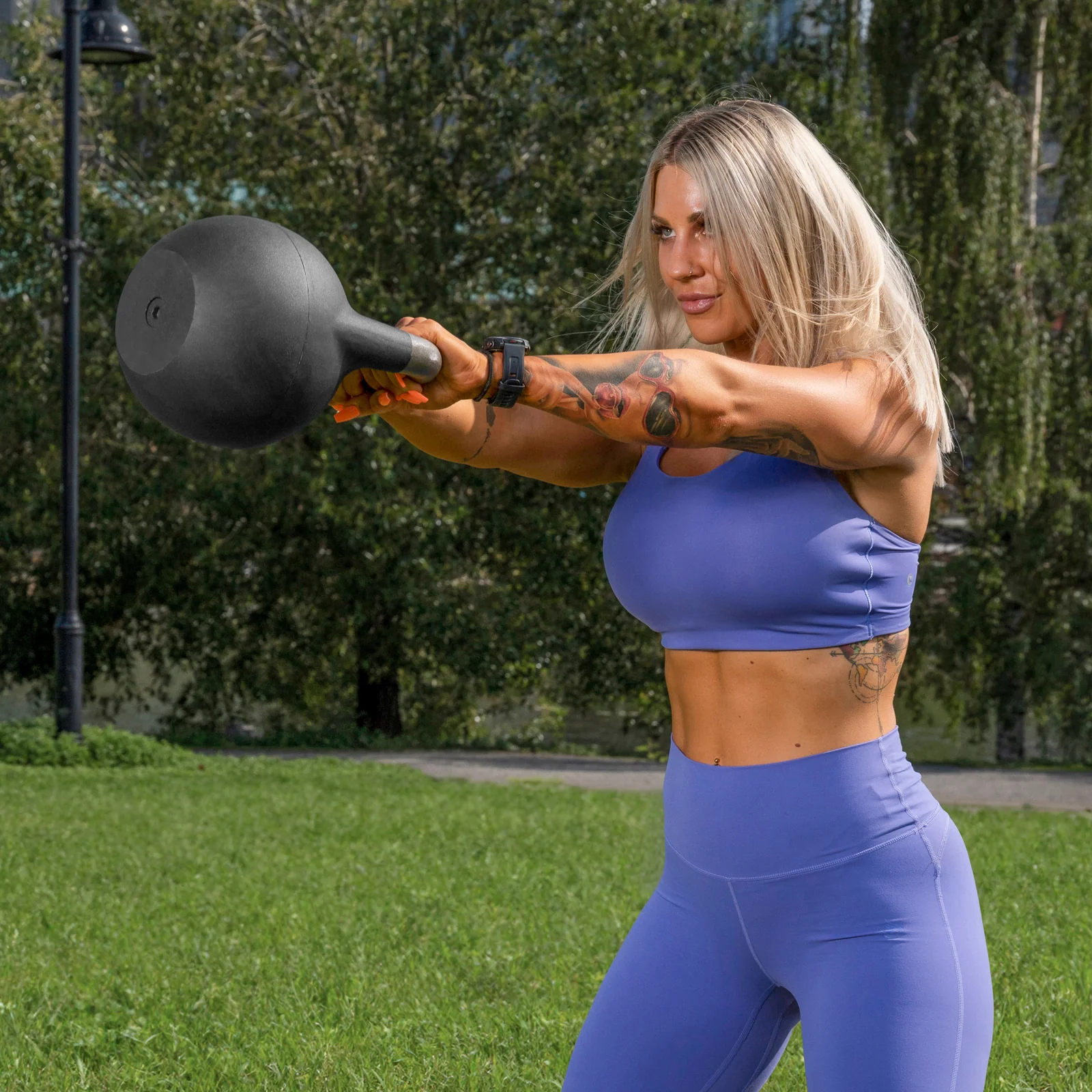
Here is an editorial example for someone already comfortable with basic kettlebell technique. It is an illustration of equipment organisation, not a routine demonstrated by an athlete or a promise of a particular physique. Choose loads you can control throughout, and leave clear space around the bell.
Start with unloaded movement practice, then use a light setting for several comfortable rehearsal repetitions. At your working press load, perform three sets of four to six controlled repetitions per side, resting enough to repeat your technique. Complete both sides before the next set. If an overhead press is unfamiliar, learn it separately rather than adding it to a timed challenge.
Next, change the weight once for lower-body work. Perform three sets of six to ten goblet squats, resting between sets. If that same load also suits your established swing technique, finish with four short sets of eight swings. If it does not, omit the swings or make another unhurried adjustment. The example is meant to reduce unnecessary changes, not make you accept an unsuitable load to protect a tidy schedule.
Record the setting, repetitions and any loss of control. At the next session, repeat the successful work before deciding whether more repetitions or another small plate is appropriate. Progress can also mean performing the same work with less rushing. Keep breathing, grip and movement quality under observation rather than treating exhaustion as the only score.
For other training days, dumbbells can cover rows and floor presses, while a bench and organised storage may suit a broader free-weight setup. Those are alternative tools and optional additions, not required accessories for this kettlebell. Buy around the exercises you will actually repeat.

Functional Fitness Shirts & Workout Gear
Functional-fitness shirts, tanks and workout gear for athletes who train strength, conditioning and everything in between.

Blue Macaroon Kettlebell – Whimsical Fitness Meme Vest Tank Top
Add some lifting attitude to training with “Blue Macaroon Kettlebell”.

Ice Cream Kettlebell Shirt – Sweet Gains Meme T-Shirt
Bring “Ice Cream Kettlebell” humor to your next gym day.

I Like Because I Love Eating Meme Shirt Foodie T-Shirt
Bring “I Like Exercise Because I Love Eating” humor to your next gym day.

Cheeseburger Kettlebell – Burger Swings Meme Decal for Sticker
Stick a little “Cheeseburger Kettlebell” humor on your favorite gear.

Gym Is My Happy Place Happy Kettlebell Emoji Hoodie
Show off your gym-girl humor in a laid-back “Gym Is My Happy Place” hoodie.

Heart Shaped Kettlebell Valentine’s Day Gym for Kettleb T-Shirt
Show some gym-day personality with “Heart Shaped Kettlebell Valentine’s Day”.

Pineapple Kettlebell – Kettlebell Meme Hooded Pullover Hoodie
Make your off-duty look more fun with “Pineapple Kettlebell”.

Pink Macaroon Kettlebell – Girly Kettlebell Meme Pullov T-Shirt
Keep things casual with a little “Pink Macaroon Kettlebell” attitude.

Watermelon Kettlebell – Fruit Themed Jumper Pullover T-Shirt
Keep things casual with a little “Watermelon Kettlebell” attitude.

Strawberry Kettlebell – Viral Kettlebell Meme Vest Musc Tank Top
Train hard, laugh a little, and rep “Strawberry Kettlebell”.
Compare mechanisms before comparing the headline maximum
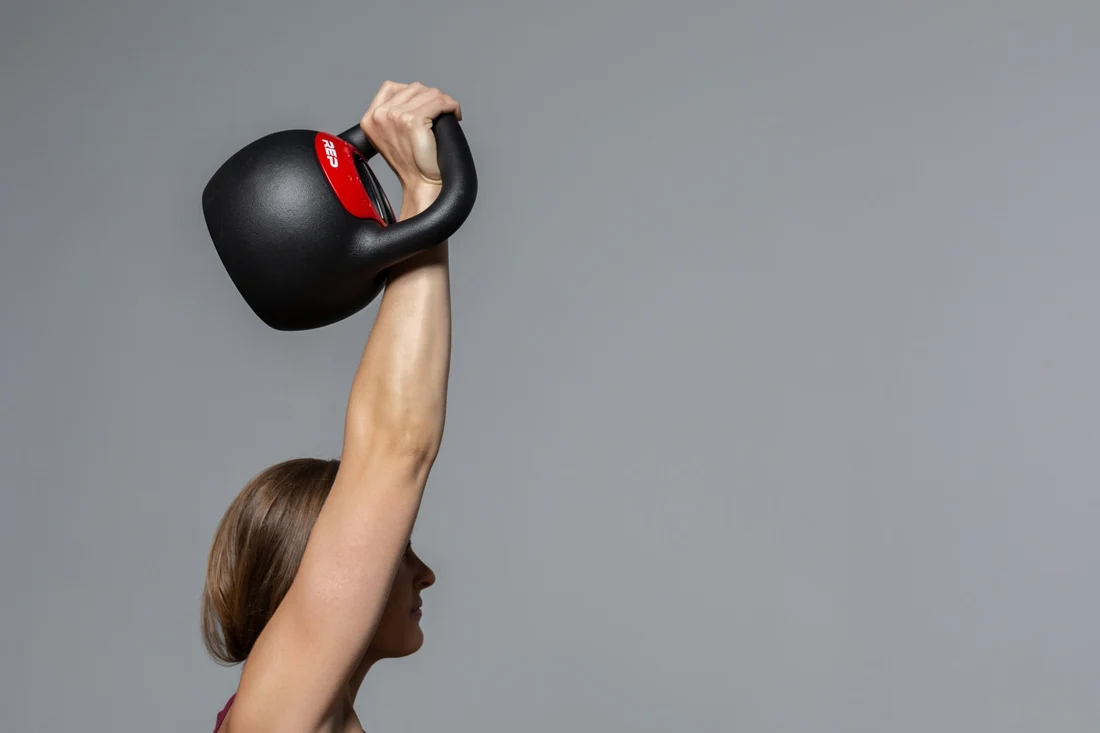
REP’s adjustable kettlebells use a push-and-twist selector. Its kilogram models cover 8–16kg or 16–24kg, each in five settings separated by 2kg. The speed-versus-increment trade therefore differs from the plate-loaded Bells of Steel design. REP also explicitly says its bell is not intended to be slammed or dropped. A quick selector is not permission to treat an adjustable like a throwing implement.
PowerBlock’s 18–35lb Pro model selects 18, 22, 26 or 35lb with a magnetic pin. The last step is substantially larger than the earlier steps. Compare every setting you need, not just the minimum and maximum printed on the box. Its manual also requires checking that the selector is fully engaged before lifting.
Ironmaster takes another route: its 22.5lb handle shares plates and locking screws with its Quick-Lock dumbbell system. The listed increments are 2.5lb, and the bell becomes taller as load increases. That can make sense for an existing owner, but the handle-only listing excludes plates and screws. A headline handle price is not the cost of a complete training setup.
Choose Bells of Steel when its available range, consistent shell and fine increments match your needs, and deliberate changes fit your schedule. Prefer a faster selector or separate fixed bells when rapid transitions matter more. Compare delivered package cost, included parts and the loads you need this month. Maximum capacity and the number of settings describe possibilities; a suitable starting load and a workable session decide whether those possibilities become useful.
Some product links may be affiliate links, which can support Mind Muscle Perfection at no additional cost to you.

Equipment Worth Exploring
Explore equipment, accessories and gear from our carefully selected range.


Cast Iron Kettlebells
Textured cast-iron kettlebells for swings, squats, carries, and full-body training.


Rubber Hex Dumbbells
Rubber-coated hex dumbbell pairs with a stable shape for home and commercial strength training.