Advertising disclosure: This page includes affiliate product links that may earn us a commission, as well as products from our own store.
Eight hundred and forty-seven push-ups in one hour would be extraordinary on its own. Add a 60-pound (27.21kg) pack, and the number becomes almost difficult to picture. That is the feat associated with Indian endurance athlete Rohtash Chaudhary in a July 16, 2026 account of a loaded push-up challenge at Jawaharlal Nehru Stadium in New Delhi.
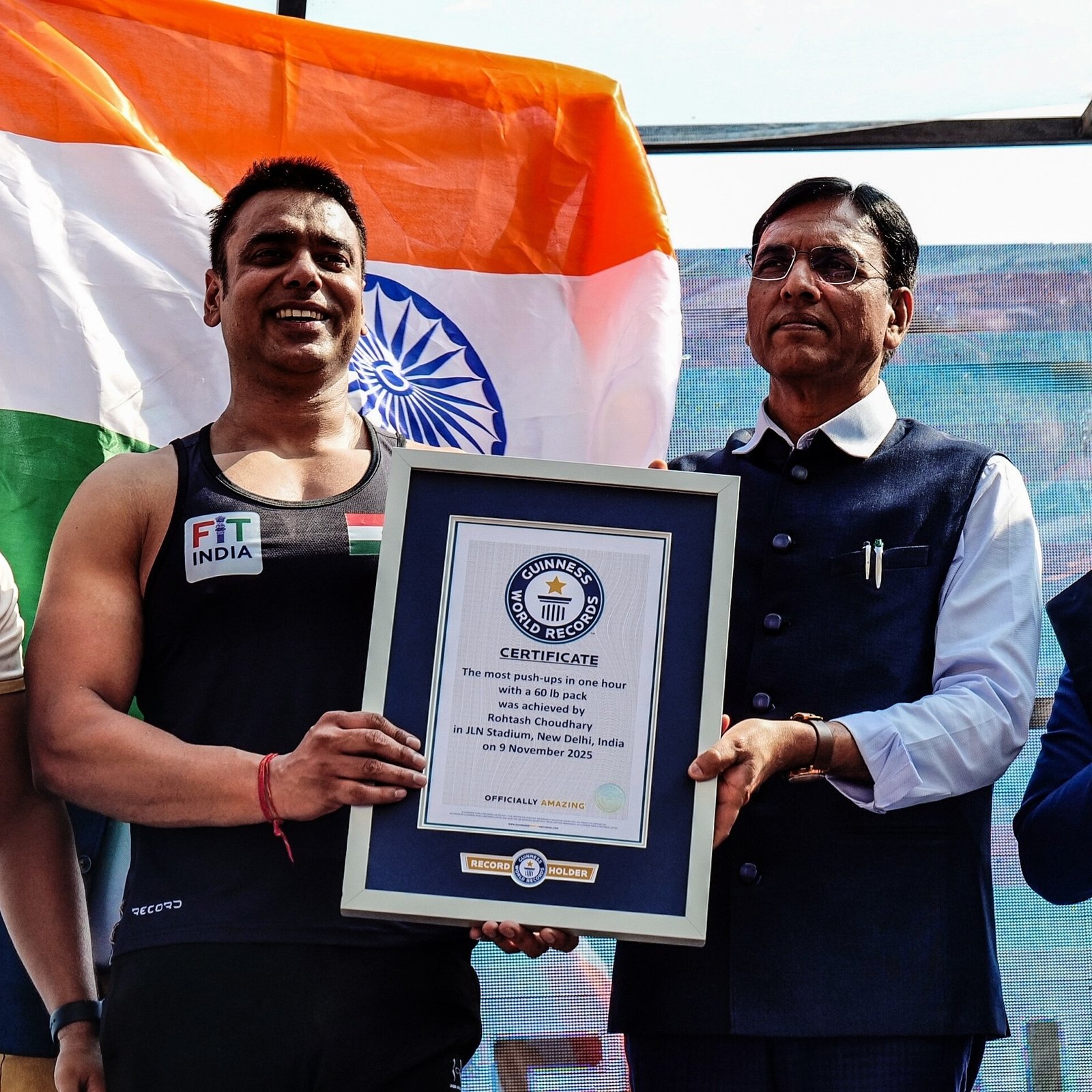
But one detail deserves attention: a separate live record-title listing displays 822 repetitions, dated November 9, 2025. Both figures concern Chaudhary and the same one-hour, 60-pound category. They should not be combined into an invented timeline. The difference helps illustrate why checking the category and record details matters as much as admiring an extraordinary performance.
The 847-rep report and the separate 822-rep listing
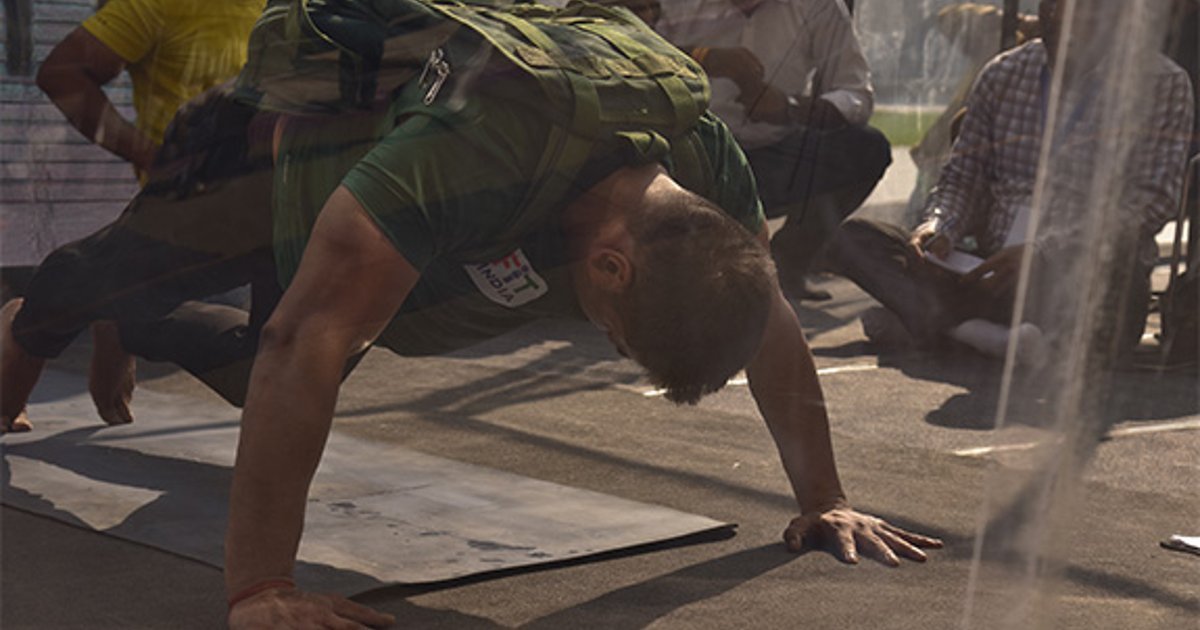
The 847-repetition account describes 41-year-old Chaudhary—known as the Push-up Man of India—wearing a 60-pound pack during a supervised challenge with spectators and an adjudicator present. A certificate presentation followed. This was a loaded, timed attempt, not a test of how many ordinary bodyweight push-ups someone can perform in one uninterrupted set.
Yet another public title listing for this exact one-hour, 60-pound category identifies Rohtash Choudhary, an alternative spelling of the surname, and gives 822 repetitions on November 9, 2025. The 25-repetition difference is not evidence of wrongdoing. It could reflect a lagging listing, revised documentation or another explanation; without verification, none should be stated as fact.
There is an additional wrinkle: photographs and reporting from November 2025 show Chaudhary receiving recognition for an 847-repetition achievement. A story published in July 2026 therefore does not establish that the attempt itself happened that July. At minimum, the available entries are inconsistent about the count and chronology. We can identify the discrepancy, but cannot responsibly resolve it by guessing which database entry was updated when.
The useful standard here is straightforward. Keep the date of an article separate from the date of the feat, distinguish a numerical claim from a title listing, and do not infer exact splits or judging outcomes from a celebration photograph. Anyone opening the separate listing should see that the unresolved 822 entry was addressed, not hidden.
Why the 60-pound backpack changes the exercise
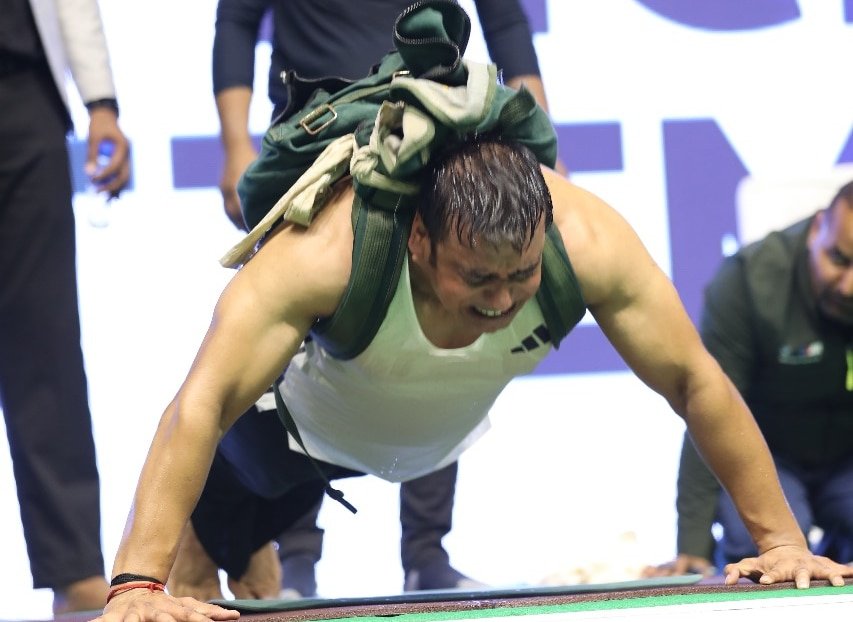
A standard push-up asks the chest, triceps and shoulders to move a substantial share of body mass while the trunk controls the rib cage and hips. A securely attached 27.21kg pack increases the demand, shifts the loading and creates a new stability problem. That does not mean the arms lift the entire body weight plus the entire pack vertically; feet continue to support part of the load, and body position changes the forces involved.
This is why a record with external weight cannot be compared directly with an unweighted push-up tally. Neither a single exceptionally heavy weighted repetition nor a very large unweighted total demonstrates the same one-hour skill. The precise load, duration and accepted repetition standard are essential details.
Backpack movement also matters. A loose load that slides toward the neck or lower back can interrupt balance and encourage compensations. As the chest and triceps fatigue, hips may sag or repetitions may grow progressively shorter. An hour-long number alone cannot show whether an athlete maintained the same quality throughout.
For ordinary training, the first objective is several sets of controlled bodyweight push-ups with repeatable depth and alignment. Only then consider small additional resistance, preferably in a securely fitted vest rather than an unstable bag. Shoulder, wrist or back discomfort is a reason to adapt the task, not push through for a dramatic number.

Equipment Worth Exploring
Explore equipment, accessories and gear from our carefully selected range.


Power Tower
Freestanding pull-up and dip station with adjustable handles for bodyweight training.


Rubber Hex Dumbbells
Rubber-coated hex dumbbell pairs with a stable shape for home and commercial strength training.

FID Bench MAX
Adjustable bench offering flat, incline, and decline positions + adjustable headrest.

Leather Wrist Grips
Padded leather lifting grips help support the hands and wrists on heavy pulling exercises.

The math behind 847 repetitions in sixty minutes
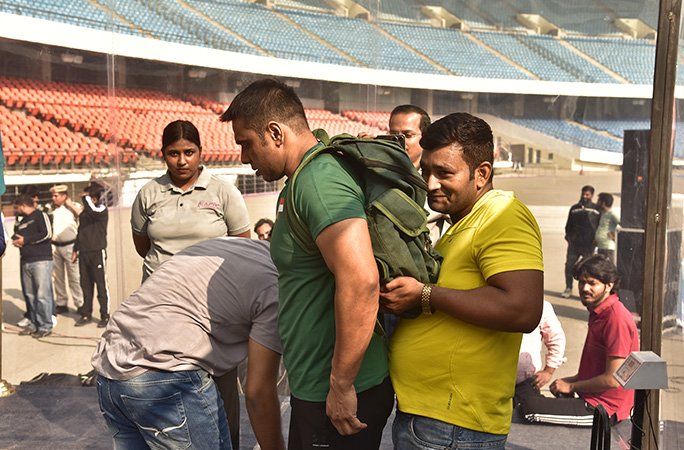
Divide 847 by 60 and the result is about 14.1 credited repetitions per minute. If spread completely evenly, that is a rep every 4.25 seconds. For 822, the comparable average is 13.7 repetitions per minute, or one every 4.38 seconds. These are whole-hour averages, not evidence of a metronomic cadence or of continuously moving without rest.
An athlete could accumulate repetitions in short clusters with brief breaks, then adjust the rests as fatigue rises. Without minute-by-minute splits, the number does not reveal the actual set scheme. Claiming that Chaudhary performed fifteen repetitions every minute, for example, would be making up a programme.
For a simple illustration, fifteen accepted reps every minute would reach 900 after an hour; twelve per minute would reach 720. The reported 847 lies between those examples. The real endurance challenge is maintaining effective output after the early easy minutes have passed, rather than posting one heroic opening set.
The lesson for a normal lifter is to record quality repetitions, set size and rest time together. Four sets of ten clean push-ups are more comparable with another session at the same elevation and depth than with an exhausting forty-rep set where later repetitions barely descend. Progress tracking works only when the task stays consistent.
Imagine repeating a ten-rep set with sixty seconds between sets, then doubling rest time in the next workout. A higher total may still be progress, but it is not an apples-to-apples performance comparison. Similarly, changing the height of an incline alters the pressing load. For meaningful personal records, keep a simple log of hand elevation, footwear, load, range and rest; otherwise the impressive count has little training context.
Form, fatigue and the limits of push-up research
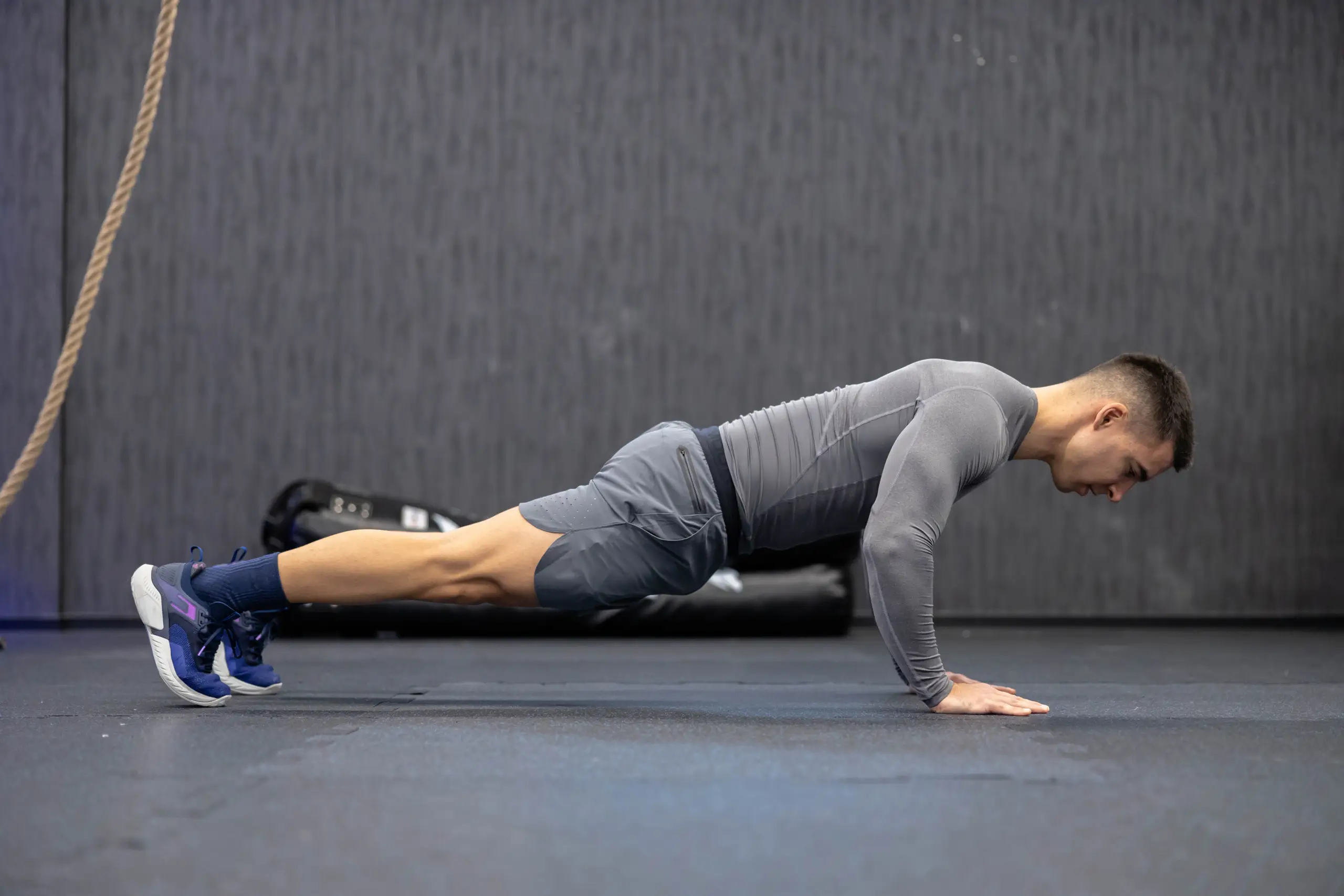
Hand spacing, hand elevation, load and depth can all change push-up difficulty. Placing hands on a stable bench generally makes the movement easier for many beginners. Lowering the elevation, slowing the descent or adding resistance can make it harder, but these changes are not interchangeable. Individual shoulder and wrist tolerance matters.
Research comparing push-up variants examines different muscle activation and movement demands. An acute muscle-activity measurement is not proof that one variation produces superior muscle growth over months, and an endurance record does not demonstrate the best hypertrophy programme. Do not confuse an impressive number or a single laboratory outcome with a universal training rule.
For repeatable technique, plant the palms comfortably, hold the trunk relatively straight from shoulders to ankles and lower under control. Use a depth that is both pain-free and consistent. Press back to the intended top position without the lower back collapsing, the head reaching forward or the shoulders suddenly shifting into an uncomfortable line.
Stop a set when technique deteriorates dramatically. You need not imitate a record athlete’s tolerance for fatigue to improve pressing endurance. Balance push-up practice with rows and other pulling work, leg training, adequate food and recovery. A well-rounded routine usually delivers more value than a single daily attempt to beat yesterday’s maximum.
A four-week push-up plan inspired by the lesson—not Rohtash’s routine
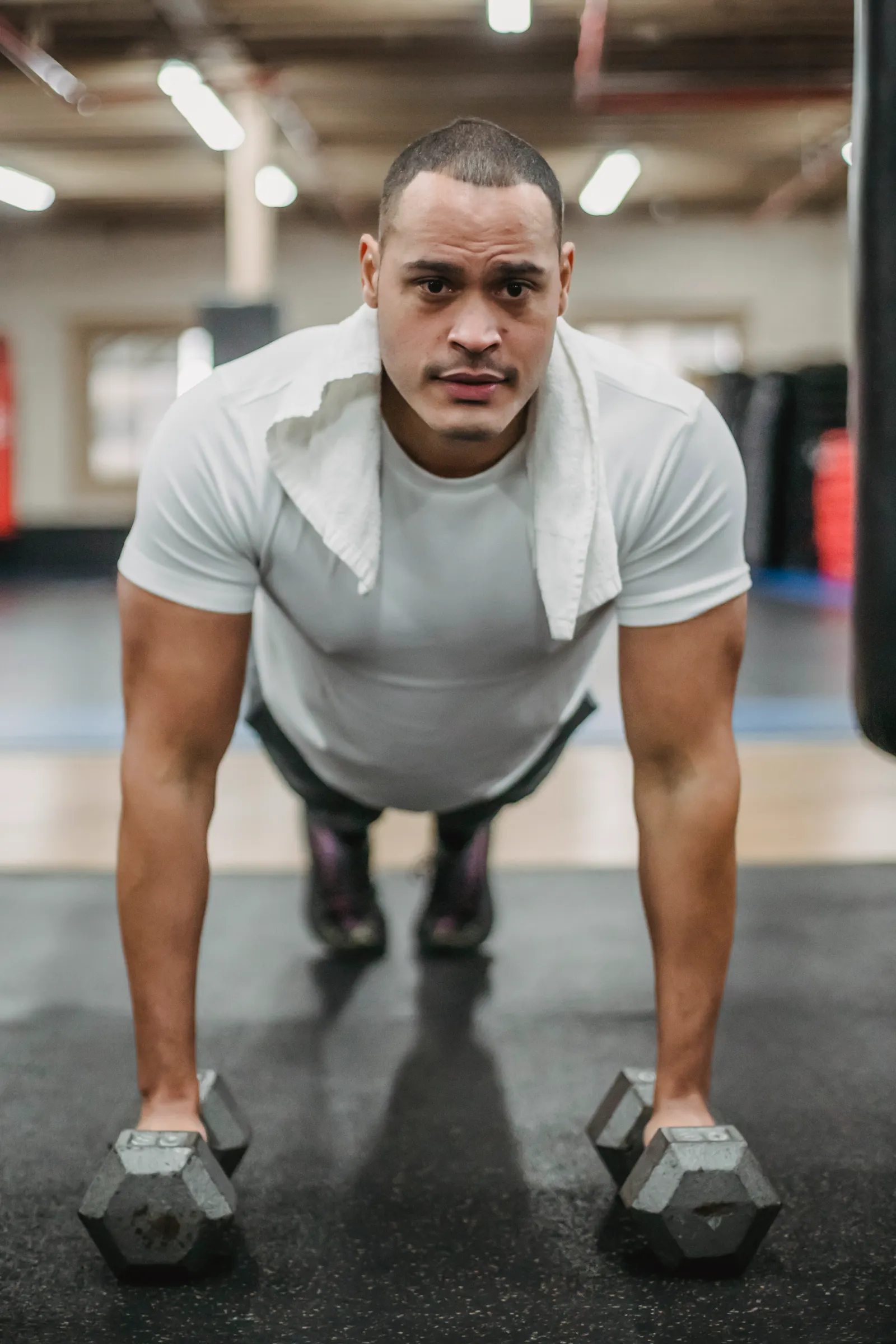
This is an editorial example for a healthy beginner or intermediate lifter, not Chaudhary’s personal programme and not a route to a weighted sixty-minute record. Start with regular floor push-ups or an elevated-hand version that allows steady reps. Train twice weekly, or three times if recovery permits, leaving at least a day between hard pressing sessions. Adapt the plan with a professional if returning from an injury.
Week 1: find repeatable sets. Use a fixed hand height and perform four sets of six to eight controlled repetitions. Keep roughly two or three solid repetitions in reserve rather than grinding until the hips sag. Record the height, rest duration and completed reps so the next workout is meaningfully comparable.
Week 2: add a little volume. If every set was comfortable, add one repetition to some sets. Do not increase sets, depth and load simultaneously. Four sets of eight total 32 reps; five sets of eight are 40, already a 25% jump. A smaller change is often more sustainable.
Week 3: earn a harder version. Try slightly lowering the hand elevation, adding a controlled lowering phase or—in an experienced floor-push-up lifter—using a very small external load. Pick only one change and maintain the same quality standard. If repetitions become ragged, return to the previous setup.
Week 4: recover and compare. Ease off early if soreness has accumulated. Later, repeat the Week 1 setup and compare clean repetitions and perceived effort. An unchanged repetition count with smoother form may still represent meaningful progress. Joint irritation, by contrast, is a cue to reduce loading or seek advice.
Progression also includes knowing when not to progress. If normal everyday pressing is becoming painful or heavy soreness never settles, remove the added challenge and focus on a movement that can be performed comfortably. A good session should leave enough capacity for the rest of the training week. Consistency over months is more important than having a spectacular daily number to share.
The feat deserves admiration, but it is an extreme specialist challenge. The 847-versus-822 mismatch also illustrates a broader principle: accurate fitness writing separates an exceptional performance claim from fully reconciled evidence. Take the consistency and discipline, build from your present ability, and leave the loaded sixty-minute world-record attempt to specialists.

Calisthenics Shirts & Street Workout Gear
Calisthenics and bodyweight-training gear for pull-ups, dips, handstands and street-workout athletes.


Big Dip Energy Hooded Pullover for Calisthenics Dips Fa Hoodie
Show off your lifting humor in a laid-back “Big Dip Energy” hoodie.

Be Stronger Than Your Excuses Funny Gym
Bring “Be Stronger Than Your Excuses” humor to your everyday gym style.

Calisthenics Heartbeat Tank
Add some lifting attitude to training with “Calisthenics Heartbeat”.

Calisthenics Evolution Sticker
Stick a little “Calisthenics Evolution” humor on your favorite gear.

Turn Off Gravity Funny Calisthenics Gym Decal for Water Sticker
Give your everyday gear a playful “Turn Off Gravity Funny Calisthenics” twist.

Human Flag Calisthenics Hooded Workout Gymbro Pullover Hoodie
Make your off-duty look more fun with “Human Flag”.

Calisthenics Hanging Out Crewneck
Bring “Calisthenics Is My Idea of Hanging Out” humor to your everyday gym style.