Advertising disclosure: This page includes affiliate product links that may earn us a commission, as well as products from our own store.
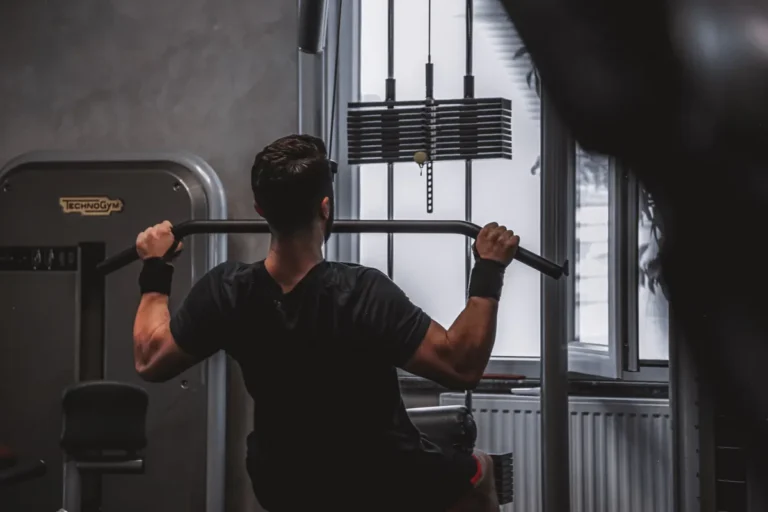
A maximum pull-up set answers a useful question: how many repetitions can you do now? It is not the only way to practise getting better. Misty Posey’s approach puts repeated, manageable work on the bar at the centre of the process, with different starting options for people who cannot yet complete a repetition.
The method was publicly described in 2016 and appeared again in documented Marine training in February 2026. It is an established coaching approach, not a newly discovered shortcut. The useful question is how to separate productive practice from repeatedly testing yourself—and how to evaluate a change without promising anyone a particular result.
Understand the purpose of a practice set
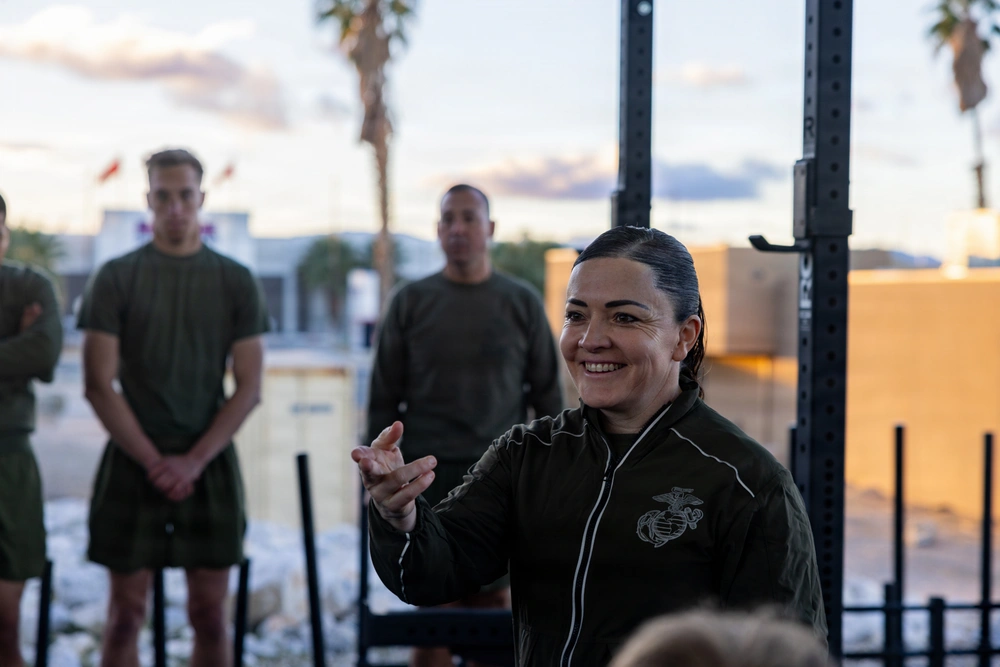
Posey’s approach for people who already have pull-ups involves practising several days a week while stopping short of failure. For beginners, the described options include partner-assisted repetitions, negatives, jumping pull-ups and partial-range repetitions. These are starting routes, not interchangeable scores on a test.
That distinction matters because the goal of a practice set is different from the goal of a maximum attempt. In practice, you want an effort you can repeat with the intended movement. A test asks how far performance can go on that occasion. Mixing the two without noticing can turn every encounter with the bar into another exhausting contest.
Before starting, decide what the set is for. If it is practice, choose an amount of work that leaves a clear margin rather than searching for the last possible repetition. Do not call a set easy merely because the repetition count looks small. A few repetitions may be near someone’s limit and comfortably below another person’s.
Keep the description simple: movement version, repetitions, whether help was used, and how the set ended. Those details make the work understandable. They also stop a new personal best achieved with a different movement or assistance from being mistaken for a like-for-like improvement.
There is no requirement to adopt military fitness-test scoring to use this distinction. Define the movement you are practising for your own goal and use that definition consistently. This article does not set out current Marine test rules or claim that a particular civilian practice plan meets them.
Choose a starting point you can actually describe
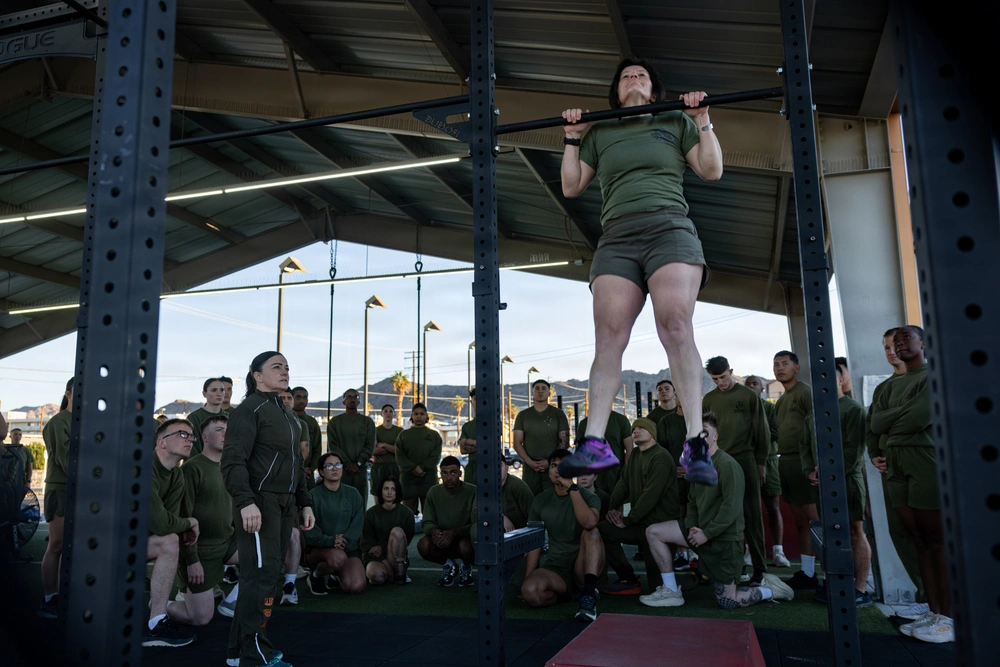
A first pull-up and a larger maximum set are different problems. If there is not yet an independent repetition to practise, simply prescribing several ordinary pull-ups leaves out the step that matters. Begin by identifying what you can currently do under suitable supervision and with an appropriate setup.
For partner-assisted work, record that help was provided rather than assigning an invented equivalent in unassisted repetitions. The amount of help can change between partners and between attempts. A useful observation might be that the same partner provided less assistance in a comparable movement; that is still different from completing the repetition independently.
For partial repetitions, note the part of the movement being practised. For negatives, distinguish lowering work from complete up-and-down repetitions. These labels preserve useful information without suggesting that every variation has the same demands or should be repeated at the same frequency.
Do not read frequent practice as permission to pile unfamiliar lowering work onto an already demanding programme. Choose a manageable starting exposure, allow for recovery and adjust if performance deteriorates. Stop for pain rather than treating it as evidence that the method is working; persistent symptoms deserve appropriate assessment.
For illustration, a novice’s note could say: assisted version, same setup, help present throughout. A more experienced lifter’s entry might say: independent repetitions, comfortable stopping point, no extra attempt. These are examples of useful records, not Posey’s exact session prescription or a universal progression schedule.
Stopping short of failure is a choice, not a magic formula
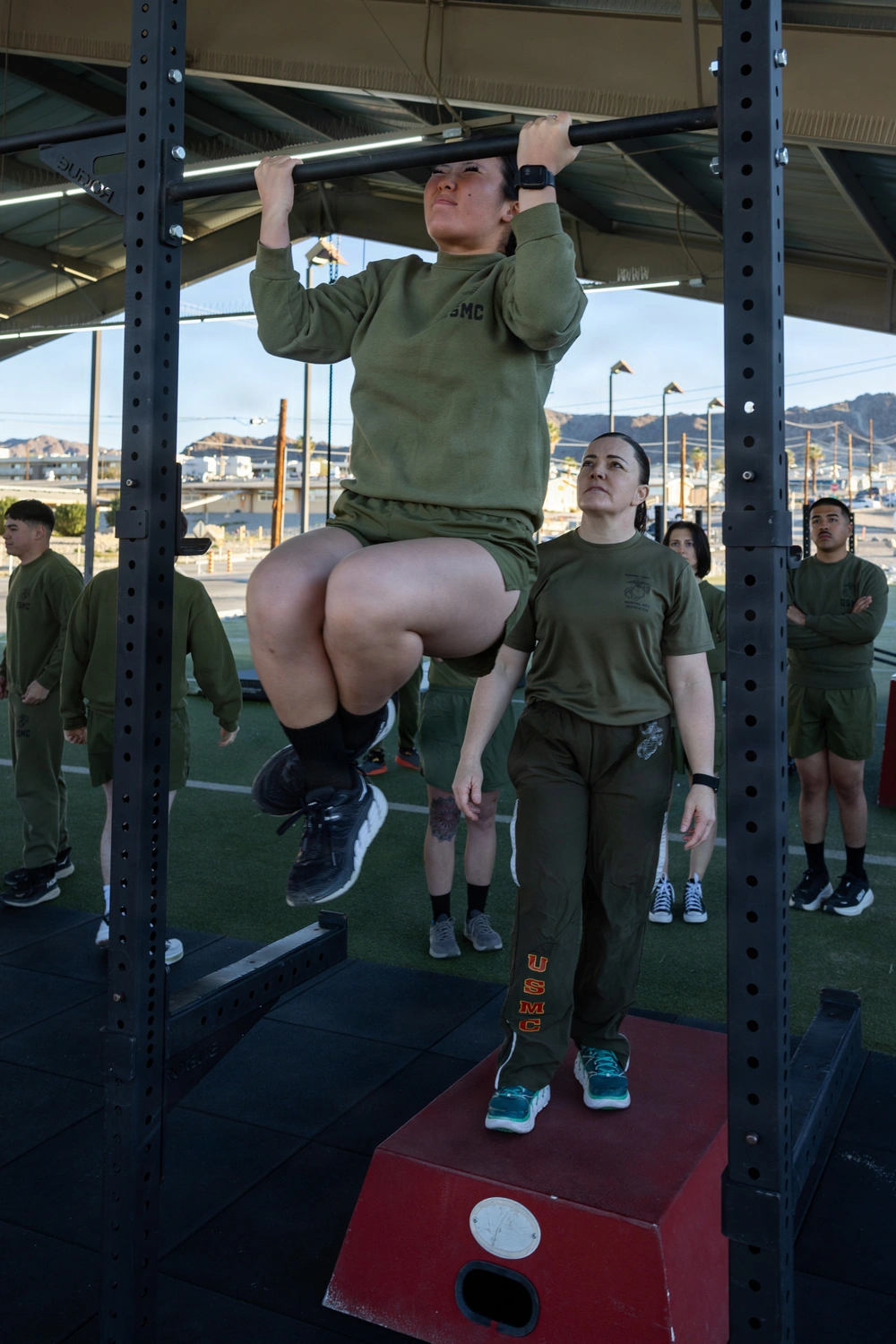
Submaximal practice is easy to misunderstand as barely trying. The relevant distinction is whether you deliberately stop before the next repetition becomes impossible. The effort can still be meaningful, and the margin should suit the person’s current ability rather than a fixed number borrowed from someone else’s programme.
A 2022 meta-analysis of 15 studies in young adults found no significant overall difference in strength or hypertrophy between failure and nonfailure resistance training. A trained-participant subgroup favoured failure for hypertrophy. That is a more qualified finding than either “failure is essential” or “failure never helps.”
The review did not directly test Posey’s pull-up method against every other approach. It also does not establish the best stopping point for an individual. Use it to question the assumption that every set must reach the limit, while keeping the specific coaching method separate from the broader evidence.
For practice, decide the stopping rule before gripping the bar. If you intended a manageable set but the movement becomes a struggle, record what happened and reconsider the next exposure. Adding an unplanned finish is still extra work even when it happens away from a formal training session.
The bodyweight designs below connect to pull-ups, hanging out at the bar and building calisthenics skills. Their slogans are training humour, not instructions to ignore fatigue or to turn every set into a challenge.

Calisthenics Shirts & Street Workout Gear
Calisthenics and bodyweight-training gear for pull-ups, dips, handstands and street-workout athletes.


Always Pull Yourself Up Funny Gym T
Heavy lifts, good laughs, and a little “Always Pull Yourself Up” energy.

Pullups Heartbeat Tank
Train hard, laugh a little, and rep “Calisthenics Pullups Heartbeat”.


Funny Calisthenics Gym Crewneck Pullover Sweater for Bo T-Shirt
Add a playful “Calisthenics” touch to your casual rotation.


Funny Calisthenics Gym Hooded Pullover for Bodyweight W Hoodie
Stay casual and show some lifting attitude with “Calisthenics”.

Be Stronger Than Your Excuses – Motivational T-Shirt
Rep “Be Stronger Than Your Excuses” humor in and out of the gym.
Frequency should help organize the work you can recover from
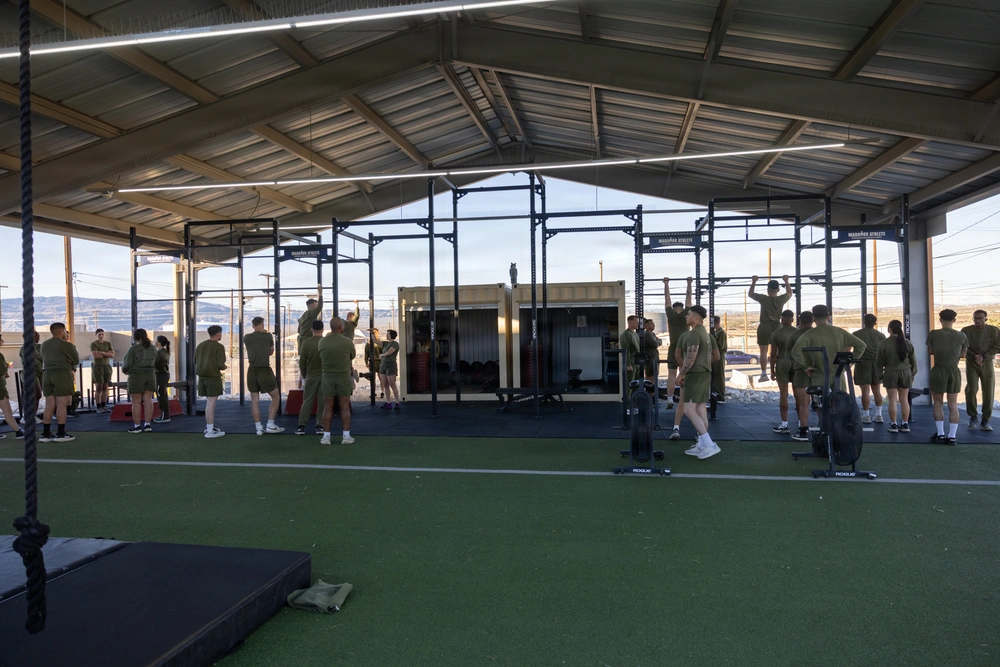
More opportunities to practise can make a movement easier to fit into the week. They can also conceal how much work you are accumulating. Several small sessions should appear in the same training record as the larger ones, especially when rows, pulldowns and other pulling exercises are already present.
A 2018 strength meta-analysis included 22 studies. Higher frequency was associated with greater gains overall, but there was no significant frequency effect in the volume-equated subgroup. Much of the available evidence came from untrained participants. More days alone should not be sold as a guaranteed strength advantage.
A separate hypertrophy meta-analysis covering 25 studies likewise found no significant difference between higher and lower frequency when training volume was equated. Muscle growth and maximum pull-up performance are different outcomes. These findings help frame frequency as a way to arrange work, rather than proof that a particular daily routine is superior.
Map a normal week before adding practice. Include the pulling you already do, the days you can use a suitable bar and the activities that may affect recovery. An additional short session should have a reason to exist; it need not be added simply because a doorway or rack is convenient.
Consider the arithmetic in a hypothetical log: three sets of two repetitions on each of four days add up to twenty-four repetitions. Four days does not describe the dose without the sets and repetitions, and the total alone still leaves out effort and assistance. This is a bookkeeping example, not a recommended starting dose. Use it to see why every short exposure belongs in the weekly record.
Equipment can make access easier, but it does not settle the programme. Bars, racks and rings provide different movement options, while grip accessories and loading equipment change the task further. The options below are tools to compare for your own bodyweight setup, not required purchases for Posey’s method or equipment she has endorsed.

Equipment Worth Exploring
Explore equipment, accessories and gear from our carefully selected range.


Power Tower
Freestanding pull-up and dip station with adjustable handles for bodyweight training.


Foldable Wall Rack
Wall-mounted folding squat rack designed to save floor space between workouts.


Retest under comparable conditions and keep the useful details
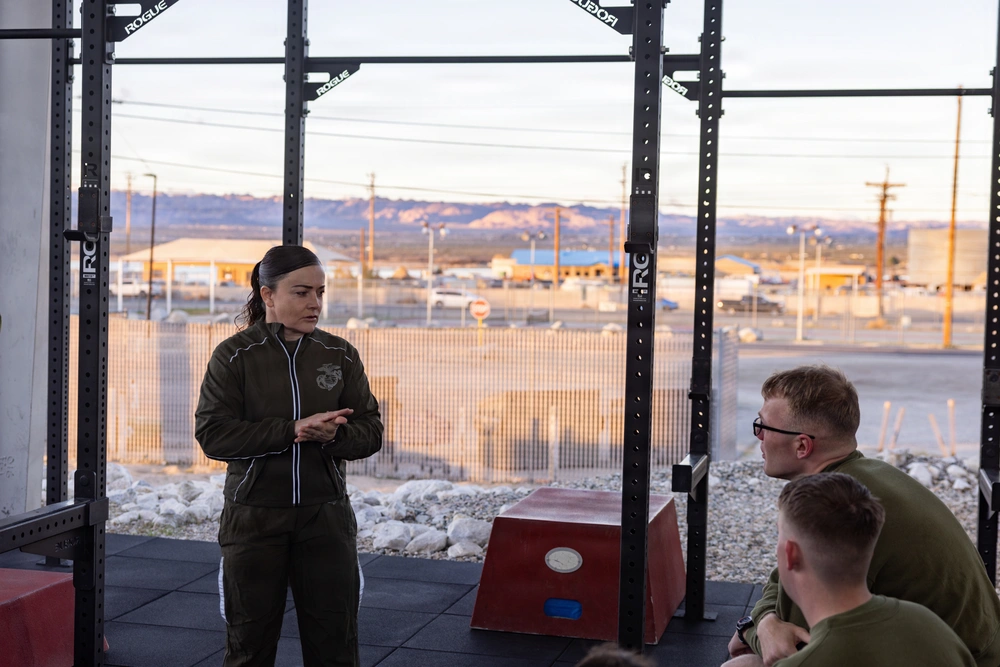
A larger repetition total is easiest to interpret when the conditions stay recognizable. Record the bar or implement, grip, movement definition, assistance and whether the set was a practice effort or a test. Include any change that would explain why the new number might not be directly comparable.
For a maximum-set comparison, avoid presenting a tired attempt after a demanding workout as equivalent to a fresh attempt on another day. You do not need perfect laboratory conditions, but you do need enough context to understand the result. Testing more frequently does not automatically make the information more useful.
Review the pattern across several exposures. Are the planned practice repetitions staying manageable? Is assistance becoming more consistent? Are you repeatedly adding work beyond the plan? Those observations can inform the next decision even before a maximum changes.
If progress stalls, check what actually changed before adding more days or repetitions. A different grip, extra pulling elsewhere in the week or a run of harder sets may matter to the comparison. Keep the first adjustment small enough that you can still tell what you are evaluating.
Posey’s approach makes a useful distinction visible: practising a movement and proving your maximum are different jobs. Choose the starting version honestly, count all the work and preserve a clear record. A promised jump from zero to twenty is less useful than a progression you can explain and repeat.