Advertising disclosure: This page includes affiliate product links that may earn us a commission, as well as products from our own store.
A safety squat bar good morning is a loaded hip hinge, not a miniature squat. The padded yoke and forward handles spare you the awkward arm position of a straight-bar good morning, yet the camber can make a small change in torso angle feel surprisingly demanding. This guide shows how to choose a usable rack height, create a consistent hinge, avoid turning fatigue into spinal movement, compare alternatives and progress the lift over four weeks. It is a technique and programming guide, not a claim that one specialty bar guarantees injury prevention or superior muscle growth.
What the padded yoke and camber actually change
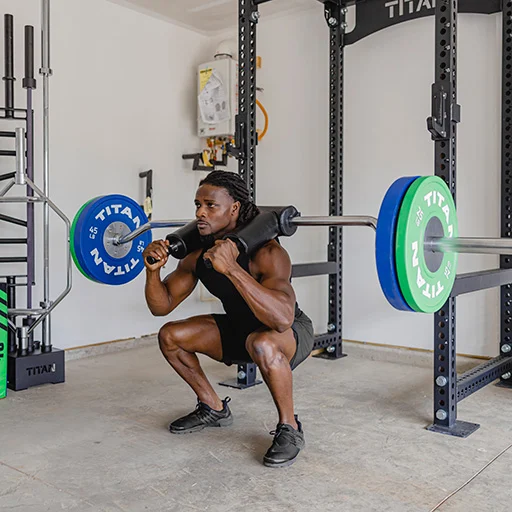
A safety squat bar rests across the upper back through a padded shoulder yoke, while its handles project forward. That arrangement avoids the shoulder external rotation usually required to secure a straight bar. It does not make the loaded hinge weightless or remove the need to brace: resistance still sits above the torso as the hips move backward. With a forward-displaced load, the bar may feel more eager to pull the upper back into flexion. That is a reason to start lighter than expected, not a reason to chase a dramatic torso angle.
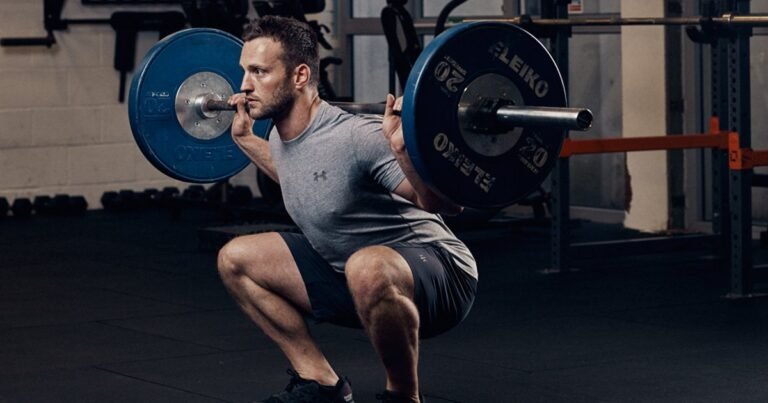
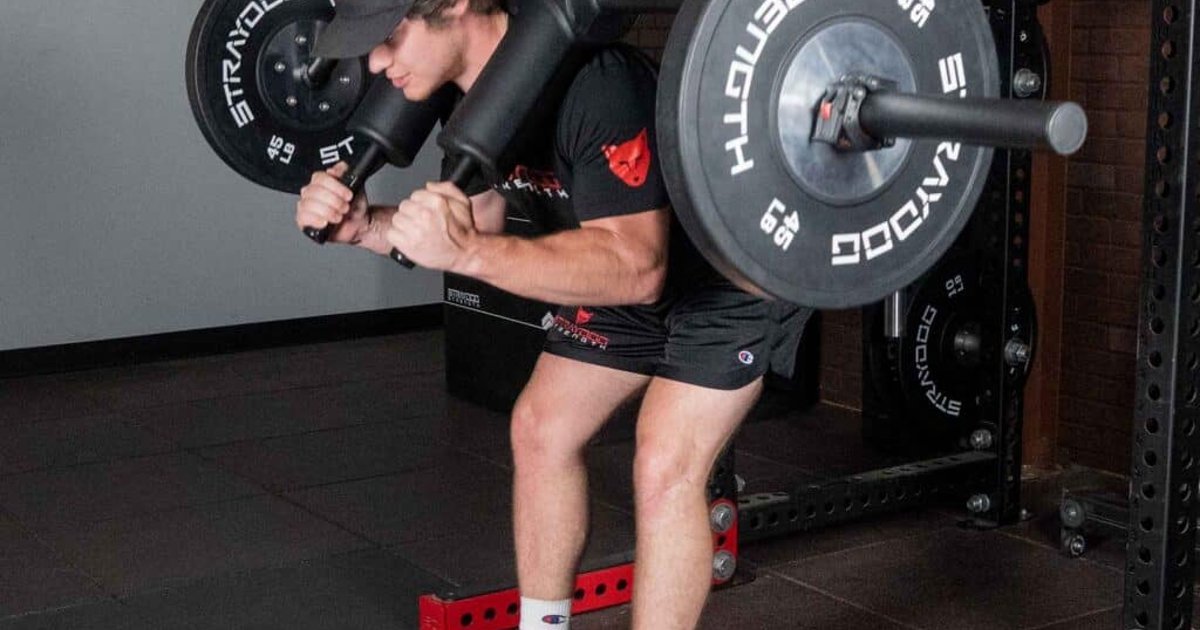
Not all safety squat bars have the same camber, padding, handle length or empty-bar weight. A bar that weighs more than an ordinary Olympic bar changes the starting load even before plates are added. Read the actual bar marking or manufacturer’s specification, test how it settles across your traps and record the complete load. The photograph above shows a genuine safety-bar squat rather than a good morning; it is useful for identifying the yoke, handles and plate position, not for copying the movement depth.
The aim of this exercise is controlled hip flexion and extension against an external moment, with hamstrings and glutes moving the hips and spinal erectors helping preserve trunk position. You may feel substantial upper-back effort as well. Calling it a ‘lower-back isolation’ lift misses that shared task. A straight-bar good morning, a safety-bar good morning and a Romanian deadlift can all train posterior-chain strength, but their equipment and balance demands are not interchangeable.
Set the rack before you learn the hinge
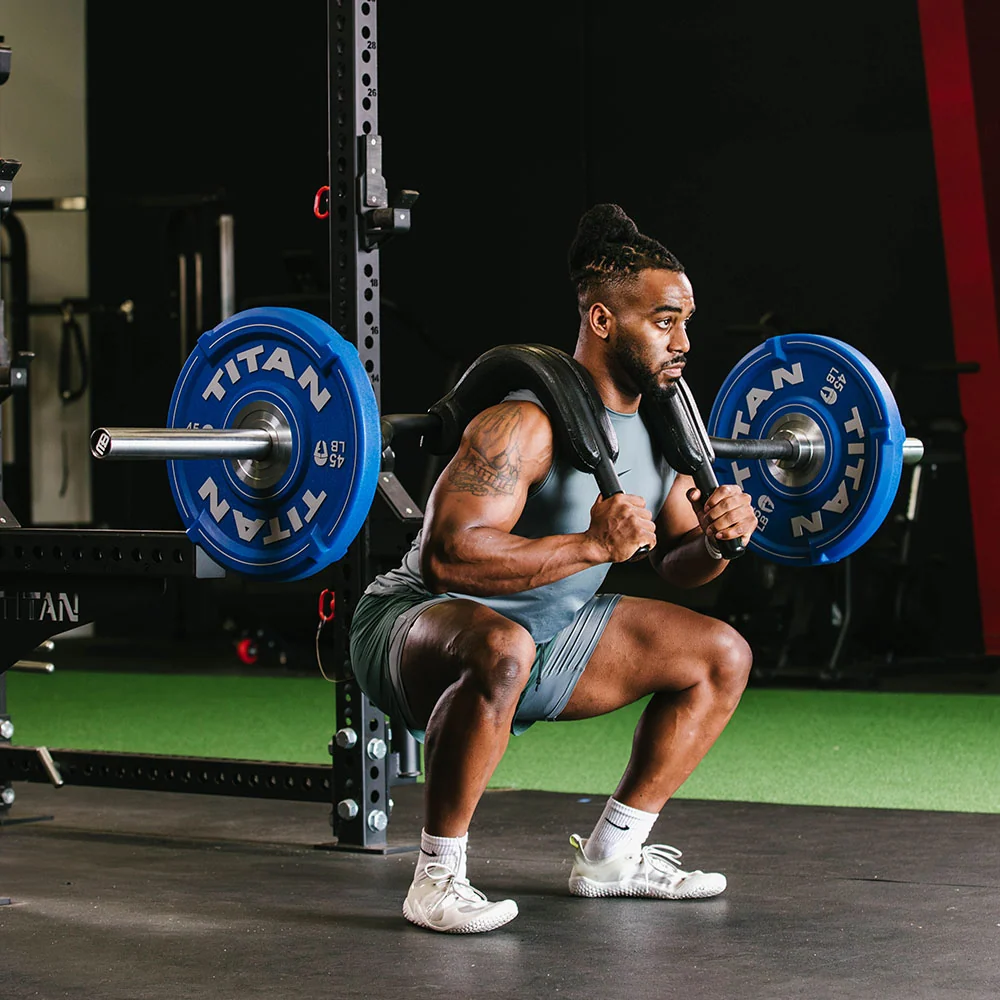
Start inside a stable power rack with an unloaded safety squat bar. Adjust the J-cups so you can stand the yoke up without tiptoeing, bending deeply or striking the hooks. Set correctly rated safety bars or straps before doing working sets; their height must suit your bar, reach and intended hinge depth. Walk out only far enough to clear the uprights, then stop. Clear the floor of plates, attachments and objects that could catch your shoes during the return.
Place the pad across the upper back according to its design, take a comfortable shoulder- or hip-width stance and hold the handles securely. Keep pressure through the whole foot. Use a soft knee bend and maintain roughly the same knee angle while you push the hips backward. This is the simplest way to distinguish a good morning from a shallow squat. If the knees continue traveling forward while the hips sink down, reset rather than forcing the torso lower.
Practice several unloaded hinges with a side-view recording before adding weight. In the photograph above, the athlete is performing a safety-bar squat, not the hinge described here; its relevance is the secure yoke placement and rack environment. Your actual good-morning rep should move the hips farther back, with substantially less knee travel. The goal is a reproducible position that you can reverse under control, not a predetermined ‘parallel to the ground’ target for every torso and hamstring length.

Equipment Worth Exploring
Explore equipment, accessories and gear from our carefully selected range.

Safety Squat Handles
Barbell squat handles that reduce shoulder positioning demands during high-bar squats.

VForce 2IN1
Half rack and pivot-arm functional trainer with switchable 1:1 and 2:1 pulley ratios.

Foldable Wall Rack
Wall-mounted folding squat rack designed to save floor space between workouts.

Multi Pull Smith Rack MPHR-780
All-in-one rack with a Smith machine, functional trainer, lat pulldown and low row.


Grip Plates
Rubber-coated weight plates with handholds for loading barbells and machines.


Competition Plates
Competition-style bumper plates for Olympic lifts and loaded strength training.
Brace, send the hips back and own the return
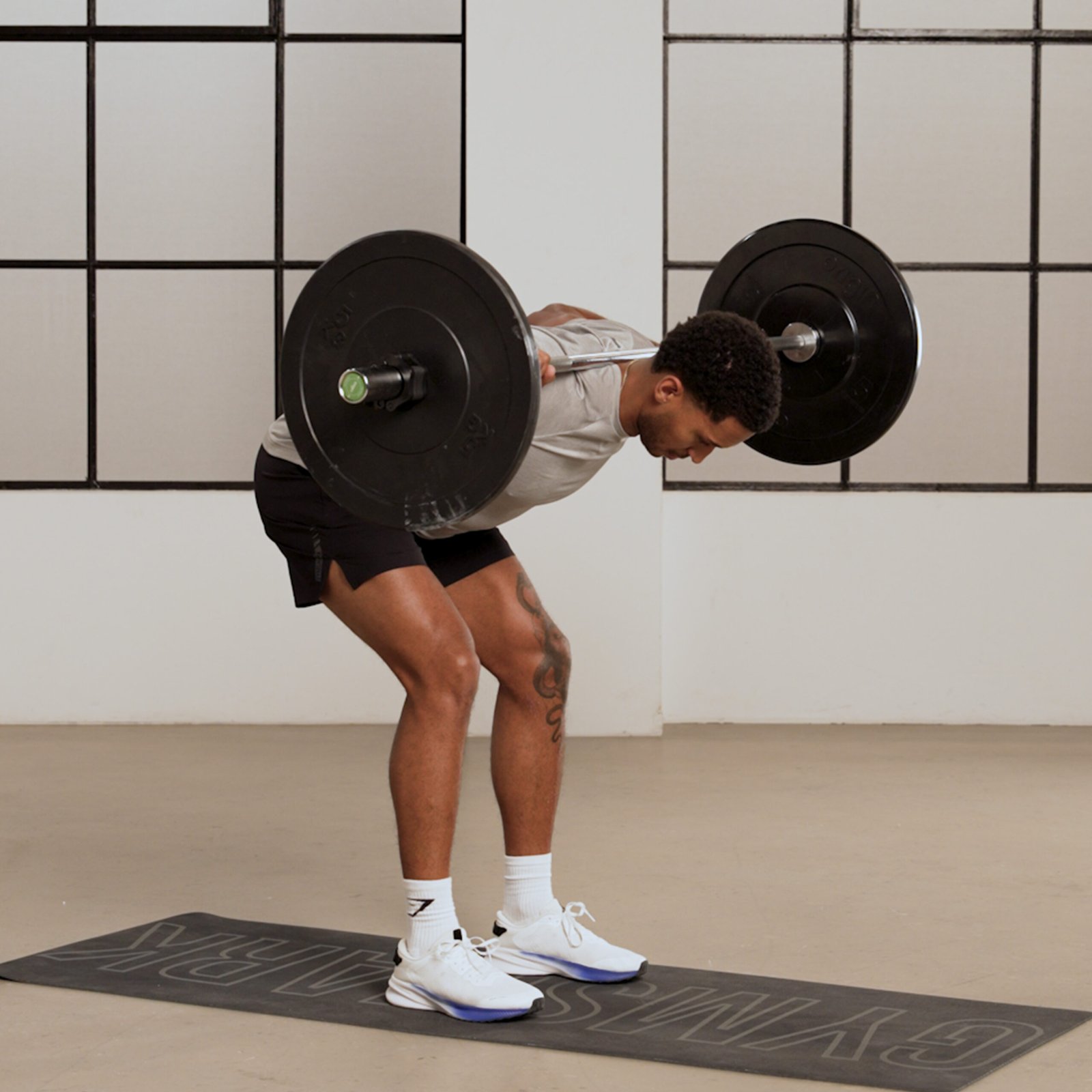
Before each repetition, inhale into the abdomen and sides, then create enough trunk pressure to keep the ribs and pelvis moving together. Look toward a fixed point slightly ahead of the feet rather than craning your neck upward. Start with the hips: imagine moving your backside toward the wall behind you. The torso follows because the hips hinge; it should not be pulled down by deliberate rounding of the lower back.
Lower over two or three deliberate seconds until you reach your own controlled range. You might feel hamstring tension well before the torso approaches horizontal. Stop when another inch would require bending the knees much more, shifting onto the toes, losing foot pressure or changing spinal position. Do not force a range based on somebody else’s demonstration. A controlled partial hinge that can be repeated consistently is a better training starting point than a maximal forward fold with a heavy yoke.
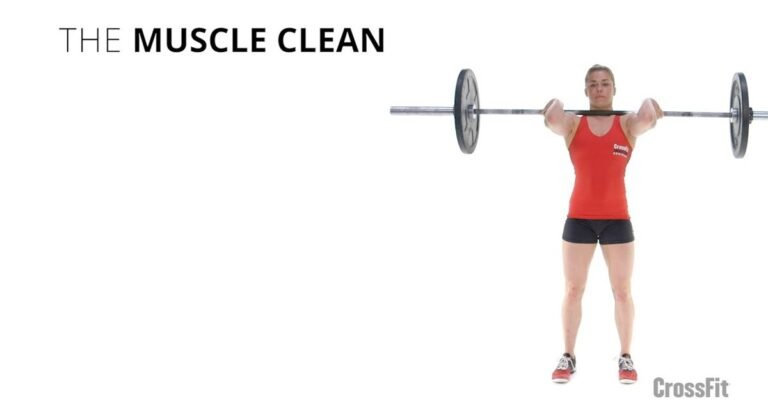
To stand, drive the feet into the floor and extend the hips without jerking the head up or overextending the lumbar spine at lockout. Reset your breathing and balance before the next rep. The straight-bar good morning photographed above shares the hip-hinge pattern, but the bar and shoulder position are different; it is a movement comparison, not an image of the SSB version. If the load repeatedly pushes you forward despite a good setup, decrease it before taking another set.
Fix the three errors that make progress hard to measure
The first error is turning the hinge into a squat. Soft knees help, but letting them bend more throughout the descent shifts the emphasis and makes the bottom position change from rep to rep. Check your side video: after the initial knee bend, the hips should travel back while the shins change relatively little. If you cannot feel that distinction, rehearse with an unloaded bar or a dowel along the back until the pattern is clear.
The second is using the yoke to pull the head and upper back forward. Front handles are for holding the bar securely, not for yanking the torso into more range. Keep a balanced handle grip rather than crushing it so hard that you tense the shoulders unnecessarily. The third is loading beyond your ability to reverse the descent. You should not need a bounce, a sharp exhale at the bottom or a new spinal shape to return. End sets while several controlled repetitions are still realistically available.
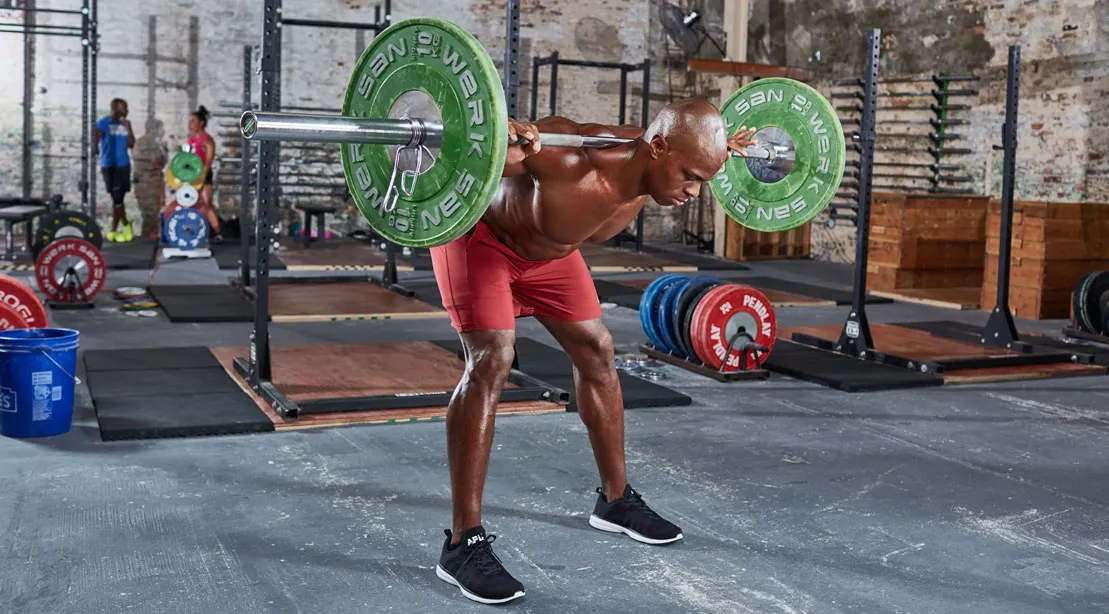
Muscle fatigue around the glutes, hamstrings and back is expected; sudden pain, spreading symptoms, numbness or dizziness are not desirable training signals. Stop the lift if those occur and seek appropriate professional assessment when needed. Do not treat the word ‘safety’ in the bar name as a promise that mistakes are consequence-free. The real straight-bar demonstration above shows a hinged torso; evaluate your own bracing and movement rather than matching the photo’s exact load or depth.

Funny Gym Shirts & Workout Gear
Funny gym shirts, tanks, hoodies and workout gear for lifters who like training hard.

Powerlift Deadlifts Tee
Show some metalhead attitude with a playful “Powerlift Deadlifts” tee.


Negative Leg Day Review 1 Star Not Recommended Tank Top
Train hard, laugh a little, and rep “Negative Leg Day Review”.


I Look Better Bent Over Squats Deadlifts & Booty Hoodie
Keep it laid-back with a little “I Look Better Bent Over” attitude.

Do You Even Deadlift Sticker
Stick a little “Do You Even Deadlift” humor on your favorite gear.
Heavy Metal Deadlift – Skeleton Gym Shirt for Powerlift T-Shirt
A t-shirt featuring the Heavy Metal Deadlift – Skeleton Gym Shirt for Powerlifters and Leg Day Lifters artwork, bringing lifting-inspired humor and distinctive gym graphics to your everyday gear.

Leg Day Gains | LEGO Inspired Workout Sweater For Squat T-Shirt
Add a playful “Leg Day Gains” touch to your casual rotation.

Choose between the SSB, Romanian deadlifts and back extensions
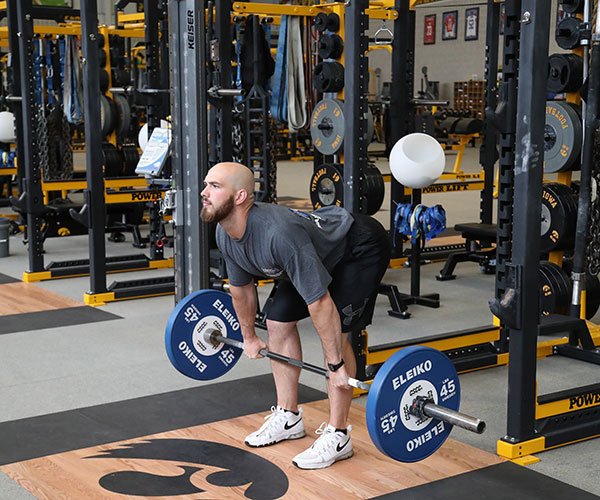
An SSB good morning places the resistance across the upper back. A Romanian deadlift lets you grip the bar in the hands and keep it nearer the legs; that difference changes leverage, hand demands and how naturally people find balance. When your rack is small or the specialty yoke cannot clear its uprights, an RDL with dumbbells or a straight bar is a practical way to keep hip-hinge work in the program without trying to improvise a safety-bar setup.
A straight-bar good morning is another valid option if your shoulders tolerate the grip and you can control the bar position. It usually costs less equipment than an SSB, but it is not a direct weight-for-weight replacement. A 45-degree back extension supports the lower body and lets you train hip extension with a different balance requirement; some lifters can accumulate posterior-chain volume there with less technical friction. The photograph above shows an authentic Romanian deadlift, not a safety-bar good morning.
Choose the exercise based on the limitation you are trying to solve. If shoulder positioning is the problem, front SSB handles may help. If load stability and simple progression matter most, the RDL may be easier. If you want a controlled accessory after heavy deadlifts, a modest back-extension set can make more sense than stacking another demanding bar-on-back hinge. None of these choices has been established here as universally superior for hypertrophy, rehabilitation or injury risk.
Equipment Worth Exploring
Explore equipment, accessories and gear from our carefully selected range.

45° Hyperextension HPX-650
Angled back-extension trainer with split padding, a ribbed footplate and resistance-band pegs.


Glute Ham Developer GHD-820
Adjustable glute-ham developer with contoured pads and a fold-out knee support.

Open Hex Bar
Open-frame trap bar with multiple handles for deadlifts, carries, and lower-body training.


Rubber Hex Dumbbells
Rubber-coated hex dumbbell pairs with a stable shape for home and commercial strength training.


FID Bench MAX
Adjustable bench offering flat, incline, and decline positions + adjustable headrest.
A four-week plan for repeatable reps, not heroic numbers
Use the SSB good morning once per week at first, preferably after your main lower-body lift or on a separate hinge-focused day when you are not exhausted. Begin with two light warm-up sets. In week one, perform 2 sets of 8 controlled repetitions at an easy-to-moderate effort, stopping with around three or four good reps in reserve. Film the first work set and note the rack height, exact bar model, total load, stance and roughly how deep the hinge stays consistent.
Week two: perform 3 sets of 8 at the same load if the prior sets were crisp. Week three: keep 3 sets and aim for 9–10 clean repetitions without changing the bottom position. Week four: when all ten are stable, add the smallest sensible plate increment and return to 3 sets of 8; otherwise repeat week three. Rest around two to three minutes between working sets, longer if bracing and balance still feel unsettled. Treat these numbers as a conservative example, not a rule for every experience level.
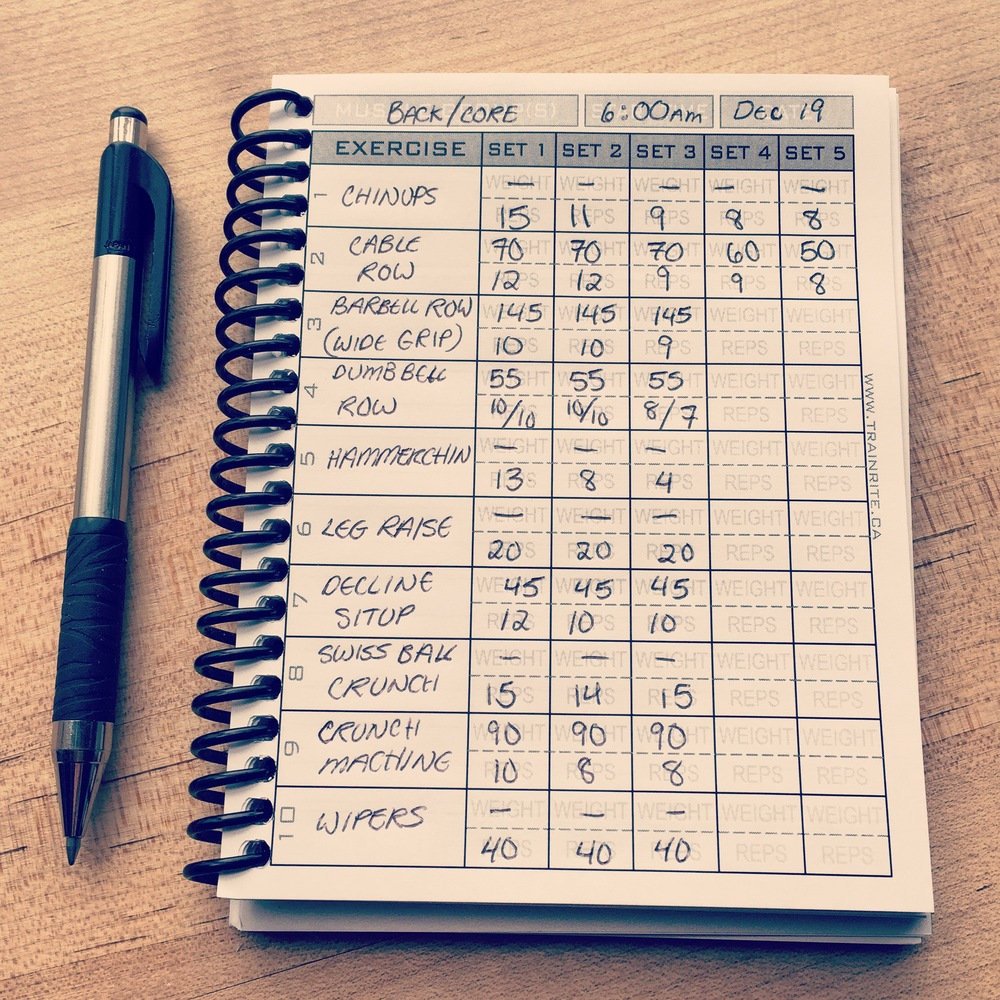
Keep the main squat or deadlift training consistent while testing this accessory. If adding good mornings makes your next heavy session noticeably worse, reduce sets or move the exercise farther away rather than interpreting fatigue as proof the program works. Write down technique quality alongside the weight and repetitions. The training log photographed above illustrates what useful records look like; it does not show this specific program or its participants.
At the end of four weeks, review one comparable side-view set from week one and week four. Did the bottom position stay consistent? Can you hinge without shifting onto the toes, and do the handles remain still? Did load or reps improve at the same standard? Keep the exercise if those answers are positive and recovery is manageable. If it is persistently awkward or uncomfortable, substitute an RDL or back extension and keep progressing the underlying hip-hinge pattern.
Funny Gym Shirts & Workout Gear
Funny gym shirts, tanks, hoodies and workout gear for lifters who like training hard.

6 Plates Deadlift Club Motivational Meme & Essential T-Shirt
Bring “6 Plates Deadlift Club” humor to your next gym day.

Grim Reaper Deadlift Powerlifters & Leg Day Meme Hoodie
Stay casual and show some leg-day attitude with “Grim Reaper Deadlift”.

Skeleton Deadlift Sweater & Fans Meme T-Shirt
Show some gym-day personality with “Skeleton Deadlift”.

Praise The Deadlift Holy Lifting Meme Fans T-Shirt
For laid-back days and deadlift humor: “Praise The Deadlift”.

Deadlifts & Dragons Fantasy Swoleplaying Game T-Shirt
Make gym days more fun with “Deadlifts & Dragons” style.

I Love Deadlifts | Valentine's Heart Plate Hooded For G Hoodie
Keep it laid-back with a little “I Love Deadlifts” attitude.

Deadlift Snake Skull – Hardcore Powerlifting Gym Shirt T-Shirt
Make gym days more fun with “Deadlift Snake Skull” style.

Therapy Barbell – Bodybuilding Powerlifting Meme Sweate T-Shirt
Add a playful “Therapy Barbell” touch to your casual rotation.

Barbell Buddies for Gym Buddies and Lifting Together Tank Top
Add some powerlifting attitude to training with “Barbell Buddies”.

5 Plates Squat Club – Motivational T-Shirt
Show some leg-day attitude with a playful “5 Plates Squat Club” tee.