Advertising disclosure: This page includes affiliate product links that may earn us a commission, as well as products from our own store.
Scapular Pull-Ups: Straight Arms, a Small Movement and Better Control
A scapular pull-up is a small movement on a pull-up bar, not a failed attempt to reach the top. You keep the elbows straight while moving between a relaxed hanging position and a more active shoulder position. The visible rise can be modest, which makes it easy to exaggerate the motion with bent arms or swinging legs.
That distinction gives the drill a useful identity. You can practise a controlled hanging transition without confusing it with a full pull-up. Here is how to organise the setup, recognise a repeatable repetition and decide whether the exercise deserves space in your pulling session.
1. Make the hanging setup dependable
Use a secure bar you can grip fully, with the palms facing away and the hands around shoulder width. Choose a way to reach it and return to the floor safely. If you need a step, use equipment intended for that purpose rather than balancing on an unstable object.
Check the mounting, loading limits and clearance before hanging. A doorway bar, wall-mounted station and rack attachment are different systems. Follow the maker’s installation and usage instructions; a bar looking sturdy is not verification that it is properly fitted.
Keep the initial grip and equipment consistent while learning. A thick handle, rotating attachment or different bar shape changes the task for your hands. More grip difficulty is not automatically a better shoulder-control drill, particularly if it makes you rush the repetitions.
Before beginning a set, consider how much comfortable hanging time you actually have. If the hands are already slipping, do not try to finish several more repetitions merely because the shoulder movement is small. Put your feet down and reset. Losing your hold can end the exercise regardless of how fresh your back feels.
For a new setup, test a short, manageable hang before committing to a longer session. Keep the space below clear and avoid jumping away from a crowded rack. A repeatable entry and exit are part of the exercise, not minor details to solve after fatigue arrives.
2. Let a small repetition stay small
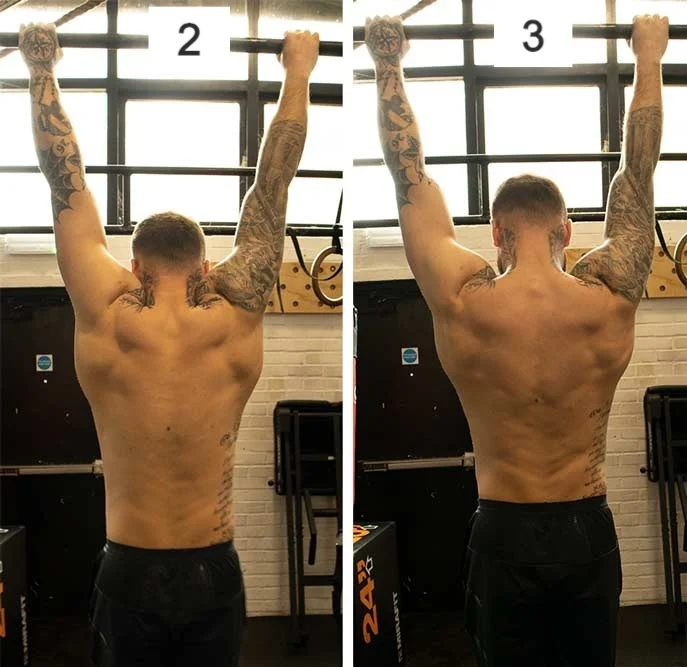
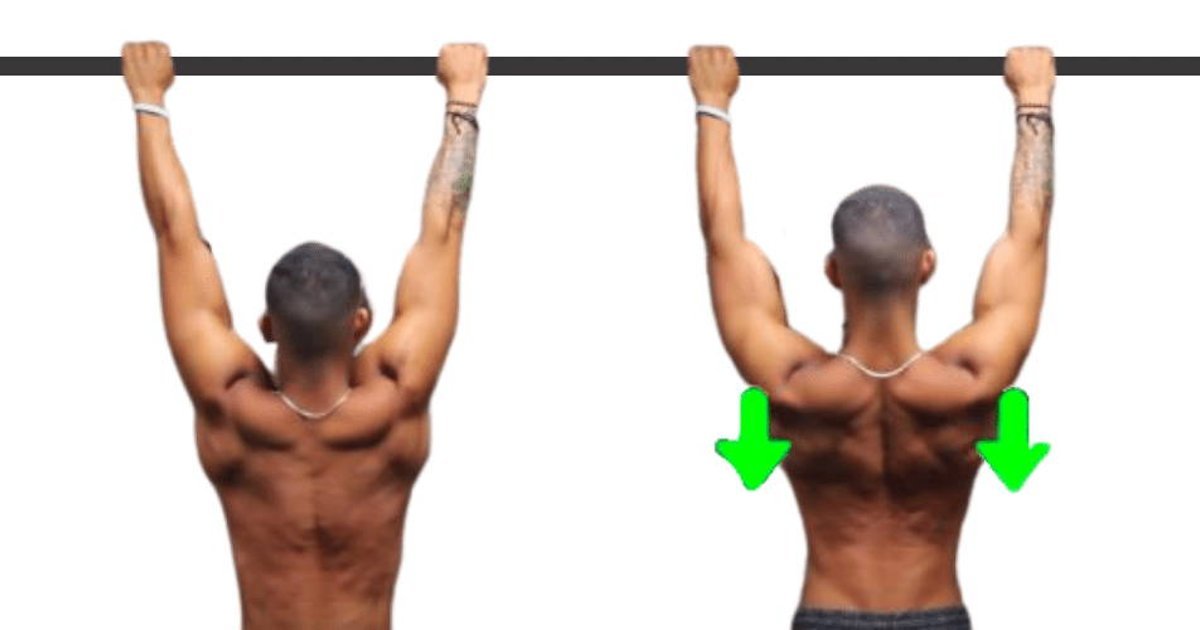
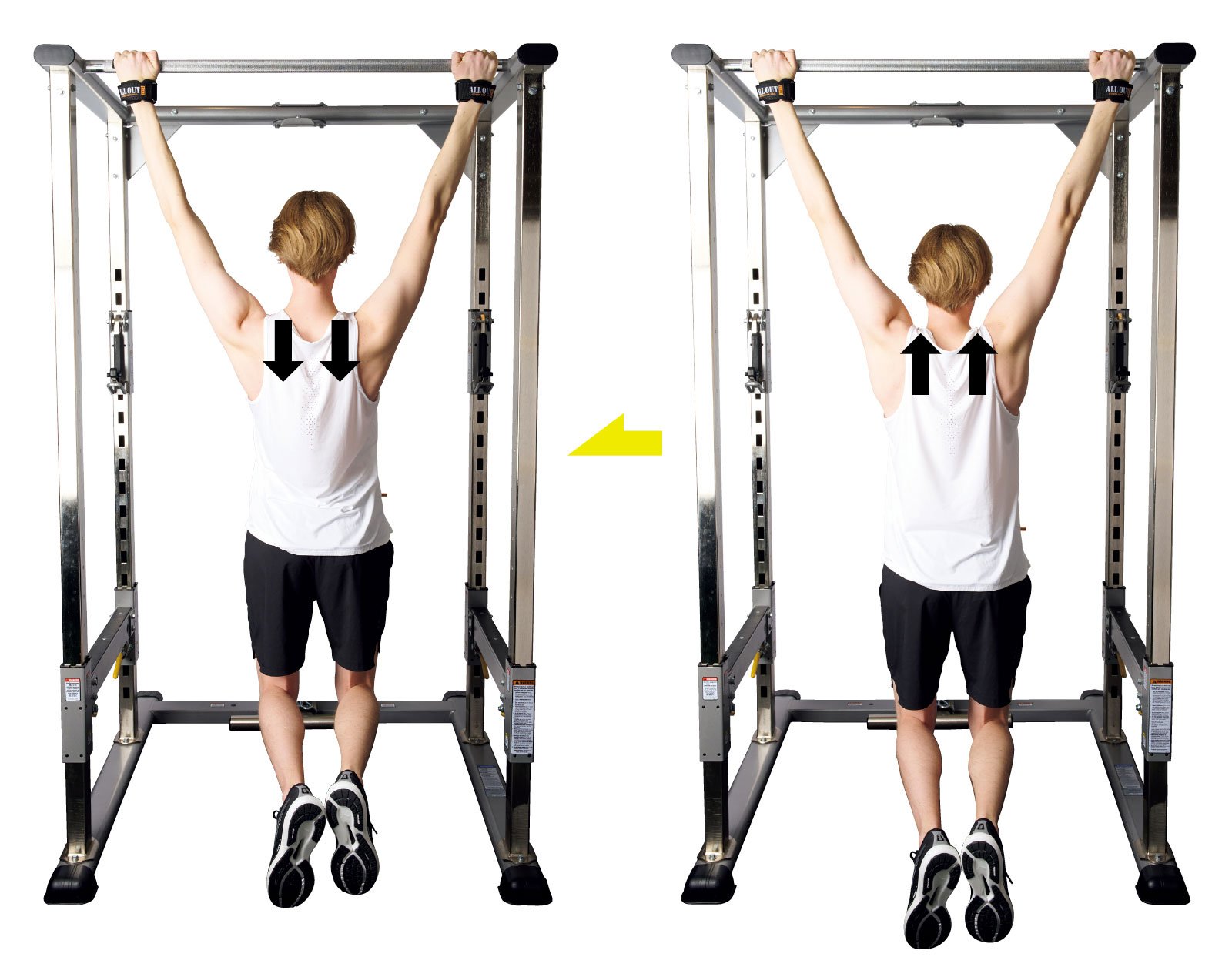
Begin with straight arms in a comfortable hanging position. Without bending the elbows, draw the shoulder blades down and back enough to raise the chest slightly. Pause briefly, then return under control. The shoulders and shoulder blades move; the elbows do not turn the repetition into a miniature pull-up.
Do not judge success by the largest possible rise. A short movement you can reproduce is more useful for this task than an extra few centimetres created by bending the arms or leaning dramatically. Think of the start and finish as two controlled positions rather than a distance target.
A useful check is to watch the first and final repetitions on a short video. Did the elbows remain similarly straight? Did the legs start swinging? Did you drop into the lower position as soon as you became tired? These observations are more informative than counting every upward movement as an equivalent rep.
Keep the camera far enough away to show the hands, shoulders and torso together. A close-up of the back may hide a changing elbow angle, while a view that excludes the legs can miss the momentum that started the motion. You do not need an elaborate filming setup.
A quiet repetition does not require forcing an extreme shoulder position. Use a range you can control comfortably. If reaching a particular position causes pain, stop and reassess the exercise rather than assuming the discomfort proves you have found a weak muscle.
3. Separate shoulder movement from elbow bending and momentum
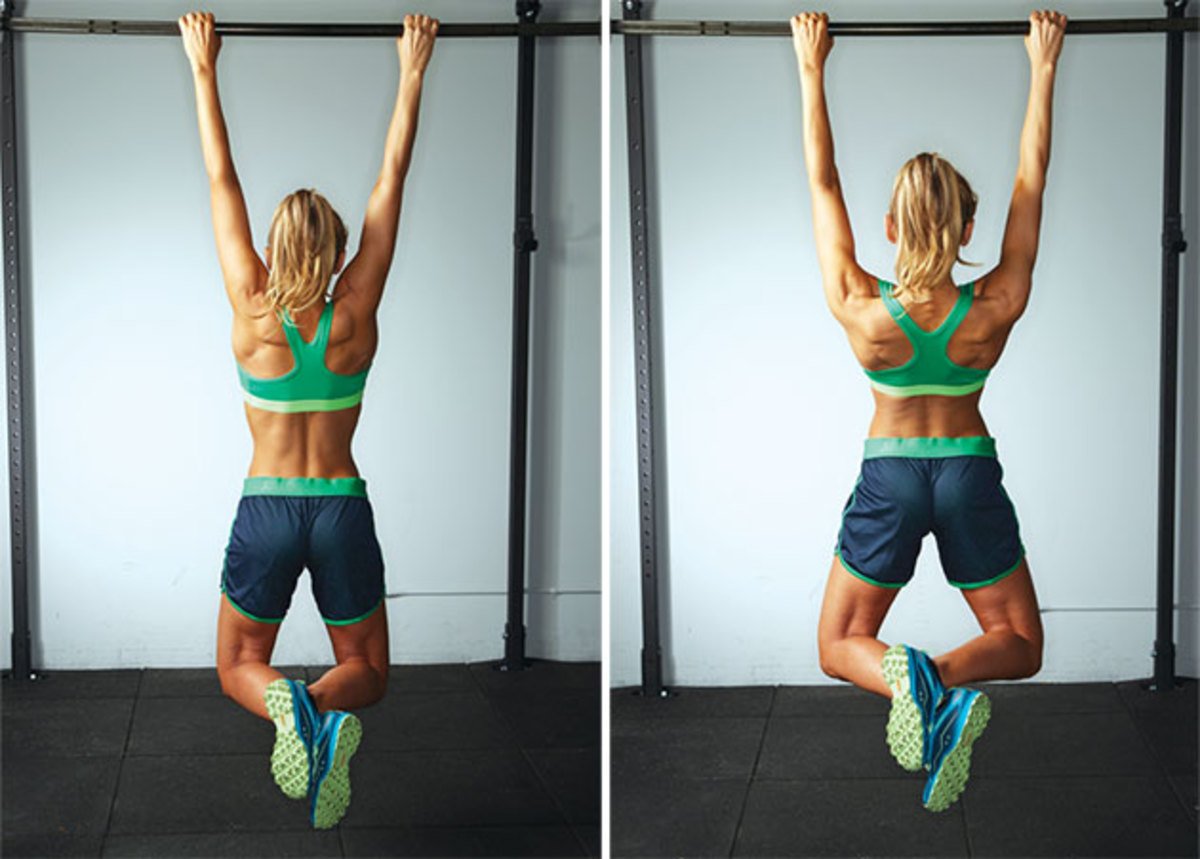
The most obvious substitution is elbow flexion. Your body may rise farther, but the task has changed. That does not make a normal pull-up a bad exercise; it means you should log and practise it as a different movement.
Another substitution begins below the shoulders. A kick, swing or sudden change in the trunk can start the body moving before the intended shoulder action. Settle the hang between repetitions if needed. When you cannot stop the swing, end the set and reset instead of trying to time the next rep to it.
Pay attention to the return as well as the rise. A controlled transition back into the hanging position makes it easier to repeat the same starting conditions. Dropping abruptly and immediately bouncing into another rep creates a different rhythm and makes your repetition count less meaningful.
Choose one correction at a time. For example, keep the same grip and reduce the number of repetitions while checking elbow position. On another session, focus on returning slowly. Changing the bar, grip, tempo and assistance together leaves you with too many explanations for why the drill feels different.
Useful progress may initially be a cleaner set at the same repetition count. A set of five that stays controlled can be a better practice record than eight repetitions that gradually become bent-arm pulls. Describe what you performed rather than giving every repetition the same label.
4. Decide whether you need support or a different exercise
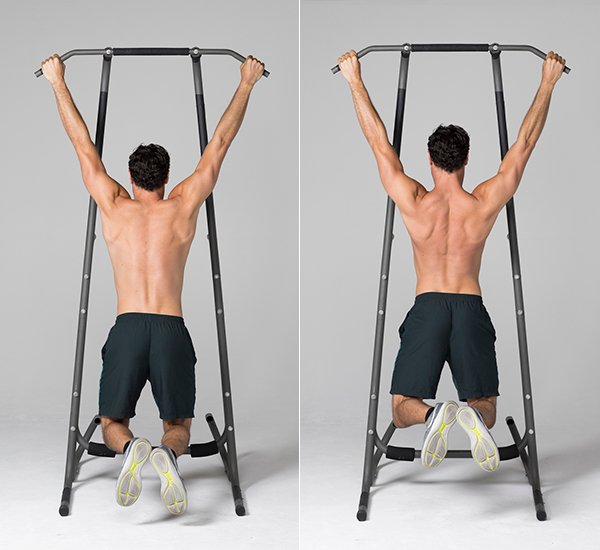
A full bodyweight hang is a meaningful demand. If you cannot hold it comfortably, do not assume you must earn the right to practise by struggling through it. A lower bar with the feet supported can let you explore shoulder movement while leaving some weight through the legs.
Keep that assistance repeatable. Record the bar height and foot position, and avoid pushing harder with the legs as the set progresses. A supported version is not numerically equivalent to an unsupported one; it is a different loading arrangement that may be more suitable while learning.
A resistance band is another possible form of support, but it introduces its own setup and loading curve. Check its condition, anchor and entry method. Do not copy a complicated band arrangement solely because it appears in a demonstration. A simpler supported position may be easier to organise.
If hanging remains unsuitable, another pulling exercise may be a more practical choice. A lat pulldown allows adjustable external resistance, while rows offer a different pulling pattern. Neither is an exact substitute for a hanging scapular transition, but you can still train your back without forcing this drill.
The equipment below includes pulling stations, suitable rack options and grip accessories. Verify the exact product’s intended use and bodyweight rating before hanging from an attachment. Additional grip difficulty is optional, and neither straps nor a new handle should be used to disguise a setup you cannot control.

Equipment Worth Exploring
Explore equipment, accessories and gear from our carefully selected range.

Power Tower
Freestanding pull-up and dip station with adjustable handles for bodyweight training.


Foldable Wall Rack
Wall-mounted folding squat rack designed to save floor space between workouts.

Multi Pull Smith Rack MPHR-780
All-in-one rack with a Smith machine, functional trainer, lat pulldown and low row.


Angles 90 Grips
Flexible grip attachments that allow natural wrist movement during pulling exercises.


Leather Wrist Grips
Padded leather lifting grips help support the hands and wrists on heavy pulling exercises.
5. Give the drill a clear place in your pulling session
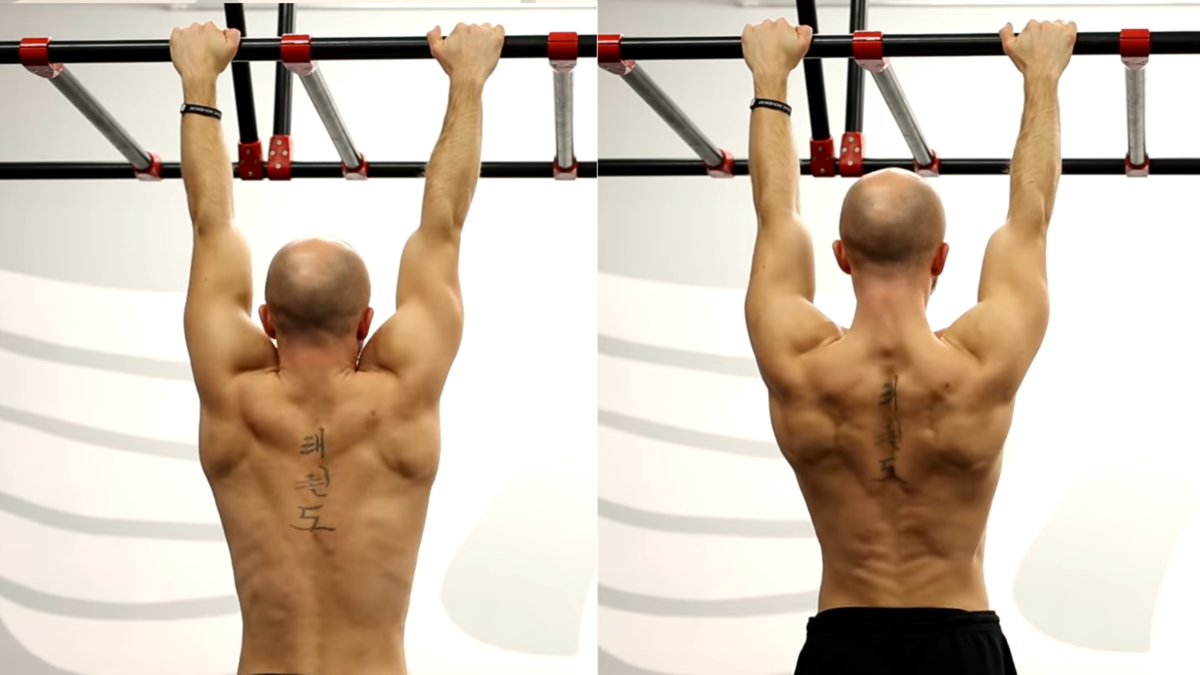
Decide whether you are practising a movement or adding demanding accessory work. Those goals lead to different choices. A short preparation set should leave you ready for the main session; a challenging set after pulling work adds fatigue that belongs in the week’s workload.
As an illustrative practice option, try one or two short sets of three to five controlled repetitions, with enough rest to keep the second set similar to the first. This is a conservative example, not a trial-established dose or a requirement. Adjust or omit it according to your ability and response.
Keep full pull-ups separate in the log. They involve a larger movement with elbow bending, and they should not be mixed with scapular repetitions in one personal record. A controlled scapular set also does not prove that a full pull-up will follow on a predictable timetable.
If you use rows alongside vertical pulling, record their loads and repetitions independently. Dumbbells and a suitable bench can support rowing work, but the movement remains different. Building a useful back-training programme does not require treating every exercise as a direct progression of the one before it.
Assess the drill across several sessions. Look for comfortable entry and exit, a reliable grip, quiet legs and a controlled return. If more repetitions repeatedly degrade the next part of your workout, reduce the dose rather than defending an arbitrary target.
Direct evidence for specific scapular-pull-up benefits is limited. Avoid treating the drill as guaranteed protection against shoulder injury or a treatment for existing symptoms. Keep the claims modest, the technique repeatable and the workload appropriate. Calisthenics clothing and accessories are optional; the useful record is the movement you can actually control.

Calisthenics Shirts & Street Workout Gear
Calisthenics and bodyweight-training gear for pull-ups, dips, handstands and street-workout athletes.

Pull Up or Shut Up Crewneck Pullover Sweater for Calist T-Shirt
For laid-back days and bodybuilding humor: “Pull Up or Shut Up”.

Always Pull Yourself Up Hoodie
Make your off-duty look more fun with “Always Pull Yourself Up”.

Pullups Heartbeat Tank
Train hard, laugh a little, and rep “Calisthenics Pullups Heartbeat”.

Calisthenics Evolution Hooded Pullover for Bodyweight W Hoodie
Keep it laid-back with a little “Calisthenics Evolution” attitude.

Calisthenics Hanging Out Decal for Water Bottles Laptop Sticker
A fun “Calisthenics Hanging Out” touch for bottles, laptops, and lockers.

Be Stronger Than Your Excuses Funny Gym
Bring “Be Stronger Than Your Excuses” humor to your everyday gym style.

Calisthenics – Meme & Lovers – Top & Gains T-Shirt
Heavy lifts, good laughs, and a little “Calisthenics” energy.


Calisthenics Lovers – Gains & Meme Shirt T-Shirt
Make gym days more fun with “for Calisthenics Lovers” style.

Funny Calisthenics Gym Decal for Water Bottles Laptops Sticker
Bring “Calisthenics” attitude to your water bottle or laptop.