Advertising disclosure: This page includes affiliate product links that may earn us a commission, as well as products from our own store.
A new six-week comparison of 36 male military cadets raises an interesting training question: can light resistance work combined with blood-flow restriction improve strength as much as conventional heavier lifting? In this short trial, a group training at roughly 30% of one-rep max with cuffs recorded a larger average gain on an isometric strength test than a group training at about 70%. That is worth understanding, but it is a narrower finding than the claim that cuffs make heavy weights obsolete.
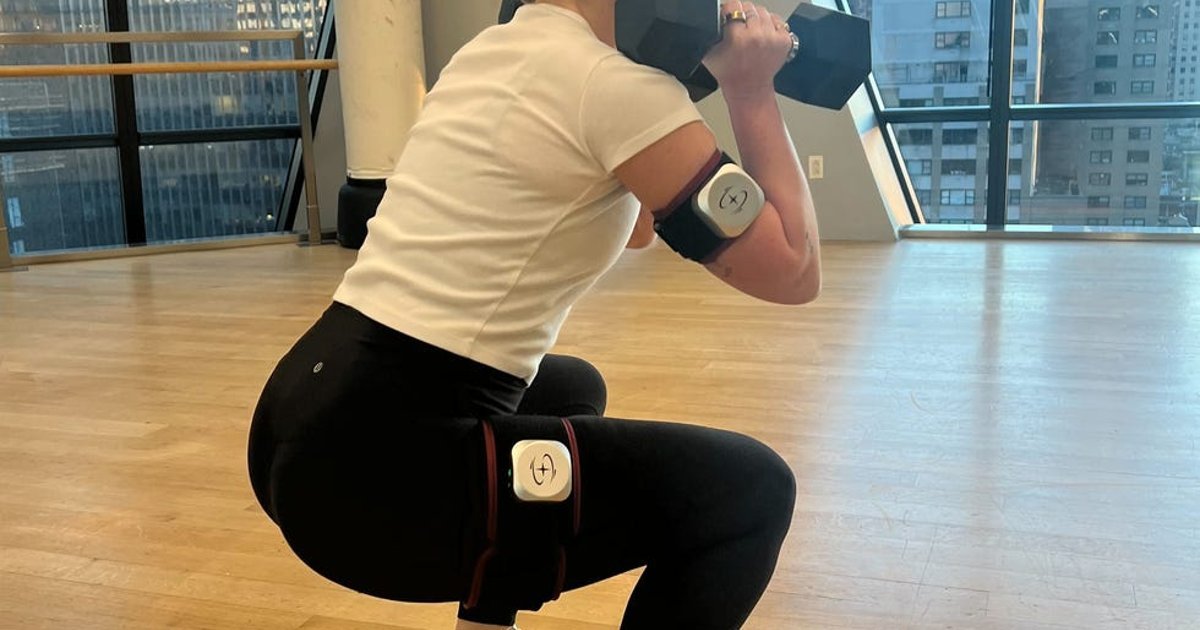
Blood-flow restriction, or BFR, involves applying controlled pressure to a limb during exercise. It can make lower external loads more stimulating, but the method requires proper pressure assessment and screening. Below we separate the measured results from marketing shortcuts, discuss the important training and safety limitations and explain when a lifter might reasonably consider a low-load option.
The six-week trial: who trained and what changed
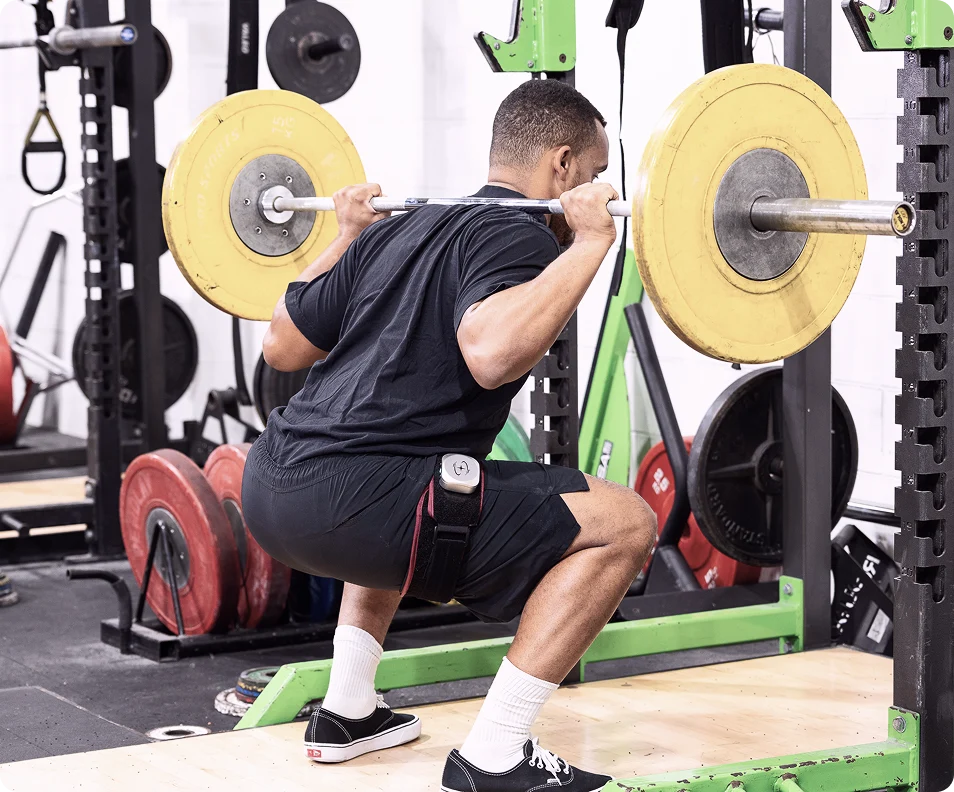
Thirty-six male military cadets took part in a six-week comparison of two lower-body resistance-training approaches. Eighteen trained with relatively light resistance and blood-flow restriction (BFR); eighteen trained conventionally with substantially heavier loads. Both groups attended three sessions per week and practiced compound movements rather than relying only on isolated knee extensions. The menu included squats, deadlifts, weighted walking lunges and resisted running. All participants completed the intervention, and the investigators recorded no adverse events during this short study.
The main prespecified outcome was peak force on an isometric mid-thigh pull, a test in which the athlete pulls against an immovable bar. The light-load BFR group improved by about 332 newtons, against about 266 newtons in the heavier-training group. The between-group difference in improvement was 66 newtons, with a reported 95% confidence interval from 8 to 124 newtons. That is an interesting result for a relatively small study; it is not evidence that light squats with cuffs universally outperform heavy squats.
The distinction matters because the study measured a specific trained population, a specific six-week program and a particular strength test. It did not enroll a balanced sample of all lifters, did not establish how results would look over six months and did not test every form of BFR equipment. No adverse events in 36 participants is reassuring for this supervised trial, but cannot establish the rate of uncommon complications in the much larger training population.
Thirty percent versus seventy percent is a different workout
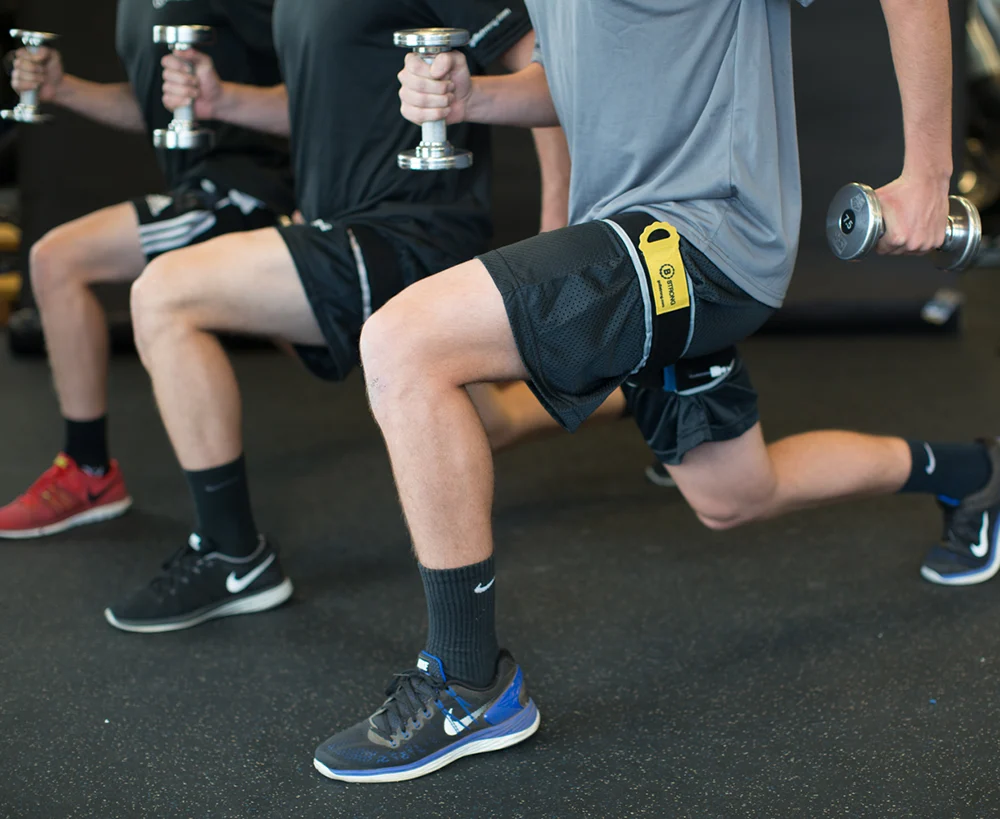
The training loads make the comparison striking. The BFR group used roughly 30% of its one-repetition maximum for the prescribed resistance work; the conventional group worked at approximately 70%. For someone who can squat 150 kilograms, those percentages correspond to about 45 kilograms and 105 kilograms. That example illustrates the arithmetic, not a recommended BFR workout. The study’s cuff protocol is also not a safe do-it-yourself template.
Load is only one element of training stress. Sets, repetitions, rest periods, movement speed, cumulative work, proximity to muscular failure and the unusual sensation of exercising with restricted venous outflow can change how taxing a session feels. A light external load does not necessarily mean an effortless set. Conversely, an athlete capable of moving a heavier load can practice a different motor and bracing demand that low-load work does not exactly reproduce.
The study’s two groups may have experienced different proximity to failure, which limits attempts to isolate BFR as the sole reason for any difference. It also prevents a clean claim that the intervention is equivalent to a particular number of heavy sets. A lifter reading the numbers should ask what was held constant and what changed. The better lesson is that meaningful strength adaptation is possible under carefully supervised light-load conditions, not that percentage-based progression or progressive overload has become irrelevant.

Equipment Worth Exploring
Explore equipment, accessories and gear from our carefully selected range.


Foldable Wall Rack
Wall-mounted folding squat rack designed to save floor space between workouts.

Competition Plates
Competition-style bumper plates for Olympic lifts and loaded strength training.

Rubber Hex Dumbbells
Rubber-coated hex dumbbell pairs with a stable shape for home and commercial strength training.


Open Hex Bar
Open-frame trap bar with multiple handles for deadlifts, carries, and lower-body training.

Studio V-Squat
Plate-loaded V-squat machine for supported lower-body strength training.

Leg Extension/Curl BCO-780
Leg extension and lying leg curl combo with plate loading, band pegs and a cable-loading option.
Why cuff pressure is never a copy-and-paste number
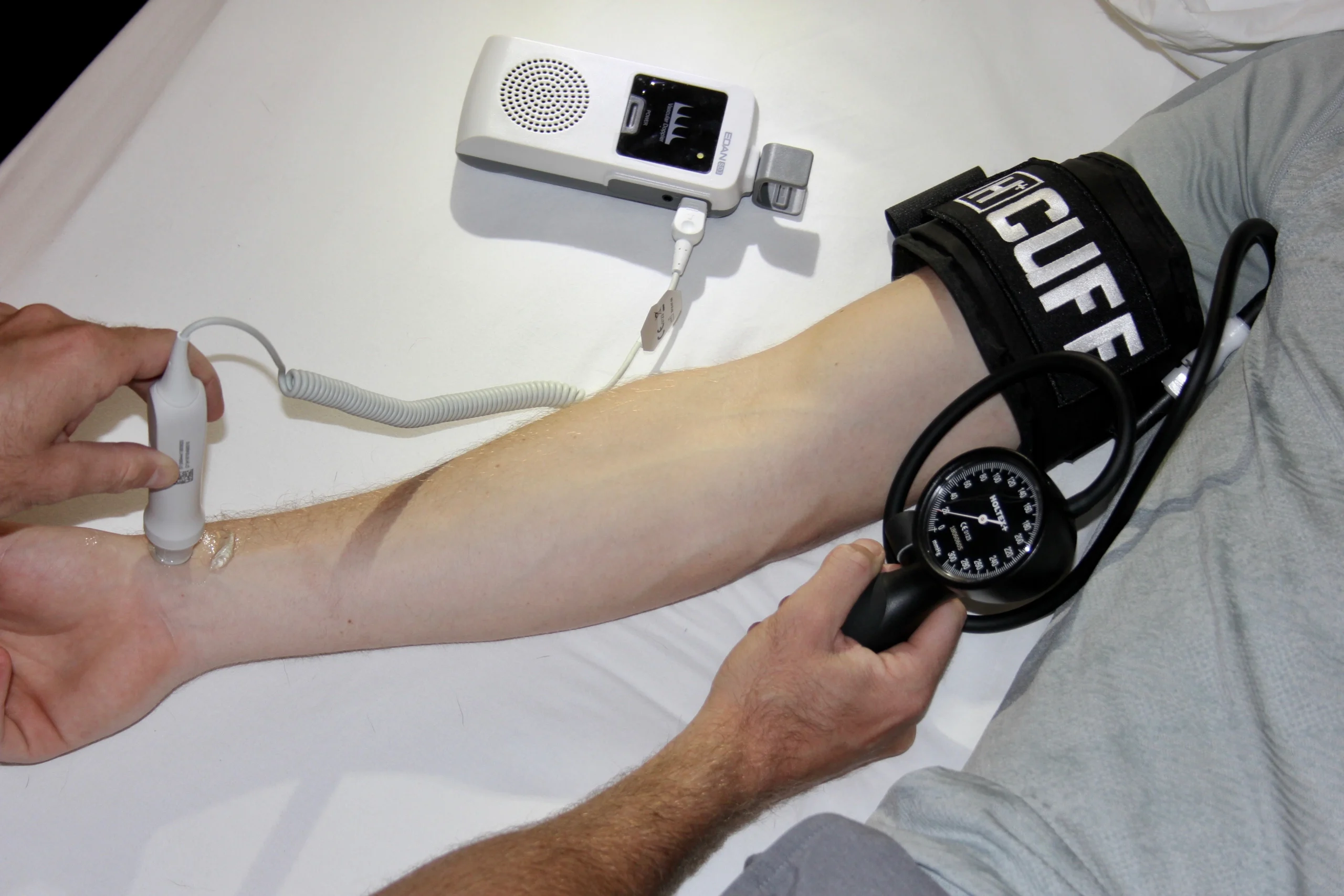
A cuff creates external pressure around the upper limb or thigh. Its purpose during typical BFR exercise is to limit venous return while preserving some arterial inflow; it is not intended to shut off circulation completely. The actual restriction depends on limb size, blood pressure, cuff width, material, position and the individual athlete. A fixed gauge value can correspond to very different physiological conditions on two bodies.
The trial used a cuff setting of 200 mmHg. That number is a description of the researchers’ protocol, not a general prescription. Contemporary safety practice favors measuring or estimating each person’s arterial occlusion pressure with appropriate equipment and then prescribing a controlled fraction of it. Device instructions and trained supervision matter, especially for a first exposure. Improvised wraps and a feeling of extreme tightness do not substitute for calibrated measurement.
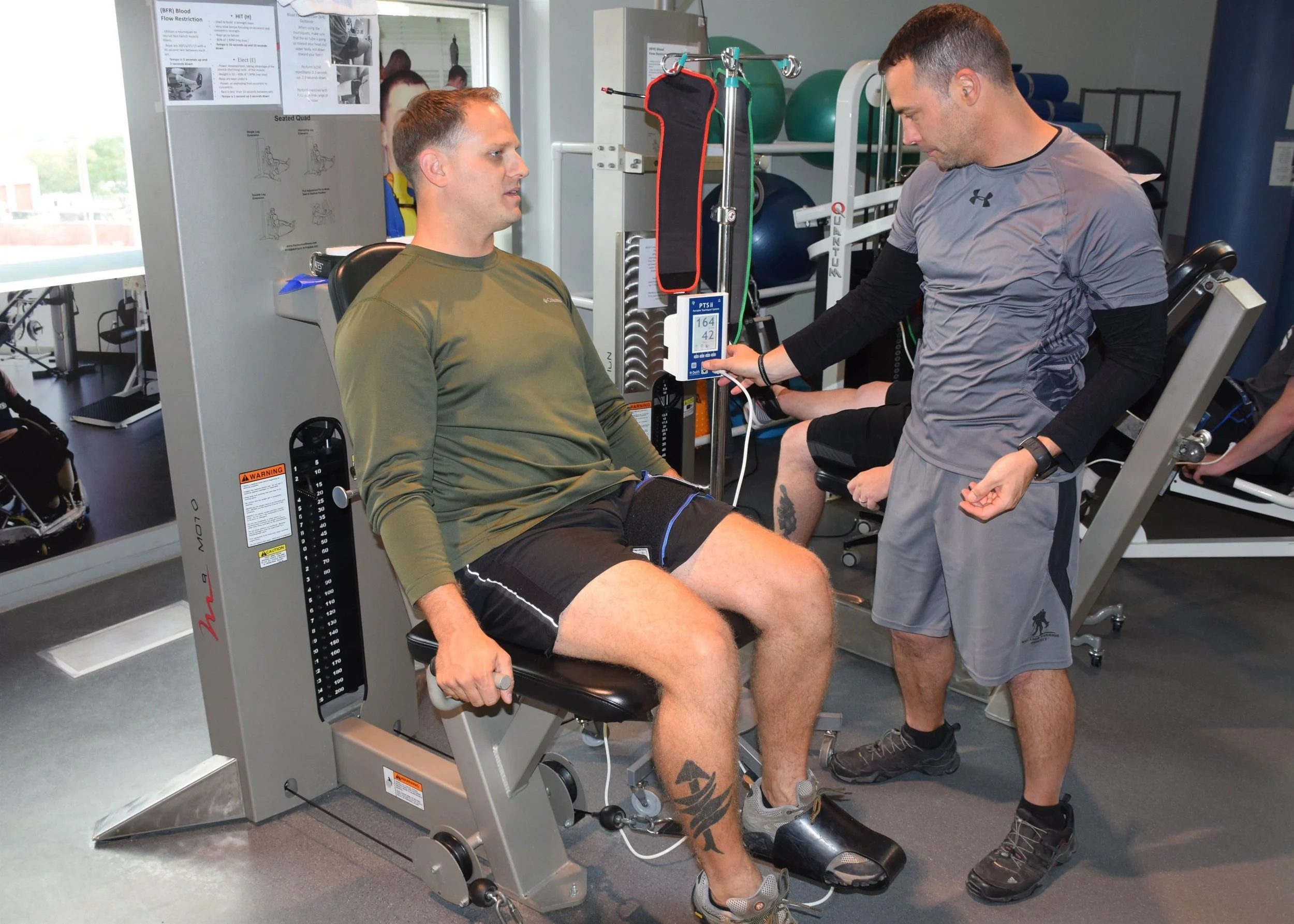
Clinicians and coaches also consider session duration, hydration, heat and how the athlete responds. Sudden numbness, dizziness, unusual pain, significant color change or feeling unwell calls for stopping the session and reassessing. There is no bonus hypertrophy for tolerating warning signs. Choosing an appropriately controlled BFR setup is a separate skill from choosing a useful squat load, and anyone without access to suitable screening and pressure control can simply train without cuffs.

Funny Gym Shirts & Workout Gear
Funny gym shirts, tanks, hoodies and workout gear for lifters who like training hard.


Squat Bench Deadlift Read Shirt Literary Bookworm Top T-Shirt
Bring “Squat Bench Deadlift Read” humor to your next gym day.

Squat Bench Deadlift Pet Dogs Shirt Dog Lovers T-Shirt
Make gym days more fun with “Squat Bench Deadlift Pet Dogs” style.

Squat Bench Deadlift Pet Dogs – Meme Shirt T-Shirt
Rep “Squat Bench Deadlift Pet Dogs” humor in and out of the gym.

Captain Deadlift Leg Day Tee
Show some superhero attitude with a playful “Captain Deadlift Leg Day” tee.

Deadlift Addict & Barbell Cigarettes Can'T Quit T-Shirt
Show some deadlift attitude with a playful “Deadlift Addict & Barbell Cigarettes” tee.

Squats Leg Day Heavy Weights Meme – Essential Top T-Shirt
Bring “Squats Leg Day Heavy Weights” humor to your next gym day.

Heavy Barbell – Meme Shirt & Top T-Shirt
Make gym days more fun with “Heavy Barbell Powerlifting Graphic” style.

Deadlift Skull Cyberpunk Muscle Shirt for Powerlifting Tank Top
Bring “Deadlift Skull” humor to your next lifting session.

Deadlift Skull Explosion Pullover for Powerlifting Leg Hoodie
Show off your leg-day humor in a laid-back “Deadlift Skull” hoodie.
An isometric strength result is not a new one-rep max
The isometric mid-thigh pull has a different measurement target from a dynamic squat or deadlift. It can capture the ability to express force against a fixed bar without asking an athlete to move a heavy load through a full range of motion. A higher peak force on that test is therefore a legitimate performance outcome, but it cannot be translated into a precise new three-repetition squat record or predicted competition deadlift.
The same trial reported changes in an isometric squat pull, countermovement-jump height, estimated skeletal-muscle mass and percentage body fat. Those results moved in a promising direction in the BFR group, but the secondary comparisons were exploratory and the trial was not powered to make strong conclusions on each one. Small numeric advantages in jump height or body composition should not be presented as proven superior effects of the cuff itself.
Another limitation is that the experiment did not formally establish non-inferiority. To claim that one treatment is sufficiently close to another, researchers ordinarily need a predefined non-inferiority margin and a study designed to evaluate it. This was not that design. If your main objective is heavier singles, speed under the bar or skill in a competition lift, include direct practice at appropriate heavier loads when medically and practically possible. Specificity remains important even when an assistance method looks useful.
Equipment Worth Exploring
Explore equipment, accessories and gear from our carefully selected range.

Seated Leg Combo BCO-680
Adjustable seated leg extension and leg curl machine with band pegs for added resistance.

Compact Leg Press CLP-700
Compact reverse-style leg press with a moving seat carriage and an adjustable footplate.

Leg Press/Hack Squat BPR-790
Convertible 45-degree leg press and hack squat machine with a broad footplate and band pegs.

HUSLA Leg Extension Pad
Pad attachment designed to increase usable range of motion on compatible leg-extension machines.


Studio Glute Drive
Plate-loaded hip-thrust machine with supported back pad and adjustable foot platform.

Pro Sled System
Heavy-duty push-pull training sled for loaded conditioning, speed, and strength work.


Squat Harness
Wearable harness for hands-free cable squats, sled work, and lower-body training.

VForce 2IN1
Half rack and pivot-arm functional trainer with switchable 1:1 and 2:1 pulley ratios.
Where lighter BFR sessions fit beside normal lifting
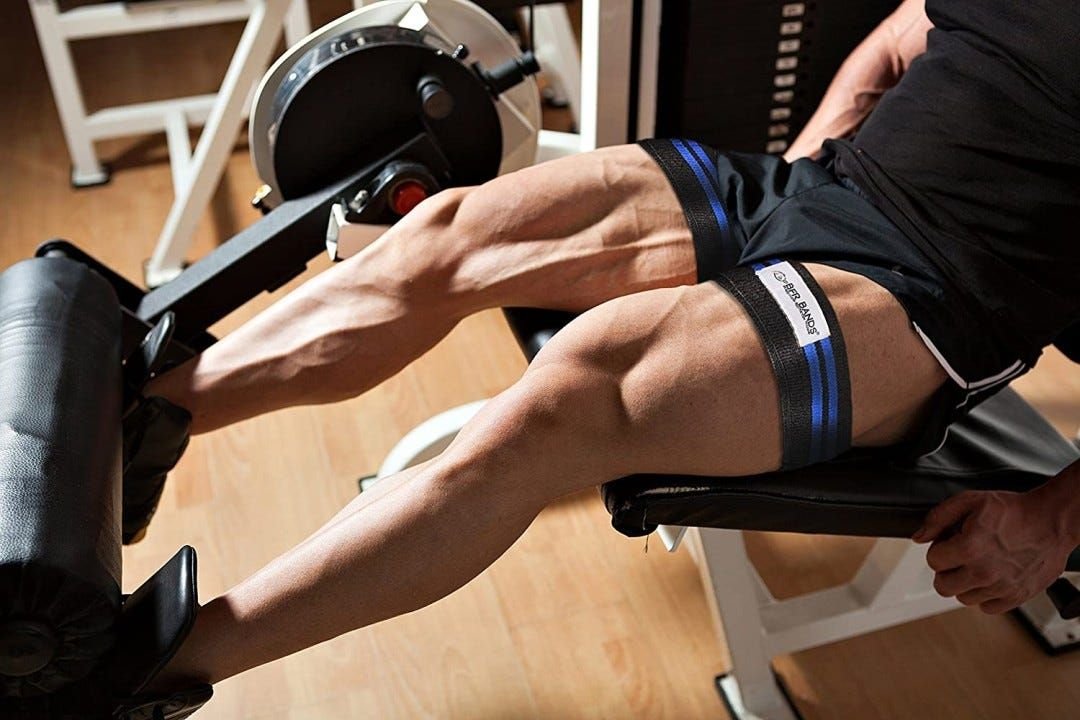
For a healthy lifter with full access to training equipment, conventional resistance work remains a well-supported foundation for strength development. Heavy sets allow practice handling substantial external resistance and developing coordination under those loads. BFR is better understood as a possible supplementary method: an alternative stimulus when heavy loading is temporarily impractical, a carefully monitored way to perform lower-load accessory work or a tool within professional rehabilitation.
A practical decision starts with the question you are trying to solve. If a sore joint or a period of clinical recovery limits loading, a qualified professional can judge whether modified exercises and supervised BFR make sense. If your objective is simply a bigger squat and you tolerate normal lifting well, adding cuffs is not automatically a better investment than improving technique, sleep, exercise selection and consistent progression. There is no universal reason to make a well-working routine more complicated.
Equipment selection should follow the movement, not drive it. A barbell and plates suit conventional squats and deadlifts; dumbbells may make split-stance work approachable; a leg-extension machine may offer an easier-to-monitor assistance movement when appropriate. None of those products is a prescription for circulation restriction. Keep the article’s training question separate from any accessory purchase, and use suitable loads and supervision rather than guessing that a particular machine will reproduce the study.
Powerlifting Shirts & Lifting Gear
Powerlifting shirts and gym gear for squat, bench and deadlift lifters who live for heavy numbers.

Grateful Deadlift Lifting Bears Tee
Show some deadlift attitude with a playful “Grateful Deadlift” tee.

Deadlift Skull Cyberpunk Gym Shirt for Powerlifting Leg T-Shirt
Make gym days more fun with “Deadlift Skull” style.

Deadlift Skull Explosion Graphic for Powerlifting Leg D T-Shirt
Make gym days more fun with “Deadlift Skull” style.

Deadlift Pink Skull Muscle Shirt for Powerlifting Leg D Tank Top
Bring “Deadlift” humor to your next lifting session.

Deadlift Pink Skull Gym Decal for Powerlifting Leg Day Sticker
Give your everyday gear a playful “Deadlift” twist.

Funny Viking Deadlift Shirt For Gym Bros | Leg Day Gain T-Shirt
Heavy lifts, good laughs, and a little “Viking Deadlift” energy.

Deadlift Purple Skull for Powerlifters Heavy Weight Leg Hoodie
Show off your leg-day humor in a laid-back “Deadlift” hoodie.

Deadlift Electric Skull Graphic , Hardcore Leg Day Trai Tank Top
Bring “Deadlift” humor to your next lifting session.

Deadlift Snake Skull – Hardcore Powerlifting Crewneck f T-Shirt
Show some gym-day personality with “Deadlift Snake Skull”.

Deadlift Skull Cyberpunk Gym Crewneck for Powerlifting T-Shirt
Show some gym-day personality with “Deadlift Skull”.
Who should pause, get screened and choose a safer route
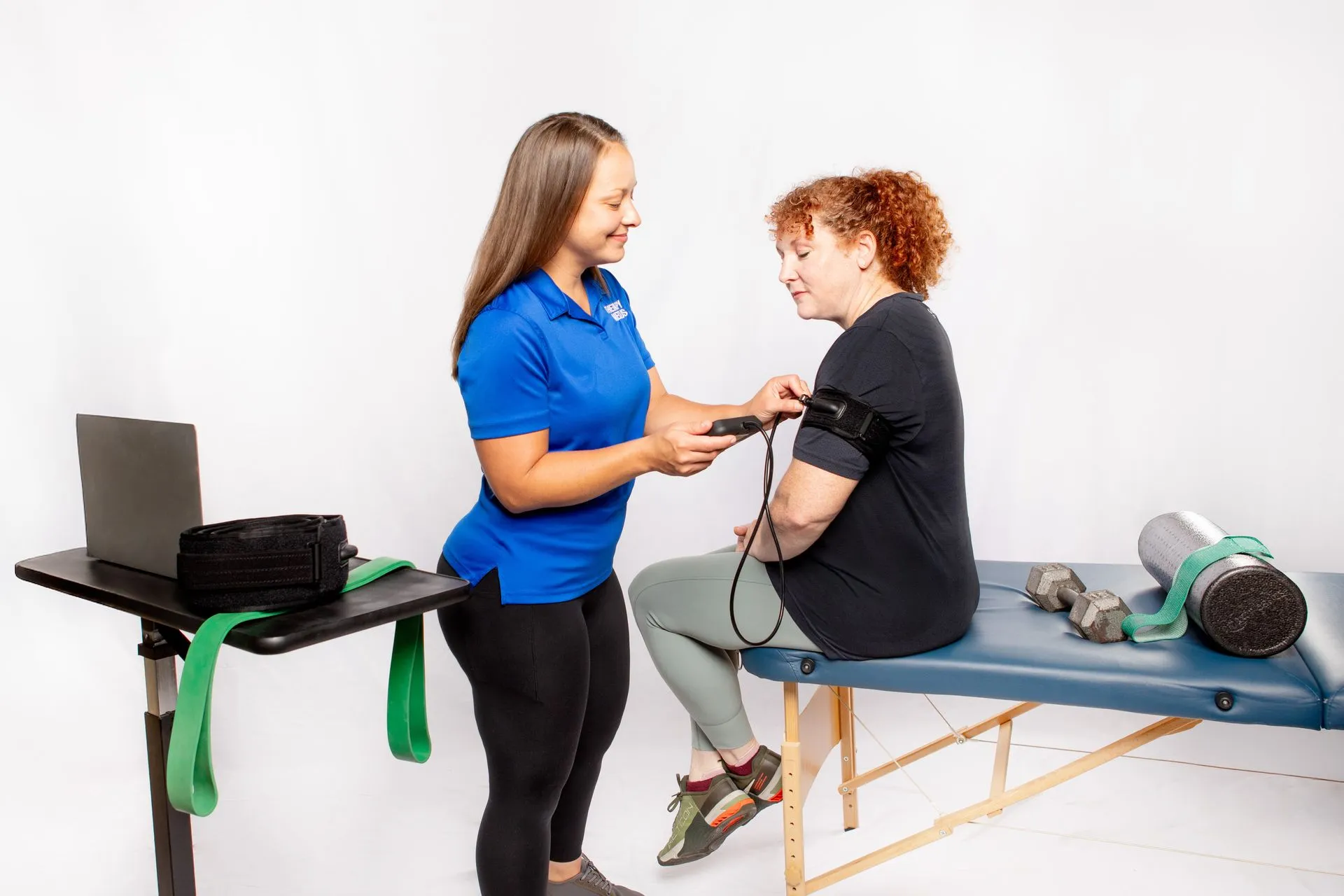
Before experimenting with BFR, the sensible checklist is about suitability, not performance hype. First, establish why you need a low-load intervention and whether ordinary light resistance training alone already meets the goal. Second, disclose relevant health history to a qualified clinician or practitioner. A history of blood clots, vascular disease, vascular surgery, uncontrolled blood pressure, certain blood disorders, nerve problems or recent medical events can materially change the safety assessment.
Third, use an appropriate measured-pressure system and trained guidance rather than copied fixed numbers or elastic straps pulled to a subjective tightness. Fourth, begin conservatively, watch for unusual symptoms and stop if something feels wrong. The observation that no adverse events occurred in this trial should never be treated as medical clearance for someone with different risk factors. This is especially important when exercising in heat, when dehydrated or when considering longer sessions than a supervised research protocol.
Finally, track the outcome you genuinely care about. Record loads, repetition quality, completed sessions, recovery and any symptoms. A runner preparing for obstacle events might prioritize repeatable leg work; a powerlifter cares about dynamic lift performance; someone returning from injury needs individualized rehabilitation milestones. This six-week experiment broadens the discussion about how strength can improve with lower external loads. It does not erase the value of heavy training or justify ignoring pressure control and individual safety.
Some product links may be affiliate links, which can support Mind Muscle Perfection at no additional cost to you.