Advertising disclosure: This page includes affiliate product links that may earn us a commission, as well as products from our own store.
A plate pinch curl combines two jobs: keep the plate secured between the thumb and fingers, and bend the elbow to raise it. The hand position is what separates it from simply curling a plate through its handle holes. That distinction matters when choosing a load, comparing sets and deciding whether the exercise belongs in an arm session or a grip session. Treat it as a specific variation with specific limitations, rather than a shortcut that replaces every curl and every grip exercise.
Keep the pinch when you add the curl
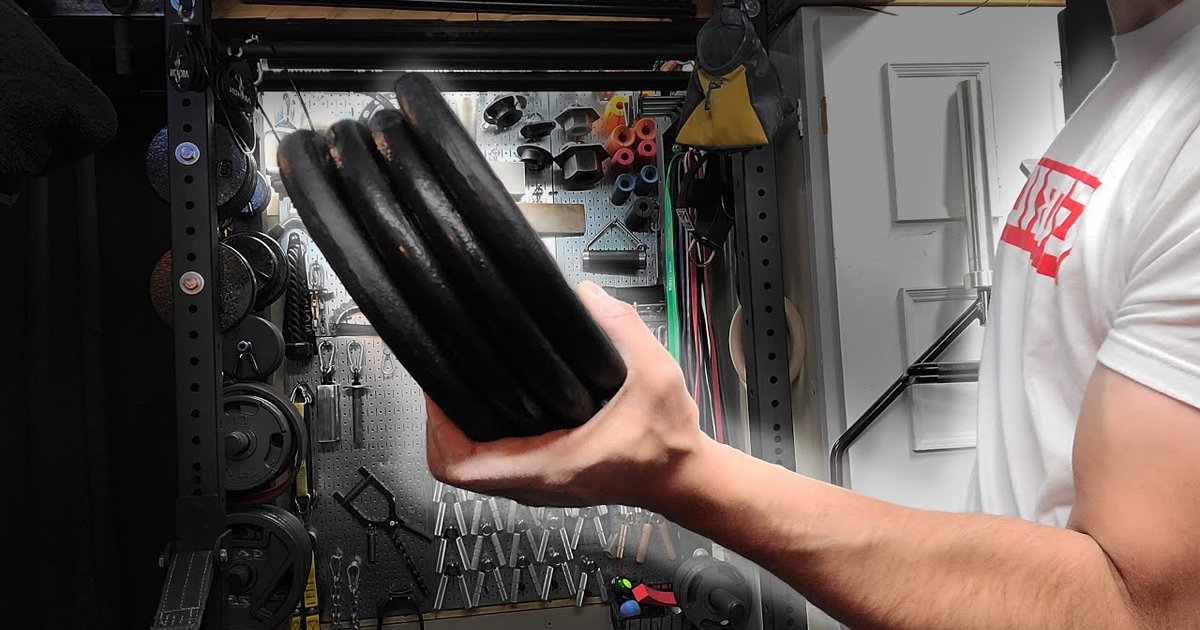
In a pinch grip, the thumb presses against one side of the plate while the fingers oppose it on the other. The exercise adds elbow flexion while that contact stays secure. The basic two-plate version holds the plates together, starts with the arms extended and curls upward without using momentum. Return to the starting position under control.
One-handed and two-handed plate-curl arrangements also exist, so the name alone is not a complete description. State how many plates you use, how many hands hold them and where your fingers contact the surface. A single plate held through an opening is a different grip task from two plates pressed together at their edges.
Decide which version you intend to practice before picking a weight. If the point is maintaining a pinch, hooking the fingers into a convenient hole changes the exercise even if the elbow follows a similar path. That is not cheating in every context; it simply belongs to a different movement description and should not be merged into the same record.
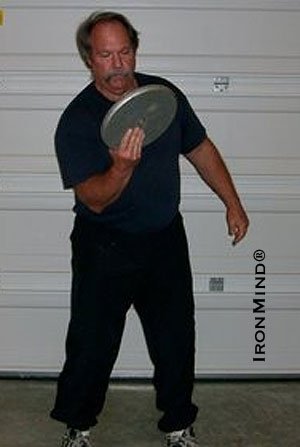
The illustration here shows a one-handed plate-curl variation. It helps make the hand-held implement clear, but it does not establish an identical difficulty to the two-plate version. Number of hands, contact area and plate construction can change together. Compare a defined setup with itself before comparing it with another person's demonstration.
A useful first question is which part you want to challenge. If your fingers cannot keep the plates together, the elbow flexors may never face the load you intended for an ordinary curl. That makes the exercise more specific, not automatically better or worse.
Choose the plate by its contact surface, not just its mass
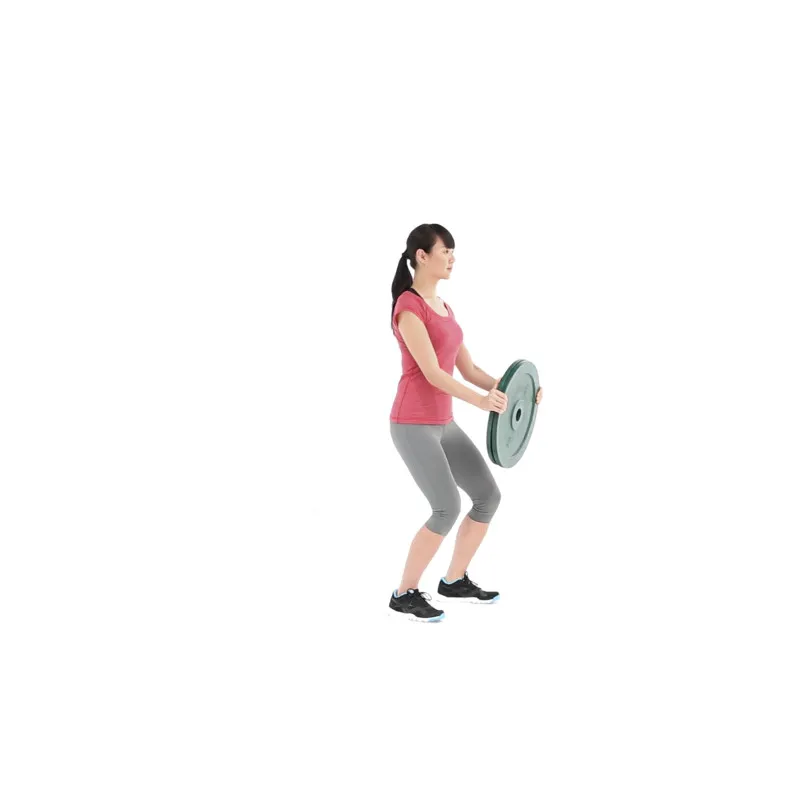
Two plates with the same printed weight can feel very different in the hand. Thickness, diameter, rim shape, coating and the available contact area all affect how the implement sits against the thumb and fingers. Record the actual plates, not merely the total kilograms, when the grip is part of the exercise.
A large bumper plate and a small change plate are not interchangeable substitutes for a pinch curl. The larger diameter may bring the plate closer to the body or floor during the motion. The wider edge may change the hand position. A convenient handle opening can invite a wrapped grip that defeats the pinch you meant to maintain.
Begin by checking that you can establish the intended contact and return the implement to its resting place deliberately. You do not need to discover the limit of your hold while a plate is already moving toward your shoulder. A manageable implement gives you room to learn the motion without turning every attempt into an emergency catch.
Plan the path and the set-down together. Clear nearby equipment and keep feet out of the intended landing area. Place the plate where you can pick it up and replace it without an awkward extra lift. The exercise begins before the first curl and ends after the load is supported again.
For a practical comparison, describe a set as two matching small plates, smooth faces outward, one hand, rather than simply light plates. If you later change to another pair, start a new equipment entry. A heavier total on an easier-to-hold shape does not isolate a change in pinch performance.
Make each repetition controlled rather than rescued
Keep the upper arm relatively still and avoid using a swing to start the plates. Curl only while the intended grip stays secure, then lower deliberately. If maintaining contact becomes uncertain, finish the attempt by setting the load down under control rather than adding a final improvised repetition.
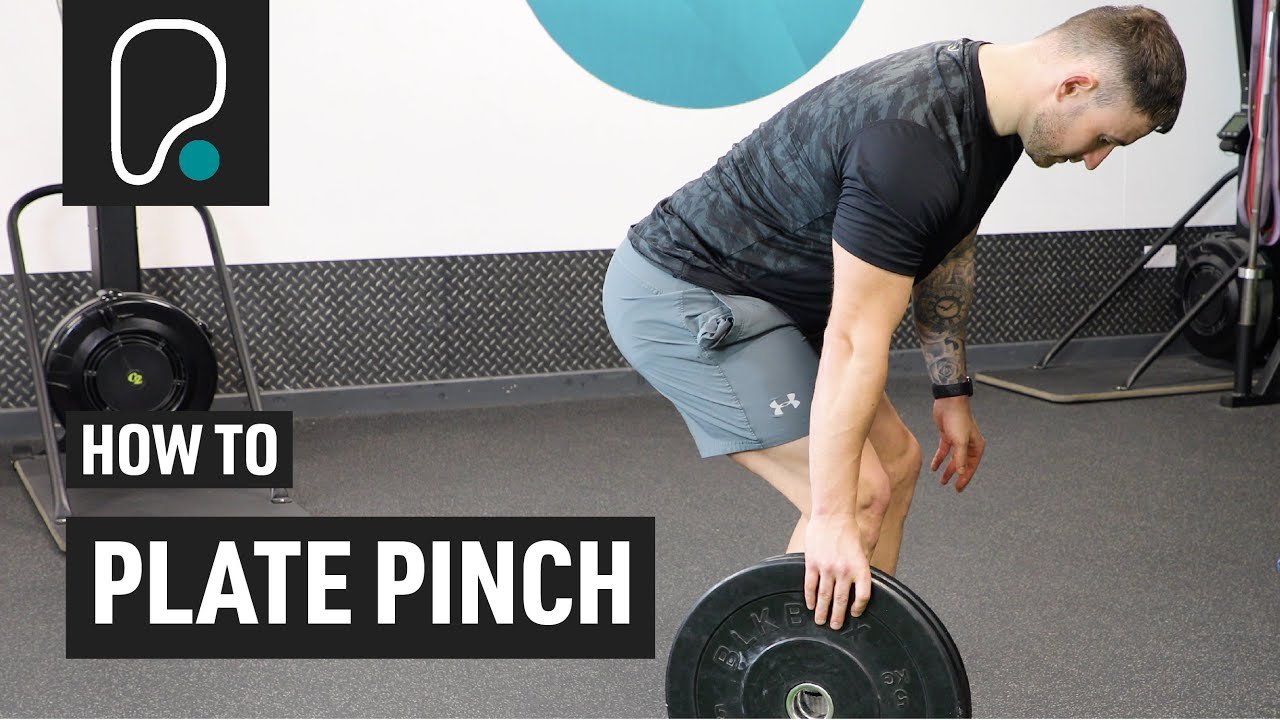
A static pinch hold, pictured here, is a related but different task. It removes the repeated elbow movement. Someone may hold a plate steadily at the side and still find the curl awkward because the implement changes orientation during the repetition. Holding time and curl repetitions should therefore remain separate observations.
Watch for small changes that make a set hard to compare: the plate starts resting against the thigh, the fingers slide farther around the rim, or the torso begins rocking. One changed detail does not diagnose a physical weakness. It tells you that the movement description no longer matches the earlier repetitions.
An observer can help by watching one detail at a time. Ask whether the upper arm stayed in place or whether the fingers moved into a different hold. A short recording can also distinguish a smooth repetition from one that relied on momentum. Neither a photograph nor a burning sensation establishes how the complete set was performed.
Use a clear endpoint that you can reproduce. For example, end when you cannot maintain the agreed hand position through another controlled repetition. Record that reason rather than pretending every completed rep represented the same task. This is especially useful when grip security limits the set before your arms feel heavily worked.
Separate pinch curls, wrist curls and handle-grip curls
A plate wrist curl changes the main moving joint. With the forearm supported, the wrist moves the plate rather than the elbow performing a standing curl. The image here illustrates that separate exercise. It should not be labeled a plate pinch curl simply because both movements use a plate and involve the hand.
A two-handed hammer-style plate curl is another useful comparison. Holding opposite sides or handles of one plate can make an arm exercise easier to organize, but it does not recreate the same thumb-versus-fingers task as pinching plates together. Keep it as an alternative when that is the movement you actually want.
Likewise, barbell and dumbbell curls, thick-handle work and forearm tools offer different ways to load the arms and hands. Their existence does not make a pinch curl redundant, and the pinch curl does not make them obsolete. Match the implement to the intended training task before ranking exercises by how unusual they look.
The equipment suggestions below include plate choices and related curl or grip tools. They are not a required kit, and not every plate shown has an equally suitable rim for pinching. Check the physical product rather than assuming that a catalog picture establishes how it will fit your hand.
Do not combine records from these variations to manufacture a progression. A heavier hammer-style plate curl may reflect a more secure hold and two hands sharing the load. A longer supported wrist-curl set answers another question. Keeping their names and setups separate makes each record more useful.

Equipment Worth Exploring
Explore equipment, accessories and gear from our carefully selected range.


Competition Plates
Competition-style bumper plates for Olympic lifts and loaded strength training.

Grip Plates
Rubber-coated weight plates with handholds for loading barbells and machines.


Fit the exercise around the result you want
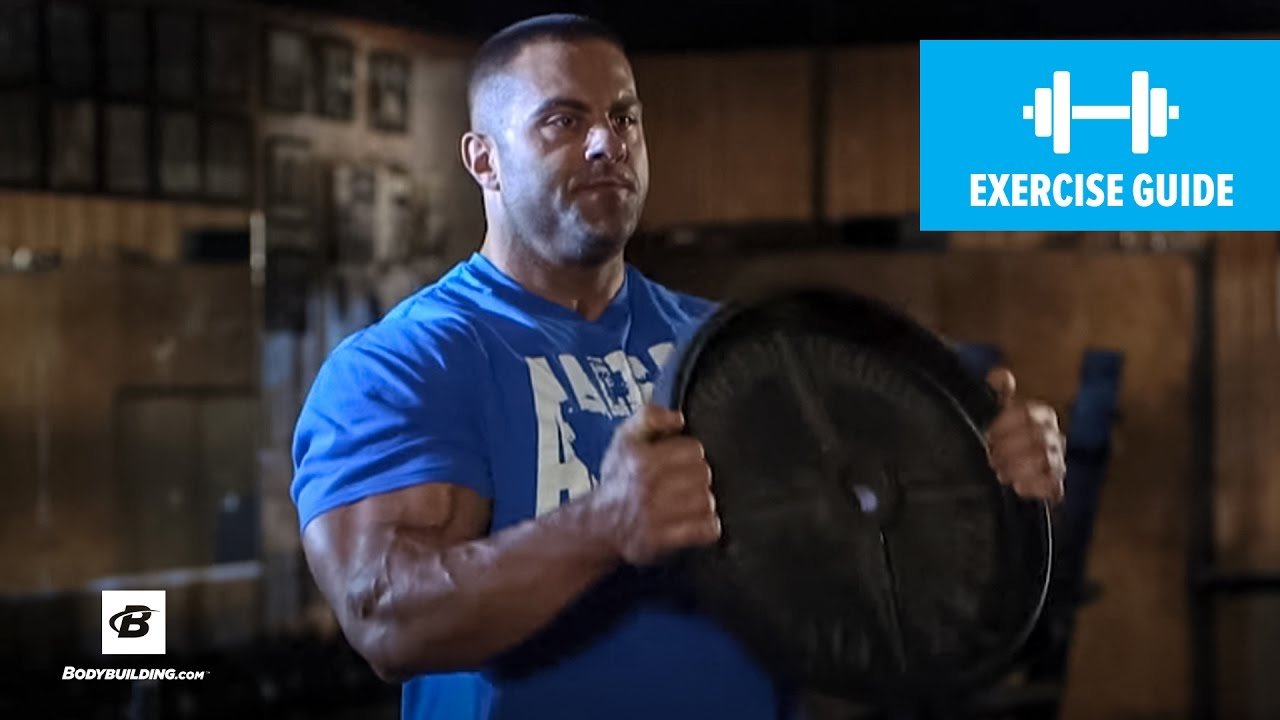
If the priority is arm training, ask whether grip failure prevents useful curling work. A pinch curl can be an additional variation while another implement supplies the main elbow-flexion work. If the priority is the pinch itself, the fact that the hand limits the set may be exactly the feature you want to observe.
Place it thoughtfully around other gripping work. A session containing rows, carries and plate pinches can leave the hands in a different state from a session that starts fresh. That affects what a particular set tells you. Compare similar session positions before deciding that an isolated number proves progress or regression.
Start with a modest amount of practice that lets you maintain the intended contact. Repeat the same implement and movement standard before increasing difficulty. You might first improve consistency across the repetitions you already perform, then consider a change in load or volume. Changing plate shape and weight together makes the cause of a different result harder to interpret.
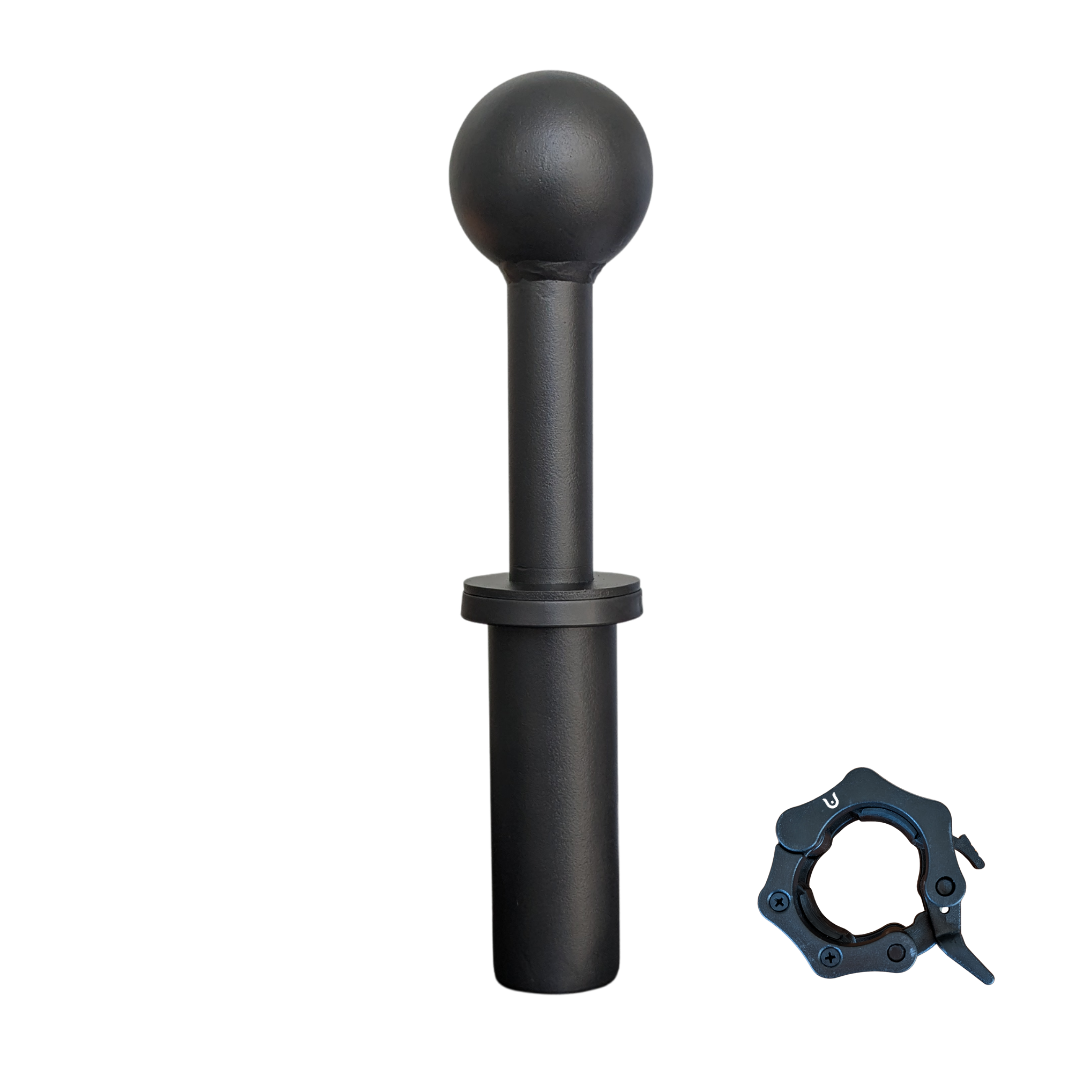
A short record is enough: exact plates, hand arrangement, repetitions, session position and why the set ended. For static holds, record time separately. If you switch to the hammer-style alternative pictured here, give it its own entry. Those details are more useful than a grand total of everything called plate curls.
Keep the expected outcome proportionate. Completing a controlled set does not demonstrate larger biceps, stronger performance on every pulling lift or a universal grip improvement. It shows how you performed one defined task. Build the exercise into a coherent plan and assess the outcomes that matter over time, while preserving the distinction between gripping the plate and curling it.

Funny Gym Shirts & Workout Gear
Funny gym shirts, tanks, hoodies and workout gear for lifters who like training hard.

Grip Day Legend Essential Gymbro & T-Shirt
Rep “Grip Day Legend” humor in and out of the gym.

Grip Train Get A Grip Jumper Grip Training T-Shirt
Show some gym-day personality with “Grip Train”.

I Love Gym Bicep Heart Shirt | Swole Heart Valentine's T-Shirt
Bring “I Love Gym Bicep Heart” humor to your next gym day.


Curls The Girls Shirt – Bicep Curls Top & Gymbros T-Shirt
Rep “Curls For The Girls” humor in and out of the gym.

Micro Biceps Club President Gym | Funny Workout Sweater T-Shirt
Keep things casual with a little “Micro Biceps Club President” attitude.

OnlyGains Big Biceps & Meme Fans Hooded Hoodie
Make your off-duty look more fun with “OnlyGains Big Biceps”.

Lift Eat Repeat & Weightlifting Meme Vest Tank Top
Add some lifting attitude to training with “Lift Eat Repeat”.

Platehead Weightplate Skull Meme – Ultimate Top T-Shirt
Rep “Platehead Weightplate Skull” humor in and out of the gym.