Advertising disclosure: This page includes affiliate product links that may earn us a commission, as well as products from our own store.
A one-hand grip lift only makes sense when you know what was lifted and how. The IronMind Rolling Thunder adds a rotating handle to that problem: a weight that feels manageable on a fixed handle can become a different challenge when the grip surface turns. For lifters who enjoy measurable grip work, the useful goal is a repeatable test rather than an impressive number with missing details. Here is how to separate the implement, the loading setup, the lift standard and the training decision before comparing results.
Rotation changes the task, so identify the handle first
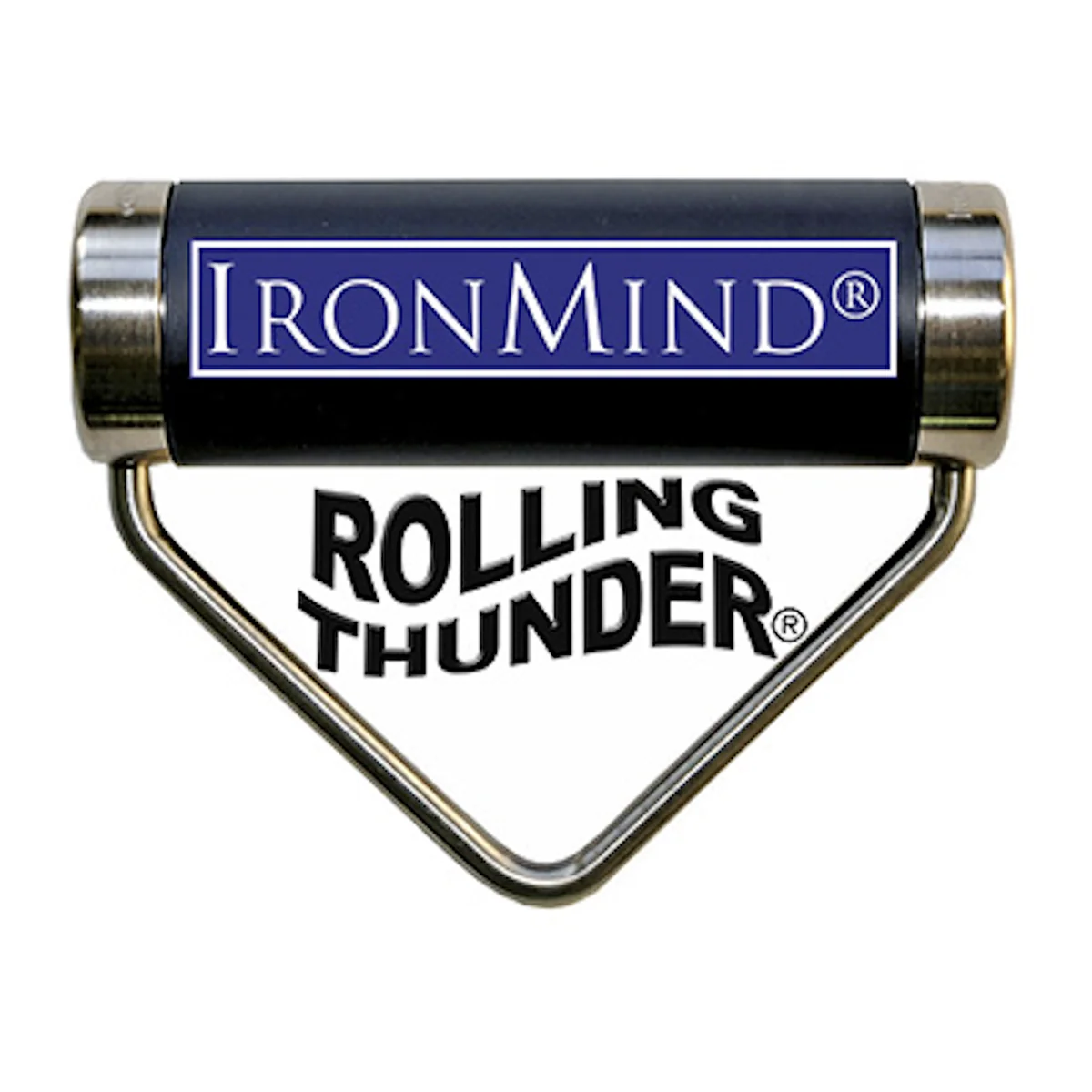
The Rolling Thunder is a revolving deadlift handle, not simply a thick piece of metal attached to plates. A fixed handle and a freely turning surface create different holding tasks. The implement therefore belongs in the name of the test. Calling every thick-handled lift a Rolling Thunder result hides the very feature that makes the comparison useful. Similar appearance is not evidence that two devices behave alike.
The contest requires an authentic, unmodified current-model handle that rotates freely. Check it before loading: turn the frame horizontal, release it and confirm it falls back under its own weight. Document the implement and its condition when comparing venues.
A study of eleven trained men compared standard, two-inch and three-inch bars across six exercises. Thicker bars reduced performance in some pulling exercises, while bench and shoulder press results did not differ between bar conditions. Those findings show why grip diameter can matter differently across tasks. They do not provide a conversion from a fixed-bar deadlift to a rotating one-hand lift, nor establish that a particular grip accessory produces superior long-term gains.
Keep each implement's results in its own series. A change from a smooth rotating cylinder to knurled steel, a different surface finish or a fixed attachment means you have changed the test. You can enjoy both versions without pretending the kilograms are interchangeable. Better documentation is more informative than arguing over which handle feels harder on one afternoon.
Count the complete load and keep the starting setup consistent
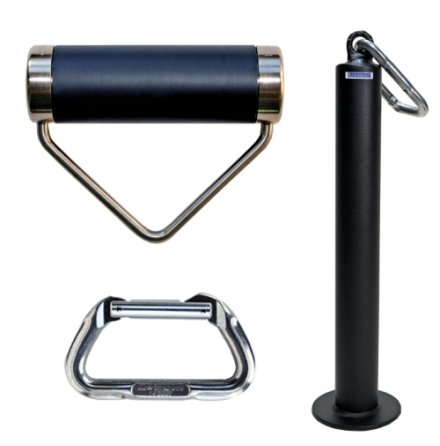
The plates are only part of the load hanging from your hand. A loading pin, connector and handle also contribute mass. Record whether a number means plates alone or the complete assembly. For example, a fictional setup with 40 kilograms of plates and 3 kilograms of equipment represents 43 kilograms of total lifted mass. That arithmetic is an illustration, not a specification for the actual IronMind equipment or a target for a beginner.
Use a level, clear lifting area and assemble the connection before attempting a meaningful load. Check that the carabiner closes properly, that the plates sit securely and that nothing catches on nearby equipment. Keep feet and bystanders away from the possible drop area. A grip test should allow the weight to return to the floor without trapping toes, striking a bench or swinging into another person.
Starting height also belongs in your notes. Plate thickness, stack arrangement and loading-pin geometry can change where the hand begins. A higher starting handle can shorten the movement even when the listed mass stays the same. If you are testing progress, repeat the arrangement rather than quietly building a taller stack and treating the result as a clean comparison.
For competition, use the prescribed loading equipment and verified plate masses. For ordinary training, keep your own setup stable and describe it honestly. A notebook entry such as plates-only mass, same pin, same connector and same stack order is already much more useful than a photograph of an unidentified pile. If you later weigh the assembly, preserve the old entries with their original meaning instead of rewriting them as total-load results.
Choose a lift standard before the first heavy attempt
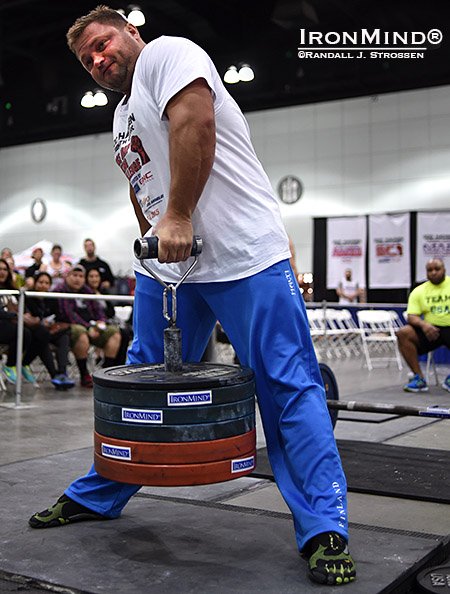
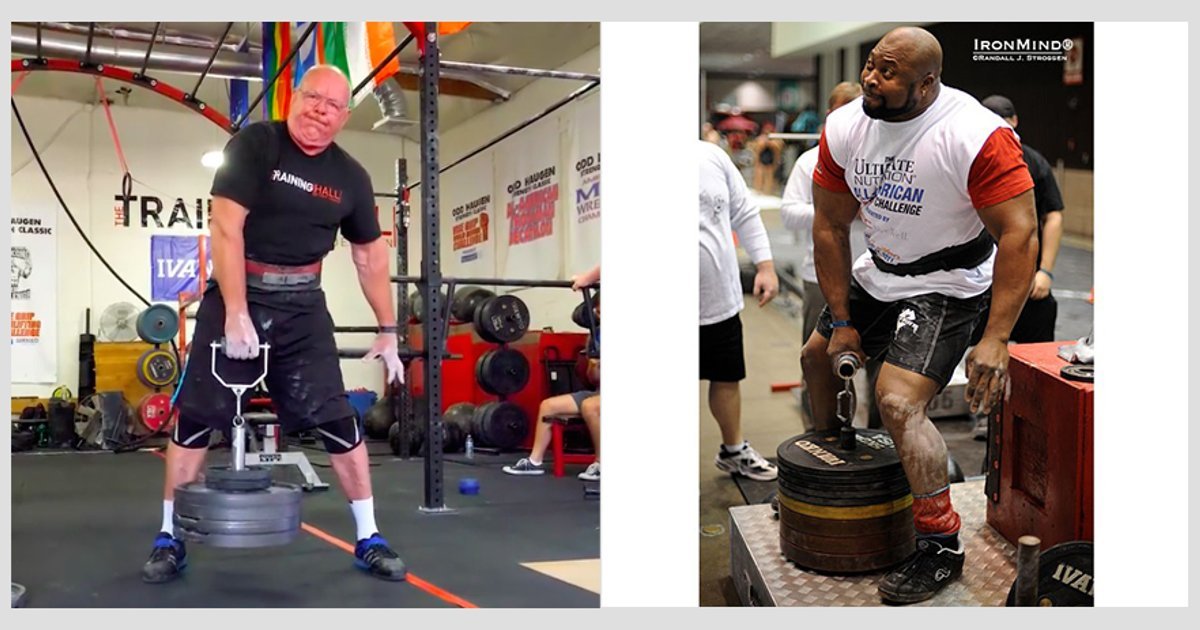
For an official attempt, use the prescribed 15-inch Olympic loading pin and carabiner. Grip centrally with the thumb and keep the handle horizontal. Do not grip the frame or drag the handle up the leg. Stand fully upright, hold control for one second until the down signal, then lower while maintaining contact until the weight rests on the floor.
Those details define a completed attempt. Breaking the plates from the floor is a different achievement from finishing the whole lift. Likewise, releasing the handle while the weight is still descending changes the ending. Decide which outcome you are recording before you look at the number. That makes it easier to distinguish a promising near miss from a repeatable successful attempt.
When practising alone, you can use a deliberate pause and controlled return, but do not describe your self-judged repetition as an official certification. A training video can help you review the finish without replacing an event's referee or administrative process. Position the camera so that the handle, hand, knees, hips and floor remain visible. A tight crop of the plates may show mass moving while hiding the reason a lift would not count.
Review misses by category: grip opened, handle touched the leg, finish incomplete or descent uncontrolled. Each tells you something different. Adding more load is rarely the most useful response when the previous attempt failed a movement standard. Repeat an easier complete lift first, then decide whether another attempt would provide useful information rather than another ambiguous clip.
Treat chalk and surface preparation as part of the test
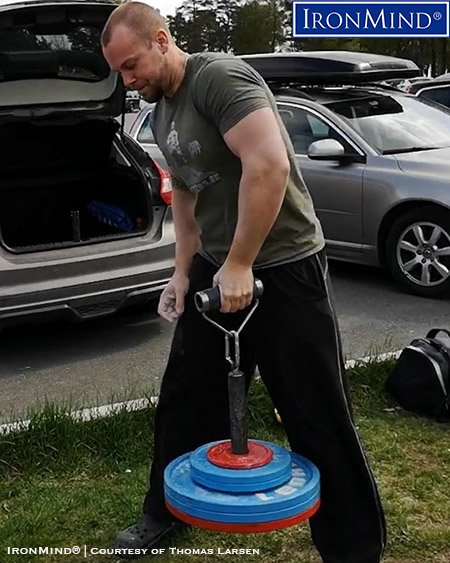
The handle must be wiped clean before attempts. Ordinary chalk is allowed on the hand; liquid chalk and direct application to the handle are prohibited. These are event-specific conditions, so check the rules for the competition you intend to enter.
Keep preparation simple and repeatable. Start with clean hands and use a modest amount of permitted chalk if you choose to use it. Note that choice in your log. Comparing one attempt with damp hands to another with freshly prepared hands introduces an extra variable. You do not need to turn the process into a laboratory experiment, but a few consistent details make a personal record more interpretable.
Do not modify the handle to make a comparison look better. Adding a sticky surface, preventing rotation or using straps changes what is being tested. Straps and wrist grips can have a useful role in other training when the target is the back or legs and the hands are limiting the work. They are not substitutes for the required hand-to-handle connection in this particular event.
The same distinction applies to other grip tools. Thick grips on a bar, a forearm trainer, plate holds and ordinary barbell pulls offer different practice options. Choose them for the task you want to train. Owning several accessories does not mean they should be combined into one test, and a successful strapped row should not be filed alongside an unaided rotating-handle lift.

Equipment Worth Exploring
Explore equipment, accessories and gear from our carefully selected range.


Leather Wrist Grips
Padded leather lifting grips help support the hands and wrists on heavy pulling exercises.

Leather Lifting Straps
Padded leather straps support grip during heavy rows, deadlifts and pulling exercises.

Angles 90 Grips
Flexible grip attachments that allow natural wrist movement during pulling exercises.


Grip Plates
Rubber-coated weight plates with handholds for loading barbells and machines.

Train the grip without making every session a record attempt
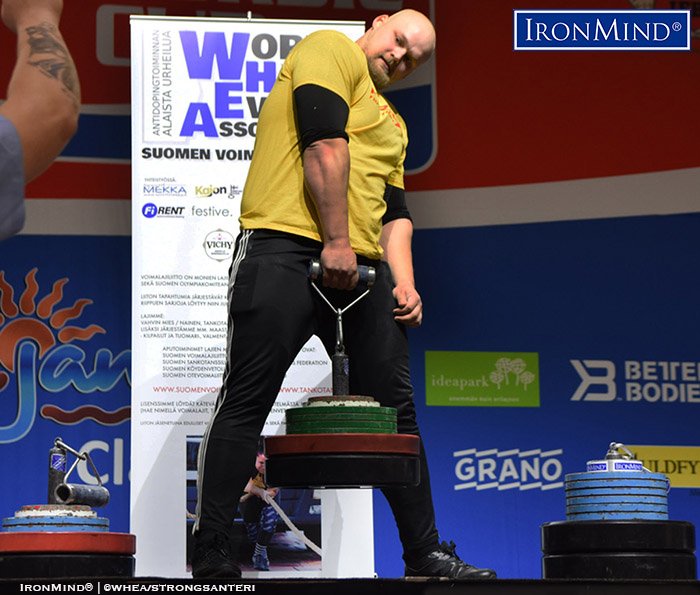
First decide whether this is the main goal of the session or a small addition after other lifting. If heavy rows or deadlifts matter most that day, exhausting the hands beforehand can interfere with the work you intended to prioritise. Grip work can fit after those lifts, while a dedicated testing day can place the grip test earlier. Keep that order in the log so fatigue differences are visible.
For a healthy lifter learning the implement, one practical starting example is a few easy single lifts on each hand, with a complete reset and enough rest to repeat the same standard. This is a coaching example, not a proven optimal Rolling Thunder program. Start below the load that produces scrambling, twisting or repeated slips. Stop for pain, and avoid turning an unfamiliar test into a sudden increase in hard hand and forearm work.
Record the hand used, complete load definition, handle identity, surface preparation, starting setup, successful attempts and reason for misses. Keep left and right results separate. If you change the implement or the rules, start a clearly labelled new series. You can also record how the session fits around other pulling work; a tired hand and a rested hand should not be treated as identical testing conditions.
After several comparable sessions, judge progress by cleaner completed lifts and a trend you can reproduce. One unusually good attempt can be enjoyable without proving a lasting strength increase. Regular resistance training remains the broader foundation, and specialised grip work is an optional way to pursue a specific goal. A useful number is one you can explain, repeat and build on—not merely the heaviest stack that left the floor.

Funny Gym Shirts & Workout Gear
Funny gym shirts, tanks, hoodies and workout gear for lifters who like training hard.

Grip Training Essential Gymbro Jumper & T-Shirt
For laid-back days and lifting humor: “Grip Training Essential”.

Grip Training Get A Grip Hoodie
Show off your lifting humor in a laid-back “Grip Training” hoodie.

Pumpeye Forearm Gains Grip Training Popeye Meme Vest Tank Top
Add some lifting attitude to training with “Pumpeye”.

Slip Not Grip Training – Heavy Metal Workout Decal for Sticker
A fun “Slip Not Grip Training” touch for bottles, laptops, and lockers.

Huh Huh Let'S Train Grip Beavis And Butt-Head T-Shirt
Make gym days more fun with “Huh Huh Let's Train Grip” style.

The Walking Deadlift – Zombie Leg Day & Gymbro Gains T-Shirt
Make gym days more fun with “The Walking Deadlift” style.

Strongman Superman Hero Meme & Gymbros Comic Book Top T-Shirt
Rep “Strongman Superman Gym Hero” humor in and out of the gym.

Grim Reaper Deadlift Skeleton Bros & Leg Day Lovers Hoodie
Stay casual and show some leg-day attitude with “Grim Reaper Deadlift”.

Do You Even Deadlift Tee
Heavy lifts, good laughs, and a little “Do You Even Deadlift?” energy.

Skeleton Deadlift Decal Water Bottles & Equipment Sticker
Put “Skeleton Deadlift” gym humor on your laptop, bottle, or gym gear.