Advertising disclosure: This page includes affiliate product links that may earn us a commission, as well as products from our own store.
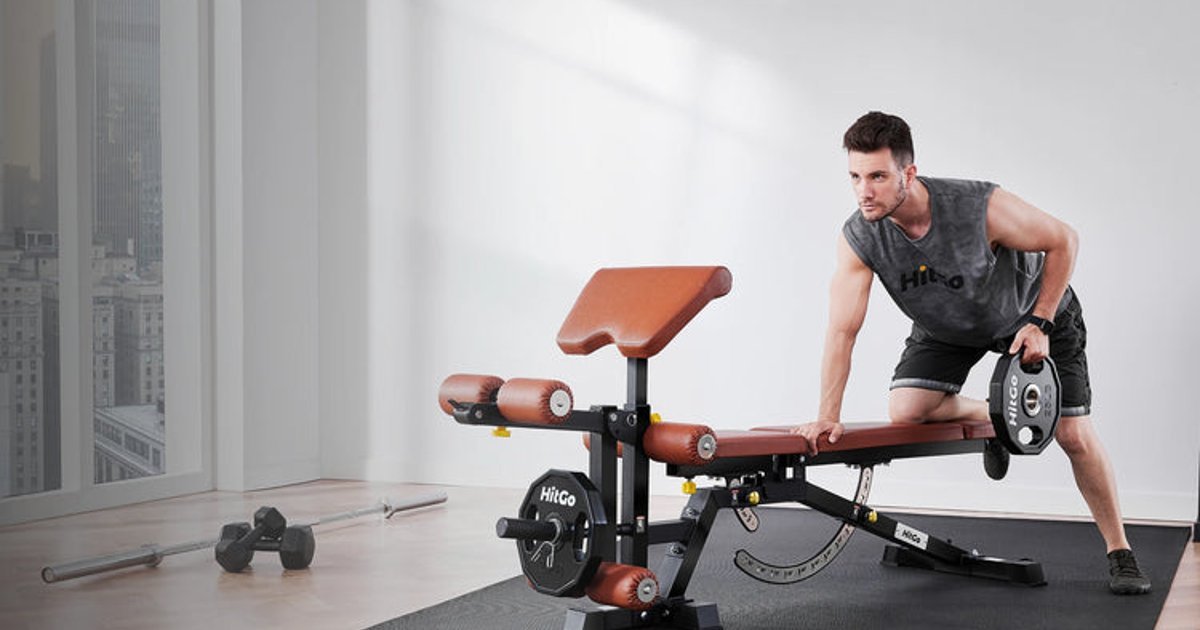
The HitGo EVO-UB pairs an adjustable bench with options for preacher curls and plate-loaded leg work. The practical attraction is obvious: several training tasks around one bench rather than a separate station for each. The important details are less obvious. Package contents, attachment limits, adjustment fit and working space deserve separate checks before the headline capacity or a photograph of a fully equipped setup drives the purchase.
Read the 1,200-pound capacity as a question to clarify
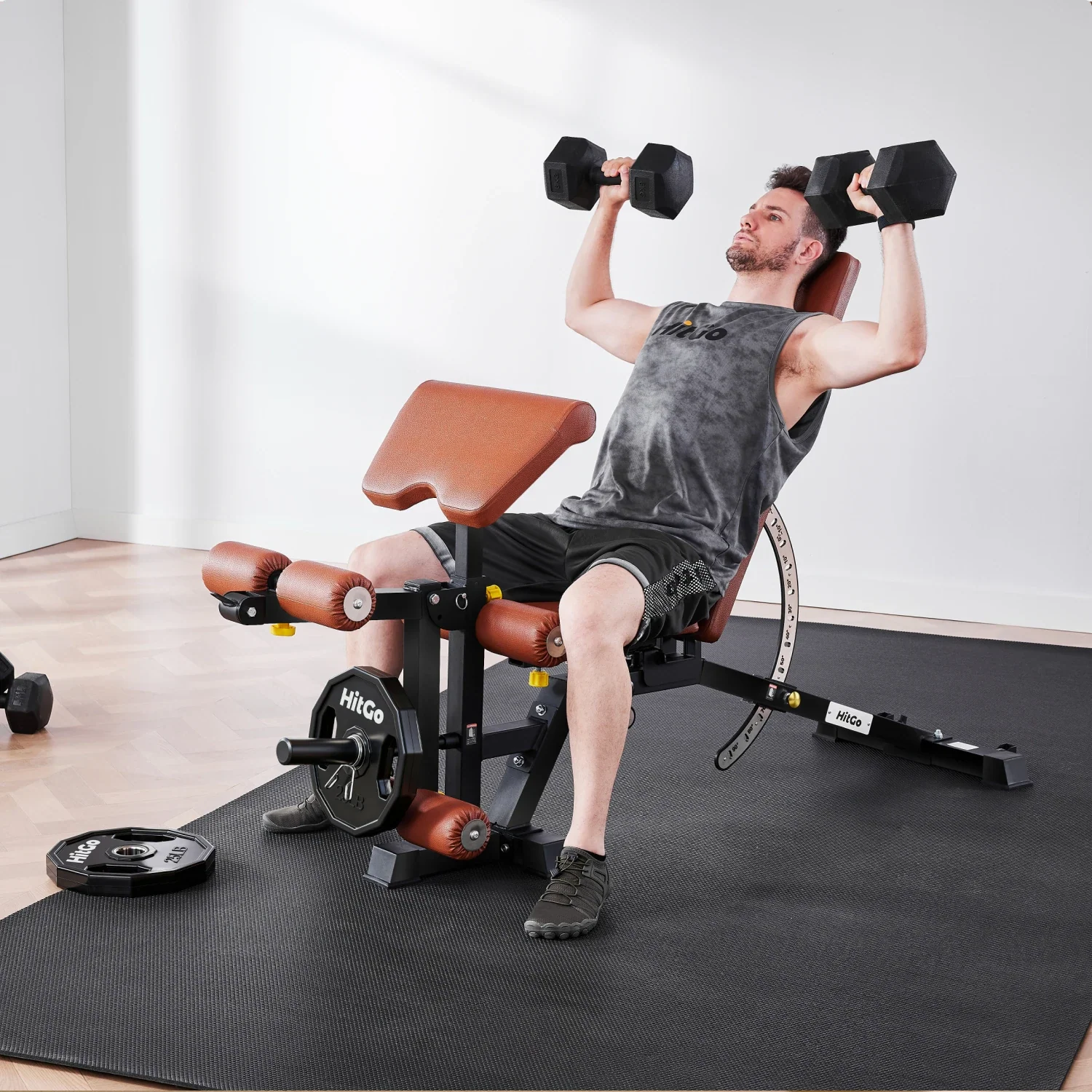
The EVO-UB listing advertises a 1,200-pound weight capacity. That is a manufacturer specification, not an independent MMP load test. It should not be interpreted as a 1,200-pound allowance for every attachment or every exercise. Ask what the rating includes, whether it combines user and external weight, and which positions and components the stated limit covers before using it to plan a heavy session.
For a bench, the relevant load is more than the dumbbell number on a training log. Your body, the weights and the way you enter and leave the position all matter. A headline rating also does not describe how the pad feels, whether the bench rocks on your floor or how easily you can get your feet into a useful position. Those are separate buying checks.
The product page offers Basic and Premium accessory options, with brown and black upholstery choices. A photograph showing the preacher pad, curl bar and front leg assembly does not establish that every pictured part comes with the option you select. Request an itemized contents list, then compare it against the actual basket description. Keep the complete training setup separate from the starting price of the bench.
Work out the first three exercises you intend to use before judging the package. For example, an incline dumbbell press, a leg extension and a supported curl create three different fit checks. If your program mainly needs a stable flat bench, the extra stations may add little value. If you genuinely use all three, the important question becomes how well each position works and how much changeover it requires.
Test the adjustment system with your pressing setup
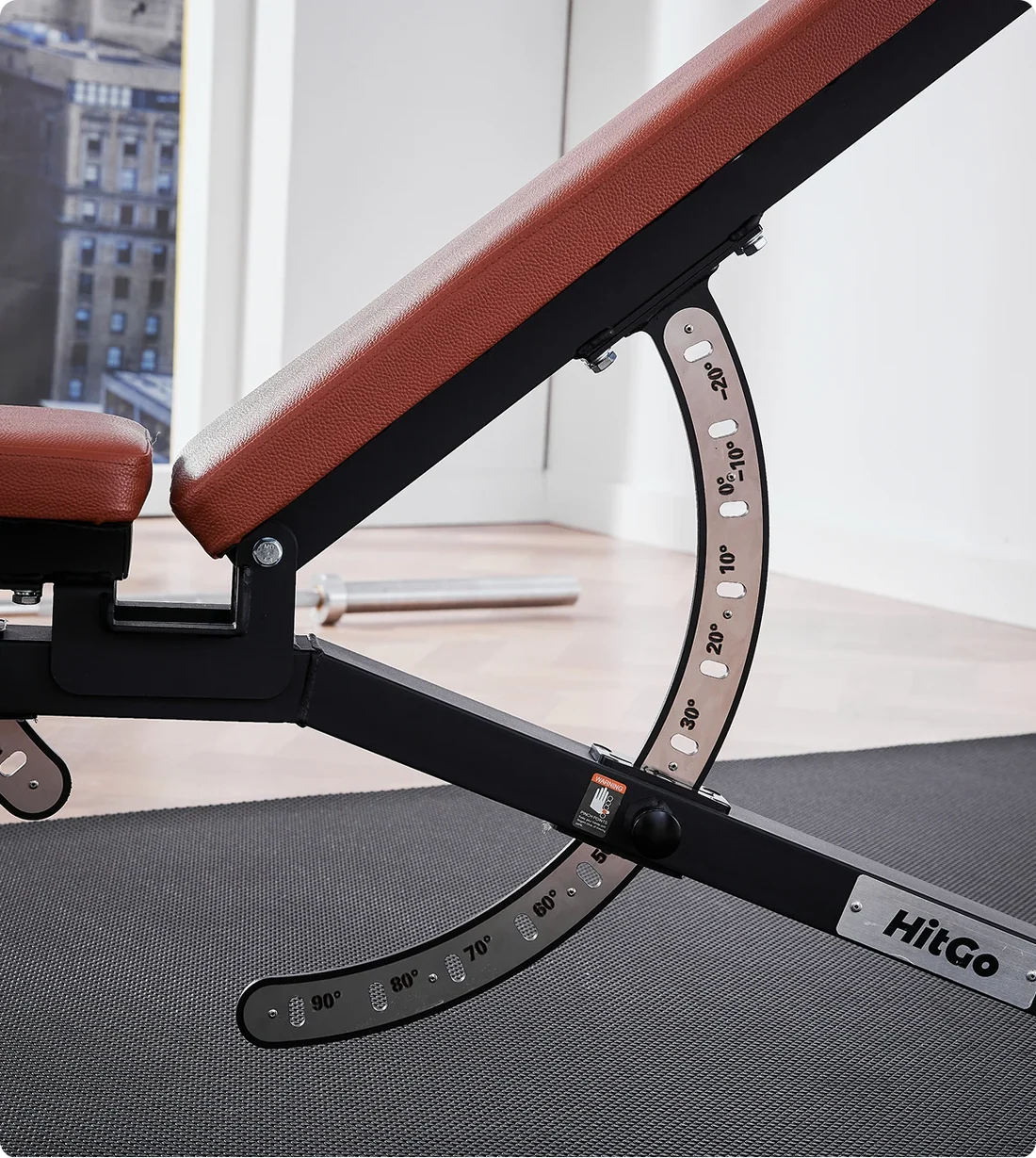
The listing describes twelve adjustable positions spanning incline, flat and decline. The curved angle guide makes the selected position visible, but the number of settings is only a starting point. Check which backrest and seat combinations are actually available, whether the support locks securely and whether you can make the adjustment without leaving an unstable component or a partly engaged pin.
Before pressing, confirm that the bench sits firmly on the intended surface and that the setting is secured according to the current instructions. Then check your body position without heavy weights. Your head and upper back need useful support, and your feet need somewhere stable to go. A setting that suits another lifter in a product photo may not create the same position for you.
Think about the path into and out of the exercise as well as the repetitions. Front rollers or a preacher assembly can occupy space near the knees and feet. Confirm which accessories should be removed for the movement and how they are secured when installed. Do not make a difficult dumbbell setup more complicated by trying to work around an attachment that is unnecessary for that exercise.
Record the bench setting alongside your pressing load and repetitions. If the incline changes between sessions, you are changing the task rather than making a clean comparison. For a repeatable baseline, use the same setting, similar range and the same intended execution. Build useful training records before interpreting a heavier dumbbell as proof that every aspect of your pressing has improved. For example, keep one incline setting for two sessions and note whether the feet, pad support and dumbbell entry feel repeatable. If you then change the backrest angle, start a new comparison for that position. This small distinction makes the log more useful than collecting numbers from several different setups under a single exercise label.
Check the leg station as a separate machine
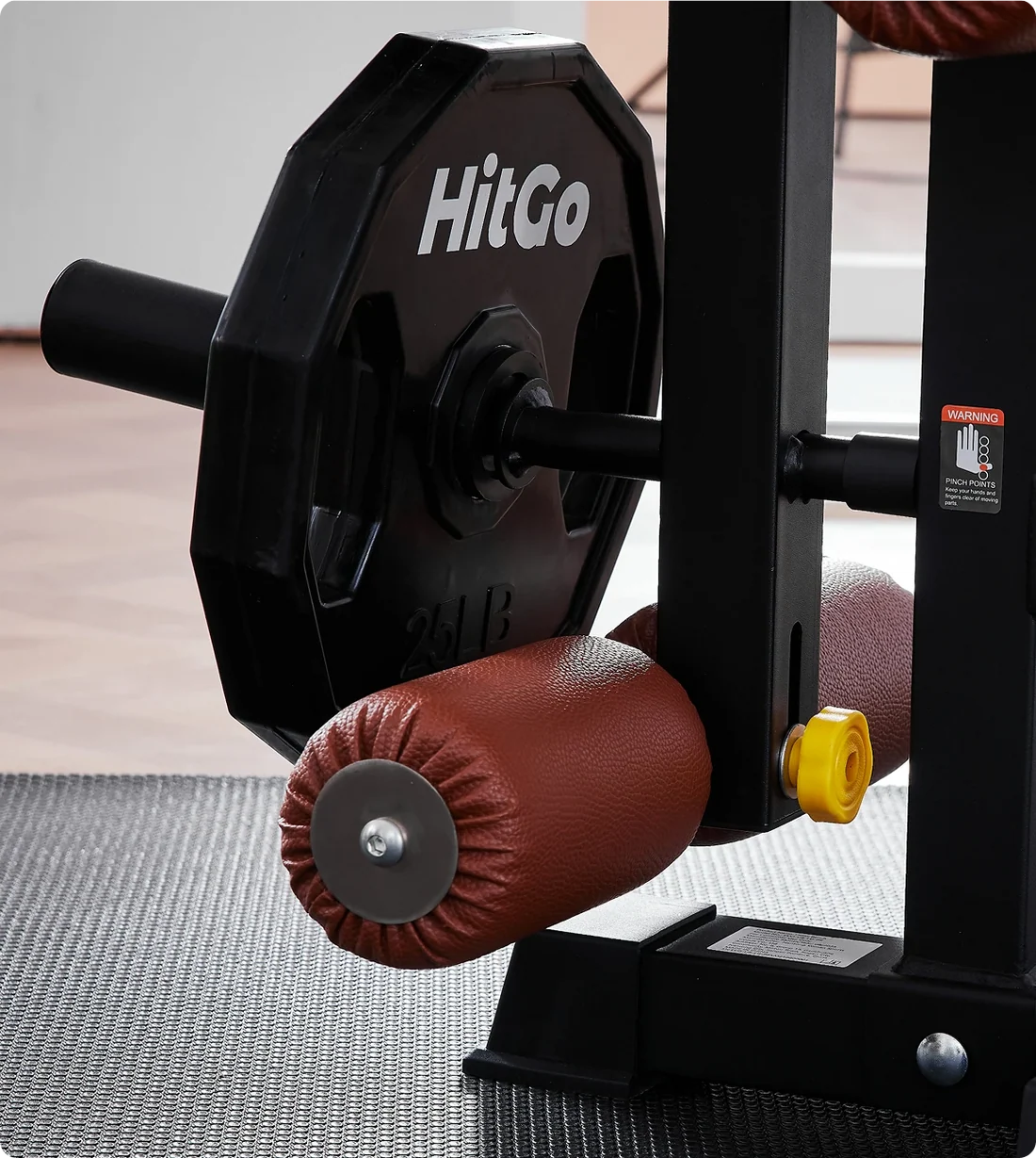
The EVO-UB page shows a plate-loaded leg-extension attachment with padded rollers. Evaluate that station separately from the bench frame. Ask for the attachment's own loading limit, loading-post dimensions, plate compatibility and required retaining hardware. The main bench capacity is not a substitute for those answers, and a photograph of a single plate does not establish the maximum usable stack.
Fit matters at both the knee and the lower leg. During a demonstration, check where you sit, how the knee lines up with the moving assembly and where the roller contacts the shin. You want a controlled knee-extension task rather than a position that forces you to slide, twist or reach for the roller. Try the available adjustments before assuming the attachment suits your proportions.
The resistance also changes through the movement because a plate-loaded lever moves relative to gravity. That means the plate label alone does not describe what the knee experiences throughout the repetition. It also means a plate-loaded attachment and a selectorized leg-extension machine should not be compared as though equal displayed loads create an identical exercise. Compare the usable range and execution, not just kilograms or pounds.
If a seller demonstrates leg curls or another configuration, verify that exact setup in the current instructions. Do not assume every movement shown on a related bench or another regional listing is supported by your package. Start lightly while learning the station, keep the movement controlled and assess whether the setup remains practical once plates are loaded and you need to get on or off the bench.
Evaluate the preacher curl pad and chain-linked bar
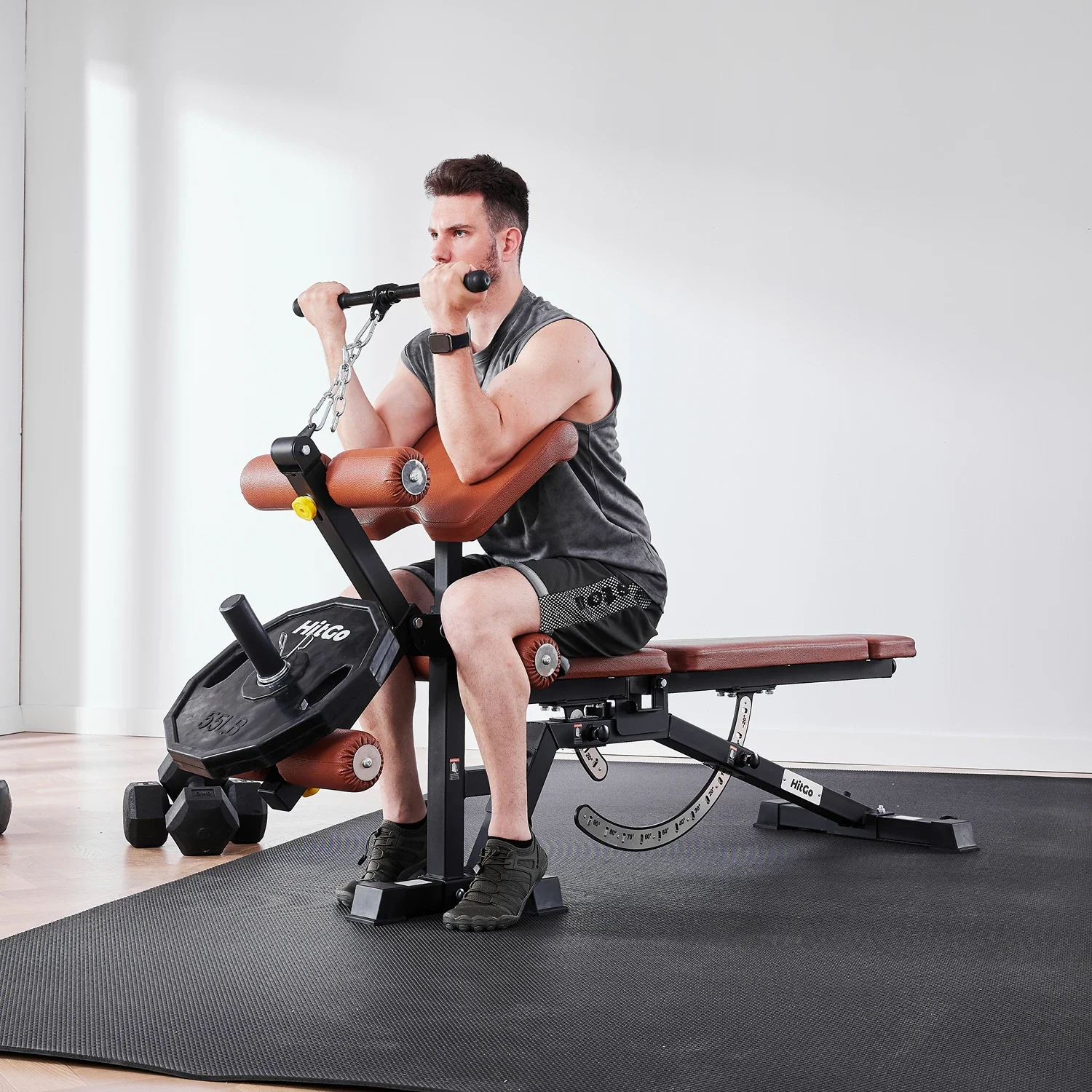
The pictured curl setup connects a bar by chain to the plate-loaded front mechanism. That is different from holding a free bar over a standalone preacher bench. Check how the chain attaches, how the bar rests between sets and whether the selected configuration provides an appropriate starting position. A supported upper arm does not remove the need to control the load at the bottom of a curl.
Set the pad and your seat position so you can reach the bar without an awkward stretch or a sudden pull. Keep the intended upper-arm contact consistent, then choose a range you can control. If your shoulders have to roll forward or your torso repeatedly rises to finish the repetition, the setup, load or chosen range needs attention. More plates do not correct an unsuitable position.
Ask to see the whole travel of the mechanism, not just the top position in a promotional image. Watch the chain path, plate clearance and whether the load settles predictably at the end. Confirm the current instructions for retaining plates and securing connections. Do not substitute a different chain, handle or pin merely because it appears to fit; compatibility requires more than a matching-looking hole.
For progression, keep the pad setting, grip and movement standard stable. You can first add controlled repetitions, then make a modest load increase when the same execution remains achievable. That is more useful than treating every difficult sensation as a superior arm stimulus. The station earns its place when it supports a repeatable curl that fits comfortably into the rest of your training.

Equipment Worth Exploring
Explore equipment, accessories and gear from our carefully selected range.


FID Bench MAX
Adjustable bench offering flat, incline, and decline positions + adjustable headrest.


Multi Bench MBX-650 2.0
Adjustable multi-bench with roller adjustment, 15 backrest positions and accessory mounts.


Rubber Hex Dumbbells
Rubber-coated hex dumbbell pairs with a stable shape for home and commercial strength training.


Plan storage around the complete working setup
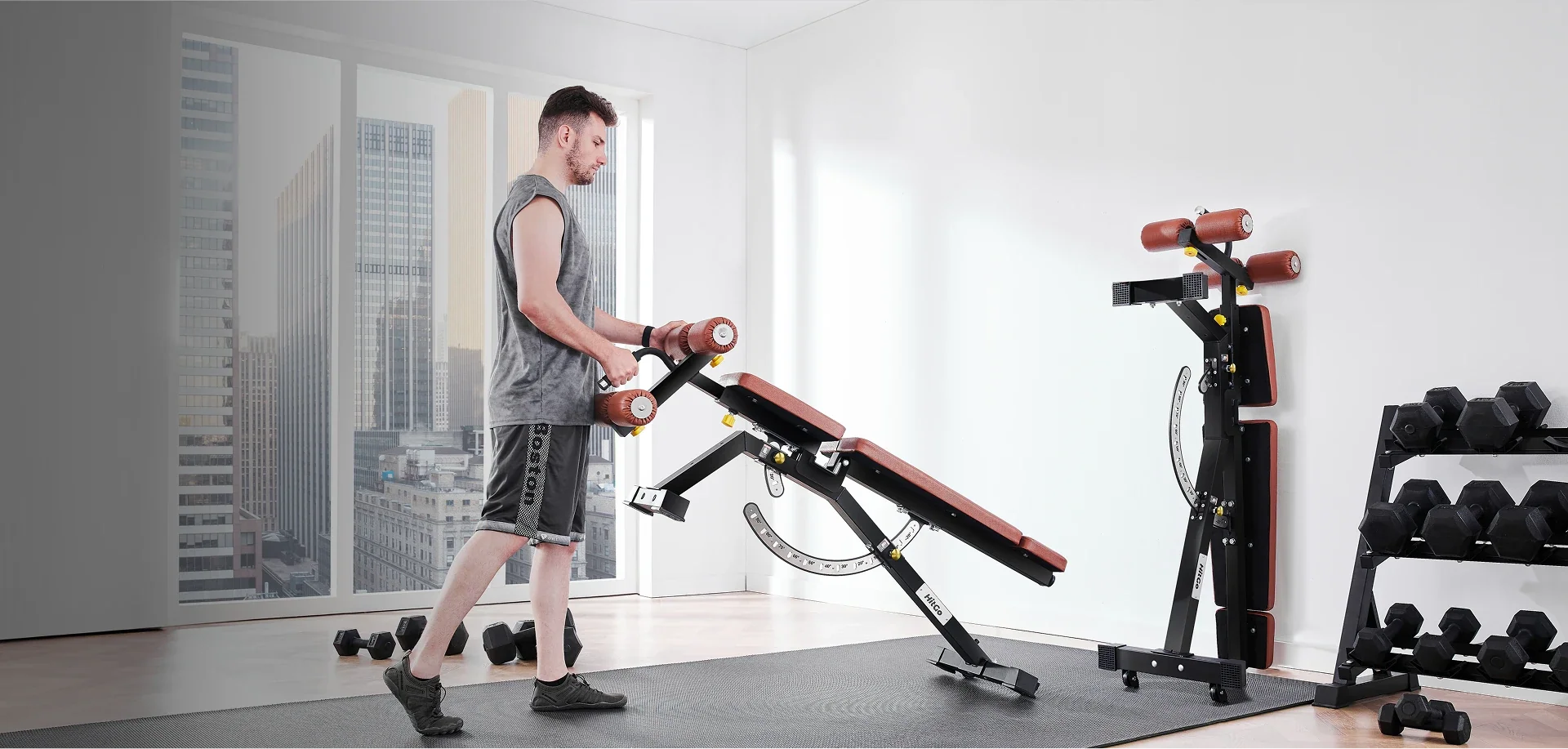
The bench is shown with transport wheels and an upright storage arrangement. Those features can help with moving and parking it, but they do not make the operating footprint disappear. Allow room to load plates, adjust the backrest, approach the seat and handle dumbbells. Include the projecting leg and preacher components when measuring rather than relying on the bare-bench outline.
The specification table labels its 88-pound figure as gross weight. That should not be silently converted into an assembled bench weight or a promise about how easy the unit is to move. The page also shows different dimensions for different configurations. Ask for the assembled and stored dimensions of the exact version, including attachments, before planning a tight storage location or a narrow access route.
Make everyday upkeep part of the decision. Check the frame connections, adjustment hardware, upholstery and moving attachment parts as the current instructions require. Keep loose weights out of the route around the bench and address damaged or insecure components before use. Convenient equipment should make a regular session easier to start, rather than adding a sequence of improvised fixes before each exercise.
Compare the full package with other adjustable benches, dumbbells and dedicated attachment systems based on your actual exercise list. Those alternatives have their own compatibility and space requirements; they are not accessories assumed to fit the EVO-UB. The sensible purchase is the setup that supports consistent training, a workable room layout and clear component limits. Confirm those details before letting a large capacity number stand in for the whole buying decision.

Funny Gym Shirts & Workout Gear
Funny gym shirts, tanks, hoodies and workout gear for lifters who like training hard.

Bench Press and Chill Funny Gym T
Make gym days more fun with “Bench Press and Chill” style.


Funny Micro Biceps Club President | Gym Humor Hooded | Hoodie
Bring “Micro Biceps Club President” gym humor to lazy days and post-workout plans.

The Real Rocky Mountains – Bicep Mountain Meme Pullover T-Shirt
Keep things casual with a little “The Real Rocky Mountains” attitude.

Dumbbell Heartbeat Muscle Shirt Athletic Vest Fitness F Tank Top
Your gym-day look, with a playful “Dumbbell Heartbeat” twist.

Anti Gym Home Gym Club Hooded Pullover for Garage Gym L Hoodie
Stay casual and show some lifting attitude with “Anti Gym Home Gym Club”.

Basement Gym Club Muscle Shirt Athletic Vest for Baseme Tank Top
Add some lifting attitude to training with “Basement Gym Club”.


Dumbbell Meme Shirt – Essential & Gymbros Seeking T-Shirt
Make gym days more fun with “Dumbbell Gym Meme” style.