Advertising disclosure: This page includes affiliate product links that may earn us a commission, as well as products from our own store.
A lying low-cable curl gives you a straightforward way to make arm training stricter: put your back on the floor, keep the pulley near your feet and bend your elbows without rocking your torso. The useful part is a repeatable setup. You can compare repetitions with less uncertainty about how much body swing helped. Here is how to choose the floor variation, manage the cable path and use it as a practical biceps accessory.
Identify the low-pulley version before choosing your load
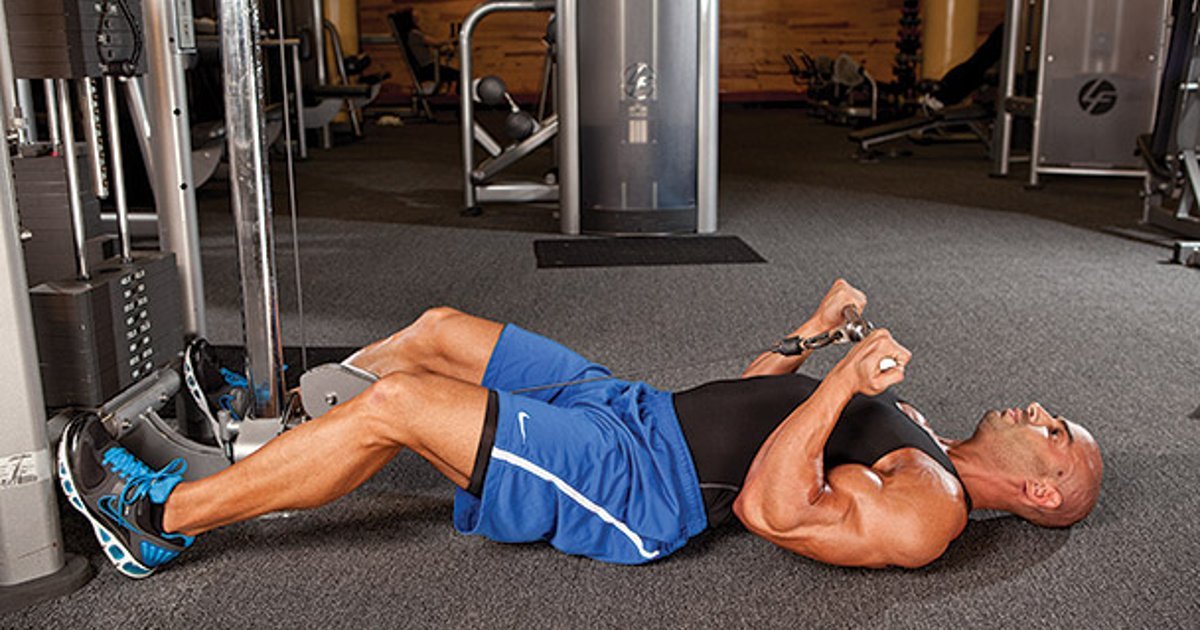
For this version, lie face up with your feet toward the cable station. The cable travels from a low outlet toward a short bar held with an underhand grip. Your upper arms stay close to your torso as your elbows bend. The biceps help flex the elbow; the brachialis and brachioradialis also contribute. Supporting the torso makes it easier to notice when the exercise starts turning into a whole-body effort.
The name lying cable curl also covers exercises with very different geometry. A high pulley behind your head, arms pointing toward the ceiling and a bar coming toward your forehead is a separate setup. A floor curl with a higher pulley and deliberately elevated upper arms differs again. Those variations can have a place, but moving between them changes the exercise you are recording. Start by deciding which position you intend to repeat.
Cable tension does not mean the elbow experiences identical resistance throughout every degree of the curl. The angle between your forearm and the cable changes as you move, changing the cable's turning effect around the elbow. Pulley height and your distance from it therefore matter. Two stations can feel different even when both stacks show the same number. Treat the stack label as a reference for that machine rather than a universal strength score.
Choose this movement when you want a supported, easy-to-monitor curl. It is not a requirement for bigger arms, a proven way to reshape your biceps peak or a guarantee of superior growth. If you already have a comfortable curl that progresses well, the floor version earns its place through useful execution and convenient tracking.
Set the floor position, grip and cable clearance
Start with a light setting and attach a suitable short cable bar. Check that the clip is closed and the attachment rotates or sits as intended. Sit facing the pulley, take your grip and lower yourself into position with control. Avoid dragging a heavy stack into place while trying to lie down. Leave enough clear floor space for your full body and the moving attachment without blocking another person's station or walkway.
An underhand grip around shoulder width is a sensible first trial. Choose a position that lets your wrists stay comfortable instead of forcing a particular hand spacing. A compatible angled cable bar may suit you better than a straight one. A single handle offers another way to find an individual wrist position. Changing the handle changes the setup, so note it rather than pretending every attachment produces an interchangeable result.
Keep your feet toward the station and your back comfortably supported. Some machines provide an appropriate fixed foot support; others work better with your feet on the floor and knees bent. Do not brace against moving plates, guards or loose parts. Check that the cable clears your legs, clothing and the attachment through the whole repetition. If you must twist or lift your body just to avoid contact, reposition or use another station.
Adjust your distance so the cable is engaged at the beginning without pulling you out of position. Test a few easy repetitions before committing to a working set. You should be able to reach the intended bottom position, curl without striking your body and return without a sudden slack-to-tight jerk. Finish by setting the weight down deliberately before getting up. A smooth exit is part of a workable setup.
Use elbow movement to define each repetition
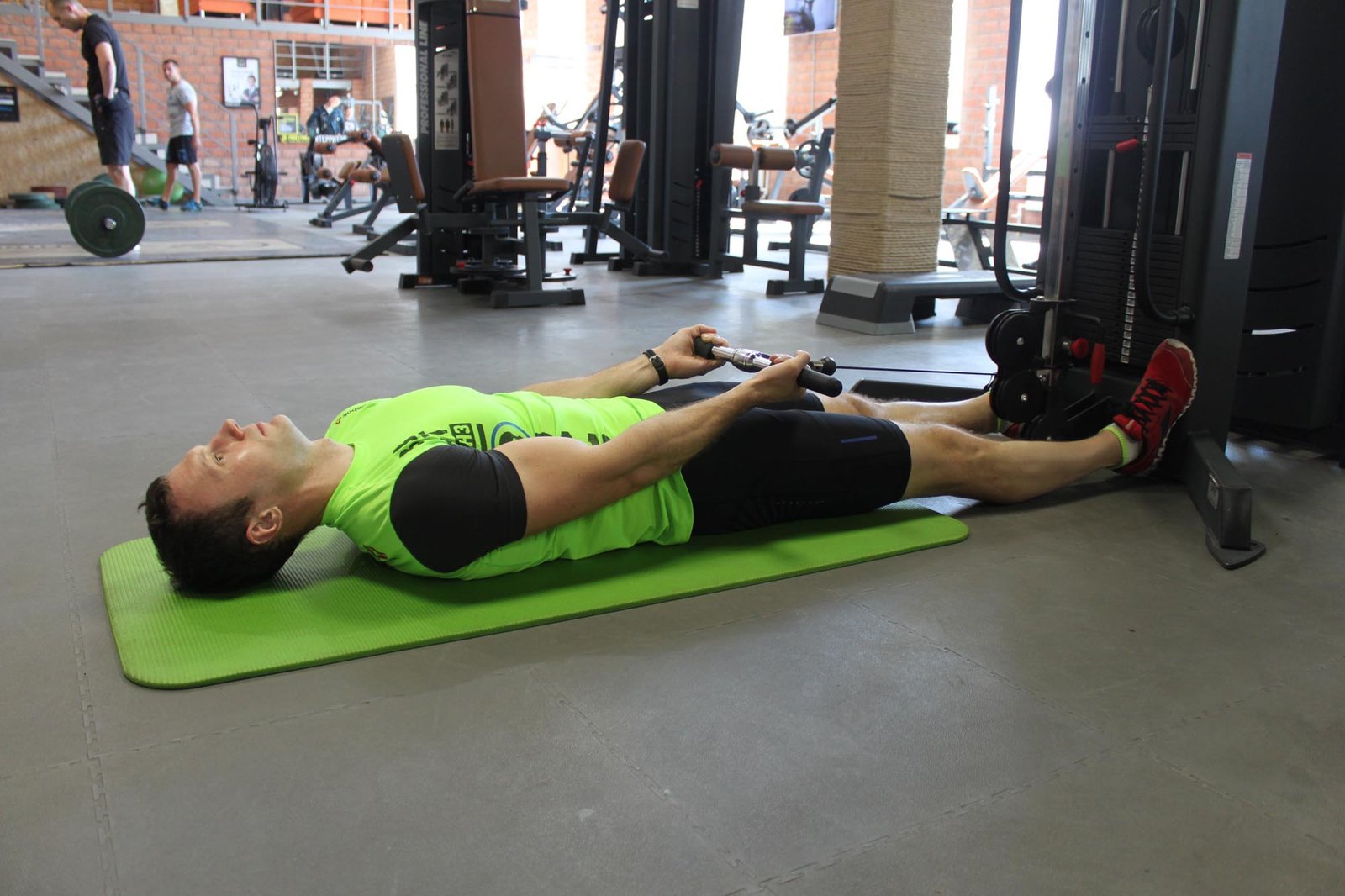
Begin with the bar toward your thighs and your elbows comfortably extended rather than forcibly locked. Keep the upper arms close to your sides. Bend the elbows and let the bar follow its natural arc toward your upper torso. Stop at the point where further travel would require a clear change in shoulder position or wrist angle. A dramatic bar-to-chest touch is unnecessary if your proportions or attachment make it awkward.
For the strict floor variation, keep the upper arms supported where the setup allows and avoid progressively lifting the elbows to finish tired repetitions. Lower the bar along the same path until you reach the starting position you established. Maintain enough control to change direction without bouncing. You can breathe out while curling and breathe in while lowering, keeping the rhythm comfortable rather than holding your breath through a long accessory set.
A brief, controlled turnaround is enough. You do not need a ritual of exaggerated squeezing or an extremely slow descent to make the set count. Select a pace that exposes loss of control and remains repeatable. If the first repetition takes one smooth motion but the last involves a sudden wrist snap, raised head and shifting shoulders, the set has changed even if the bar still reaches the same landmark.
Try a simple quality check: watch one light set from the side, or ask a training partner whether your torso and upper arms stayed in place. Then compare a working set. Look for changes in the bottom position as well as the top. Gradually shortening the return can hide fatigue just as easily as swinging the bar upward. Count repetitions against a clear standard you can recognize again next week.
Troubleshoot sliding, wrist strain and changing arm angles
If you slide toward the machine, reduce the load and reassess your support and distance. Trying to solve the problem by driving your heels harder into unsuitable machine parts creates a worse setup. A comfortable mat can help you establish a consistent position, but it should not become an improvised anchor system. If the station cannot accommodate the movement cleanly, a standing or seated cable curl is a useful alternative.
If the bar bothers your wrists, stop forcing that grip. Test a lighter load and a compatible angled handle, or use one hand at a time. Keep the hand and forearm reasonably aligned instead of curling the wrist to lift the attachment farther. These are options for improving exercise comfort, not a treatment plan for an injury. Stop a painful set rather than using momentum to get through the irritation.
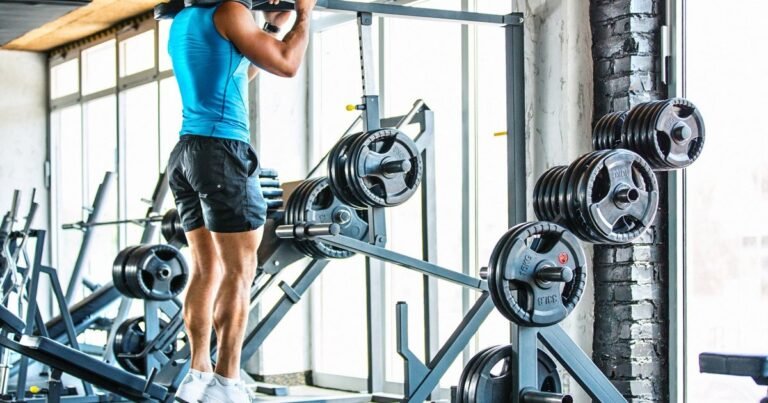
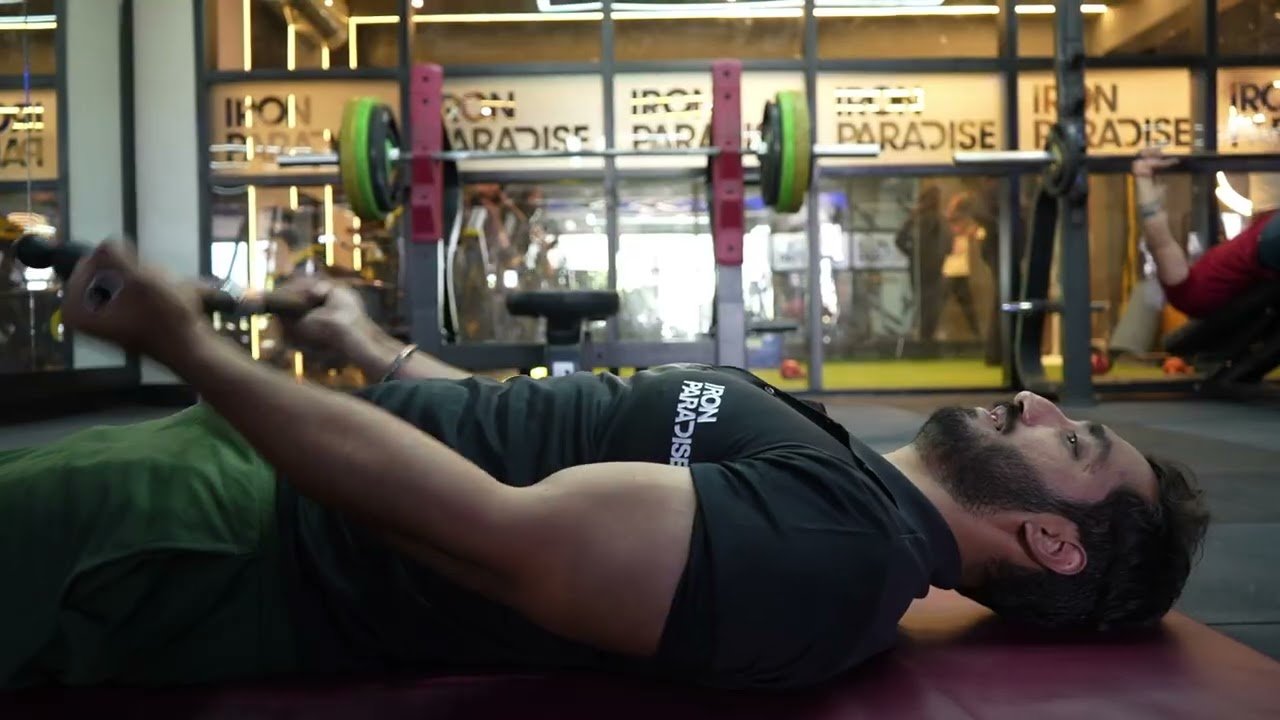
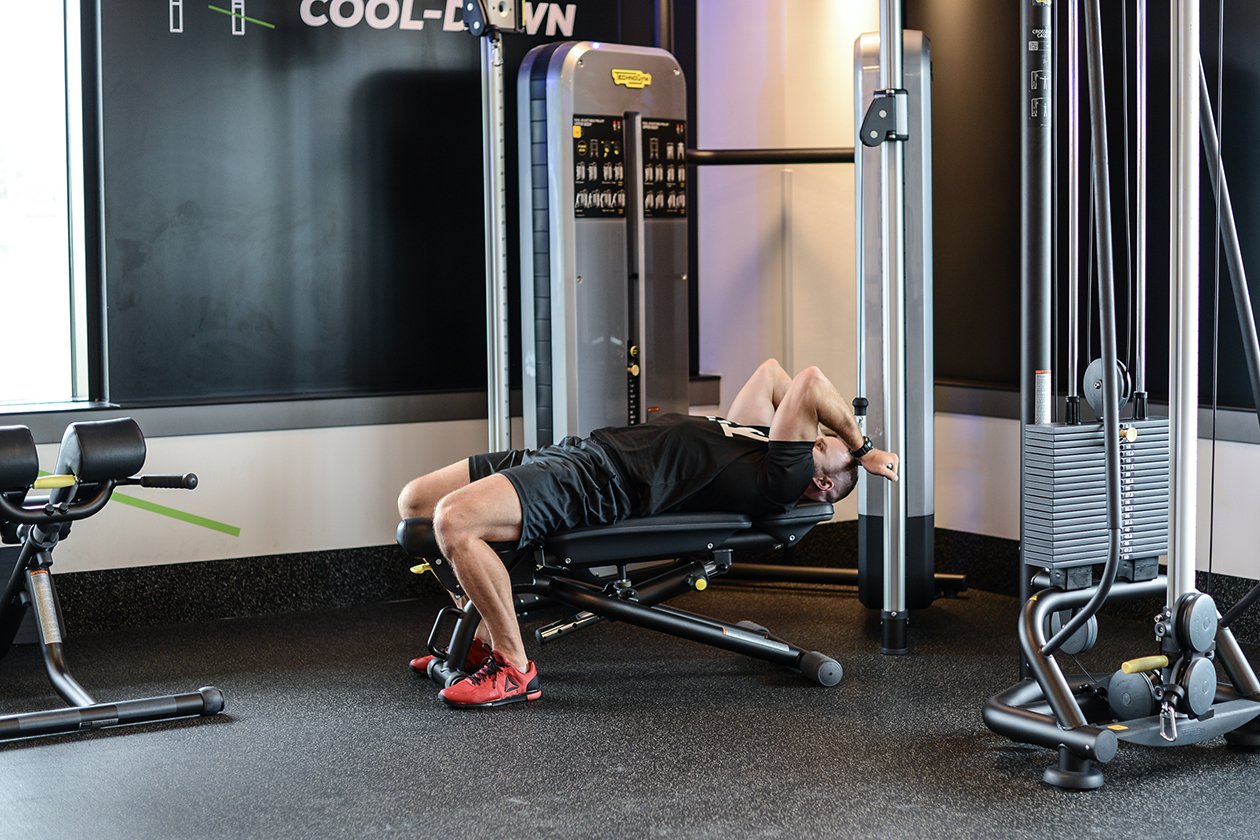
Notice the distinction between accidental elbow drift and a deliberate variation. A higher pulley with upper arms held above the floor creates a different arm angle; the pictured raised-arm setup illustrates that distinction. It should not be judged against floor-supported instructions or silently substituted into the same training log. If you prefer it, give it its own setup description and use a load appropriate to that version.
Equipment choice follows the same logic. A low cable outlet, adequate travel, a secure connection and a comfortable handle matter more than an elaborate attachment collection. Different bars and independent handles may require different connectors or anchoring arrangements. Confirm compatibility before buying or loading them, especially with dual-connection bars or portable resistance units. An approved product listing does not establish that every accessory fits every trainer.

Equipment Worth Exploring
Explore equipment, accessories and gear from our carefully selected range.

Dual Hook EZ Curl Bar
Angled aluminum dual-hook cable bar for biceps curls and pulldown variations.
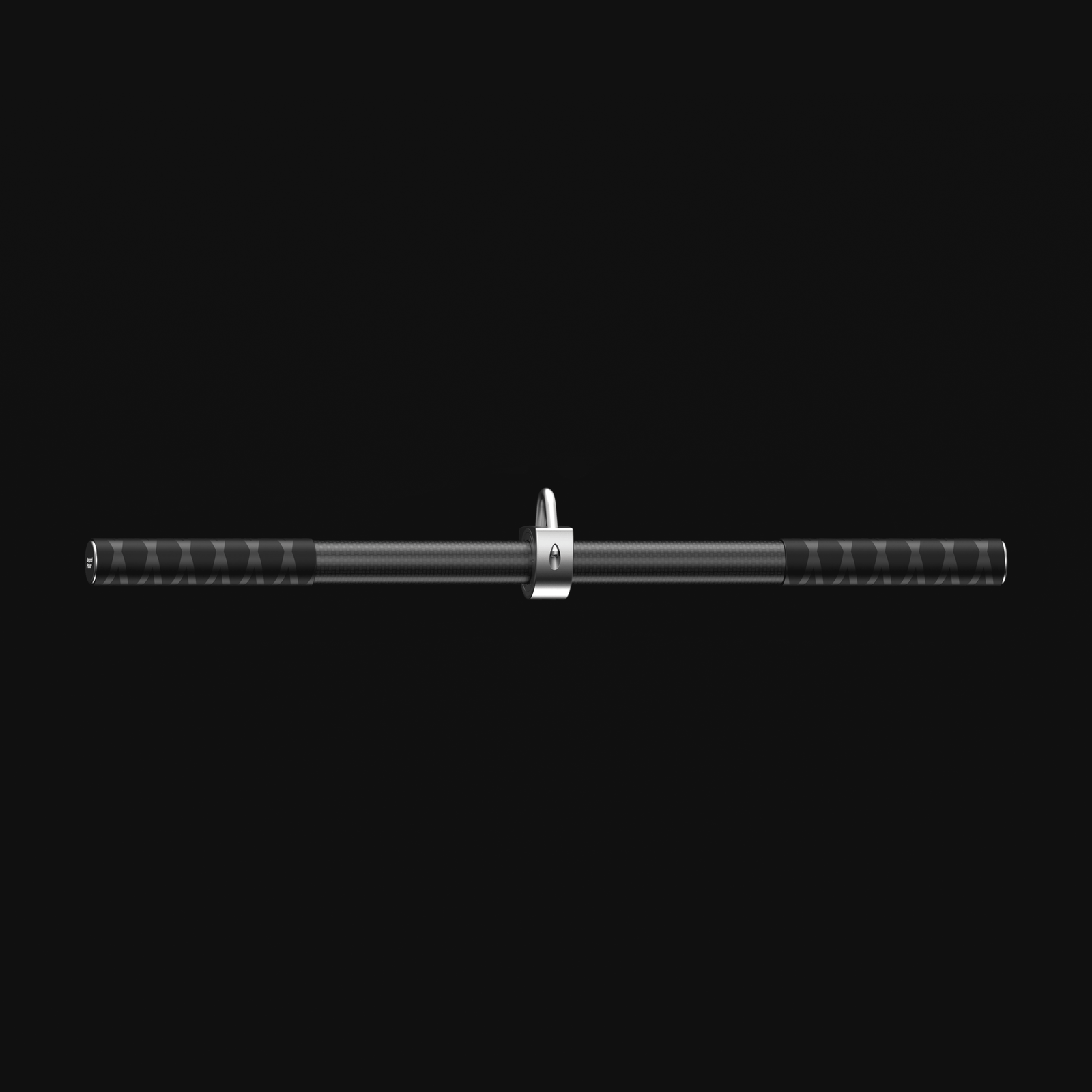


GymPin Ergo Handles
Pair of ergonomic cable handles shaped for comfortable triceps and pulling exercises.

Angles 90 Grips
Flexible grip attachments that allow natural wrist movement during pulling exercises.

GymPin D Handle Bar
Multi-use steel D-handle bar for cable rows, pulldowns and other cable exercises.


VForce Wall Trainer
Space-saving wall-mounted functional trainer with pivoting cable arms and variable resistance ratios.
VOLTRA
Compact digital cable trainer with smooth, adjustable resistance.

VForce Lat Tower
Wall-mounted cable tower with pivot arms and adjustable 1:1 or 2:1 pulley ratios.
Build a small arm-training trial and progress it honestly
Use a manageable trial rather than rebuilding your entire program around a new curl. For example, replace one existing curl slot with two sets of 10–15 repetitions after your main pulling work. Leave roughly two clean repetitions available while you learn the setup. Rest long enough that breathing and positioning are no longer limiting the next set; around 90 seconds is a practical starting point to adjust from.
Keep the same station, attachment, body position and repetition standard for several exposures. Record the load, repetitions, approximate effort and any setup change. When both sets reach the top of your chosen range with the same control, try the smallest suitable increase. If the next stack increment is too large, retain the previous setting and improve repeatability instead of adding unsecured objects to the machine. The example is a starting framework, not a uniquely effective prescription.
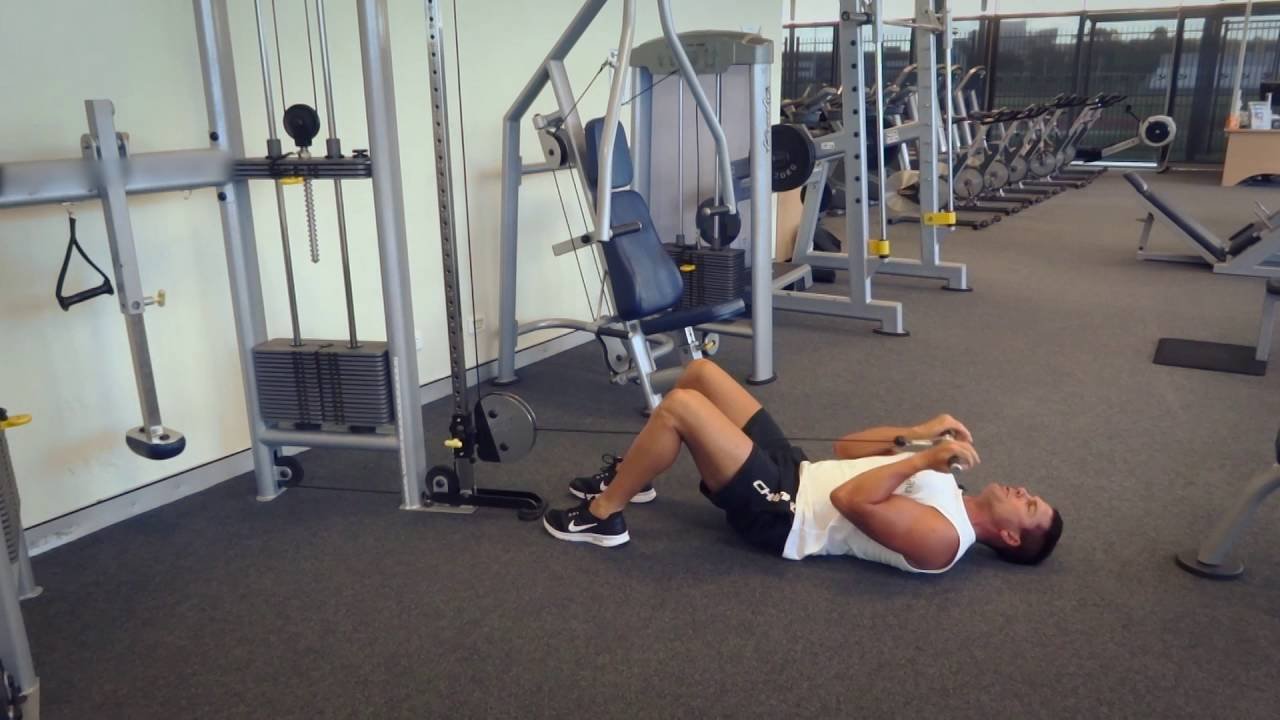
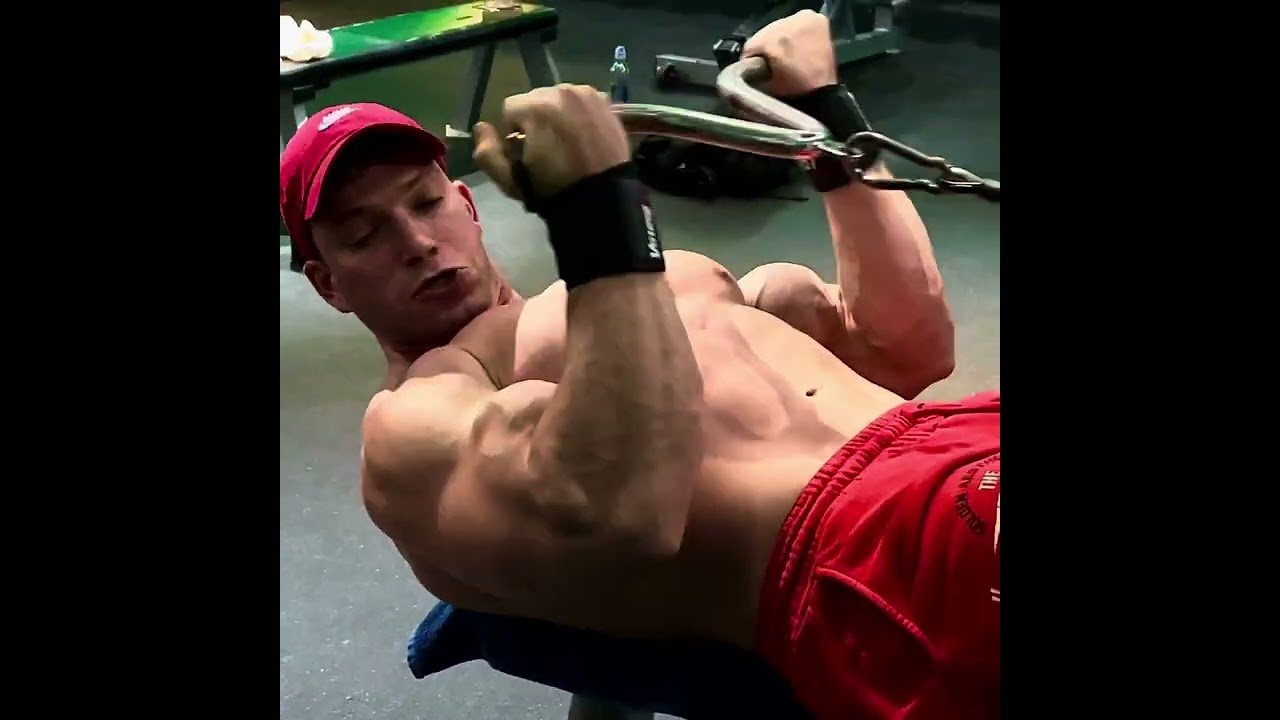
A low-row station may provide a supported surface for a related lying curl, as pictured. Its cable height and body support differ from the floor, so log that version separately. If the floor setup remains inconvenient, choose a simpler standing cable curl or dumbbell curl and apply the same progression rules. The useful question is whether you can repeat hard, comfortable work and recover for your next session.
Judge the trial against your whole arm-training week. More curl sets are not automatically better if pulling performance drops or elbow discomfort persists. Maintain the rest of your routine long enough to interpret the change. A stronger pump can be enjoyable, but it does not measure lasting muscle growth. Keep the variation when it improves the quality and consistency of your training; move on when its setup costs outweigh its practical value.

Funny Gym Shirts & Workout Gear
Funny gym shirts, tanks, hoodies and workout gear for lifters who like training hard.

Curls The Girls Shirt – Bicep Curls Top & Gymbros T-Shirt
Rep “Curls For The Girls” humor in and out of the gym.

Gym Dost Thou Even Curl Medieval Knight Bicep Hoodie
Show off your medieval humor in a laid-back “Dost Thou Even Curl Medieval Knight Bicep” hoodie.

OnlyGains Big Biceps Sweater & Meme Fans T-Shirt
Bring “OnlyGains Big Biceps” humor to your everyday gym style.

Micro Biceps Club President Gym | Funny Muscle Shirt | Tank Top
Train hard, laugh a little, and rep “Micro Biceps Club President”.

Big Biceps Theory Meme Sweater Bro Science T-Shirt
Add a playful “Big Biceps Theory” touch to your casual rotation.

I Love Gym Bicep Heart | Swole Heart Decal For Water Bo Sticker
Stick a little “I Love Gym Bicep Heart” humor on your favorite gear.

Muscle Mountain – Bicep Mountain Meme Vest Muscle Shirt Tank Top
Add some lifting attitude to training with “Muscle Mountain”.

GymTok – TikTok Parody Bicep for Gymbro Content Creator Hoodie
Show off your bodybuilding humor in a laid-back “GymTok” hoodie.

Every Day Is Arm Day
Make gym days more fun with “Every Day is Arm Day Octopus Gym Meme” style.

Shirt Pull Day – Back & Biceps Meme Top T-Shirt
Heavy lifts, good laughs, and a little “Pull Day Graphic” energy.