Advertising disclosure: This page includes affiliate product links that may earn us a commission, as well as products from our own store.
The Scott press looks close enough to a dumbbell shoulder press to invite the wrong comparison. The weights are lighter, the movement is shorter and the elbows remain bent instead of driving toward a full overhead lockout. Its useful distinction is the path of the upper arm, not a promise of a special kind of muscle growth. If you want to try this bodybuilding variation, first decide what you are practicing: an elbow-led shoulder movement with a repeatable arc. Then choose a load and range that let you keep that movement intact. A heavier overhead press performed under the same name is a different training choice.
Recognize the elbow-led arc before adding weight
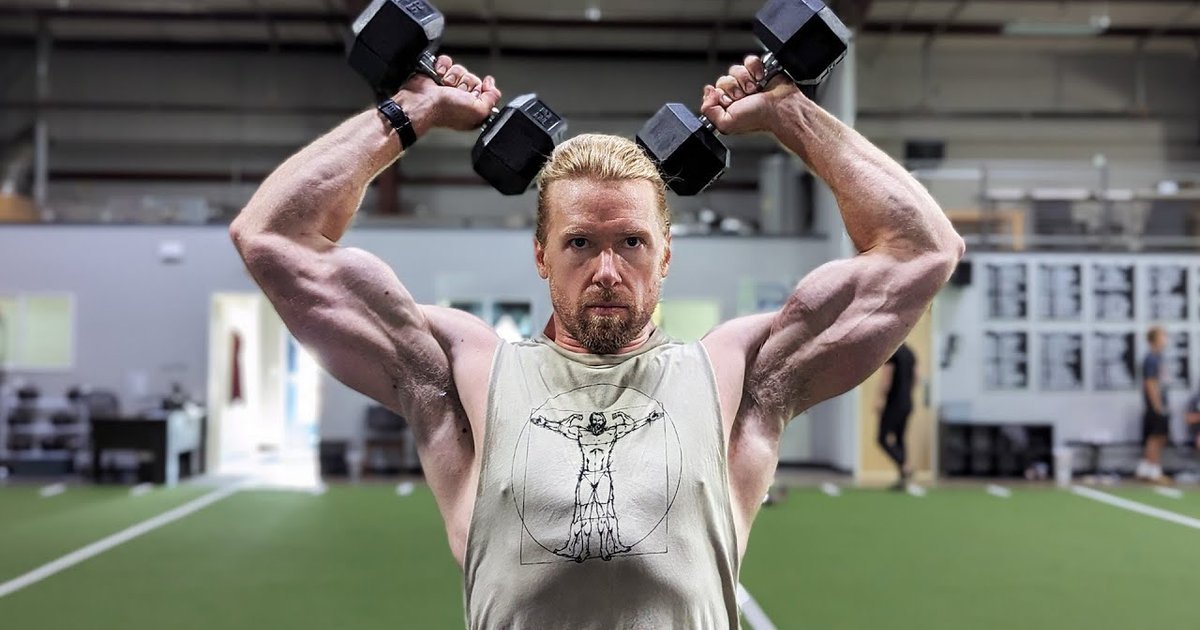
In a conventional dumbbell shoulder press, elbow extension is a large part of bringing the weights overhead. In the Scott press, the elbows travel outward, upward and somewhat backward while staying bent. The movement is therefore easier to understand by watching the elbows than by watching how high the dumbbells finish. The name includes press, but a complete overhead lockout is not the goal of this particular variation.
Descriptions and demonstrations differ in their exact starting position, amount of torso inclination and hand rotation. That is a reason to identify one controllable version, not to combine every dramatic cue into a single repetition. You do not need to force the elbows behind the head, twist the wrists or push the dumbbells to the highest possible point to make the exercise count.
The shoulder muscles move and control the upper arms, while other muscles around the shoulder girdle help position the arms. Keeping the elbows bent reduces the obvious pressing action at the elbow; it does not prove that the triceps or other muscles become inactive. Likewise, feeling the side of the shoulder working is useful feedback but is not a measurement of comparative muscle activation or future growth.
Treat the Scott press as an optional shoulder accessory. It can offer a different way to practice controlled shoulder movement, but it is not a compulsory upgrade from lateral raises or conventional presses. If a familiar exercise gives you a more repeatable and comfortable training stimulus, there is no prize for replacing it with something harder to coordinate.
Set the dumbbells, grip and body position
Start with a pair of light dumbbells that you can bring to the starting position without a forceful clean or a large body swing. Use considerably less than you would choose for a normal heavy shoulder press while learning the pattern. The first session is an opportunity to find the movement, not to establish a load record. An unloaded rehearsal can help you understand the elbow path before holding weights.
Hold the handles securely with the wrists supported in line with the forearms. Traditional instructions often describe the little-finger side of the dumbbell being higher than the thumb side. Make any tilt through a comfortable arm position rather than sharply bending the wrist. A cue that produces joint discomfort or makes the handle insecure is not helping you execute a useful set.
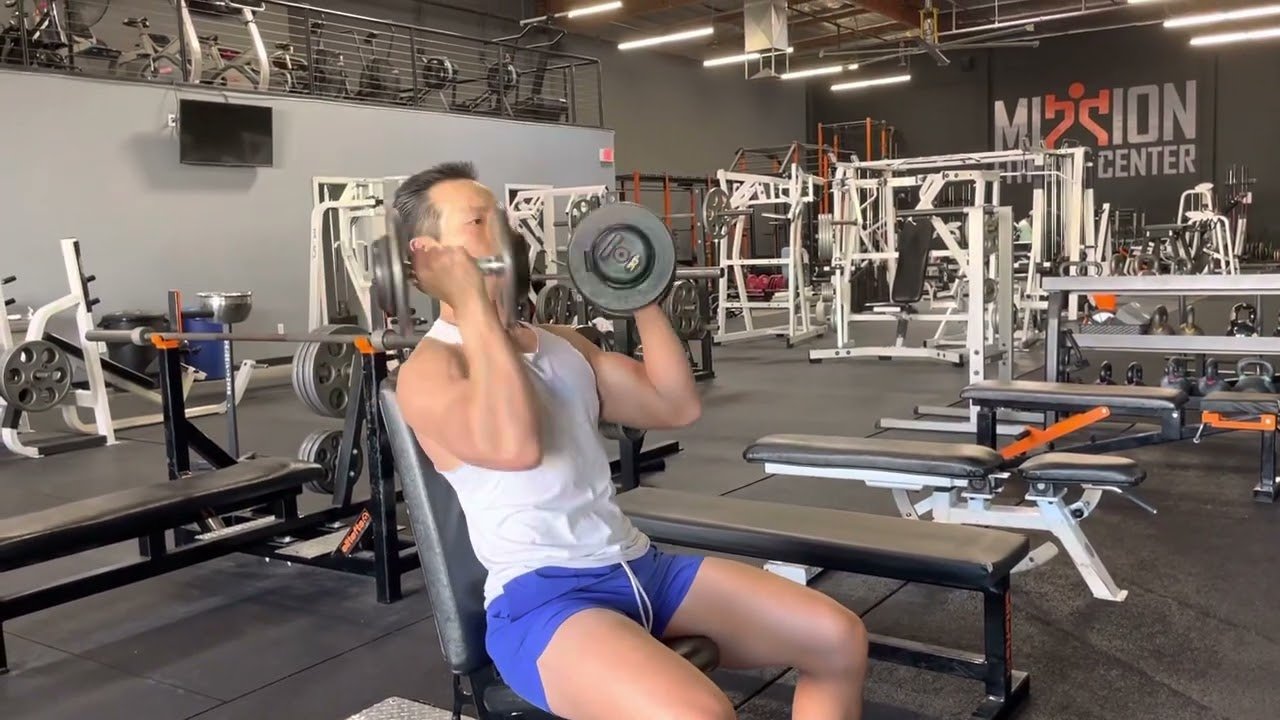
Bring the dumbbells around shoulder-to-chin height with the elbows bent and slightly forward of the torso. The exact height depends on your proportions and comfortable shoulder position. Avoid pinning the elbows to an arbitrary angle simply because another lifter uses it. Your starting position should allow the next part of the arc without an immediate shrug, wrist collapse or forced reach.
Standing requires you to keep the torso controlled as the arms move. A seated setup can reduce some balance demands, but a bench does not automatically solve the movement. Set your feet firmly, leave room for the weights and keep the rib cage from lifting into a large backward lean. If the dumbbells are difficult to bring into position, reduce the load rather than improvising a complicated handoff.
Plan how you will lower the weights after the final repetition. End the working movement, bring the dumbbells to a settled position and put them down under control. The setup and finish are part of the exercise, even though they are not counted in the rep total.
Choose a range you can reproduce
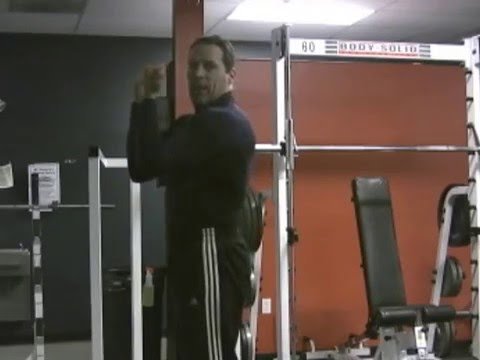
Initiate the repetition by moving the elbows through the intended outward-and-upward arc. Keep the bend in the elbows broadly similar while the upper arms move. The dumbbells follow that action; they do not need to travel in a perfectly vertical line. Move slowly enough to notice whether the elbows are leading or whether you have started straightening the arms into an ordinary press.
Stop the upward movement where you can still control the arm position without forcing a backward reach. A short arc can be appropriate for this variation, but shorter is not automatically better. Choose a recognizable start and finish that you can repeat. Avoid turning the set into tiny, hurried pulses simply because the exercise is associated with a limited range.
Reverse along the same path rather than dropping the weights back toward your shoulders. Keep the return deliberate and allow yourself to settle before the next repetition. If one arm reaches a different endpoint, use the range both sides can manage comfortably instead of making the more mobile side travel farther. Equal dumbbell weight does not guarantee equal movement.
A front-oblique recording can show the elbow path, while a side view can reveal whether the torso is leaning farther back as the set progresses. Place the camera clear of the training area. Compare the first and last repetitions rather than judging the exercise from one flattering frame. A stable-looking final pose cannot show how much swinging was needed to get there.
Some demonstrations include additional rotation or a larger overhead component. Treat that as a variation to evaluate separately. Changing the hand orientation, arm path and torso position all at once makes it difficult to tell which version you are actually progressing.
Correct drift before chasing another repetition
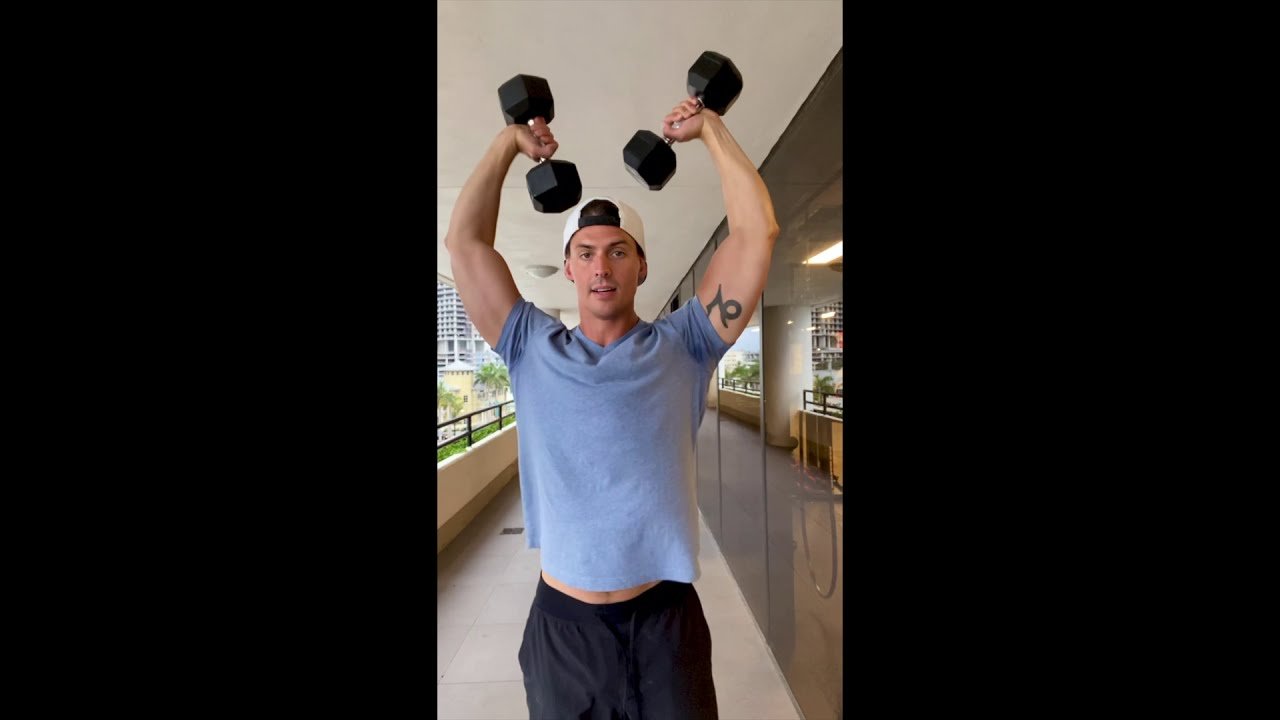
The most obvious change under fatigue is elbow extension. You begin with an elbow-led arc and finish with a conventional dumbbell press. That does not make the latter exercise wrong, but it makes the set inconsistent. Reduce the load, shorten the set or choose a conventional press deliberately. Do not use a changed movement to claim progress in the original one.
Another change is lifting the chest and leaning backward to help the dumbbells rise. A small, planned torso inclination is different from a position that changes with every repetition. Keep the body position you selected at the start. If your back angle keeps increasing, the weight or the set length is exceeding your current control of this version.
Pay attention to the grip as well. A tilted dumbbell should still feel secure. If the wrist folds, the handle starts rolling or one arm changes direction abruptly, stop and reset. Trying to preserve a traditional visual detail at the expense of a stable hold defeats the purpose of controlled training.
There is also a difference between muscular effort and a joint position that feels wrong. A burning shoulder muscle is not proof that a painful repetition is productive. Stop for sharp pain, catching or symptoms that persist, and use a more suitable exercise while deciding what needs attention. The Scott press should not be presented as treatment for shoulder problems.
Equipment can make small adjustments easier. Manageable dumbbell increments and a stable seat help you reproduce the setup. They do not create a unique growth effect. Choose equipment that supports the movement you can perform rather than selecting an exercise to justify using a particular product.

Equipment Worth Exploring
Explore equipment, accessories and gear from our carefully selected range.


Rubber Hex Dumbbells
Rubber-coated hex dumbbell pairs with a stable shape for home and commercial strength training.




FID Bench MAX
Adjustable bench offering flat, incline, and decline positions + adjustable headrest.


Multi Bench MBX-650 2.0
Adjustable multi-bench with roller adjustment, 15 backrest positions and accessory mounts.


Run a small shoulder-training trial
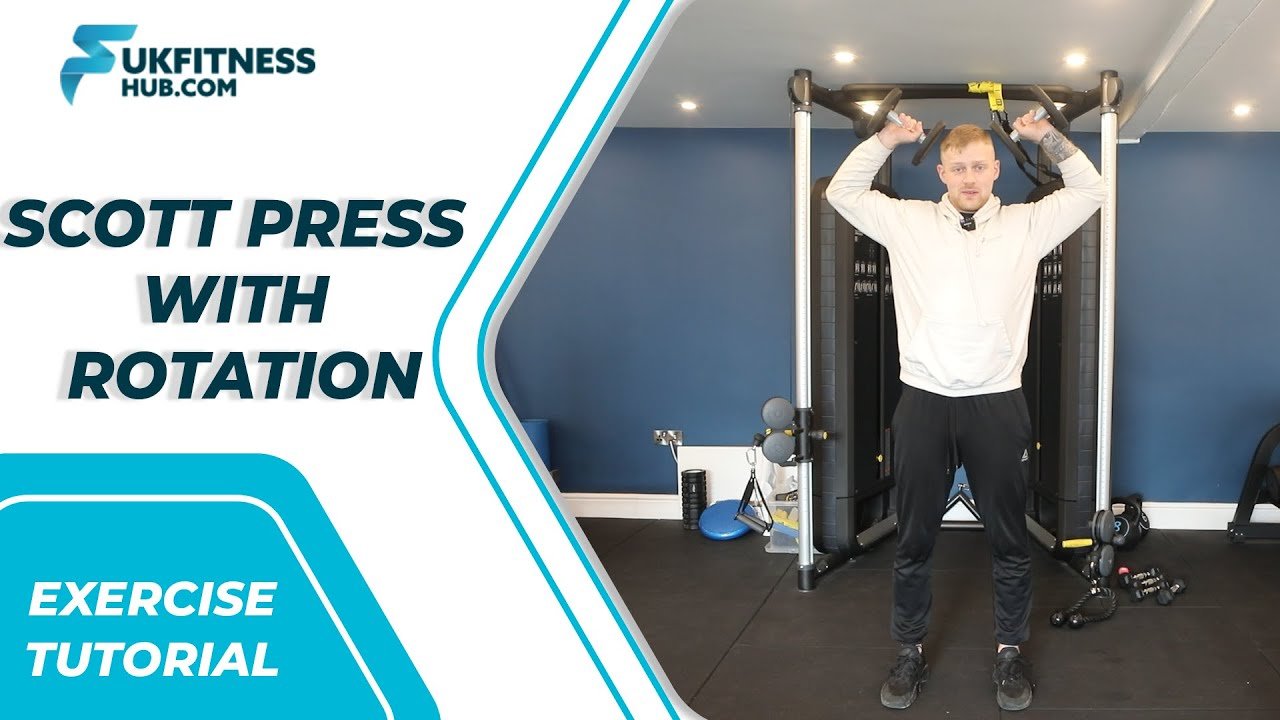
Try the exercise as a modest part of an existing shoulder session. One illustrative starting experiment is two light sets of eight to twelve controlled repetitions, leaving several repetitions available rather than pushing to failure. This is a practical way to learn the pattern, not a tested optimal prescription. Use fewer repetitions if you cannot maintain the chosen arc, even with a light load.
Record the dumbbell weight, whether you stood or sat, the approximate starting height and the reason the set ended. Hold those choices steady across several sessions. Adding repetitions within the same movement gives you clearer information than adding weight while simultaneously changing the range, elbow bend and body position.
When the set remains consistent and recovery is comfortable, consider the smallest available load increase. If that increase immediately changes the exercise into a full overhead press, return to the previous weight or build more controlled repetitions first. A training log is most useful when the movement behind its numbers stays recognizable.
Count the work alongside existing presses and raises. Adding the Scott press on top of every other shoulder exercise may simply make the session longer and recovery harder to judge. Replacing a small amount of accessory work gives you a cleaner comparison. You can keep conventional presses for a different training role and use lateral raises, cable work or a rear-delt machine where those movements fit your program.
After a few exposures, ask whether you can reproduce the arc, tolerate the grip and fit the work around the rest of your lifting. Keep the variation if those answers are positive. If the movement remains awkward or offers no practical advantage, another shoulder accessory is a reasonable choice. The goal is useful training that you can progress, not loyalty to the most unusual exercise name.

Funny Gym Shirts & Workout Gear
Funny gym shirts, tanks, hoodies and workout gear for lifters who like training hard.


Jesus Lateral Raises Tee
Bring “Jesus Christ Dumbbell Cross Lateral Raises” humor to your next gym day.

Smash Dumbbells Tee
Show some superhero attitude with a playful “Smash Dumbbells Like Hulk” tee.


Doom-Bells Villain Doctor Doom & Dumbbells Meme & T-Shirt
Rep “Doom-Bells” humor in and out of the gym.

Dumbbelldore Gym | Swole Wizard Workout Jumper | Harry T-Shirt
For laid-back days and bodybuilding humor: “Dumbbelldore”.


Break The Stereotype Gym | Feminist Workout Muscle Shir Tank Top
Train hard, laugh a little, and rep “Break The Stereotype”.

Kanye Lifting Dumbbells | Rap Music Workout Decal Sticker
Stick a little “Kanye Lifting Dumbbells” humor on your favorite gear.