Advertising disclosure: This page includes affiliate product links that may earn us a commission, as well as products from our own store.
The farmer’s walk looks deceptively simple: stand up with two heavy objects and walk. Add an incline and the equation becomes more interesting. Your legs must move you uphill while your hands maintain the same uninterrupted connection with the handles. Which part gives out first?
A 2026 experiment with twelve adults found measurable grip fatigue during a series of loaded treadmill walks across different gradients. But it did not test long-term muscle growth, injury prevention or the ideal hill for everyone. This guide examines the results without overselling them, then shows how to train loaded carries with good technique and a practical six-week progression.
What the 12-Person Farmer’s Carry Experiment Measured
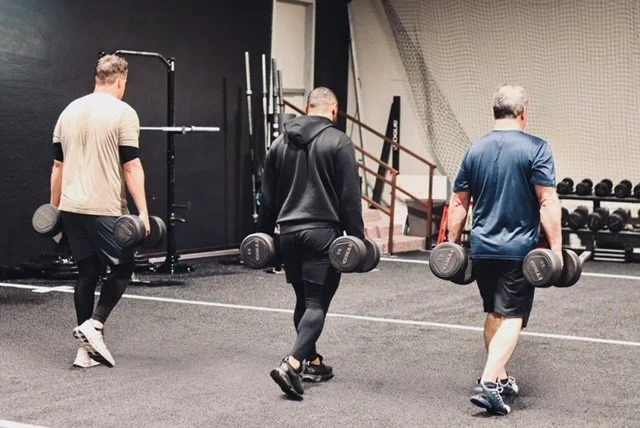
The researchers had twelve healthy young adults walk on a treadmill with a ten-kilogram dumbbell in each hand. Walking speed was four kilometers per hour. The protocol included five stages, each covering fifty meters, across inclines ranging from zero to eight percent. Between stages the investigators assessed handgrip force and characteristics of the rectus femoris, a thigh muscle. This is an acute laboratory exercise test rather than a program of workouts repeated over several months.
Following the test, maximum grip force had fallen by 10.10 percent on the dominant side and 8.50 percent on the nondominant side. Those reductions met the study’s statistical criteria. The reported changes in the measured thigh-muscle mechanical properties were comparatively small. That combination makes a useful point: the hands may show obvious fatigue after relatively brief loaded walking, even when the weight is not close to what someone could lift for a single deadlift repetition.
There are important limits. Each person experienced a series of stages rather than months of randomly assigned incline training. The effects of elapsed carrying time and rising gradient cannot be cleanly separated from the numbers alone. The group was small and relatively young. Nothing in the experiment establishes that eight percent is the most effective incline for building a bigger back, stronger hands or healthier knees. Treat the study as evidence about immediate fatigue under a specific controlled task, not a universal prescription.
How an Incline Changes a Loaded Walk
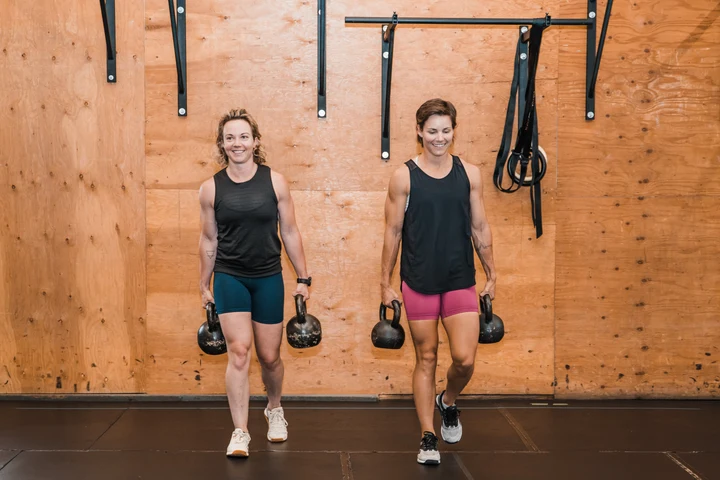
When two weights hang by your sides, your grip must support them for as long as the walk continues. Your trunk resists side-to-side sway, your shoulders maintain an organized arm position and your legs repeatedly catch and propel your body. This steady demand is different from a set of deadlifts, where you can release the bar between repetitions or finish the set after a short burst.
Gradient adds another variable. Walking up a slope generally feels harder at the same belt speed because the legs are doing more work against gravity. Yet a slope increase and a load increase are not interchangeable. A light carry up a gentle grade might challenge breathing and cadence while a much heavier flat carry is limited by finger strength. Distance matters too: doubling the walk length can be a big change for someone who is close to losing the handle at twenty meters.
Do not interpret the treadmill study as permission to carry near-maximal dumbbells on moving gym equipment. A treadmill adds risks if a handle slips, the belt speed changes or you cannot exit cleanly. Most trainees should first practice on a clear, level floor. If you want to add a mild outdoor hill later, check the footing, ensure the route is free of people and obstacles, and plan a secure place to set the weights down at both ends. Change only one progression variable at a time so the training log still tells you what improved.

Equipment Worth Exploring
Explore equipment, accessories and gear from our carefully selected range.

Rubber Hex Dumbbells
Rubber-coated hex dumbbell pairs with a stable shape for home and commercial strength training.

Cast Iron Kettlebells
Textured cast-iron kettlebells for swings, squats, carries, and full-body training.


Open Hex Bar
Open-frame trap bar with multiple handles for deadlifts, carries, and lower-body training.

Leather Lifting Straps
Padded leather straps support grip during heavy rows, deadlifts and pulling exercises.

Grip Fatigue, Straps and the Muscle-Growth Question
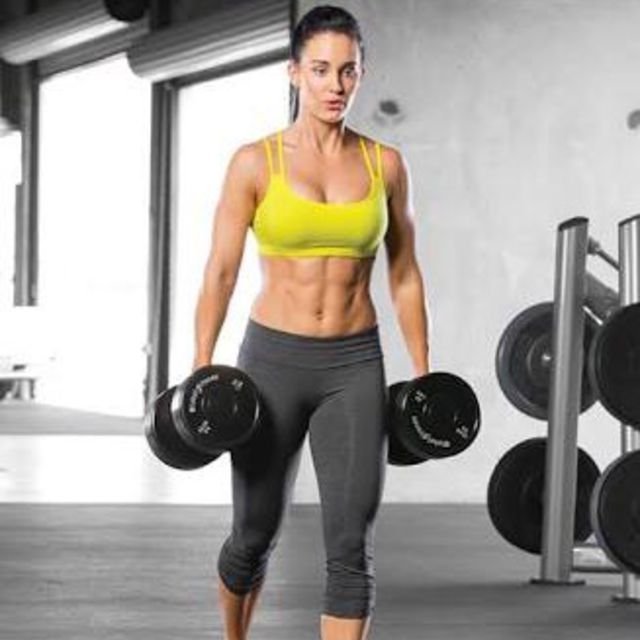
A decline in the handgrip test is evidence of temporary performance fatigue. It is not the same as a decline in baseline strength, and it certainly is not evidence that a muscle became larger during the session. An acute study can tell you what happens immediately after the task. To evaluate hypertrophy or longer-term strength adaptation, researchers would need a different design with repeated training, a comparison group and measurements before and after a sustained intervention.
Additional upper-limb activation work suggests that load, walking direction and lifting straps influence how muscles contribute during a farmer’s walk. Those measurements help explain why some athletes feel their forearms fail before their breathing, while others notice their upper back and trunk first. However, electrical activity recordings are not a direct measure of growth. Do not use a single muscle-activation ranking as proof that one carry will build more muscle than every alternative.
If improving grip endurance is your goal, perform most walks without straps and end a repetition before a handle peels out of your fingers. Keep the thumb secured and the wrist close to neutral. If you mainly want trunk and leg loading while your grip is already exhausted from heavy pulls, a strapped variation can occasionally be useful. It changes the exercise, so record it as a separate variation rather than comparing the distance directly to an unstrapped personal best. Handle size and surface matter: a thicker smooth grip can be challenging at a far lighter load than a narrow textured one.
Farmer’s Walk Form: Pick Up, Walk and Put Down
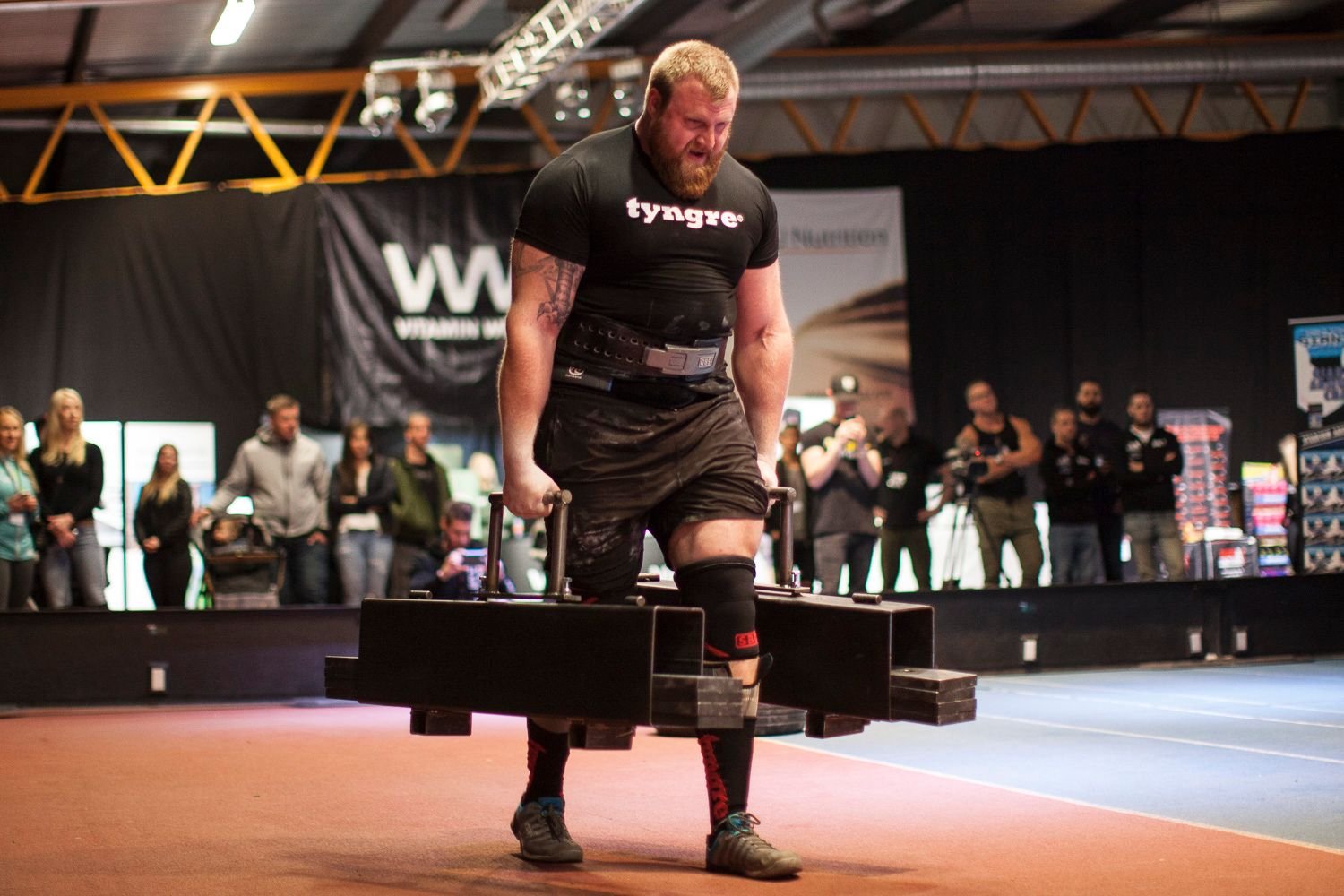
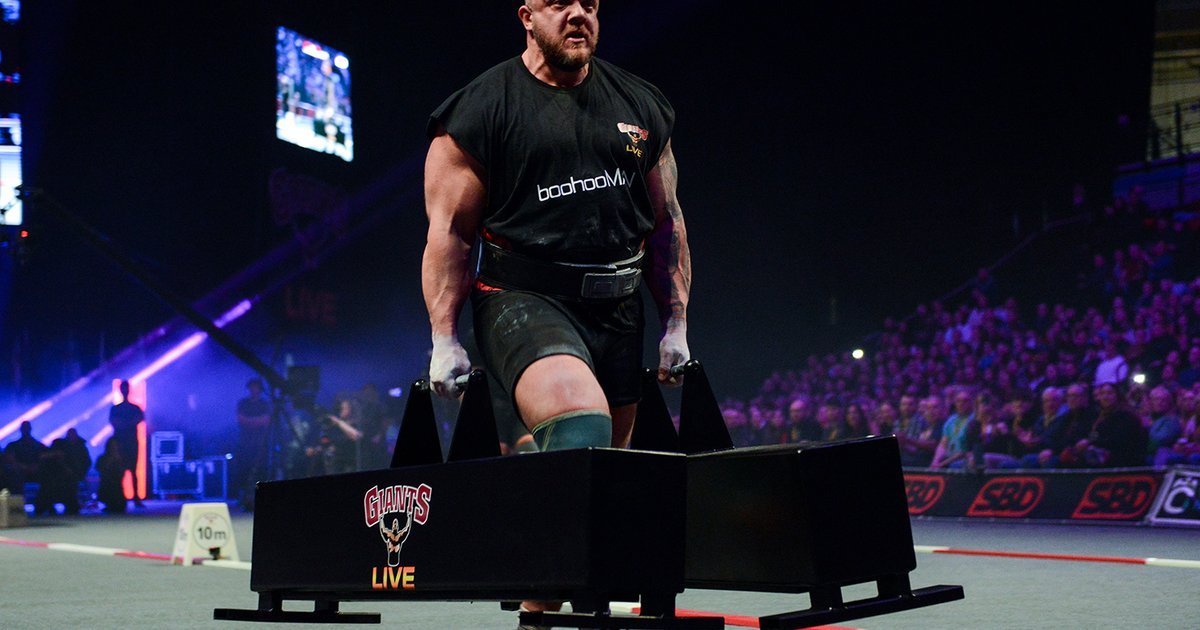
Use two matching dumbbells, kettlebells or purpose-built handles that you can lift and lower under control. Measure the lane before you begin. Pick a length that does not require weaving around benches, door frames or other people. If you have limited space, plan deliberate turns, not abrupt pivots. Set the weights on the floor beside your feet and hinge down, keeping the load close rather than reaching forward with straight knees.
Stand using the legs and hips while maintaining a firm brace. Think tall, not exaggerated: ribs over pelvis, head relaxed, shoulder blades supported without a constant shrug. Start walking with short even strides. Let the arms hang near the sides rather than swinging the bells to create momentum. Breathe while maintaining enough trunk tension to prevent side-to-side tilting. Keep the gaze forward so you can see the path, and let the pace settle before trying to walk faster.
Place the weights down as deliberately as you picked them up. Do not drop a pair of heavy dumbbells because you wanted one extra step, especially in a small home gym. Stop the set if your shoulders become uneven, the elbows begin to bend involuntarily, the weights repeatedly strike the legs, or the grip opens. These are practical limits that matter more than a round distance target. If you feel a sharp pain or become light-headed, end the effort and reassess rather than trying to turn the sensation into a training challenge.

Functional Fitness Shirts & Workout Gear
Functional-fitness shirts, tanks and workout gear for athletes who train strength, conditioning and everything in between.

Heavy Metal Kettlebell | Lifting Skull Hooded Workout P Hoodie
Keep it laid-back with a little “Heavy Metal Kettlebell” attitude.

For Whom the Bell Curls Tee
Show some metalhead attitude with a playful “For Whom The Bell Curls Kettlebell” tee.

Kettlebell Heartbeat Decal for Water Bottles Laptops Wo Sticker
Put “Kettlebell Heartbeat” gym humor on your laptop, bottle, or gym gear.

Muscle Mommy Pink Kettlebell Gym Design for Women & Fem Tank Top
Add some gym-girl attitude to training with “Muscle Mommy”.

Hybrid Athlete Strength & Endurance Tank
Add some lifting attitude to training with “Hybrid Athlete”.

Break the Stereotype Tee
Show some gym-girl attitude with a playful “Break The Stereotype Gym Girl” tee.

Live Love Lift Hooded Pullover Gymbro Workout Fans Hoodie
Bring “Live Love Lift” gym humor to lazy days and post-workout plans.

Happy Kettlebell Emoji Smiley Kettlebell Graphic Who Lo T-Shirt
Make gym days more fun with “Happy Kettlebell Emoji” style.

Lift Together Grow Stronger for Gym Buddies and Lifting Tank Top
Bring “Lift Together Grow Stronger” humor to your next lifting session.

Suitcase and Front-Loaded Carries: When to Switch
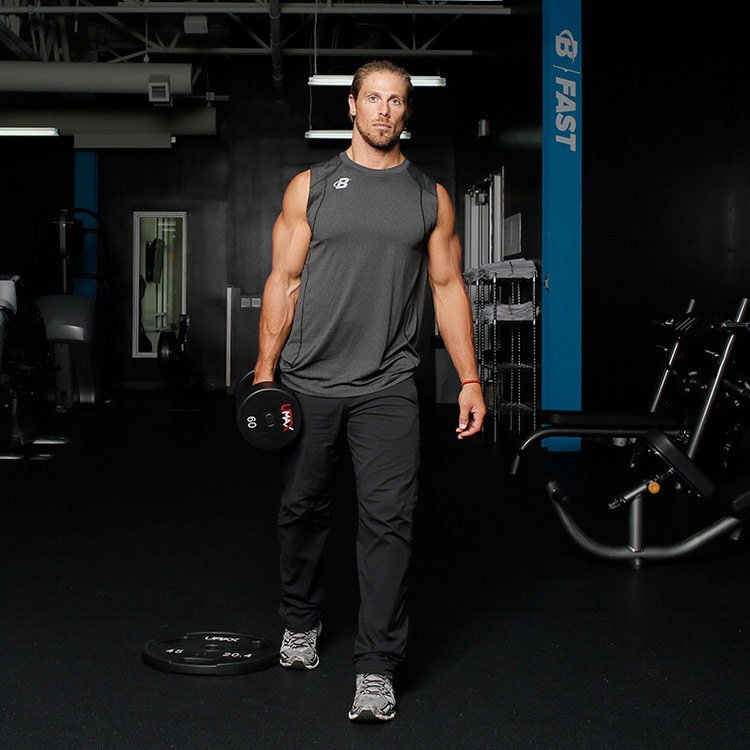
A standard farmer’s walk is bilateral: each hand holds a weight and the external load is approximately balanced when both implements match. A suitcase carry uses one dumbbell or kettlebell. The uneven load wants to pull the trunk toward one side, so the lifter must remain upright instead of leaning to counterbalance it. The suitcase version can be valuable in a compact home gym because a single weight is easy to manage and you can compare left and right over identical distances.
Another option is a front-loaded carry. A sandbag hugged to the chest or a barbell held in the crooks of the elbows shifts the weight forward. A separate 2026 biomechanical comparison of farmer and Zercher carries reported differences in trunk-muscle activity and walking mechanics during short loaded trials. That is useful evidence that load position changes the task, not proof that the front-loaded version is the best general muscle-building exercise.
Choose the variation based on your equipment and goal. Bilateral carries suit simple heavy walking and grip endurance. Suitcase carries emphasize resisting one-sided tilting. Front-loaded versions demand a different elbow, arm and trunk setup and require a clear line of sight. They also need an implement you can lower safely. If you have elbow discomfort, avoid forcing a heavy rigid bar into the crooks of the arms. Use a comfortable sandbag or return to two-hand carries. Once you change implement, load position or handle, start with a fresh baseline instead of treating every carry as interchangeable.
A Six-Week Progression for Strength and Conditioning
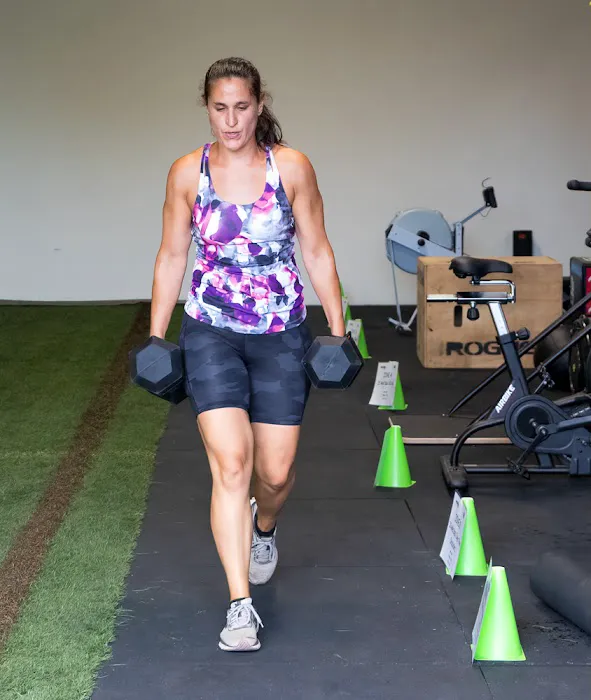
This is a coaching plan, not the intervention used in the twelve-person incline experiment. Perform carries twice weekly after your main lifts, with at least one easier day between challenging sessions. Pick a weight that allows full control and breathing. Record the load in each hand, distance, sets, rest, surface, turns, and whether the grip or breathing ended the walk. If your route is less than fifteen meters, use a consistent timed carry instead of pretending every turn costs nothing.
Weeks 1 and 2: Walk fifteen to twenty meters for three sets, resting ninety to one hundred twenty seconds. Start light enough that the final walk looks like the first. Practice a clean pickup, measured steps and a safe setdown. If you cannot keep a secure grip throughout the opening set, reduce the weight before increasing distance.
Weeks 3 and 4: Keep three sets and work toward twenty to thirty meters per set. Alternatively, add five to ten seconds to each timed effort. Progress distance before load while the walking pattern is being learned. After the bilateral work, an optional light suitcase carry on each side can provide a distinct coordination challenge; keep the distance and rest symmetrical.
Weeks 5 and 6: Hold distance steady and increase weight modestly, or add a fourth round if the available weights jump too sharply. Do not raise pace, incline, weight and distance simultaneously. If everything is technically controlled, you can cautiously explore a mild outdoor grade without changing the weight. Skip that option if the route is crowded, uneven or slippery. A meaningful progression is better posture and a more repeatable performance, not an exhausted grip that forces a dangerous drop at the end of every session.
Equipment Worth Exploring
Explore equipment, accessories and gear from our carefully selected range.


Competition Plates
Competition-style bumper plates for Olympic lifts and loaded strength training.

Grip Plates
Rubber-coated weight plates with handholds for loading barbells and machines.

Leather Wrist Grips
Padded leather lifting grips help support the hands and wrists on heavy pulling exercises.


Equipment Choices, Recovery and a Sensible Finish
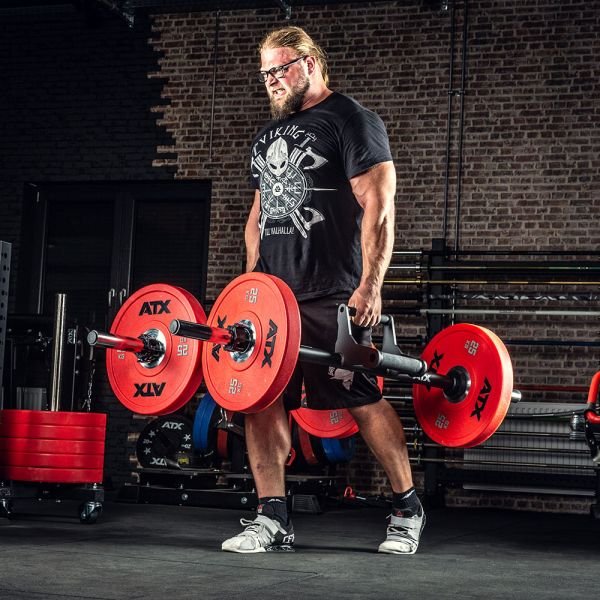
Dumbbells are excellent for beginners because the load is familiar, adjustable and easy to return to a rack. Kettlebells work too, but the bell shape and handle affect how the weight hangs next to the leg. For advanced lifters, open trap bars and dedicated farmer handles may allow heavier loads while changing the balance and required space. Choose equipment based on your available lane and ability to control the initial pickup. Very large handles are rarely an advantage if you must make tight turns between furniture.
A comfortable handle does not need to be a maximal grip challenge every session. Thick grips can be used as a separate forearm exercise, but they should not automatically replace all ordinary carries. Straps are optional depending on the goal, and collars or plates on loadable implements should be secure before movement. When using an unfamiliar implement, do the first lap with a much lighter weight and confirm there are no protruding plates or handles that will clip your legs.
Heavy carries create fatigue that can overlap with deadlifts, rows, pull-ups and other exercises that depend on hand strength. Schedule them after your primary strength work if grip is likely to interfere. Leave enough rest between sessions to regain a secure grip and normal control. Anyone with significant balance problems or relevant hand, spinal or cardiovascular limitations should seek individualized advice before using heavy carries. The lesson from the incline study is deliberately modest: this simple-looking exercise can fatigue the hands measurably, so plan load, distance and recovery instead of chasing a harder slope just because you can.
Powerlifting Shirts & Lifting Gear
Powerlifting shirts and gym gear for squat, bench and deadlift lifters who live for heavy numbers.

Strong Inside And Out Shirt Weights And Brains Meme T-Shirt
Rep “Strong Inside And Out” humor in and out of the gym.

Weak Ends Strongboy End The Weakness No More T-Shirt
Make gym days more fun with “Weak Ends Strongboy” style.

Iron Made Heavy Metal Made by Iron for Bodybuilding, Po Tank Top
Bring “Iron Made Heavy Metal Made by Iron” humor to your next lifting session.

Meme – "Shhh I'M Doing Plate Math" & Weightlifting Sticker
Stick a little “"Shhh I'm Doing Plate Math" Workout &” humor on your favorite gear.

Gym Sworn to the Iron Oath Medieval Knight Muscle Shirt Tank Top
Bring “Sworn to the Iron Oath Medieval Knight” humor to your next lifting session.

Gym The Bar Does Not Lie Medieval Knight for Powerlifte Hoodie
Show off your medieval humor in a laid-back “The Bar Does Not Lie Medieval Knight” hoodie.

Bar Breaker Barbell Breaker Ballbreaker Album Cover Par Hoodie
Keep it laid-back with a little “Bar Breaker Barbell Breaker” attitude.


Meme – Shhh I'm Doing Math Plate Math Weightlifting T-Shirt
Heavy lifts, good laughs, and a little “Shhh I'm Doing Math Plate Math” energy.