Advertising disclosure: This page includes affiliate product links that may earn us a commission, as well as products from our own store.
Board presses look like ordinary bench presses until the bar stops on a small stack of wooden boards above the chest. That shorter travel can make a heavy weight feel surprisingly manageable. It can also turn an otherwise useful accessory into an awkward partial rep if the boards move, the lifter loses position, or the height has no connection to the sticking point being trained.
The useful questions are practical: what changes from one board to three, who holds the boards, what does a correct contact feel like, and how can you progress the lift without confusing a heavier partial bench with a stronger full-range bench? This guide answers those questions and gives you a repeatable six-week starting plan.
What a board press actually changes
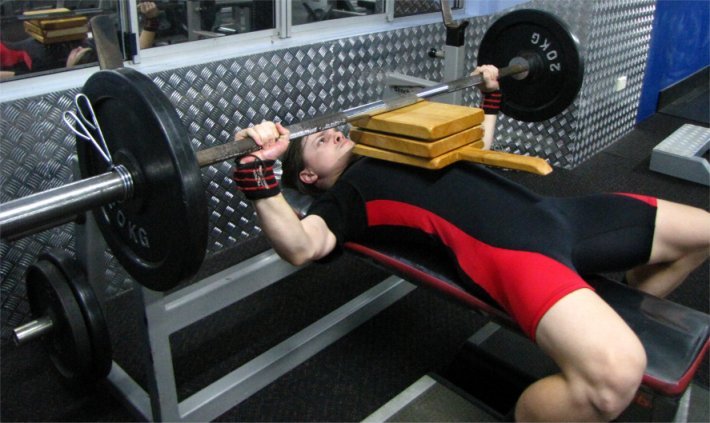
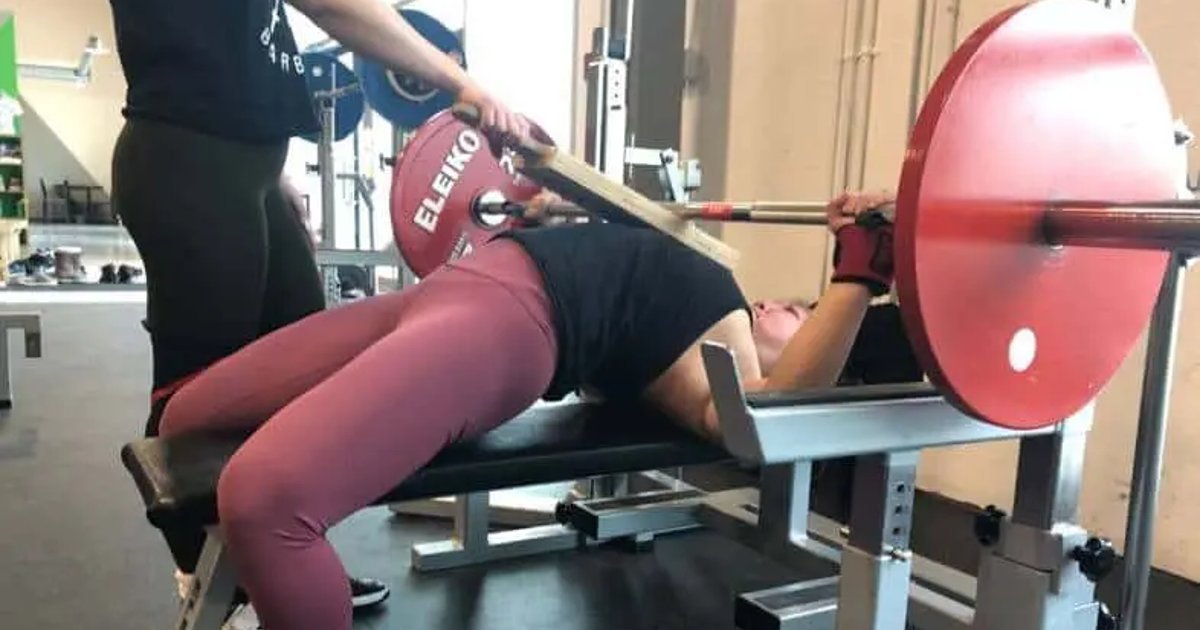
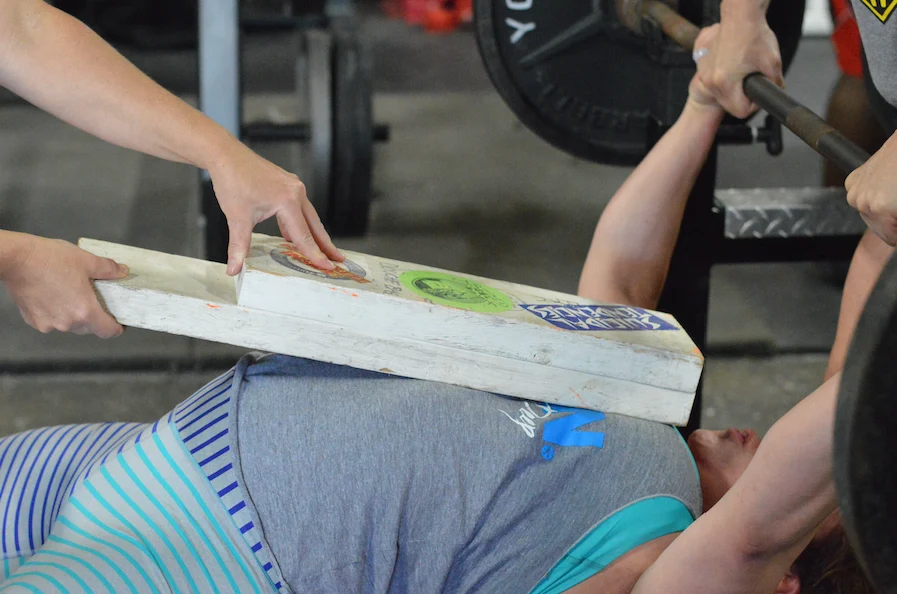
A board press is a barbell bench press with a firm physical stop resting on the upper torso. An assistant holds the board stack in a stable position while the bar descends to it, then the lifter presses back up. Each additional board increases the stop height and removes another portion of the lower range. The upper end of the rep still includes elbow extension and the normal demand to keep the bar over a strong pressing base.
That range limitation is the whole point, not an incidental detail. If you cannot comfortably reach the chest in a standard bench press, a higher touchpoint may let you train a deliberately selected section of the movement. If your bench slows halfway up, a board chosen near that region can expose your pressing mechanics under load. Neither observation establishes that a given board automatically fixes a weakness; it only tells you what range you are practicing.
One board is generally a modest elevation, while two and three boards produce progressively shorter presses. Thickness differs among commercial sets and homemade boards, so a board count by itself is not a precise distance. Write down the actual stack and use it consistently. An inconsistent stop height makes load records difficult to compare, especially if two gyms use different lumber.
This variation is not a substitute for a complete bench program. Shorter travel often permits more load, but a bigger number on three boards is not a new full-range personal record. Treat it as a separate lift with its own technique baseline, range and recovery demands. The best board height is the lowest one that deliberately trains the intended portion without making the exercise an uncontrolled lockout demonstration.
Set the rack, bench and boards before loading
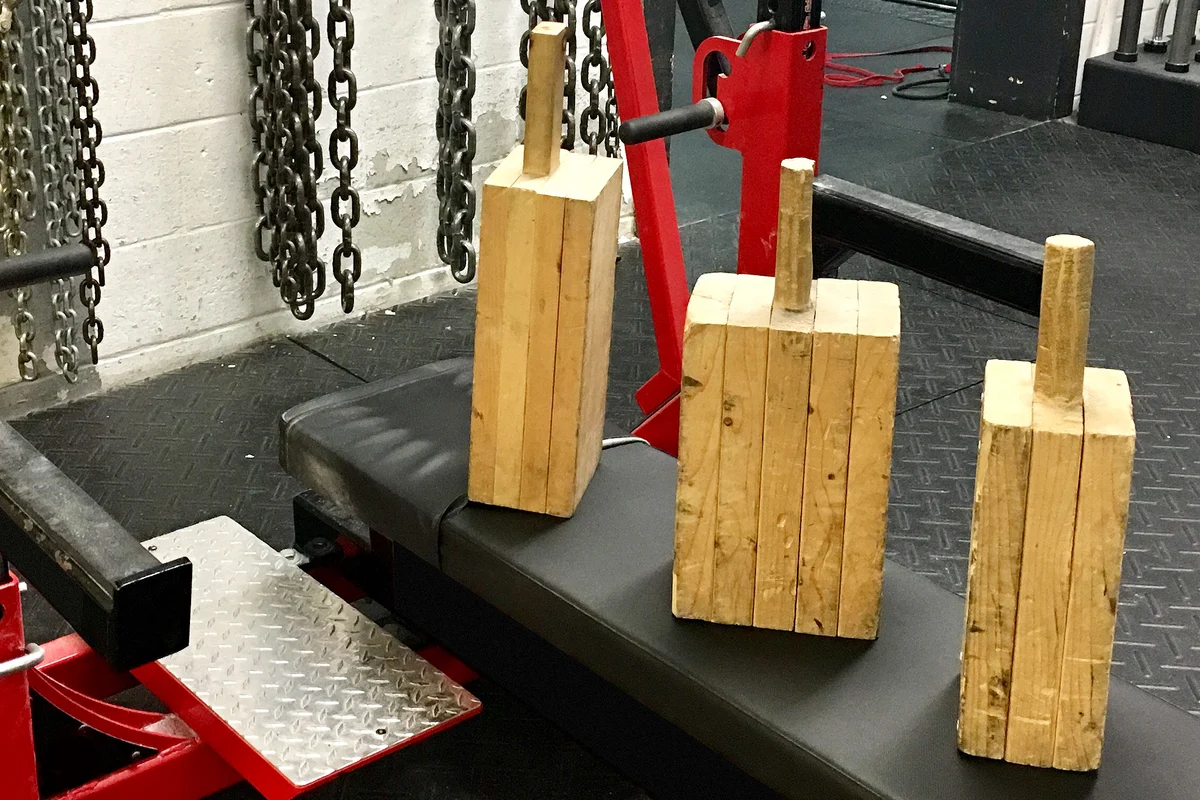
Start by centering a stable flat bench inside a rack with safeties and adjusting the bar hooks so the lift-off does not pull the shoulders forward. Check bar clearance against the safeties and the chosen board height. The boards should be fastened together, smoothly finished and wide enough to give the bar a reliable contact surface. Splintered, warped or loosely stacked pieces have no place under a loaded bar.
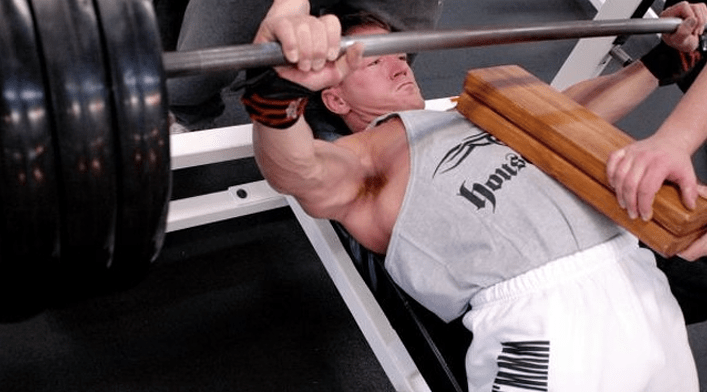
A board press with loose boards usually requires a separate board holder in addition to a competent lifter spotter. The holder keeps the stack flat against the chest without pushing it into the neck or letting it slide toward the abdomen. The bar must touch the same spot on every repetition. If no qualified assistance is available, use a purpose-made secured board alternative or choose a different exercise. A free-moving piece of wood is not an acceptable solo workaround.
Take your normal competition-style or training bench position: upper back firmly set, feet planted, shoulder blades stable, forearms in a useful pressing line and wrists supported over the grip. The board stack belongs at the normal touch region of your bench, not at an arbitrary high point near the throat. Experiment with an empty bar first so that everyone involved can see the intended path before adding plates.
Ask the holder to rehearse getting the boards in and out while the bar remains racked. The bench spotter controls the handoff and is ready at the bar; the board holder manages the stop, not the weight. Confirm a simple spoken signal for board placement, bar start, final repetition and rack. When the session involves a new training partner, a practice set is worth more than a hurried heavy single.
Matching setup from week to week matters. Record the rack or bench used, grip reference, stack thickness, feet position and whether a lift-off was provided. These details are not glamorous, but they prevent a misleading comparison when a small range change makes the same weight feel completely different.
Control the descent and press from the board
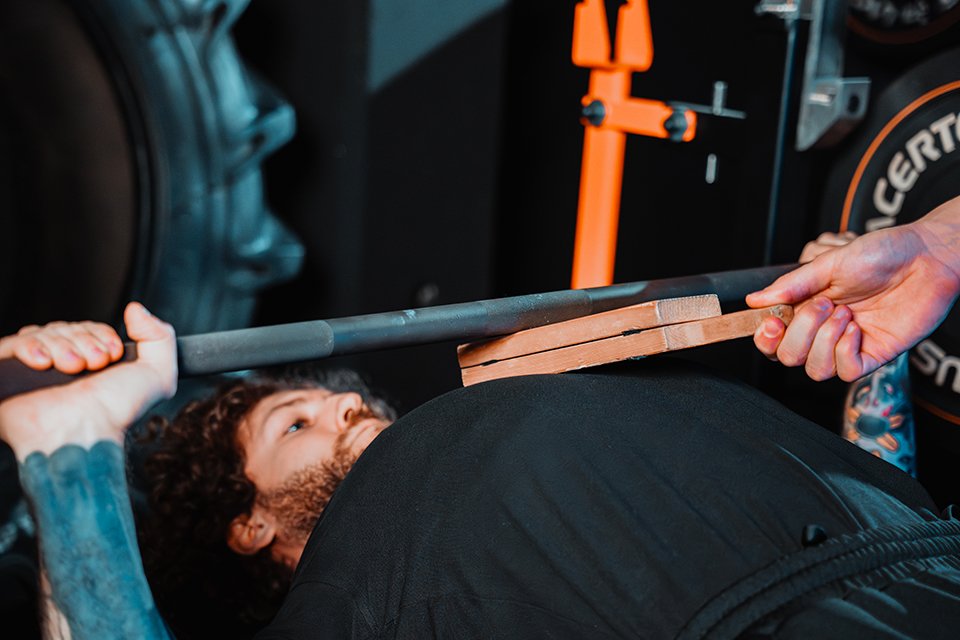
Unrack with straight elbows, move the bar to the controlled start over the shoulder-to-chest line and take a brace before lowering. Keep the upper back pressed into the bench. Descend deliberately rather than allowing the bar to fall into the wood. The touch should be quiet and repeatable. If the board bounces, tilts, or makes the bar ricochet, the repetition has lost the constraint that makes the variation useful.
At the contact point, let the bar settle briefly without driving the board down into your chest. You do not need a long theatrical pause unless the plan calls for one. A short, defined touch makes technique easier to compare. Press back through a path that keeps the wrists stacked and elbows contributing smoothly; avoid changing grip width or flaring abruptly simply because the bottom position is higher than usual.
An effective cue is to maintain tension all the way to the touch. Many lifters relax as soon as they see the board, assuming it will support the weight. That makes the rebound unpredictable and interrupts the leg and upper-back pressure established at the start. The board limits travel; it should not become an excuse to release your torso position.
Complete each repetition with balanced elbow extension and an even bar. If one side reaches the board first, examine the holder’s position, bar tilt, grip symmetry and whether the feet have shifted. If the bar rolls forward at contact, reduce load and return to the empty-bar pattern rather than trying to muscle the next attempt through. You are training the press, not compensating for a moving target.
End the set while you still control the downward speed and rack path. Ask the bench spotter to assist with the final return only when requested or when the rep clearly fails. Keep the board in place until the bar is secured. Practicing this sequence under light loads makes heavy sessions less dependent on improvised communication.

Equipment Worth Exploring
Explore equipment, accessories and gear from our carefully selected range.

Multi Bench MBX-650 2.0
Adjustable multi-bench with roller adjustment, 15 backrest positions and accessory mounts.

FID Bench MAX
Adjustable bench offering flat, incline, and decline positions + adjustable headrest.


Foldable Wall Rack
Wall-mounted folding squat rack designed to save floor space between workouts.





Speed Collar
Quick-release collars designed to secure weight plates on standard two-inch Olympic bars.
One, two or three boards: choose the range with a reason
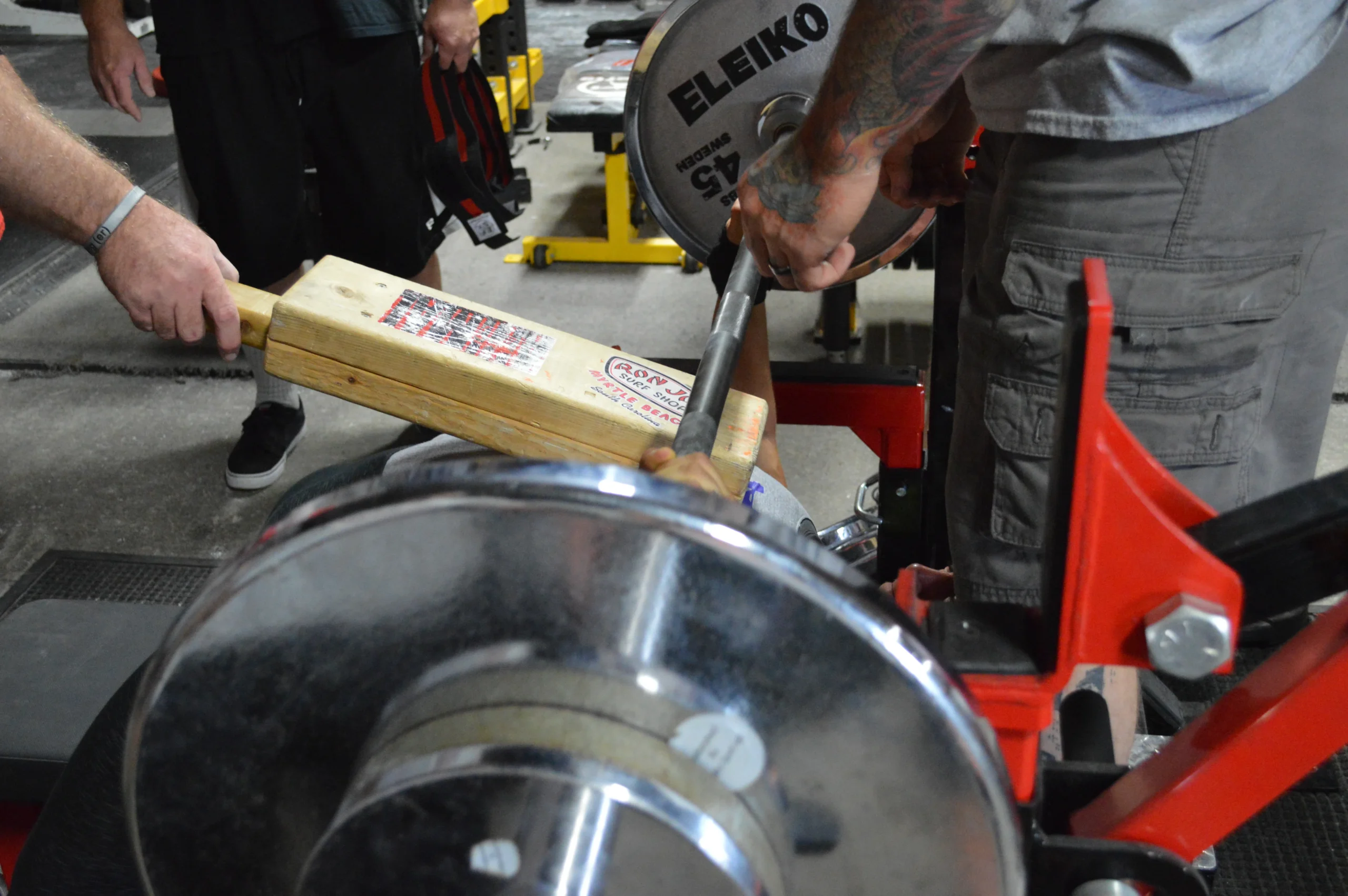
A one-board press preserves more of the normal bench movement. It can be useful when you want a slightly shorter touch without removing the whole bottom half of the rep. Two boards shift attention further toward the middle and upper portion, while three boards reduce travel more aggressively. These are descriptions of range, not guaranteed muscle-isolation switches; chest, shoulders and triceps still work together.
Begin by watching a few smooth full-range sets at a manageable load. Notice where bar speed falls and whether the slow point appears consistently. A sticking point low off the chest might not be addressed well by a very high board; if the issue is near the lockout, a low board may not emphasize the desired region. Match the stop to what you actually see, then keep it fixed long enough to compare.
Board height also changes leverage. It is easy to declare a high-board rep stronger when the weight climbs, but shorter travel makes the measurement a different task. Do not compare a two-board five-repetition maximum with a full-range five-repetition maximum as if they were interchangeable. Record each variation separately, and retest the regular bench under comparable conditions if that lift is your real goal.
A board press is especially relevant for lifters with a trained bench pattern who need supplemental work at a selected height. Beginners often need more full-range practice first: controlled lowering, stable touchpoints, consistent spotter calls and repeatable bar paths. Board work added too early can hide those missing skills rather than build them.
Choose one board height for a training block instead of changing the stack every session. If the training goal changes, treat the next height as a new exercise variation and establish a fresh load baseline. The most useful adjustment is the one you can connect to a specific weakness and assess with video, not the height that produces the most dramatic load.
Board presses versus pin presses and other bench accessories
Pin presses stop the bar on rack-mounted safety pins rather than a stack resting on the torso. They can be performed from a dead stop and are easier to set up without a dedicated board holder, assuming the rack and safeties are designed for the work. The contact feels different: hard steel pins can change the bounce, starting tension and bar behavior. That means the same nominal height is not automatically the same training task.
A close-grip bench changes hand spacing while retaining the normal chest touch. A floor press limits range when the upper arms meet the floor, often making the bottom position and elbow placement different from a board press. Paused full-range benching preserves the complete descent and adds a controlled stop at the chest. If the goal is technique under competition-style conditions, that specificity is often more important than partial-range loading.
For a triceps-focused accessory, boards can let you practice finishing a heavy press, but they are not the only route. Cable extensions, lying extensions or close-grip presses may provide more accessible volume, especially in a home gym without a board holder. Select the accessory that solves an actual problem while keeping setup cost and recovery manageable.
Board presses should also not be sold as rehabilitation. A shorter range can alter which positions are loaded, but an injury, new pain or loss of motion needs an individualized assessment rather than a blanket recommendation to shorten the bench. Pain at the touch or during the lockout is a reason to stop and reassess, not to stack more boards and keep chasing the top set.
From a programming standpoint, compare what you can measure: board height, bar load, repetitions, proximity to failure and the stability of the final rep. Reserve statements about changes in your full bench for occasions when you actually test the full lift. A specific accessory can be useful without pretending that every strong board press translates directly into a competition record.
A six-week board-press progression that stays measurable
Use the board press once a week after your main bench work or as the second press in one upper-body session. Start with a fixed two-board height only if it matches the range you want to train; a one-board or three-board version can replace it when clearly justified. Warm up with the empty bar, rehearse the board touch and build gradually to working weights that leave approximately two clean repetitions in reserve.
Weeks one and two: complete three sets of six to eight controlled repetitions at the chosen height. Rest about two to three minutes between sets, longer if bar path or breathing needs recovery. Log the weight and whether every rep contacted the board in the same position. Do not increase load merely because the first set felt easy when the final set has an unstable touch.
Weeks three and four: keep three working sets and aim to add one repetition per set within the existing range before increasing weight by the smallest practical increment. Once all sets reach eight with a consistent touch and no rushed lowering, add a modest amount of weight and return to six. Keep the board thickness unchanged. If your bench session already contains demanding pressing volume, use two sets rather than forcing extra work.
Week five: if technique and recovery remain good, use four sets of five to six with a small increase over the previous block. Resist testing a one-rep board maximum; this is accessory practice, not an unplanned meet. Week six: reduce the board work to two comfortable sets of six and assess the regular bench with the same grip, pause and setup you used before the block. You are looking for a better full-range pattern, not proof that the boards caused every change.
Keep one session note that explains whether the bar contacted evenly, the spotter and holder coordinated reliably, and the touchpoint stayed stable. If those basics break down, repeat the previous week’s load. Good progression means an improvement you can identify and reproduce safely. When the block ends, either retain the same height for another cycle or move to a different accessory based on what the full bench actually needs.

Powerlifting Shirts & Lifting Gear
Powerlifting shirts and gym gear for squat, bench and deadlift lifters who live for heavy numbers.

Barbell Heartbeat Decal for Water Bottles Laptops Power Sticker
Stick a little “Barbell Heartbeat” humor on your favorite gear.

My Bench Press Is Stuck Horror Scary Movie Meme Hoodie
Show off your Halloween humor in a laid-back “My Bench Press Is Stuck Horror” hoodie.

I Love Bench Press Muscle | Heart Plate Gym Vest for Ch Tank Top
Add some lifting attitude to training with “I Love Bench Press”.

3 Plates Bench Club Chest Day Meme & Top T-Shirt
Rep “3 Plates Bench Club” humor in and out of the gym.

Squat Bench Deadlift Read Shirt Literary Bookworm Top T-Shirt
Bring “Squat Bench Deadlift Read” humor to your next gym day.


Shirt: Good Argument But I Bench More Than You – T-Shirt
Make gym days more fun with “: Good Argument But I Bench More Than You” style.

2 Plates Bench Club Chest Day Meme & Top T-Shirt
Heavy lifts, good laughs, and a little “2 Plates Bench Club” energy.

Bench Press and Chill Funny Gym T
Make gym days more fun with “Bench Press and Chill” style.