Advertising disclosure: This page includes affiliate product links that may earn us a commission, as well as products from our own store.
The ATX PEC-650 combines a pec fly and a rear-delt station in a plate-loaded frame. The interesting questions are not whether the machine looks premium, but how its five start angles, three grip options, four seat settings and full moving width affect real training. Here is a model-specific buying and setup guide grounded in the published hardware specifications, without pretending to be a hands-on review.
One frame, two fly patterns – but check the actual mechanism
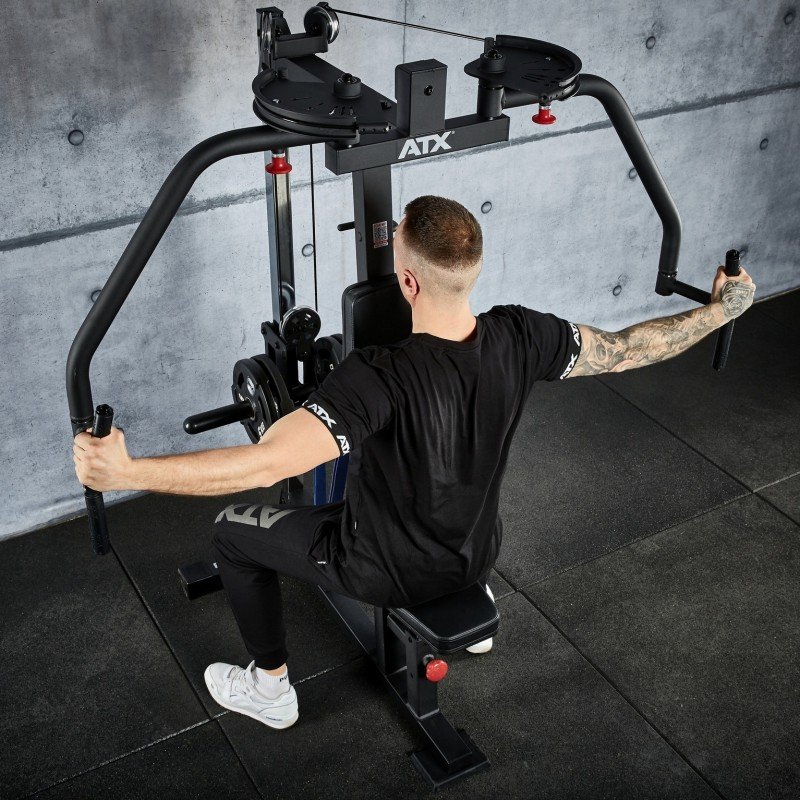
The PEC-650 is a plate-loaded combination station rather than a conventional selectorized pec deck. It uses a seated position, moving lever arms, a weight carriage and adjustable starting angles to support chest fly and reverse-fly work. That matters when comparing it with a cable crossover: you are selecting a guided arc, not independently positioning two cables.
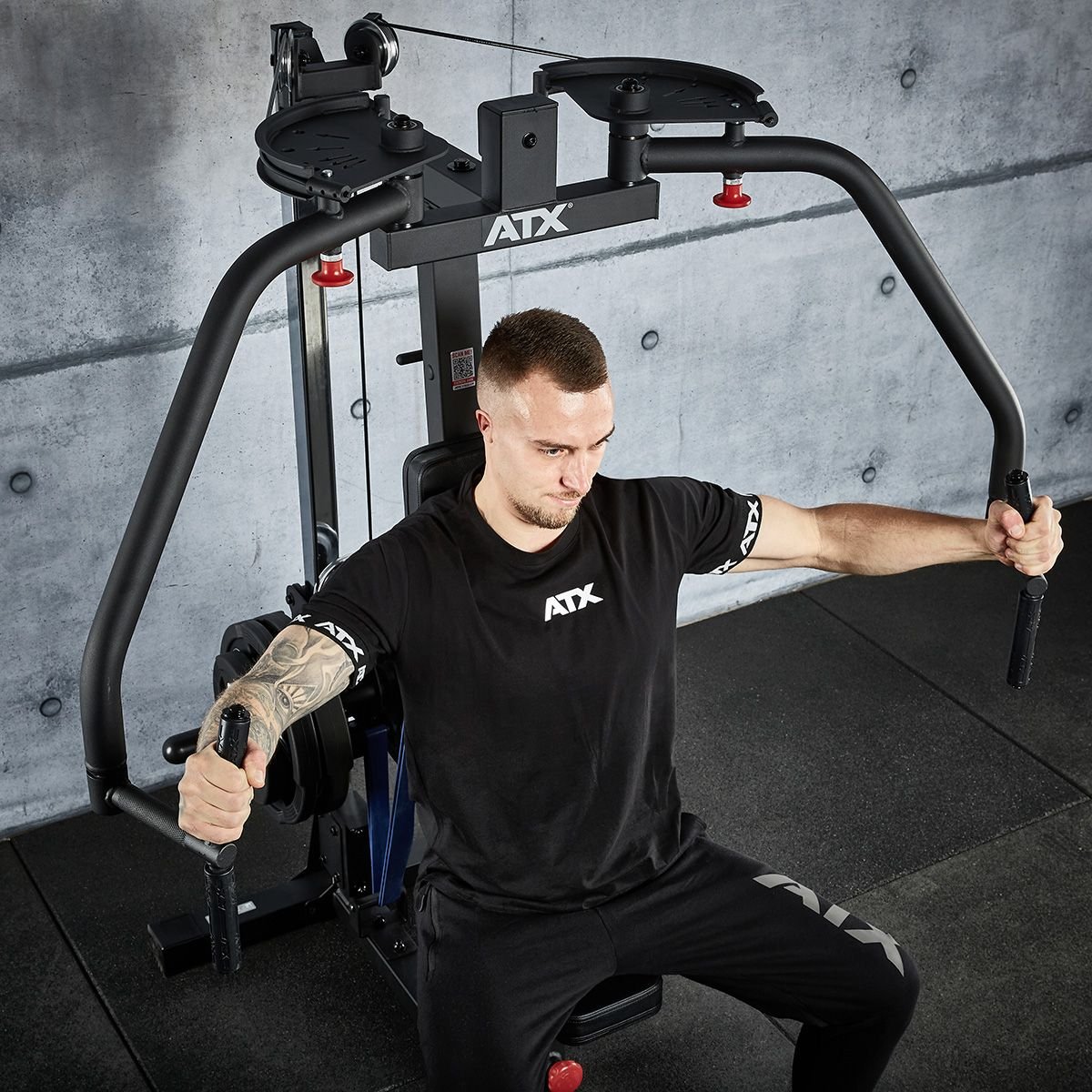
Start by identifying the model and inspecting the machine before loading it. The PEC-650 has a vertical support, back or chest pad depending on which way you face, and a pair of curved arms attached above the exerciser. Check that adjustment knobs engage cleanly, the cable path is unobstructed, the feet are stable, and the plates are equally loaded on the intended carriage. Do not improvise a new handle attachment or force a pin between marked positions.
For a chest fly, sit with your back supported and bring your arms together in front of the torso, choosing a starting angle that gives a comfortable chest stretch. For a reverse fly, turn to face the pad and move the handles outward in a controlled horizontal arc. Adjust the two sides consistently: uneven start positions can create different ranges even when the plate load is balanced.
The advertised two-in-one function is useful, but neither movement automatically replaces every pressing, rowing or shoulder exercise. Its value comes from repeatable positions and a distinct isolation stimulus alongside compound lifts. Treat the first session as familiarization rather than a test of how much plate weight the frame can carry.
Set the seat and five starting positions before loading up

The manufacturer specifies four seat-height positions and five selectable lever-arm start positions. Those numbers sound minor until you consider how differently a short-armed and long-armed lifter approach the same handle. A good start position lets the target muscle do the work without forcing the shoulder into a painful stretch or asking the trainee to twist out of position.
For chest flys, raise or lower the seat until the handles track at a comfortable upper-chest level. Keep the upper back in contact with the pad, ribs controlled and feet firmly planted. Select a start angle that permits a moderate chest stretch without the shoulders being pulled backward abruptly. An excessive reach behind the body is not necessary to make the pecs work.
For rear delts, face into the pad and set the handles around shoulder height. Begin with a slight, consistent elbow bend, then sweep the arms sideways and back rather than rowing the handles toward your ribs. If the front of your shoulders feels pinched, reduce the start range, try another grip or lower the working resistance.
The range-setting pins are not an invitation to maximize travel at all costs. Start conservatively, run a light set, and confirm the path feels stable on both sides. Once the seat and pin positions are repeatable, record them beside the chosen plates in your training log. These setup numbers are often more valuable for progression than comparing stacks or loads between completely different machines.
Three handle positions: use comfort and consistency, not promises

ATX lists one horizontal and two vertical handle positions, with the vertical handles designed to rotate. This gives multiple wrist and forearm orientations on the same machine. It does not prove that one grip grows the rear delts faster or that rotating grips eliminate joint stress for every user; those are individual responses and would require more direct evidence.
For a rear-delt set, many lifters find a neutral grip intuitive because the elbows can travel broadly outward with little wrist rotation. A palms-down or more horizontal grip may also feel natural. Choose the handle that permits clean arm motion while the chest stays supported. Avoid turning the exercise into a shrug just because a particular handle lets you move more plates.
Small laboratory comparisons of shoulder activation have found grip-dependent differences during horizontal-abduction exercises. Yet surface electrical activity measures the immediate exercise condition, not how much a muscle will grow over months. Machine geometry, shoulder comfort and your ability to reproduce the motion are better practical selection criteria than a claim that a certain grip is universally superior.
The chest-fly grip decision is similar. Keep the wrists reasonably aligned with the forearms and use a path that feels controlled as the hands approach each other. If an orientation causes joint irritation, do not solve it by forcing the handles through the same path with heavier weight. Try an alternative setting or train the muscle with another exercise.

Equipment Worth Exploring
Explore equipment, accessories and gear from our carefully selected range.

Pec Fly/Rear Delt PEC-650
Combination machine with adjustable movement limits for chest fly and rear-delt exercises.
VOLTRA
Compact digital cable trainer with smooth, adjustable resistance.

Go-Tone Pro
Portable digital cable trainer with up to 66 lb (30 kg) of adjustable resistance.

VForce Lat Tower
Wall-mounted cable tower with pivot arms and adjustable 1:1 or 2:1 pulley ratios.

Multi Pull Smith Rack MPHR-780
All-in-one rack with a Smith machine, functional trainer, lat pulldown and low row.

GymPin D Cuffs
Adjustable wrist cuffs with textured grips for supported cable-machine exercises.

GymPin Ergo Handles
Pair of ergonomic cable handles shaped for comfortable triceps and pulling exercises.

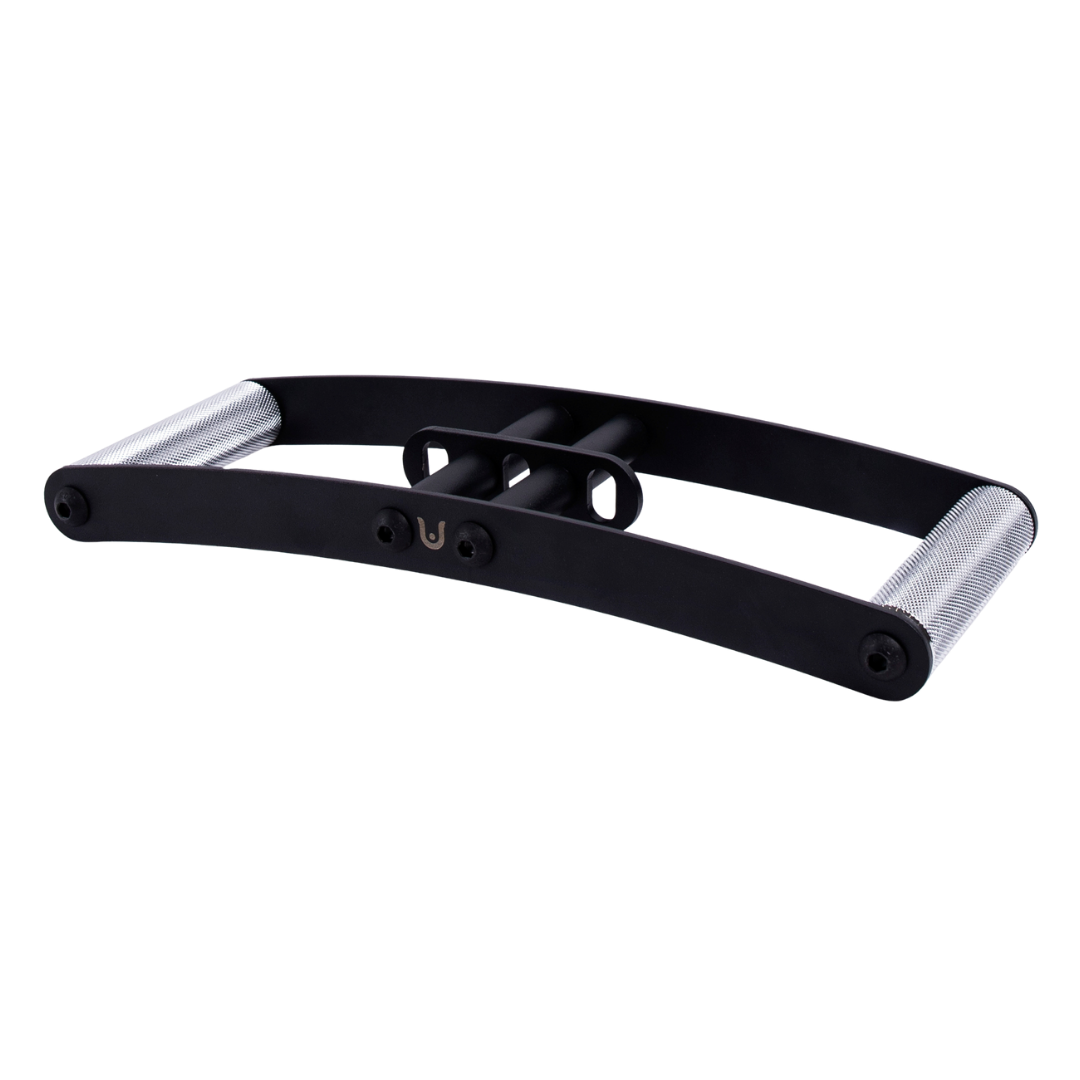
Horizon Grip
Ergonomic V-style cable grip for rows and back training.

How its bearings, weight carriage and band pegs affect training

The PEC-650 lists ball bearings at its lever pivots, rotating handles, aluminum rollers and weight carriage, plus an eccentric linkage intended to shape the resistance profile. These are hardware specifications, not independent proof of a particular strength curve or extra muscle growth. They suggest design priorities worth evaluating in person: smooth unloaded travel, low sticking at transitions, consistent left-right motion and predictable resistance.
Before adding plates, move the arms through the full selected range slowly. Watch for unexpected cable contact, jerky carriage movement or a change in resistance that makes one side feel different. Then add a modest, symmetric load and compare the first and last third of the repetition. A machine can use high-quality components and still be a poor match for someone’s limb lengths or preferred training angle.
The machine also has integrated roller-band pegs and two pre-tension positions. Bands can change the way load builds during the rep, but they are optional and should not automatically be combined with heavy plates. If using them, start with little tension, confirm the anchors are secure, and ensure bands cannot slip toward hands, eyes or face. Record the band and peg setting separately from plate loading because it is no longer the same resistance condition.
Plate loading itself deserves attention. The stated 150 kg capacity is an equipment limit, not a recommended training load or a guarantee of smooth performance at that number. ATX’s regional listings may differ about standard plate-sleeve diameter and adapter options, so measure the actual sleeve and confirm the correct adapters before relying on existing Olympic plates.
Footprint, assembly and the hidden cost of a combination station

The published footprint is approximately 75 cm across the base and 106 cm deep, with a height near 174.5 cm. That compact base dimension is not the full operating width: ATX lists up to roughly 165 cm across the arms. Allow space for arm travel, loading plates, getting onto the seat and walking around the station. A floor plan using the base width alone can badly underestimate clearance.
The machine weighs around 66 kg before plates. It arrives disassembled, so the true installation job includes unpacking, building the frame square, securing fasteners according to the supplied instructions and checking free movement before using it. A flat, load-rated floor, sound fixings and adequate ceiling clearance matter more than whether the outline fits a bare rectangle on paper.
The combo format is attractive when you would otherwise use separate pec-fly and rear-delt stations. But it is still a dedicated machine: unlike dual adjustable pulleys it cannot perform every cable press, curl, extension or row. If you have a full gym, its appeal may be the repeatable path and easy exercise switching. If floor area is the main constraint, compare its real operating envelope with a functional trainer and the rest of your training needs.
Also consider what is included. Official descriptions list the machine and its assembly instructions, while example photos can show optional plates, resistance bands and floor mats. Do not assume those accessories arrive in the box. Check the current regional product listing and delivery terms before purchasing; pricing, stock, shipping dimensions and plate-adapter packages can vary by market.

Bodybuilding Shirts & Workout Gear
Bodybuilding shirts, tanks and gym gear for lifters chasing muscle, size, symmetry and the pump.


Smash Dumbbells Tee
Show some superhero attitude with a playful “Smash Dumbbells Like Hulk” tee.

Yeah Buddy Ronnie Tank
Add some lifting attitude to training with “Yeah Buddy Lightweight”.


Gymhead – Mind Muscle Connection – Skull , & Meme T-Shirt
Rep “Gymhead” humor in and out of the gym.

Buff Smiley Grunge Hoodie
Stay casual and show some metalhead attitude with “Buff Smiley Face”.

Wonder Snatch Weightlifting Tee
Bring “Wonder Snatch Wonder Woman Olympic” humor to your next gym day.

Programming the PEC-650 without turning every set into a max
A practical first month can be simple: learn the machine in week one, stabilize setup in week two, build repetitions in week three and add a small plate increment only after week four feels consistently clean. The chest fly and rear-delt fly are accessories, so fit them around your presses, pulls and recovery rather than replacing compound work by default.
For example, try two or three chest-fly sets of 10 to 15 smooth repetitions and two or three rear-delt sets of 12 to 20 at a load that leaves roughly one to three repetitions in reserve. These are reasonable training examples, not model-specific prescriptions. If you already train the same muscles hard elsewhere, reduce that volume rather than stacking exercises solely because the machine offers them.
Use a steady lowering phase, keep the pad contact you established during setup and stop before technique deteriorates into bouncing or excessive scapular shrugging. When all sets reach the top of the rep range at the same seat, grip, pin and plate settings, increase resistance modestly. Because the machine is plate loaded, small increments may be preferable to making an abrupt jump simply because larger plates are available.
Track the exact configuration: chest or reverse fly; grip choice; seat position; start-position numbers; plate load; optional band tension; repetitions; and whether each set stayed controlled. Over four weeks, improvement means higher-quality repetitions or a measured load increase under comparable conditions. It is not a promise that the hardware will guarantee bigger shoulders or pecs.
The best purchasing and programming decision is the same: test the actual movement. A machine may offer five settings, several grips and sophisticated bearings, but the useful question is whether those options help you perform the desired reps comfortably, consistently and with enough space for safe use.