Advertising disclosure: This page includes affiliate product links that may earn us a commission, as well as products from our own store.
A reverse preacher curl gives the upper arms a support, but the setup still determines what you can repeat. Arrange the pad, cable and grip before adding weight. Keep standing and dumbbell alternatives distinct, then use a clear repetition standard to evaluate progress.
Set the preacher pad before selecting the working load
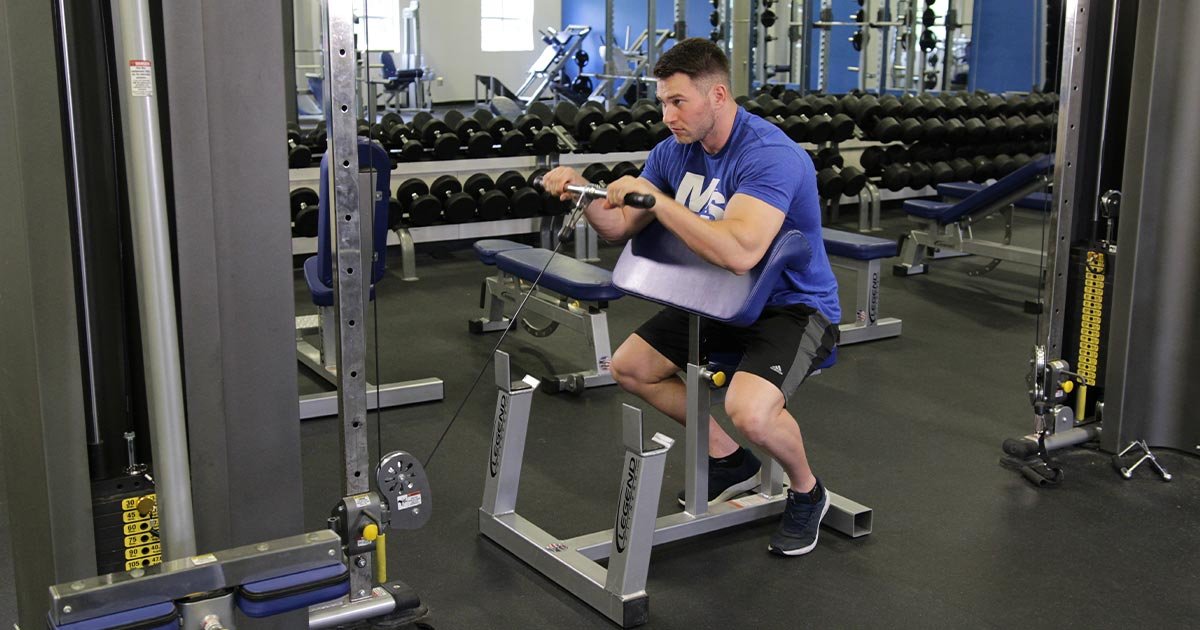
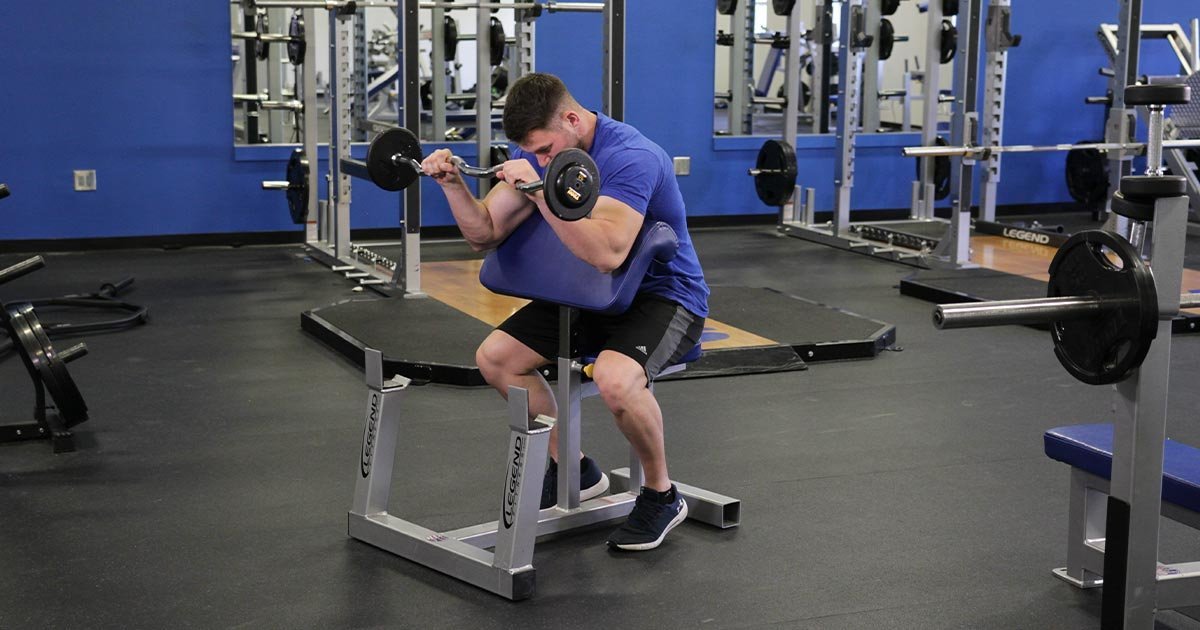
The reverse cable preacher curl combines an overhand grip with support under the upper arms. Attach a suitable bar to a low pulley and position a proper preacher bench facing the station. Sit so the upper arms can rest securely on the pad while you reach the handle. Begin with a light setting and check the movement before committing to a working set. The bench should remain stable when cable tension comes on.
Adjust the seat and your position together. If you must lift your chest off the pad or reach with the shoulders to complete every repetition, the setup needs attention. Support the upper arms rather than balancing only the points of the elbows against an edge. Your hands should have room to travel without the bar striking the bench. Check that the attachment, connector and cable can move freely throughout the intended arc.
Start from an extended but controlled elbow position, curl the handle upward, then lower it deliberately. Keep the upper arms in contact with the support rather than turning the repetition into a shoulder pull. Do not force an uncomfortable endpoint or drop suddenly into the bottom. You want a range you can reverse under control. The first warm-up set is an opportunity to establish that range, not a test of how much you can tolerate.
A useful setup note might read: low pulley, preacher seat setting three, straight attachment and upper arms fully supported. The exact number is only meaningful on your equipment. Recording it still makes the next visit easier. When a bench has been moved or the seat changed, repeat the light check. A familiar weight does not guarantee that an unfamiliar arrangement will feel or behave the same way.
Understand the cable line and the standing alternative
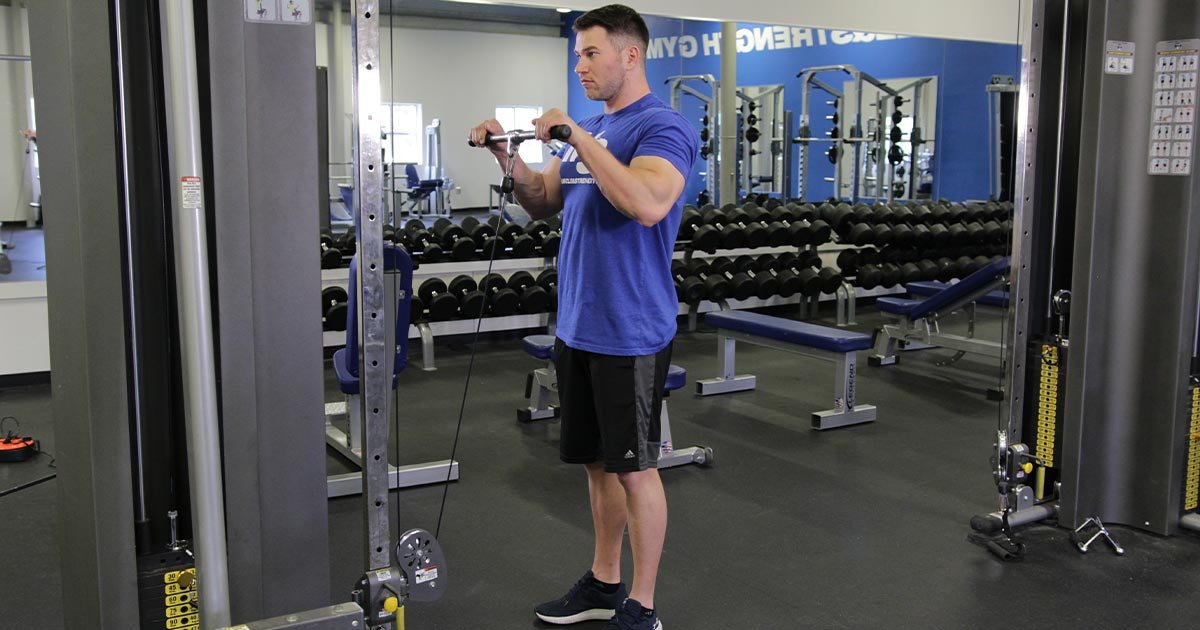
A cable pulls toward its pulley, so bench position changes the direction of resistance relative to your forearm. Moving the bench closer or farther away is therefore a setup change, not just a convenience. Find a position where you can complete the intended movement without the cable rubbing against the bench or pulling you out of position. Keep the route clear for the whole set and leave room to return the handle safely.
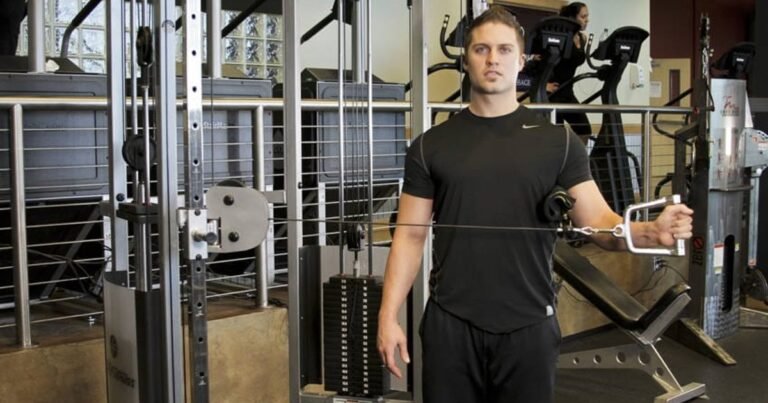
The accompanying image shows a standing reverse cable curl. It is a useful comparison because it uses a similar attachment and low pulley without the preacher support. In that version, you must maintain the upper-arm and torso positions yourself. In the preacher version, the pad supplies an external reference. Neither setup makes it acceptable to jerk the handle, lean backward or let the shoulder movement replace elbow flexion.
Do not transfer a stack number directly between stations and assume the task stayed identical. Cable routing, pulley arrangements and attachment choices can differ. Even at the same station, changing the bench distance or your standing position may change how the resistance feels through the arc. Keep comparisons within the same repeatable arrangement whenever possible. Label standing and preacher curls separately in your log so a substitution does not masquerade as a strength gain.
If the preacher bench is unavailable, the standing version can be an intentional substitute rather than an improvised unstable bench arrangement. Start lighter, establish your posture and check where the elbows move as fatigue builds. Record the substitution and evaluate it on its own terms. Returning to the supported version next session does not require matching the standing number. Consistent execution gives each exercise a useful history without pretending their loads are interchangeable.
Choose the grip you can hold without folding the wrists
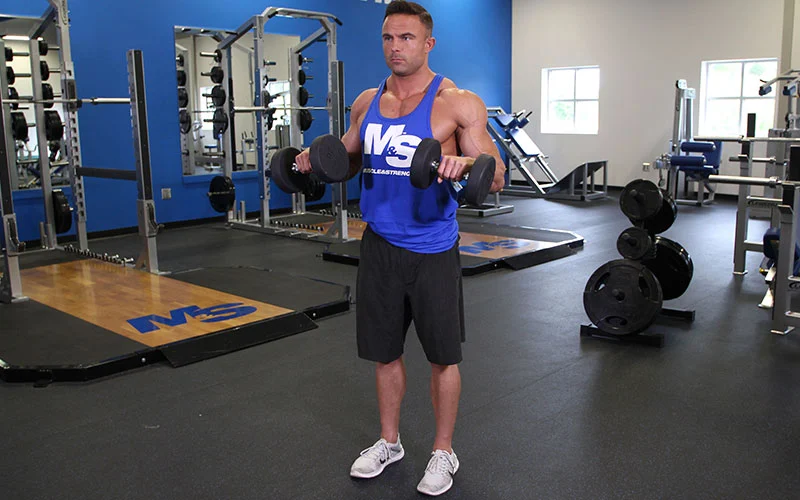
Reverse describes an overhand grip: the palms face downward relative to the bar at the starting position. Elbow flexion still drives the curl. Keep the hand and forearm reasonably aligned instead of repeatedly bending the wrist to move the handle farther. This is an elbow-curl exercise, not a reverse wrist curl. If the wrist angle changes dramatically before the elbow finishes its movement, reduce the load and reassess the grip.
A straight attachment and an angled curl attachment offer different hand positions. An angled grip may feel more comfortable for some lifters, but it is not automatically the correct choice for everyone. Try the available positions with a light load before making a decision. Do not force your hands into a prescribed width that feels awkward merely to copy another person's setup. Note the exact attachment and grip segment you choose.
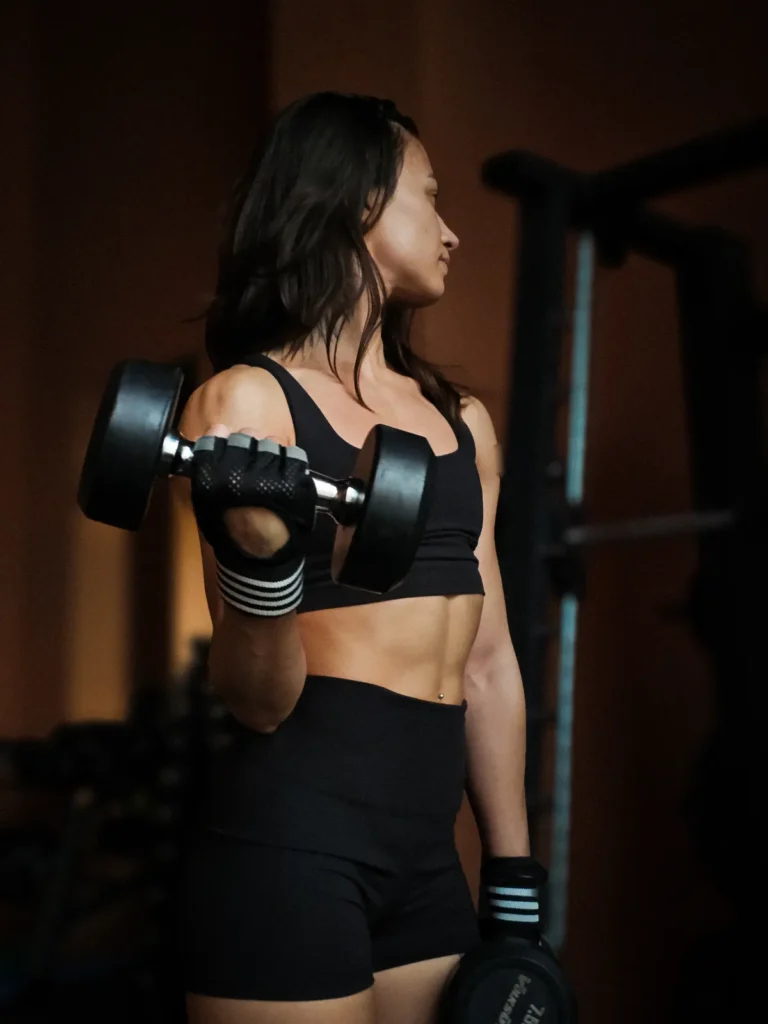
The photograph shows a standing dumbbell reverse curl. Separate dumbbells remove the requirement for both hands to share one fixed bar, but they also remove the preacher support in this example. Treat those as two changes. Keep the dumbbells controlled, avoid swinging the torso and do not assume an equal total load makes this equivalent to the cable version. The way the weight acts through the movement is different.
If one implement repeatedly feels uncomfortable, choose another manageable variation instead of chasing a promised muscle advantage. Stop a painful set. You can review setup and load before trying again, and get qualified coaching when the movement remains unclear. There is no need to manufacture a difficult wrist position to prove that a reverse curl is working. The useful grip is one you can maintain while performing the intended elbow movement.

Equipment Worth Exploring
Explore equipment, accessories and gear from our carefully selected range.


Rubber Hex Dumbbells
Rubber-coated hex dumbbell pairs with a stable shape for home and commercial strength training.


EZ Curl Barbell
Olympic EZ curl bar with angled grips for curls and triceps exercises.


VOLTRA
Compact digital cable trainer with smooth, adjustable resistance.

Go-Tone Pro
Portable digital cable trainer with up to 66 lb (30 kg) of adjustable resistance.
Keep supported alternatives distinct rather than mixing their records
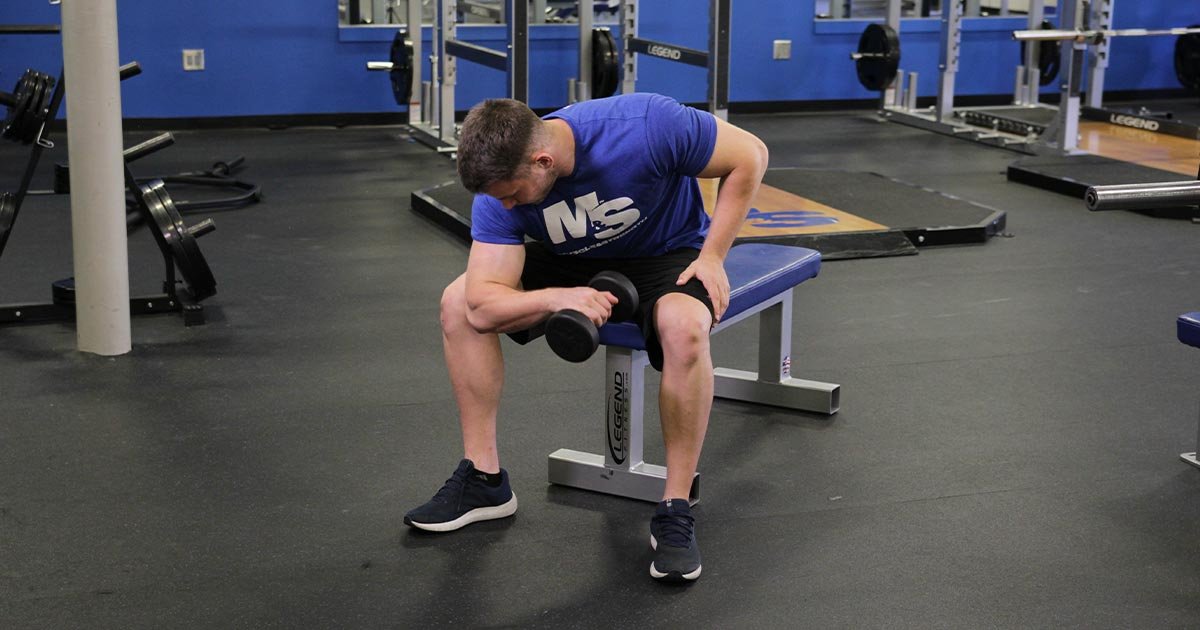
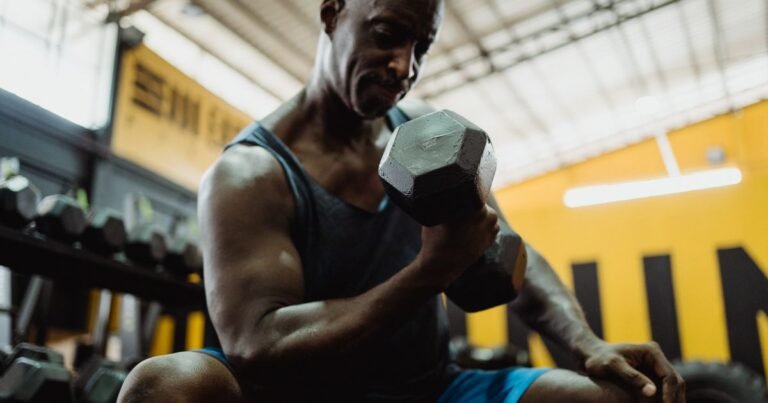
A reverse concentration curl provides a different form of support. In the seated variation pictured, the working upper arm is braced against the inner thigh while the other hand rests on the opposite leg. The lifter curls a dumbbell with an overhand grip. This arrangement is not a portable version of every preacher station: the support angle, resistance direction and available range need to be established for this particular position.
Sit on a stable seat and arrange enough space between the legs for the dumbbell to move. Use the thigh as a reference rather than shifting it to launch the weight. Keep the upper arm settled and lower deliberately. If you cannot maintain the position, simplify the task or use another exercise. The appeal of a supported curl is a clearer movement standard, not permission to load a setup that keeps changing.
Training one arm at a time also makes recording each side straightforward. Use the same intended range and a comparable setup on both sides. If one side completes fewer clean repetitions, first check whether posture, grip or support changed. Do not automatically add extra sets to the lower count. A small difference in one session does not by itself identify a problem that needs a special correction programme.
Choose a supported variation for a practical reason: access to equipment, a position you can control or a clearer way to evaluate repetitions. You do not need preacher, concentration and standing curls in the same workout just because all three are available. An arm day or pull day already containing curls may need a substitution rather than another exercise. Keep the routine focused on work you can perform consistently and review over time.
Progress the curl while preserving the repetition standard
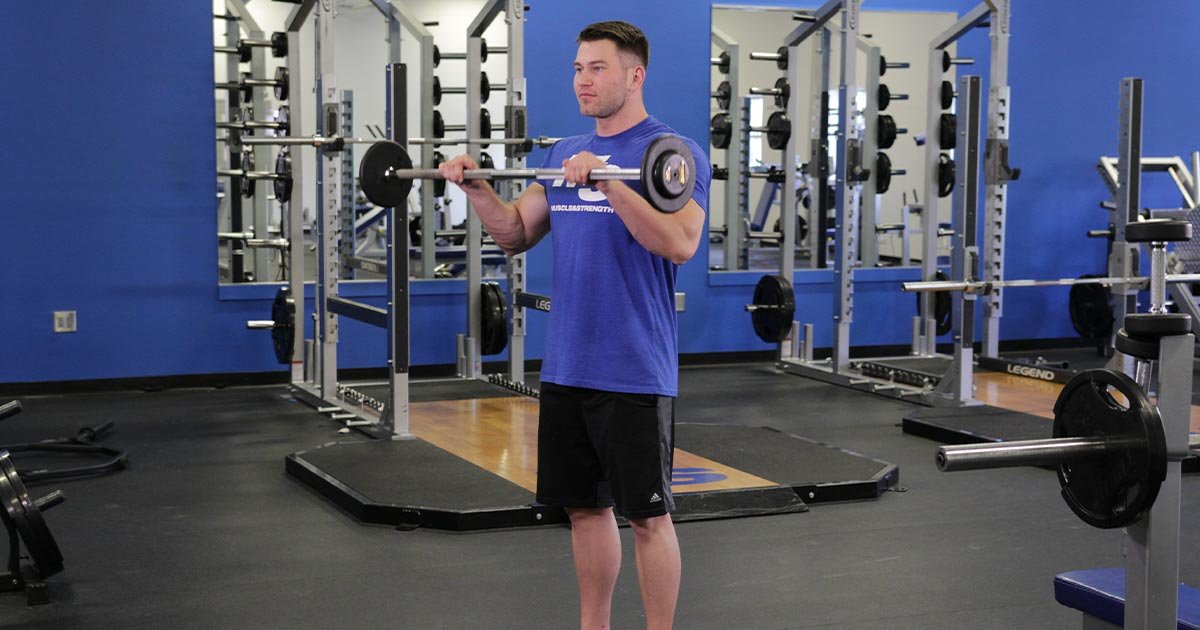
The standing barbell reverse curl shown here is another separate comparison exercise. Without a pad, it is easier to change the task by moving the upper arms or leaning as the bar rises. That makes it a useful reminder for any reverse-curl variation: a larger number is only a clear improvement when the movement standard stays comparable. Record the exercise and implement, not simply a generic entry labelled arms.
For the reverse preacher curl, an initial experiment could be two working sets of eight to twelve controlled repetitions after your main training. This is a practical starting template, not a proven optimum. Choose a load that allows the chosen range without lifting off the pad or collapsing the wrists. Rest enough to repeat that standard, then inspect how the work fits with your existing curls, pulling exercises and recovery.
When both sets reach the upper end across repeated sessions with the same setup, try a small increase. If the next stack increment is too large, remain at the current setting rather than changing the movement to complete it. An extra clean repetition can be progress. Stop counting when the task changes substantially. Ten controlled repetitions followed by two shoulder-driven heaves should not automatically become a twelve-repetition performance.
Keep a concise log of attachment, bench setting, load, sets and clean repetitions. Add a short note if grip comfort or fatigue affected the session. Habit and consistency help because they make comparisons clearer, not because every day must contain more arm work. Keep the reverse preacher curl if it serves a clear role; replace it when another controlled option better fits your equipment or programme. Evaluate the exercise by repeatable training, not by the amount of equipment surrounding it.

Bodybuilding Shirts & Workout Gear
Bodybuilding shirts, tanks and gym gear for lifters chasing muscle, size, symmetry and the pump.

Curls The Girls Shirt – Bicep Curls Top & Gymbros T-Shirt
Rep “Curls For The Girls” humor in and out of the gym.

Big Biceps Theory & Weightlifting Bro Science Hoodie
Stay casual and show some lifting attitude with “Big Biceps Theory”.

Micro Biceps Club President Gym | Funny Workout Sweater T-Shirt
Keep things casual with a little “Micro Biceps Club President” attitude.


OnlyGains Big Biceps Decal Water Bottles & Equipment Sticker
A fun “OnlyGains Big Biceps” touch for bottles, laptops, and lockers.

Muscle Mountain – Shirt , Bicep Mountain Meme T-Shirt
Heavy lifts, good laughs, and a little “Muscle Mountain” energy.

Dumbbell Heartbeat Muscle Shirt Athletic Vest Fitness F Tank Top
Your gym-day look, with a playful “Dumbbell Heartbeat” twist.

Lift Eat Sleep Repeat Meme Sweater & T-Shirt
Bring “Lift Eat Sleep Repeat” humor to your everyday gym style.

Progressive Overload Milo Tee
Bring “Progressive Overload Milo Bull” humor to your next gym day.

Mind Muscle Perfection Brain and Biceps Gym for Science Hoodie
Show off your lifting humor in a laid-back “Mind Muscle Perfection Brain and Biceps” hoodie.