Advertising disclosure: This page includes affiliate product links that may earn us a commission, as well as products from our own store.
The REP Adonis cable tower offers something more specific than a generic functional trainer: a direct heavy lat pulldown and low-row path alongside a longer-travel adjustable trolley. Its pulley ratios, loading options and support requirements determine whether that combination fits your actual training.
Understand the two pulley ratios before choosing a load
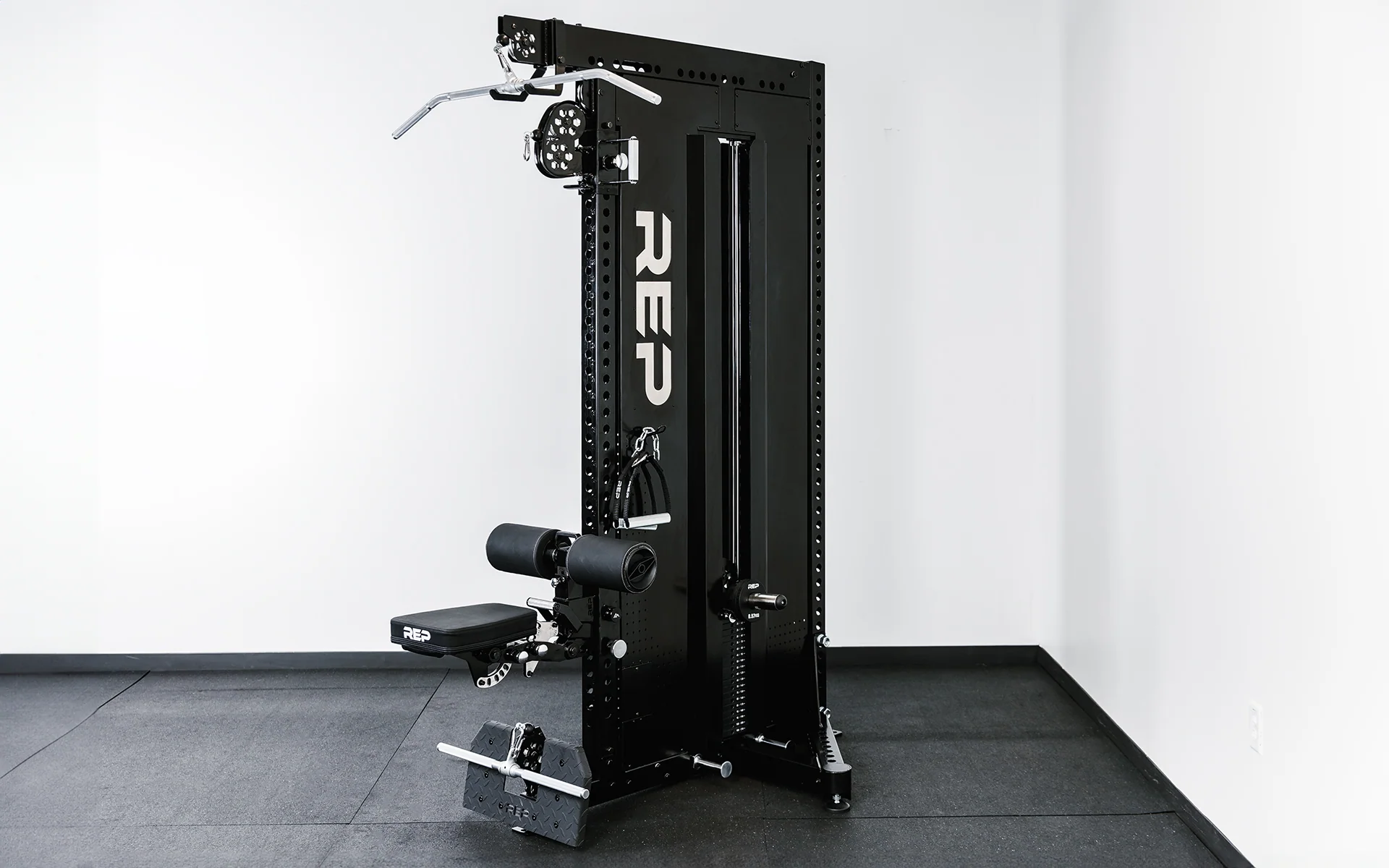
The Adonis combines a direct 1:1 high pulldown and low row with a separate 2:1 adjustable trolley. That is the feature that most changes training, yet it is easy to misunderstand when staring at a weight stack. On the 1:1 path, twenty pounds of loaded resistance produces roughly twenty pounds of nominal handle force. On the 2:1 cable, that same amount produces roughly ten. Real-world friction and movement angles affect exact force, but the underlying relationship is the useful starting point.
The ratios also influence travel. The trolley offers a specified 108 inches of cable movement, while the dedicated pulldown and low-row cable offers 54. The longer line can feel less restrictive on standing presses, flyes, lateral raises and curls. The direct line makes heavy, controlled pulls practical without constantly doubling the stack selection to get a similar handle resistance. Always write both the selected weight and the pulley used into a training log. Otherwise two sets marked as the same load may not be comparable at all.
A stated maximum system resistance of 450 pounds applies across the supported configurations, but it includes the weight stack, evenly distributed added plates and resistance bands as applicable. It does not mean that 450 pounds can be added on top of an existing stack. On the direct cable this is nominally 450 pounds at the handle; on the 2:1 trolley it is 225. Such limits are a capacity specification, not a suggested working target for a typical workout.
Think about what you actually need. A strong lifter who prioritizes pulldowns and low rows might value the direct heavy path more than a second adjustable handle. Someone whose chest workouts revolve around simultaneous two-handle flyes may prefer a conventional dual-column trainer. The Adonis provides one adjustable trolley, not two independent cable columns. Understanding that tradeoff is more important than any marketing claim about how many exercises one tower can perform.
Selectorized or plate loaded: get the weight math right
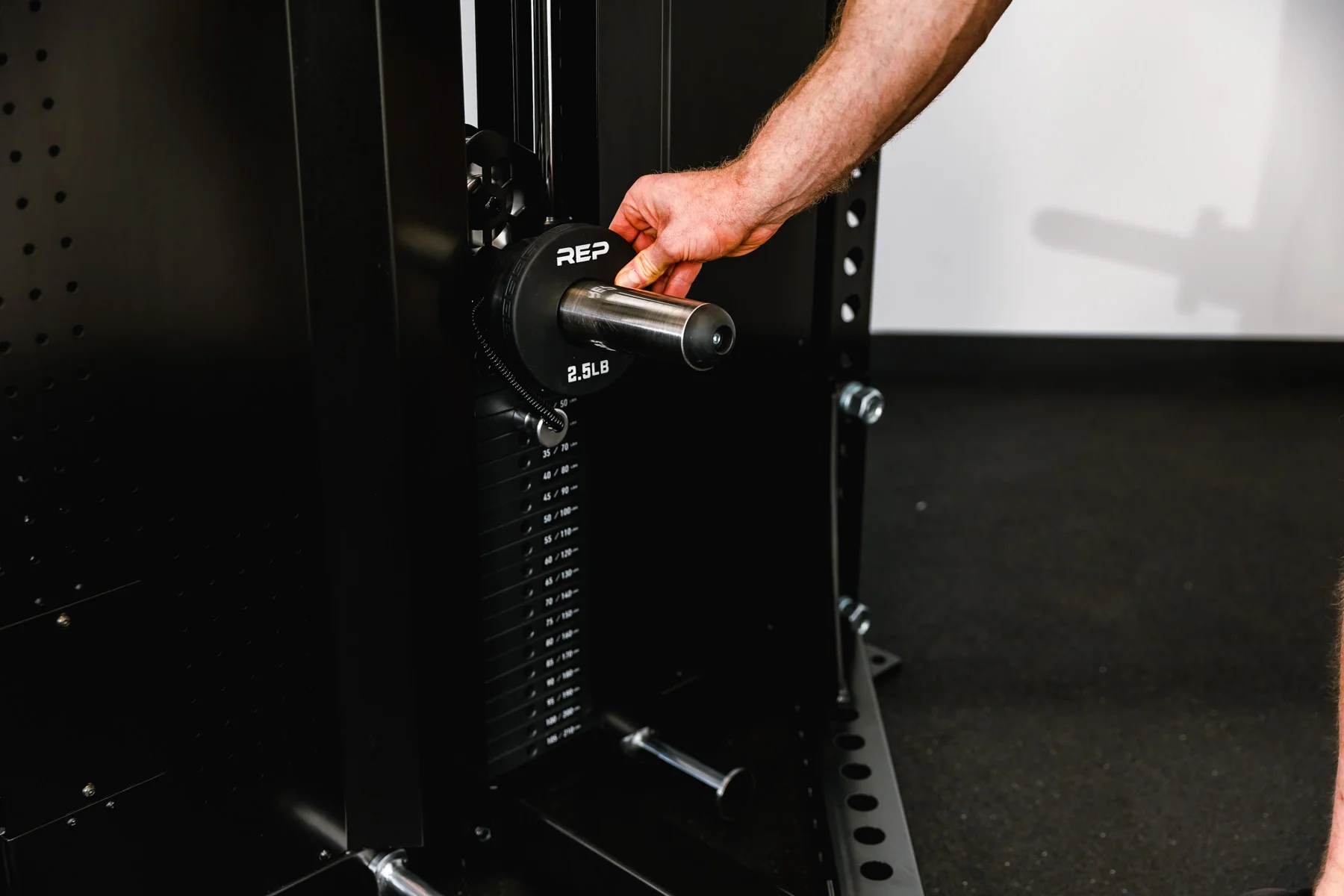
The selectorized Adonis has a 210-pound weight stack with a pin adjustment and auxiliary weight horns. The plate-loaded version uses horns that can carry up to 360 pounds of plates. Those figures describe different parts of the equipment; neither should be confused with the stated overall 450-pound system capacity. Choose the configuration according to how you train, not simply the largest number in a table. An exerciser using a 2:1 trolley for small isolation movements has different requirements from someone progressing toward heavy 1:1 pulldowns.
Selectorized adjustment is convenient when changing between athletes or exercises. You move the selector pin, check that it is properly inserted, and train. Plate-loaded equipment instead asks you to load and unload plates. That may be fine for a single long back session, but less convenient when you alternate a heavy row with a very light lateral raise. If you already own substantial compatible plates and do not mind the setup, the plate-loaded variant can still be a rational choice.
The Adonis includes a pair of 1.25-pound and a pair of 2.5-pound microplates. These help make smaller loading changes than using major plates or large stack increments alone. However, a two-pound increase in loaded weight does not necessarily create two additional pounds at the working handle when you use the 2:1 path. Make a quick conversion list for your most common increments so you can compare progressive overload accurately. Treat your technique, clean reps and range of motion as the main progression criteria.
Inspect how the selectorized stack, horn, pin and accessories are positioned before installing the machine. A nominally fast-loading system becomes annoying when handles are hidden behind other gear, the stack cannot be reached comfortably, or plates collide with nearby storage. Leave clear space for any moving cable and avoid hanging a loaded handle where it can strike the shrouds. The best option is the one you can adjust safely and repeatably during normal training.

Equipment Worth Exploring
Explore equipment, accessories and gear from our carefully selected range.

Trinity Lat Machine LSW-850
Weight-stack pulldown tower offering three cable directions and adjustable seated support.

VForce Lat Tower
Wall-mounted cable tower with pivot arms and adjustable 1:1 or 2:1 pulley ratios.

VForce Wall Trainer
Space-saving wall-mounted functional trainer with pivoting cable arms and variable resistance ratios.

VForce 2IN1
Half rack and pivot-arm functional trainer with switchable 1:1 and 2:1 pulley ratios.

VForce 3IN1
All-in-one rack combining an adjustable Smith machine, functional trainer, and free-weight station.
VOLTRA
Compact digital cable trainer with smooth, adjustable resistance.

Go-Tone Pro
Portable digital cable trainer with up to 66 lb (30 kg) of adjustable resistance.

Multi Pull Smith Rack MPHR-780
All-in-one rack with a Smith machine, functional trainer, lat pulldown and low row.

Linear Row LRX-750
Dual-sided rowing machine for supported rows, bent-over rows and varied pulling movements.

Lateral Row Machine LRM-720
Rowing machine with independent lever arms, an adjustable seat and chest support.
Build a controlled lat pulldown and low row station
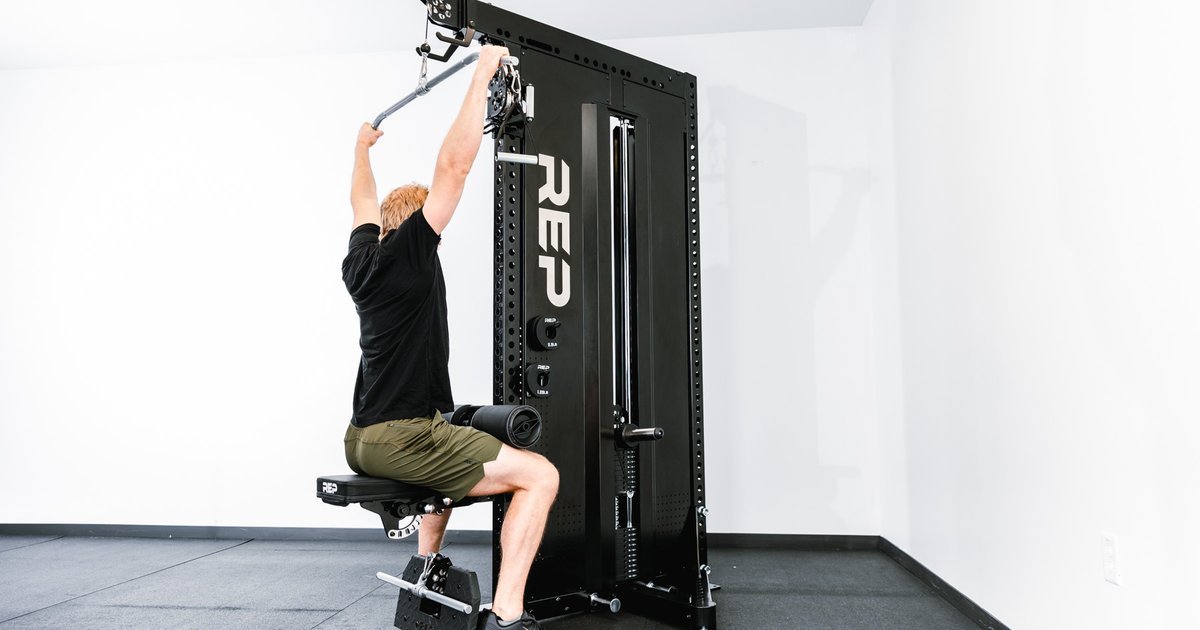
A dedicated lat pulldown is only useful if the lifter can remain anchored and complete the motion without a fight for balance. With the high 1:1 cable, place a suitable seat or stable bench so the bar travels freely. Arrange a secure leg restraint if you need one. Strong lifters can otherwise lift away from the seat during heavy repetitions, making load selection and range hard to reproduce. The optional Pegasus attachment changes the available seating and support arrangement, so confirm what is actually included in your package.
Choose a grip that your shoulders tolerate and begin with a solid trunk position. Pull the elbows toward the sides while keeping the torso controlled. Bring the handle down through a comfortable range without wrenching behind the head, jerking backward or turning the exercise into a bodyweight swing. Let the arms lengthen in the return while keeping the descent and ascent under control. A bar that moves smoothly with repeatable form is a better progress marker than the biggest stack number you can nudge.
For seated low rows, the telescoping footplate offers seven adjustments. Set the plate so your feet are supported while you can reach forward without collapsing into an exaggerated spinal position. Pull the elbows past the body as far as comfortable, pause briefly, then let them travel forward under control. If you must hurl the torso back to move the handle, reduce the load or change your seating setup. Stable foot pressure and a predictable start point make one session comparable with the next.
The equipment comes with a hard-chrome lat bar, a low-row bar and a pair of knurled D-handles. Those cover a surprisingly large share of conventional back training. Other handles can adjust wrist comfort or elbow direction, but do not assume that a new attachment creates a completely isolated new muscle action. Start by finding one comfortable pulldown variation and one reliable row variation, then add grips when an actual limitation appears.
Measure the actual tower, rack and working clearance
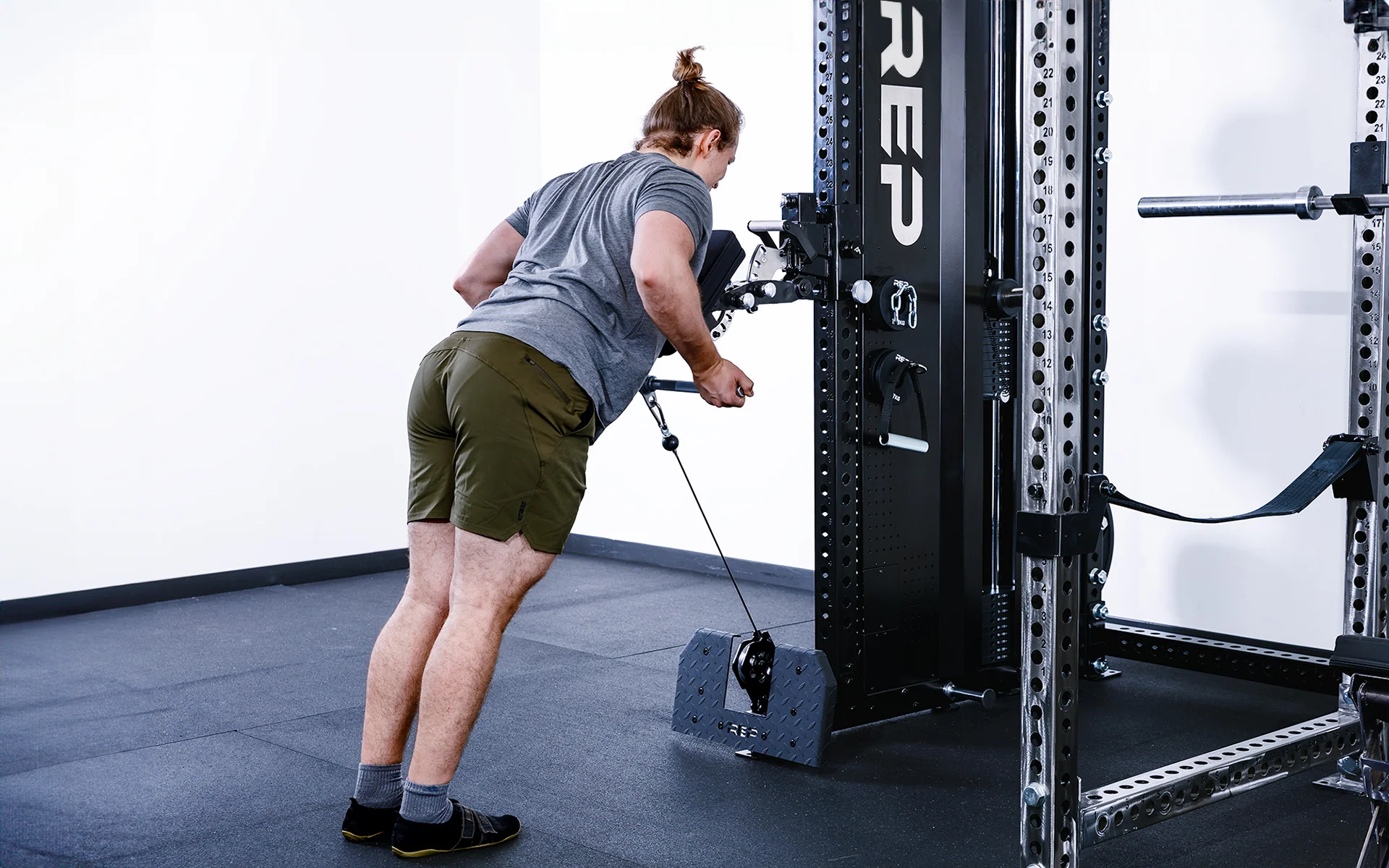
For the standalone configuration with the proper base, the listed dimensions are about 92.1 inches high, 45.5 inches wide and 54.9 inches deep with the footplate retracted. A without-base configuration is narrower on paper, around 43 inches, but that does not make an unsupported standalone installation safe. The Adonis requires lateral support. The standalone single tower needs its base, while supported rack and storage arrangements use their designed bracing connections. The precise configuration matters more than a sales photo.
Measure the floor area in which you will actually train, not only the steel outline. Low rows can extend a bench or seated athlete in front of the footplate. Pulldowns need room for the body, seat, bar and cable. A standing fly or side raise adds a sweeping handle arc. A tower that technically fits against a wall may still block a rack aisle or storage access whenever someone uses it. Tape the tower outline on the floor, put a chair where the seat would go, and test the reach of your own arms.
Ceiling clearance deserves extra care. A 92.1-inch machine placed in a room just above that height leaves very little room for floor variation, moving a tall frame into position, and servicing upper components. Check the complete assembly instructions and any raised floors before choosing the location. The most useful floor plan also leaves room to remove and replace a handle without hitting another station.
For rack integration, use the correct PR-4000 or PR-5000 system and the specified crossmembers or support hardware. The rack-attached assembly has its own dimensions and may add about 54 inches from the edge of the rack. A visually similar upright from another company is not proof of fit. Likewise, a storage-equipped Adonis changes shelf access and the way equipment is arranged. If multiple lifters share the gym, work out whether a pulldown session would obstruct a barbell exercise or prevent someone accessing plates.
Equipment Worth Exploring
Explore equipment, accessories and gear from our carefully selected range.

48in Aluminum Lat Bar
48-inch aluminum lat pulldown bar with knurled grip and rotating center swivel.

Lat Pulldown Set
Multi-grip cable attachment set for pulldowns, rows, and varied upper-body training.

44in Dual Hook Bar
44-inch aluminum dual-hook straight bar for cable rows, pulldowns, and curls.

Dual Hook EZ Curl Bar
Angled aluminum dual-hook cable bar for biceps curls and pulldown variations.

GymPin Ergo Handles
Pair of ergonomic cable handles shaped for comfortable triceps and pulling exercises.

GymPin D Handle Bar
Multi-use steel D-handle bar for cable rows, pulldowns and other cable exercises.

Angles 90 Grips
Flexible grip attachments that allow natural wrist movement during pulling exercises.
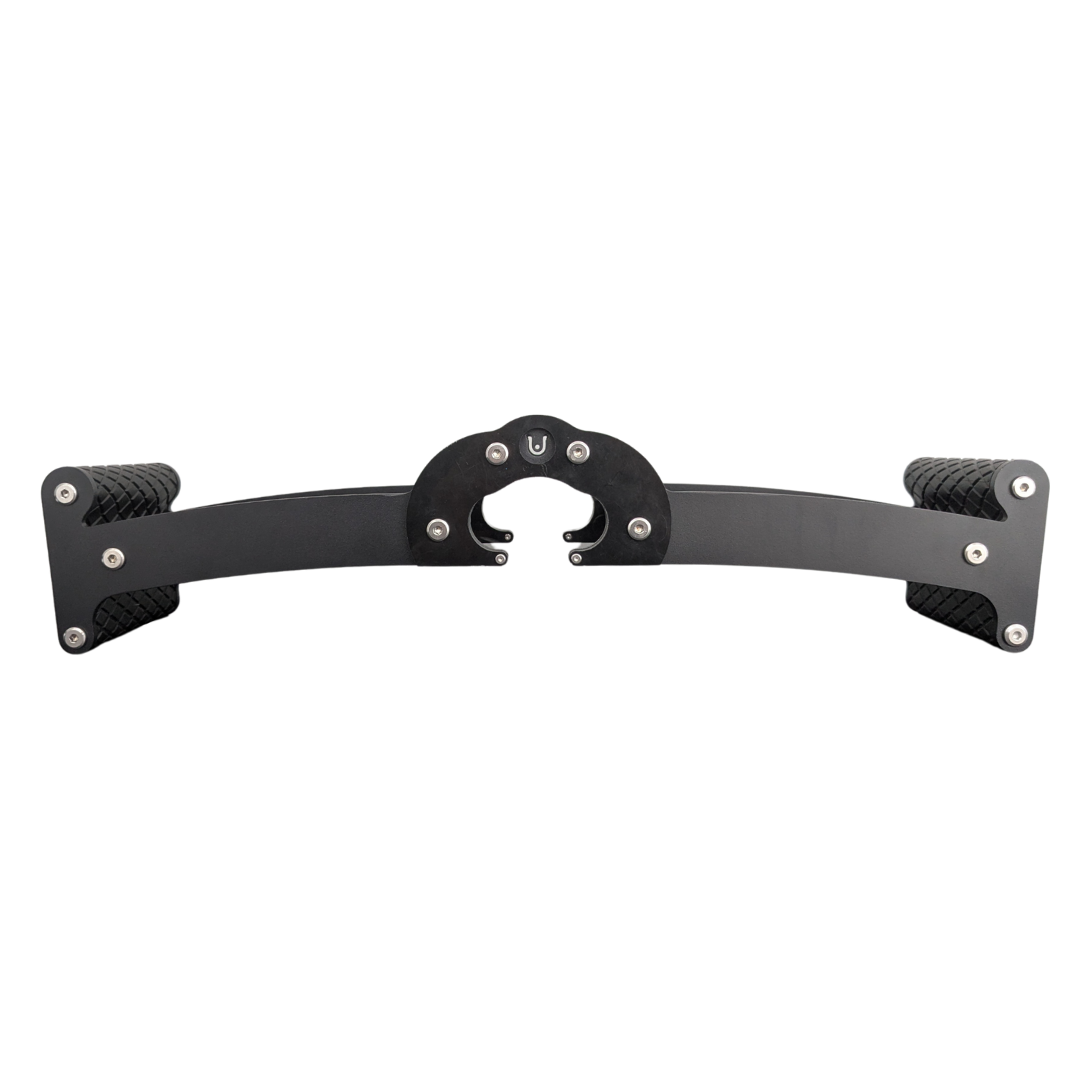
Back Bar
Multi-grip cable and landmine bar with a built-in deadlift jack.
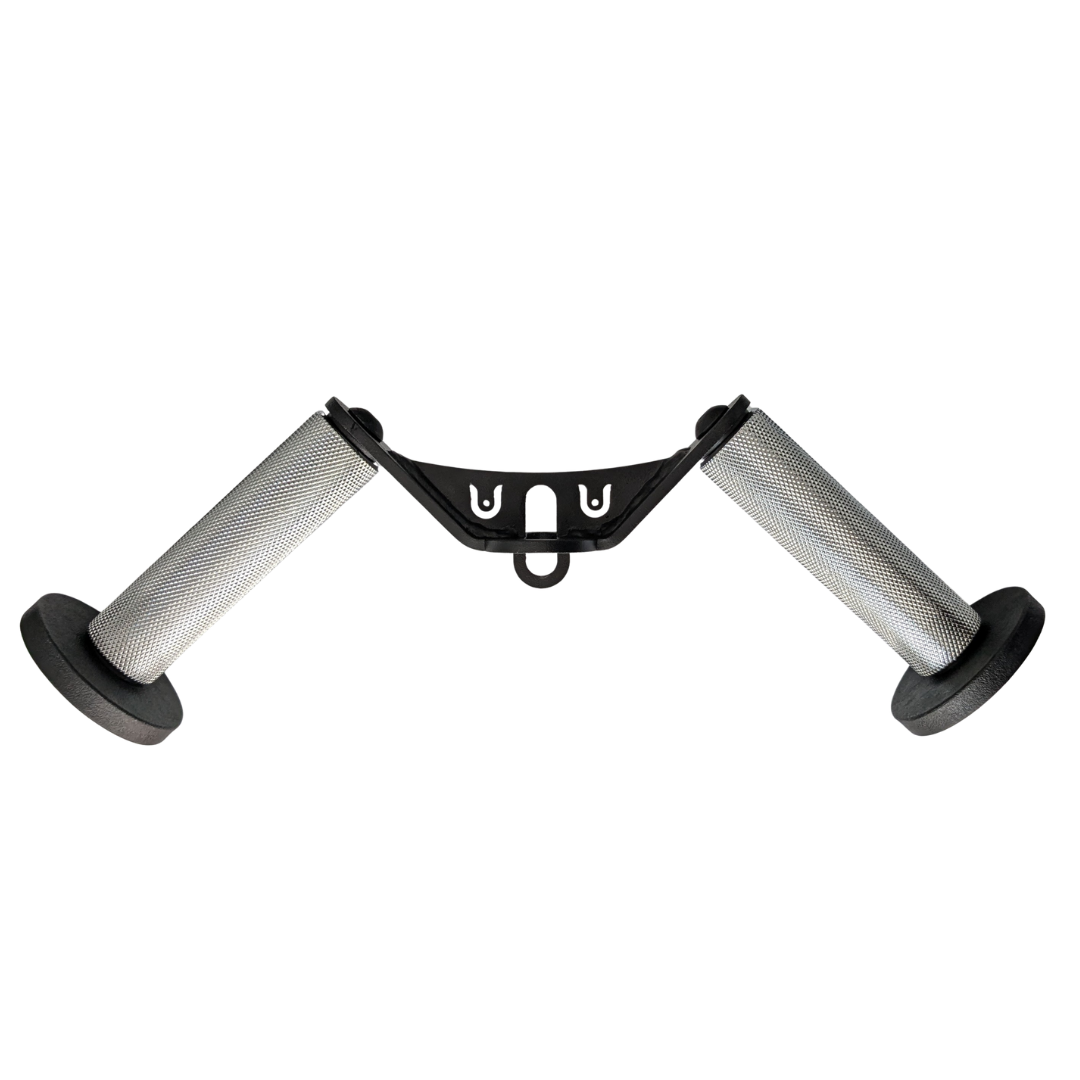
W Grip
Angled cable grip for comfortable rows, pushdowns, and curls.

Program the 34-position trolley for accessory training
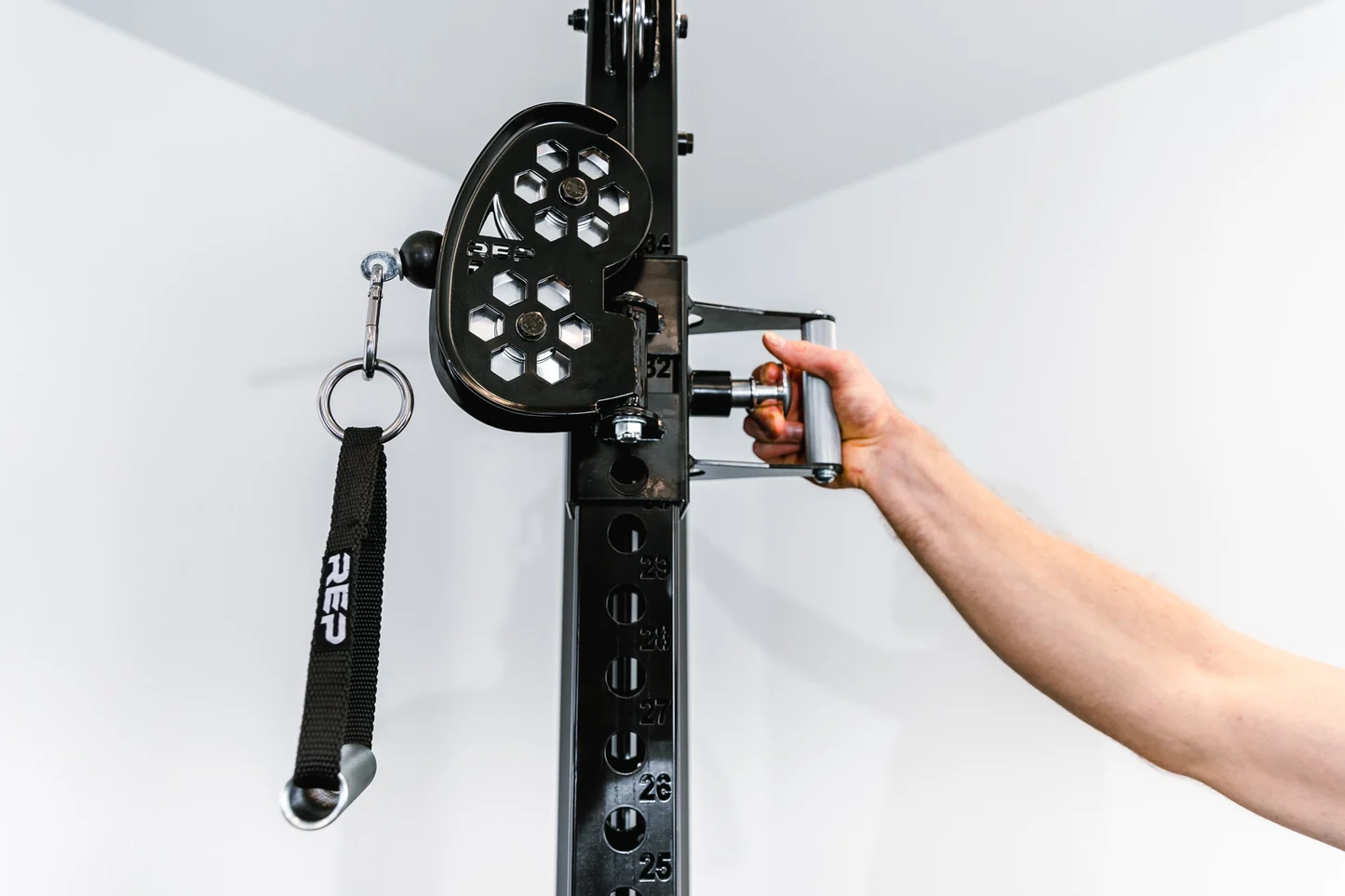
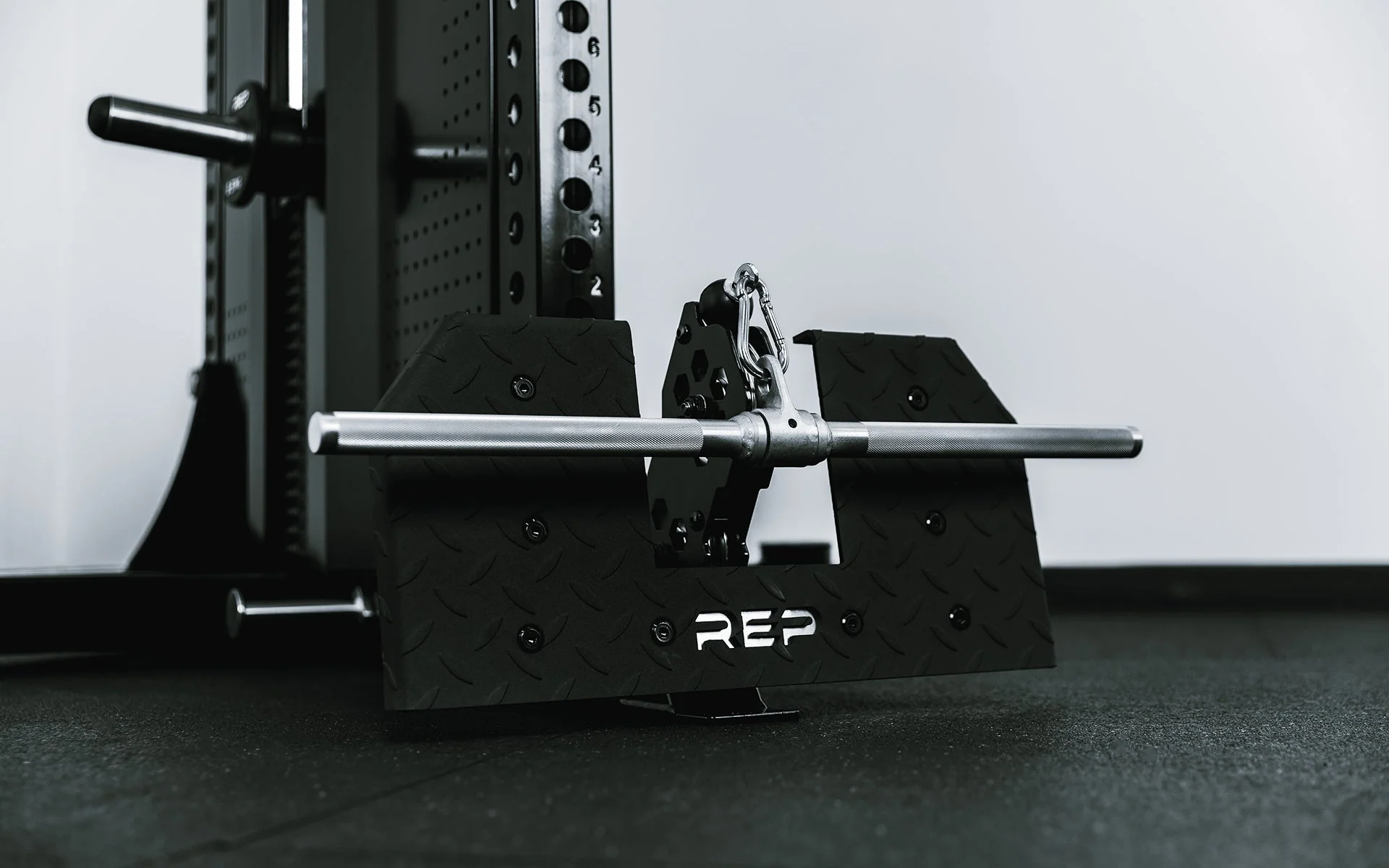
The adjustable trolley has 34 height settings, with usable positions from roughly 14 to 79 inches above the floor. Its front pulley swivels, helping the handle follow different lines of movement. That makes the 2:1 path a practical option for unilateral rows, standing presses, cable curls, pressdowns, lateral raises and face pulls. The lower nominal force and longer cable travel are features to use deliberately, not signs that the pulley is weaker or less serious.
For lateral raises, begin with a low setting that gives a comfortable pull across the intended arc and lets the working arm move without jerking the torso. For curls, move the height until you can maintain a stable upper arm rather than constantly changing the shoulder angle. For pressdowns, ensure the handle can finish below elbow level without the stack bottoming out. For face pulls, choose a height that allows elbows and shoulders to move naturally, keeping the neck free from forced extension. There is no magic hole number for everyone.
The two dedicated high and low endpoints extend the range of possible positions beyond the adjustable trolley itself. They are separate cable paths, however, so switching attachments and stations can affect the ratio and feel. Record the connection point along with the chosen handle and setting. A high-row or press is only comparable over several weeks when the cable angle, seat placement and range stay similar.
Try a practical session before deciding how many additional cable attachments to buy: three controlled sets of pulldowns, three low-row sets, two unilateral face-pull or row sets and a pair of light arm or shoulder movements. Notice how much effort it takes to move between stations. If the sequence runs smoothly, one tower is doing several useful jobs. If your staple movements constantly require two separately positioned handles, the lack of a second adjustable trolley may be the deciding limitation.
Match the Adonis to your lifts before paying
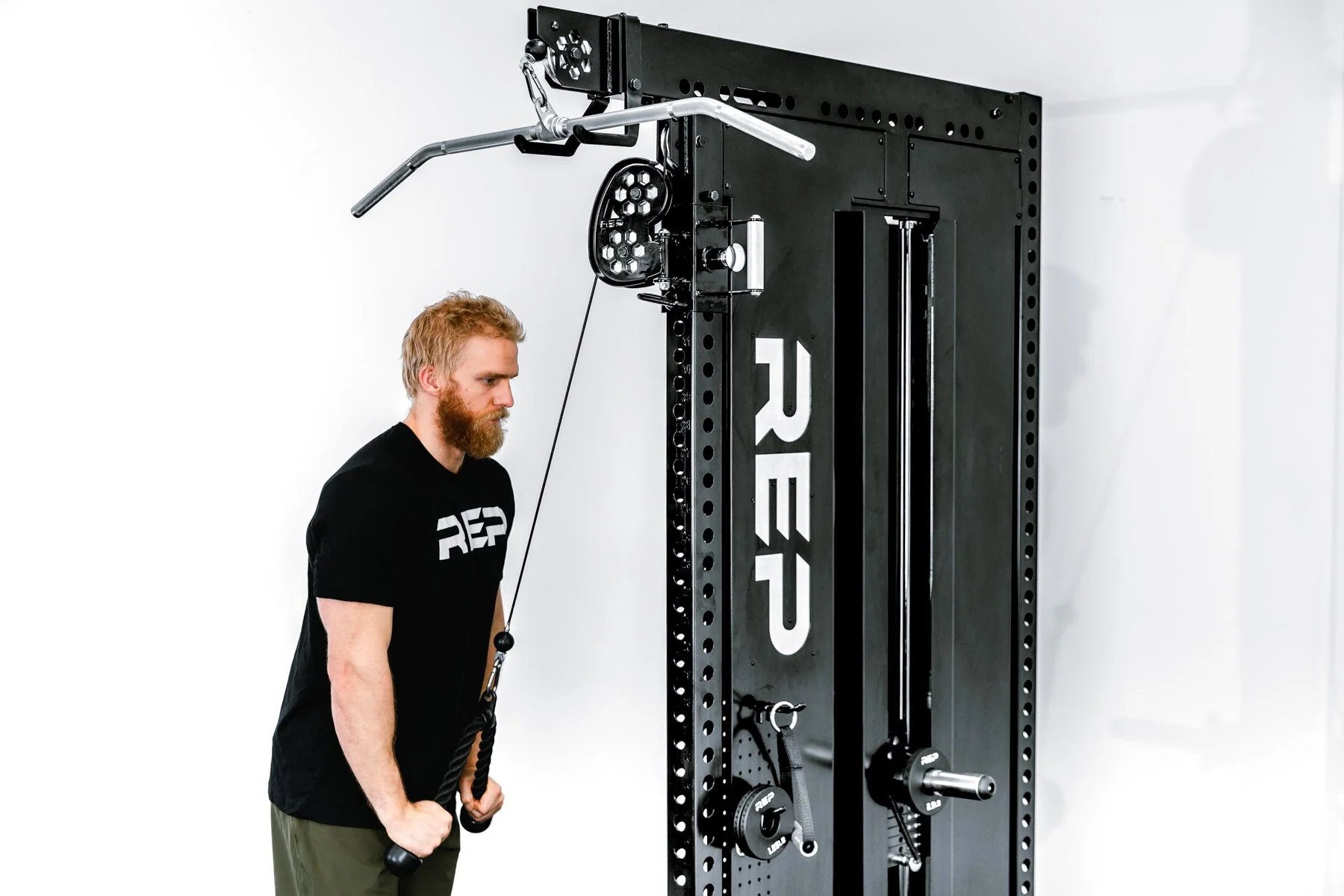
The strongest buying case is a lifter who wants a serious vertical pulldown and low row, plus enough adjustable cable work to cover accessories, without adding an entirely separate station for every exercise. The weakest case is a buyer primarily chasing simultaneous bilateral cable flyes, crossover movements and two-column routines. A single-trolley unit can still train both sides independently, but that changes the rhythm and sometimes the exercise itself. Judge it against your weekly movement list rather than a catalog of possible variations.
Choose a four-week introductory progression that prioritizes repeatability. Twice weekly, perform three sets of lat pulldowns for six to ten controlled repetitions and three sets of rows for eight to twelve. Add a couple of lighter trolley movements for two sets each. Begin with a load that leaves a few good repetitions in reserve. First improve control and total repetitions; only add the smallest sensible increment when the same clean range is maintained. The schedule is an illustrative programming option, not a claim of hands-on testing or a manufacturer-issued prescription.
Before ordering, verify whether the selected item is selectorized or plate-loaded, whether it includes a base or uses a compatible rack connection, and exactly which seat or leg-restraint attachments are separate purchases. Check the included bars, the travel needed around the footplate and access to the stack. The optional Pegasus arrangement may improve support but changes budget and working space. Warranty coverage also varies by part and market; the manufacturer’s stated structural coverage is distinct from its shorter warranty on cables, bearings and related components.
If the room and exercises fit, the Adonis offers a distinctive combination: direct-resistance back work alongside long-travel accessory work. If support, ceiling clearance or two-handle training is critical, the correct decision might be a different system. You can check the available configurations on the official REP product page before committing, but do your own floor layout first. The difference between a capable machine and a good purchase is whether it makes the lifts you actually perform easier to set up and progress.

Bodybuilding Shirts & Workout Gear
Bodybuilding shirts, tanks and gym gear for lifters chasing muscle, size, symmetry and the pump.

Shirt Pull Day – Back & Biceps Meme Top T-Shirt
Heavy lifts, good laughs, and a little “Pull Day Graphic” energy.

Dost Thou Even Pull Tee
Make gym days more fun with “Dost Thou Even Pull Medieval Knight Lat” style.


Hardcore Gains Gym | Funny No Pain No Gain Workout Swea T-Shirt
For laid-back days and lifting humor: “Hardcore Gains”.


Nice Traps Big Back Tee
Heavy lifts, good laughs, and a little “Nice Traps Big Back” energy.