Advertising disclosure: This page includes affiliate product links that may earn us a commission, as well as products from our own store.
Front raises are easier to evaluate when the movement stays consistent. Choose a clear range, record the variation and consider the pressing already in your plan.
Start with a position you can repeat
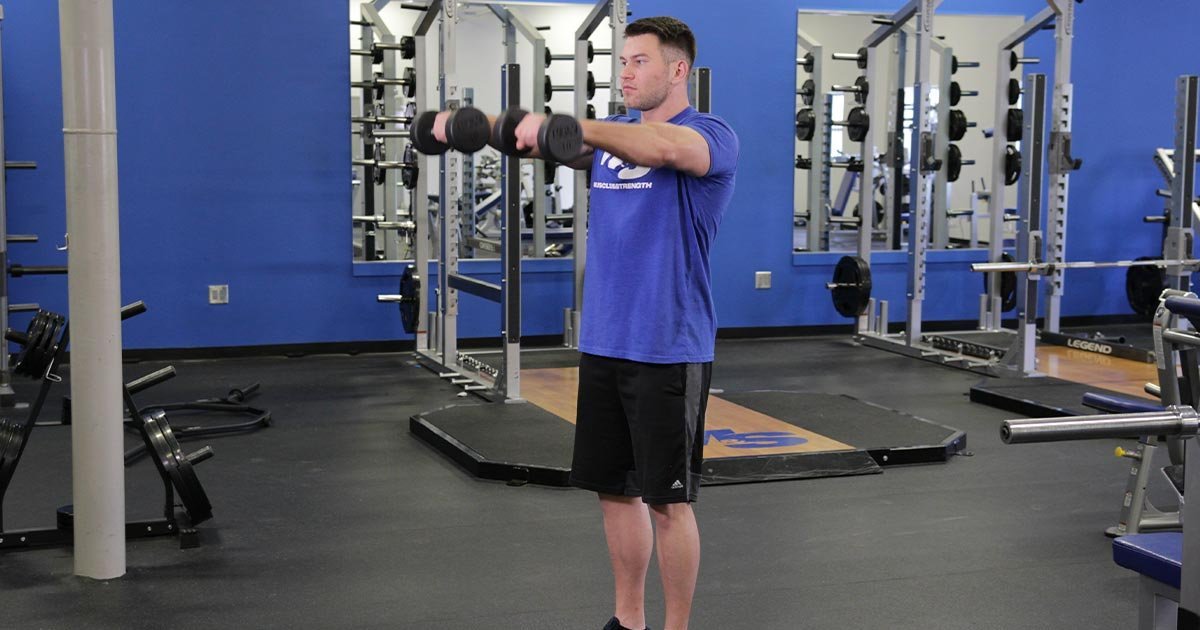
The front raise moves the arms forward against resistance. Start with light dumbbells, a comfortable stance and a secure grip. Keep the wrists aligned with the forearms and allow a small, consistent bend in the elbows. You do not need to straighten the arms forcefully or squeeze the handles as hard as possible to make the exercise useful.
Set your torso before the first repetition. The aim is to raise the weights without repeatedly leaning backwards or driving through the knees. If the first repetition needs a body swing, reduce the load and rehearse the movement. A slightly wider stance or a comfortable split stance can help you feel stable, but neither should become a way to launch heavier weights.
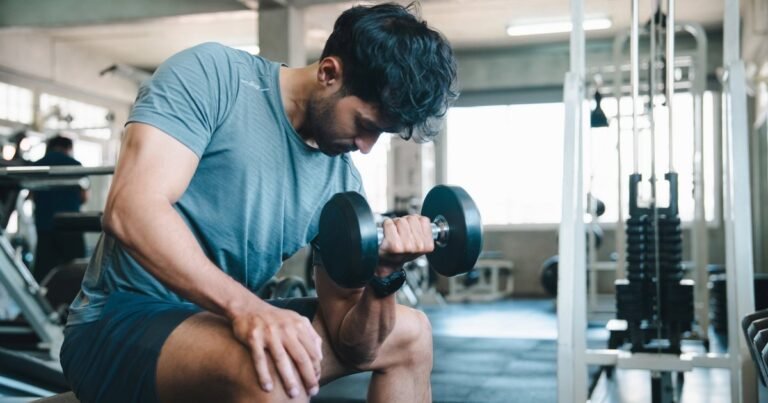
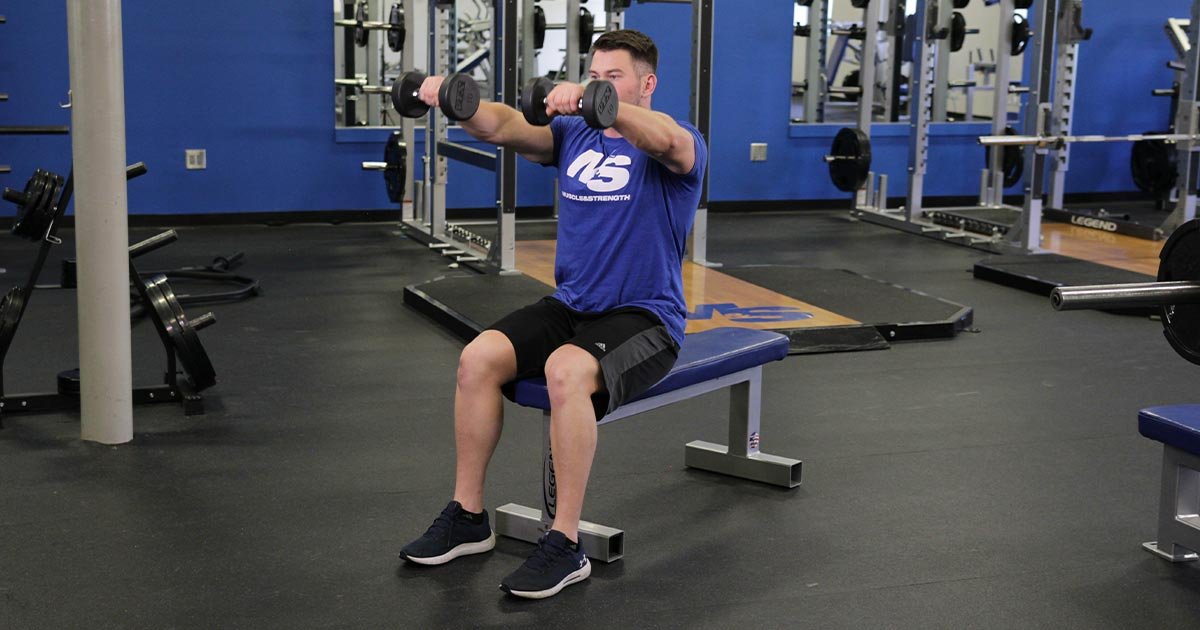
The seated variation shown here changes the support available while retaining the forward arm action. Plant your feet and use a stable bench with enough room for the dumbbells to move freely. Sitting does not automatically eliminate momentum: you can still rock, arch or change the elbow bend. Judge the variation by how consistently you perform it rather than assuming the bench guarantees strict technique.
Choose one version for your initial training block. Record whether you stand or sit, the dumbbell load and the range you intend to use. If you alternate arms, make that explicit too. Ten alternating repetitions in total are not the same record as ten repetitions with each arm. Clear bookkeeping makes the next session easier to compare.
Before a working set, perform a few easy rehearsals. Check the path from the thighs to the intended endpoint, and make sure you can lower the weights without dropping them. A rehearsal that exposes an awkward grip or unstable stance is useful feedback, not a wasted set.
Define the top of the repetition before chasing weight
For a conventional front raise, approximately shoulder height is a useful reference endpoint. Raise the arms smoothly and stop at a height you can reach comfortably while keeping the torso organized. More height is not automatically a better repetition. Reaching overhead introduces a different range and should not quietly become the way you complete a set that was intended to stop around shoulder level.
Keep the elbow angle reasonably consistent. Bending the elbows more as fatigue builds changes the lever and can make a heavier load easier to move. That can be a deliberate variation, but it makes a poor comparison with earlier repetitions performed with straighter arms. Decide what counts before starting, then end the set when you can no longer reproduce it.
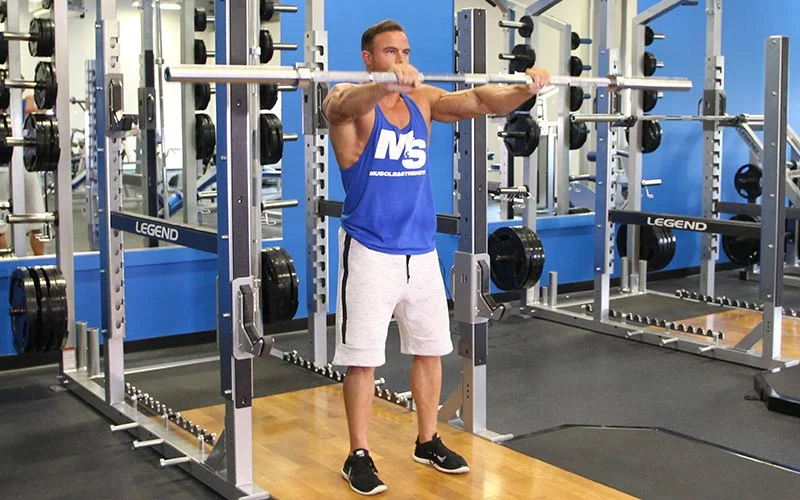
The barbell version pictured here links both hands to one implement. It is a separate option with its own grip width and starting load, not a requirement for progressing the dumbbell version. An empty bar may already be too heavy for a controlled raise. Do not choose it merely because it looks more serious than a pair of light dumbbells.
Avoid forcing an uncomfortable wrist or shoulder position to match a photograph exactly. Equipment, proportions and comfortable movement paths vary between people. Use a secure grip and a range you can control. If the movement causes pain, stop and reassess rather than trying to turn discomfort into evidence that the exercise is targeting the right muscle.
A short side-view recording can help you compare the first and final repetitions. Look for the same torso position, similar elbow bend and a repeatable endpoint. The purpose is to notice changes in execution, not to diagnose a joint problem from a video or enforce a universal angle for every lifter.
Treat cable raises as their own exercise
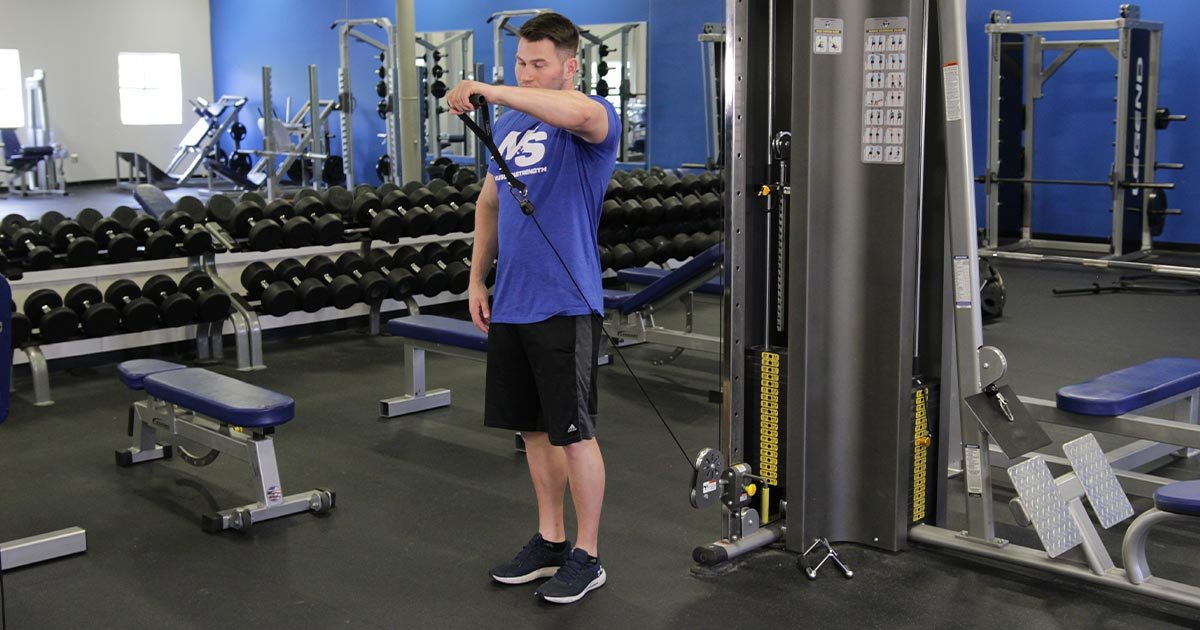
A cable front raise can provide another way to load the forward arm action. The single-arm example shown here requires a clear cable path and a stable position relative to the pulley. Check the attachment, pin and surrounding space before beginning. Keep the cable away from your legs and avoid standing where another person might cross its path.
Cable resistance acts along the line toward the pulley, so the setup affects how the exercise feels. Moving farther from the stack, changing pulley height or altering your stance can change that line. Keep those details consistent when comparing sessions. A number on one stack is not directly interchangeable with the same number on another machine or with a dumbbell label.
Use the free hand for light support when an appropriate fixed surface is available, without pulling your body through the repetition. Start with the less coordinated side if that helps you establish a sensible load, then use comparable execution on the other side. A difference between sides is something to record, not an invitation to twist harder to make the numbers match.
Do not add a cable variation simply to collect more versions of the same movement. Choose it when the equipment is available, the setup is comfortable and you can make useful progress with it. If the station is busy, a familiar dumbbell version may be the more practical choice. Record the substitution rather than treating the two performances as identical.
Once the setup is settled, give it enough consistent practice to evaluate. Changing the handle, stance, range and load every session creates variety but obscures what improved. Keep a brief setup note so you can return to the same position without rebuilding the exercise from memory each time.
Progress the load without losing the movement
Begin with a modest dose you can recover from. For example, two sets of ten to fifteen controlled repetitions can serve as an initial experiment for a lifter who already tolerates the movement. That is a practical starting template, not a proven optimum or a prescription for every shoulder. Leave room to stop before momentum becomes necessary and adjust the dose to the rest of the week.
Choose a repetition range and a clear quality standard. Keep the same load until both sets reach the upper end with the intended endpoint and controlled lowering. Then test the smallest sensible increase available. If the next dumbbell pair is a large jump, you can spend longer consolidating the current load instead of forcing a heavier set through a shorter range.
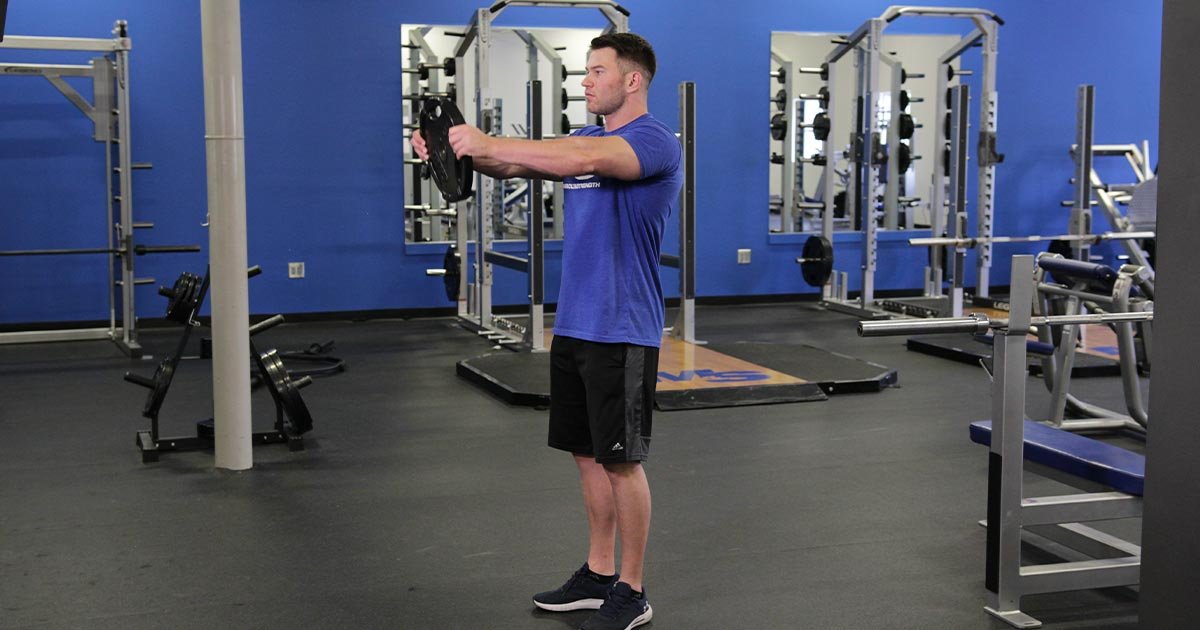
A plate front raise uses one object held in both hands, as the image shows. It changes the grip and the way you share the load, so log it separately from dumbbell raises. Use a plate you can hold securely without trapping fingers or relying on a damaged edge. Check the available grip rather than assuming every plate shape is equally convenient.
Lowering should remain deliberate enough that you retain control of the weight. You do not need an elaborate tempo ritual, but dropping the arms and immediately bouncing into another repetition makes comparisons less useful. If you deliberately change the tempo, write that down. More repetitions achieved by changing the task are not a clear progression in the original task.
Rest long enough to repeat a useful set. Around one to two minutes can be an initial trial, with more time if breathing or general fatigue limits execution. Keep the rest reasonably consistent while evaluating progress. A rushed final set tells you something about the session, but it should not be mistaken for a fair test of your usual performance.

Equipment Worth Exploring
Explore equipment, accessories and gear from our carefully selected range.


Rubber Hex Dumbbells
Rubber-coated hex dumbbell pairs with a stable shape for home and commercial strength training.


FID Bench MAX
Adjustable bench offering flat, incline, and decline positions + adjustable headrest.


Multi Bench MBX-650 2.0
Adjustable multi-bench with roller adjustment, 15 backrest positions and accessory mounts.
VOLTRA
Compact digital cable trainer with smooth, adjustable resistance.

Go-Tone Pro
Portable digital cable trainer with up to 66 lb (30 kg) of adjustable resistance.
Give front raises a clear role beside pressing
Front raises are an optional accessory, not a mandatory addition to every upper-body workout. Review the pressing already in your plan before adding them. Bench pressing and overhead pressing also involve the front of the shoulder, so extra raises need a reason: a specific training preference, an accessory goal or a way to practise a controlled movement you tolerate well.
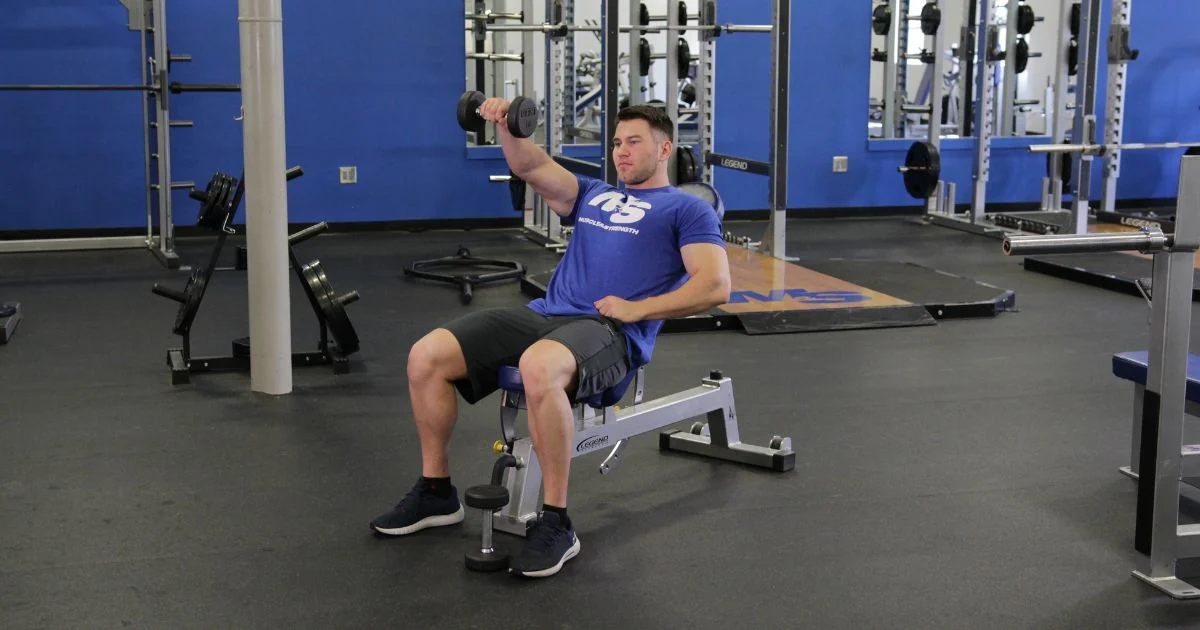
An incline-bench single-arm raise, pictured here, changes body support and the arm's position relative to the torso. Treat it as another distinct variation rather than a more advanced badge to earn. Choose the bench angle and load cautiously, keep the arm path comfortable and record the setup. Its dumbbell number alone cannot establish that it is harder or better than a standing raise.
If pressing performance is the priority, keep the raise dose small enough that it does not repeatedly compromise those sessions. You might place it after the main work and assess the following workout before adding more sets. If shoulder fatigue accumulates, reduce or remove the accessory first rather than assuming every movement must remain in the programme unchanged.
Use a training log to connect execution with the weekly plan. Note the variation, load, repetitions, rest and any meaningful change in control. Consistency, focus and gradual progress are more informative than a single unusually hard session. Judge the exercise over several comparable exposures, allowing ordinary day-to-day variation without rewriting the plan after every workout.
A useful decision is sometimes to keep the same dose, or to leave front raises out altogether. The exercise earns its place when it fits your goals, remains comfortable and can be progressed without disguising the movement. You do not need every variation in this guide at once; choose a clear task and make the record honest.

Bodybuilding Shirts & Workout Gear
Bodybuilding shirts, tanks and gym gear for lifters chasing muscle, size, symmetry and the pump.

Control Your Gains Stoic Greek God Marble Sculpture T-Shirt
Make gym days more fun with “Control Your Gains Stoic Greek God Marble” style.

Installing Muscles Meme – Hooded Jumper Hoodie
Make your off-duty look more fun with “Installing Muscles”.

Meme – "Shhh I'M Doing Plate Math" & Weightlifting Sticker
Stick a little “"Shhh I'm Doing Plate Math" Workout &” humor on your favorite gear.

Dumbbell Heartbeat Muscle Shirt Athletic Vest Fitness F Tank Top
Your gym-day look, with a playful “Dumbbell Heartbeat” twist.

Shoulder Press Dost Thou Even Press Medieval Knight Cre T-Shirt
Show some gym-day personality with “Shoulder Press”.

Lift Eat Repeat Weightlifting & Hooded Hoodie
Keep it laid-back with a little “Lift Eat Repeat” attitude.

Dumbbell Meme Shirt – Essential & Gymbros Seeking T-Shirt
Make gym days more fun with “Dumbbell Gym Meme” style.

Heart And Brains Dumbbell Meme : The Ultimate T-Shirt
Make gym days more fun with “Heart and Brains Dumbbell Gym Meme” style.

Vitruvian Man With Dumbbells Shirt: Leonardo Da T-Shirt
Bring “Vitruvian Man With Dumbbells” humor to your next gym day.