Advertising disclosure: This page includes affiliate product links that may earn us a commission, as well as products from our own store.
The devil’s press compresses a chest-to-floor burpee, a hip-powered double-dumbbell swing and an overhead finish into one continuous repetition. It is effective precisely because none of those parts can be skipped: your legs must get you back from the floor, your hips must accelerate two weights, and your shoulders must stabilize the load overhead.
That makes it a useful conditioning complex, not an automatic substitute for heavy strength work. Most form breakdowns happen in the transitions rather than the obvious endpoints. A wobbling dumbbell during the burpee, an early arm pull after the jump-in, or a rushed descent can turn one efficient movement into several risky ones. The goal is a repeatable path that works at modest loads before the clock becomes important.
Choose stable dumbbells and set the floor position
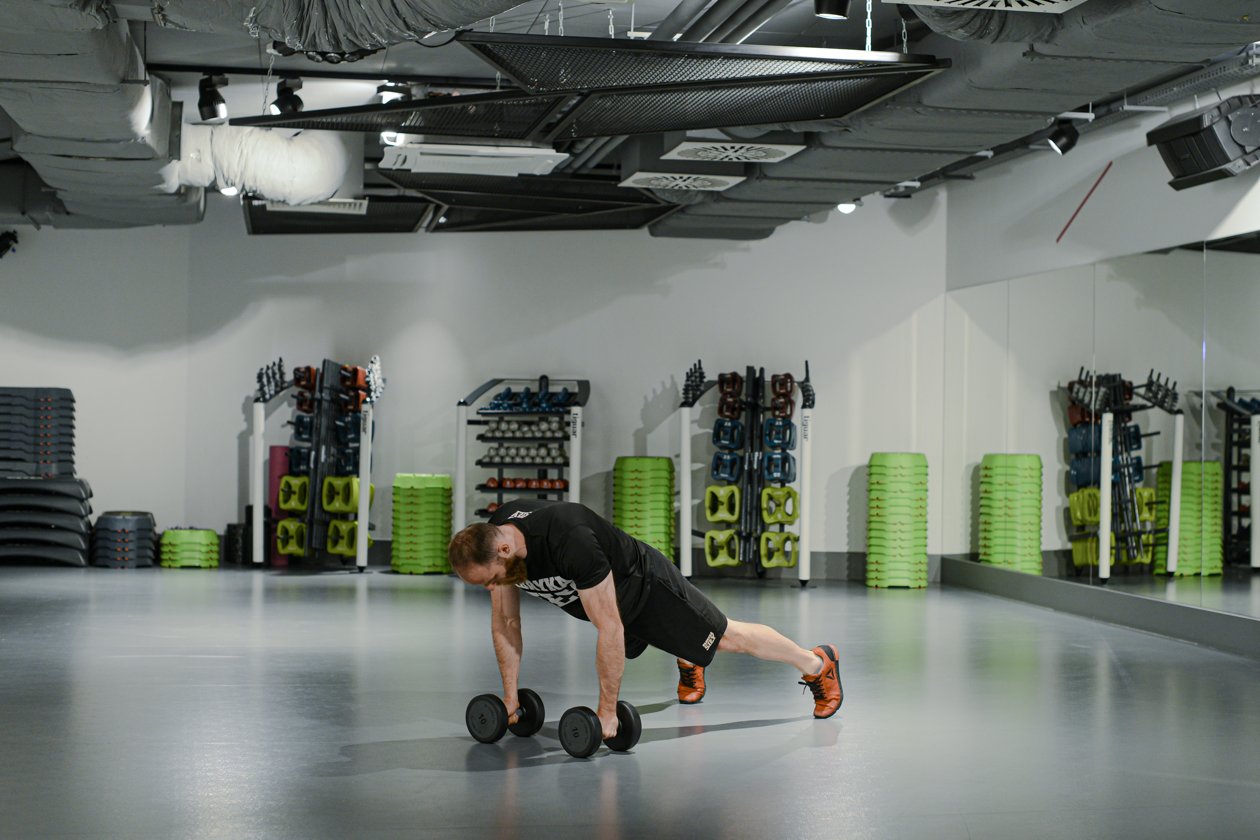
Begin with a clear patch of nonslip floor where you can lie between the bells, jump or step forward, and finish with both arms extended overhead. Check ceiling clearance as well as the floor in front of you. A compact home gym may have enough room for the burpee but still place the lockout uncomfortably close to a light fitting, cable attachment or rack crossmember.
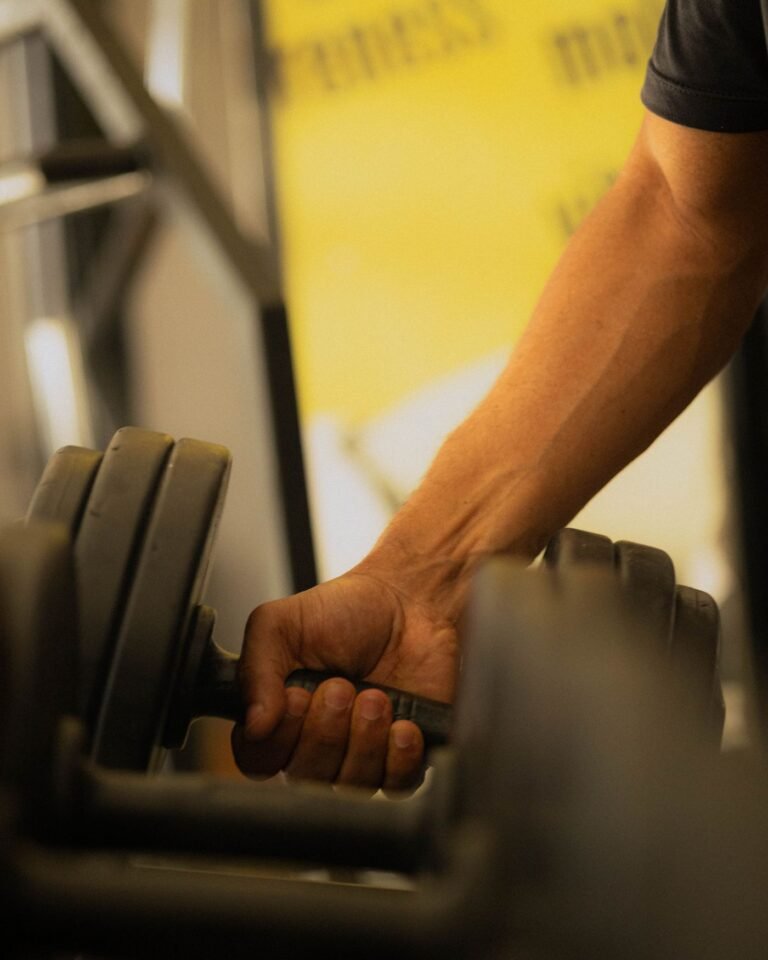
Use a matching pair of stable, flat-sided dumbbells intended to bear hand pressure on the floor. Hex-shaped heads are the straightforward choice because they resist rolling during the plank. Some adjustable dumbbells have delicate selector mechanisms, moving plates, or rounded heads and are not designed for bodyweight support. Do not use them for the hands-on burpee unless the manufacturer explicitly approves that use. An ordinary weight you can press overhead is not necessarily suitable as a floor support.
Put the handles parallel on the ground, about shoulder width apart or slightly wider so your chest has space between them. Set them far enough forward to step back cleanly without striking the bells with your shins. Start standing just behind the pair, with feet near hip width. Look once at the dumbbells before your first repetition: neither should rock or tilt when you apply pressure.
Choose light weights for the first technique sets. The overhead phase might feel manageable when standing fresh, but the floor transition can fatigue your shoulders and grip before the next catch. A pair you can control for six smooth, unhurried repetitions is more useful than a heavier pair you can only muscle up once.
Own the burpee before jumping into the lift
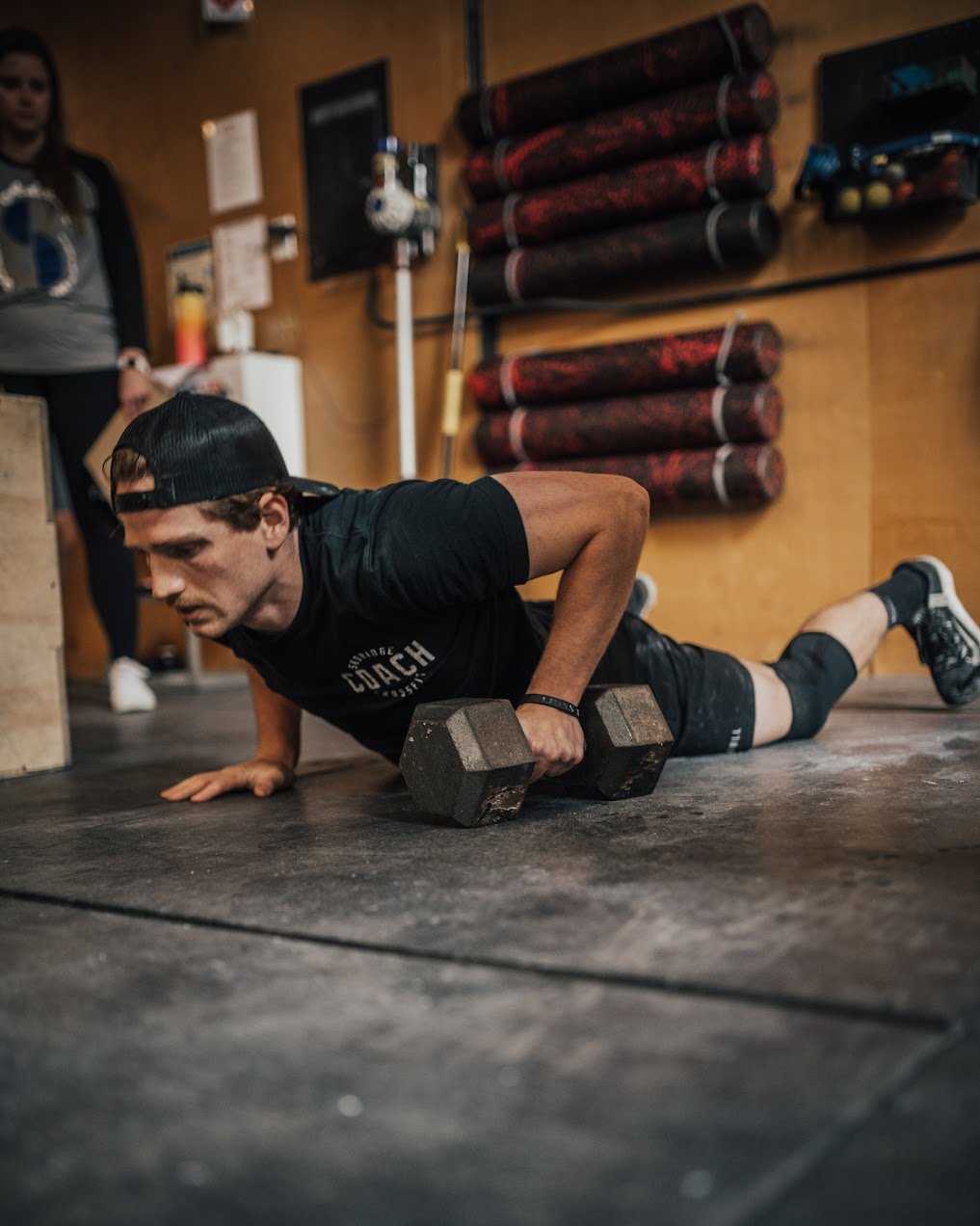
Hinge down, grip both handles and plant the dumbbell heads evenly on the floor. Step or hop both feet backward into a plank, keeping the weights quiet. Lower the torso between them with control. In versions that require a chest-to-floor contact, reach the floor without letting one dumbbell slide away or forcing your shoulders into an uncomfortable position. The pace should leave you capable of pushing back out.
Come up by pressing against the dumbbell handles, then bring the feet forward outside the bells, rather than landing with your feet trapped between the heads. A slightly wider landing gives your hips space to travel back and creates a workable hinge for the next part. If your hamstrings, ankles or cardiovascular fitness make a two-foot jump-in untidy, step forward one foot at a time. That is a legitimate training modification, not a wasted rep.
Keep your eyes on the patch of floor ahead of the weights and let your trunk move as a unit. A common mistake is to throw the hips up first while the chest stays near the floor, which leaves the lifter twisted around the hands and unprepared to stand. Another is to rush forward with the knees between the handles, making room for neither the grip nor the forthcoming swing.
For the first several sessions, rehearse two complete but unweighted burpees followed by a clean hip hinge. Then add the bells and pause for one breath after the feet land. Removing that pause is a progression to earn, not a starting requirement. It is particularly helpful in a small training space where the dumbbells have to return to almost the same spots each repetition.
Use your hips to power the dumbbells, not a slow curl
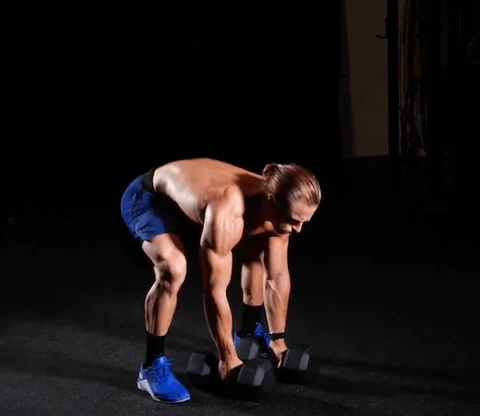
Once both feet are back near the dumbbells, sit the hips behind you, load the legs and keep the shoulders connected to the trunk. The weights travel backward between the thighs in a compact hinge rather than swinging far out in front. Drive the floor away, extend the knees and snap the hips through. That lower-body acceleration should make the dumbbells rise as a consequence, with the arms guiding their path instead of supplying the whole lift.
Think about the dumbbells moving close to the body, not making a giant circle. A wide, looping path increases the distance from the shoulder and makes the final catch much harder to control. At the same time, do not smash the handles into the legs in an attempt to keep them close. The exact route will depend on the bell dimensions, your stance and the technique being used in your gym.
Do not confuse a devil’s press with a pair of strict dumbbell shoulder presses attached to a burpee. When the hip drive stops at shoulder height and you have to grind the weights upward, the load or timing has probably exceeded what you can snatch smoothly. Reset, lower the weight, and practise the swing-to-overhead transition separately before doing another full repetition.
A simple drill is to stand tall, hinge with two light dumbbells, then drive them upward for two or three partial swings without attempting an overhead finish. Once the acceleration comes from the legs and hips, add the full lockout. The aim is not to throw the weights as fast as possible; it is to produce enough power for an orderly finish that you can reverse safely.

Equipment Worth Exploring
Explore equipment, accessories and gear from our carefully selected range.

Rubber Hex Dumbbells
Rubber-coated hex dumbbell pairs with a stable shape for home and commercial strength training.


Cast Iron Kettlebells
Textured cast-iron kettlebells for swings, squats, carries, and full-body training.


Competition Wall Ball
Competition-style weighted wall ball for HYROX, wall-ball shots, and functional conditioning.

Slam Ball
Low-bounce weighted slam ball for explosive throws and high-intensity conditioning.

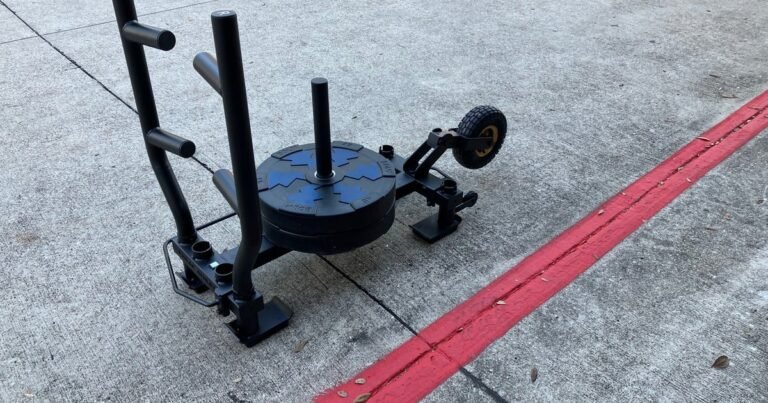
Pro Sled System
Heavy-duty push-pull training sled for loaded conditioning, speed, and strength work.

Catch overhead and control the route back down
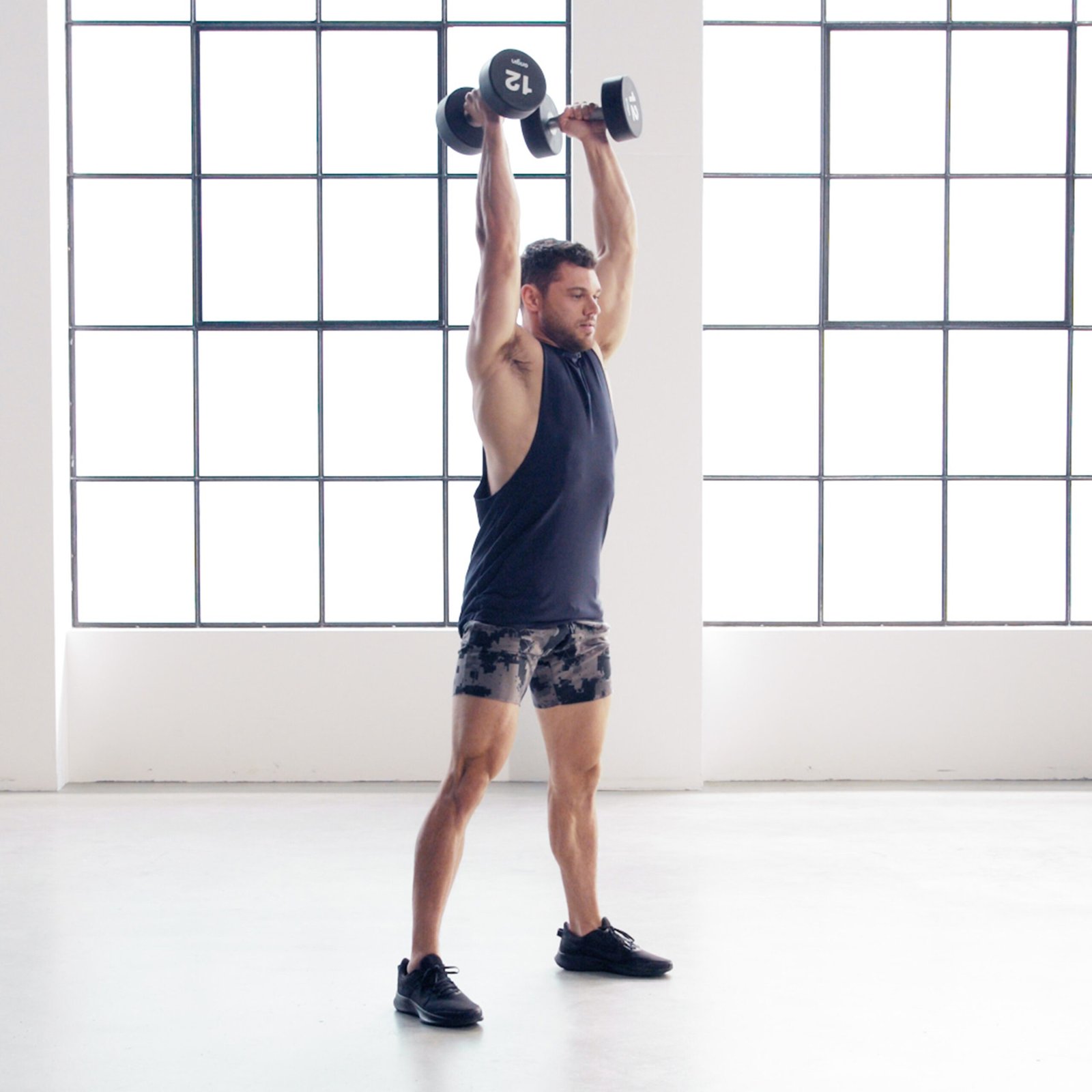
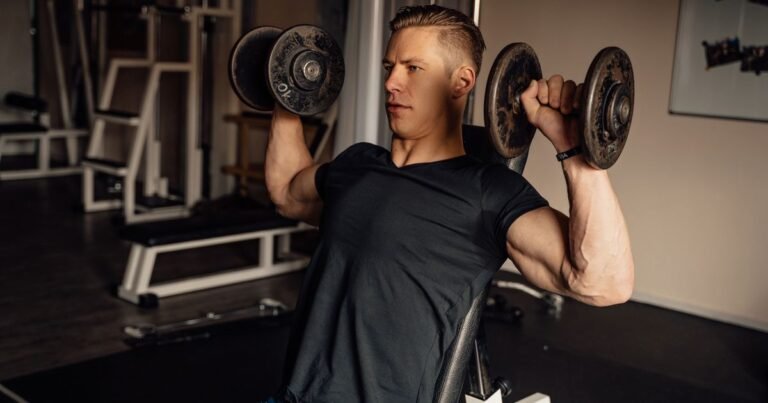
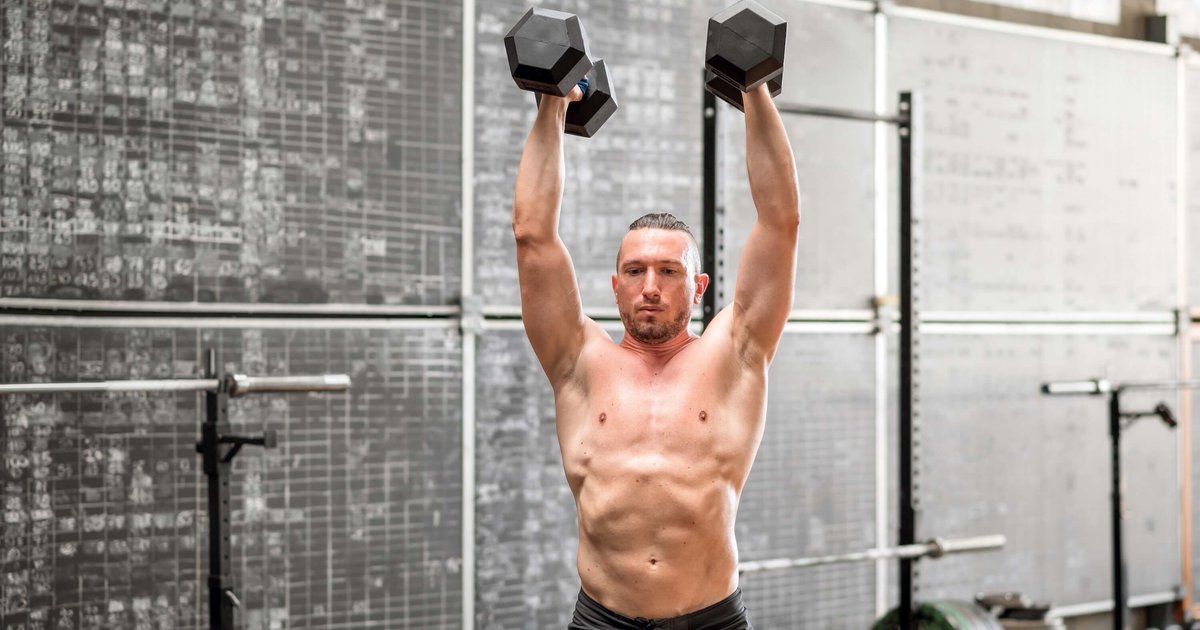
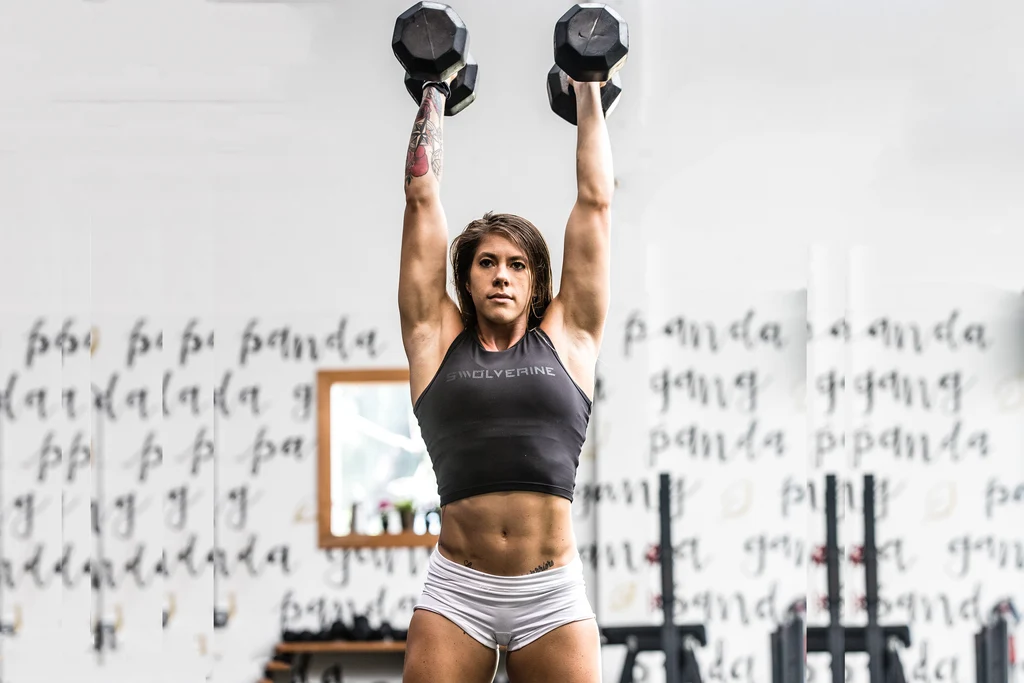
As the bells rise, guide the hands through the turnover until the weights settle over the shoulders. Finish standing tall, with hips and knees extended, the arms straight, wrists reasonably stacked, and the torso braced. The dumbbells should look balanced above the middle of your stance rather than drifting forward while you arch the lower back to stay underneath them.
There is a difference between reaching a stable lockout and throwing the shoulders back to fake one. Keep the ribs roughly over the pelvis, breathe without losing control, and let the shoulder blades rotate naturally upward as the arms reach. If one side consistently drifts out or the elbows remain bent after the catch, do not compensate with a frantic second press. Lower the load and practise cleaner timing.
The descent matters just as much as the ascent. Pull the dumbbells under control toward the sides of the body or into a manageable reverse swing, hinge the hips back, and place the heads squarely on the floor. Do not drop them from overhead or slam the heads against a hard floor. A controlled reset also ensures that the next burpee starts with stable hand supports.
Before adding speed, use a deliberate one-second standing hold in the top position and a full reset on the floor after every repetition. Once the finish is consistent, shorten the pause without losing the same alignment. For general conditioning, a slightly slower rate with a repeatable catch often lets you complete more useful work than an aggressive first minute followed by awkward, heavily fatigued reps.
Scale the movement before fatigue ruins the pattern
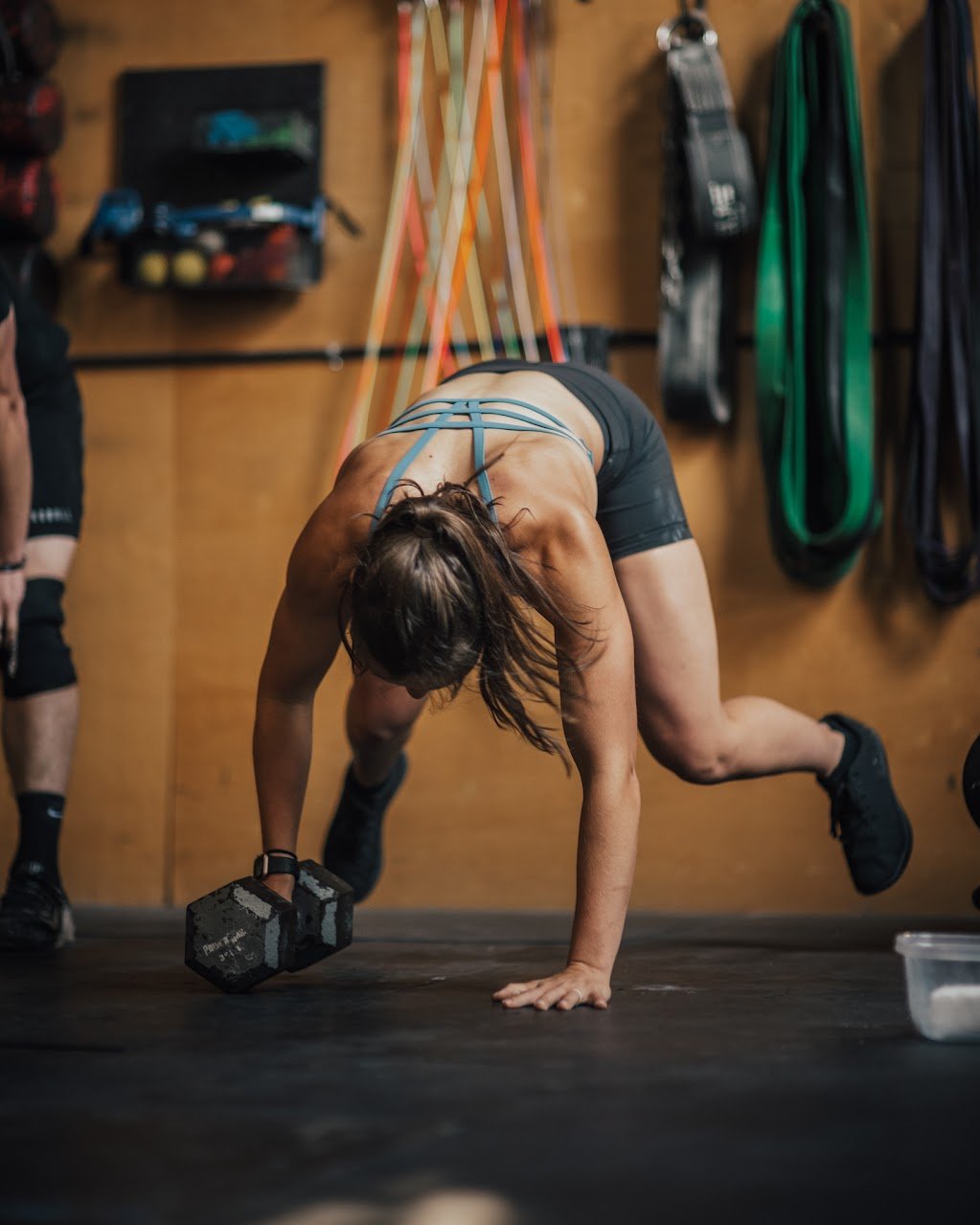
There are several different reasons to scale a devil’s press, and a single lighter weight does not solve all of them. If the burpee makes you lose your plank position, step the feet backward and forward instead of jumping. If the hinge feels rushed, pause with both feet planted before lifting. If the overhead phase is the bottleneck, work on the swing or dumbbell snatch separately with a much lighter pair.
A single-arm version can reduce the amount of overhead load and make each side work independently, although it changes the floor-support arrangement. Support the free hand on the ground as needed and keep the weight-bearing bell steady. It is not automatically safer if you lack shoulder stability or enough space; practice the unsupported side carefully. Alternating arms between repetitions helps distribute fatigue instead of letting one grip decide the entire session.
Three warning signs deserve a stop or reset: the dumbbells roll under the hands, the lower back repeatedly rounds during the swing, or an overhead bell finishes in front of the face instead of over the shoulder. Another is the involuntary extra press at the end of every rep. Those are signs that the sequence or load is no longer under control, not an invitation to chase the timer harder.
For a simpler conditioning substitute, pair ordinary floor burpees with a separate set of light dumbbell swings or presses. To practise the power phase without the floor work, use light dumbbell snatches or hip-hinge high pulls. None is an identical replacement, but separating the pieces can make the next proper devil’s press session noticeably more precise.

Functional Fitness Shirts & Workout Gear
Functional-fitness shirts, tanks and workout gear for athletes who train strength, conditioning and everything in between.

Burpees Bad Breaking Bad Shirt – Meme & Cardio Haters T-Shirt
Show some cardio attitude with a playful “Burpees Bad Breaking Bad” tee.

Hybrid Athlete – Strength & Endurance Gym Pullover for Hoodie
Keep it laid-back with a little “Hybrid Athlete” attitude.

HYROX High Rocks Sweater Functional Fans Meme T-Shirt
Add a playful “HYROX High Rocks” touch to your casual rotation.

Battle Ropes Training Tank
Add some superhero attitude to training with “Wonder Woman Battle Ropes”.


Heavy Metal Skull Kettlebell Gym | Funny Workout Liftin Sticker
Put “Heavy Metal Skull Kettlebell” gym humor on your laptop, bottle, or gym gear.

Break The Stereotype Gym | Feminist Workout Decal for S Sticker
Put “Break The Stereotype” gym humor on your laptop, bottle, or gym gear.

Live Love Lift Hooded Pullover Workout Gymbro Apparel Hoodie
Keep it laid-back with a little “Live Love Lift” attitude.

Happy Kettlebell Emoji Smiley Kettlebell Graphic Who Lo T-Shirt
Make gym days more fun with “Happy Kettlebell Emoji” style.

OnlyGains Kettlebell Meme Meme Athletic Shirt Tank Top
Train hard, laugh a little, and rep “OnlyGains”.
Program four weeks of repeatable full-body work
Use devil’s presses primarily for coordination, power endurance and conditioning. They involve the legs, chest, shoulders, grip and trunk, but the load is usually limited by overhead control and breathing long before it becomes a maximal stimulus for each muscle. Keep your squats, rows, presses and other basic strength movements if those are central to your training goals. A complex is a useful addition, not a complete resistance-training program.
Week 1: Learn the route with four sets of four controlled repetitions, resting 90 to 120 seconds and stopping when the position changes. Week 2: Move to four sets of five at the same weight if all previous repetitions were clean. Week 3: Try five sets of five or a small load increase, never both simultaneously. Week 4: Perform three or four quality rounds with a fixed, generous rest period and compare control, not just speed.
For conditioning, a practical alternative is 20 seconds of deliberate repetitions followed by 70 to 100 seconds of easy recovery for four to six rounds. The first round should leave room to keep the same shape in the last round. Record the dumbbell weight, reps, rest, whether you stepped or jumped, and any tendency to lose the lockout. Those notes tell you more than an inflated total achieved through poor-quality repetitions.
Put these sessions after the most technically demanding heavy lifts, or on a separate conditioning day, rather than before a maximum overhead press. If you have shoulder, wrist or back pain, do not force the movement through discomfort; use an appropriate simpler option and seek qualified advice where needed. Progress is the ability to move both dumbbells through the same controlled path when tired, with no roll, collision, uncontrolled arch or surprise landing.