Advertising disclosure: This page includes affiliate product links that may earn us a commission, as well as products from our own store.
Freak Athlete WheelBarrow Sled: Check the Surface, Route and Storage Before Buying
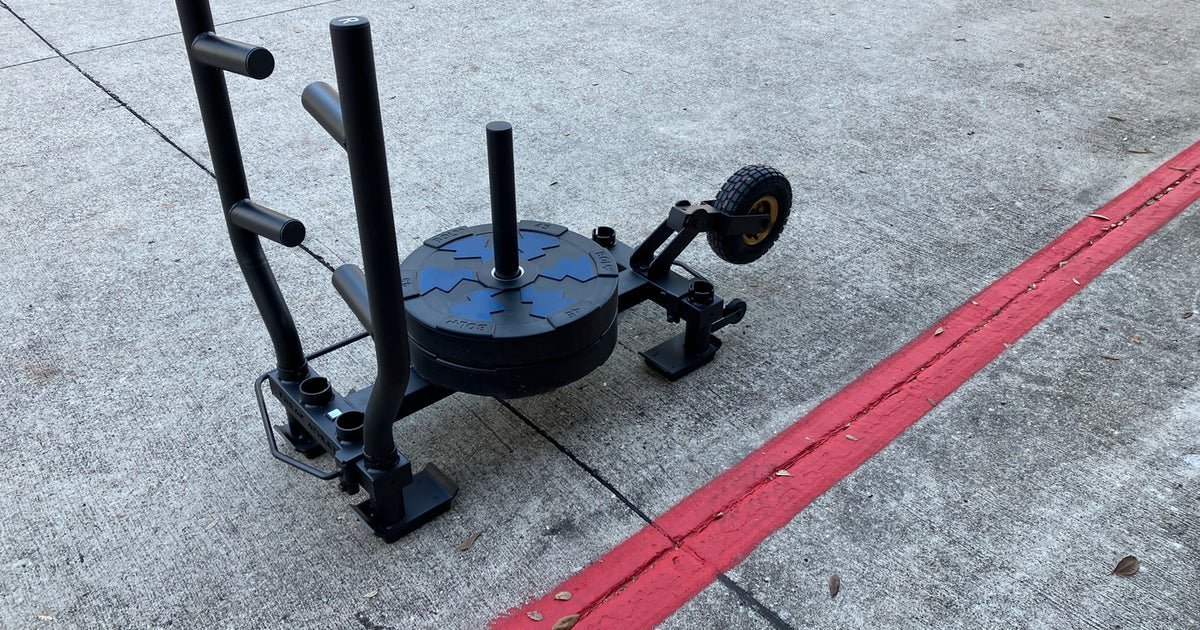
A training sled can be easy to store and surprisingly difficult to use regularly. The missing ingredient is often a suitable route: somewhere you can load it, move without interruptions, turn around and put everything away. That makes the Freak Athlete WheelBarrow Sled an interesting buying decision. It combines sled pushes and pulls with a wheelbarrow configuration, but those modes place different demands on your space and your training.
This is a buying and setup guide, not a hands-on MMP durability review. The useful question is whether its format solves a problem in your routine. Before you compare plate stacks or imagine a brutal finisher, work through the surface, handling and storage checks below.
1. Choose the job before choosing the load
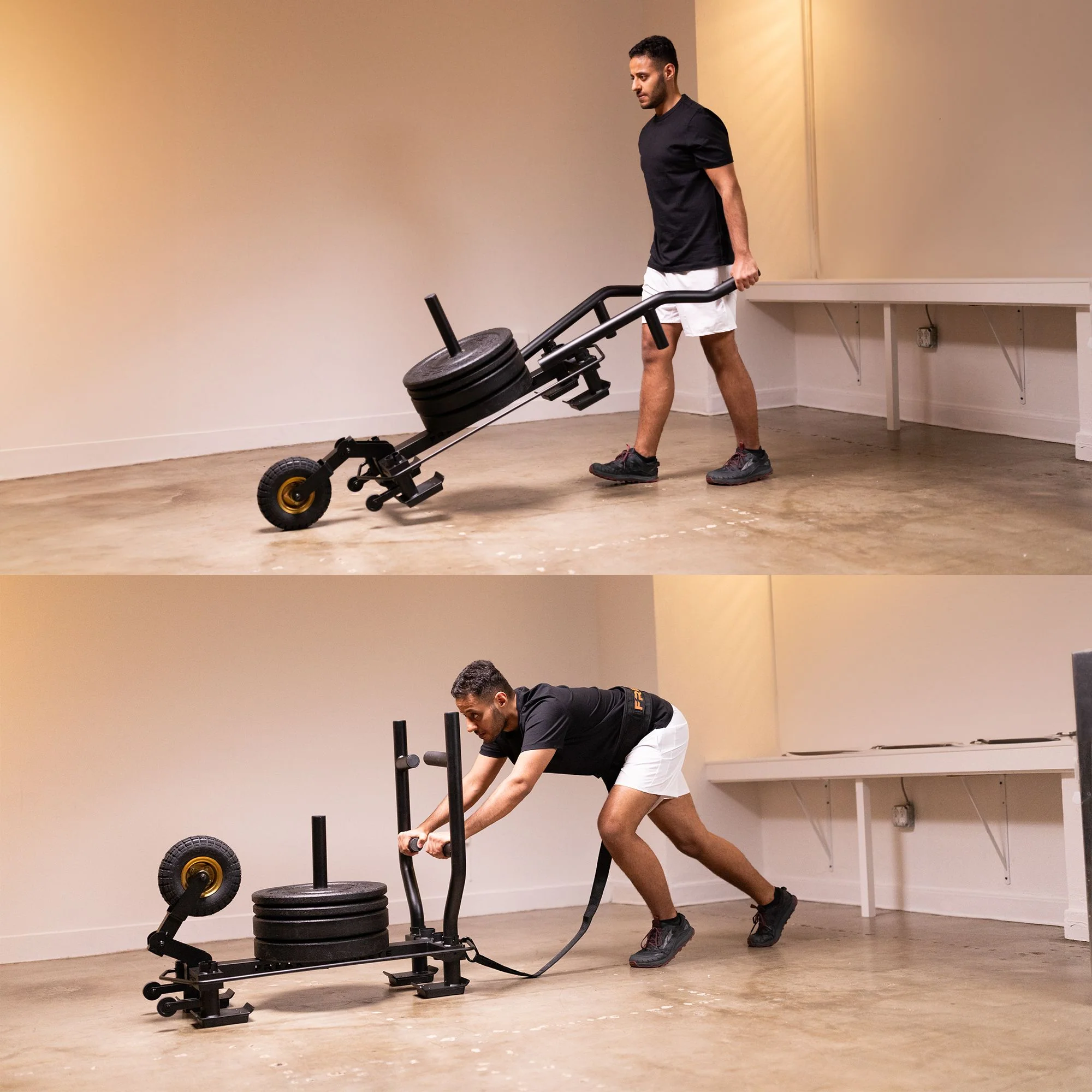
Start by naming the session you want to make easier. Perhaps you want short, heavy pushes after strength training. Perhaps you prefer steady backward drags, or you want loaded carries without a separate pair of farmer’s handles. Those are different jobs, even when one frame can serve all three. The best choice depends on the movement you will actually repeat, rather than the longest feature list.
In a sliding push or drag, the ground contact creates resistance as the base moves along the surface. In wheelbarrow mode, a wheel supports part of the system while your hands support and guide the other end. Changing between them changes the task. It does not preserve a single, directly comparable resistance merely because you left the same plates on the loading post.
Use that distinction when planning a workout. A push can be judged by whether your steps and torso position remain consistent. A carry also asks whether you can maintain your grip, keep the frame controlled and finish the route without a rushed set-down. A drag introduces its own attachment position and direction of travel. Record the mode alongside the load so your log describes the exercise you performed.
A simple buying test is to write down your next three sessions. If you cannot identify a specific slot for the equipment, versatility alone is a weak reason to buy it. If carrying and dragging are already activities you enjoy, the combined format has a clearer purpose. You are choosing how to deliver training you want, rather than purchasing another object that needs a new routine built around it.
2. Treat the surface as part of the resistance
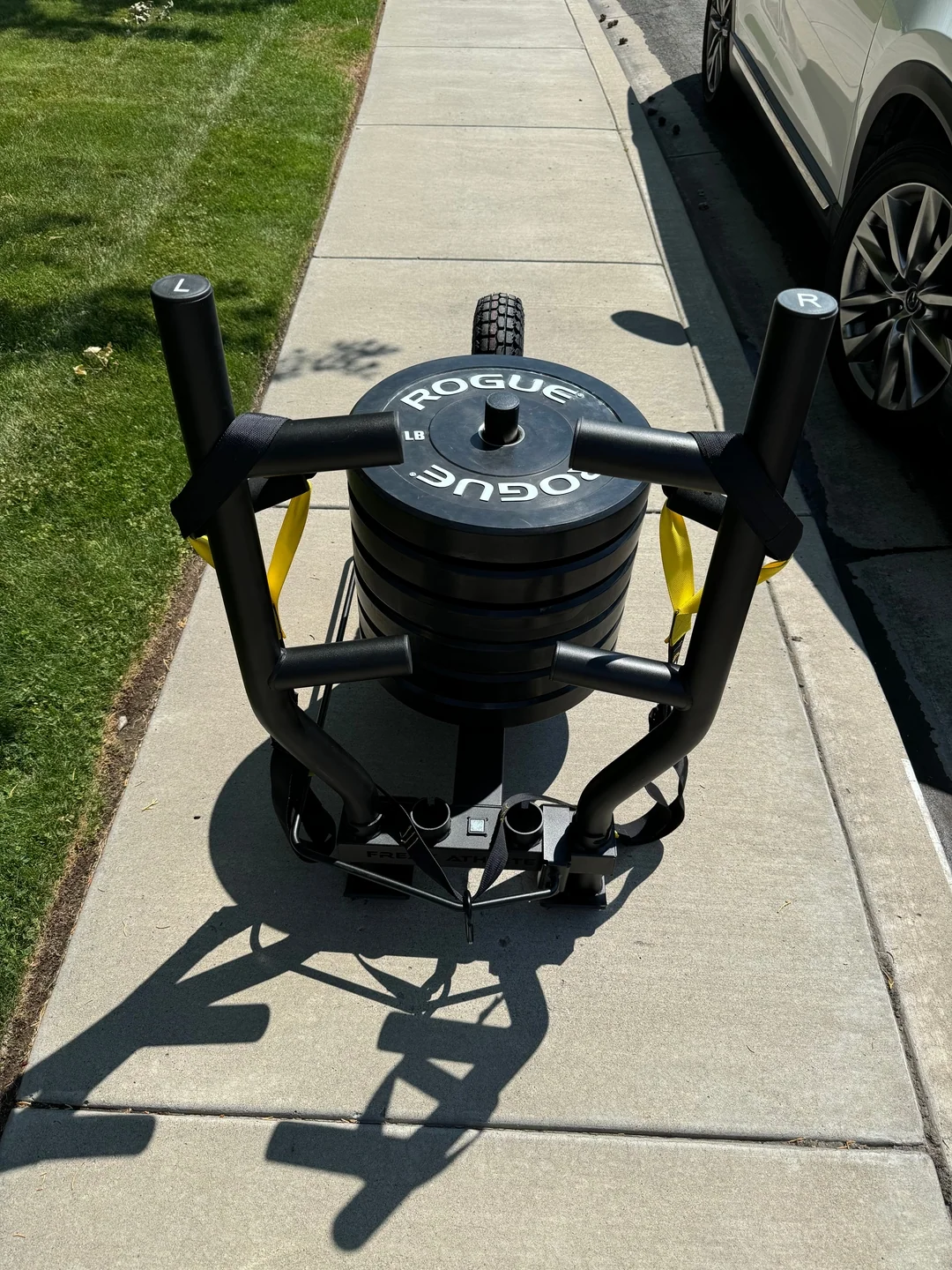
The number on a plate describes mass, not the horizontal force needed to move a sled. Contact materials, the load pressing them together and the condition of the route matter. Starting from a standstill can also feel different from keeping the sled moving. That is why a demanding set on one driveway cannot be compared cleanly with the same plates on a different strip of turf.
Controlled sled-towing research has measured friction while changing both mass and speed, finding that effective loading depended on speed on the tested athletics-track surface. That does not supply a resistance conversion for this product, your driveway or a wheel-supported carry. It supports a narrower lesson: keep the conditions consistent if you want your training numbers to mean something.
For this model, Freak Athlete’s published surface advice recommends its All Surface Rails on pavement, concrete, asphalt and rubber, with the rails removed for turf, grass and carpet. That is setup guidance, not a promise of silent operation, zero wear or identical feel everywhere. Check the current instructions for your particular surface and configuration before using it.
Inspect the actual lane, not just its broad label. A concrete route may contain joints, loose grit, a slope or an awkward transition at the garage entrance. A grass route may have soft patches and uneven ground. Test a short, controlled pass with a manageable load before treating the space as your normal training course. If the equipment catches or your footing becomes uncertain, change the setup or location rather than driving harder through the problem.
For repeatable sessions, keep the route, direction, rail configuration and distance in your notes. Mark where you start and finish. If you change the surface, establish a new baseline instead of interpreting an easier time as an immediate strength gain.

Equipment Worth Exploring
Explore equipment, accessories and gear from our carefully selected range.


Pro Sled System
Heavy-duty push-pull training sled for loaded conditioning, speed, and strength work.


Competition Plates
Competition-style bumper plates for Olympic lifts and loaded strength training.

Grip Plates
Rubber-coated weight plates with handholds for loading barbells and machines.


Rubber Hex Dumbbells
Rubber-coated hex dumbbell pairs with a stable shape for home and commercial strength training.


Cast Iron Kettlebells
Textured cast-iron kettlebells for swings, squats, carries, and full-body training.

3. Separate wheelbarrow handling from sled dragging
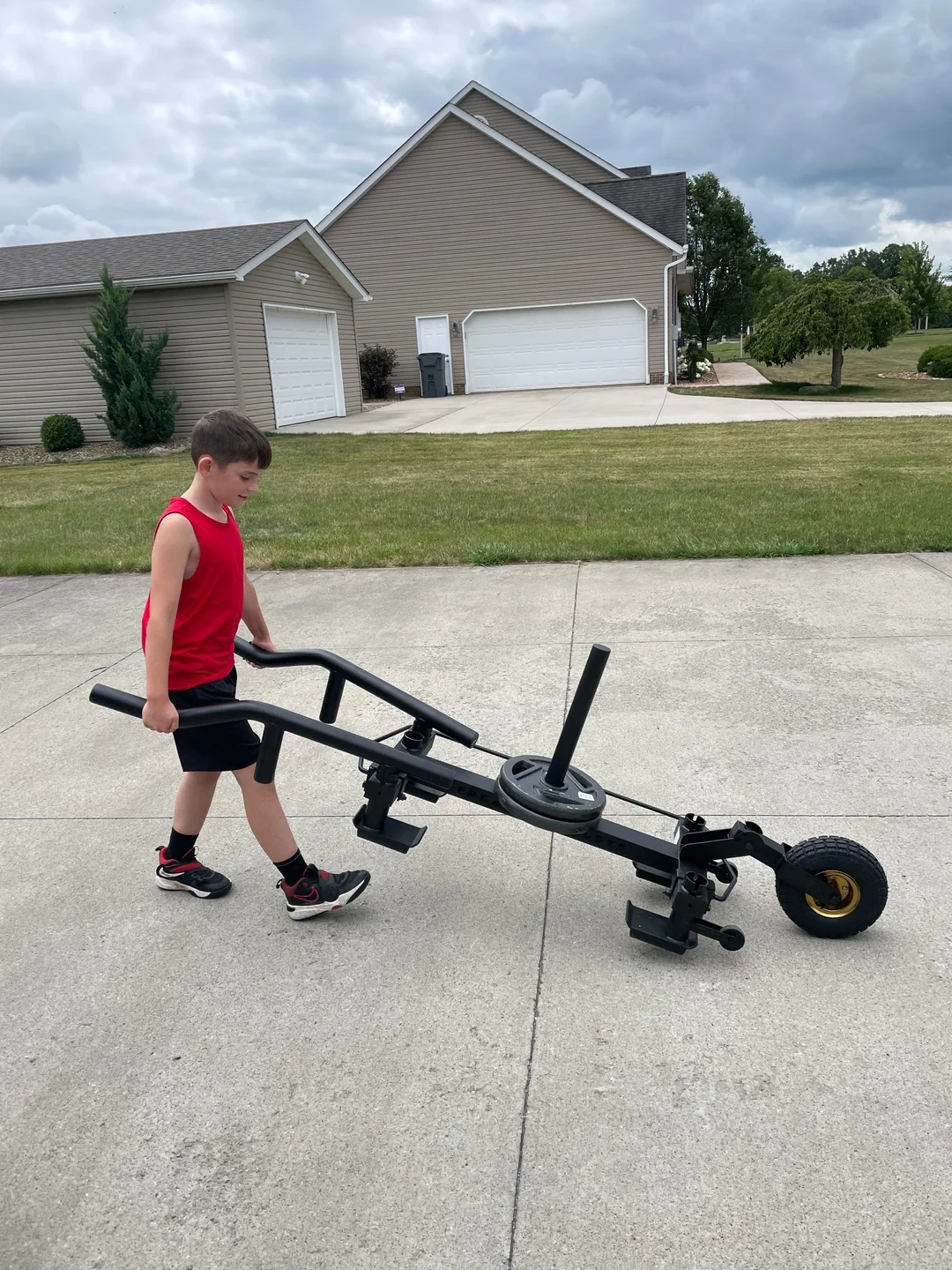
A wheelbarrow-style carry is not simply a deadlift that travels. The load is shared between the wheel and your hands, and that distribution depends on geometry and where the mass sits. Total plate weight therefore does not tell you exactly what each hand supports. Without measuring the system, an advertised or assumed hand-load ratio would be guesswork.
Assess the entire movement before adding much weight. Can you pick up the handles without crowding your feet? Can you walk normally without kicking the frame? Is there room to lower it under control at the far end? These questions become more useful than a dramatic maximum-load claim when you train in a real garage, courtyard or driveway.
Turning deserves its own rehearsal. A route that looks generous while you walk through it may feel narrow once a loaded frame extends ahead of you. Leave space for your body as well as the equipment. Practice the turn with little resistance and keep other people clear of the path. Do not make a tight pivot the hardest part of a conditioning set simply because the only available lane ends against a wall.
Keep changes deliberate. Increasing plates, extending the route and reducing rest simultaneously makes it hard to identify what caused the session to become unmanageable. First make the same trip look and feel controlled. Then change one variable and compare it with your previous notes. If grip fails before the training task you intended, shorten the trip or reduce the load; do not assume every set must end with the handles falling from your hands.

Funny Gym Shirts & Workout Gear
Funny gym shirts, tanks, hoodies and workout gear for lifters who like training hard.


Hybrid Athlete – HYROX Workout Checklist Gym Decal for Sticker
Give your everyday gear a playful “Hybrid Athlete” twist.

Anti HYROX HYROX Club Meme Shirt Gymbro T-Shirt
Make gym days more fun with “Anti HYROX HYROX Club” style.


Enter Strongman Hooded Pullover Metal Music Strongman F Hoodie
Show off your metalhead humor in a laid-back “Enter Strongman” hoodie.

Atlas Gains : Strongman Meme Shirt & T-Shirt
Show some lifting attitude with a playful “Atlas Gains” tee.

Leg Day Thou Shalt Not Skip Leg Day Medieval Knight Gym T-Shirt
Make gym days more fun with “Leg Day” style.

Shirt – Cardio Is Hardio – & Gymbros T-Shirt
Show some cardio attitude with a playful “Cardio is Hardio” tee.

Shirt Never Skip Leg Day Flamingo Meme – Gymbros, & T-Shirt
Rep “Never Skip Leg Day Flamingo Meme” humor in and out of the gym.

Cardio Is Calling You , Meme Top Answer Or Decline? T-Shirt
Make gym days more fun with “Cardio Is Calling You” style.
4. Measure the working route as well as the storage corner
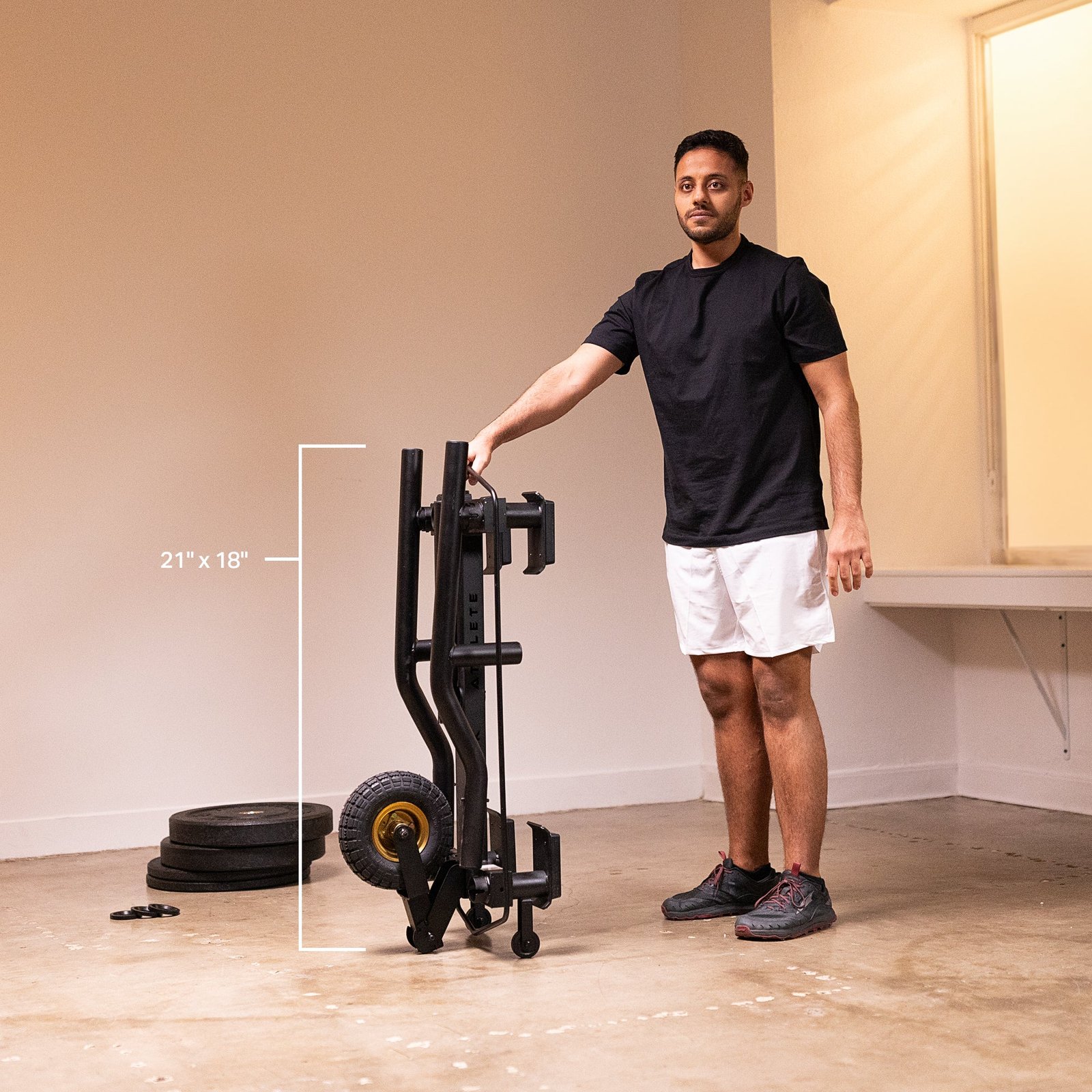
The brand lists a vertical-storage footprint of 21 by 18 inches. That is useful information for parking the equipment, but it is not the space required to train with it. Your working area also includes the configured handles, your body, the travel distance and the room needed to change direction. Storage and operation should be two separate checks on your purchase list.
Walk the journey from the storage corner to the training lane. Include every doorway, threshold and turn. Imagine doing it after your session, when the plates still need unloading and other equipment may be in the way. A compact parked footprint offers little practical benefit if retrieving the sled means moving three benches and opening a route through the entire gym.
Plan where loose items will go while you switch modes. Keep plates within reach without spreading them across the walking path. Confirm the current assembly and storage instructions before deciding which parts remain fitted or where they should sit. A photograph of a neatly stored unit shows one arrangement; it does not prove that every arrangement is equally secure.
Do not judge setup convenience only on a fresh, enthusiastic first day. Think about the session you will do on a cold evening with limited time. If you have twenty minutes, several minutes of rearranging the garage can change whether you train at all. The strongest space-saving purchase is one you can retrieve, use and put away as part of your ordinary routine, without turning the changeover into a second workout.
5. Compare the complete cost and make progress measurable
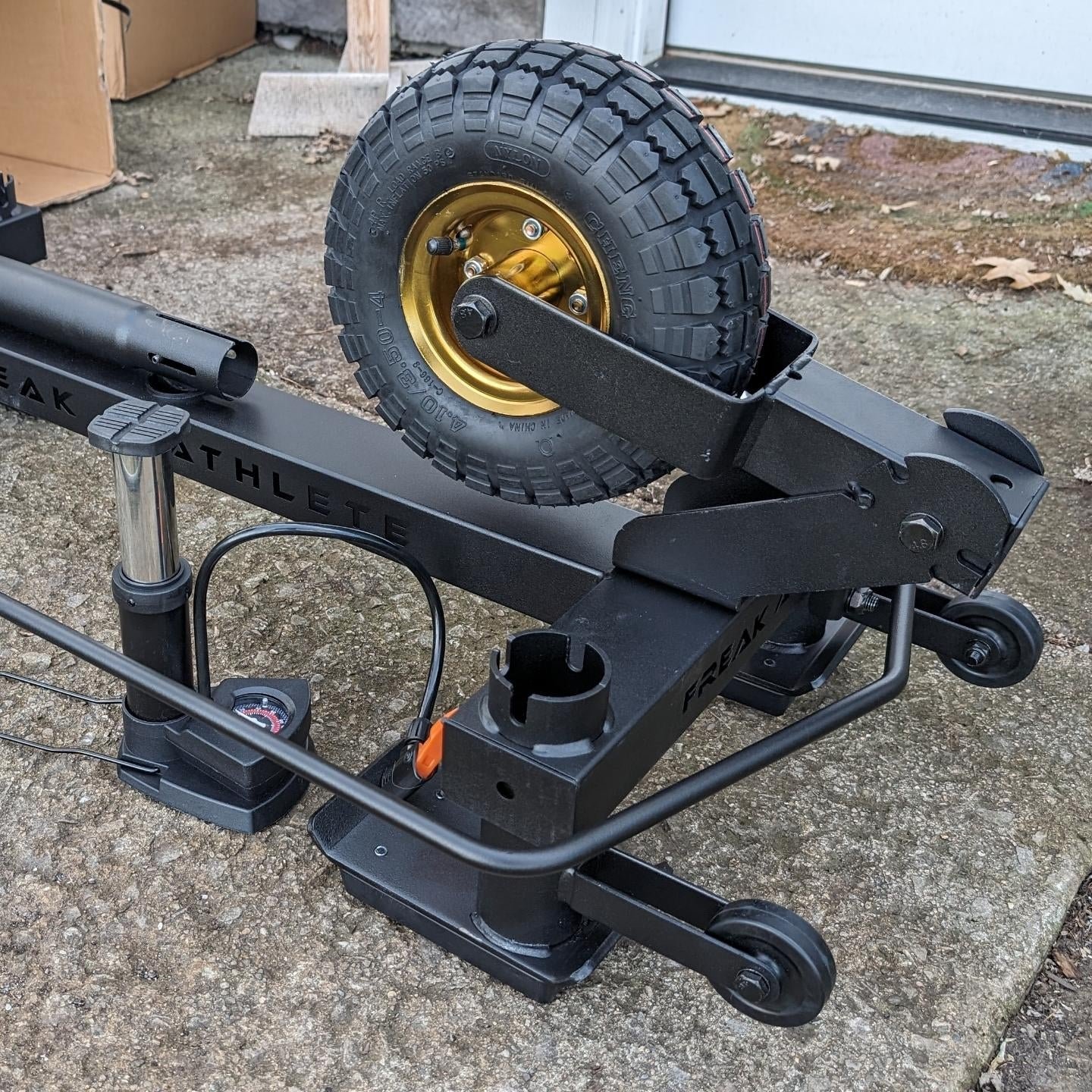
On November 16, 2026, the US product page listed the one-set-of-push-posts option at $299. Treat that as a dated US listing, not a guaranteed delivered price in another country. Check the chosen regional store, included configuration, shipping, taxes and current replacement-part support before comparing totals. A cheaper headline price can become a different decision once your actual order is specified.
Compare equipment by the job you need. A basic drag-only sled may be sufficient if dragging is your entire plan. A push-and-pull frame makes sense when upright pushing is important. A wheelbarrow configuration is more relevant when you want that handling task too. Compare how each option reaches the training lane and stores afterward, rather than treating additional modes as automatic value.
Ask practical ownership questions before ordering: which contact parts are replaceable, what wheel maintenance is required, how damaged parts are handled, and whether you can obtain the relevant instructions and spares locally. Inspect wheels, contact surfaces, fasteners and handle connections according to those instructions. Do not infer a service interval, load rating or lifetime wear guarantee from a close-up photograph.
For the first sessions, make the log deliberately simple: mode, surface, route length, plates, number of trips, rest and how controlled the final trip felt. For example, repeat the same short lane for several trips with enough recovery to maintain your chosen pace and position. This is a baseline exercise, not a universal sprint prescription. A heavy walking push and a fast resisted sprint have different objectives; neither should borrow the other’s load just because both use a sled.
Choose the WheelBarrow Sled if the combined format fits a route you can use consistently. If the route is uncertain, solve that first. Regular, comparable sessions will tell you more about the value of your purchase than the largest stack of plates you can move once.