Advertising disclosure: This page includes affiliate product links that may earn us a commission, as well as products from our own store.
The PowerBlock Pro 100 EXP is an expandable adjustable dumbbell system with a nested weight stack. Before choosing a configuration, evaluate the handle, selection process, available load steps and space needed to use it. This guide explains the buying and setup questions to answer without claiming hands-on testing.
Check the handle before chasing the maximum load
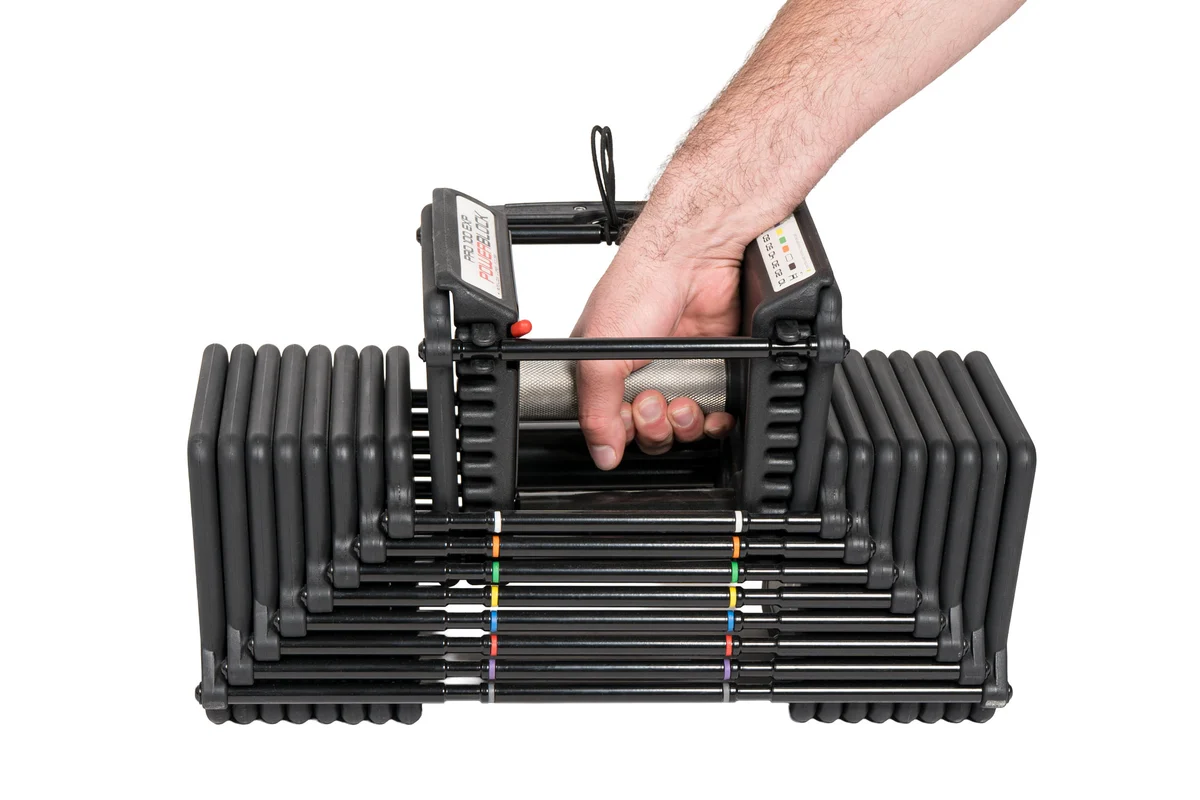
The PowerBlock Pro 100 EXP offers knurled stainless steel and cushioned TPR grip choices. That is a useful decision to make before comparing the biggest number on the box. Handle texture affects the point where you actually hold the dumbbell, while the surrounding rectangular frame changes the space available around your hand. Neither a specification sheet nor a dramatic product photograph establishes your personal comfort.
Ask to handle the exact version if possible. Close your hand naturally and consider the movements you expect to perform most often: presses, rows, curls or carries. A comfortable stationary hold is only the beginning. Check whether the surrounding structure feels manageable when you bring the weight into position and when you return it afterward. Avoid treating a trial with another PowerBlock family as proof that this model fits identically.
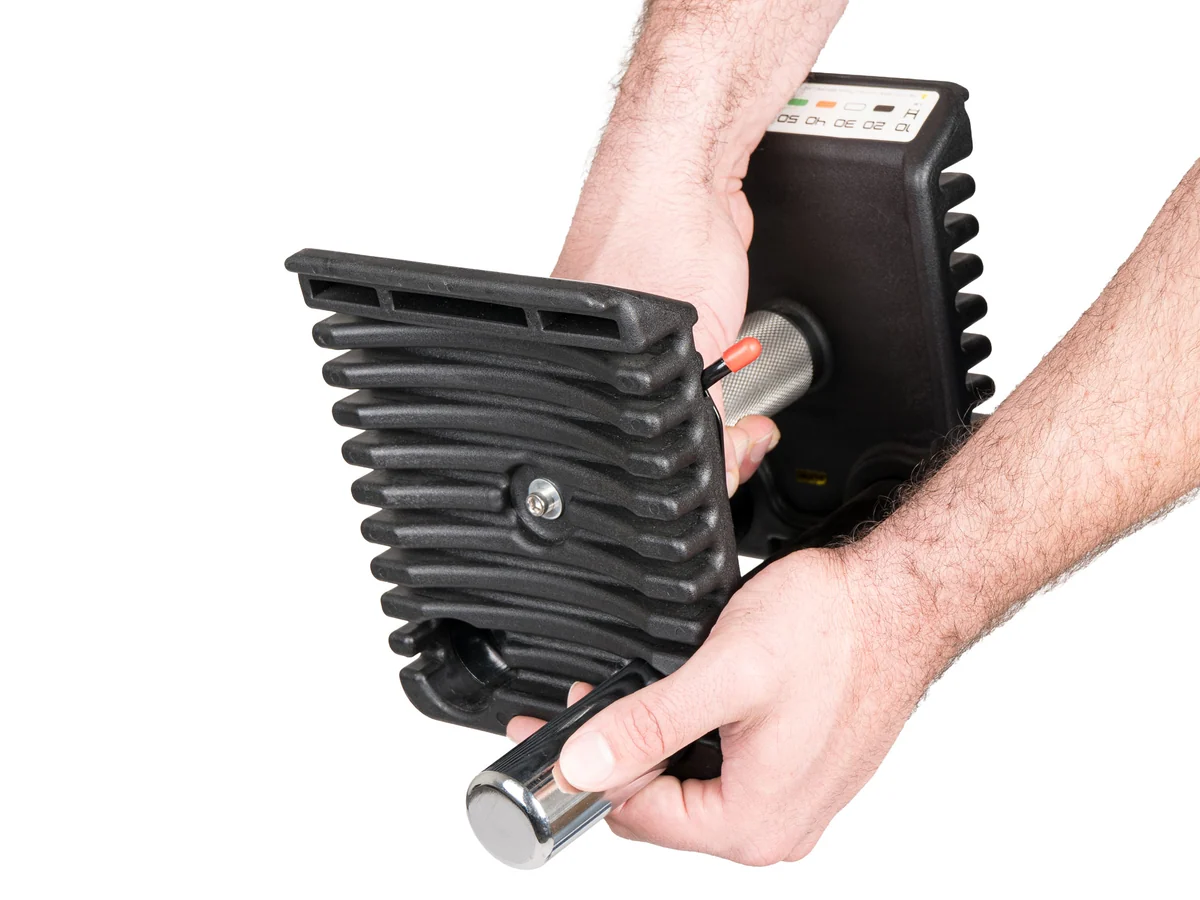
For pressing, a secure grasp and controlled wrist position matter more than trying to make your hand match somebody else's demonstration. Practise the setup with an easy load before attempting demanding working sets. The handle photograph shows the actual knurled option being lifted from its stack; it does not demonstrate every possible exercise or establish that the grip suits every hand.
A grip choice is also a purchasing choice. Confirm the selected option in the basket, the retailer's description and the delivered packaging. Product pages may show several handle versions in one gallery. If a seller's text and photographs disagree, resolve that discrepancy before buying. Being precise about the version is more useful than assuming the most attractive photograph describes the least expensive configuration.
This is a specification-grounded guide to evaluating the system, not a hands-on durability review. Comfort, long-term wear and the feel of a heavy set would require actual use. The practical aim here is to identify the decisions that deserve checking before the first demanding workout.
Treat the selector pin as part of every setup
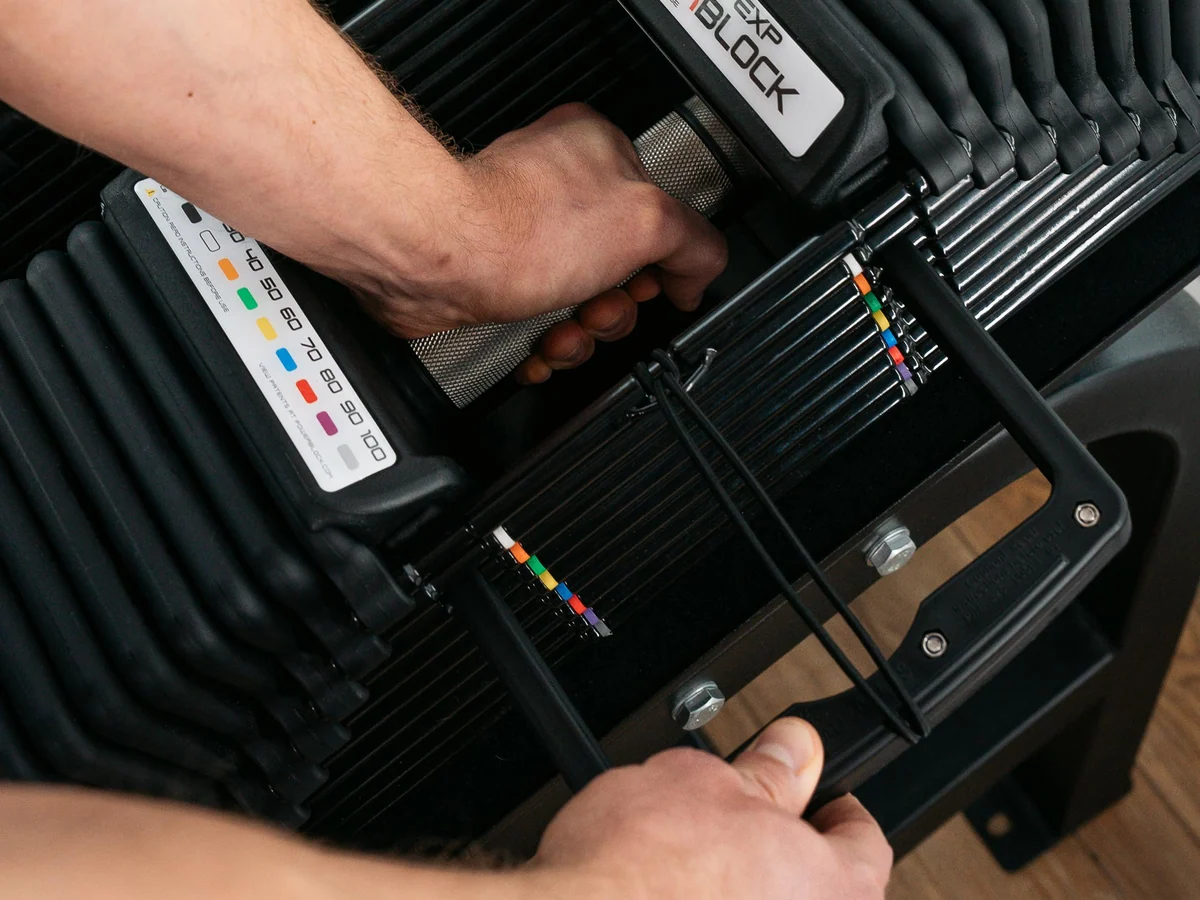
The dumbbell uses a handle nested inside a stack, with a selector pin determining which plates leave with it. Before lifting, read the chart on the actual unit and follow the manufacturer's instructions for selecting and checking the weight. Do not infer the intended load from the exposed plate number alone while ignoring the handle configuration.
Set up on a stable, level surface with the stack properly aligned. A pin change made while you are tired still deserves the same attention as the first change of the session. If something does not seat normally or the selected plates do not behave as expected, put the dumbbell down and resolve the setup. Do not improvise a way to keep lifting through an uncertain selection.
When using two dumbbells, check each one independently. Identical-looking stacks are not a substitute for confirming both settings. It is easy to remember the number you intended to select and overlook what you actually selected after an interruption. A brief visual check is especially useful when alternating between lighter shoulder work and heavier rows or presses.
Build a consistent order into the routine: return the dumbbells, change the settings, confirm the selections, then prepare for the exercise. That small sequence separates equipment handling from the effort of the set. It also makes a training partner's handover easier to follow without assuming that their settings are the ones you want.
The photograph shows a real hand operating the selector beside the weight chart. It is a close view of the mechanism, not a replacement for the owner's instructions. Use the exact model's documentation when learning the process, and keep damaged or uncertain equipment out of use until the problem is resolved.
Separate small load changes from expansion stages
The product offers a base range up to 40 pounds and expansion configurations reaching 60, 80 and 100 pounds per dumbbell. The 100-pound maximum requires the relevant expansion stages. A pair advertised under the Pro 100 EXP name is therefore not automatically a pair supplied with every plate needed to reach the maximum.
There is a second decision within the loading system: the micro weights in the handle. These provide smaller adjustments than simply selecting another group of plates. The close photograph shows a small cylindrical weight being removed. Keep the distinction clear: changing handle weights adjusts an available setting, while buying an expansion stage extends the available upper range.
Do not assume every possible number between the minimum and maximum can be selected. Check the actual weight chart for the version you are buying and the increments relevant to your exercises. A modest jump may matter much more for a curl or lateral raise than for a heavy row. The useful question is whether the available steps match your likely progression, not whether the system advertises an impressive total number of settings.
Plan the first purchase around the exercises and loads you can use now, then consider a realistic path forward. Buying every expansion immediately may be convenient, but it is a different decision from needing those loads today. Conversely, a lower initial price can be misleading if your current working weights already require an additional stage.
Keep a record of the setting and handle configuration when tracking progression. If a later workout feels unexpectedly different, those notes help distinguish a changed setup from a change in your performance. Progress should mean more controlled, repeatable work over time, rather than simply reaching the next label as quickly as possible.
Match the plates and accessories to the exact system
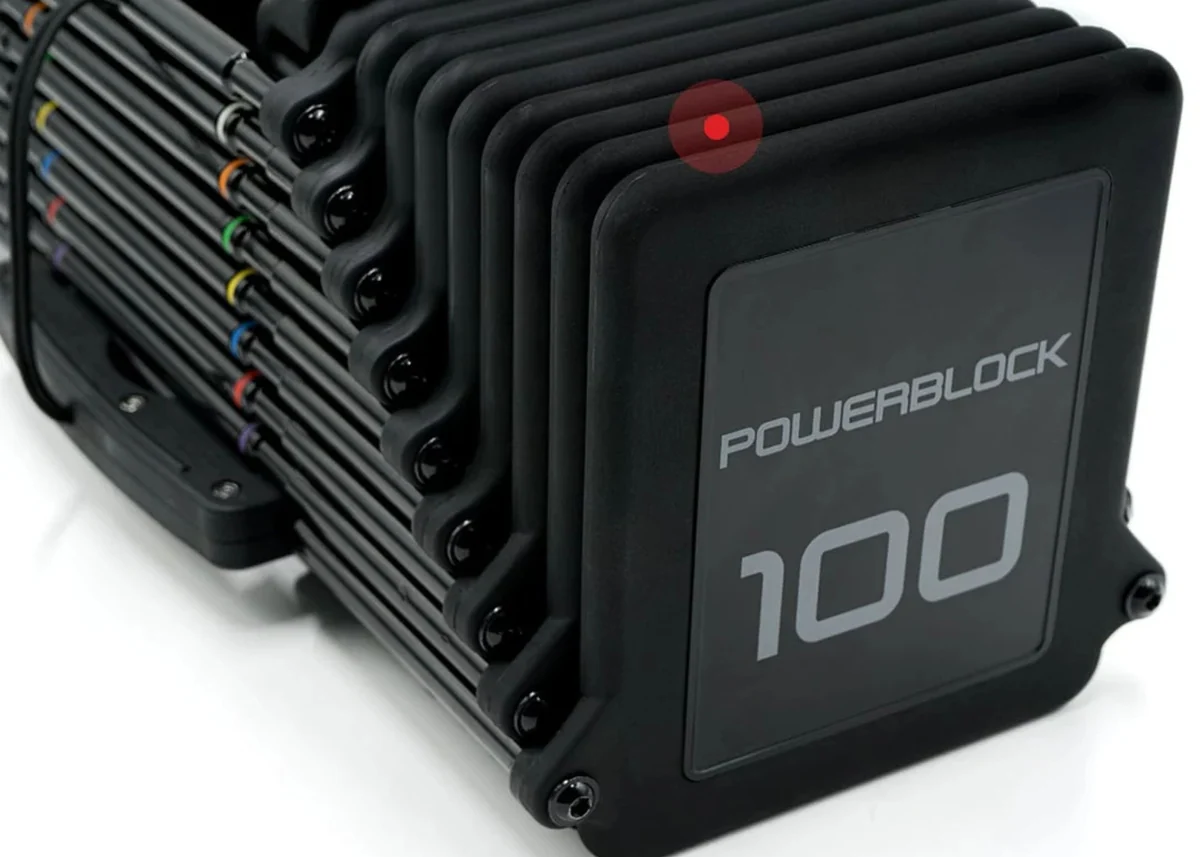
The Pro 100 EXP uses urethane-coated weight plates. That is a construction feature, not permission to drop the dumbbells or a guarantee against damage. Treat adjustable components carefully, return the weights under control and use the care instructions for the coating you actually own. Advice for an uncoated steel product should not be carried across automatically.
Model compatibility deserves the same precision as loading. PowerBlock sells several families with similar-looking nested stacks. An expansion kit or accessory for another family should not be assumed to fit this one. Before ordering, match the exact product name, generation and manufacturer compatibility information, especially when buying secondhand pieces without their original packaging.
The wider ecosystem includes dedicated options for converting compatible stacks into other implements. Regard each attachment as a separate configuration with its own instructions and limits. The presence of a familiar brand name does not establish that a random handle, curl bar or stand is suitable. Ask the manufacturer to resolve an uncertain match rather than trying to infer compatibility from a photograph.
A useful equipment comparison also includes what you do not need. If your routine is built around dumbbell presses, rows and curls, extra conversion accessories may add little. If you regularly use another implement, compare the actual changeover process with keeping a separate one available. Buying versatility is worthwhile only when you can use it conveniently and correctly.
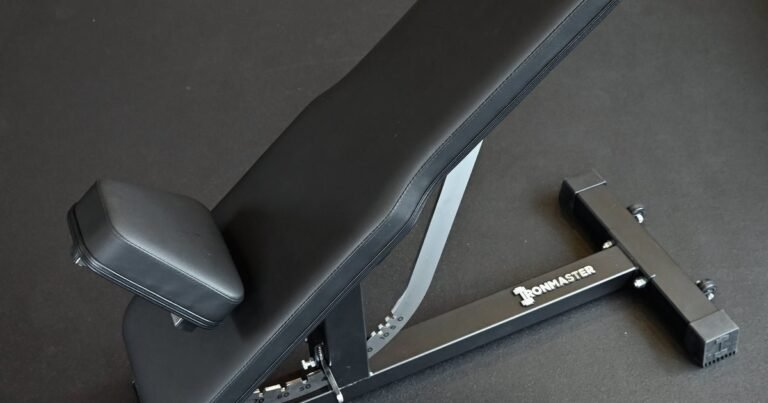
When comparing alternative equipment, separate dumbbells from the rest of the setup. A stable bench, suitable rack, bar, plates or collars may serve other exercises, but none becomes a PowerBlock-compatible component merely by appearing beside the dumbbells. Plan the whole training area while keeping the specifications of each separate item clear.

Equipment Worth Exploring
Explore equipment, accessories and gear from our carefully selected range.


Rubber Hex Dumbbells
Rubber-coated hex dumbbell pairs with a stable shape for home and commercial strength training.

FID Bench MAX
Adjustable bench offering flat, incline, and decline positions + adjustable headrest.


Multi Bench MBX-650 2.0
Adjustable multi-bench with roller adjustment, 15 backrest positions and accessory mounts.


Plan the lift-off, return and storage route
Replacing many fixed dumbbells with two adjustable units can reduce storage demands, but the storage footprint is not the whole working area. You still need room to stand in front of the weights, pick them up without twisting around an obstacle and move into the exercise position. Consider the route back after the set as carefully as the first lift-off.
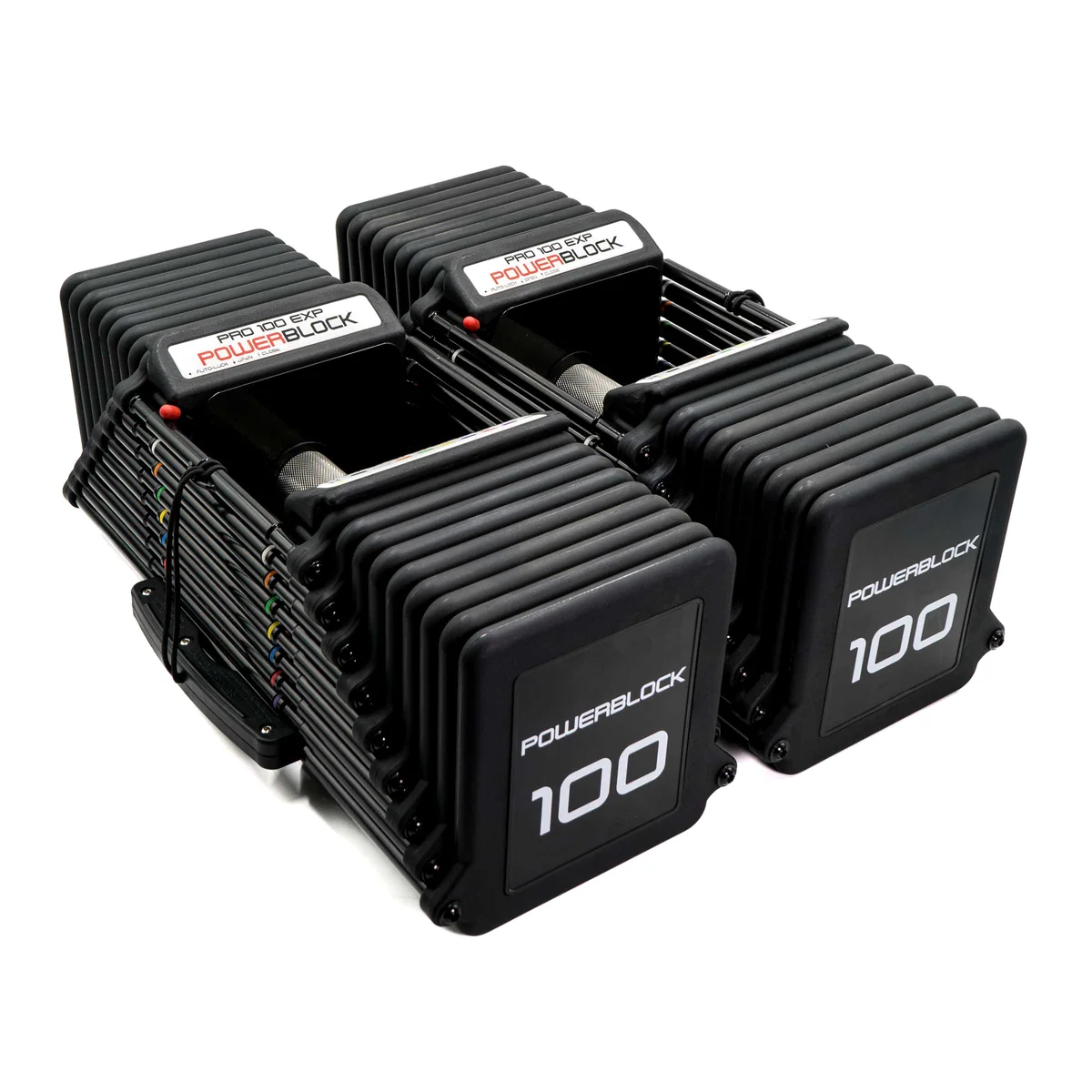
A compatible stand can change the height at which you begin handling the dumbbells. Check its intended model, stability and placement rather than assuming any platform will do. Leave enough room for the selected weights and the remaining stacks. The pair photograph illustrates the nested shape of the system; it cannot tell you how comfortably a particular stand fits beside your bench.
Sketch a typical session before reorganizing the space. Where will you put the dumbbells for a row? Can you approach the bench without stepping over another item? Is there a clear place to return each weight while keeping the stack aligned for the next selection? These questions reveal practical limitations that a simple comparison of storage dimensions can miss.
Keep the storage environment suitable for the equipment. The manufacturer recommends indoor storage with controlled temperature and humidity. That matters when a training area doubles as an exposed garage or outdoor workspace. Protecting the equipment between sessions is separate from whether the floor has enough room to hold it.
Finally, choose a configuration you can use repeatedly. Confirm the handle choice, supplied expansion stages, available increments and compatible storage before paying. Then learn the selection process with manageable loads and track the actual settings you use. The strongest reason to choose the Pro 100 EXP is that its loading system and physical layout fit your training, not that the maximum number alone looks impressive.

Bodybuilding Shirts & Workout Gear
Bodybuilding shirts, tanks and gym gear for lifters chasing muscle, size, symmetry and the pump.

Shirt – Dumbbell Heartbeat Gymbros, & Meme Lovers T-Shirt
Show some bodybuilding attitude with a playful “Dumbbell Heartbeat” tee.


Shirt – Micro Biceps Club President – Gymbros, & T-Shirt
Rep “Micro Biceps Club President” humor in and out of the gym.

Lift Heavy Sh*T – Essential & Gymbros T-Shirt
Show some powerlifting attitude with a playful “Lift Heavy Sh*t” tee.

Be Happy Lift Heavy – Motivational & Gymbros – Meme T-Shirt
Make gym days more fun with “Be Happy Lift” style.

Big Biceps Theory Meme Sweater Bro Science T-Shirt
Add a playful “Big Biceps Theory” touch to your casual rotation.


Progressive Overload Milo Tee
Bring “Progressive Overload Milo Bull” humor to your next gym day.


Dumbbell Meme Shirt – Essential & Gymbros Seeking T-Shirt
Make gym days more fun with “Dumbbell Gym Meme” style.