Advertising disclosure: This page includes affiliate product links that may earn us a commission, as well as products from our own store.
An adjustable bench earns its place through the exercises you can set up well and repeat consistently. The Kensui Adjustable FID Bench offers PRO and MAX versions, with the MAX adding an adjustable headrest. Here is a practical way to assess that choice, check the supported positions and plan the space around the bench before buying.
Start with the PRO or MAX decision
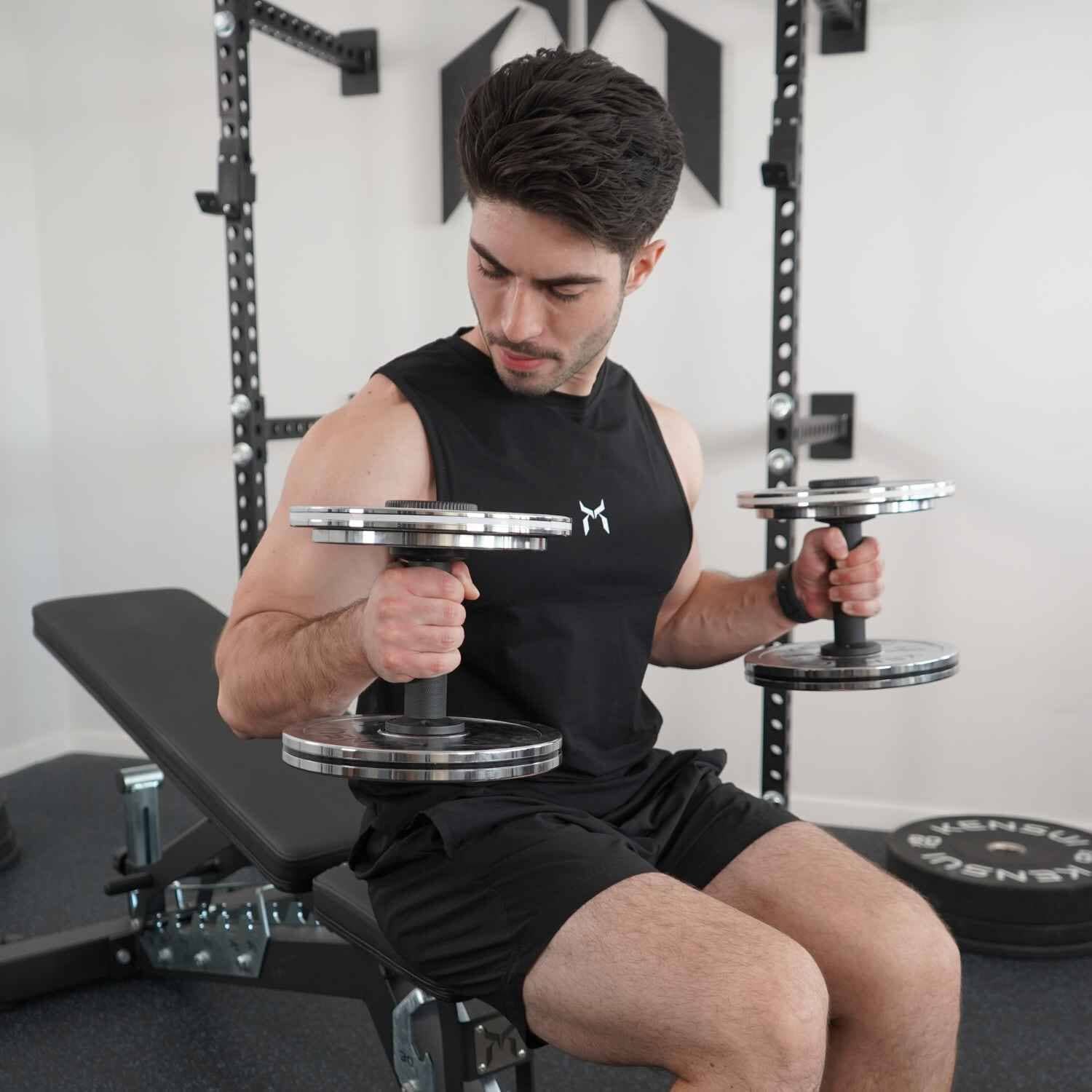
The Kensui Adjustable FID Bench comes in PRO and MAX versions. The central distinction in the current listing is the MAX model's adjustable headrest. Both sit within the flat, incline and decline bench range. That makes the first buying question more specific than whether you want a premium bench: do your actual exercises benefit from the additional support adjustment? Start with a short list of movements rather than choosing from the most elaborate configuration photograph.
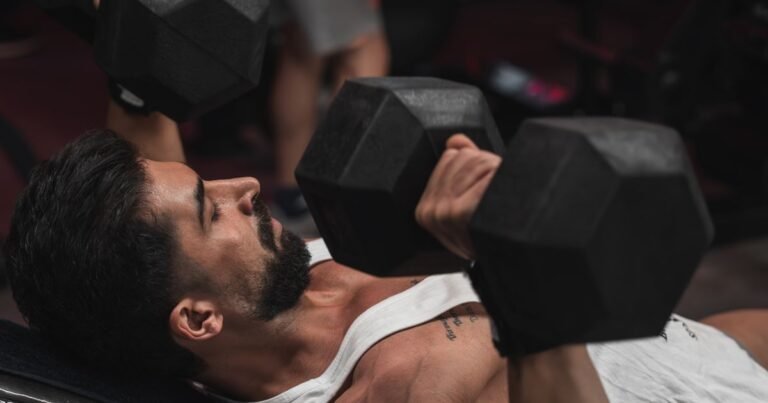
For straightforward flat pressing and seated dumbbell work, assess the basic bench first. Can you position yourself with comfortable support, place your feet securely and reach the weights without an awkward setup? For a dumbbell chest press, stable contact with the bench and floor matters more than accumulating unused adjustments. A spotter can help with handing over and recovering the weights when appropriate. The bench does not remove the need to plan those parts of the lift.
The MAX becomes a more interesting option when the movable support solves a specific fit problem for chest-supported work. That is a reason to investigate it, rather than a guarantee that every lifter will prefer it. Torso length, the intended exercise and the position of the weights all affect the setup. A photograph of another person fitting neatly against a pad cannot establish where your own shoulders, sternum or face will end up.
Write two columns before ordering: exercises already in your program, and exercises you genuinely want to add. If the second column is mostly hypothetical, keep that uncertainty visible. Paying for a feature can be reasonable, but it is easier to judge its value when you can name the movement it improves. This guide evaluates the buying questions and published configuration options; it does not claim hands-on testing or a personal comfort result.
Check the adjustments as a complete exercise setup
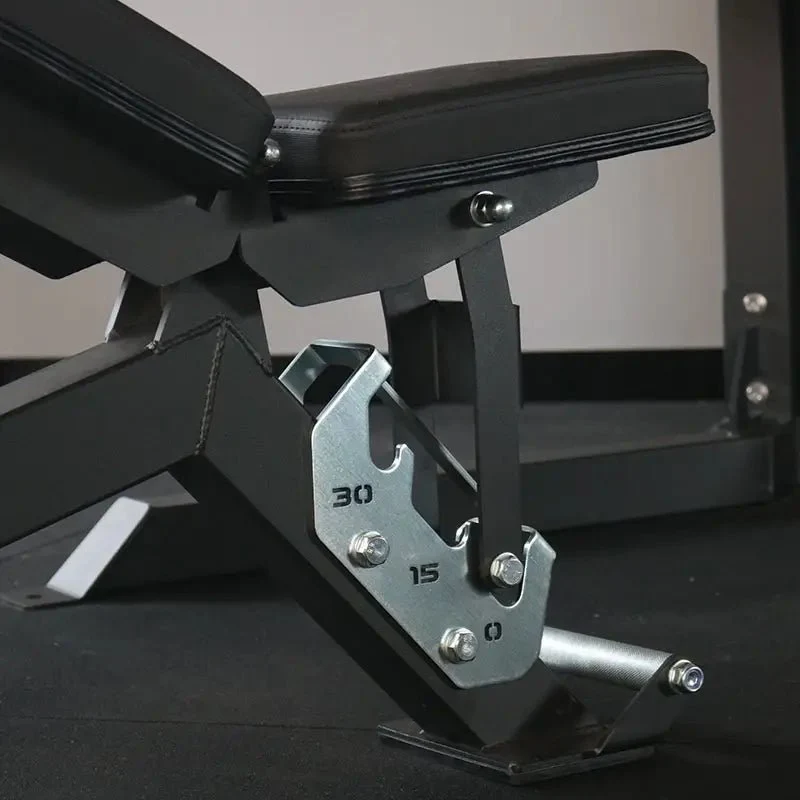
The product presentation describes ten back-pad settings and three seat settings. The MAX adds seven headrest positions. More combinations offer more ways to position the pads, but combinations are not the same thing as distinct exercises or training benefits. You still need to find the small number of settings that match your body and program. Begin with one familiar movement and make its setup easy to reproduce before exploring the rest.
For an incline press, consider the seat and backrest together. Raising one pad changes your relationship to the other, the floor and the dumbbells beside you. Check whether you can sit securely and move into the starting position without sliding or twisting. The most upright setting is not automatically the right one for every shoulder exercise. Choose an appropriate movement and comfortable position, then establish a light, controlled practice set before progressing.
Before loading, inspect the adjustment engagement in the positions you intend to use. Follow the supplied assembly and operating instructions for the exact version, and check that the support is fully seated rather than resting near a notch. Keep fingers clear while moving the pads. A numbered plate is useful for returning to a setting, but the number itself does not prove that the mechanism has been engaged correctly.
Record the position in plain language: bench version, back setting, seat setting and any headrest adjustment. Add the exercise and the load. If you change two pad positions and the weight in the same session, performance becomes harder to compare with your previous entry. A simple setup photograph can supplement the written record. The point is to reduce avoidable variation between sessions, not to create an elaborate checklist that takes longer than the exercise.
Use supported exercises to test the fit questions
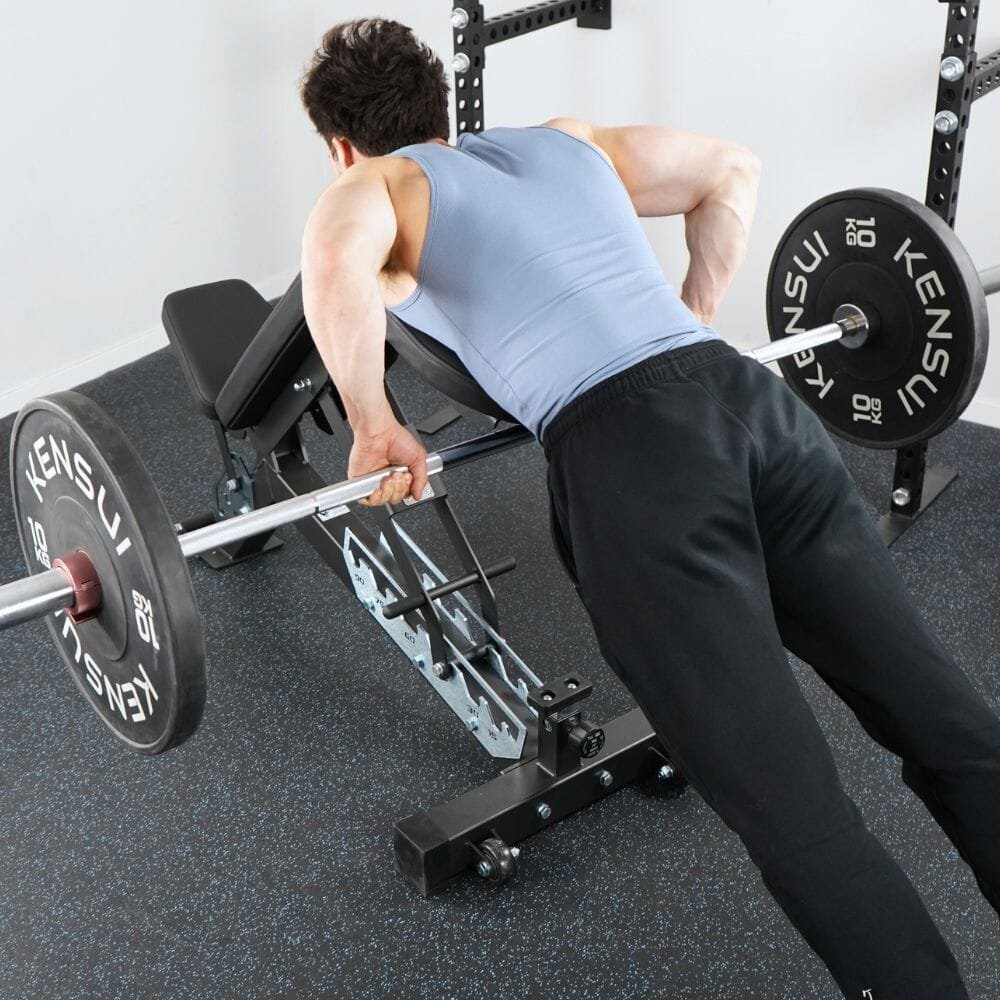
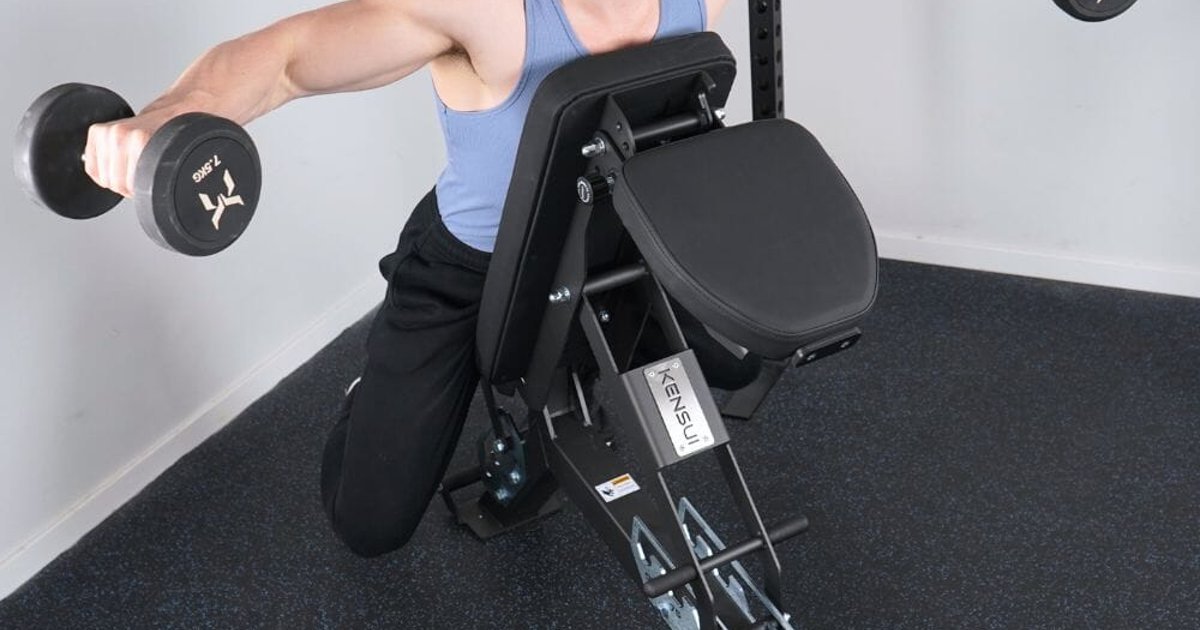
Chest-supported rows are a useful way to think through the MAX's extra adjustment. Your chest needs a secure contact point while your arms and the resistance have enough room to travel. Check where the pad meets the torso, whether the face and neck can remain comfortable, and whether the implement clears the frame. Supporting the chest changes the exercise setup; it does not justify claiming that the movement isolates every back muscle or removes all loading from the spine.
Start the fit check without a challenging load. Move through the intended rowing path and identify what stops the repetition. If a plate hits the bench or the bar contacts a support before you reach the desired position, adding weight will not solve the clearance problem. Dumbbells and barbells have different shapes and approach the frame differently. A configuration that works for one should not be assumed suitable for the other.
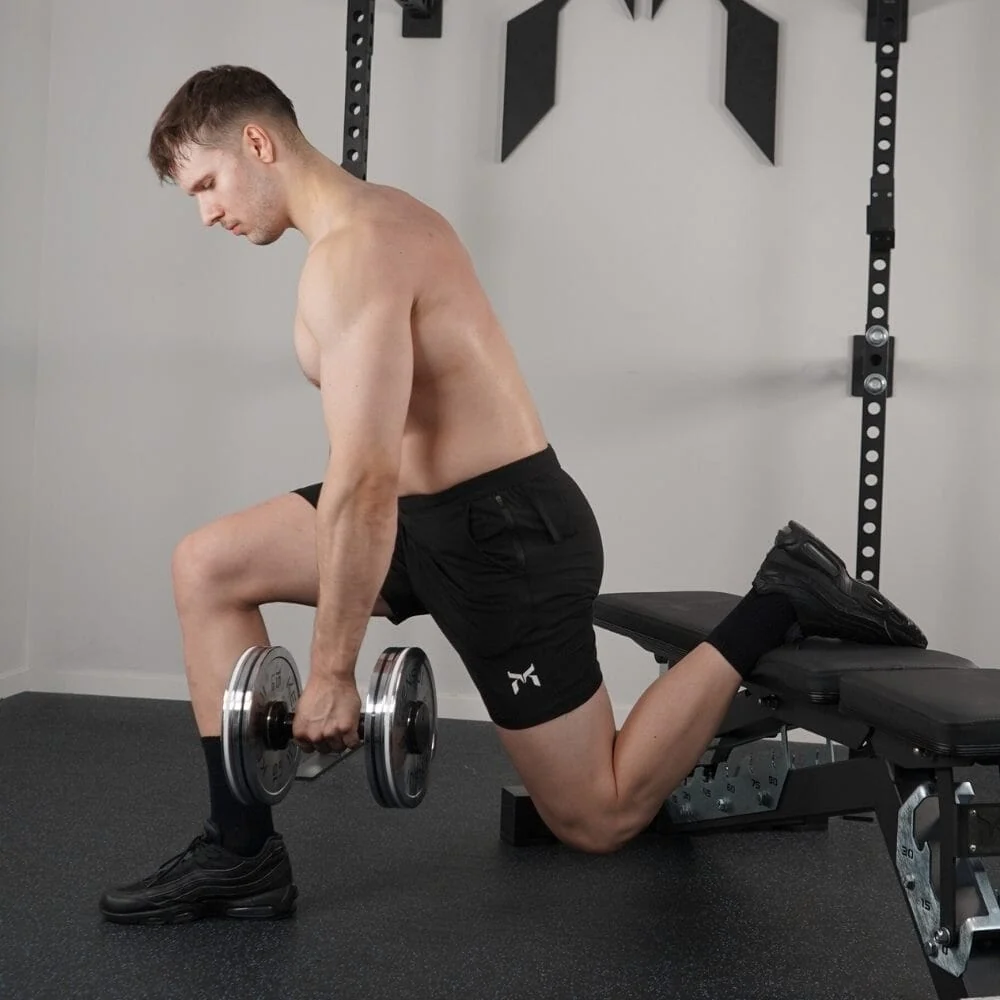
A supported one-arm dumbbell row provides another practical option. With the supporting hand and knee placed securely on the bench, keep the torso controlled while pulling and lowering the dumbbell. Avoid rotating the body to turn the final part of the repetition into a different movement. The bench provides a contact surface; you still need to choose an appropriate load and maintain the movement you intended to train.
Seated curls and chest-supported raises raise their own questions about elbow room and pad placement. Treat each as a separate setup rather than transferring one photograph's angles to every exercise. The useful result is a few repeatable configurations that suit your training. If an adjustment feels awkward or restricts the movement, try an appropriate alternative instead of forcing yourself into it simply because the bench can be positioned that way.

Equipment Worth Exploring
Explore equipment, accessories and gear from our carefully selected range.

FID Bench MAX
Adjustable bench offering flat, incline, and decline positions + adjustable headrest.



Multi Bench MBX-650 2.0
Adjustable multi-bench with roller adjustment, 15 backrest positions and accessory mounts.


Rubber Hex Dumbbells
Rubber-coated hex dumbbell pairs with a stable shape for home and commercial strength training.


Measure the training space and the storage route
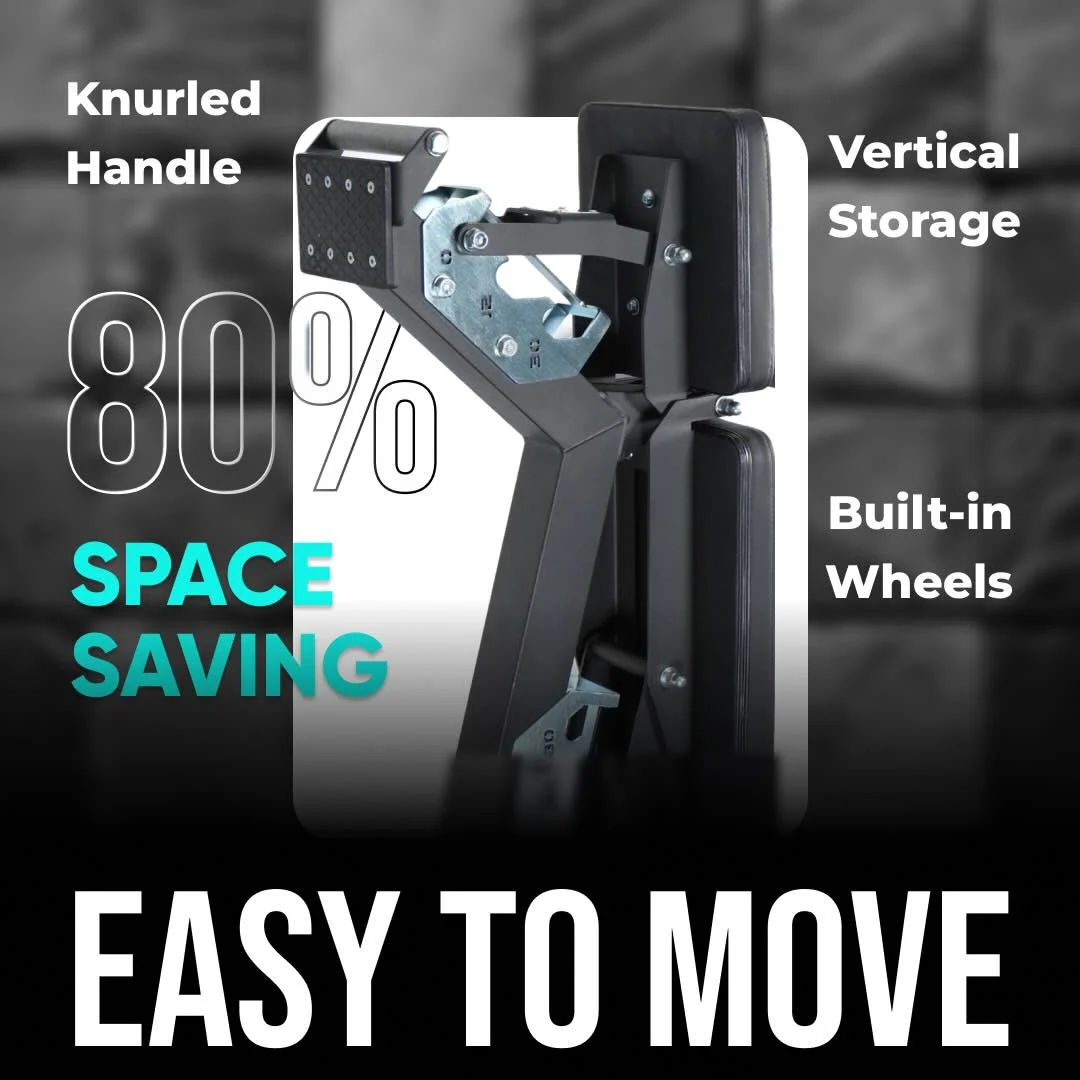
The bench is presented with transport wheels, a carrying handle and upright storage. Those features address different tasks. Rolling a bench out of a rack, moving it across the room and leaving it stored vertically are separate practical checks. Plan the whole route, including the turn into the storage area, rather than measuring only the floor space where the bench will stand once the session is finished.
Mark out the training position with enough room for your feet, the weights and getting on and off. A bench that fits between two uprights may still leave too little room to collect a dumbbell from the floor. Include access around the bench when the backrest is raised. For barbell exercises, assess the rack and safety equipment as part of the setup; the bench alone cannot determine whether the overall arrangement suits your reach and movement.
Check the intended storage configuration against the instructions for the exact model. Remove loose weights and accessories before moving the bench, and use the designated handling points. A clear, level storage location is preferable to balancing equipment among loose plates or across a doorway. Keep the area around the stored bench accessible so returning it to use does not begin with moving several other objects.
For a shared room, think about the transition both ways. Where do the dumbbells go while you move the bench, and where does the bench go while someone needs the floor? The easiest setup to repeat is usually more useful than an impressive arrangement that is frustrating to dismantle. Storage convenience is a legitimate purchase consideration, but a product photograph cannot verify the stability of your particular floor, storage position or handling method.
Confirm the specification, then buy for the program
Before paying, confirm the exact model, included components and current operating limits with Kensui. Ask whether a stated capacity includes the user's body weight and how the rating applies across the positions you intend to use. Keep the model-specific manual with your order details. A large headline number should not substitute for clear instructions, and this guide does not present an independently tested capacity or certification.
Check the dimensions against your measurements, the delivery arrangements for your destination, and the conditions that apply to returns or replacement parts. These details can change, so use the terms attached to your actual order. If a feature is important enough to influence the purchase, obtain a clear answer before ordering rather than assuming it is included because it appears in a demonstration photo. Weights, racks and other accessories should be treated as separate unless the selected package explicitly includes them.
Build the first sessions around familiar exercises and manageable loads. You could begin with a press and a supported row, then add the seated or chest-supported movement that motivated the purchase. This is an example of organizing the setup, not a complete individualized program. Continue training the other major muscle groups and allow recovery between demanding sessions. Buying a more adjustable bench does not create a need to replace an otherwise useful training routine.
Review the purchase through usefully specific questions: can you reproduce the settings, handle the weights sensibly, maintain the intended movement and store the bench without disrupting the room? Log the changes you make and assess them over several sessions. Choose PRO when the standard configuration meets the job, and consider MAX when the adjustable support has a clear purpose. The most valuable setting is the one that helps you perform consistent training, not the one that makes the longest feature list.

Bodybuilding Shirts & Workout Gear
Bodybuilding shirts, tanks and gym gear for lifters chasing muscle, size, symmetry and the pump.


Big Biceps Theory Decal Water Bottles & Gear Meme Sticker
Bring “Big Biceps Theory” attitude to your water bottle or laptop.


Shirt Pull Day – Back & Biceps Meme Top T-Shirt
Heavy lifts, good laughs, and a little “Pull Day Graphic” energy.

I Love Bench Press Gym | Funny Heart Plate Muscle Shirt Tank Top
Add some lifting attitude to training with “I Love Bench Press”.

Bench Press and Chill Funny Gym T
Make gym days more fun with “Bench Press and Chill” style.

Consistency Is Key Stoic Greek God Marble Sculpture T-Shirt
Make gym days more fun with “Consistency is Key Stoic Greek God Marble” style.

Ultimate Bench Press Tee
Heavy lifts, good laughs, and a little “Ultimate Bench Press” energy.

Lift Smart Brain Plate Tee
Show some lifting attitude with a playful “Lift Smart Brain Weight Plate” tee.

Mind Muscle Perfection Brain and Biceps Gym for Science T-Shirt
Show some gym-day personality with “Mind Muscle Perfection Brain and Biceps”.