Advertising disclosure: This page includes affiliate product links that may earn us a commission, as well as products from our own store.
A leg extension and curl machine is only useful if it fits your body, your room and your training routine. The Bells of Steel Basilisk now offers stack and VOLTRA-compatible choices, but the right purchase involves more than selecting the largest resistance number. Here is how to compare the configurations and check the details that matter before ordering.
Choose the complete machine before comparing upgrade kits
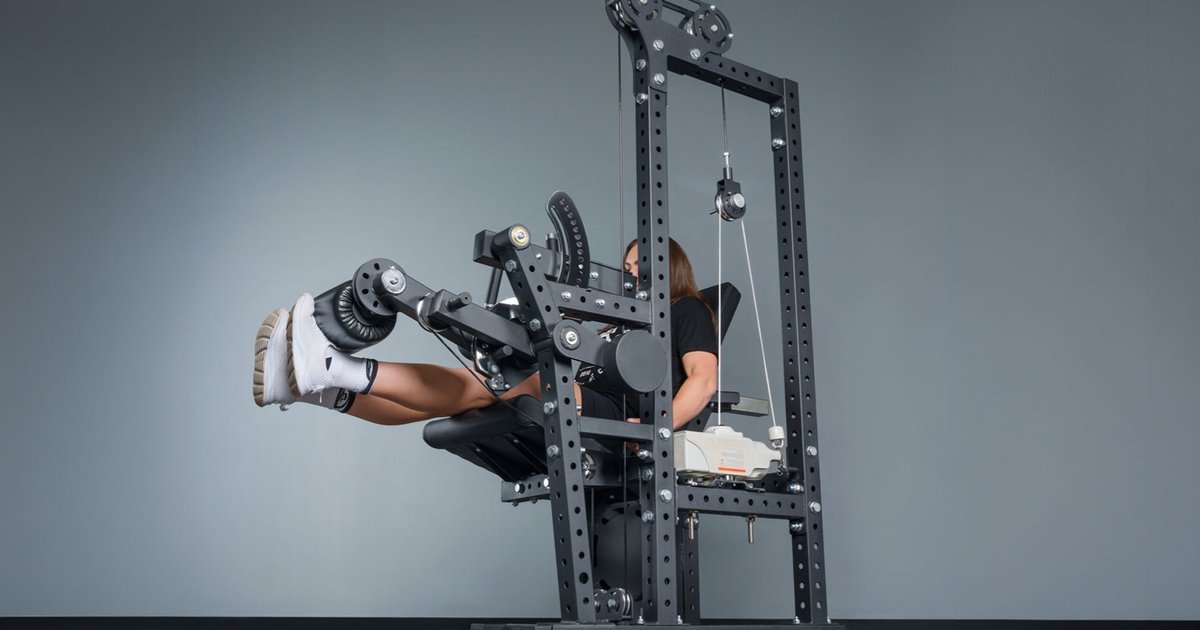
The current Basilisk range offers a 210 lb stack, a 310 lb stack and a VOLTRA-compatible machine supplied without the smart trainer. Separate options include a 100 lb stack upgrade and a mounting-only VOLTRA upgrade kit. Those last two are accessories, not complete machines. Check the exact variant name on your order confirmation rather than relying on the main product photograph.
Start with the job you want this station to perform. If you want to walk over, move a pin and train, a stack is the straightforward choice. If you already own a VOLTRA and want it to power another station, the no-stack route deserves a cost comparison. Buying a smart trainer solely for this machine is a different calculation from putting an existing one to work.
Make two complete shopping lists before deciding. Include the machine, required resistance equipment, delivery and any installation costs. For an accessory-based alternative, include its compatible bench or station as well. A cheap attachment can become an expensive system when its supporting equipment is missing; an apparently costly dedicated machine can be convenient when it leaves your main rack available. Compare complete usable setups.
Before checkout, save the chosen variant, included-parts list and a written answer to any compatibility question. That gives you something specific to check when the shipment arrives. If the listing changes later, you can still distinguish what you ordered from an accessory or configuration introduced afterwards.
Seat fit matters more than the height claim
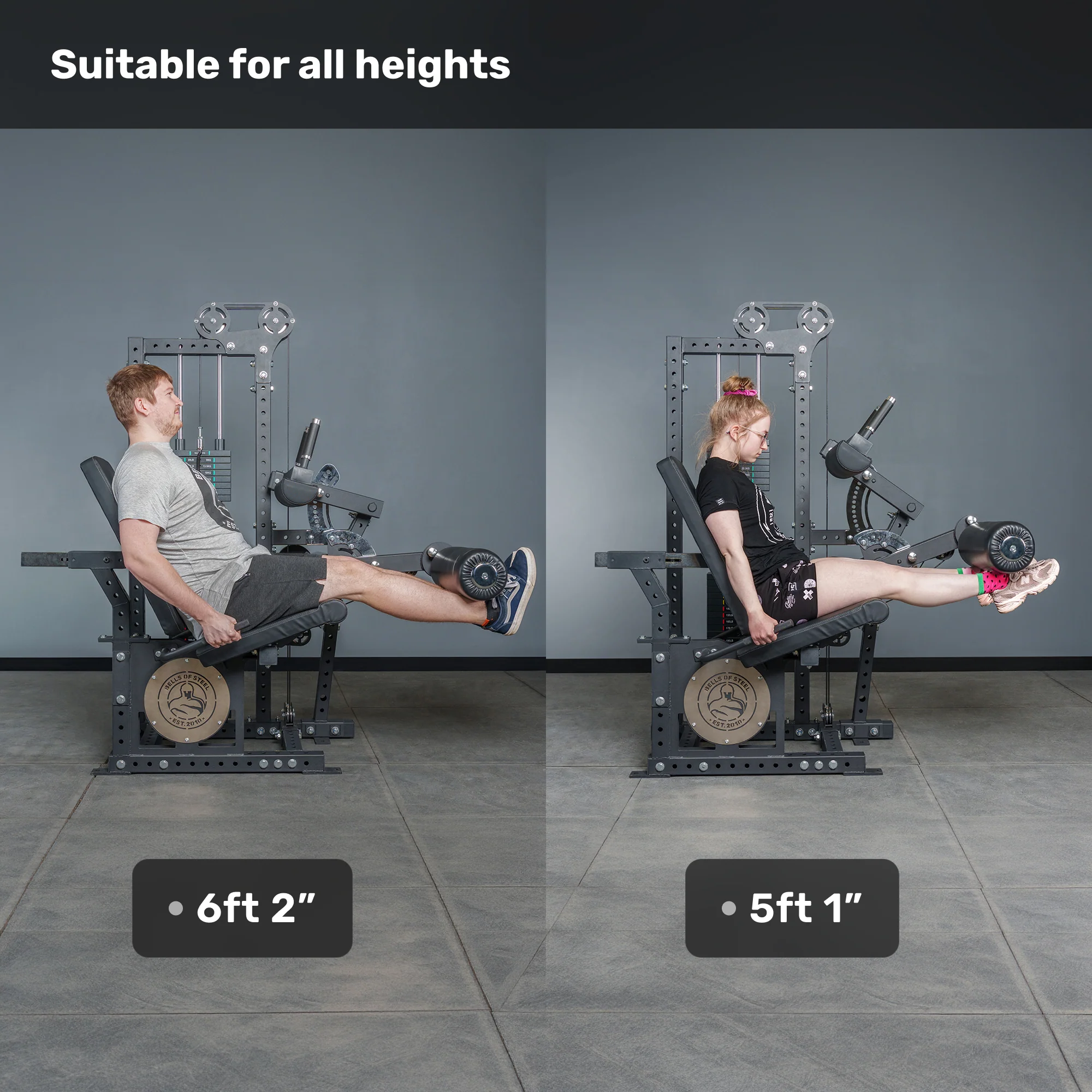
Bells of Steel describes an adjustable back pad, leg roller and leg holder. Its published height guidance is inconsistent: the US product description names 5 ft 3 in to 6 ft 2 in, while its Basilisk article describes testing across a wider range. Treat neither statement as a guarantee for your proportions. A very tall buyer needs a fit check, not reassurance from a photograph of a shorter lifter.
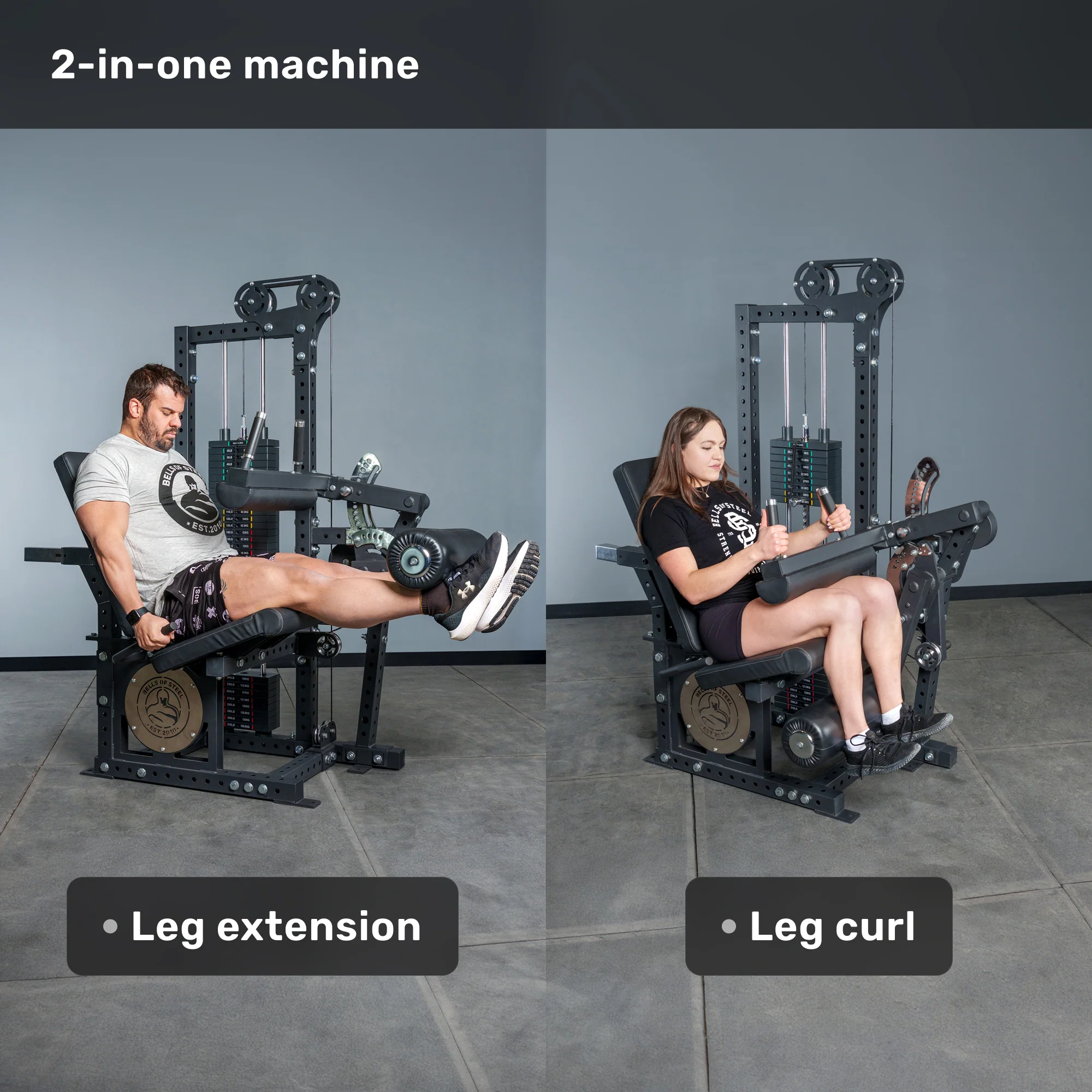
At a demonstration, first establish a supported sitting position and check how your knee lines up with the machine's pivot. Then examine where the working roller contacts your lower leg. A useful adjustment should let you move through the intended exercise without chasing the pad, sliding around on the seat or losing your position against the back support. Test extensions and curls separately because an acceptable setup for one does not prove the other fits.
For a shared gym, repeat the process for the shortest and tallest regular users. Note the actual adjustment positions and whether each person can reach the controls. If you cannot try the machine, ask for a demonstration with someone close to your leg length and request the relevant adjustment measurements. Total standing height is only a starting point; thigh and lower-leg proportions decide where the pads end up.
Check the changeover as well as the final position. A machine can accommodate two people yet be inconvenient if swapping their settings takes several awkward steps. Try making the change after a light set, when your legs are already working, and decide whether that routine suits your household.
Pick a stack for progression, not a flattering number
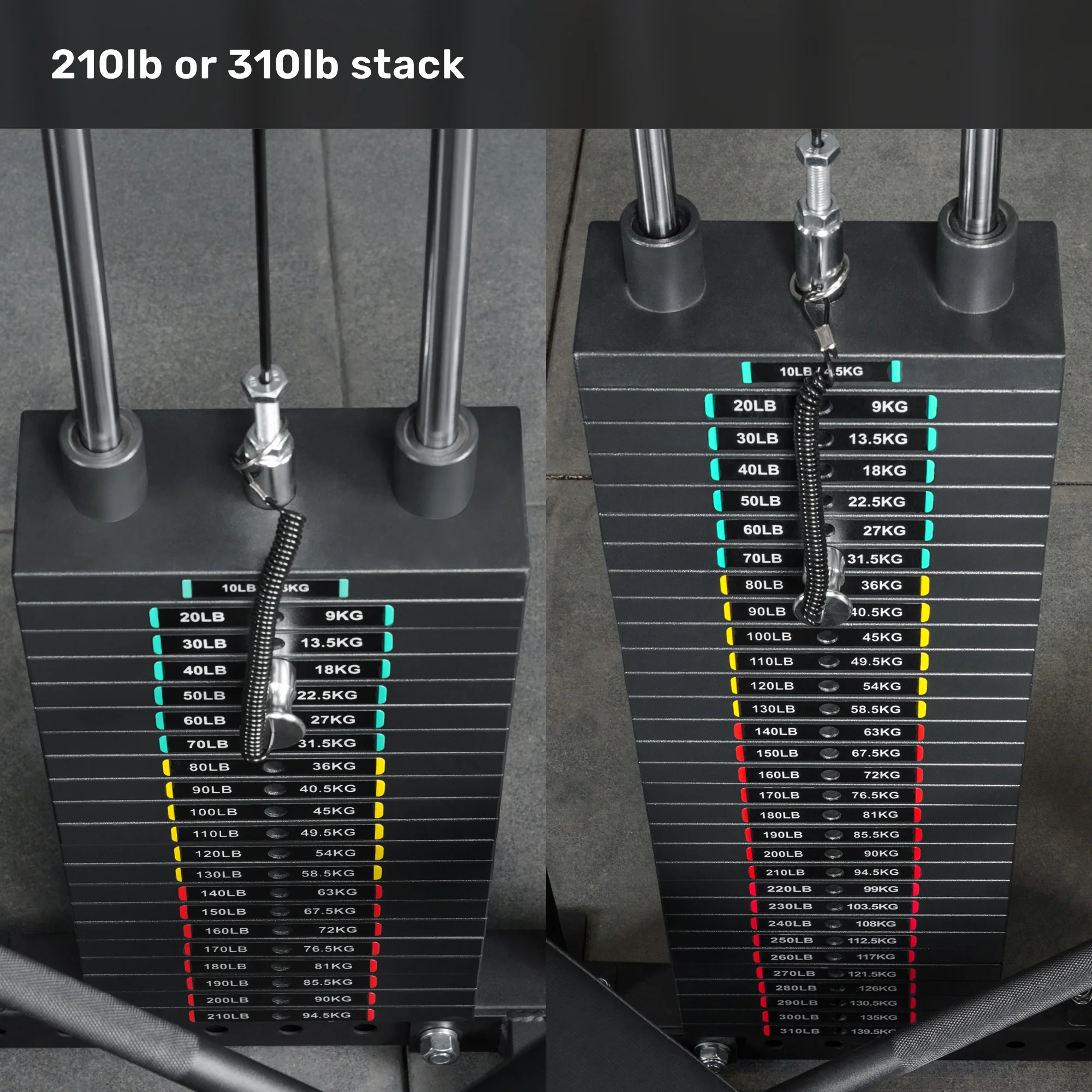
The choice between 210 and 310 lb should reflect useful progression headroom. Bells of Steel advertises the stack configuration as 1:1. That describes its loading arrangement; it does not make a selected stack weight equivalent to the same number on another leg machine. Roller position, lever geometry and the movement itself still affect what you experience at the leg pad.
If you can test a unit, use controlled repetitions at your intended settings. Record the exercise, selected load, repetitions and how much effort remained. Test both extension and curl rather than assuming they will use the same weight. A stack that offers plenty of room for curls could be closer to your needs on extensions, or the opposite. Guessing from your leg-press performance gives little useful purchasing evidence.
The larger stack buys potential headroom, while the smaller option may leave more budget for another genuine training need. The listed upgrade route is worth including in that calculation, but confirm the parts and installation requirements for your specific machine. Also ask about the smallest available increments. Being able to make a manageable next increase can matter more in regular training than a maximum you rarely approach.
The VOLTRA route changes the setup and the comparison
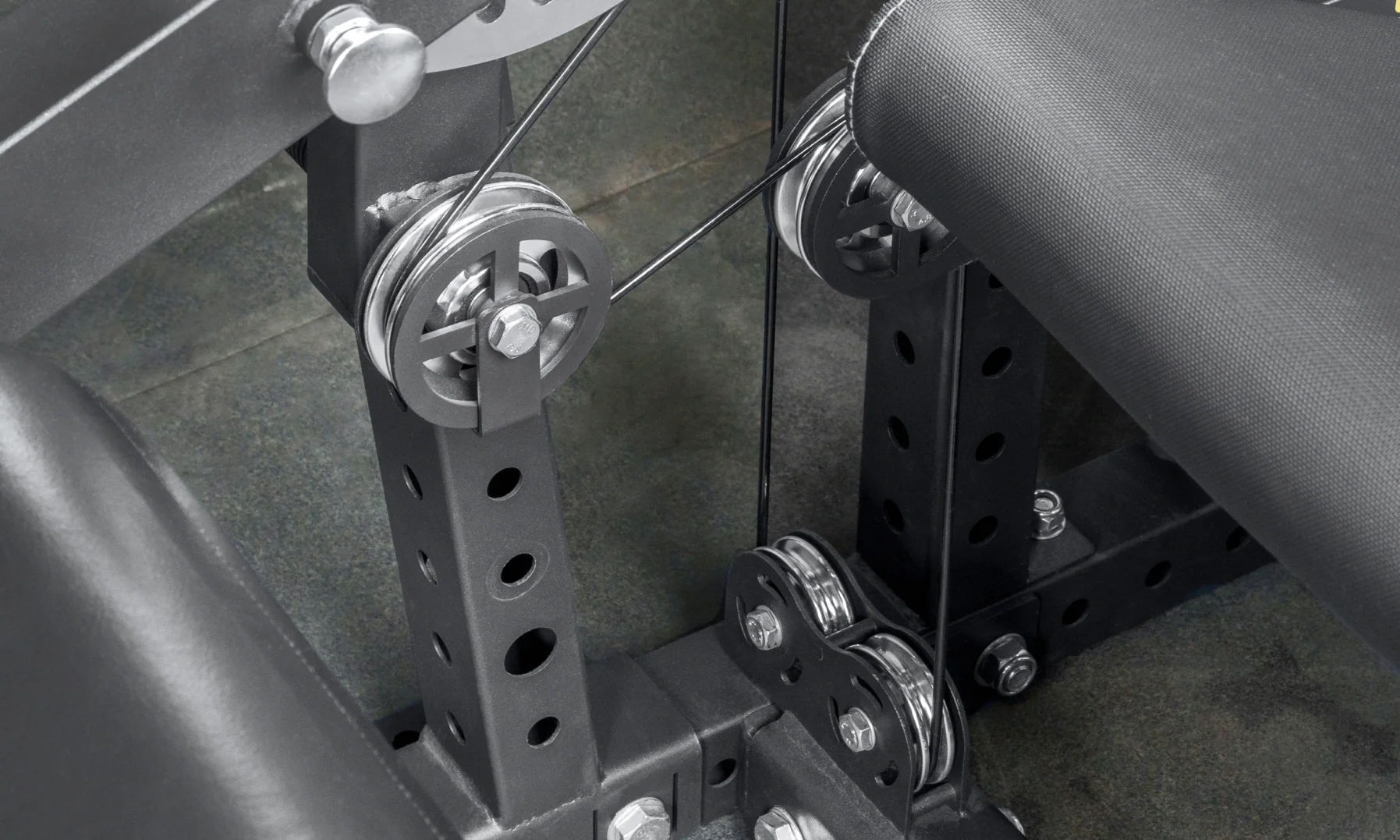
The no-stack version requires a separate VOLTRA. Bells of Steel lists a dedicated mount, counterweight and 1:2 pulley kit, advertising up to 400 lb of resistance for that configuration. Keep that manufacturer claim separate from the VOLTRA's own 230 lb cable-resistance specification. Neither headline alone establishes the force at your shins throughout a repetition, and this guide has not measured it.
For an existing owner, the practical question is whether the unit can remain on the Basilisk. Sharing one trainer across several stations may save hardware, but moving it between exercises can add work to every session. Walk through your normal training order: where does the unit start, when does it move, and can someone else use the equipment at the same time? Convenience depends on that routine.
Confirm the correct mounting kit and approved cable route for your version before assembly. Do not infer compatibility from a familiar-looking upright or improvise a pulley arrangement from photographs. Once installed, establish a baseline with an ordinary resistance setting before exploring different loading profiles. Changing the resistance profile, roller position and range together makes it difficult to tell why an exercise feels different. Keep those choices in your training log alongside the displayed load.

Equipment Worth Exploring
Explore equipment, accessories and gear from our carefully selected range.
VOLTRA
Compact digital cable trainer with smooth, adjustable resistance.

Seated Leg Combo BCO-680
Adjustable seated leg extension and leg curl machine with band pegs for added resistance.

Leg Extension/Curl BCO-780
Leg extension and lying leg curl combo with plate loading, band pegs and a cable-loading option.






Glute Ham Developer GHD-820
Adjustable glute-ham developer with contoured pads and a fold-out knee support.
Measure the training space around the frame
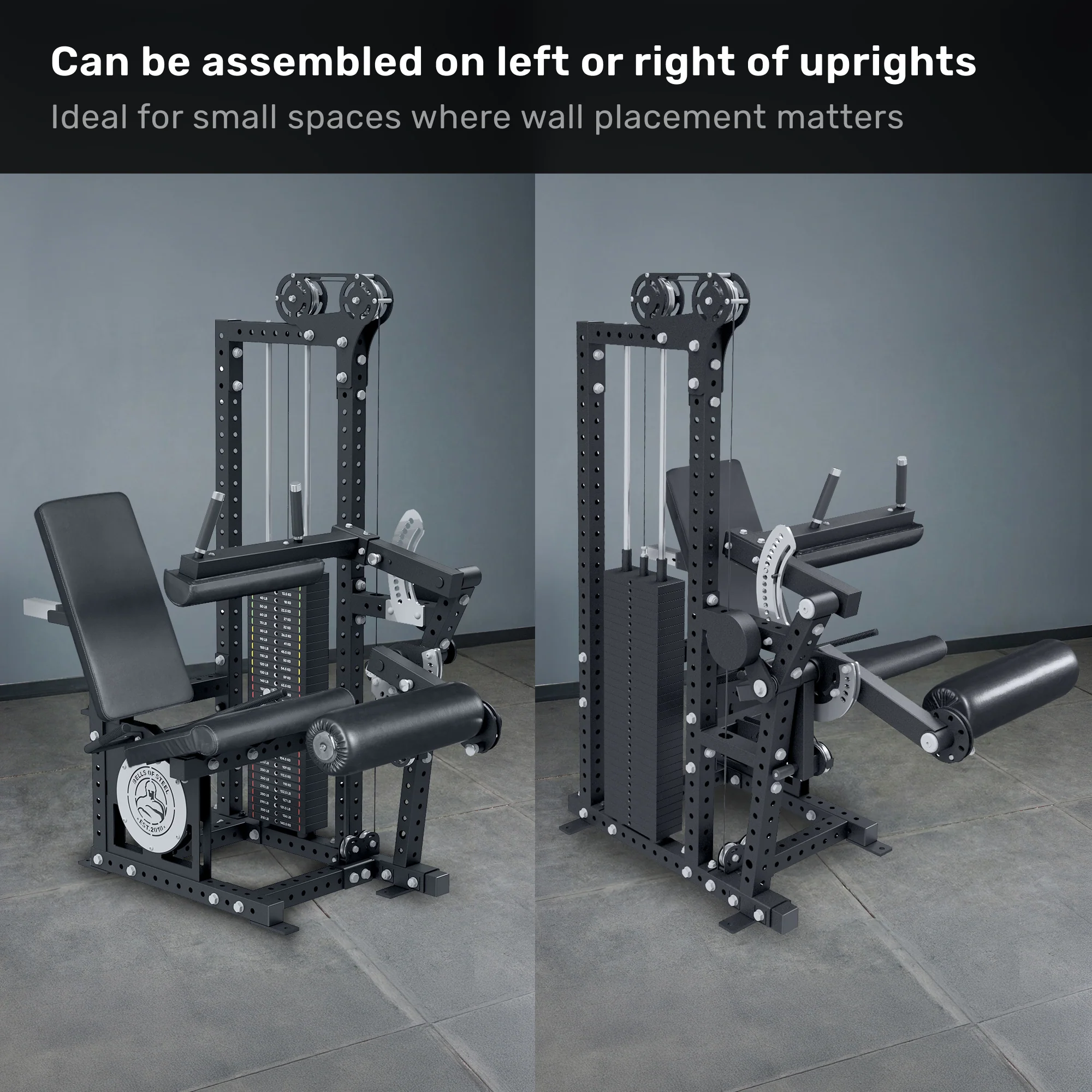
A compact frame still needs room for a person to use it. Tape out the current machine dimensions in your intended location, then add space for entering the seat, extending your legs, changing adjustments and reaching the resistance equipment. A footprint that fits between two objects on a floor plan may leave an awkward station once the lever moves or a lifter tries to get out.
The Basilisk permits a left- or right-side stack arrangement. Choose the side after considering your wall, walkway and usual approach to the seat. Keep selector access practical and allow room for inspection and maintenance. In a garage, include the space occupied by a parked car, an opening door or plates waiting to be loaded elsewhere. Measure the room as it is used, not only when it is empty.
Consider what the station replaces. A dedicated extension/curl machine, a compatible bench attachment, a plate-loaded ankle attachment and a Nordic station serve overlapping but different purposes. They differ in setup, support and exercise choices; they are not interchangeable versions of the same experience. Keep useful squat or hinge space if those movements remain part of your programme. For a home gym owner, a successful purchase improves the whole room rather than winning a footprint comparison in isolation.

Home Gym Shirts & Garage Gym Gear
Home, garage and basement gym shirts and workout gear for lifters who built their own place to train.

Voltra Digital Weights Gym for Cyberpunk Home Gym Nerds Tank Top
Bring “Voltra Digital Weights” humor to your next lifting session.

No Cars Allowed In My Garage Gym Decal for Garage Gym E Sticker
Stick a little “No Cars Allowed In My Garage” humor on your favorite gear.

Home Gym Nerd Hooded Pullover for Garage Gym Lifters Wo Hoodie
Make your off-duty look more fun with “Home Gym Nerd”.

Basement Gym Muscle Shirt Athletic Vest for Home Gym Li Tank Top
Show some personality between sets with “Basement”.

Home Is Where The Gym Is Funny Home Gym Garage Basement T-Shirt
Bring “Home Is Where The Gym Is Funny Home” humor to your everyday gym style.

Garage Gym Hero Muscle Shirt Athletic Vest for Home Gym Tank Top
Add some lifting attitude to training with “Garage Gym Hero”.

Home Gym Built Not Bought Muscle Shirt Athletic Vest fo Tank Top
Show some personality between sets with “Home Gym Built Not Bought”.

Anti Social Home Gym Club Hooded Pullover for Solo Home Hoodie
Bring “Anti Social Home Gym Club” gym humor to lazy days and post-workout plans.

Funny Home Gym Owner Gym Decal for Garage Gym Basement Sticker
Give your everyday gear a playful “Home Gym Owner” twist.

Basement – Basement Meme & Gymbros – Top Home Gains T-Shirt
Heavy lifts, good laughs, and a little “Basement” energy.
Use a repeatable first-session check before judging the machine
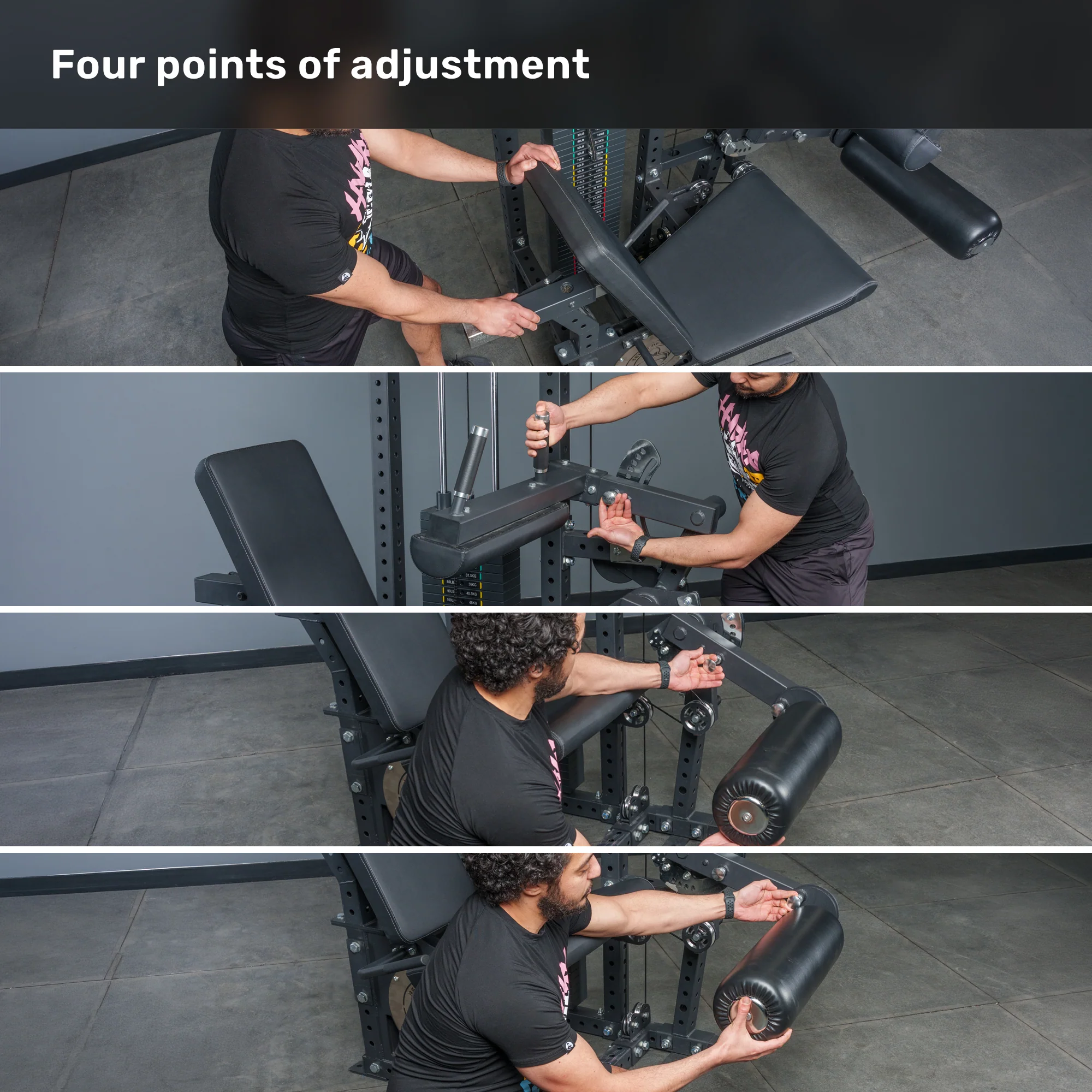
Begin the first session by learning the controls and confirming the assembled setup against the supplied instructions. For extensions, establish the back support and roller contact before selecting a light introductory load. For seated curls, check the leg holder and ankle-pad position again. Move deliberately and keep your torso supported. Stop and reassess a setup that makes you slide, strain to reach a handle or lose contact with a pad.
An original practice example is two easy sets of each movement, with enough reserve to concentrate on the settings rather than exhaustion. Note the back-pad position, roller adjustment, starting position and resistance choice. On a later session, repeat those details before increasing effort. This is a familiarisation example, not a tested Basilisk programme or a reason to add extra sets to an already demanding leg day.
Keep extension and curl records separate. Useful progress means more repeatable work at comparable settings, not a higher number achieved by shortening the movement or swinging the lever. Include cable, pad and fastener checks in the maintenance routine specified for your configuration. Choose between the stack and VOLTRA versions according to fit, complete-system cost and the way you actually train. This is a purchasing and setup guide based on current specifications, not an MMP hands-on durability or resistance-curve test.
For example, a log entry might record the curl's back-pad mark, roller mark, load and eight controlled repetitions with comfortable reserve. If the next session uses a different pad position, flag that change instead of calling the extra repetitions automatic strength progress. A consistent reference makes later decisions easier.