Advertising disclosure: This page includes affiliate product links that may earn us a commission, as well as products from our own store.
Kneeling Cable Crunches: Curl Your Ribs, Stop Hip-Hinging and Progress Your Abs
Many lifters can move a surprisingly heavy cable stack during kneeling crunches without feeling their abs do much work. Often the problem is not weak abdominal muscles. It is a mismatch between cable angle, knee position and the movement the lifter is actually performing. A hip hinge with a rope in your hands can look dramatic while giving the spine very little curling work.
The kneeling cable crunch becomes much easier to judge when you treat it as a loaded rib-to-pelvis curl. Here is how to choose the setup, keep the hip flexors and arms from taking over, compare useful alternatives and progress the exercise without treating stack numbers as a personal record.
1. Set the high pulley, rope and knee position before loading
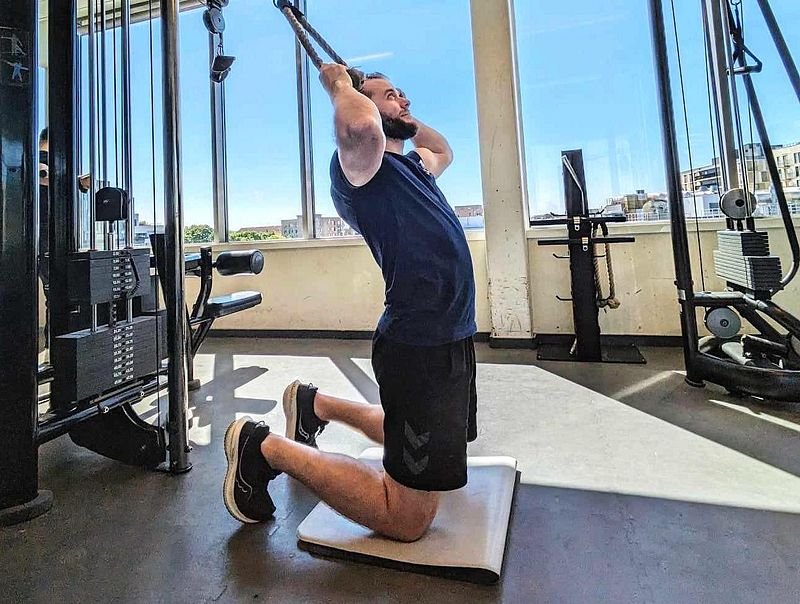
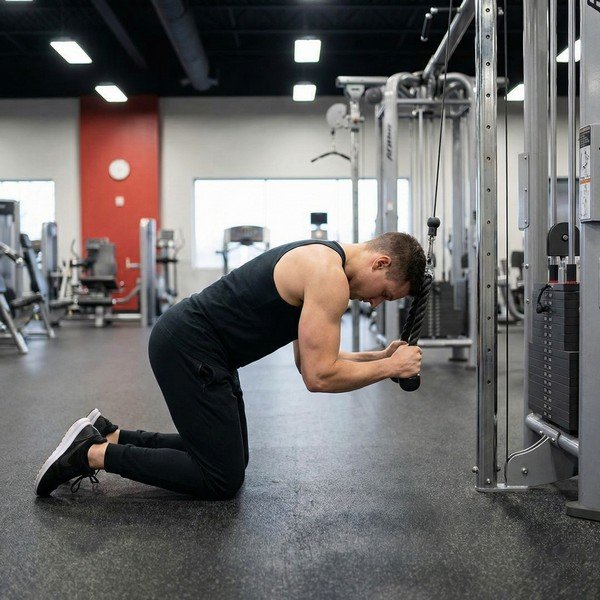
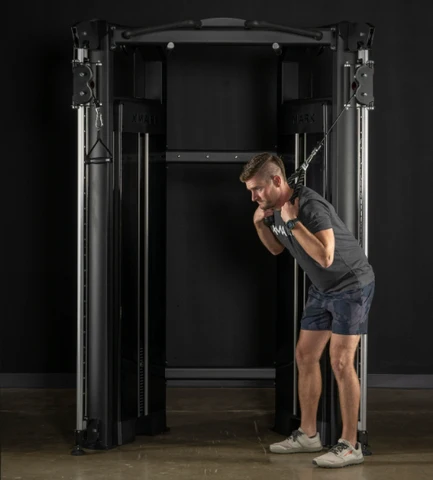
Begin at a high pulley with a secure rope attachment. Place a mat where both knees can rest without being dragged toward the weight stack. Face the machine, hold an end of the rope in each hand and bring your hands beside your temples or ears. Your elbows can point slightly forward; they should not become the handles of a triceps pushdown.
Start roughly one short step from the stack, then adjust the position to suit the pulley height and cable angle. Kneel tall enough that your hips remain above your knees, rather than sitting heavily on your heels. A slight lean can take up cable slack, but the working movement will come from your spine. Check that the selected plates lift before you begin the first repetition and that the rope clears your head and shoulders throughout the range.
There is no universal knee distance that fits every machine. Tall and short pulley towers, pulley guards and rope lengths all change the geometry. If the cable pulls you forward so strongly that you cannot set the start, move your knees a little closer or use less weight. If the stack bottoms out before your abs finish curling, alter your setup or range rather than bouncing the plates. The practical goal is a repeatable start position with space to round through the torso and no unstable attachment.
2. Curl the rib cage toward the pelvis, not the hips backward
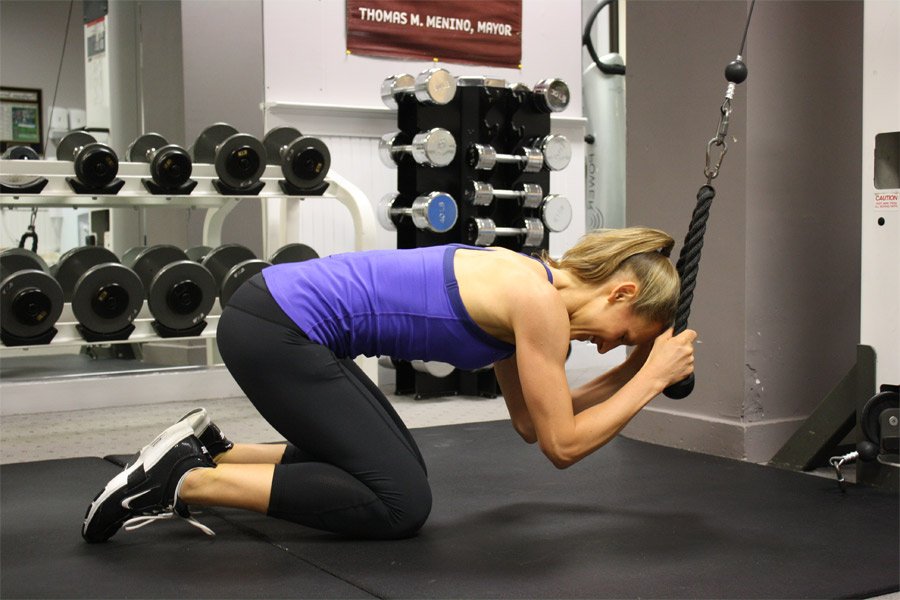
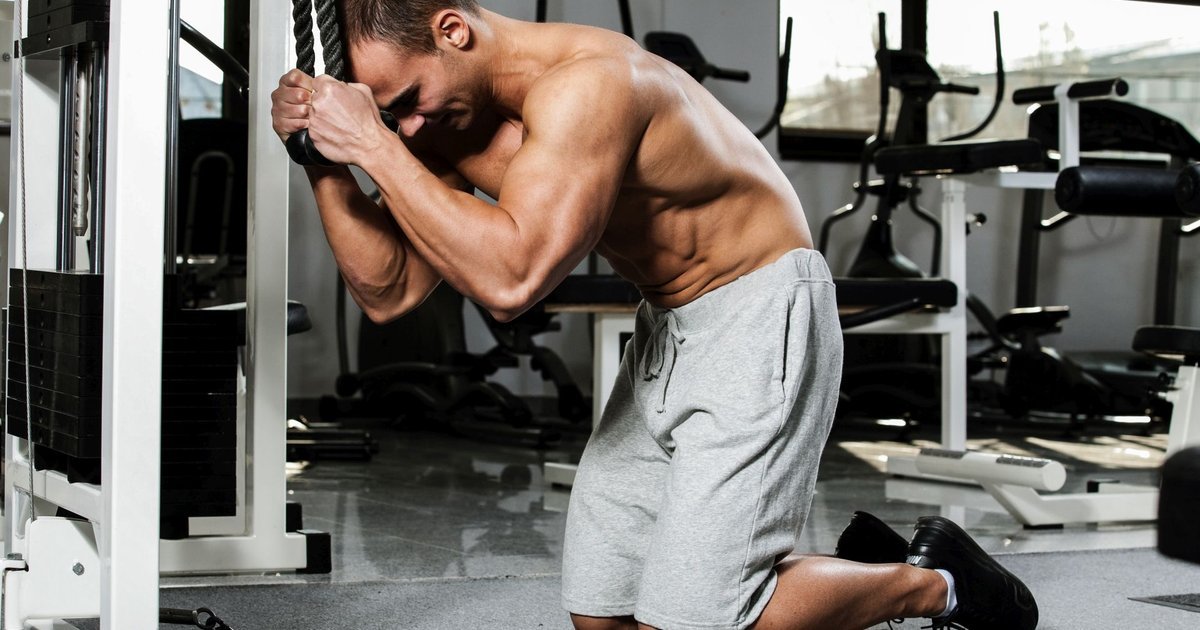
The crunch begins when the sternum and lower ribs move toward the pelvis. Exhale as you gradually round the upper and middle torso, imagining a zipper closing between your rib cage and waistband. Keep the hips relatively quiet above the knees. You will still have normal small adjustments for balance, but the rep should look like the trunk curling, not a straight-backed bow from the hip joints.
One helpful comparison is a seated bow: your entire back stays nearly flat while your pelvis folds forward. That movement can shift much of the work to hip flexors and other stabilizers while the abs mostly brace. In a well-executed cable crunch, the spine changes shape visibly as the front of the torso shortens. Your elbows may approach the thighs, yet elbow-to-knee contact is not the target and should never be forced with the shoulders.
Pause briefly near your most controlled curled position. Then uncurl over two to three seconds, gradually allowing the ribs to separate from the pelvis. Return only as far as you can keep your knees planted, hips controlled and cable under tension. Do not fling your chest back to create an exaggerated spinal arch. The goal is a comfortable flexion-and-return range that is repeatable from the first rep to the last, not an acrobatic stretch.

Equipment Worth Exploring
Explore equipment, accessories and gear from our carefully selected range.
VOLTRA
Compact digital cable trainer with smooth, adjustable resistance.

Go-Tone Pro
Portable digital cable trainer with up to 66 lb (30 kg) of adjustable resistance.

VForce Wall Trainer
Space-saving wall-mounted functional trainer with pivoting cable arms and variable resistance ratios.

VForce Lat Tower
Wall-mounted cable tower with pivot arms and adjustable 1:1 or 2:1 pulley ratios.

Trinity Lat Machine LSW-850
Weight-stack pulldown tower offering three cable directions and adjustable seated support.

VForce 2IN1
Half rack and pivot-arm functional trainer with switchable 1:1 and 2:1 pulley ratios.

VForce 3IN1
All-in-one rack combining an adjustable Smith machine, functional trainer, and free-weight station.

VForce 3IN1 Max
Six-post all-in-one rack with Smith machine, functional trainer, and variable-force cables.

Multi Pull Smith Rack MPHR-780
All-in-one rack with a Smith machine, functional trainer, lat pulldown and low row.

Original GymPin
Adds Olympic plates to compatible cable-machine weight stacks for extra resistance.
3. Fix the arm pull, neck strain and disappearing cable tension
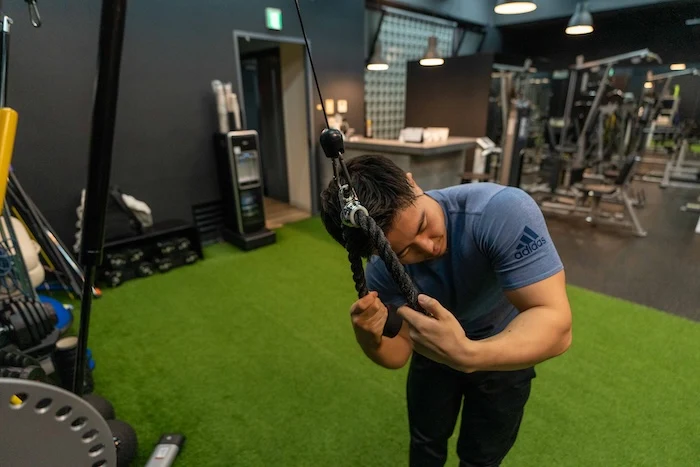
Three technique leaks account for much of the frustration with this exercise. First, a lifter can pull the rope down using the lats and arms while the torso barely changes shape. Keep your hands in the same neighborhood beside your head and allow the torso to carry the arms through the crunch. Second, nodding the chin toward the chest makes a tiny head movement feel like a large abdominal contraction. Keep the neck comfortable and let the rib cage, not just the head, travel toward the pelvis.
Third, the cable may become slack at the top or lose useful leverage at the bottom. A pin-loaded stack exerts force through the cable, but that does not mean your abdominal muscles experience identical resistance at every joint angle. The line of pull and changing body position matter. If the cable goes slack, adjust knee distance, lean or load; do not automatically add another plate. Watch for the stack slamming down or lifting unevenly as another sign that the movement is no longer controlled.
A straightforward self-check is to film three repetitions from the side. Do the hips drift toward the heels on every lowering phase? Does the back remain ruler-straight while the elbows shoot down? Does the head disappear between the arms? If yes, reduce resistance and practice the small rib-to-pelvis curl until the abdominal action is visible. There is no advantage to moving a larger stack by using a completely different movement.
4. Choose resistance by abdominal control, not stack numbers
Choose a setting that lets you perform about ten to fifteen smooth repetitions with a clear trunk curl and no jerking. The number printed beside a stack pin is not a standardized measure of difficulty between machines. Cable ratios, rope length, pulley geometry and your body position can all change the feel. A useful log therefore records the machine, attachment, knee position and load, rather than claiming one machine’s number is directly comparable to another.
For a first working set, stop with roughly two clean repetitions left in reserve. If the last two reps turn into shoulder pulls or hip hinges, the selected load was too aggressive. On the other hand, if fifteen reps barely challenge the abs and the position remains stable, a small increase is reasonable. Increase repetitions within the target range before advancing the pin. This creates an objective overload rule without encouraging sloppy short-range grinding.
When breathing, exhale during the curl and inhale as you return without losing your brace or rhythm. You do not need to hold your breath to earn an abdominal contraction. A brief squeeze at the shortened position can help you feel the action, but an extended pause is optional, not magic. If spinal flexion provokes persistent pain, or the exercise aggravates a known back condition, stop and use a tolerable alternative while you seek individualized guidance.

Bodybuilding Shirts & Workout Gear
Bodybuilding shirts, tanks and gym gear for lifters chasing muscle, size, symmetry and the pump.

Check Out My Six Pack Donut – Donut Meme Vest Muscle Sh Tank Top
Show some personality between sets with “Check Out My Six Pack Donut”.


Shredded Cheese – Muscle Meme Hooded Pullover For Fitne Hoodie
Stay casual and show some lifting attitude with “Shredded Cheese”.

Gymhead Lifting On My Mind Meme Hooded Bro Jumper Hoodie
Show off your powerlifting humor in a laid-back “Gymhead” hoodie.

Suffering Is Gainz Stoic Greek God Marble Sculpture T-Shirt
Make gym days more fun with “Suffering is Gainz Stoic Greek God Marble” style.

Fight Your Inner Demon Motivational & Meme Fans Vest Tank Top
Add some lifting attitude to training with “Fight Your Inner Demon”.

Shirt – Return Of The Shredi , Gymbros & Meme Lovers T-Shirt
Rep “Return of the Shredi” humor in and out of the gym.

OnlyGains Meme – Bros – & Lifting, Humor T-Shirt
Rep “OnlyGains Gym Meme” humor in and out of the gym.

Yeah Buddy Lightweight Baby Meme Top & T-Shirt
Bring “Yeah Buddy Lightweight Baby” humor to your next gym day.

– Everything Hurts And I'M Dying Jumper T-Shirt
Show some gym-day personality with “Everything Hurts And I'm Dying Workout”.
5. Cable crunches versus floor crunches, planks and hanging raises
A floor crunch is an accessible starting point for learning the same basic rib-to-pelvis action. The cable version adds adjustable external resistance, making progression straightforward for someone whose floor crunches have become very easy. It is not automatically superior, however: the useful question is whether you can control the target movement and gradually increase the challenge. A heavier stack without a larger genuine curl is not meaningful progress.
Planks serve a different purpose. In a good plank, the torso resists movement under tension rather than repeatedly flexing. This makes planks useful for practicing anti-extension control and trunk bracing; they do not need to compete with loaded crunches for a single winner. Hanging knee raises and leg raises involve moving the legs relative to the pelvis. Their hip-flexor demand is substantial, especially if you simply lift the thighs. Posterior pelvic tilt at the top can bring more deliberate trunk motion into the repetition.
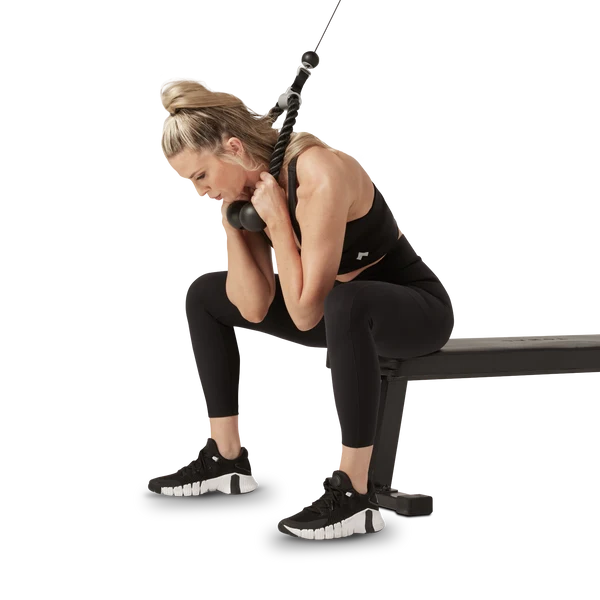
Standing rope crunches are convenient when kneeling is uncomfortable or the station lacks floor space, but they invite more changes at the hips and knees. A seated cable crunch or abdominal machine may be more stable for some lifters. Choose variations by comfort, technique and available progression, rather than assuming one body position isolates a completely separate upper or lower abdominal muscle. The rectus abdominis acts as a continuous muscle, even though different exercises may change local effort.
6. A four-week progression with repeatable reps and recovery
Train the movement two times a week initially, leaving at least a day between harder sessions. A simple starting prescription is two work sets of ten to twelve controlled repetitions after your main compound lifts. Keep the high pulley, rope and approximate knee position constant. Write down each set’s repetitions, load and whether the hips or arms started helping. That last observation matters as much as the number beside the weight pin.
Week 1: use a conservative load and find a repeatable cable path. Aim for two sets of ten to twelve. Week 2: keep the same load and add repetitions toward fifteen without shrinking the curl. Week 3: once both sets reach fifteen clean reps, increase the resistance by the smallest practical increment and return toward ten to twelve. Week 4: maintain that load and try to improve one or two quality repetitions per set. If quality falls, repeat the previous week’s setting.
After the four weeks, you can add a third set if the extra work improves performance rather than simply lengthening the workout. For many lifters, two or three precise sets are enough to give the abs a direct hypertrophy stimulus alongside squats, presses, loaded carries and other training. Visible abdominal definition also depends heavily on body-fat level; a stronger, thicker rectus abdominis will not automatically reveal a six-pack through an unchanged layer of body fat.
The best progress marker is simple: the same clean curve of the torso, a slightly more demanding set over time, and no need to recruit the arms or hips to finish the movement.
Equipment Worth Exploring
Explore equipment, accessories and gear from our carefully selected range.

Long Tricep ERGO Ropes
Extended triceps ropes with ergonomic grips for cable pressdowns and overhead extensions.
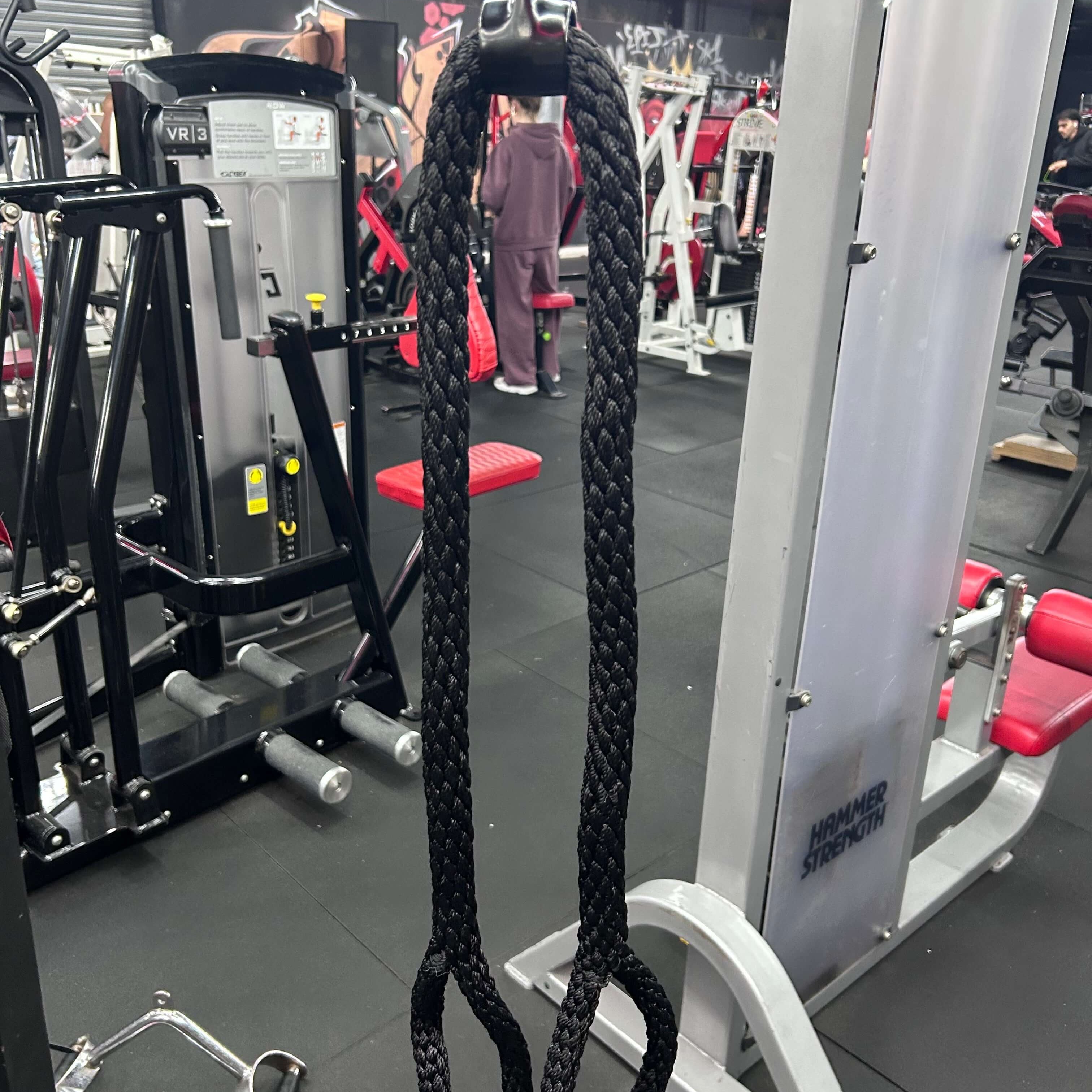
Super Long Tricep Rope
Extra-long looped cable rope for triceps pressdowns and overhead extensions.
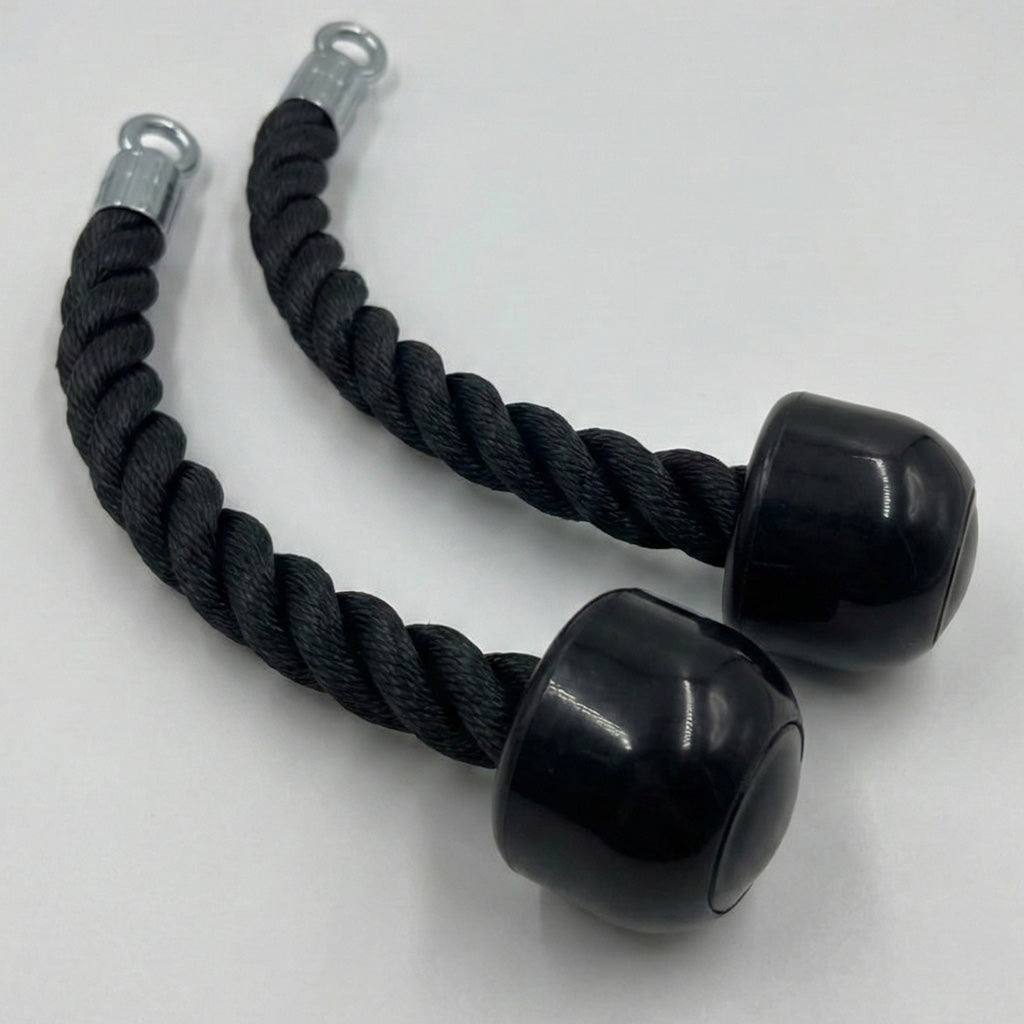
Individual Tricep Ropes
Pair of individual cable ropes for triceps pressdowns and cable hammer curls.

Multi-Length Tricep Strap
Adjustable-length cable strap for triceps, biceps and upper-body cable exercises.

GymPin Ergo Handles
Pair of ergonomic cable handles shaped for comfortable triceps and pulling exercises.

Lat Pulldown Set
Multi-grip cable attachment set for pulldowns, rows, and varied upper-body training.
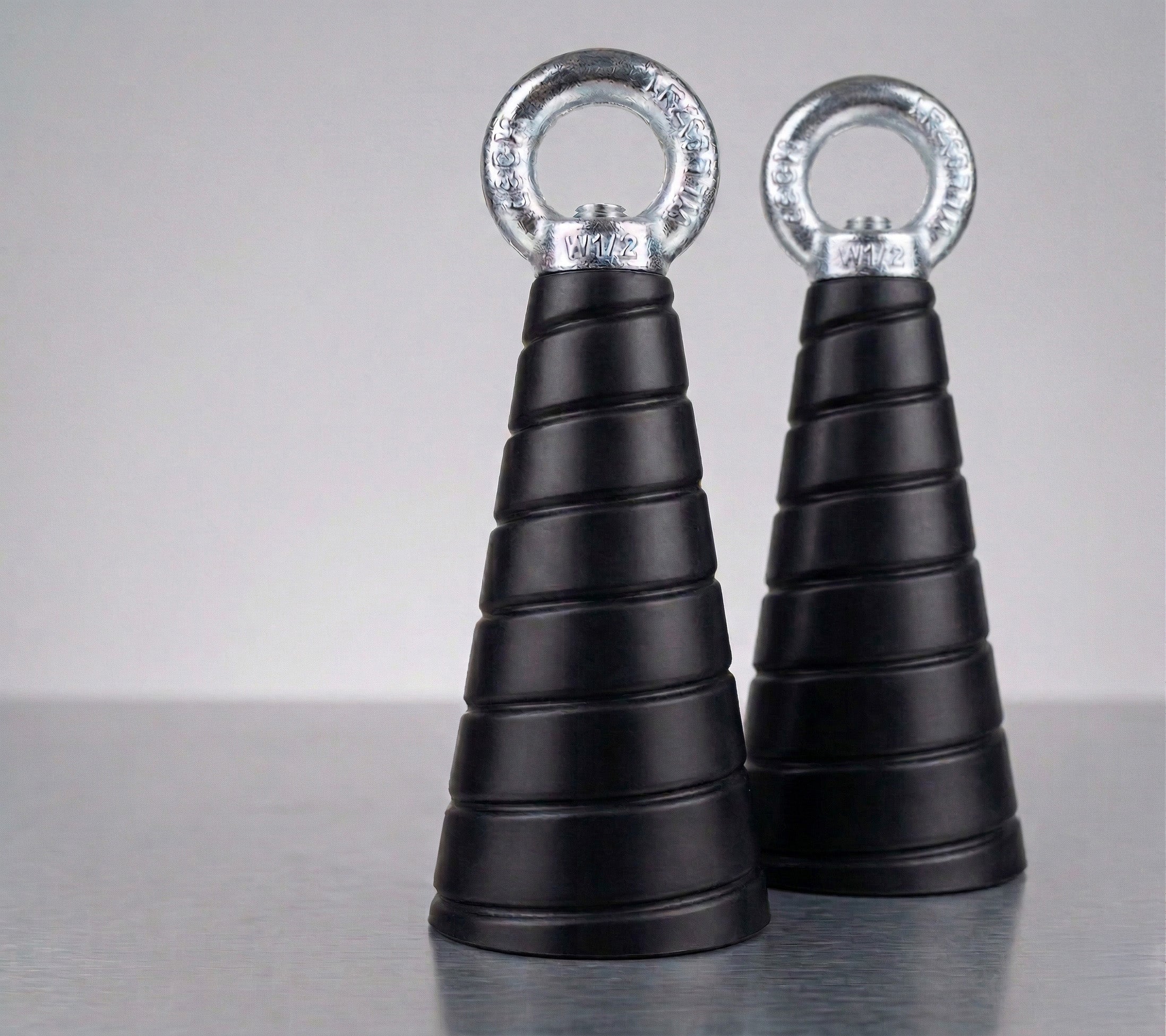
Tapered Tricep Cone
Tapered rubber cable grip for triceps extensions, face pulls and hammer curls.

Angles 90 Grips
Flexible grip attachments that allow natural wrist movement during pulling exercises.

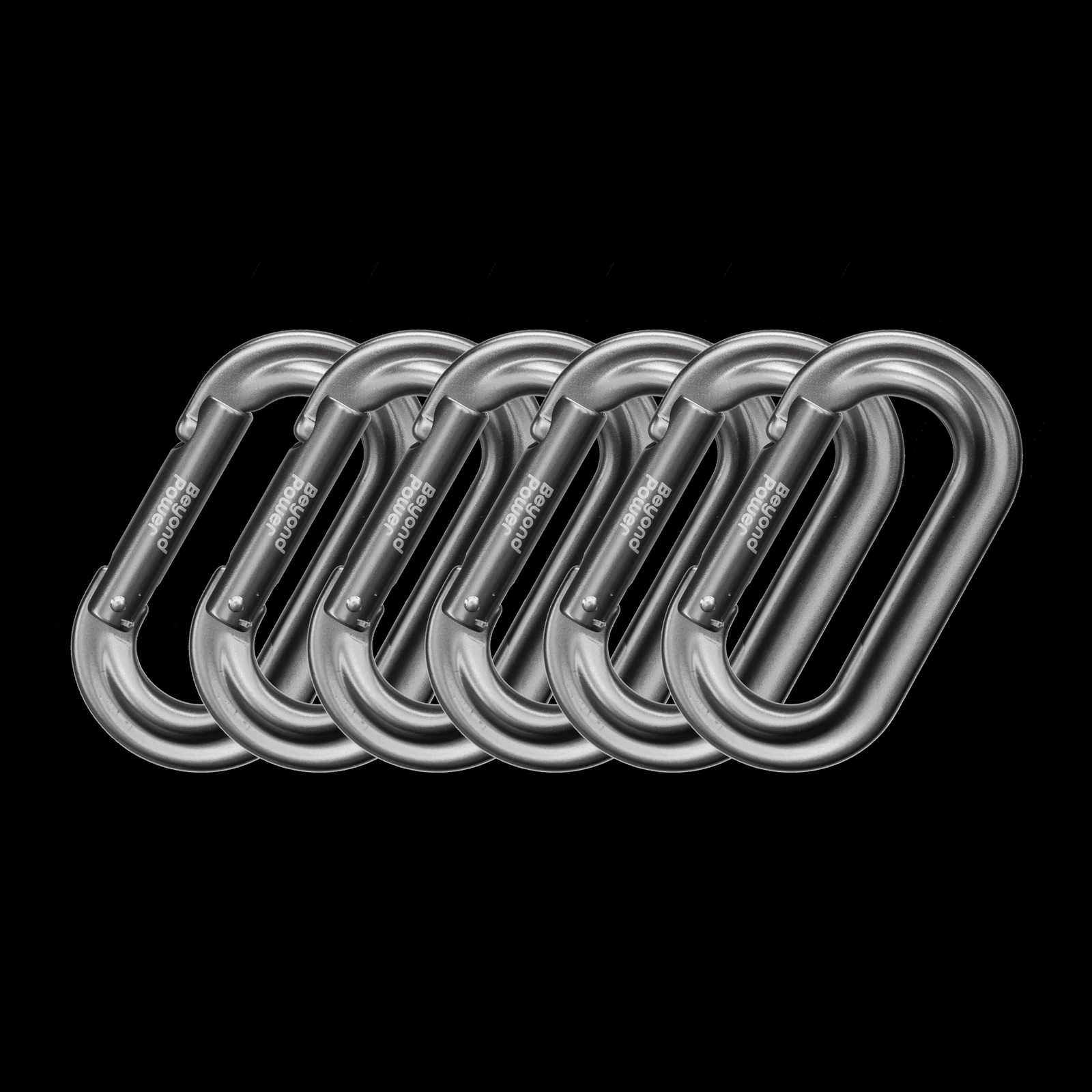
Premium Carabiner
Durable carabiner for connecting cable attachments and training accessories.