Advertising disclosure: This page includes affiliate product links that may earn us a commission, as well as products from our own store.
Kettlebell Arm Bars: Learn the Roll Before Chasing More Weight
A kettlebell arm bar asks a different question from a heavy press: can you change your body’s position while keeping a light load steady above the shoulder? It is easy to make the drill look more impressive by choosing a larger bell or rolling farther. Neither change is useful if the arm wanders, breathing becomes strained or getting back to the floor turns into a scramble.
Treat the movement as controlled practice. Establish a stable start, make a small roll, pause within a comfortable range and return deliberately. It can occupy a short place in a training session without becoming a test of pain tolerance or a promise to fix every shoulder problem.
1. Make the floor setup part of the repetition
Clear a level area with enough space to roll in either direction. Keep other people, loose plates and bags outside the working area. A thin, firm exercise mat may improve comfort; an unstable pile of cushions changes the support beneath you. Check the handle and adjustable parts of your equipment before bringing any load above the body.
Begin with an unloaded rehearsal if the pattern is unfamiliar. Work out where your head, free arm and legs will go, and how you will return. That gives you a chance to notice an awkward floor surface or insufficient space without simultaneously trying to control a weight.
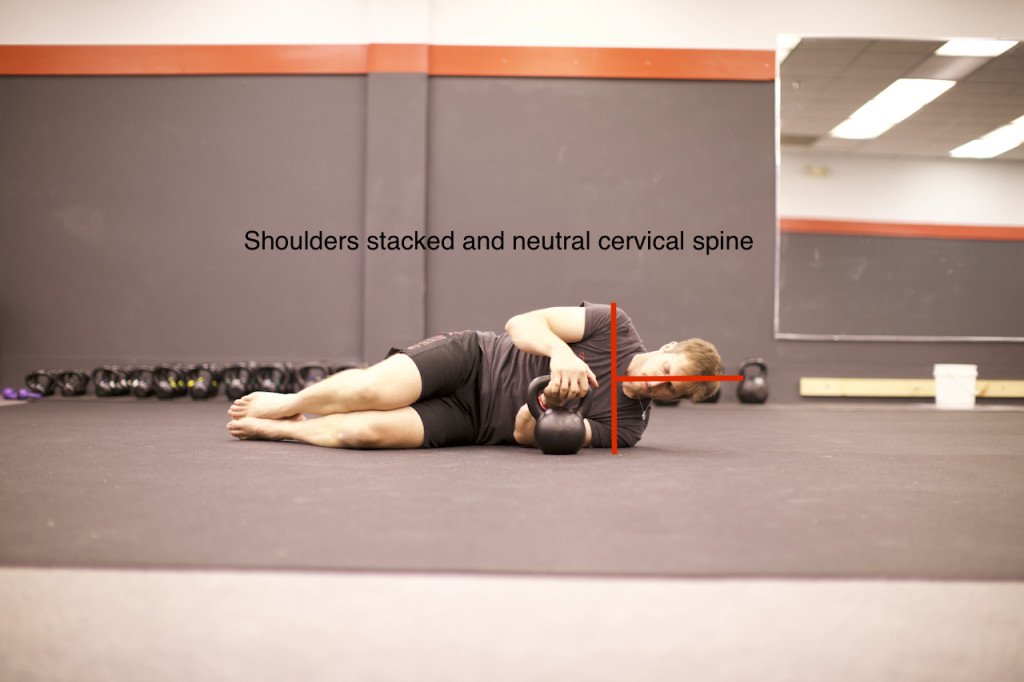
For a loaded start, lie on your side facing the bell and take the handle with both hands. Keep it close as you roll onto your back. Use both hands to help establish the raised position rather than reaching sideways for a heavy object with a straight arm. The setup should feel organised before the free hand moves away.
Choose a load you can manage smoothly through the entire sequence. The bell you swing or press comfortably may be inappropriate here. If the smallest available bell is too demanding, a lighter handheld object can help you learn the pattern. Do not rush into an unsuitable load just because the movement happens on the floor.
2. Establish the arm position before moving the body
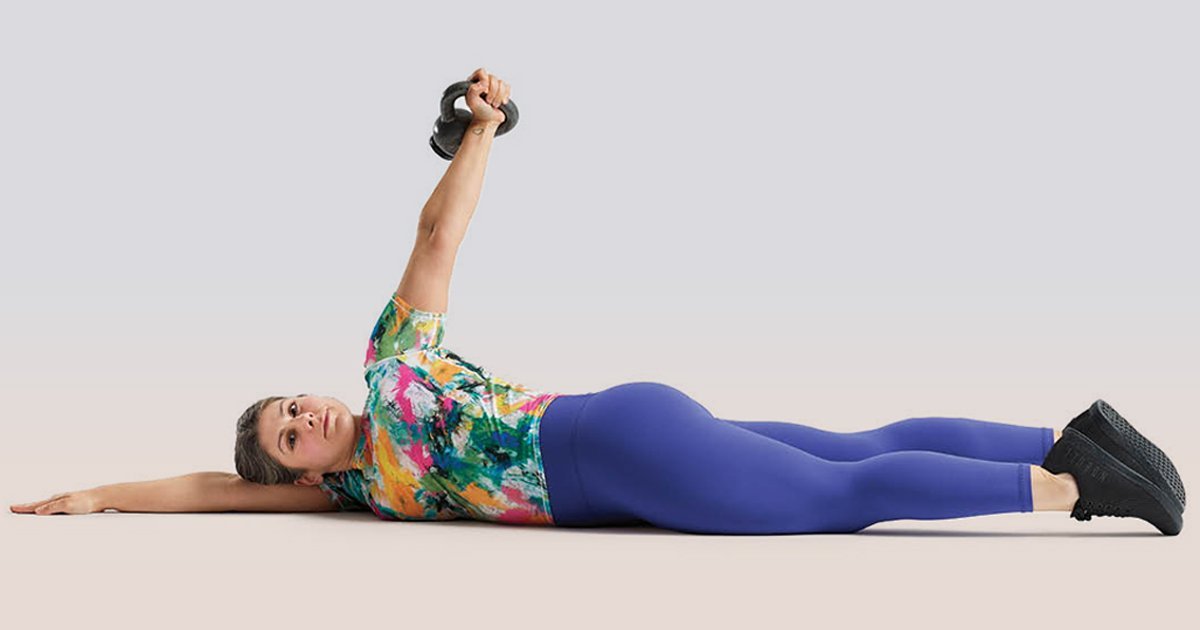
With your back supported by the floor, keep the working arm extended and the wrist close to neutral. The aim is a steady load over the shoulder, rather than a wrist bent backward beneath the handle. Pause long enough to check that you can support the position without hurried adjustments.
The kettlebell-side knee bends, with that foot supported on the floor. The opposite leg and free arm extend along the floor to organise the next movement. Find a foot position that allows a small, comfortable roll; forcing the heel into the buttock is unnecessary.
Think of this as a checkpoint. If you cannot hold the starting position comfortably, making the exercise more complicated will not solve it. Rehearse without load, choose a lighter object or get a qualified coach to assess the setup. A light implement still deserves attention when it is above your chest.
A kettlebell and a dumbbell also feel different because the mass sits differently relative to the hand. Use the lighter option you can actually control and check its position deliberately. Do not treat the same printed kilogram number as proof that two implements create an identical task.
3. Let the legs initiate a small, controlled roll
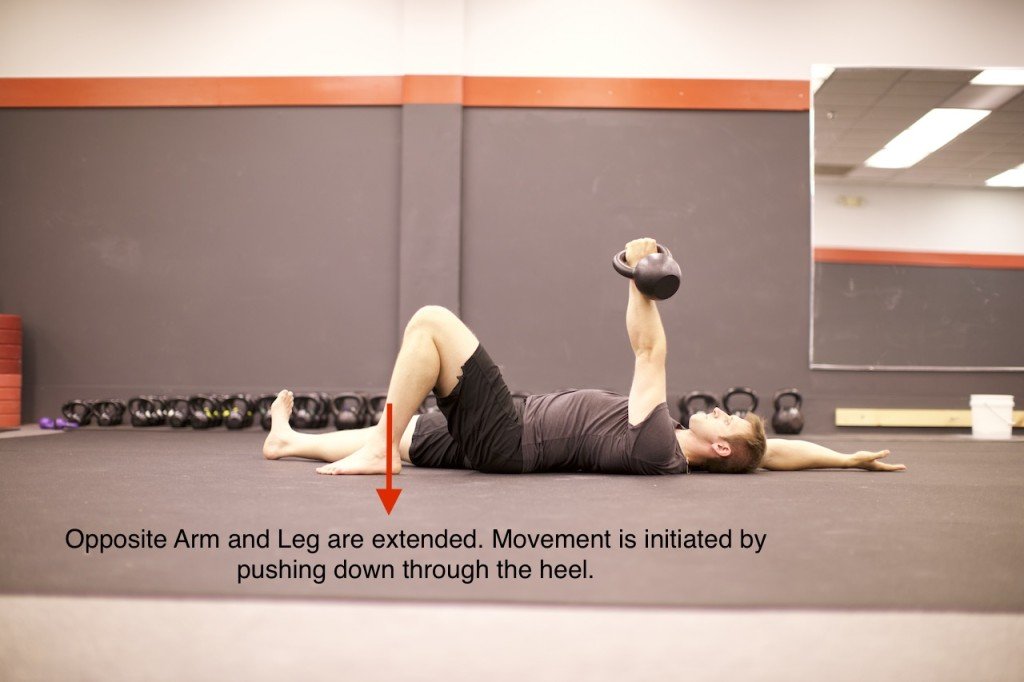
Press gently through the planted foot to begin turning onto the opposite side. Move slowly enough that the load stays organised while the trunk changes position. The free arm provides a resting place along the floor; it should not become a lever for dragging yourself through an uncomfortable range.
Keep the raised arm directed upward rather than sweeping it across the room with your torso. The exercise is about coordinating a changing base beneath the load. If the hand moves dramatically away from the shoulder, stop the roll and return before trying a smaller movement.
Your first useful repetition may involve only a modest turn. That is enough to practise the transition. There is no requirement to flatten your chest against the floor, match another person’s photograph or reach a particular knee position at the expense of control.
Separate the movements when learning: settle the starting position, make a small turn, pause and return. Once that feels repeatable, explore a little more range if it remains comfortable. Changing load, range and hold duration together makes it difficult to identify which part became too demanding.

Equipment Worth Exploring
Explore equipment, accessories and gear from our carefully selected range.


Cast Iron Kettlebells
Textured cast-iron kettlebells for swings, squats, carries, and full-body training.


Rubber Hex Dumbbells
Rubber-coated hex dumbbell pairs with a stable shape for home and commercial strength training.



4. Hold a position you can leave as calmly as you entered
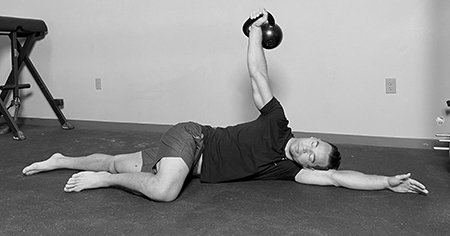
In the side-lying position, aim for a quiet arm, an unforced neck and normal breathing. A stretch sensation is not an instruction to push harder. Pain, tingling, loss of control or a feeling of instability calls for stopping and reassessing rather than searching for a more forceful cue.
Keep the first holds brief. For example, a coach might use several comfortable breaths as a practical check rather than prescribing a long endurance test. That is a learning option, not a universal dose or evidence that a particular duration repairs a joint.
Notice what changes as you stay there. Does the elbow soften? Does the wrist bend farther back? Does your body tense simply to keep the bell from drifting? Shortening the hold or reducing the range may make the practice more repeatable. Finishing before those compensations escalate is a useful training decision.
Return to your back under control, bring the free hand back to assist with the bell and roll toward it to put it down. Do not finish with a hurried sideways reach after the arm becomes tired. The return and parking sequence belong to the repetition just as much as the outward roll.
5. Give the drill a clear place in your training

The arm bar can be a short technique or mobility practice before other lifting, provided it leaves you ready for the session rather than fatigued. Start with a small amount you can repeat comfortably. You do not need to turn every warm-up into an additional workout.
Use a simple log: implement and load, side practised, approximate hold, comfortable range and whether the return stayed controlled. A useful observation might be that the second side needed a smaller roll today. That is more informative than forcing both sides to look symmetrical or calling every new sensation an improvement.
Progress one feature at a time. More consistent starts, steadier holds and smoother returns can all count as progress before you increase weight. If you decide to change the load, first demonstrate that the existing version is repeatable. An adjustable implement must be secured according to its instructions; small plates or accessories are not interchangeable across every handle design.
Keep the wider program in view. Controlled pressing, pulling and other strength work have their own roles; a floor drill does not replace them. Benches and heavier dumbbells belong to those surrounding exercises, not beneath your body during this arm-bar practice. If a shoulder is painful or has a history of instability, seek individual assessment rather than using the drill as self-prescribed rehabilitation.
The useful standard is modest: enter the position deliberately, support the load, move within a comfortable range and return without drama. Let that standard determine the next step instead of the size of the kettlebell.

Funny Gym Shirts & Workout Gear
Funny gym shirts, tanks, hoodies and workout gear for lifters who like training hard.

Heavy Metal Gym – Funny Kettlebell Rock Music Hooded Pu Hoodie
Keep it laid-back with a little “Heavy Metal” attitude.

Skull Kettlebell Gym | Heavy Metal Lifting Funny Workou T-Shirt
For laid-back days and metalhead humor: “Skull Kettlebell”.

Hells Kettlebells Hells Bells Parody AC/DC Heavy Metal Tank Top
Your gym-day look, with a playful “Hells Kettlebells” twist.

Gotta Lift 'Em All Pokemon Kettlebells Meme Top T-Shirt
Make gym days more fun with “Gotta Lift 'Em All” style.

Punisher Kettlebell Shirt – Meme & T-Shirt
Make gym days more fun with “Punisher Kettlebell” style.


Live Love Lift Decal for Water Bottles Laptops Workout Sticker
Stick a little “Live Love Lift” humor on your favorite gear.

Blue Macaroon Kettlebell – Whimsical Fitness Meme Hoode Hoodie
Keep it laid-back with a little “Blue Macaroon Kettlebell” attitude.

Ace Ventura Shirt – & Meme Fans T-Shirt
Heavy lifts, good laughs, and a little “Ace Ventura” energy.